California Corn Lily (Veratrum californicum)
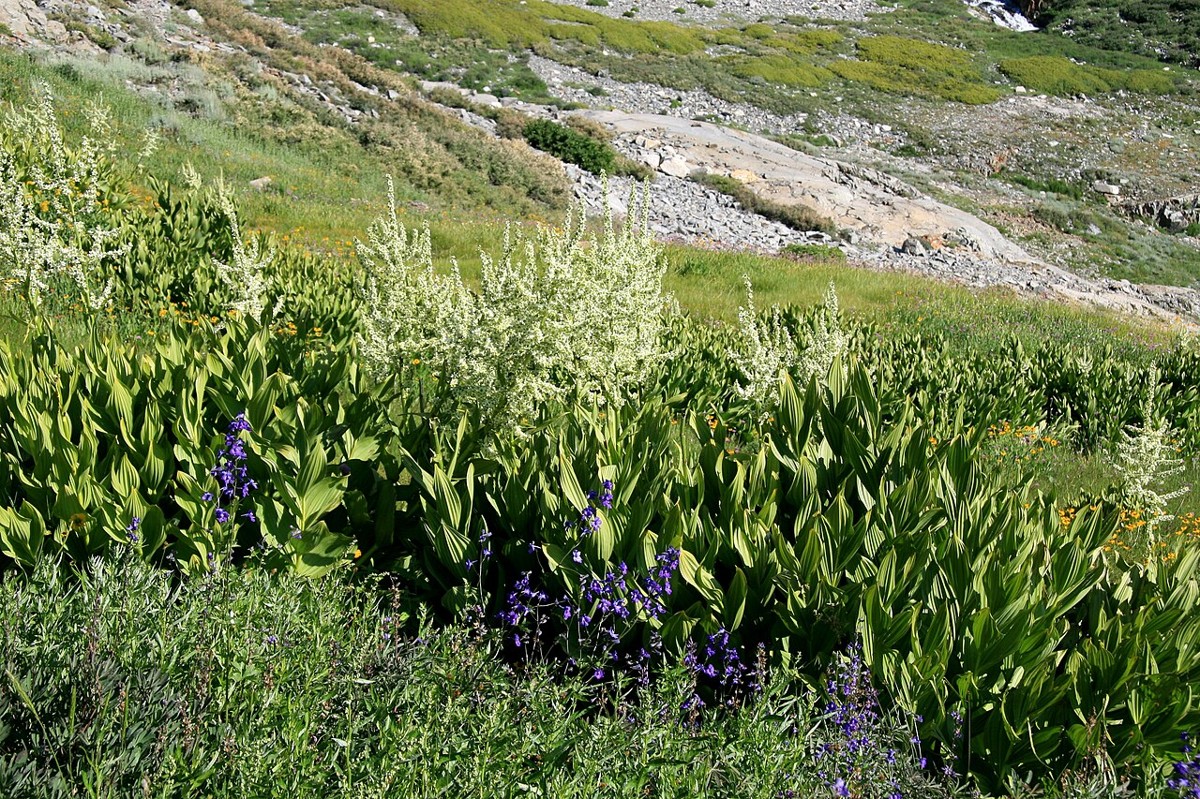
Veratrum californicum, known as California corn lily or California false hellebore, is a tall, bold-leaved perennial of wet mountain meadows across the western United States. Its broad, deeply pleated leaves and towering plumes of starry cream flowers make it one of the most dramatic wildflowers of high-elevation wetlands, often forming dense colonies that dominate an entire meadow through midsummer.
Despite its lily-like common name, California corn lily is not a true lily and, more importantly, it is extremely poisonous in every part of the plant. It is best known to ranchers and biologists for a strange medical legacy: compounds in its roots, when eaten by pregnant sheep at a critical stage of gestation, cause severe birth defects in lambs, including the single-eyed condition cyclopia. This discovery in the 1950s and 60s led to major advances in understanding the Hedgehog signaling pathway in developmental biology, giving a wild mountain meadow plant an outsized role in modern medical research — as a subject of study, never as a treatment.
In the garden, California corn lily is grown strictly for its architectural foliage and striking flower spikes in a wet meadow or bog setting, never for any edible or medicinal use. Its toxicity should be taken seriously around livestock, pets, and curious children, and it is not a plant to handle without care.
Identification
California corn lily is an unmistakable plant once it reaches flowering size, forming a stout, leafy stalk 3 to 7 feet tall from a short, thick rootstock.
Leaves
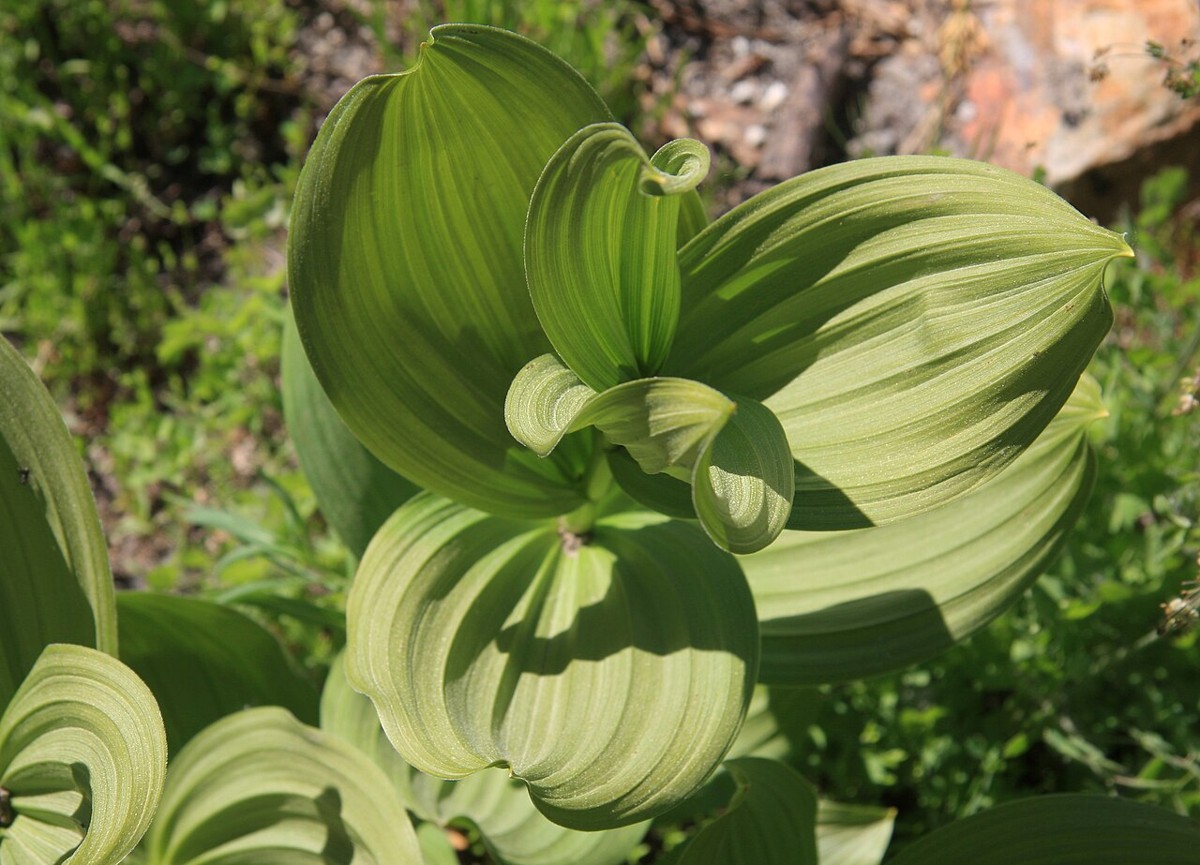
The leaves are the plant’s most distinctive feature even before it flowers: broad, oval to elliptic, strongly pleated (accordion-like) blades up to a foot long, clasping the stem and arranged spirally up its length. They are a rich green, sometimes with a slight waxy bloom, and their deep parallel veins give them a corrugated, almost tropical look that is easy to recognize even from a distance.
Flowers
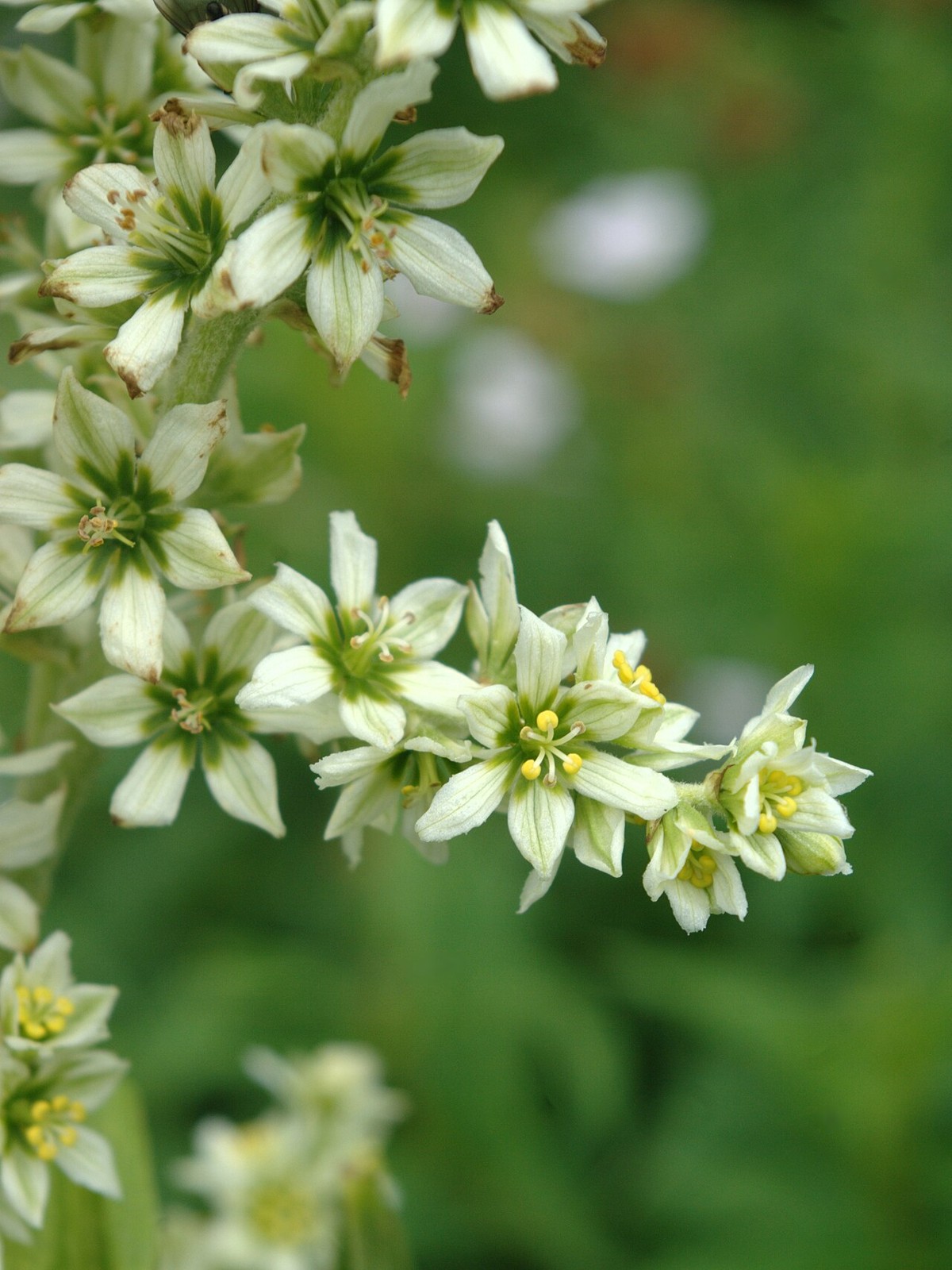
Flowering stems rise well above the leaves, branching into a large, plume-like panicle crowded with hundreds of small, star-shaped, six-petaled flowers, usually cream to greenish-white with a darker green or yellow-green center. Each flower is about half an inch to an inch across. Not every plant flowers every year; corn lily often spends several seasons as leaves only before sending up a flowering stalk, then can take a year or more off afterward.
Fruit & Seed
Flowers are followed by oval, three-chambered seed capsules that dry and split to release flat, papery, wind-dispersed seeds in late summer and fall. Seed capsules persist on the dried stalks well into winter.
Quick Facts
| Scientific Name | Veratrum californicum |
| Family | Melanthiaceae (False Hellebore) |
| Plant Type | Perennial wildflower, herbaceous |
| Mature Height | 3–7 ft |
| Mature Spread | 2–3 ft clump |
| Growth Rate | Slow to establish, long-lived once settled |
| Sun Exposure | Full Sun to Part Shade |
| Water Needs | Wet to consistently moist |
| Soil Type | Rich, moist meadow soil; tolerates seasonal saturation |
| Soil pH | Neutral to slightly acidic |
| Bloom Time | June – August |
| Flower Color | Cream to greenish-white |
| Fall Color | Leaves yellow and collapse after frost |
| Fruit | Three-chambered capsules with flat winged seed |
| Deer Resistant | Yes — toxicity deters grazing |
| USDA Hardiness Zones | 3–8 |
Native Range
California corn lily grows through the mountains of the western United States, from the Cascades and Sierra Nevada east across the Great Basin ranges to the central and southern Rockies and the mountains of Arizona and New Mexico. It is a plant of mid to high elevations, generally between about 5,000 and 11,000 feet.
Typical habitat is a wet mountain meadow, seep, streamside flat, or the margin of a subalpine pond, where snowmelt keeps the soil saturated well into summer. Corn lily often forms large, dense stands that visibly outcompete other meadow plants once established, a trait that makes it both a conspicuous wildflower spectacle and, in rangeland settings, a plant that ranchers watch closely because of its toxicity to grazing livestock.
The species has no significant conservation concerns and is common within its wet-meadow habitat throughout its range. Because it depends on consistent moisture, drying or draining of mountain meadows can reduce its populations locally even where the surrounding region remains suitable.
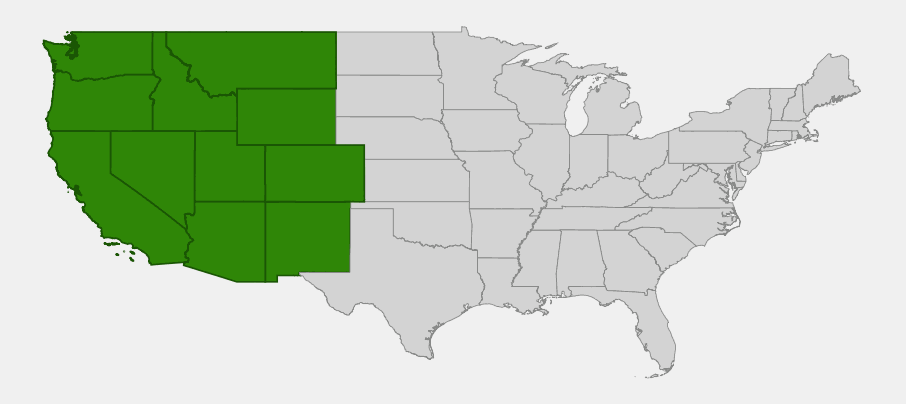
📋 Regional plant lists featuring California Corn Lily: California & Nevada · Western Oregon & Western Washington · Idaho, Eastern Oregon & Eastern Washington · Montana & Wyoming · Utah & Western Colorado · Nebraska, Kansas & Eastern Colorado · Arizona & New Mexico
Growing & Care Guide
California corn lily is grown for its bold, tropical-looking foliage and towering flower plumes in wet garden settings. Because every part of the plant is poisonous, site it thoughtfully and keep it away from grazing animals, pets prone to chewing plants, and small children.
Light
Give it full sun in cool, consistently moist climates, and partial shade where summers are hot, which helps keep the broad leaves from scorching. In its native meadows it often grows in full sun because the ground stays wet from snowmelt.
Soil & Water
Plant in rich, moisture-retentive soil and keep it consistently wet through the growing season; it is not a plant for average garden soil that dries out in summer. A bog garden, pond margin, or the base of a rain garden suits it well. It tolerates occasional standing water but prefers soil that is saturated rather than submerged.
Planting Tips
Start from nursery-grown plants or fresh seed rather than wild-collected material; wild populations should be left undisturbed. Seed often needs a period of cold, moist stratification and germinates slowly, and plants can take several years to reach flowering size. Space plants 2 to 3 feet apart to allow for their eventual mature spread, and always wear gloves when handling any part of the plant.
Pruning & Maintenance
Little routine maintenance is needed. Cut back the flowering stalk after seed has dispersed if a tidier look is wanted, or leave it standing for winter interest and self-seeding. Wear gloves for any cutting or handling, and wash hands afterward, since the plant’s toxic alkaloids can cause skin irritation in some people.
Propagation
Propagate from seed sown in fall for natural cold stratification, or divide established clumps at the rootstock in early spring, again using gloves throughout. Division is slow to recover but reliable; seed-grown plants take the longest to reach flowering size.
Landscape Uses
- Bog gardens and pond margins where bold, pleated foliage adds dramatic structure
- Wet meadow restoration alongside sedges and native wetland perennials
- Rain gardens with consistently moist low spots
- Naturalistic high-elevation gardens, kept well away from grazing livestock or pets
Wildlife & Ecological Value
California corn lily is a conspicuous part of the wet mountain meadow community, providing structure and, for a narrow set of visitors, nectar during the short high-elevation summer.
For Pollinators
Flowers are visited mainly by flies and some beetles and bees, which are drawn to the abundant, easily accessed blooms. Large flowering stands can attract a notable volume of pollinator activity during their bloom window.
For Birds
The dense meadow stands corn lily grows in shelter insects and seeds that support meadow-foraging songbirds, though the plant itself is not a direct food source for birds.
For Mammals
Virtually all mammals, wild and domestic, avoid eating California corn lily because of its toxic alkaloids; this is precisely why it often persists and spreads in heavily grazed meadows where more palatable plants are eaten down. Its best-documented effect on mammals is the teratogenic (birth-defect-causing) impact on sheep that graze it while pregnant, which made it a significant subject of veterinary and developmental-biology research.
Ecosystem Role
As a dominant plant of many wet subalpine meadows, corn lily contributes significant biomass and structure to these wetland communities and, because grazing animals avoid it, can influence which other plants persist nearby. Its presence is a useful marker of consistently wet, high-elevation meadow habitat.
Cultural & Historical Uses
California corn lily occupies an unusual place in scientific history rather than in traditional food or medicine use, precisely because of its severe toxicity. In the 1950s, Idaho ranchers reported a sudden wave of lambs born with a single central eye after ewes grazed corn lily on a particular range in a dry year that concentrated the toxic plant among sparse forage. Research by USDA scientists eventually traced the defect to steroidal alkaloids in the plant, named cyclopamine and related compounds after the cyclopia they caused. That discovery later proved foundational to understanding the Hedgehog signaling pathway, a fundamental system in animal development that remains an active area of cancer research today.
This history is a caution, not an invitation: California corn lily and its chemical constituents are the subject of laboratory research, never a folk or home remedy, and no part of the plant should ever be eaten or used medicinally. Some Indigenous peoples within its range were aware of the plant’s dangers and avoided it as forage and food, recognizing it among the poisonous plants of the high meadows.
Frequently Asked Questions
Is California corn lily poisonous?
Yes, extremely. Every part of the plant contains toxic steroidal alkaloids that are dangerous to people and animals if eaten, and even skin contact can cause irritation in some people. It should never be considered edible or medicinal.
Why did California corn lily cause birth defects in sheep?
Pregnant ewes that grazed the plant at a critical stage of pregnancy gave birth to lambs with severe facial and brain defects, including a single central eye (cyclopia). Scientists traced this to alkaloid compounds in the plant’s roots, a discovery that later helped reveal the Hedgehog signaling pathway important in animal development.
Is it safe to plant California corn lily if I have livestock or pets?
Only with real caution. Keep it fenced away from grazing animals and out of reach of pets or children who might chew on plants, since ingestion can cause serious poisoning.
Why do corn lily leaves look pleated?
The broad leaves have deep, parallel, accordion-like folds (a trait called plicate venation) that give the plant its distinctive corrugated look and help it shed excess water in its wet meadow habitat.
Does California corn lily bloom every year?
Not always. Plants often grow as foliage only for several seasons before producing a flowering stalk, and may skip a year or more between bloom events, especially in drier years.

Looking for a nursery that carries California Corn Lily?
Browse our native plant nursery directory: California · Colorado · Idaho · Montana · Nevada & New Mexico · Oregon · Utah · Washington · Wyoming · Arizona