Dune Evening Primrose (Oenothera deltoides)
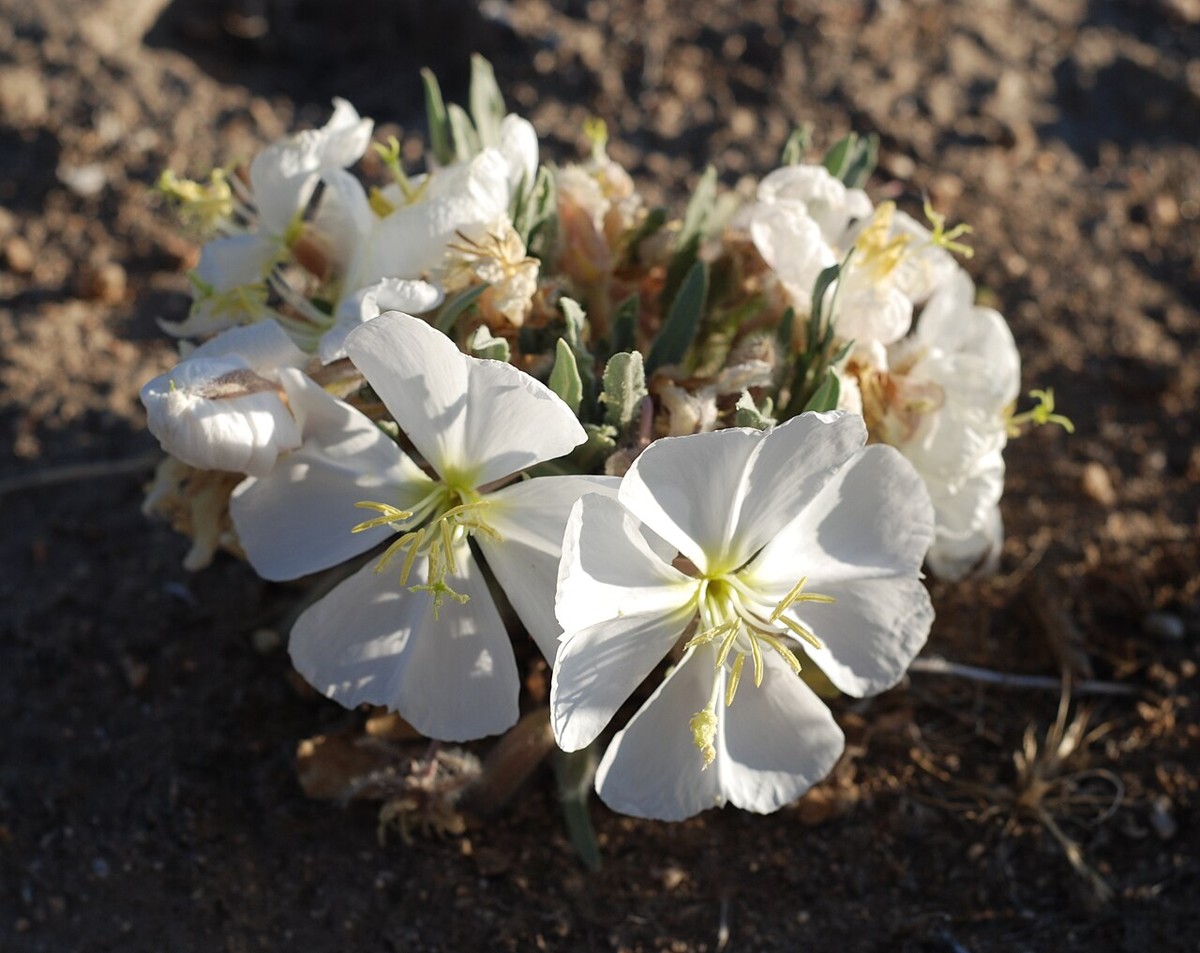
Oenothera deltoides, commonly known as dune evening primrose or birdcage evening primrose, is a striking desert wildflower prized for its large, crepe-paper-like white flowers and its dramatic growth habit — older plants dry into a distinctive rounded, cage-like skeleton of curled, wiry stems that can persist and tumble across the desert floor long after the flowers are gone, giving rise to the “birdcage” nickname. A member of the Onagraceae (evening primrose family), it is one of the signature spring wildflowers of the Mojave, Sonoran, and Great Basin deserts.
Dune evening primrose grows as a biennial or short-lived perennial, forming a basal rosette of silvery-green leaves in its first season before sending up branching flowering stems the following year. Its large, fragrant white flowers open at dusk and attract the white-lined sphinx moth and other night-flying pollinators, closing and fading to pink by the following midday — a cycle that repeats night after night through the bloom season, carpeting sand dunes and desert flats with ephemeral white blooms.
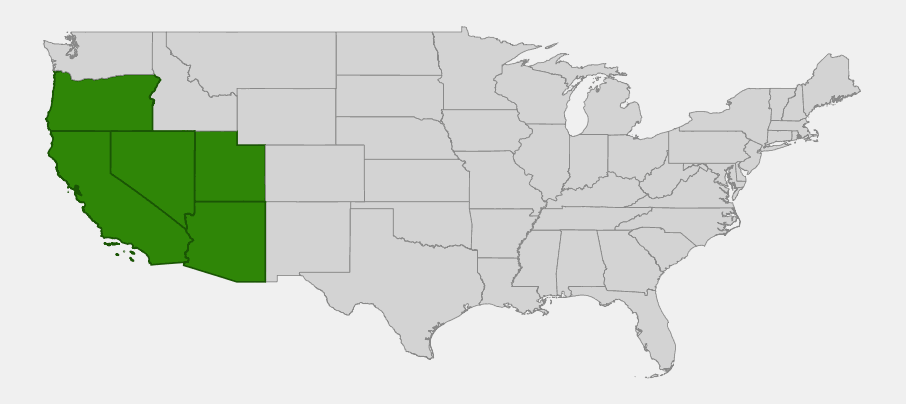
Native to the sandy deserts of California, Nevada, Arizona, Oregon, and Utah, dune evening primrose is an excellent choice for a sandy, low-water desert garden, where it rewards minimal care with months of striking evening flowers and an architecturally interesting dried form once its bloom season ends.
Identification
Dune evening primrose begins as a flat basal rosette and develops, in its flowering season, into a rounded, many-branched plant 1 to 3 feet tall and often equally wide, with stiff, wiry stems that radiate outward from the base. As the plant dries and dies after flowering, the stems curl inward, creating the rounded, cage-like skeleton that gives the species its “birdcage” common name.
Leaves
The leaves are gray-green and covered in fine hairs, forming a basal rosette of lance-shaped to irregularly lobed leaves 2 to 6 inches long. Leaves along the flowering stems are smaller and more sparse, with most of the foliage concentrated near the base of the plant.
Flowers
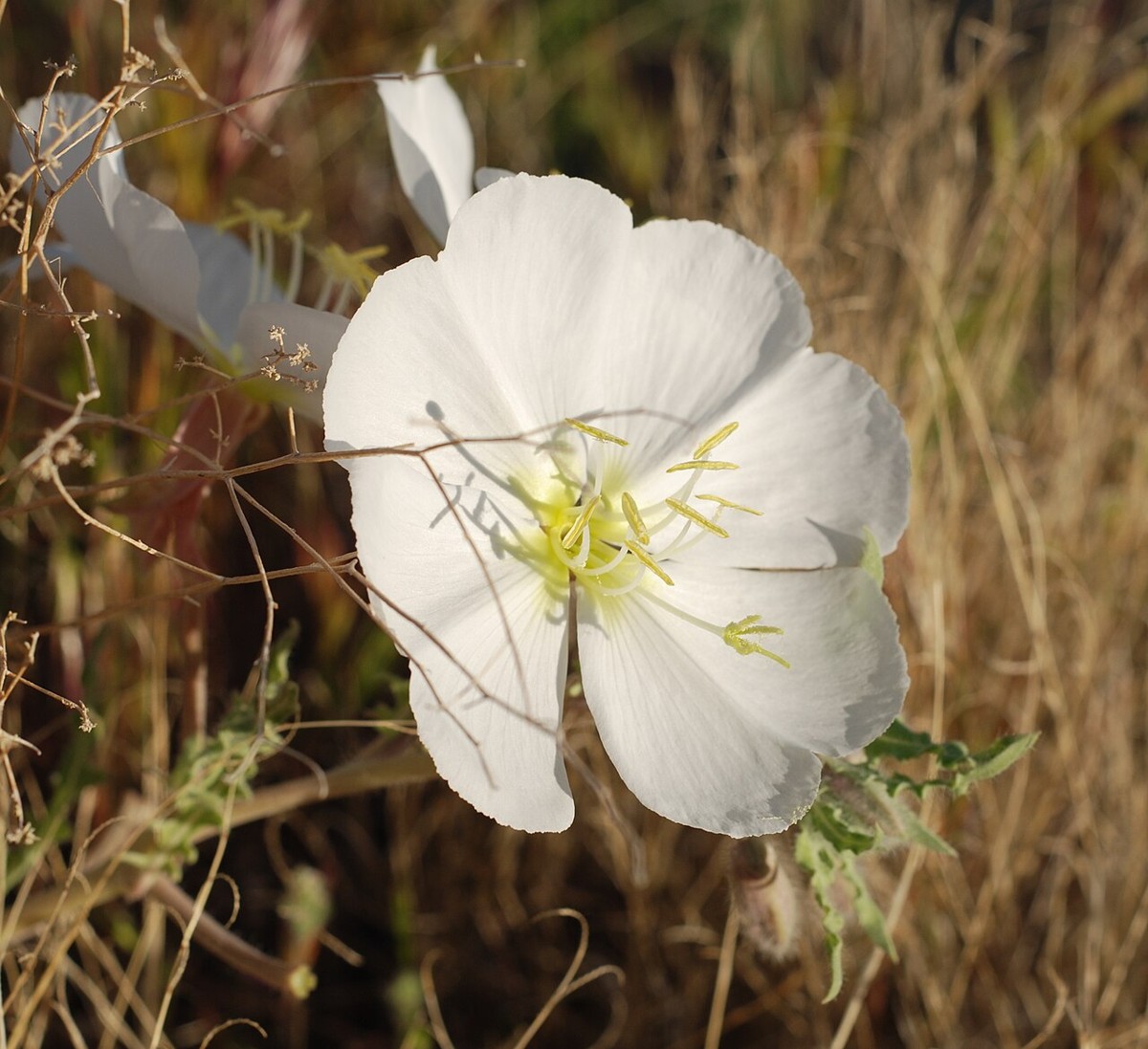
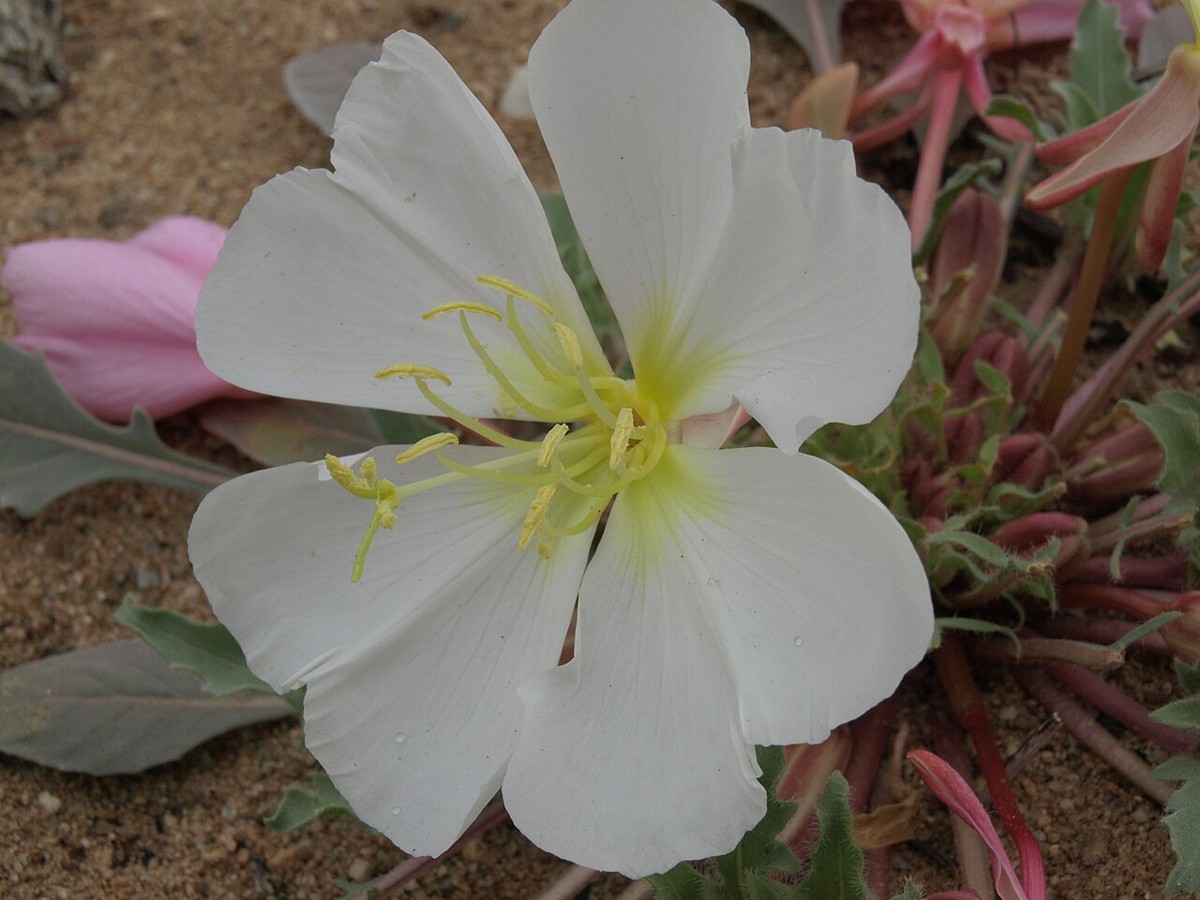
The flowers are the plant’s most spectacular feature: large, up to 2 to 3 inches across, with four broad, overlapping, crinkled white petals that resemble crepe paper and a central cluster of yellow stamens and a cross-shaped stigma. Flowers open in the evening and remain open through the night and into the next morning, gradually fading from white to pink as they wilt — so a single plant in full bloom often displays fresh white and aging pink flowers side by side. The flowers are lightly fragrant, an adaptation to attract their primary pollinator, the white-lined sphinx moth. Bloom season runs from February through May, varying with elevation and winter rainfall.
Fruit & Seeds
After flowering, each bloom develops into a slender, woody, four-angled seed capsule roughly 1 to 2 inches long. As the plant dries at the end of its life cycle, these capsules and the curled stems that bear them form the distinctive “birdcage” skeleton, which can detach and tumble in the wind, scattering seed as it goes.
Quick Facts
| Scientific Name | Oenothera deltoides |
| Family | Onagraceae (Evening Primrose) |
| Plant Type | Biennial / Short-lived Perennial Wildflower |
| Mature Height | 1–3 ft (30–90 cm) |
| Mature Spread | 1–3 ft (30–90 cm) |
| Growth Rate | Moderate |
| Sun Exposure | Full Sun |
| Water Needs | Low |
| Soil Type | Sandy, loose, fast-draining |
| Soil pH | 6.5–8.0 (neutral to alkaline) |
| Bloom Time | February – May |
| Flower Color | White, aging to pink |
| Fall Color | None (dries to a tan skeleton) |
| Fruit | Slender woody seed capsules |
| Deer Resistant | Yes |
| USDA Hardiness Zones | 7–10 |
Native Range
Dune evening primrose is native to the sandy deserts of the American Southwest, found in California, Nevada, Arizona, Oregon, and Utah, with its range continuing south into northern Baja California and northwestern Mexico. It spans the Mojave, Sonoran, and Colorado deserts and extends north into the Great Basin Desert of southeastern Oregon.
As its common name suggests, this species is closely tied to sandy habitats: stabilized and active sand dunes, sandy desert flats, washes, and roadsides with loose, well-drained soil. It typically grows from near sea level up to around 5,000 feet in elevation, and some coastal and inland dune populations, including the federally endangered Antioch Dunes subspecies in California, are highly specialized to particular dune systems.
Dune evening primrose is well adapted to the extreme heat, intense sun, and shifting sandy substrates of its desert habitat, and its biennial to short-lived perennial life cycle allows it to take advantage of favorable rainfall years to produce abundant seed before the parent plant dies and its dried skeleton tumbles off to disperse that seed further afield.
📋 Regional plant lists featuring Dune Evening Primrose: California & Nevada · Arizona & New Mexico · Utah & Western Colorado · Idaho & Eastern Oregon/Washington
Growing & Care Guide
Dune evening primrose is an easy, low-care desert wildflower for gardeners within its native range who want months of dramatic evening blooms and don’t mind the plant’s natural end-of-season dieback into a dried, tumbling skeleton.
Light
Plant in full sun. This species is adapted to open, unshaded dunes and desert flats and needs strong sun exposure to flower well and develop its characteristic compact, rounded growth form.
Soil & Water
Give it loose, sandy, fast-draining soil that mimics its native dune and desert-flat habitat; heavy clay soils that hold moisture are poorly suited to this species and can cause root rot. Established plants need very little supplemental water and perform best with the natural boom-and-bust rainfall pattern of the desert Southwest, though occasional deep watering during the bloom season can extend flowering.
Planting Tips
Direct-sow seed or set out small container plants in fall, allowing the basal rosette to establish over winter ahead of spring flowering. Choose the sandiest, most open spot available — a dune garden, sandy slope, or gravel bed all work well. Because the species is biennial to short-lived, expect individual plants to complete their life cycle and die within one to a few years; a self-sustaining patch relies on ongoing self-seeding.
Pruning & Maintenance
No pruning is needed during the growing season. Once a plant finishes flowering and dries into its “birdcage” skeleton, you can leave it in place to let wind disperse the remaining seed naturally, or remove it for a tidier look — either is fine. Avoid overwatering, which shortens the plant’s lifespan and increases the risk of rot in its sandy native soil conditions.
Propagation
Propagate from seed, sown in fall to take advantage of cooler temperatures and natural winter moisture. No special pretreatment is typically required, though light scarification can improve germination rates for stored seed. Because the species is not reliably perennial, maintaining a planting over the years depends on consistent self-seeding or periodic reseeding.
Landscape Uses
Dune evening primrose suits several desert and dryland garden settings:
- Sand gardens and dune restoration plantings where its deep sand preference is a natural fit
- Evening gardens near patios or paths to enjoy the dusk-opening flowers
- Xeriscape and low-water gardens throughout its native desert range
- Pollinator gardens focused on sphinx moths and other night-flying insects
- Naturalistic desert plantings where the dried “birdcage” form is valued as winter interest
Wildlife & Ecological Value
Dune evening primrose is an important nectar source in the sparse desert plant community, particularly valuable for the specialized moths that depend on its evening and nighttime flowering schedule.
For Pollinators
The large, fragrant white flowers are specially adapted to attract the white-lined sphinx moth (Hyles lineata), a large, fast-flying hawkmoth that is the species’ primary pollinator, along with other night-flying moths. Native bees and other daytime pollinators may also visit in the cooler morning hours before the flowers fully close, giving the species a somewhat extended window of pollinator activity.
For Birds
Dune evening primrose is not a major direct food source for birds, though the seeds in its dry capsules are eaten in small quantities by some desert seed-eating birds, and the moths it attracts provide foraging opportunities for nightjars and other crepuscular or nocturnal insectivorous birds.
For Mammals
Various desert rodents forage on the seeds, contributing to seed dispersal across the sandy habitats where the species grows, and the white-tailed antelope ground squirrel is among the small mammals noted to use dune evening primrose habitat. The foliage is not heavily browsed by larger mammals, consistent with its general deer resistance in garden settings.
Ecosystem Role
As one of the few larger-flowered wildflowers adapted to loose, shifting sand, dune evening primrose plays a disproportionate ecological role in dune and sandy-flat plant communities, providing a reliable nectar source through a long bloom season and helping stabilize sand with its root system during its growing phase. Several of its rarer subspecies, including the federally endangered Antioch Dunes evening primrose of California, are focal points of dedicated dune-habitat conservation efforts.
Cultural & Historical Uses
Dune evening primrose does not carry an extensive documented history of traditional food or medicinal use by Indigenous peoples of the desert Southwest, consistent with many smaller-statured desert annuals and biennials; specific, well-documented traditional uses for this species are limited in the available literature. It has long drawn the attention of botanists and desert naturalists, however, for both the beauty of its evening-opening flowers and the striking, almost sculptural form of its dried “birdcage” skeleton.
The common names “birdcage evening primrose,” “basket evening primrose,” and “lion-in-a-cage” all reference the same distinctive trait: as the plant dries at the end of its life cycle, its curling stems form a rounded, cage-like tumbleweed that can roll across the desert floor, scattering seed as it travels — a dispersal strategy that has fascinated observers of desert ecology for generations.
In recent decades, dune evening primrose and its rarer subspecies have become important subjects of desert dune conservation, most notably the federally endangered Antioch Dunes evening primrose (Oenothera deltoides subsp. howellii), restricted to a small remnant dune system along the Sacramento River in California and the focus of long-running recovery efforts.
Frequently Asked Questions
Why is it called “birdcage” evening primrose?
After flowering, the dried stems of the plant curl inward to form a rounded, cage-like skeleton that can break free and tumble across the desert like a small tumbleweed, scattering seed as it goes. This distinctive dried form is the source of the “birdcage” and “lion-in-a-cage” common names.
Is this the same plant as the endangered Antioch Dunes evening primrose?
The federally endangered Antioch Dunes evening primrose is a subspecies of this species (Oenothera deltoides subsp. howellii), restricted to a small dune habitat in California. The species as a whole, including its more common subspecies, is widespread and not endangered, though all dune habitat for this species benefits from conservation-minded gardening and restoration.
Does dune evening primrose come back every year?
It is typically biennial to short-lived perennial rather than a long-lived perennial, meaning an individual plant usually flowers once or over a couple of seasons and then dies. A planting persists over time through self-seeding rather than individual plants living for many years.
Can I grow this plant in regular garden soil?
It performs best in loose, sandy, fast-draining soil that mimics its dune and desert-flat habitat. Heavy clay or regularly irrigated garden soil increases the risk of root rot and is not recommended for this species.
What pollinates dune evening primrose?
Its primary pollinator is the white-lined sphinx moth, a large hawkmoth active at dusk and after dark, drawn to the flower’s fragrance and pale color, which is easy to see in low light. Native bees may also visit in the early morning before the flowers close.

Looking for a nursery that carries Dune Evening Primrose?
Browse our native plant nursery directory: California · Nevada · Arizona · Oregon · Utah