Leatherstem (Jatropha dioica)
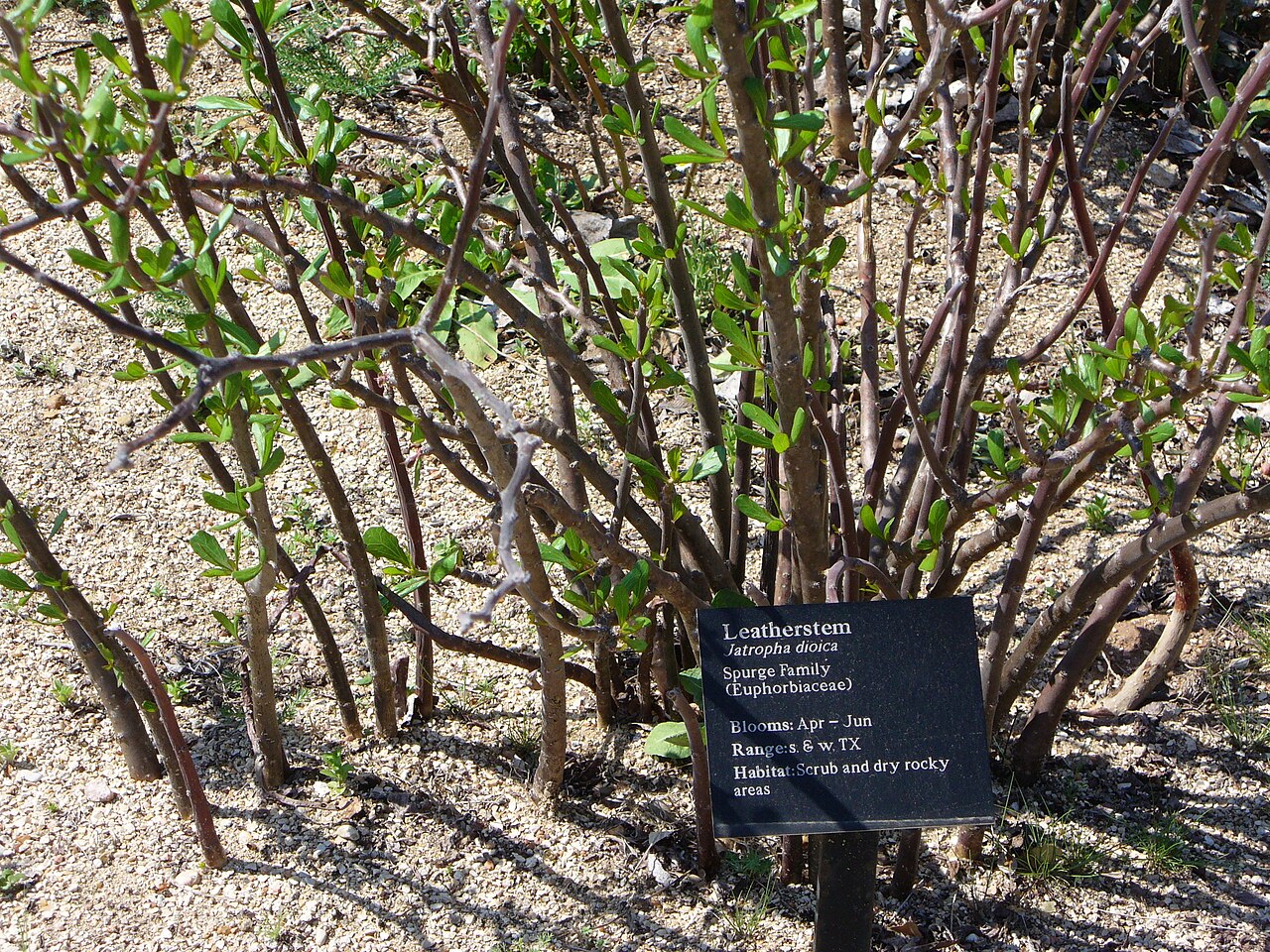
Jatropha dioica, commonly known as Leatherstem or by its evocative Spanish name sangre de drago (“dragon’s blood”), is a low, distinctive perennial shrub native to the dry rocky scrub of south and west Texas. A member of the Euphorbiaceae (spurge family), it earns its common names from two striking traits: stems so tough and pliable they can be bent without snapping, and a clear sap that oxidizes to a deep blood-red color on contact with air.
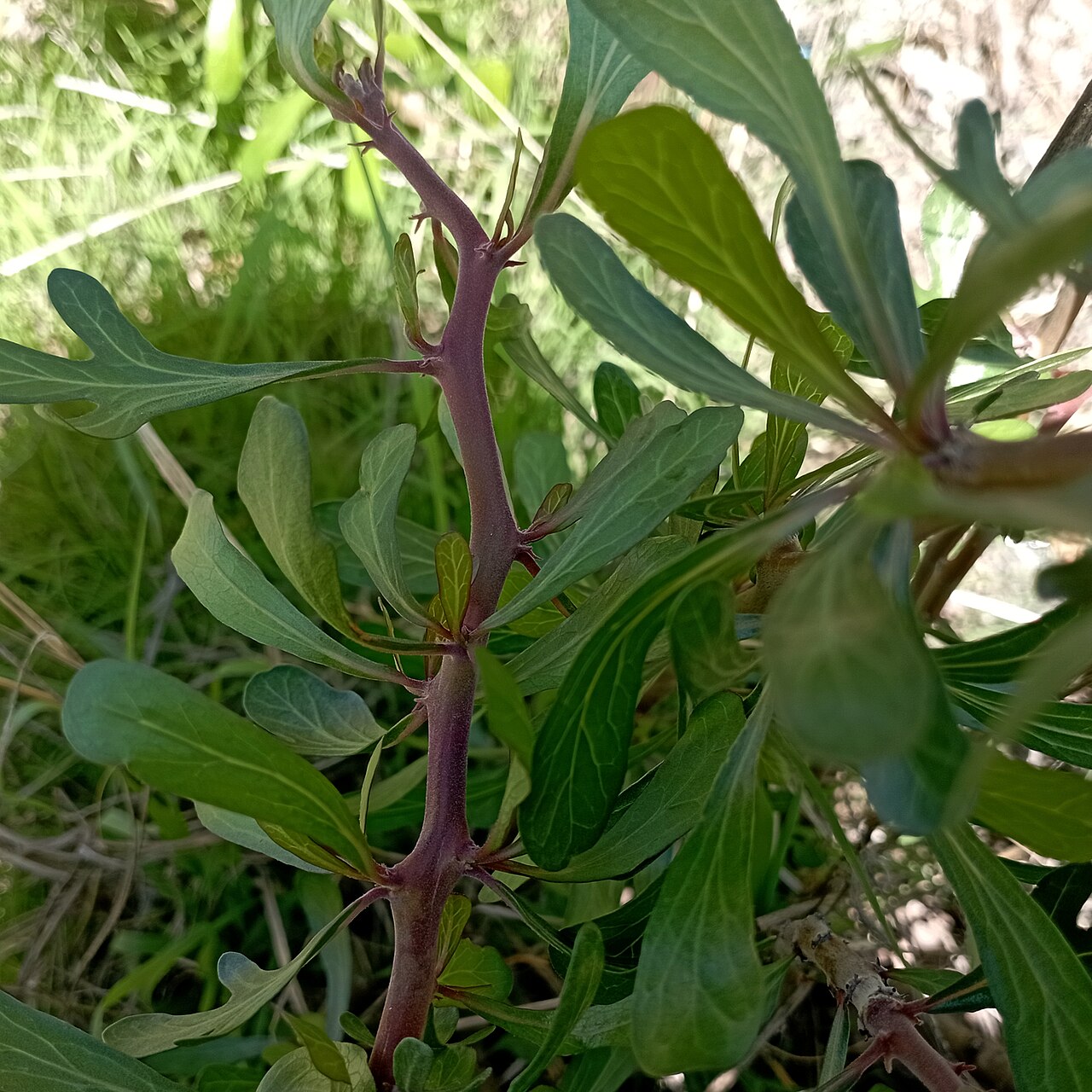
Leatherstem grows as a dense clump of slender, upright, unbranched or sparingly branched stems rising from a woody base, with small lobed leaves scattered along the upper portions of the stems. The stems themselves — smooth, leathery, and reddish-brown — are the plant’s most memorable feature and remain visually interesting even through the long dry periods when the plant drops its leaves and goes semi-dormant, giving it a sculptural, almost architectural presence in the landscape.
Well adapted to the thin, rocky, often limestone soils of the Rio Grande Plains, Trans-Pecos, and western Edwards Plateau, Leatherstem is a low-water, low-maintenance native for rock gardens, cactus and succulent plantings, and xeriscapes throughout its native Texas range. Its unusual form and extreme drought tolerance make it a conversation-starting addition to any dry native garden.
Identification
Leatherstem is a low, clumping perennial shrub typically reaching 1 to 3 feet tall, with numerous slender, upright stems arising from a woody crown or caudex. The overall form is loose and somewhat sparse, with stems that are smooth-skinned, leathery in texture, and reddish-brown to gray-brown in color.
Stems
The stems are the plant’s signature feature: tough, flexible, and leathery, they can be bent without breaking, a trait reflected directly in the common name “Leatherstem.” When cut or broken, the stems exude a clear, watery, astringent sap that oxidizes on contact with air, turning a deep blood-red color within minutes — the source of the Spanish name sangre de drago. Stems often persist bare through dry seasons, giving the plant a distinctive leafless, twiggy winter silhouette.
Leaves
Leaves are alternate, deeply lobed to nearly maple-like in outline, with a grayish-green to blue-green color and a somewhat fleshy, leathery texture. They are clustered mainly near the stem tips and are drought-deciduous, dropping during extended dry spells and regrowing with rainfall, which gives the plant a variable, season-dependent appearance.
Flowers & Fruit
Leatherstem is dioecious, meaning individual plants bear either male or female flowers, not both. Small, white, five-petaled flowers appear clustered along the upper stems from April through June, modest in size but noticeable against the bare stems. Female plants produce small three-lobed capsules that split open to release seeds.
Quick Facts
| Scientific Name | Jatropha dioica |
| Family | Euphorbiaceae (Spurge) |
| Plant Type | Perennial Shrub (drought-deciduous) |
| Mature Height | 1–3 ft |
| Mature Spread | 1–2 ft, clumping |
| Growth Rate | Slow |
| Sun Exposure | Full Sun to Part Shade |
| Water Needs | Very Low |
| Soil Type | Rocky, well-drained; caliche or limestone soils |
| Soil pH | 7.0–8.5 (neutral to alkaline) |
| Bloom Time | April – June |
| Flower Color | White |
| Fall Color | None (drought-deciduous, drops leaves in dry periods) |
| Fruit | Small three-lobed capsule on female plants |
| Deer Resistant | Yes, highly |
| USDA Hardiness Zones | 8–11 |
Native Range
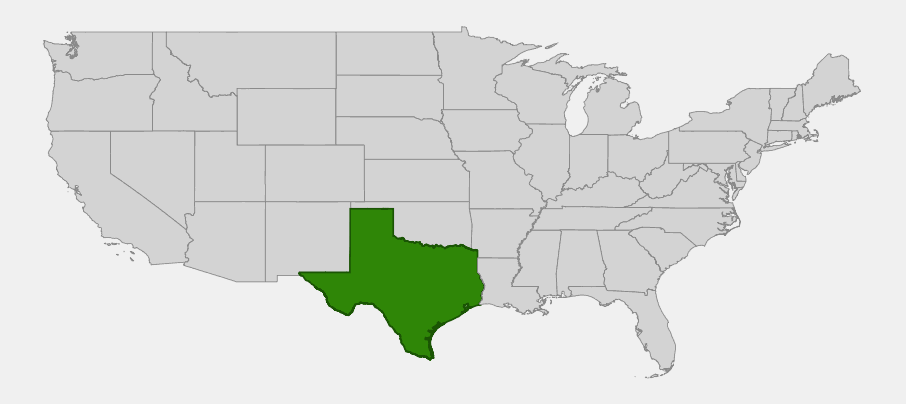
Leatherstem is native to south and west Texas, where it is frequent in the dry, rocky areas of the western Edwards Plateau, the Rio Grande Plains, and the Trans-Pecos, with its range continuing south into Mexico. Within Texas, county-level native records concentrate in this southern and western band of the state.
It typically grows in open scrub, caliche flats, and rocky desert grassland, often alongside other low, drought-adapted shrubs and succulents. The species tolerates intense heat, prolonged drought, and thin, mineral-poor soils, reflecting its origin in one of the driest and rockiest parts of the state.
Leatherstem is not documented as native outside of south and west Texas within the United States; gardeners elsewhere in Texas with heavier, moister soils should expect to provide extra drainage to replicate its preferred growing conditions.
📋 Regional plant lists featuring Leatherstem: South and West Texas
Growing & Care Guide
Leatherstem is about as low-maintenance as native shrubs get, provided it has the sharp drainage and heat it is adapted to. It is a natural fit for rock gardens and cactus and succulent beds rather than conventional garden borders.
Light
Plant in full sun to part shade. In the wild it grows in open, sun-exposed scrub, though it also persists in the light shade at the edge of taller shrubs. More sun generally produces a more compact, floriferous plant.
Soil & Water
Leatherstem demands excellent drainage and thrives in rocky, caliche, or limestone-derived soils with very low fertility. It is extremely drought tolerant once established and needs little to no supplemental water beyond its first growing season — in fact, overly rich or consistently moist soil is far more likely to kill this plant than neglect. During extended drought it will simply drop its leaves and wait out the dry spell, releafing with rain.
Planting Tips
Plant in spring once the soil has warmed, siting it in a rock garden, gravel bed, or cactus and succulent planting with sharp drainage. Because it is dioecious, both male and female plants are needed nearby if seed production is desired, though most gardeners grow it simply for its sculptural stem form rather than for fruit. Handle cut stems with care, since the sap can stain skin and clothing as it oxidizes to red.
Pruning & Maintenance
Leatherstem needs essentially no pruning. Old or winter-damaged stems can be removed at the base if desired, but the plant’s irregular, twiggy form is part of its appeal and heavy shaping is unnecessary. It requires no fertilization and is largely untroubled by pests or disease.
Landscape Uses
Leatherstem’s unusual form and toughness suit several dry-garden roles:
- Rock and gravel gardens where its sculptural stems stand out
- Cactus and succulent plantings as a companion shrub
- Xeriscapes needing essentially no irrigation once established
- Deer-resistant borders in south and west Texas landscapes
- Winter-interest plantings, thanks to its leafless, reddish-stemmed dormant form
Wildlife & Ecological Value
Leatherstem plays a modest but steady role in the dry scrub ecosystems of south and west Texas, valued most for what it does not attract — browsing deer — as much as for what it supports.
For Wildlife
Leatherstem is highly deer resistant, likely owing to its astringent, irritating sap, which makes it a reliable choice in areas with heavy deer browsing pressure where many other natives struggle to establish. The small white spring flowers offer nectar to native bees and other small pollinating insects during bloom season.
Ecosystem Role
As a low, clumping perennial adapted to the thinnest, rockiest soils of the Rio Grande Plains and Trans-Pecos, Leatherstem adds structural diversity to scrub communities dominated by thorny acacias and other drought-adapted shrubs, and its drought-deciduous habit allows it to persist through conditions that would stress less specialized plants.
Cultural & Historical Uses
Leatherstem’s Spanish name, sangre de drago (“dragon’s blood”), refers directly to its clear sap turning blood-red on exposure to air — a trait shared by several unrelated plants around the world that carry the same evocative folk name. In regional folk tradition along both sides of the Texas-Mexico border, the reddening sap and the roots of Jatropha dioica have long been associated with topical folk remedies, though these are historical and ethnobotanical uses, not medical recommendations, and the plant’s safety for such use has not been established by modern research.
The tough, flexible stems have occasionally been noted in regional accounts for small practical or craft uses, consistent with the “Leatherstem” common name describing their unusual durability. Today the plant’s primary significance is horticultural: its sculptural form, extreme drought tolerance, and strong deer resistance have made it an increasingly popular specimen for rock gardens and xeriscapes in its native south and west Texas range.
Frequently Asked Questions
Why does Leatherstem sap turn red?
The sap is clear when the stem is first cut or broken, but it oxidizes on contact with air and turns a deep blood-red within minutes — the source of both the plant’s Spanish name, sangre de drago (“dragon’s blood”), and its striking garden presence.
Is Leatherstem sap or any part of the plant safe to touch or eat?
No part of this plant should be eaten, and the sap can be irritating or staining to skin, so it is best handled with care or gloves when pruning. It has a history of folk use along the Texas-Mexico border, but that is historical ethnobotany, not a safety endorsement.
Is Leatherstem deer resistant?
Yes, highly. Its astringent sap appears to discourage browsing, making it a reliable choice for Texas gardens with significant deer pressure, where many other native shrubs are quickly eaten back.
Why does my Leatherstem lose its leaves?
Leatherstem is drought-deciduous, meaning it naturally drops its leaves during extended dry periods to conserve water, leaving behind its distinctive bare, leathery, reddish-brown stems. This is normal behavior, not a sign of a dying plant, and new leaves return with rainfall.
How much water does Leatherstem need?
Very little. It is adapted to some of the driest, rockiest soils in Texas and needs only occasional watering to establish; after that, natural rainfall in its native range is typically sufficient, and overwatering is a far greater risk than drought.

Looking for a nursery that carries Leatherstem?
Browse our native plant nursery directory: Texas