Silktassel (Garrya ovata)
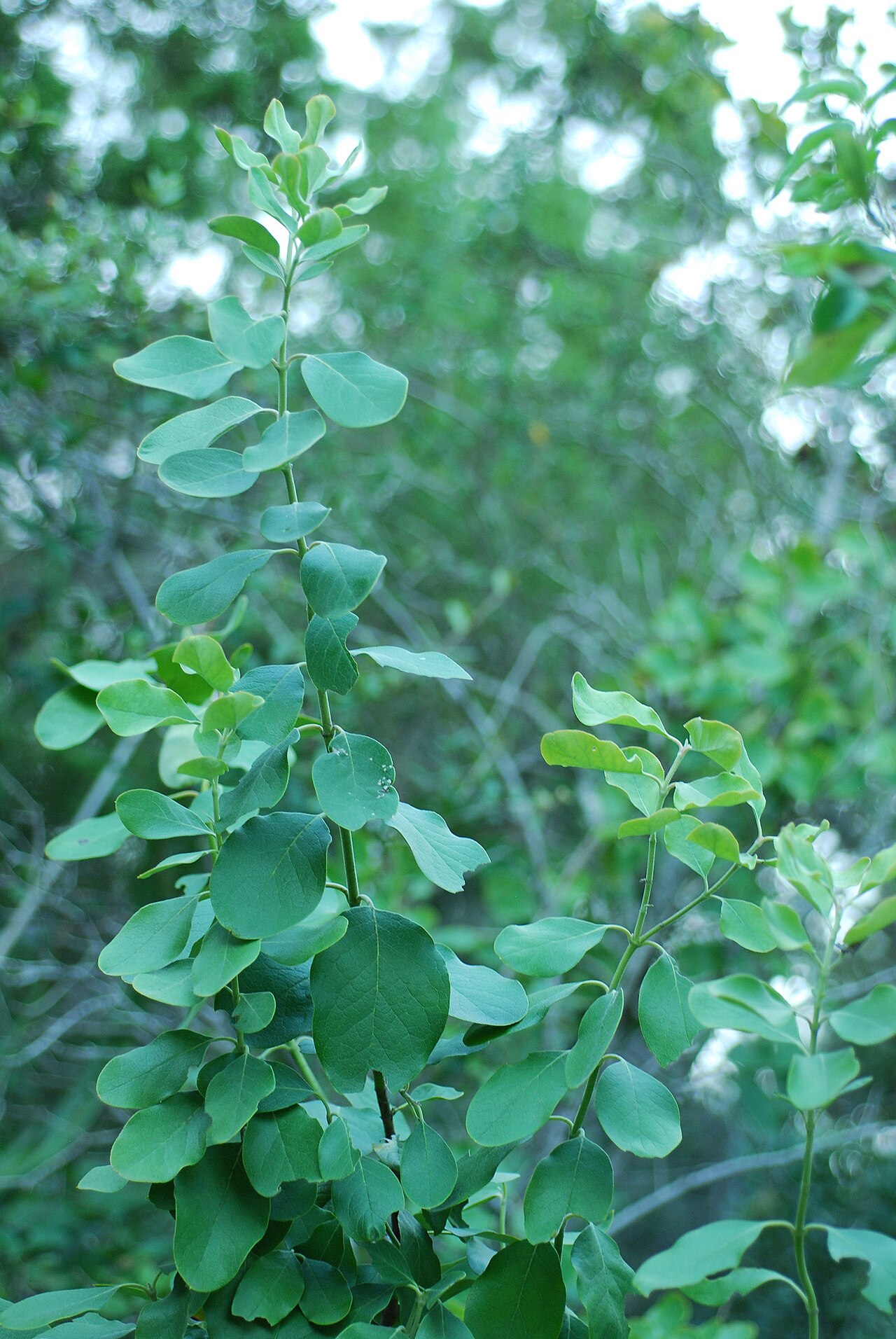
Garrya ovata, commonly called Silktassel or Eggleaf Silktassel, is an evergreen shrub of the limestone hills and canyons of central and west Texas and southeastern New Mexico. It belongs to the small Garryaceae (silktassel) family, a group of mostly western North American evergreen shrubs known for their distinctive catkin-like flower clusters. The plants growing in Texas and New Mexico are usually treated as Garrya ovata subsp. lindheimeri — Lindheimer’s Silktassel — named for the German-born “father of Texas botany,” Ferdinand Lindheimer.
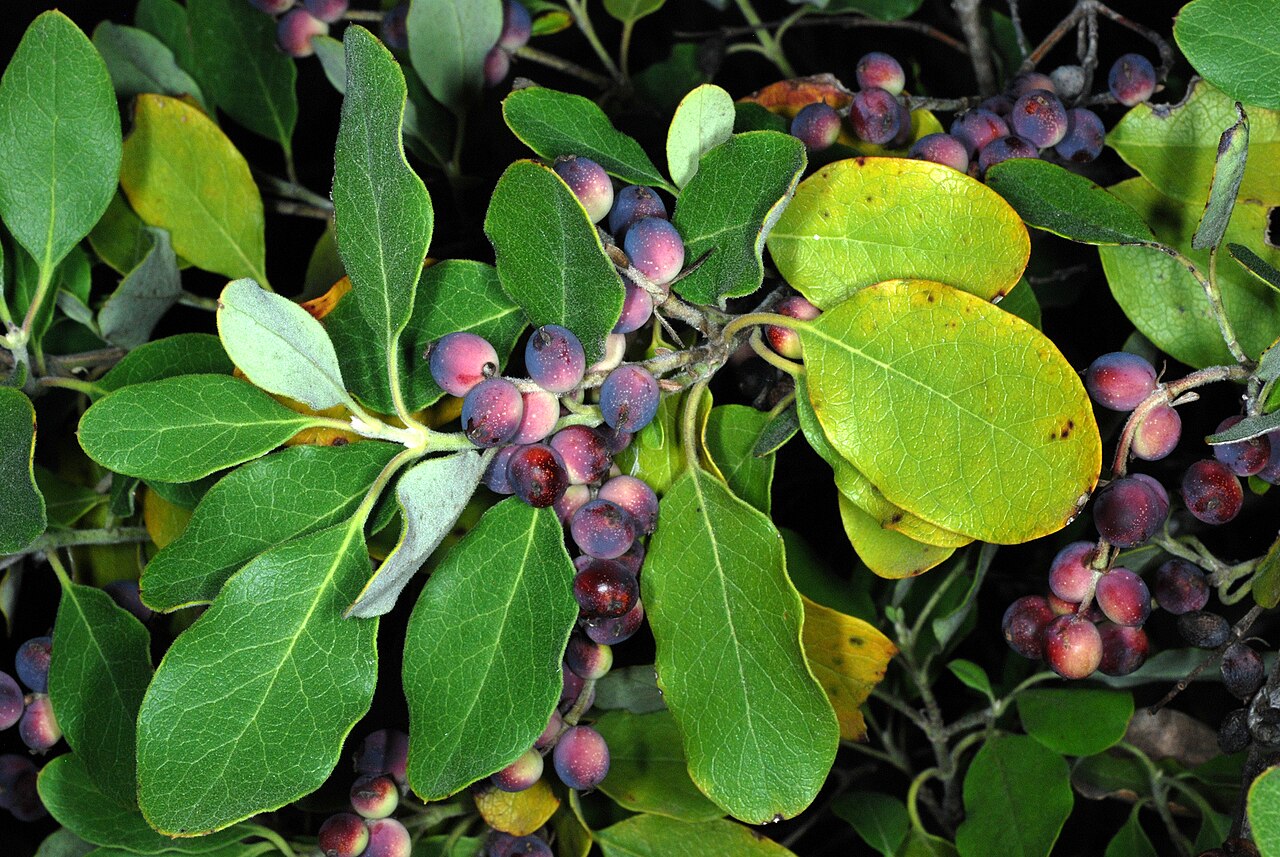
Silktassel is a dense, upright shrub with handsome, leathery, blue-green leaves arranged in opposite pairs along reddish young stems, giving established plants year-round structure even in the driest months. Like other silktassels, it is dioecious — male and female flowers are borne on separate plants — with male plants producing the more ornamental, elongated catkin-like flower clusters that give the genus its common name, while female plants develop small clusters of round, purple-black berries by late summer and fall.
Adapted to thin, rocky, often limestone soils with intense sun and long dry spells, Silktassel is an excellent evergreen backbone plant for xeriscaping, wildlife gardens, and naturalistic plantings throughout its native range in the Texas Hill Country, the Trans-Pecos, and adjacent New Mexico. Its drought tolerance, evergreen foliage, and wildlife value make it a strong, underused choice compared with more commonly planted non-native evergreen shrubs.
Identification
Silktassel is an evergreen shrub typically reaching 6 to 10 feet tall, occasionally taller to about 15 feet in favorable sites, with a dense, upright, multi-stemmed form. Young stems are reddish and slightly angled, maturing to gray-brown bark.
Leaves
Leaves are opposite, leathery, and evergreen, broadly oval to rounded (“eggleaf,” as the common name suggests), typically 1 to 2½ inches long with smooth to slightly wavy margins. The upper surface is a dull blue-green, while the underside is paler and finely hairy, with a dense network of fine veins visible up close. The leathery texture and persistent foliage are key identification features distinguishing it from deciduous shrubs in the same limestone habitat.
Flowers
Silktassel is dioecious, with male and female flowers on separate plants. Flowers are small, greenish, and petal-less, borne in narrow, pendant, catkin-like clusters at branch tips from March into May. Male catkins are generally longer and showier than the more compact female flower clusters, and a male plant in full bloom can be quite ornamental even though the individual flowers are tiny.
Fruit
Female plants produce small, round berries, roughly ¼ to ⅜ inch across, that ripen from green to purple-black by late summer into fall and often persist into winter. The berries form in tight clusters along the stems, held close against the paired leaves, and are an important late-season food source for wildlife.
Quick Facts
| Scientific Name | Garrya ovata (TX/NM plants usually subsp. lindheimeri) |
| Family | Garryaceae (Silktassel) |
| Plant Type | Evergreen Shrub |
| Mature Height | 6–10 ft, occasionally to 15 ft |
| Mature Spread | 4–8 ft |
| Growth Rate | Slow to Moderate |
| Sun Exposure | Full Sun to Part Shade |
| Water Needs | Low |
| Soil Type | Rocky, well-drained; limestone-derived preferred |
| Soil pH | 7.0–8.5 (neutral to alkaline) |
| Bloom Time | March – May |
| Flower Color | Green (inconspicuous petals; catkin-like clusters) |
| Fall Color | Evergreen (no fall color change) |
| Fruit | Purple-black berries on female plants, late summer–fall |
| Deer Resistant | Yes, generally |
| USDA Hardiness Zones | 7–9 |
Native Range
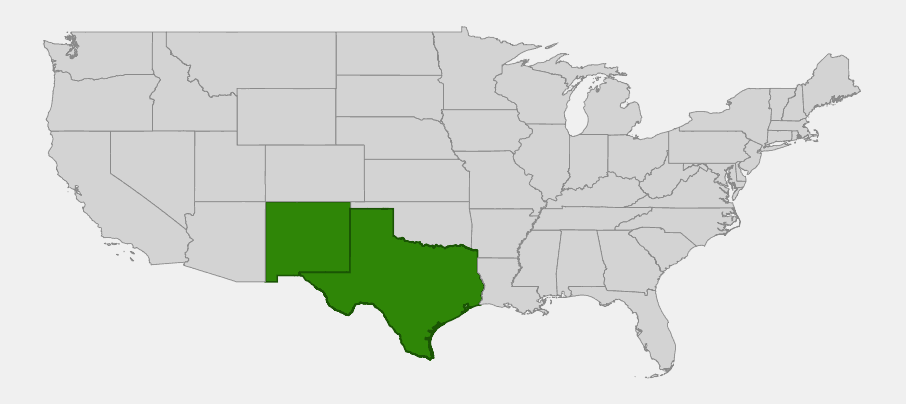
Silktassel is native to central and west Texas and southeastern New Mexico, with its range continuing south through Mexico. Within Texas, county-level native records concentrate in the Edwards Plateau and Trans-Pecos regions, extending from the central Hill Country west toward the Rio Grande; in New Mexico, native populations are limited to the far southeastern corner of the state near the Texas border.
Across this range, Silktassel grows on dry, rocky limestone and igneous hillsides, canyon slopes, and brushland, typically in full sun to light shade among oaks, junipers, and other Hill Country and Trans-Pecos shrub associates. It tolerates thin, alkaline soils with little organic matter and persists through long dry periods once established, reflecting its adaptation to the harsh, exposed sites it typically occupies.
Silktassel should not be confused with the related Coast Silktassel (Garrya elliptica) or Ashy Silktassel (Garrya flavescens), both native to California, Oregon, and the desert Southwest farther west — distinct species adapted to different climates and soils than this Texas and New Mexico native.
📋 Regional plant lists featuring Silktassel: South and West Texas · Arizona & New Mexico
Growing & Care Guide
Silktassel is a tough, low-water evergreen shrub well suited to dry gardens throughout its native Texas and New Mexico range, offering year-round structure that few other drought-tolerant natives provide.
Light
Give it full sun to part shade. In the wild it often grows in open, sunny limestone habitat, but it also tolerates the dappled light found at the edge of oak and juniper cover. More sun generally produces a denser, more compact plant.
Soil & Water
Silktassel prefers rocky, well-drained, alkaline soil and is highly drought tolerant once established, needing little to no supplemental irrigation beyond its first year or two in the ground. It is not particular about soil fertility and actually performs best in lean, mineral soils rather than rich garden beds, which can encourage excessive, weak growth.
Planting Tips
Plant in fall or early spring to allow roots to establish before summer heat arrives. Because the species is dioecious, gardeners hoping for the ornamental berry display will need both a male and a female plant nearby, since only female plants fruit and only when pollinated by a male. Space plants 5 to 8 feet apart for a natural screen, or site individually as a specimen evergreen.
Pruning & Maintenance
Little pruning is required. Remove dead or damaged branches as needed, and lightly shape after the main spring bloom period if a tidier form is desired. Silktassel tolerates occasional hard pruning and resprouts well, making it useful as a trainable evergreen hedge in addition to an informal specimen shrub.
Landscape Uses
Silktassel’s evergreen structure and drought tolerance make it valuable in several garden settings:
- Evergreen screens and informal hedges on dry, rocky sites
- Xeriscape and low-water gardens throughout its native range
- Wildlife gardens — berries and dense cover support birds and small mammals
- Naturalistic Hill Country or Trans-Pecos plantings alongside Ashe Juniper and Texas oaks
- Specimen evergreen for year-round structure in a native plant border
Wildlife & Ecological Value
Silktassel contributes year-round structure and seasonal food to the wildlife community of the Texas Hill Country and Trans-Pecos, filling a niche among the relatively few broadleaf evergreen shrubs native to that dry limestone landscape.
For Birds
The purple-black berries, ripening from late summer into fall and often persisting into winter, provide a valuable food source for a range of resident and migratory birds at a time of year when many other fruiting plants in the region have already finished. The dense evergreen foliage also offers year-round nesting cover and shelter unmatched by the deciduous shrubs it typically grows alongside.
For Pollinators & Other Wildlife
The small spring flowers, though inconspicuous individually, are visited by a variety of small native bees and other insects, particularly on male plants where the longer catkin clusters offer more floral surface area. Small mammals also make use of the dense branching structure for cover.
Ecosystem Role
As one of the few broadleaf evergreens on the limestone hills and canyons of its range, Silktassel adds structural and seasonal diversity to plant communities otherwise dominated by junipers, oaks, and deciduous shrubs. Its year-round foliage and fall-ripening fruit help smooth out gaps in food and cover availability across the seasons for the wildlife that depends on this dry limestone habitat.
Cultural & Historical Uses
The Texas and New Mexico form of Silktassel carries the name of Ferdinand Lindheimer, the German immigrant botanist often called the “father of Texas botany,” who collected extensively around New Braunfels and the Texas Hill Country in the 1840s and sent specimens to botanists in the eastern United States and Europe. Many Texas plants, including this one, bear his name as a result of that pioneering botanical work.
Spanish common names recorded for the species in Texas and Mexico — including zumaque, cuauchichic, and guachichi — point to a longer history of regional recognition among Spanish-speaking communities, though detailed traditional uses are not well documented in available records.
Silktassel has not historically been an important economic or medicinal plant; related species in the genus Garrya are known to contain bitter alkaloids, and no part of this plant should be assumed safe to eat. Its primary modern value is horticultural and ecological — as a durable, drought-tolerant native evergreen for gardens in its home range.
Frequently Asked Questions
Do I need more than one Silktassel plant to get berries?
Yes. Silktassel is dioecious, meaning individual plants are either male or female. Only female plants produce the ornamental purple-black berries, and they need a nearby male plant for pollination. If you want berries, plan to grow at least one of each.
Is Silktassel the same as the Coast Silktassel sold on the West Coast?
No. Coast Silktassel (Garrya elliptica) is a related but distinct species native to California and Oregon, with different climate and soil preferences. The Silktassel native to Texas and New Mexico is Garrya ovata, usually the subspecies lindheimeri.
How drought tolerant is Silktassel?
Very. It is native to thin, rocky limestone soils in one of the driest parts of Texas and New Mexico, and once established it needs little to no supplemental water. Overwatering or poorly drained soil is more likely to cause problems than drought.
Are Silktassel berries edible?
No part of this plant should be eaten. Species in the genus Garrya are known to contain bitter alkaloids, and the berries are intended for wildlife, not people.
Where does Silktassel grow natively?
It is native to the Edwards Plateau and Trans-Pecos regions of central and west Texas, and to a small area of extreme southeastern New Mexico, with its range continuing south into Mexico.

Looking for a nursery that carries Silktassel?
Browse our native plant nursery directory: Texas · New Mexico