Wand Butterflybush (Buddleja racemosa)
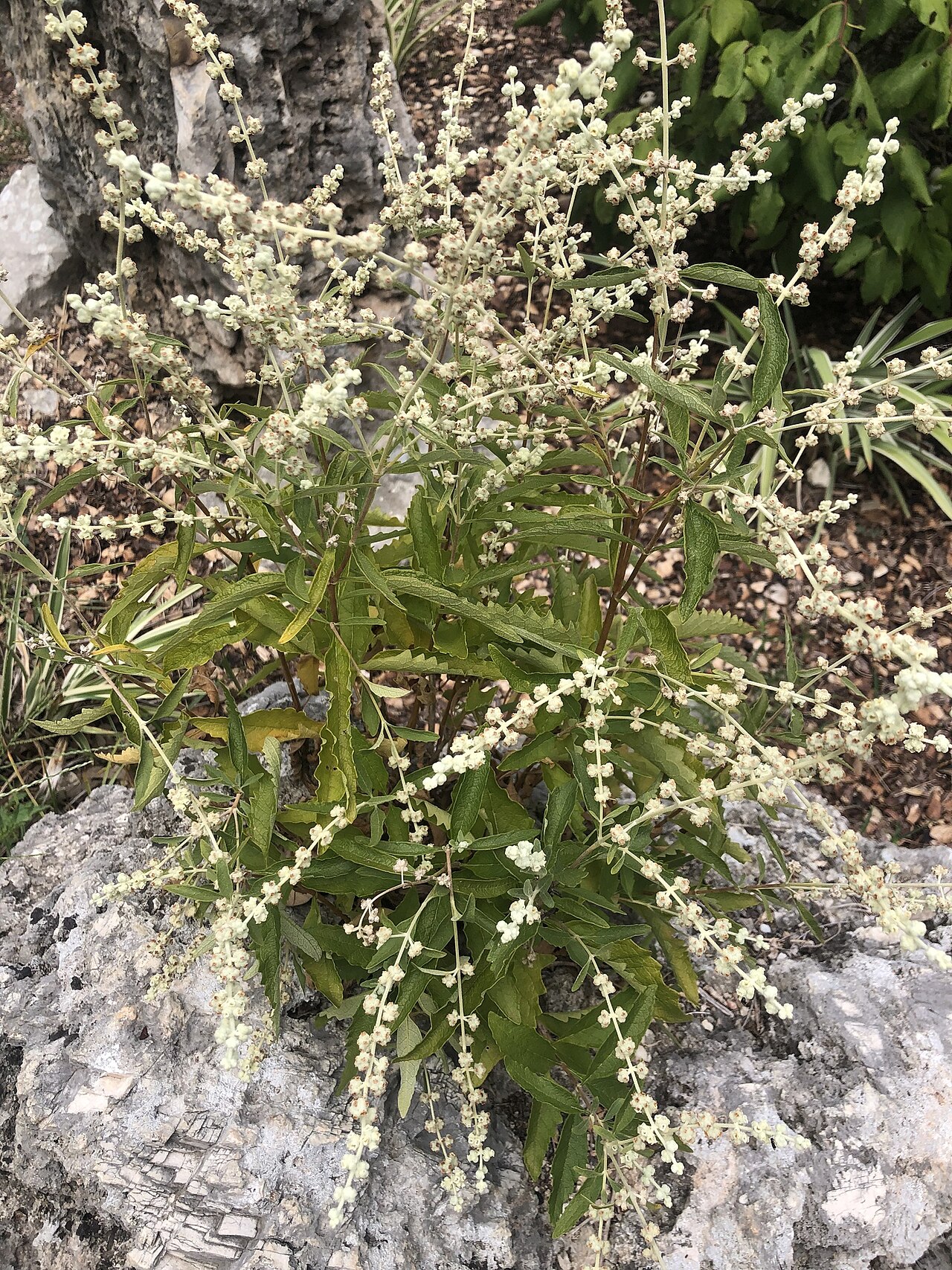
Buddleja racemosa, commonly called Wand Butterflybush or Wand Butterfly-bush, is a small, scrappy shrub found almost nowhere outside the limestone canyons and hill country of central and south-central Texas. It belongs to the Buddlejaceae (sometimes folded into Scrophulariaceae), the same family as the familiar garden butterfly bushes, but this Texas native is a far more modest plant: low, often sprawling, and built for a life wedged into cracks in bare rock rather than standing as a tidy foundation shrub.
The plant takes its common name from its flowering habit — slender, wand-like shoots rise above the foliage and arch outward, each one strung with tight little clusters of tiny whitish-green flowers from early summer into August. Up close the flowers are unremarkable, but a mature plant in full bloom reading as a soft haze of cream-colored wands is a distinctive sight on a bare limestone bluff where almost nothing else is flowering. The gray-green, deeply toothed leaves add textural interest even when the plant is not in bloom.
Wand Butterflybush rarely tops 20 inches in height, though its pendent stems can trail 4 to 5 feet down a rock face, giving it a cascading habit that is hard to duplicate with any other Texas native. Because it is adapted to thin, rocky, alkaline soils and almost no supplemental water, it is a natural choice for xeriscaping, limestone rock gardens, and dry retaining walls anywhere in its native Edwards Plateau range — but it is a specialist, and gardeners outside that limestone belt should not expect it to thrive in ordinary garden loam.
Identification
Wand Butterflybush is a low, often straggly shrub rarely reaching more than 20 inches in overall height, though individual stems can stretch 4 to 5 feet as they drape over a rock ledge. The woody stems are slender and gray, streaked with light brown, and the whole plant has a loose, open, almost vine-like architecture rather than the dense rounded form typical of garden shrubs.
Stems
Young growth and flowering shoots are covered in fine gray or tawny hairs, giving new stems a soft, felted look. Older stems turn woody and gray with light brown streaking. The plant’s habit is distinctly lax: rather than growing upright and self-supporting, it tends to lean, sprawl, or hang from the rock crevices and ledges where it typically germinates.
Leaves
Leaves are highly variable in size and shape even on the same plant — from small, ¾-inch blades with a simple wavy margin and tapered base, to much larger leaves up to 4½ inches long that are shaped almost like an arrowhead, with deeply scalloped to coarsely toothed edges. The upper leaf surface is green; the underside is a paler, grayish green and covered with tiny crystalline glands and fine hairs that are only clearly visible with a hand lens. This gray cast to the foliage is a useful field mark against the darker limestone and scrub oak around it.
Flowers & Fruit
The flowers are minute, packed into tight clusters along shoots that extend well above the foliage, with the flower clusters and the shoots that bear them covered in the same gray or tawny hairs found on young stems. Individual flowers are whitish to greenish-white and easy to overlook, but the wand-like flowering shoots as a whole are conspicuous, especially en masse on an established plant. Bloom runs from June through August. The fruit is a small dry capsule that splits open to release numerous tiny seeds.
Quick Facts
| Scientific Name | Buddleja racemosa |
| Family | Buddlejaceae (Butterfly-Bush) |
| Plant Type | Perennial Shrub |
| Mature Height | 1–2 ft (pendent stems to 5 ft) |
| Mature Spread | 2–4 ft, trailing |
| Growth Rate | Slow |
| Sun Exposure | Full Sun to Part Shade |
| Water Needs | Low |
| Soil Type | Thin, rocky, limestone-derived; shallow or crevice soils |
| Soil pH | 7.0–8.5 (neutral to alkaline) |
| Bloom Time | June – August |
| Flower Color | White to greenish-white |
| Fall Color | None notable (gray-green foliage year-round) |
| Fruit | Small dry capsule |
| Deer Resistant | Yes, generally |
| USDA Hardiness Zones | 8–9 |
Native Range
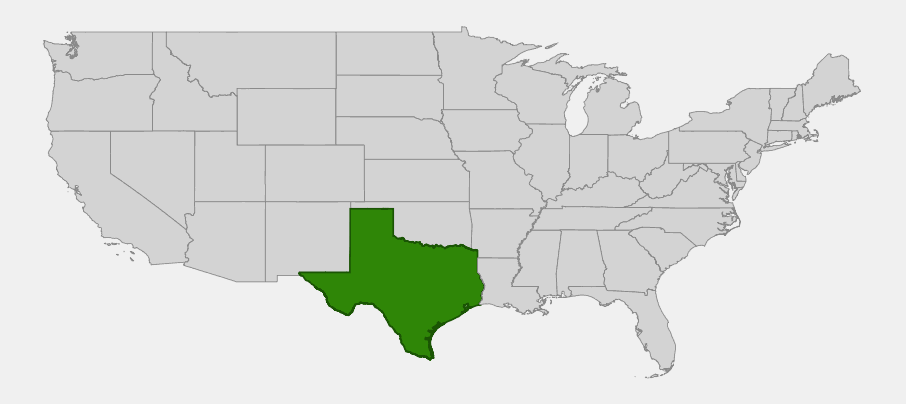
Wand Butterflybush is a Texas endemic, found only in the Edwards Plateau and adjacent Hill Country of central and south-central Texas. It is strongly tied to exposed limestone: county-level records cluster around the Balcones Escarpment and the rugged limestone canyons running from the Austin and San Antonio area west toward the Rio Grande, where the Edwards limestone comes to the surface in cliffs, bluffs, and steep wooded slopes.
Within that range it is a plant of specific microhabitats rather than a widespread understory species. It roots directly in crevices and pockets of thin soil on limestone cliffs, canyon walls, and steep rocky slopes, often in full exposure to the sun with essentially no soil reservoir to draw on between rains. This is a demanding niche that few other woody plants can occupy, which is part of why Wand Butterflybush is so tightly confined to the Hill Country’s limestone country rather than ranging more broadly across Texas.
Outside of this limestone belt, Wand Butterflybush is not documented as native, and it should not be expected to naturalize in the deep soils of the Texas Blackland Prairie, the sandy Pineywoods, or the Gulf Coastal Plain. Gardeners elsewhere in Texas who want the look of this plant are better served by siting it deliberately in a rock garden or raised limestone planting that mimics its natural crevice habitat.
📋 Regional plant lists featuring Wand Butterflybush: South and West Texas
Growing & Care Guide
Wand Butterflybush is not a plant for ordinary garden beds — it is a specialist for rock gardens, limestone walls, and dry, sunny slopes that mimic its native cliff habitat. Gardeners outside its native Hill Country range, or outside limestone soils generally, should not expect it to perform like a typical nursery shrub.
Light
Give it full sun to light part shade. In its native canyons it often grows in full baking exposure on south- or west-facing limestone, though it also persists in dappled shade at the base of oaks and junipers. More sun generally means a more compact, floriferous plant; too much shade produces leggy, sparse growth.
Soil & Water
This is a true limestone specialist. It wants thin, rocky, alkaline soil with excellent drainage — a crevice in a limestone boulder or a lean rock-garden mix is far closer to its natural conditions than regular garden topsoil. Once established, it needs very little supplemental water and is quite drought tolerant; overly rich or consistently moist soil tends to shorten its life and encourage root rot rather than encourage growth.
Planting Tips
Plant in fall or early spring into a raised limestone rock garden, dry-stacked wall, or crevice planting where roots can run into cracks and find cool, stable moisture below a hot, dry surface. Because of its trailing habit, it is well suited to the top of a retaining wall or the edge of a rock outcrop where the pendent stems can cascade downward. It is rarely available at mainstream nurseries; look for it through Texas native-plant specialty growers.
Pruning & Maintenance
Little pruning is needed. Trim back winter-damaged or overly leggy stems in late winter before new growth begins, and remove dead wood as it appears. Avoid heavy shearing, which destroys the loose, cascading form that is this plant’s main landscape appeal.
Landscape Uses
Wand Butterflybush fills a narrow but valuable niche in Texas gardens:
- Limestone rock gardens where few other flowering shrubs can establish
- Dry-stacked walls and raised crevice plantings, where the trailing stems cascade attractively
- Xeriscape and low-water gardens on alkaline, rocky soils
- Hill Country native plant collections focused on Edwards Plateau endemics
- Pollinator gardens during its long summer bloom season
Wildlife & Ecological Value
Though a modest-looking plant, Wand Butterflybush contributes real value to the specialized limestone-canyon wildlife community it shares with Ashe Juniper, Texas Live Oak, and the many other Edwards Plateau endemics.
For Pollinators
The small, nectar-rich flower clusters open over a long summer window from June through August, a period when many spring-blooming Hill Country wildflowers have already finished. This makes Wand Butterflybush a useful late-season nectar source for native bees and other small pollinating insects working the limestone canyons when flowering resources are otherwise thin.
For Birds & Other Wildlife
The dense, low, tangled growth habit provides cover for small birds and lizards moving through the exposed rock habitat where the plant grows, and the capsule fruits contribute small seeds to the local food web. Its role is best understood as one piece of the broader limestone-scrub plant community rather than as a dominant wildlife resource on its own.
Ecosystem Role
As a specialist rooted directly in bare limestone, Wand Butterflybush helps stabilize thin soils in crevices and ledges where erosion is a constant pressure, and it adds structural and floral diversity to an otherwise harsh, exposed habitat. Its presence is one indicator of intact, undisturbed limestone canyon vegetation in the Edwards Plateau.
Cultural & Historical Uses
Wand Butterflybush has no significant documented history of use by Indigenous peoples or early settlers, and it has never been an important economic plant. Its restricted range, specialized limestone habitat, and inconspicuous flowers kept it largely out of both ethnobotanical records and the early horticultural trade, in sharp contrast to Old World Buddleja species that became famous garden and butterfly-attracting shrubs.
In recent decades, interest in Wand Butterflybush has grown mainly among Texas native-plant enthusiasts and botanists documenting Edwards Plateau endemics. It is valued today primarily as a specimen for rock gardens and as a component of efforts to grow and display the distinctive limestone flora of the Texas Hill Country, rather than for any traditional practical use.
The plant remains uncommon in cultivation and is rarely offered outside specialty native-plant nurseries serving central Texas, which keeps it something of a connoisseur’s plant for gardeners specifically building a Hill Country limestone garden.
Frequently Asked Questions
Is Wand Butterflybush related to the butterfly bush sold at garden centers?
It is in the same genus, Buddleja, as the popular Asian butterfly bush (Buddleja davidii) sold widely in nurseries, but it is a completely different, much smaller Texas native species with inconspicuous whitish flowers rather than the large showy purple spikes of the garden plant. It is not used for the same mass pollinator-garden effect.
Can I grow Wand Butterflybush in regular garden soil?
It is not recommended. This species is adapted to thin, rocky, alkaline limestone soils with sharp drainage, and it tends to struggle or rot in rich, moisture-retentive garden beds. A rock garden, crevice planting, or dry limestone wall is a much better match for its needs.
Where does Wand Butterflybush grow natively?
It is found only in the Edwards Plateau and Hill Country of central and south-central Texas, rooted in limestone cliffs, canyon walls, and steep rocky slopes. It is not native anywhere else in the United States.
How tall does Wand Butterflybush get?
The main body of the plant is low, usually no more than about 20 inches tall, but its flexible stems can trail or hang 4 to 5 feet down a rock face where they have room to cascade.
Does Wand Butterflybush attract pollinators?
Yes. Its small flower clusters bloom over a long summer window from June through August, providing nectar for native bees and other insects in the Hill Country limestone canyons during a period when many spring wildflowers have already finished blooming.

Looking for a nursery that carries Wand Butterflybush?
Browse our native plant nursery directory: Texas