Trailing Four O’Clock (Allionia incarnata)
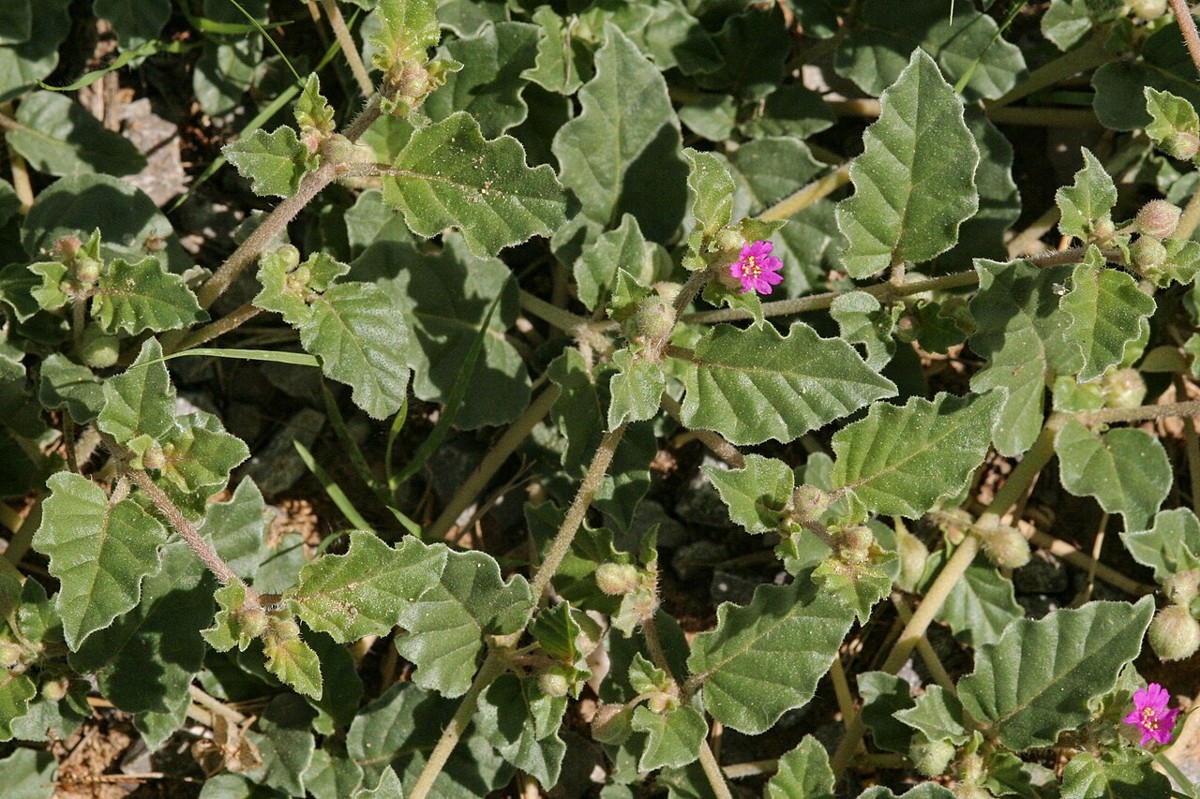
Allionia incarnata, known as Trailing Four O’Clock or Trailing Windmills, is a low, sprawling perennial (often behaving as an annual in colder parts of its range) native to the hot deserts and dry grasslands of the Southwest. It belongs to the four o’clock family, Nyctaginaceae, a group best known for the showy, papery bracts and trumpet-shaped flowers found in its larger relatives. Unlike the upright garden four o’clocks, this species hugs the ground, radiating stems outward from a central taproot to form flat mats a foot or more across.
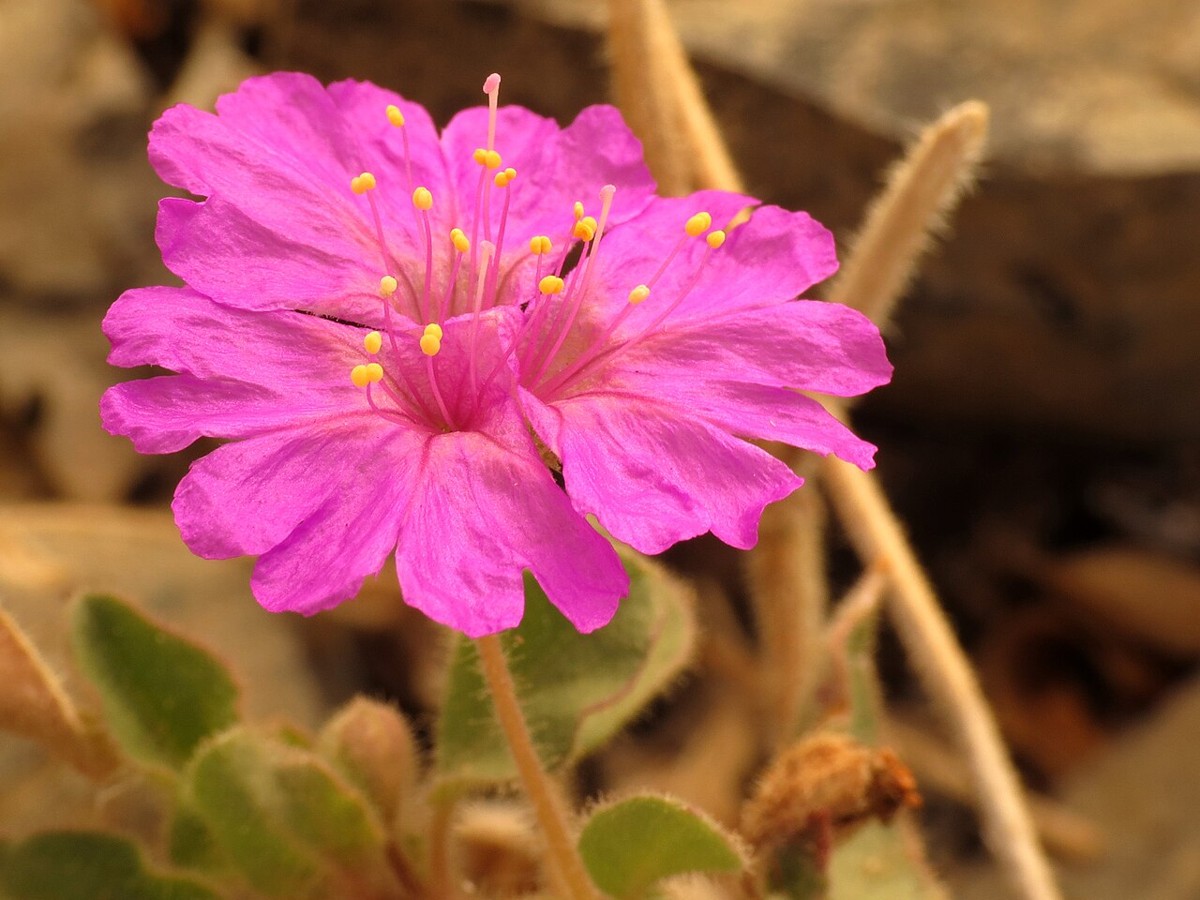
The plant is instantly recognizable once you know it: coarse, sticky-hairy, triangular to heart-shaped leaves line reddish trailing stems, and small clusters of bright magenta-pink flowers open each morning and fade by afternoon, especially in summer heat. Each cluster is actually three to five individual flowers pressed together so tightly they resemble a single bloom with a pinwheel or “windmill” shape — the source of one of its common names. New flowers open in succession through the warm months, so an established patch is rarely without color for long.
Trailing Four O’Clock thrives in exactly the disturbed, sun-baked, poor soils that frustrate many other natives — roadsides, wash margins, rocky flats, and gravelly slopes. That toughness, combined with its long bloom season and value to native bees, makes it a useful groundcover for xeriscapes and desert gardens where a tidier, more manicured groundcover would simply fail.
Identification
Trailing Four O’Clock is a prostrate, mat-forming herb with stems radiating from a woody taproot, typically reaching 1 to 3 feet in length but staying only a few inches tall. The whole plant is covered in short, glandular, sticky hairs that trap fine desert dust, giving the foliage a dusty gray-green cast.
Stems
Stems are slender, reddish to purplish, and branch freely from the base, often rooting where nodes touch moist soil. They sprawl outward in all directions, forming circular or irregular mats that can spread 1 to 2 feet or more in a single growing season under good conditions.
Leaves
Leaves are opposite, each pair typically unequal in size, broadly ovate to triangular or somewhat heart-shaped, ½ to 1½ inches long, with wavy-toothed or shallowly lobed margins. Both surfaces are covered in short sticky hairs, and the leaf color ranges from gray-green to dull green depending on moisture and sun exposure.
Flowers
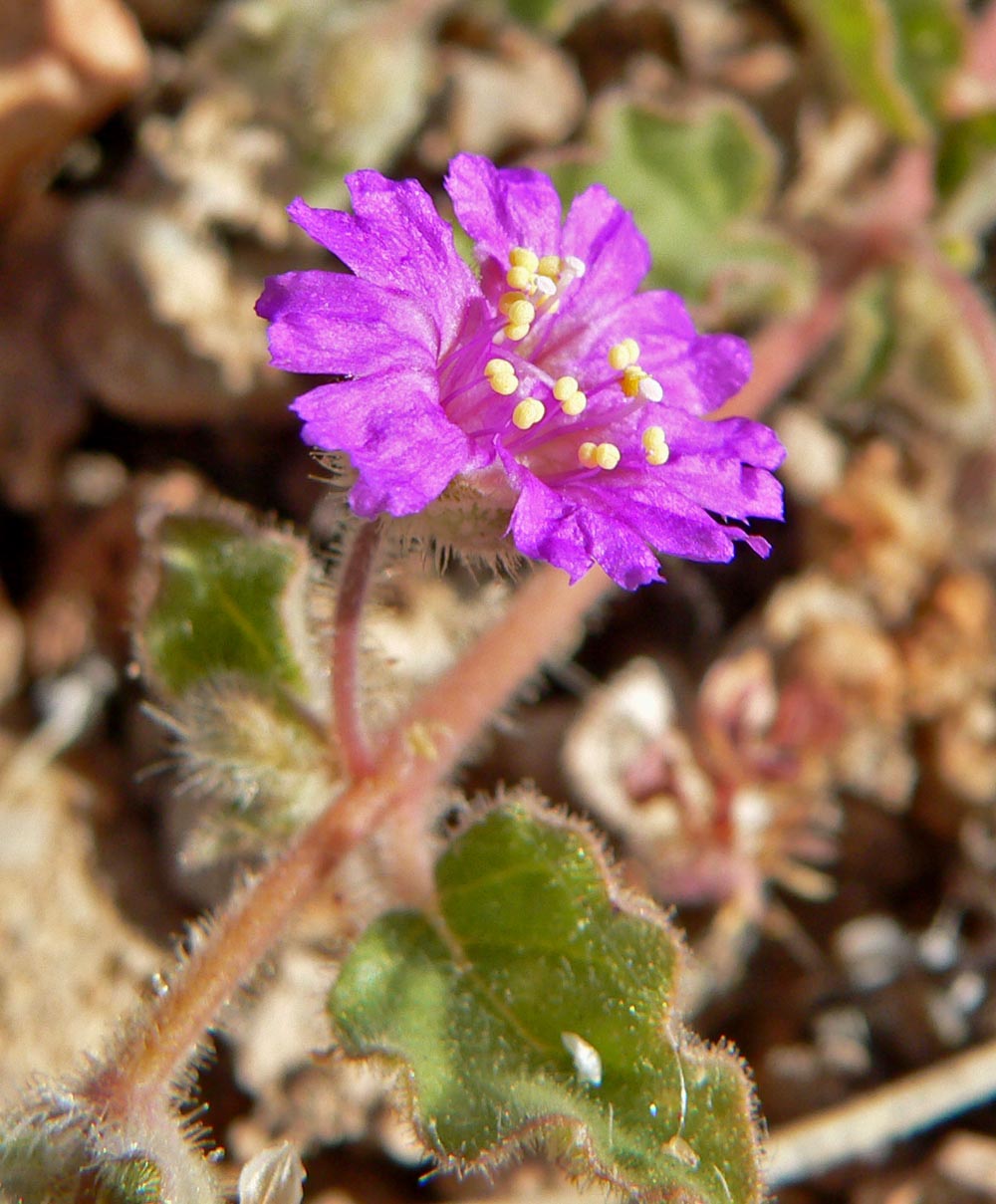
What looks like one flower is actually a tight cluster of three to five individual flowers, each with five fused, petal-like magenta to rose-purple sepals (true petals are absent in this family) surrounding a cluster of yellow-tipped stamens. Each cluster spans roughly ½ to 1 inch across. Flowers open in the cool of morning and often close by early afternoon, particularly during hot weather, then are replaced by new blooms the following day.
Fruit & Seeds
Following pollination, each flower produces a small, five-ribbed, club-shaped fruit (an anthocarp) about ¼ inch long, often sticky or glandular-hairy, which aids in seed dispersal by clinging to fur, feathers, and clothing.
Quick Facts
| Scientific Name | Allionia incarnata |
| Family | Nyctaginaceae (Four O’Clock) |
| Plant Type | Trailing Perennial (often short-lived) |
| Mature Height | 3–6 in |
| Mature Spread | 1–3 ft |
| Growth Rate | Fast |
| Sun Exposure | Full Sun |
| Water Needs | Low |
| Soil Type | Sandy, gravelly or rocky; fast-draining |
| Soil pH | 6.5–8.5 (neutral to alkaline) |
| Bloom Time | April – October |
| Flower Color | Magenta to rose-purple |
| Fall Color | None notable |
| Fruit | Small ribbed, sticky anthocarps |
| Deer Resistant | Yes (generally unbrowsed) |
| USDA Hardiness Zones | 8–11 |
Native Range
Trailing Four O’Clock is native across the hot deserts and dry grasslands of the American Southwest, from southeastern California and southern Nevada through Arizona, Utah’s southwestern corner, New Mexico, and south and west Texas, with outlying native populations reaching into Colorado’s southeastern plains, Kansas, and Nebraska. It also occurs widely through northern Mexico and south into South America, making it one of the more wide-ranging desert annuals/perennials of the hemisphere.
Within this range it favors open, disturbed, and sun-exposed ground: desert flats, arroyo and wash margins, rocky slopes, roadsides, and sandy or gravelly soils in creosote bush scrub, desert grassland, and Chihuahuan and Sonoran desert scrub communities. It is typically absent from dense woodland, heavy clay, or consistently moist sites, and it rarely persists where taller vegetation shades it out.
Because it germinates readily after rain and tolerates poor, compacted soils, Trailing Four O’Clock is often among the first native wildflowers to colonize disturbed desert ground, road cuts, and construction margins, helping stabilize soil ahead of slower-growing perennials.
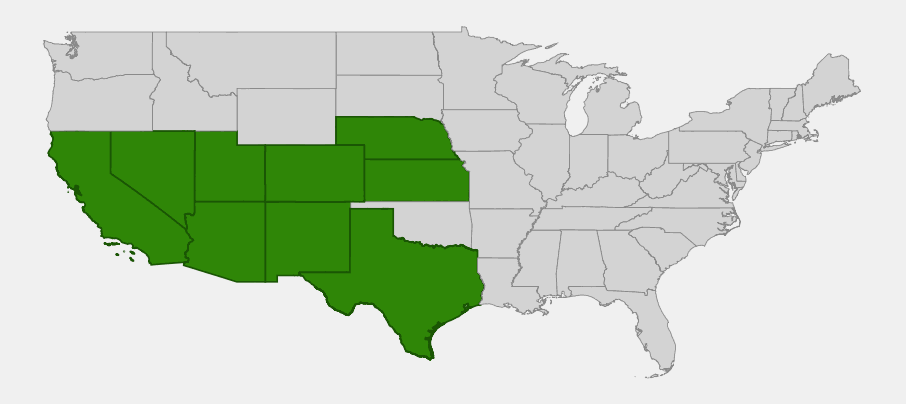
📋 Regional plant lists featuring Trailing Four O’Clock: California & Nevada · Arizona & New Mexico · Utah & Western Colorado · Nebraska, Kansas & Eastern Colorado · South & West Texas
Growing & Care Guide
Trailing Four O’Clock is about as low-maintenance as native groundcovers get, provided you can offer it the heat, sun, and lean soil it evolved for. It is a poor fit for rich garden beds or regularly irrigated lawns, but excellent for gravel gardens, parking strips, and slopes where little else will thrive.
Light
Give it full sun. The plant needs strong heat and light to flower well and will stretch thin and bloom poorly in shade. It is one of the best choices for the hottest, most exposed corners of a desert garden.
Soil & Water
Plant it in sandy, gravelly, or rocky soil with excellent drainage; it does not tolerate heavy clay or standing water. Once established, it needs little supplemental water and is sustained largely by seasonal rainfall, though occasional deep watering during extended dry spells will extend its bloom season. Overwatering tends to shorten its life and encourage rot.
Planting Tips
Direct-seed in spring after the last frost, or set out nursery starts once soil has warmed. Scarifying or soaking seed overnight can improve germination. Because it self-sows readily in favorable conditions, a single planting often fills in a patch over a season or two without replanting.
Pruning & Maintenance
Little pruning is needed; trim back scraggly stems in late winter to tidy the mat before new spring growth. In colder parts of its range it behaves as an annual and dies back with frost, reseeding the following year from dropped seed.
Landscape Uses
Well suited to several low-water landscape roles:
- Desert groundcover for hot, sunny slopes and flats
- Erosion control on disturbed or bare soil
- Gravel and rock gardens where it fills gaps between larger specimens
- Pollinator plantings for extended-season bee forage
- Roadside and parking-strip plantings tolerant of heat and poor soil
Wildlife & Ecological Value
Trailing Four O’Clock contributes nectar, cover, and erosion-stabilizing root mass to desert communities that often go long stretches without reliable bloom from other plants.
For Pollinators
The flowers attract a range of native bees, including small solitary bees drawn to the exposed yellow anthers, along with occasional butterflies and other nectar-seeking insects. Because individual flowers open and close daily but new ones form continuously through the warm season, a patch can supply nectar across many weeks when few other desert plants are blooming.
For Birds & Mammals
Small mammals and ground-foraging birds occasionally take the seeds, and the dense, sprawling foliage offers low ground cover and shade for small reptiles and insects in otherwise exposed terrain. The sticky, ribbed fruit also disperses by clinging to the fur of passing mammals.
Ecosystem Role
As an early colonizer of bare or disturbed desert soil, Trailing Four O’Clock helps stabilize ground, shade the soil surface, and slow erosion ahead of slower-establishing perennials and shrubs, contributing to the gradual recovery of disturbed desert sites.
Cultural & Historical Uses
Several Indigenous peoples of the Southwest, including groups in the Sonoran Desert region, made use of Trailing Four O’Clock as part of traditional plant knowledge, recognizing it among the seasonal wildflowers that followed summer rains. Ethnobotanical records note its presence in regional plant lore, though it was never a major food, fiber, or medicinal staple compared with larger desert plants.
Its persistence on disturbed and heavily used ground made it a familiar sight along old trails, washes, and settlement margins across the desert Southwest and northern Mexico, and it remains a common, easily recognized wildflower of the region today.
In modern horticulture, the species has drawn interest mainly from native-plant gardeners and restoration practitioners seeking quick, low-water groundcover for disturbed sites, rather than for any culinary or medicinal use.
Frequently Asked Questions
Is Trailing Four O’Clock the same as the common garden four o’clock?
No. The familiar garden four o’clock (Mirabilis jalapa) is an upright, often non-native ornamental with larger trumpet flowers that open in late afternoon. Trailing Four O’Clock is a low, sprawling native species in the same family with small, pinwheel-like flower clusters open during the day.
Why do the flowers look wilted by afternoon?
This is normal. The flowers typically open in the cool morning hours and close as temperatures rise, especially in summer. New flowers replace them the next day, so the plant maintains color over an extended bloom season even though individual flowers are short-lived.
Will it take over my garden?
It spreads readily by self-seeding in suitable hot, dry conditions, but it is shallow-rooted and easy to pull or thin where it is not wanted. It does not spread aggressively by rhizomes and is not considered invasive within its native range.
Can it survive on rainfall alone?
Yes, in much of its native range established plants get by on seasonal rainfall with no supplemental irrigation. Occasional deep watering during long dry spells will extend flowering but is not required for survival.
Is it deer resistant?
Generally yes. The sticky, glandular-hairy foliage is not a preferred browse for deer, making it a reasonably reliable choice in areas with deer pressure.

Looking for a nursery that carries Trailing Four O’Clock?
Browse our native plant nursery directory: California · Nevada, New Mexico & Nebraska · Texas & Utah · Kansas · Colorado · Arizona