Flatbud Prickly Poppy (Argemone munita)
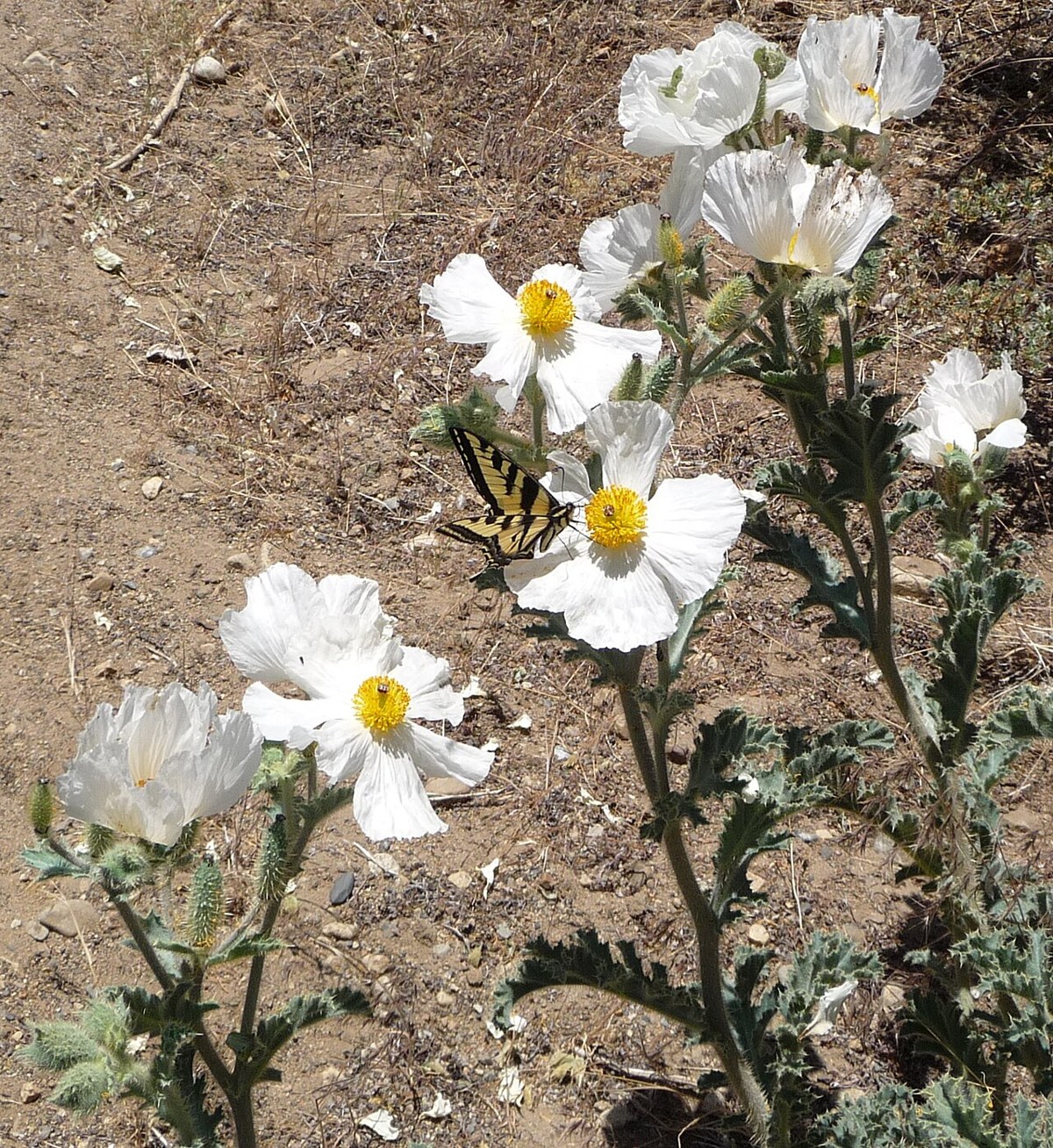
Argemone munita, commonly known as flatbud prickly poppy or chicalote, is a bold, spiny-leaved wildflower native to the dry mountains and deserts of the southwestern United States. A member of the Papaveraceae (poppy family), its species name “munita” means “armed,” a nod to the formidable prickles that cover its stems, leaves, and flower buds. Despite its thorny defenses, the plant produces some of the showiest flowers of any western native wildflower — large, crepe-paper-textured white blooms with a brilliant golden-yellow center of stamens.
Flatbud prickly poppy typically grows as an annual, biennial, or short-lived perennial, reaching 2 to 4 feet tall with pale, blue-green (glaucous), deeply lobed and spine-tipped leaves that give the whole plant a distinctly armored, almost thistle-like look even before it flowers. It is a pioneer species of disturbed, dry, sunny sites — roadsides, washes, burned areas, and gravelly slopes — where it often appears in dramatic numbers after fire or soil disturbance.
All parts of the plant exude a yellow-orange latex sap when broken, a feature shared with other prickly poppies and one that has long been associated (cautiously) with folk remedies. For gardeners within its native range who want a tough, drought-proof, pollinator-friendly wildflower with genuine visual drama, flatbud prickly poppy is worth a spot at the back of a dry border, though its prickles call for placement away from paths and play areas.
Identification
Flatbud prickly poppy is an erect, branching herb, typically 2 to 4 feet tall, though it can reach taller in favorable sites. The entire plant — stems, leaves, and flower buds — is armed with sharp, yellowish prickles, making it unmistakable among western wildflowers once in bloom.
Leaves & Stems
The leaves are pale blue-green (glaucous), deeply lobed with spine-tipped teeth along the margins, and clasp the stem at their base. Stems are stout, branching, and also prickly, with a whitish, waxy bloom that rubs off easily. All parts exude a yellow-orange, latex-like sap when cut or broken.
Flowers
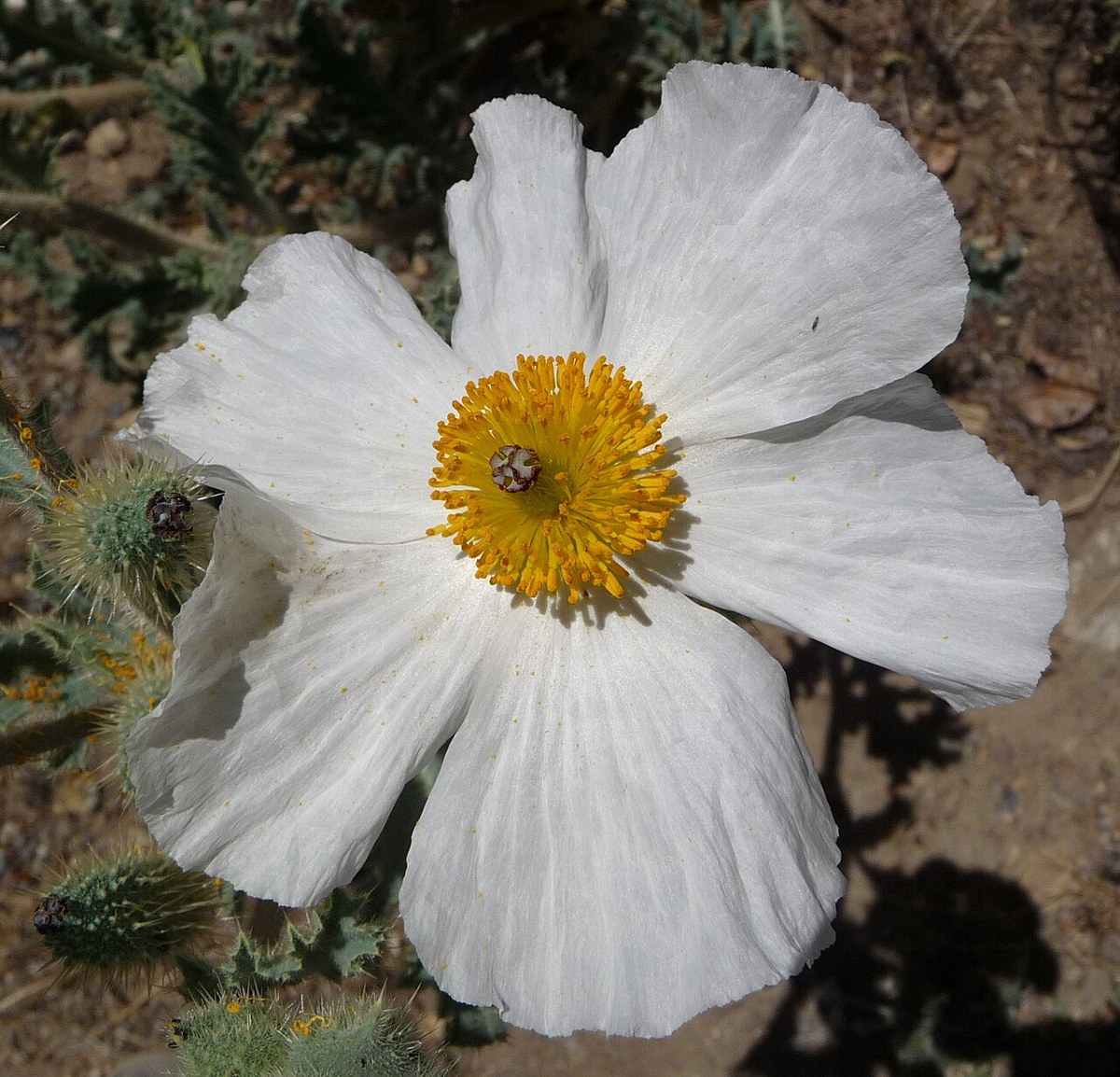
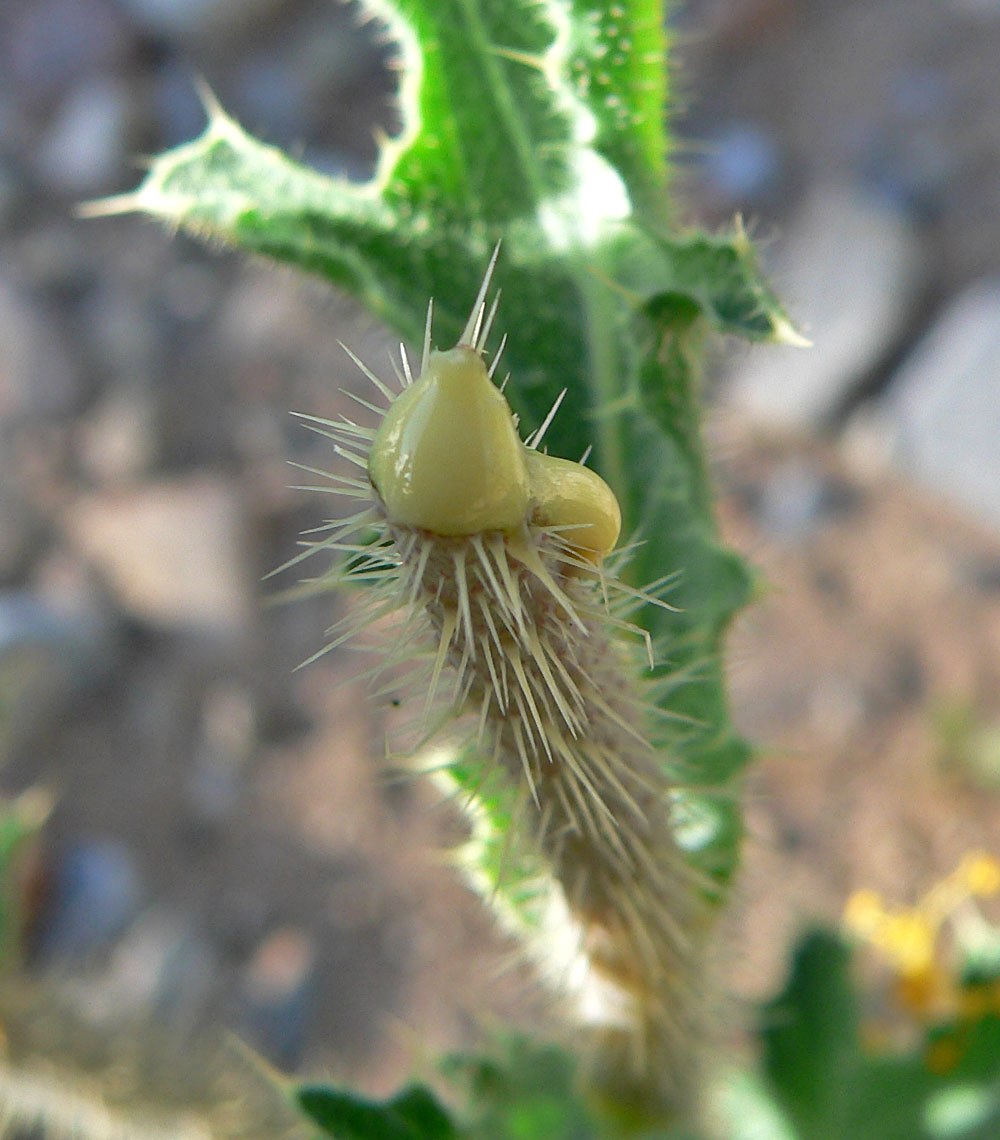
Flowers are large and showy, 2 to 4 inches across, with four to six crinkled, crepe-paper-like white petals surrounding a dense cluster of bright yellow stamens at the center. The flower buds, which give the species its common name, are relatively flat-topped and heavily armed with prickles before opening. Bloom occurs from late spring through summer, often continuing after other spring wildflowers have finished.
Fruit & Seeds
The fruit is an oblong, spiny seed capsule, densely covered in sharp prickles, that splits open at the top when mature to release numerous small, round, dark brown to black seeds. The spiny capsules persist on the dried plant well after the petals have dropped.
Quick Facts
| Scientific Name | Argemone munita |
| Family | Papaveraceae (Poppy) |
| Plant Type | Annual, Biennial, or Short-Lived Perennial Wildflower |
| Mature Height | 2–4 ft |
| Mature Spread | 1½–3 ft |
| Growth Rate | Fast |
| Sun Exposure | Full Sun |
| Water Needs | Low |
| Soil Type | Dry, gravelly, sandy, or rocky; well-drained |
| Soil pH | 6.5–8.5 |
| Bloom Time | May – August |
| Flower Color | White with yellow center |
| Fall Color | None (foliage dries tan) |
| Fruit | Spiny oblong capsule with black seeds |
| Deer Resistant | Yes (prickles and toxic sap deter browsing) |
| USDA Hardiness Zones | 6–9 |
Native Range
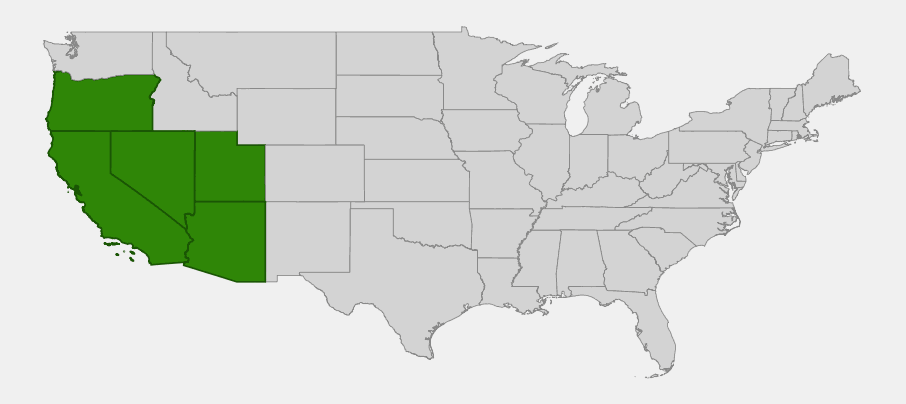
Flatbud prickly poppy is native to California, where it is widespread across the Sierra Nevada, Coast Ranges, Transverse Ranges, and the state’s eastern deserts, and it extends into Nevada, Arizona, and Utah. County-level records also confirm a native presence in south-central and southeastern Oregon, east of the Cascades, though it is not documented as native farther north or west in that state. Its range continues south into Baja California, Mexico.
It grows on dry, open, disturbed, or rocky sites — roadsides, desert washes, burned chaparral, dry streambeds, and gravelly slopes — typically from valley floors up into the lower mountains. As a pioneer species, it often appears abundantly the first few seasons after fire or ground disturbance before declining as other vegetation reestablishes.
Flatbud prickly poppy is not native to Washington, Idaho proper, New Mexico, or areas east of the Rocky Mountain states; gardeners outside its documented range should choose a locally native prickly poppy or thistle-poppy species instead.
📋 Regional plant lists featuring flatbud prickly poppy: California & Nevada · Arizona & New Mexico · Utah & Western Colorado · Idaho, Eastern Oregon & Eastern Washington
Growing & Care Guide
Flatbud prickly poppy is about as low-maintenance as native wildflowers get, thriving on neglect in hot, dry, sunny sites where many other plants struggle. Its main garden challenge is its prickles, which call for thoughtful placement.
Light
Plant in full sun. This species is adapted to open, exposed sites and does not perform well in shade, where it becomes leggy and flowers poorly.
Soil & Water
Flatbud prickly poppy thrives in poor, gravelly, sandy, or rocky soils with excellent drainage and needs very little supplemental water once established. It is well suited to soils too lean and dry for most garden plants, and in fact tends to flop or decline in rich, regularly watered soil.
Planting Tips
Direct-sow seed in fall or early spring, as this species often resents transplanting due to its sensitive taproot. Choose a site away from paths, patios, and play areas given the sharp prickles on stems, leaves, and seed capsules. It self-sows readily where happy, so allow room for volunteers in future seasons.
Pruning & Maintenance
Little maintenance is needed beyond removing spent plants at the end of the season, wearing gloves given the prickles and irritating sap. Deadheading can prolong bloom, but many gardeners simply let the plants set seed for natural reseeding.
Propagation
Propagate from seed collected from dry, mature capsules; seed may benefit from scarification or a period of cold stratification to improve germination. Because of its taproot, direct sowing in place generally succeeds better than growing transplants.
Landscape Uses
- Dry wildflower meadows and naturalistic desert gardens
- Post-fire or disturbed-site restoration plantings
- Back-of-border accent in a xeriscape, away from foot traffic
- Pollinator gardens in hot, dry climates
- Erosion control on disturbed, dry slopes
Wildlife & Ecological Value
Flatbud prickly poppy’s large, pollen-rich flowers make it a magnet for a range of pollinators in the dry habitats where it grows, often blooming when few other large-flowered natives are available.
For Pollinators
The flowers produce abundant pollen (though little nectar) and attract native bees, bumblebees, and butterflies, including swallowtails, which forage actively on the bright yellow stamen clusters. Bees are the primary pollinators, often seen rolling in the pollen-laden centers.
For Birds
Seed-eating birds, including sparrows and finches, forage on the seeds once the spiny capsules split open, though the heavily armed capsules offer the seeds some protection from casual foraging.
For Mammals
The sharp prickles covering the entire plant, combined with toxic alkaloids in the sap and foliage, make flatbud prickly poppy effectively unpalatable to deer, rabbits, and livestock, allowing it to persist and often increase in heavily grazed rangeland where more palatable plants are reduced.
Ecosystem Role
As an early colonizer of disturbed and burned ground, flatbud prickly poppy plays an important pioneer role in dry western plant communities, stabilizing bare soil and providing an early nectar and pollen pulse for pollinators before slower-growing perennial vegetation reestablishes.
Cultural & Historical Uses
Indigenous peoples across the plant’s range historically used parts of prickly poppy species, including Argemone munita, in traditional preparations, though the plant’s alkaloid-rich sap and seeds are toxic if ingested in quantity and such historical uses were specialized and should not be interpreted as a guide for casual use today.
The common name “chicalote,” used in parts of the Southwest and Mexico, reflects a long regional familiarity with prickly poppies as a conspicuous, if prickly, feature of disturbed desert and foothill landscapes. Ranchers and land managers have long recognized the species as an indicator of overgrazed or disturbed rangeland, since cattle and other livestock avoid it in favor of more palatable forage, allowing it to spread where grazing pressure is heavy.
Today, flatbud prickly poppy’s primary value is ecological and horticultural — as a hardy, drought-tolerant native wildflower for dry gardens and a pioneer species supporting pollinators on disturbed or recently burned ground.
Frequently Asked Questions
Is flatbud prickly poppy toxic?
Yes. The sap, seeds, and foliage contain alkaloids that are toxic if ingested, and the yellow-orange latex sap can irritate skin and eyes. It should be treated as an ornamental and ecological plant, not a food or home remedy, and handled with gloves.
Why is it called “flatbud” prickly poppy?
The name refers to the relatively flat-topped shape of the spiny, unopened flower buds, which distinguishes it from some related prickly poppy species with more rounded or pointed buds.
Will flatbud prickly poppy take over my garden?
It self-sows readily in open, disturbed, sunny ground, which can make it feel assertive in a loosely maintained bed, but it is not considered invasive within its native range and is easily thinned or removed as a seedling if it spreads more than wanted.
Can I grow flatbud prickly poppy in rich garden soil with regular watering?
It is better suited to lean, dry, well-drained soil. Rich soil and frequent watering tend to produce weak, floppy growth rather than the compact, free-flowering habit seen on dry, sunny sites.
Is flatbud prickly poppy safe for pets and livestock?
No — its alkaloid-containing sap and seeds are toxic if eaten, though the sharp prickles generally prevent animals from browsing it in the first place. It should not be planted where grazing animals have regular access if ingestion is a concern.

Looking for a nursery that carries flatbud prickly poppy?
Browse our native plant nursery directory: California · Nevada · Arizona · Utah · Oregon