Mountain Brome (Bromus marginatus)
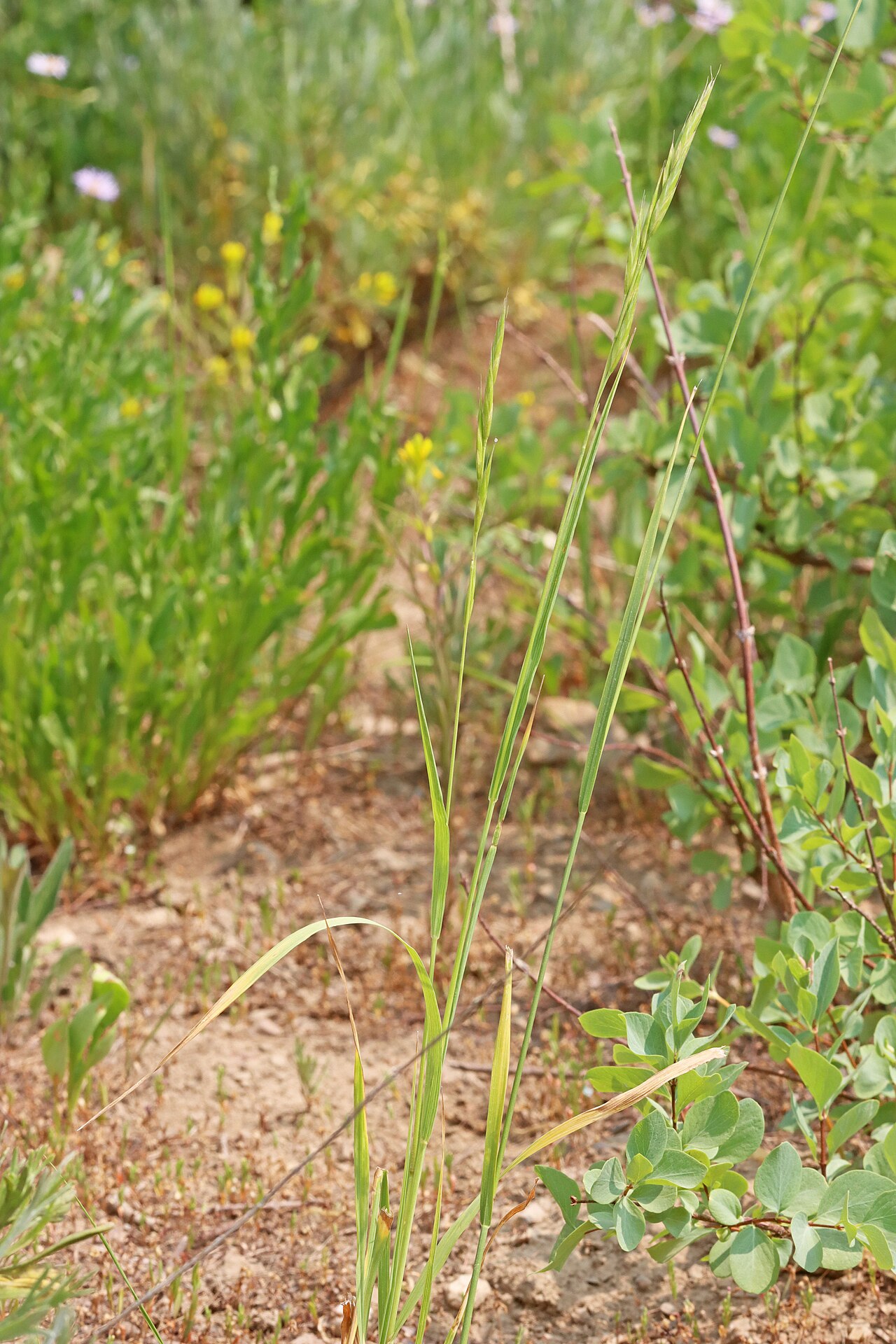
Bromus marginatus, commonly known as mountain brome, is a robust, cool-season bunchgrass native to the mountains, foothills, and high plains of western North America. A member of the Poaceae (grass family), it forms upright, leafy clumps 2 to 4 feet tall topped with drooping, awned seedheads that give it an airy, graceful texture in open meadows, forest clearings, and dry slopes from the Pacific Coast to the northern Great Plains.
Mountain brome is a relatively short-lived perennial — typically persisting 3 to 6 years — that establishes and matures quickly from seed, making it one of the most widely used native grasses in rangeland reseeding, erosion control, and post-fire restoration throughout its range. Its vigorous first-year growth and dense, fibrous root system quickly stabilize disturbed soil, while its palatability makes it valuable forage for both livestock and wildlife.
Though not usually grown as an ornamental centerpiece, mountain brome earns a place in native plant gardens and restoration plantings for its fast establishment, drought tolerance once rooted, and ability to hold its own in competitive, weedy sites while native perennials slower to establish catch up. It pairs naturally with wildflowers and other bunchgrasses in meadow and prairie-style plantings across its broad native range.
Identification
Mountain brome is a tufted, cool-season bunchgrass with erect to slightly spreading stems (culms) reaching 2 to 4 feet tall, occasionally taller in rich, moist sites. The plant forms loose to moderately dense clumps without spreading by rhizomes, distinguishing it from sod-forming grasses.
Stems & Leaves
Culms are erect, smooth to minutely hairy, and arise in tufts from a fibrous root crown. The flat, linear leaf blades are 4 to 10 inches long and up to ½ inch wide, often with fine hairs on both surfaces, giving the foliage a soft, slightly grayish-green cast. Leaf sheaths are typically hairy and may be closed for much of their length, a useful identification trait within the genus Bromus.
Inflorescence & Seedhead
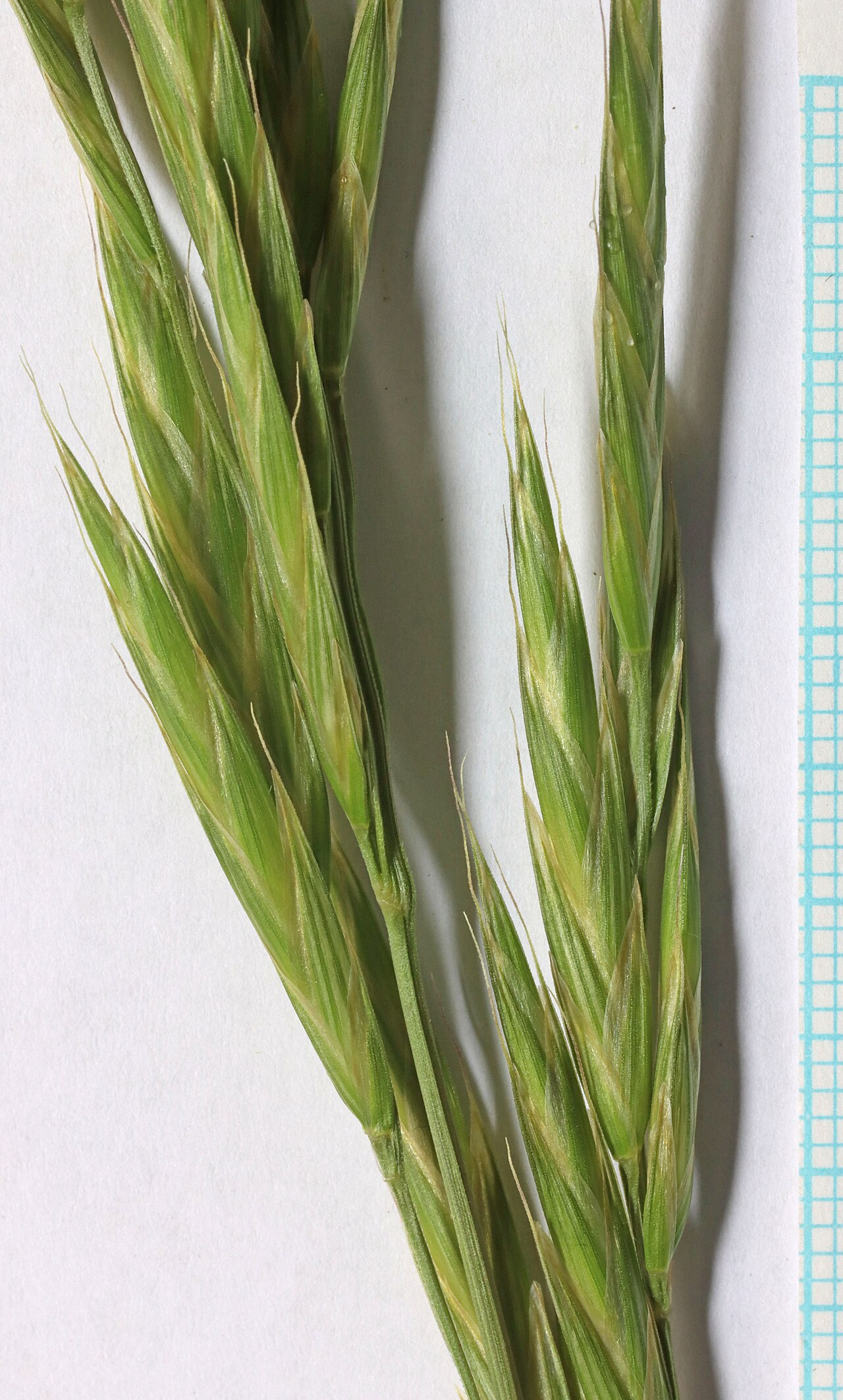
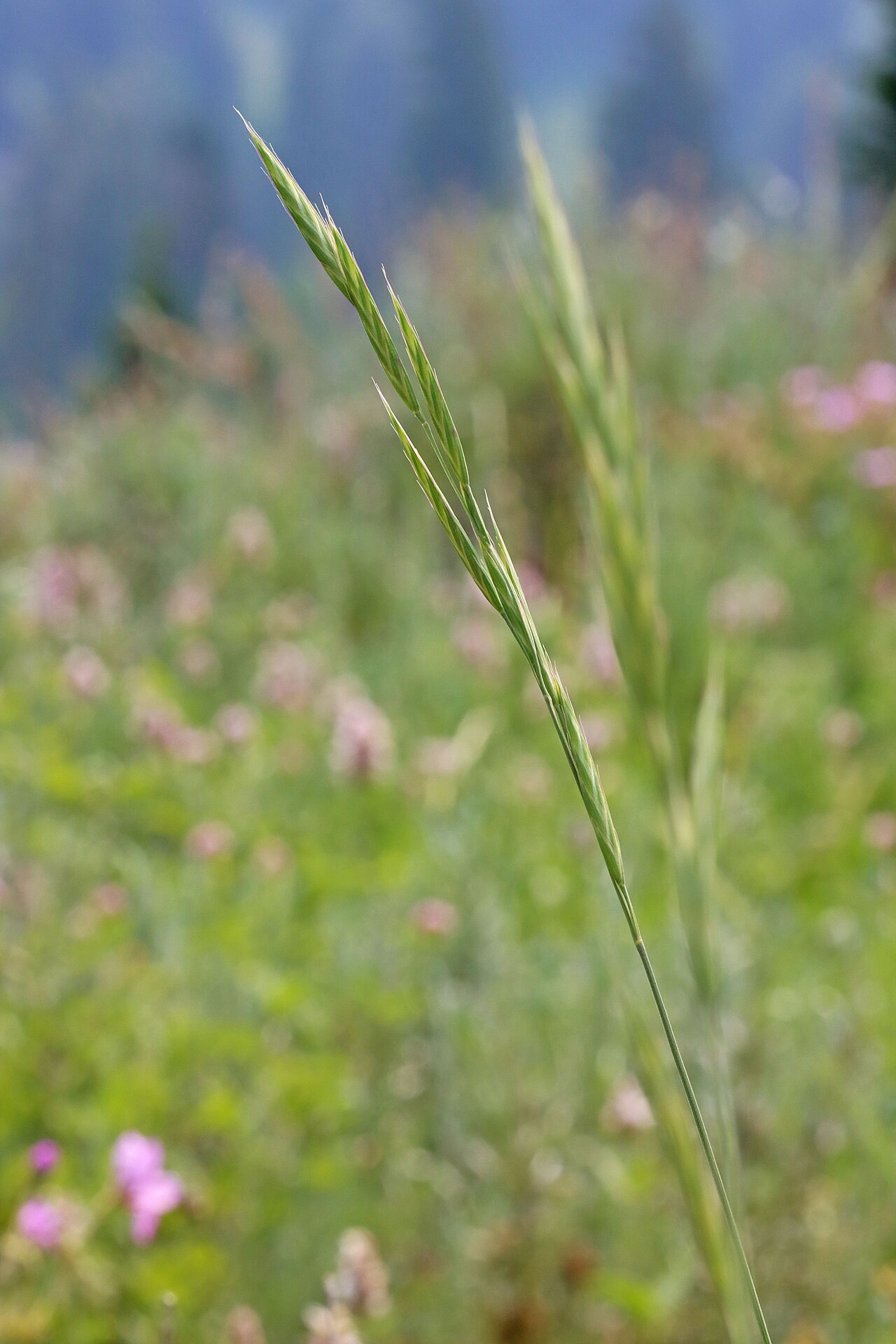
The flowering head is an open, nodding panicle 4 to 8 inches long, with slender, drooping branches bearing large, flattened spikelets. Each spikelet holds 4 to 10 florets, and each floret bears a straight awn typically ½ to ¾ inch long extending from the tip of the lemma — a prominent, bristly feature that gives mature seedheads a distinctly whiskered appearance. The overall effect is an airy, nodding seedhead that sways conspicuously in mountain breezes.
Flowers & Fruit
Like other grasses, mountain brome’s “flowers” are reduced florets without showy petals; wind, not insects, carries its pollen. Flowering occurs from June through August depending on elevation, with high-mountain populations blooming later as snowmelt recedes. The fruit is a single-seeded grain (caryopsis) enclosed within the persistent floral bracts, ripening to tan or straw-brown by late summer and shattering readily once mature — an adaptation that aids natural reseeding after disturbance.
Quick Facts
| Scientific Name | Bromus marginatus |
| Family | Poaceae (Grass) |
| Plant Type | Perennial Cool-Season Bunchgrass |
| Mature Height | 2–4 ft (seedheads included) |
| Mature Spread | 1–2 ft clump diameter |
| Growth Rate | Fast (short-lived, 3–6 years) |
| Sun Exposure | Full Sun to Light Shade |
| Water Needs | Moderate; drought tolerant once established |
| Soil Type | Adaptable; loam, clay, or rocky mountain soils |
| Soil pH | 6.0–8.0 |
| Bloom Time | June – August |
| Flower Color | Green, ripening tan/straw |
| Fall Color | Tan (cures and goes dormant) |
| Fruit | Single-seeded grain with long awn |
| Deer Resistant | No (readily grazed by deer, elk, and livestock) |
| USDA Hardiness Zones | 3–8 |
Native Range
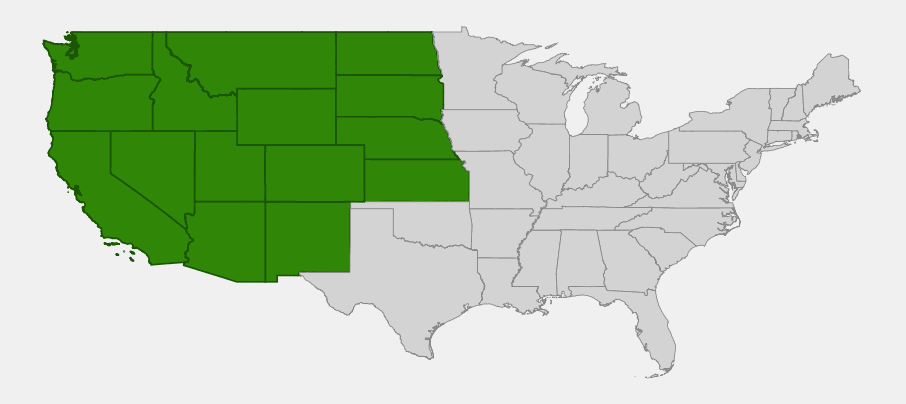
Mountain brome is native across much of western North America, from Washington, Oregon, and California east through the Rocky Mountain states of Idaho, Montana, Wyoming, Utah, Colorado, Arizona, and New Mexico, and onto the northern and central Great Plains in North Dakota, South Dakota, Nebraska, and Kansas. It occurs from low valleys to subalpine elevations, typically between 3,000 and 10,000 feet in the Rockies and Sierra Nevada, and at lower elevations closer to sea level along the Pacific Coast.
Throughout this vast range, mountain brome favors open habitats: mountain meadows, sagebrush steppe, aspen and conifer forest openings, roadsides, and disturbed ground following fire or logging. It is especially characteristic of mid- to high-elevation meadows and forest-edge clearings, where it often grows alongside other native bunchgrasses and summer wildflowers.
Mountain brome should not be confused with the closely related California brome (Bromus carinatus), a separate, typically lower-elevation and more western species with which it is sometimes lumped taxonomically; some botanists and distribution databases treat mountain brome as a variety of California brome (Bromus carinatus var. marginatus). The species is also sometimes seeded outside its native range for erosion control, so gardeners should verify local native status before planting near wildlands at the edge of its documented range.
📋 Regional plant lists featuring Mountain Brome: California & Nevada · Western Oregon & Western Washington · Idaho, Eastern Oregon & Eastern Washington · Montana & Wyoming · Utah & Western Colorado · Arizona & New Mexico · North Dakota, South Dakota & Western Minnesota · Nebraska, Kansas & Eastern Colorado
Growing & Care Guide
Mountain brome is one of the easiest native grasses to establish from seed, which is why it is a workhorse of western restoration and reclamation seed mixes. In the garden, it offers quick cover and movement, though gardeners should plan for its relatively short lifespan and plan to let it reseed or be replaced within its native plant community.
Light
Mountain brome performs best in full sun, where it produces the densest clumps and heaviest seed crop, but tolerates light shade at the edges of woodlands and under open tree canopies, conditions similar to the forest-opening habitats where it grows naturally.
Soil & Water
This grass adapts to a wide range of soils, from rocky mountain loams to heavier clay, and tolerates a broad pH range. It needs regular moisture to establish from seed and during its first growing season, after which established plants tolerate considerable summer drought, particularly at higher, cooler elevations. In hot, low-elevation gardens, occasional deep watering during extended dry spells keeps clumps looking their best.
Planting Tips
Sow seed in fall or early spring directly where plants are wanted, at a depth of about ¼ to ½ inch; mountain brome germinates readily and often flowers in its first full growing season. Because it is short-lived, mix it with longer-lived native bunchgrasses and perennials in restoration or meadow plantings so the plant community persists as mountain brome’s dominance naturally declines after a few years.
Pruning & Maintenance
Little maintenance is required. Cut back or mow old growth in late winter before new shoots emerge if a tidier appearance is desired, though leaving seedheads standing through fall and winter benefits birds and allows natural reseeding. Established plantings generally renew themselves from self-sown seed as individual plants age out.
Landscape Uses
Mountain brome’s fast establishment and graceful seedheads suit several practical garden and restoration roles:
- Erosion control on slopes, cutbanks, and recently disturbed soil
- Post-fire and post-logging restoration plantings
- Meadow and prairie-style gardens as a quick-establishing companion grass
- Wildlife and pollinator habitat plantings for forage and seed
- Temporary cover crop while slower-establishing native perennials mature
Wildlife & Ecological Value
Mountain brome is a valuable forage and habitat grass throughout its extensive western range, supporting both wild herbivores and the insects and birds that depend on grassland and meadow structure.
For Birds
Seed-eating birds, including sparrows and finches, forage on the ripening grain, while the structure of standing clumps provides nesting cover and shelter for ground-nesting birds in meadows and open forest understories.
For Mammals
Mountain brome is highly palatable and is grazed readily by elk, mule deer, and livestock, especially in spring and early summer when its foliage is lush and nutritious. It is a significant component of many montane and foothill rangelands, valued by ranchers and wildlife managers alike for its forage quality.
For Pollinators
As a wind-pollinated grass, mountain brome does not directly attract pollinators with nectar or showy flowers, but its structure provides shelter for ground-nesting native bees and other beneficial insects within meadow plant communities.
Ecosystem Role
With its fast germination and extensive fibrous root system, mountain brome plays an outsized role in stabilizing soil and jump-starting plant succession after wildfire, logging, or other disturbance across the mountainous West. Though individual plants are short-lived, the species’ ability to persist through self-seeding helps maintain continuous ground cover while longer-lived native perennials and grasses reestablish.
Cultural & Historical Uses
Mountain brome has long been recognized by range scientists and land managers as one of the most useful native grasses for rapid revegetation in the western United States. Agricultural researchers studied its seed production and growth response to fertilization as early as the mid-twentieth century, reflecting decades of interest in its use for forage and erosion control on public and private rangelands.
Its ease of establishment and strong early growth made it a standard component of post-fire and post-logging seed mixes throughout the Rocky Mountains and Pacific Northwest for much of the twentieth century, a role it continues to fill today alongside other native grasses in ecologically minded restoration projects.
Unlike many native grasses with documented traditional food or fiber uses, mountain brome’s primary cultural significance lies in this modern conservation and range-management history rather than in historical Indigenous use, though as a common native grass of western mountain meadows it would have been part of the broader grassland landscape long utilized by Indigenous peoples and wildlife alike.
Frequently Asked Questions
Is mountain brome the same as California brome?
They are closely related and sometimes treated taxonomically as varieties of the same species (Bromus carinatus var. marginatus), but USDA PLANTS and this guide treat mountain brome (Bromus marginatus) and California brome (Bromus carinatus) as distinct, separately recognized species with somewhat different elevation and habitat preferences.
How long does mountain brome live?
It is a relatively short-lived perennial, typically persisting 3 to 6 years. Established stands usually maintain themselves over time through self-sown seed rather than individual plants living indefinitely.
Is mountain brome a good lawn substitute?
No. It grows in upright, individual bunches rather than forming a dense, mowable sod, and its height and nodding seedheads make it better suited to meadow or restoration plantings than a traditional lawn.
Does mountain brome need irrigation once established?
Established plants tolerate considerable drought, especially at higher, cooler elevations, but may benefit from occasional deep watering during prolonged dry spells in hotter, lower-elevation gardens.
Will mountain brome spread aggressively in my garden?
It spreads primarily by reseeding rather than by rhizomes, so it will not form an invasive sod, but it can self-sow readily in open, disturbed soil. Mixing it with other native perennials and grasses helps it settle into a balanced, naturalized planting rather than dominating a bed.

Looking for a nursery that carries Mountain Brome?
Browse our native plant nursery directory: California · Oregon · Washington · Idaho & Kansas · Nevada, New Mexico, North Dakota & Nebraska · Arizona · Montana · Wyoming · Colorado · South Dakota