Grand Collomia (Collomia grandiflora)
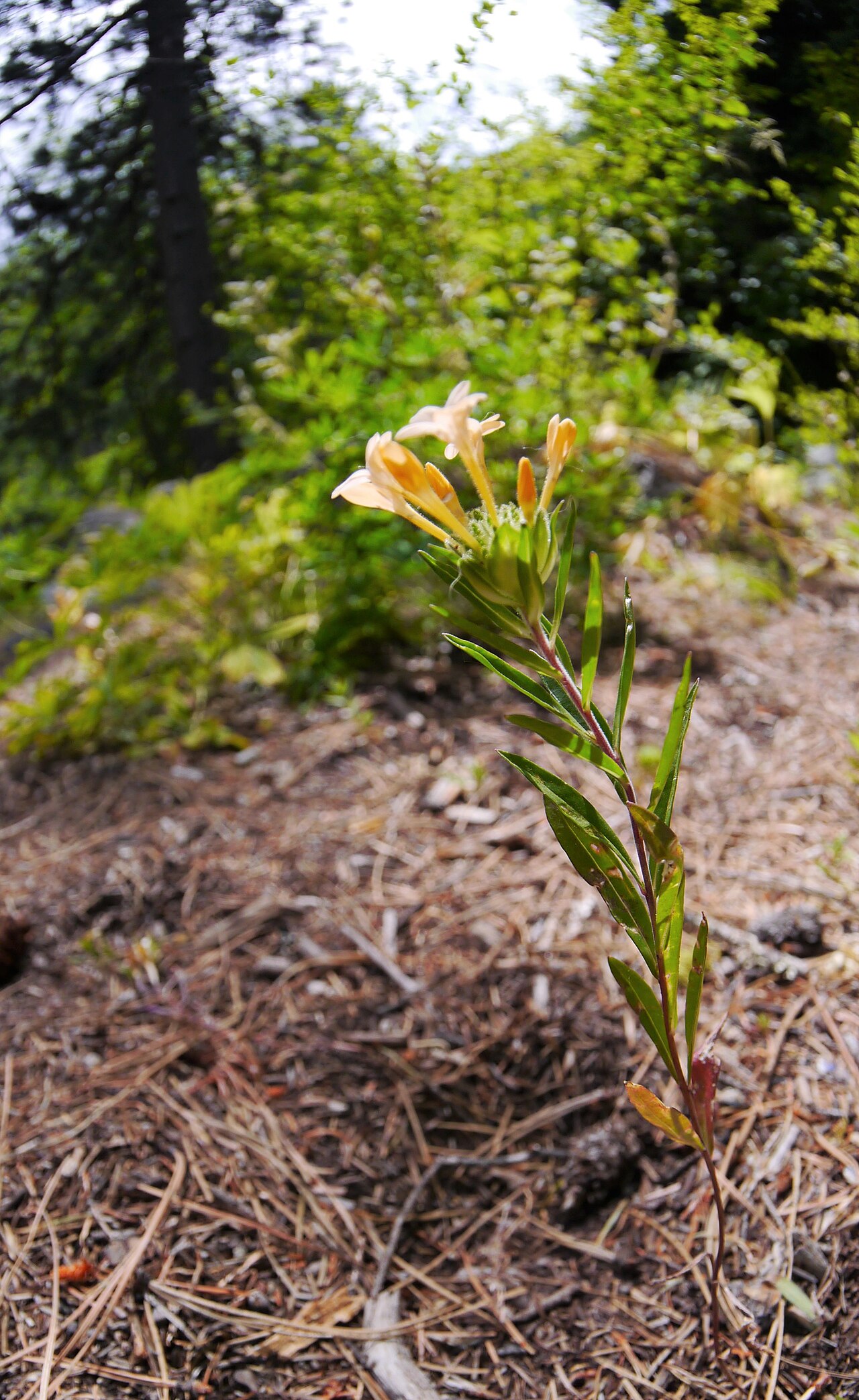
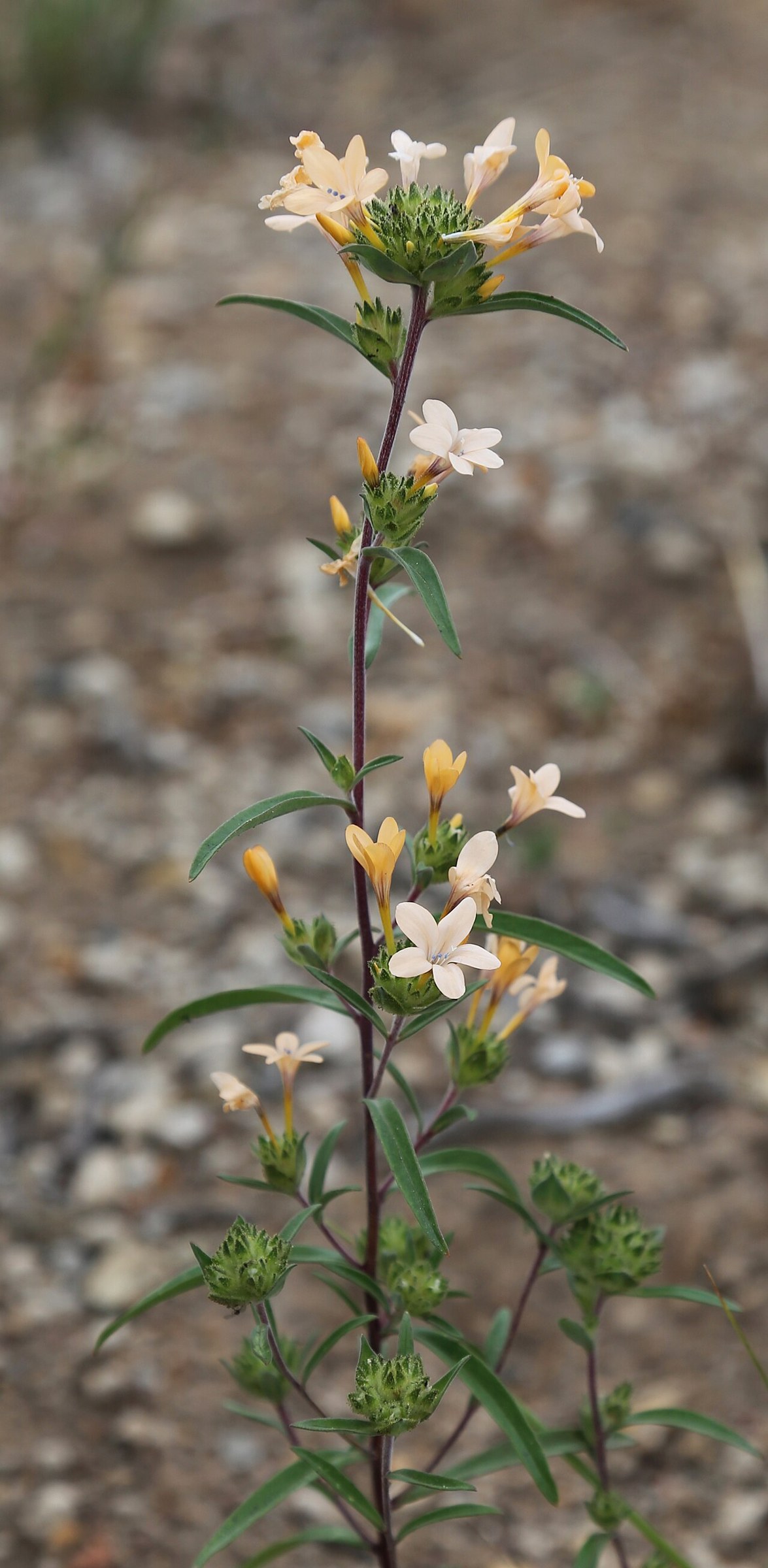
Collomia grandiflora, commonly called grand collomia or large-flowered collomia, is a western native annual wildflower in the phlox family (Polemoniaceae) that is easy to overlook until its pale apricot, trumpet-shaped flowers open. It grows as a single, slender, often reddish-purple stem lined with narrow lance-shaped leaves, topped by a tight cluster of tubular flowers that unfurl in a soft blend of cream, apricot and pale yellow. Despite the common name’s reference to “grand” flowers, the plant itself is modest and upright, usually reaching 1 to 3 feet tall in open, disturbed or recently burned ground across the mountain West.
Grand collomia is a pioneer species of dry, sandy or gravelly soils — roadsides, burn scars, open pine and fir forest, sagebrush flats and rocky slopes from the lowlands up into the subalpine zone. It germinates readily after fire or soil disturbance, often appearing in large numbers the first one or two seasons after a burn before fading as competing vegetation fills back in. This boom-and-bust pattern makes it a useful, low-maintenance addition to a dry wildflower meadow or post-fire restoration planting, where its unusual flower color stands out against the more common yellows and purples of western rangeland wildflowers.
For gardeners from California to Montana, grand collomia offers an easy-care, drought-tolerant annual that reseeds itself in lean, well-drained soil. It asks for almost nothing — no irrigation beyond what falls naturally, no fertilizer, no pampering — and in return provides several weeks of unusual, soft-colored bloom that native bees and other small pollinators readily visit.
Identification
Grand collomia is an erect annual herb growing from a slender taproot, typically 8 inches to 3 feet tall depending on soil and moisture. The single main stem is often conspicuously tinged purple-red to deep maroon, especially in drier, sunnier sites, and is covered in fine, somewhat sticky-glandular hairs. Plants may branch near the base or stay mostly unbranched, giving the species a wandlike, upright silhouette.
Stems & Leaves
Leaves are simple, narrowly lance-shaped to linear, up to about 4 inches long, and arranged alternately along the stem at fairly wide intervals. The lowest leaves are sometimes shallowly toothed along the margins, while upper leaves are usually smooth-edged. Both stems and leaves carry short glandular hairs that can feel slightly tacky to the touch, a trait shared by many of its Polemoniaceae relatives.
Flowers
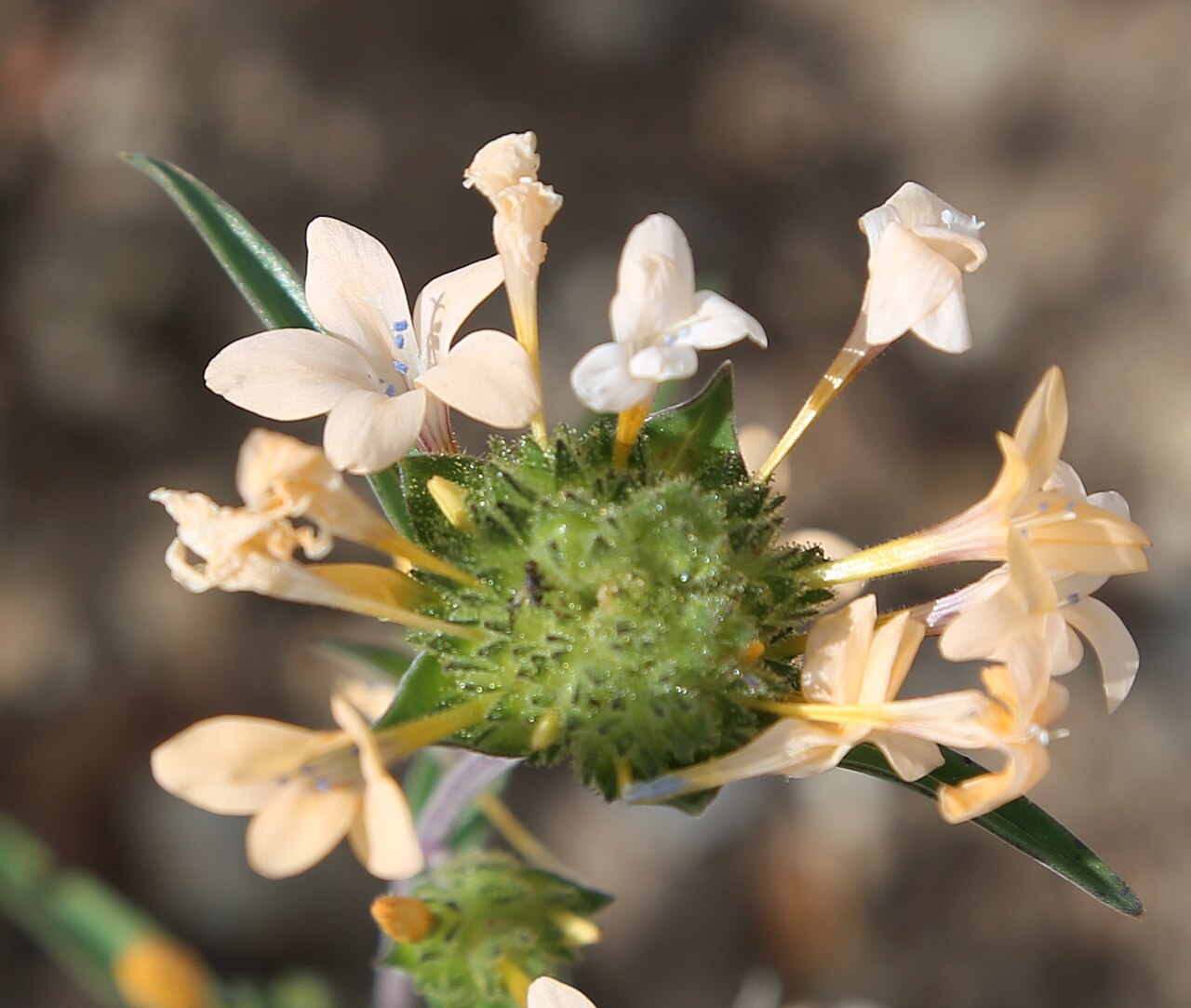
The flowers are held in dense, head-like clusters at the stem tip and sometimes in smaller side clusters where upper leaves meet the stem. Each flower is tubular at the base and flares into five rounded, slightly curving lobes, measuring roughly ¾ to 1¼ inches across — notably large for the genus, which is the source of the species name grandiflora. Flower color ranges from pale cream-white through soft apricot to light yellow or salmon-orange, often with several shades present in the same cluster. Five stamens tipped with distinctive powder-blue anthers project from the throat of each flower, a small but memorable detail visible up close. Bloom runs from late spring into summer, varying by elevation.
Fruit & Seeds
After flowering, each bloom is replaced by a small, dry, three-chambered capsule packed with tiny seeds. The seeds are mucilaginous — when wetted, they release a sticky, gelatinous coating that helps them adhere to soil and passing animals, aiding dispersal onto bare, disturbed ground where the next generation can germinate.
Quick Facts
| Scientific Name | Collomia grandiflora |
| Family | Polemoniaceae (Phlox) |
| Plant Type | Annual Wildflower |
| Mature Height | 8 in – 3 ft |
| Mature Spread | 6–12 in |
| Growth Rate | Fast (single season) |
| Sun Exposure | Full Sun to Part Shade |
| Water Needs | Low |
| Soil Type | Dry, sandy or gravelly, well-drained |
| Soil pH | Neutral to slightly acidic |
| Bloom Time | Late spring – summer |
| Flower Color | Cream, apricot, pale yellow |
| Fall Color | None (annual, dies back) |
| Fruit | Small dry capsule, sticky seeds |
| Deer Resistant | Yes, generally avoided |
| USDA Hardiness Zones | 4–9 (grown as a reseeding annual) |
Native Range
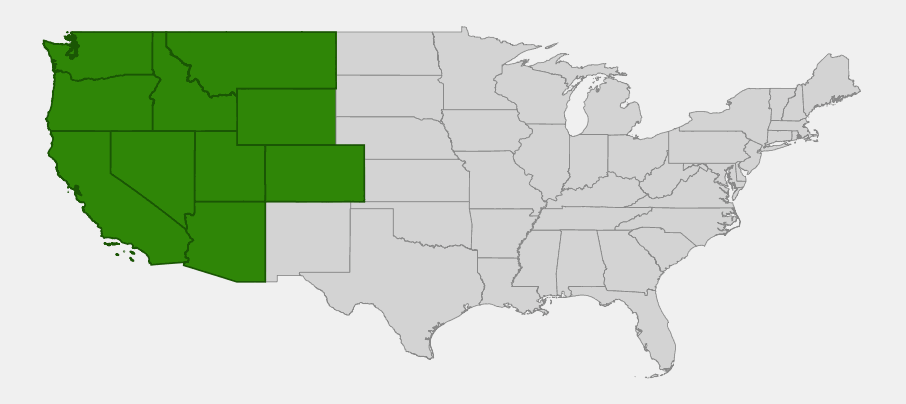
Grand collomia is native across much of the mountain West, from the eastern slopes of the Cascades and Sierra Nevada east through the Great Basin and Rocky Mountain states. It occurs from British Columbia south through Washington, Oregon, Idaho, California and Nevada, and east into Montana, Wyoming, Utah, Colorado and Arizona, typically in the foothill, montane and lower subalpine zones.
Throughout this range it favors open, disturbed, dry sites: logged or burned forest openings, roadcuts, dry meadows, sagebrush steppe edges and rocky slopes, usually in full sun to light shade beneath a thin overstory of pine, fir or Douglas-fir. It is frequently one of the first wildflowers to colonize ground exposed by wildfire, forming conspicuous stands for a year or two before receding as shrubs and perennial grasses recover.
Because it depends on disturbance and lean soil rather than consistent moisture or deep shade, grand collomia is absent from the moist, dense forests of the immediate coast and from the driest low desert basins; it is instead a plant of the transitional dry-forest and foothill belt between the two.
📋 Regional plant lists featuring Grand Collomia: California & Nevada · Idaho, Eastern Oregon & Eastern Washington · Western Oregon & Western Washington · Utah & Western Colorado · Montana & Wyoming · Arizona & New Mexico
Growing & Care Guide
Grand collomia is about as low-effort as native wildflowers get, provided it has the lean, sunny, well-drained conditions it evolved for. It is best sown directly rather than transplanted, and once established it will often reseed itself for years in the right spot.
Light
Full sun produces the most compact, floriferous plants, matching the open, recently disturbed sites where it grows naturally. It also tolerates light, dappled shade beneath a thin pine or fir canopy, though plants there tend to be taller and a bit leggier as they stretch for light.
Soil & Water
This species wants poor to average, sharply drained soil — sandy, gravelly or rocky ground is ideal, and rich, heavily amended garden soil tends to produce weak, floppy growth. Water to establish seedlings, then taper off; established plants get by on natural rainfall and resent summer irrigation, which can promote rot and encourage weedy competition they are not built to outcompete.
Planting Tips
Sow seed in fall or very early spring directly where plants are to grow, pressing seed lightly into bare soil rather than burying it deeply. The seeds’ sticky coating helps them anchor to the soil surface once moistened. Choose a site with minimal competition from grasses or established perennials — bare, disturbed or gravelly ground mimics the post-fire and roadside sites it favors in the wild.
Pruning & Maintenance
None needed. As an annual, grand collomia completes its life cycle in one season, setting seed and dying back by late summer. Leave spent plants in place until seed has dropped if you want the stand to persist and self-sow in following years; otherwise cut back after bloom to tidy the bed.
Landscape Uses
Grand collomia fits naturally into several dry, low-input garden styles:
- Dry wildflower meadows and reseeding annual mixes
- Post-fire or post-disturbance restoration plantings
- Roadside and slope plantings on lean, gravelly soil
- Pollinator gardens seeking unusual flower color
- Gravel gardens and xeriscape borders
- Forest-edge or open-pine understory plantings
Wildlife & Ecological Value
As an early colonizer of bare, disturbed ground, grand collomia plays a modest but real role in stabilizing soil and supporting pollinators in the first seasons after fire or other disturbance, before longer-lived natives return.
For Pollinators
The tubular flowers are visited by native bees, small butterflies, and other short-tongued pollinators able to reach the nectar at the base of the flower tube. Because it often blooms in large, conspicuous stands on otherwise bare post-fire ground, it can be a locally important nectar source in landscapes that are temporarily short on floral resources.
For Birds & Small Mammals
The small capsules release seed that is eaten by some seed-foraging birds and small rodents, though grand collomia is not a dominant forage species compared with the grasses and shrubs it grows alongside.
Ecosystem Role
Grand collomia is a classic early-seral, disturbance-adapted species: its rapid germination and growth on bare mineral soil help hold ground against erosion in the first year or two after fire or logging, and its presence signals a site still in the early stages of post-disturbance recovery. As shrubs and perennial grasses reestablish, grand collomia naturally fades from the site, its seed bank persisting in the soil until the next disturbance cycle.
Cultural & Historical Uses
Grand collomia has no significant documented history of cultivation or widespread traditional use compared with larger, more conspicuous western wildflowers. It was collected and described in the early 1800s by the Scottish botanist David Douglas during his expeditions through the Pacific Northwest, and the genus name Collomia references the sticky, gelatinous coating on the seeds when wetted — from the Greek kolla, meaning glue.
Some Indigenous peoples of the interior West are recorded to have made limited medicinal use of the roots and leaves of grand collomia, though specific applications and groups are not well documented in the available record, and the plant was never a major food or medicine source compared with other regional natives.
Today its main value is horticultural and ecological: as a reseeding annual for dry wildflower gardens, and as a naturally occurring early colonizer that land managers and restoration ecologists watch for as an indicator of recent disturbance in western pine and fir forests.
Frequently Asked Questions
Is grand collomia easy to grow from seed?
Yes. It germinates readily when sown on bare, lean soil in fall or early spring and needs no special treatment. The main requirement is good drainage and minimal competition from other plants — it struggles in rich soil or thick turf.
Will grand collomia come back every year?
It is a true annual, so individual plants die after setting seed. However, where conditions suit it — open, sunny, well-drained ground — it reseeds itself readily and can persist as a self-sustaining patch for many years.
Why do I mostly see grand collomia after wildfires?
Its seed responds strongly to the bare mineral soil and increased light that follow fire or other disturbance. Dense stands often appear the first one or two growing seasons after a burn, then decline as shrubs and perennial vegetation recover and shade or crowd it out.
Does grand collomia need irrigation in a garden setting?
Only to establish seedlings. Once growing, it prefers to be left on natural rainfall; regular summer watering tends to produce weak, floppy plants and can invite the weedy competition it is not adapted to outcompete.
Is grand collomia deer resistant?
Generally, yes. Its glandular, slightly sticky foliage is not a preferred browse for deer, which makes it a reasonably reliable choice in gardens with deer pressure, though no plant is completely deer-proof.

Looking for a nursery that carries Grand Collomia?
Browse our native plant nursery directory: Arizona · California · Colorado · Idaho · Montana · Nevada · Oregon · Utah · Washington · Wyoming