Cushion Buckwheat (Eriogonum ovalifolium)
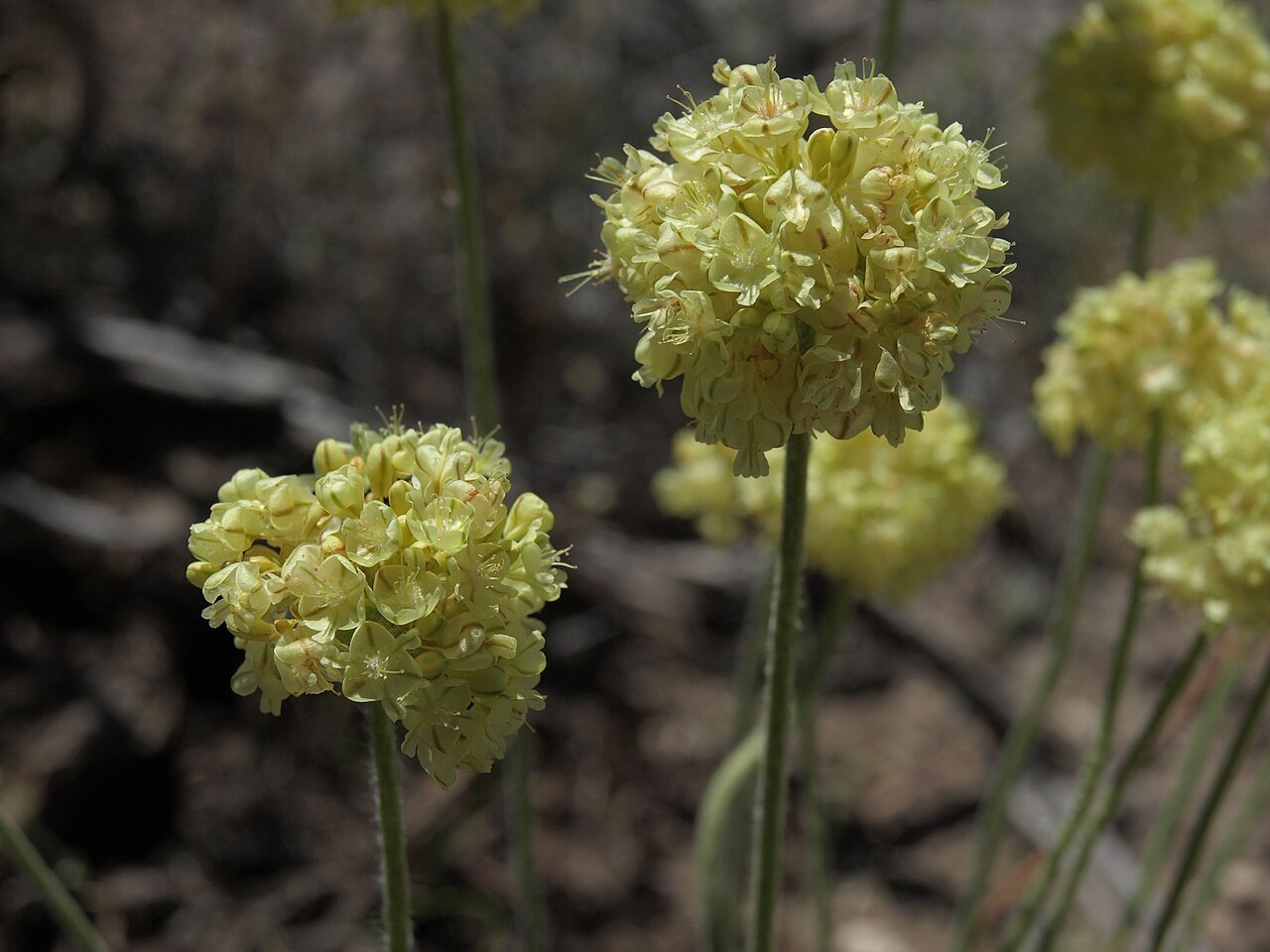
Eriogonum ovalifolium, commonly known as cushion buckwheat, is a low, mat-forming perennial in the buckwheat family (Polygonaceae), native to the mountains, high deserts, and rangelands of the western United States. True to its name, it grows as a dense, ground-hugging cushion of small, rounded, silvery-haired leaves, from which short, leafless flower stalks rise bearing tight, round, pompom-like flowerheads — a form so distinctive that some populations are informally nicknamed “butterballs” for their pale yellow, globe-shaped blooms.
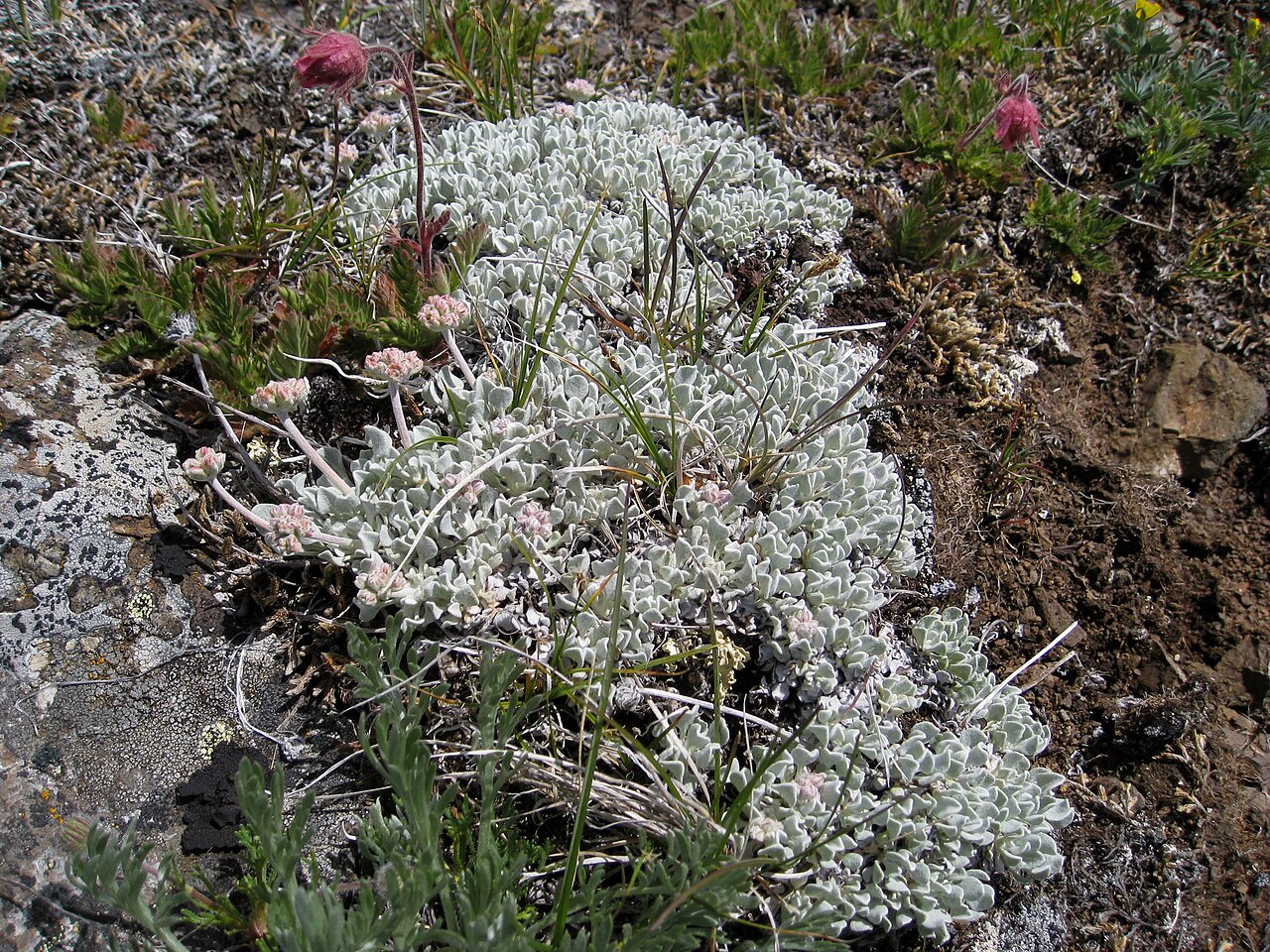
Cushion buckwheat is exceptionally wide-ranging both geographically and in elevation, found from sagebrush flats and dry rangeland at moderate elevation all the way up to wind-scoured alpine ridgelines above treeline. This remarkable elevational range is matched by real variability in the species itself: botanists recognize numerous regional varieties differing in leaf shape, hairiness, and flower color, from pale yellow and cream to white or rose-pink.
For gardeners, cushion buckwheat is a superb choice for rock gardens, alpine troughs, and other lean, well-drained sites where its tight, silvery mat and cheerful round flowerheads provide season-long structure with virtually no maintenance. It is especially valuable to pollinators, and its toughness in poor, rocky soils makes it a dependable, long-lived addition to xeric native plantings throughout the Intermountain West.
Identification
Cushion buckwheat’s low, tight, silvery mat habit and round, stalked flowerheads make it one of the more recognizable wild buckwheats once learned, though leaf size and flower color vary considerably by variety and elevation.
Stems & Leaves
Plants form a dense, ground-hugging cushion or mat, typically 2 to 6 inches (5–15 cm) tall and 6 to 18 inches (15–45 cm) across, composed of tightly packed basal leaves. The leaves are small, oval to spoon-shaped, usually under 1 inch (2.5 cm) long, and covered in dense, soft, silvery-white or gray hairs that give the whole cushion a felted, silvery appearance and help the plant conserve moisture in its exposed, often windy habitat.
Flowers
Flower stalks rise 2 to 8 inches (5–20 cm) above the leaf cushion, each bare of leaves and topped with a single dense, rounded flowerhead about ½ to 1 inch (1.5–2.5 cm) across. Individual flowers are tiny but tightly packed, creating the characteristic compact “pompom” effect. Flower color ranges from pale yellow and cream through white to rose-pink depending on variety and population, often aging to deeper rust or red tones as the flowers mature. Bloom time runs from late spring into summer, shifting later at higher, cooler elevations.
Fruit & Seeds
The fruit is a small, three-angled achene typical of the genus, maturing within the dried flowerhead through summer. The dried, rust-colored flowerheads often persist on their stalks for weeks after bloom, continuing to add visual interest and providing seed for birds and small mammals.
Quick Facts
| Scientific Name | Eriogonum ovalifolium |
| Family | Polygonaceae (Buckwheat) |
| Plant Type | Mat-Forming Perennial |
| Mature Height | 2–6 in (5–15 cm) foliage; to 8 in (20 cm) in bloom |
| Mature Spread | 6–18 in (15–45 cm) |
| Growth Rate | Slow |
| Sun Exposure | Full Sun |
| Water Needs | Low |
| Soil Type | Rocky, gravelly, or sandy; sharply drained |
| Soil pH | 6.5–8.5 (tolerates alkaline soils) |
| Bloom Time | May – August |
| Flower Color | Pale yellow, cream, white, or rose-pink |
| Fall Color | Rust-brown dried flowerheads |
| Fruit | Small three-angled achene |
| Deer Resistant | Yes |
| USDA Hardiness Zones | 3–9 |
Native Range
Cushion buckwheat is native across the mountains, high deserts, and rangelands of the western United States, from Washington and Oregon east through Idaho, Montana, and Wyoming, and south through California, Nevada, and Utah to Arizona, New Mexico, and Colorado. It is one of the most elevationally versatile wild buckwheats in the West, occurring from roughly 2,000 feet in sagebrush rangeland up past 12,000 feet (600–3,700 m) on exposed alpine ridges and fellfields above treeline.
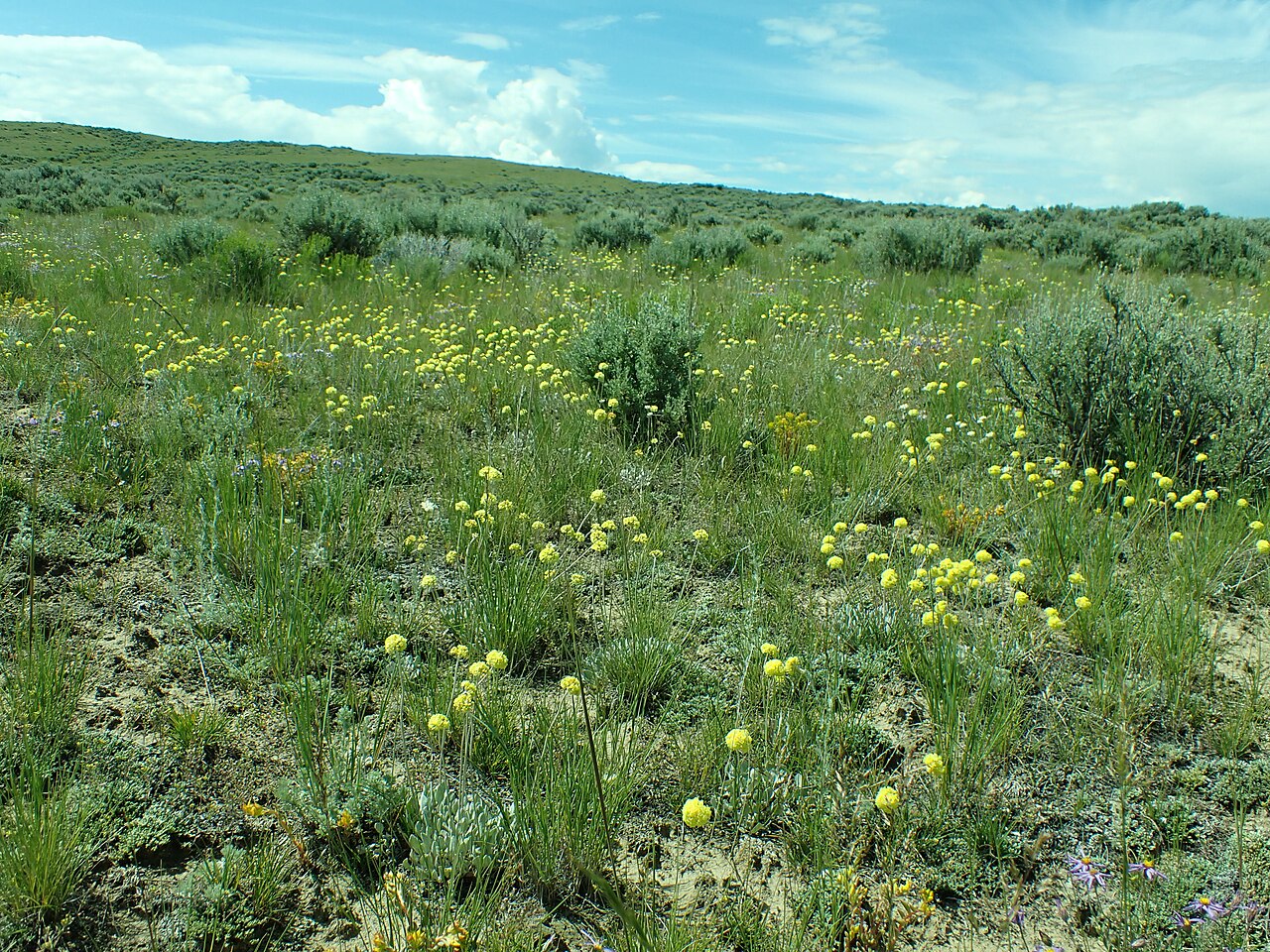
Across this huge range, cushion buckwheat grows in sagebrush steppe, dry montane forest openings, rocky outcrops, and talus slopes, but it is especially characteristic of harsh, wind-exposed alpine and subalpine terrain, where its tight, ground-hugging cushion form and dense insulating leaf hairs are well adapted to intense sun, drying wind, and short growing seasons. It favors shallow, rocky, or gravelly soils and is often found growing directly among stones on exposed ridgelines where few other plants can establish.
Because of this enormous elevation and habitat range, cushion buckwheat includes many regional varieties adapted to local conditions; gardeners planting at higher elevation or in colder climates should look for stock sourced from populations suited to similarly cold, exposed sites.
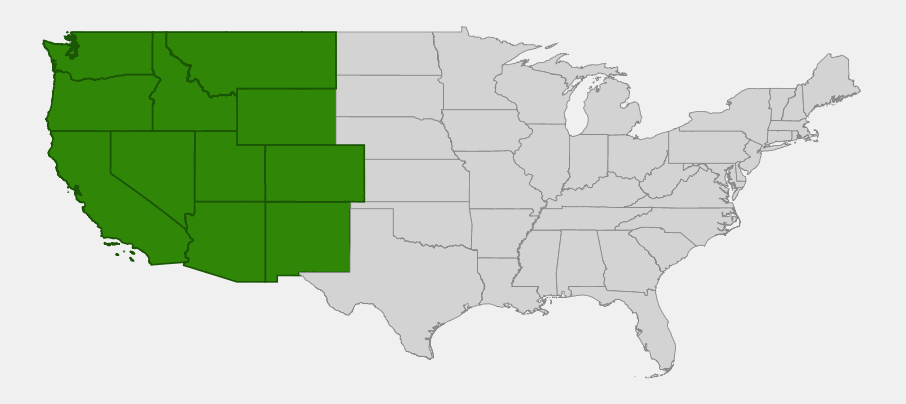
📋 Regional plant lists featuring Cushion Buckwheat: California & Nevada · Arizona & New Mexico · Utah & Western Colorado · Idaho, Eastern Oregon & Eastern Washington · Montana & Wyoming
Growing & Care Guide
Cushion buckwheat is an excellent choice for rock gardens, troughs, and other lean, sharply drained sites throughout the Intermountain West and Rocky Mountain region. Its needs are simple but non-negotiable: full sun and impeccable drainage.
Light
Grow in full sun. Cushion buckwheat is adapted to fully exposed, often windswept sites, and will not perform well or hold its tight mat form in shade.
Soil & Water
This species absolutely requires sharp drainage and is intolerant of heavy, wet, or poorly drained soils, where it readily rots. Rocky, gravelly, or sandy soils that mimic its native talus and ridge habitat are ideal. Once established, cushion buckwheat is highly drought-tolerant and should receive minimal supplemental water; it is a classic candidate for unirrigated rock gardens and alpine troughs, where excess moisture is far more likely to kill the plant than drought.
Planting Tips
Plant container-grown stock in spring or fall into a raised bed, rock garden, or scree planting with excellent drainage — adding coarse gravel or crushed rock to the planting area is often worthwhile in heavier native soils. Space plants 12 to 18 inches apart to allow mats to fill in without overlapping. Choose a variety or seed source adapted to the planting site’s elevation and winter cold for best results.
Pruning & Maintenance
Essentially no pruning is needed. Spent flower stalks can be trimmed back after bloom if a tidier appearance is wanted, but they are equally attractive left to dry in place, where they continue to provide texture and bird-accessible seed. Avoid any mulch or debris accumulating against the cushion, which can trap moisture and promote rot.
Propagation
Propagate from seed sown in fall for natural cold stratification, or from basal cuttings taken from the edge of an established cushion in late spring. Named horticultural selections are sometimes propagated by division of the outer, rooted portions of a mature cushion.
Landscape Uses
- Rock gardens and alpine troughs, where its tight silvery mat is a classic specimen
- Scree and gravel gardens with sharp drainage and minimal irrigation
- Dry slopes and ridgetop plantings at higher, exposed elevations
- Xeriscape borders as a long-lived, low-growing accent
- High-elevation and alpine restoration projects
Wildlife & Ecological Value
Despite its diminutive size, cushion buckwheat is one of the more ecologically important wild buckwheats across its huge elevational range, supporting pollinators and wildlife from sagebrush flats to alpine summits.
For Pollinators
The dense, nectar-rich flowerheads attract a wide variety of native bees, butterflies, and other pollinating insects, and are particularly valuable at higher elevations where flowering plants are scarce and the growing season is short. Cushion buckwheat serves as a larval host plant for several native butterflies, including blues and hairstreaks specialized on wild buckwheats, making it an important component of montane and alpine butterfly habitat.
For Birds
Seed-eating birds forage on the small seeds held in the dried flowerheads through late summer and fall, particularly in open sagebrush and rangeland settings where the plant often grows in abundance.
For Mammals
Small mammals, including pikas and ground squirrels in alpine and subalpine habitats, make use of cushion buckwheat for forage and the surrounding rocky terrain for cover. The plant’s deer resistance also makes it dependable in gardens facing heavy browsing pressure.
Ecosystem Role
Cushion buckwheat’s ability to colonize harsh, rocky, and exposed sites — from sagebrush flats to wind-scoured alpine ridges — makes it an important soil-stabilizing pioneer in some of the most challenging plant habitats in the West. Its extensive elevational range and many locally adapted varieties also contribute significant genetic diversity to high-elevation plant communities, many of which face increasing pressure from a warming climate.
Cultural & Historical Uses
Wild buckwheats, including cushion buckwheat, were part of the broader botanical knowledge of Indigenous peoples across the sagebrush steppe and mountain West, who possessed deep familiarity with native plants for food, medicine, and other uses according to regional and tribal tradition. As with many high-elevation and widely scattered alpine species, specific documented historical uses of Eriogonum ovalifolium itself are limited compared to more intensively studied lowland plants.
In the modern era, cushion buckwheat has become a favorite among rock garden enthusiasts and alpine plant specialists, prized for its tight, silvery mat form, tolerance of extreme cold and drought, and cheerful round flowerheads. Several named horticultural selections exist for gardeners seeking particular flower colors or compact growth habits. Botanists and ecologists studying alpine and subalpine plant communities also regard the species as a useful indicator of healthy, intact high-elevation rangeland and alpine habitat across its range.
Frequently Asked Questions
Why is cushion buckwheat sometimes called “butterballs”?
Some populations, particularly those with pale yellow, perfectly round flowerheads, have earned the informal nickname “butterballs” for their resemblance to small balls of butter sitting atop bare stalks.
How high in elevation does cushion buckwheat grow?
It has one of the broadest elevational ranges of any western wild buckwheat, from around 2,000 feet in sagebrush rangeland up past 12,000 feet on exposed alpine ridges, making it a familiar sight both in the lowland sagebrush sea and on mountain summits.
Does cushion buckwheat need winter protection?
No — it is extremely cold-hardy and naturally adapted to harsh alpine winters across much of its range. The main risk to the plant is excess moisture, not cold, so winter wet is a far greater concern than winter cold.
Can cushion buckwheat be grown in a regular garden bed?
It can, but only if drainage is excellent. In typical garden soil that retains moisture, cushion buckwheat is prone to crown and root rot. Raised beds, rock gardens, or soil heavily amended with coarse gravel give the best results.
What pollinators does cushion buckwheat support?
Its flowerheads attract native bees, butterflies, and other pollinating insects, and the foliage hosts the larvae of several native butterfly species, making it valuable in both lowland and high-elevation pollinator habitat.

Looking for a nursery that carries Cushion Buckwheat?
Browse our native plant nursery directory: Arizona · California · Colorado · Idaho · Montana · Nevada & New Mexico · Oregon · Utah · Washington · Wyoming