Starrush Whitetop (Rhynchospora colorata)
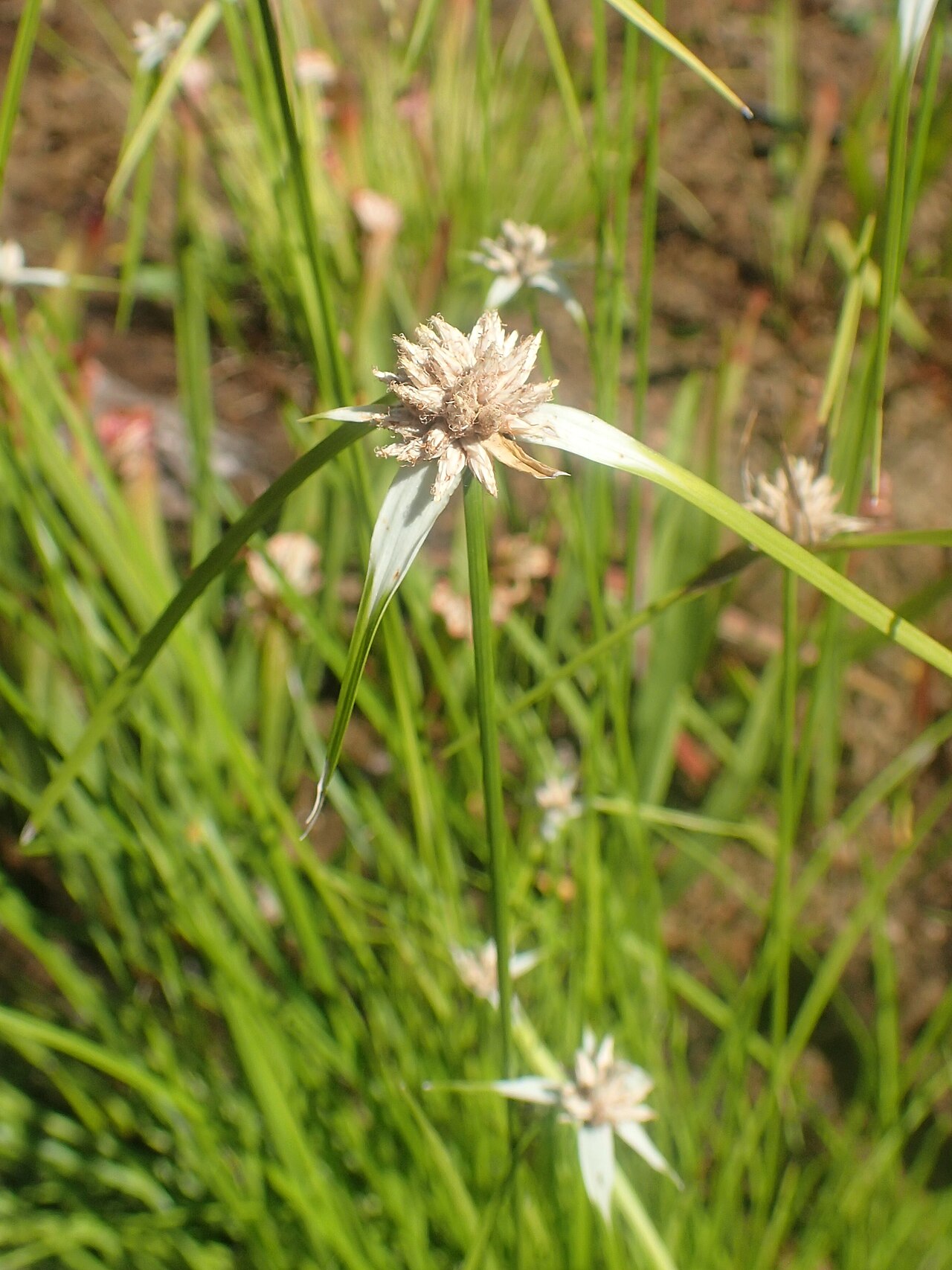
Rhynchospora colorata, commonly called Starrush Whitetop, White-topped Sedge, or Star Sedge, is one of the most eye-catching native sedges of the Gulf Coast and southeastern wetlands. A member of the Cyperaceae (sedge family), it is often mistaken at first glance for a true flower because of its showy, star-shaped cluster of white-tipped bracts — a rare case of a sedge stealing the spotlight from the true wildflowers around it.
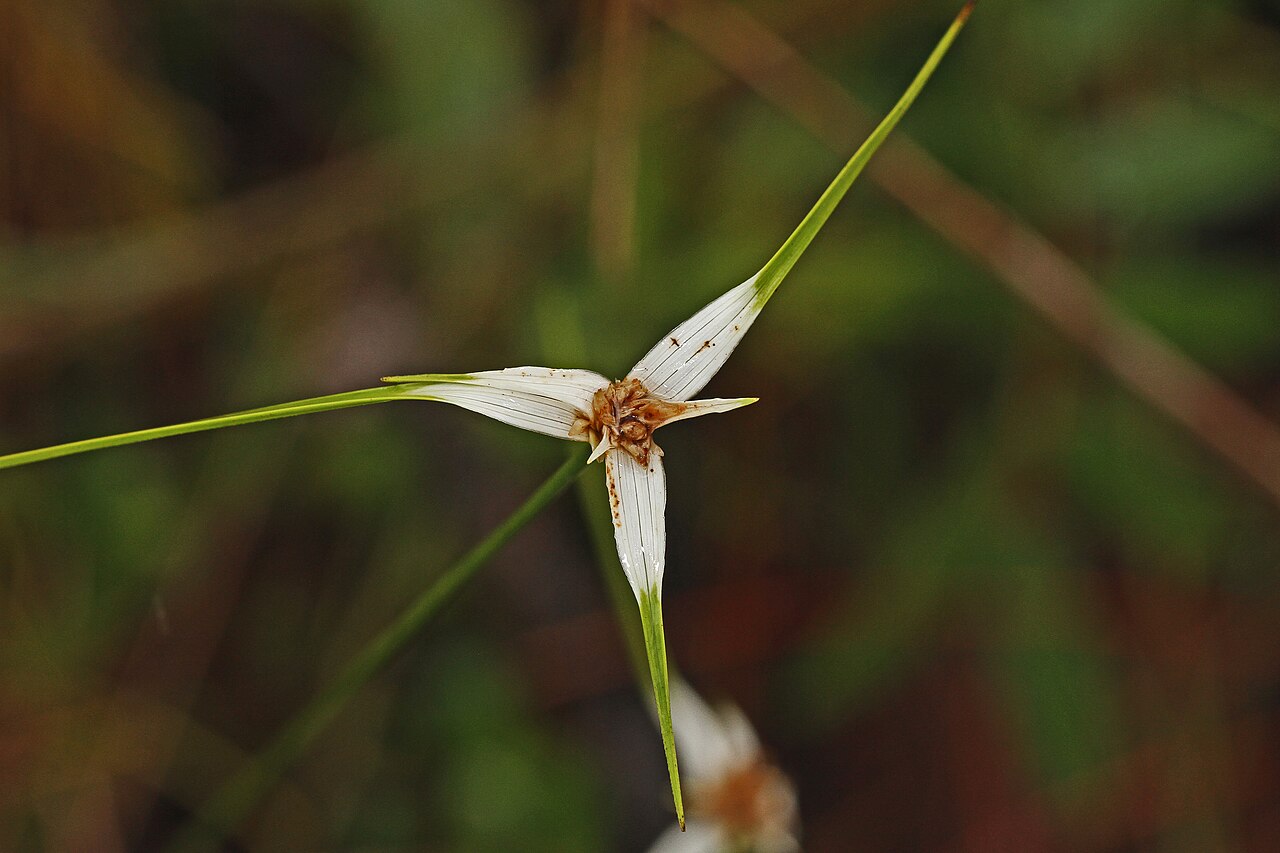
Growing in loose, spreading colonies 8 to 20 inches tall, Starrush Whitetop sends up slender, triangular stems topped with 5 to 8 narrow, pure-white bracts that radiate outward like the points of a star, surrounding a small central cluster of inconspicuous true flowers. The effect is striking enough that the plant is widely sold at native plant nurseries as an ornamental for wet gardens, despite being, botanically, a sedge rather than a showy perennial.
Found naturally in wet pine flatwoods, marsh edges, ditches, and seasonally flooded meadows across the coastal Southeast, Starrush Whitetop is both an ecologically valuable wetland plant and an easy, rewarding choice for rain gardens and pond margins in its native range.
Identification
Starrush Whitetop is unmistakable in bloom, thanks to its star-shaped cluster of bright white, leaf-like bracts, but its grass-like foliage and habit are worth knowing for identification outside of bloom time.
Stems & Growth Habit
The plant grows from slender, spreading rhizomes, forming loose colonies rather than tight bunches. Stems are slender, three-angled (triangular in cross-section, typical of sedges), and erect, reaching 8 to 20 inches (20–50 cm) tall. Basal leaves are narrow, grass-like, and typically shorter than the flowering stems.
Leaves
Leaves are narrow, linear, and grass-like, ⅛ to ¼ inch (3–6 mm) wide, with a slightly keeled midrib. They arise mostly from the base of the plant, with a few shorter leaves along the stem, and remain green through much of the year in mild climates.
Flowers & Fruit
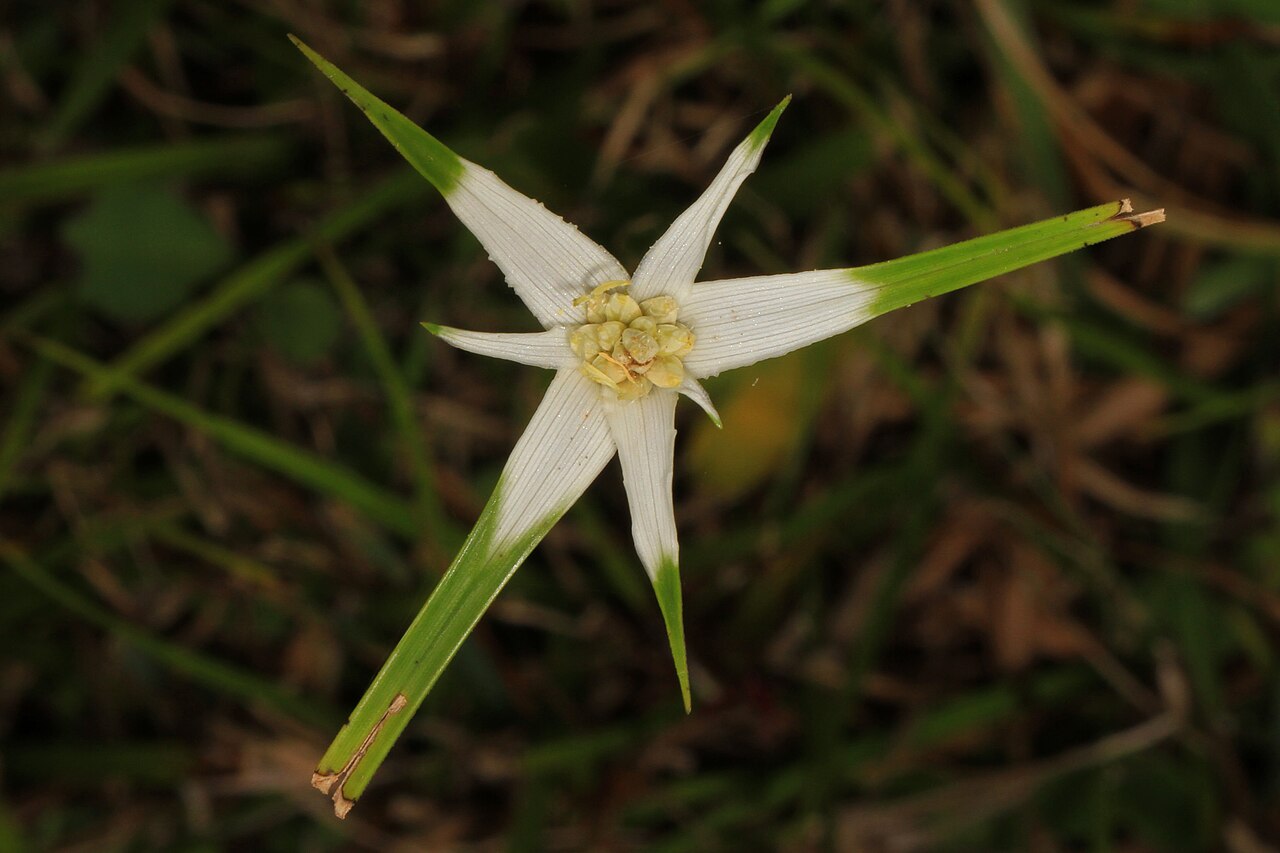
What appears to be the “flower” is actually a cluster of 5 to 8 white, petal-like bracts (modified leaves) radiating outward in a star pattern, each bract pure white at the base and often green at the very tip. At the center sits a small, inconspicuous cluster of true flowers and spikelets, which mature into tiny, dry, nutlet-like fruits (achenes). Bloom is heaviest from late spring through summer, often continuing sporadically into fall with adequate moisture.
Quick Facts
| Scientific Name | Rhynchospora colorata |
| Family | Cyperaceae (Sedge) |
| Plant Type | Perennial Sedge (Grass-like) |
| Mature Height | 8–20 in (20–50 cm) |
| Mature Spread | Spreads by rhizomes, forming loose colonies |
| Growth Rate | Moderate to fast in moist soil |
| Sun Exposure | Full Sun to Part Shade |
| Water Needs | Moderate to High; tolerates standing water |
| Soil Type | Moist to wet; sandy, loamy, or boggy |
| Soil pH | 5.0–7.0 (acidic to neutral) |
| Bloom Time | Late spring – fall |
| Flower Color | White (bracts), yellowish-brown (true flowers) |
| Fall Color | Green, persisting into mild winters |
| Fruit | Tiny dry achenes, not showy |
| Deer Resistant | Yes |
| USDA Hardiness Zones | 7–10 |
Native Range
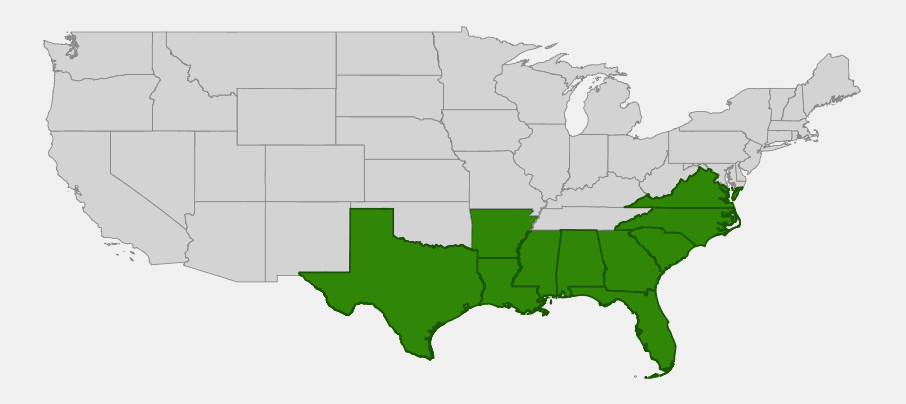
Starrush Whitetop is native to the coastal plain of the southeastern United States, ranging from Virginia south through the Carolinas, Georgia, Florida, Alabama, Mississippi, Louisiana, and Arkansas, west into Texas.
It grows naturally in wet pine flatwoods, marsh and pond margins, roadside ditches, and seasonally flooded meadows and prairies, often alongside other wetland sedges and rushes, spikerush (Eleocharis spp.), and St. John’s wort (Hypericum spp.). It thrives where soils stay consistently moist to saturated and tolerates brief periods of standing water.
Starrush Whitetop is widely cultivated outside its native range for its ornamental bracts and is sometimes found as an escape well beyond this native footprint; gardeners outside the Southeast should check local status before planting, since this guide covers only its native distribution.
📋 Regional plant lists featuring Starrush Whitetop: Arkansas, Louisiana & Eastern Texas · South & West Texas · Maryland, Virginia & West Virginia · Georgia, Alabama & Mississippi · North Carolina & South Carolina
Growing & Care Guide
Starrush Whitetop is an easy, forgiving plant for any garden spot that stays consistently moist, offering months of unusual white “star” blooms with little fuss.
Light
Grows best in full sun to light part shade. More sun generally means denser growth and heavier bloom, while part shade is tolerated, especially in hotter inland gardens, as long as soil moisture stays consistent.
Soil & Water
This sedge wants consistently moist to wet soil and tolerates brief standing water, making it well suited to rain gardens, pond edges, and low spots that stay soggy after storms. It is not drought-tolerant and will decline quickly in dry, well-drained soil without supplemental water. It adapts to a range of soil textures, from sand to loam, as long as moisture is reliable.
Planting Tips
Plant from containers or divisions in spring or fall. Space plants 12 to 18 inches apart; because it spreads by rhizomes, a modest planting will fill in over a season or two into a solid patch. Pair it with other wetland natives at pond margins, rain garden basins, or the damp edges of a yard.
Propagation
Starrush Whitetop is most easily propagated by dividing established clumps in early spring, since the rhizomatous colonies separate readily into smaller, rooted sections. It also self-seeds modestly in consistently damp soil.
Landscape Uses
Its unusual bloom and wetland tolerance make it useful in several settings:
- Rain gardens and bioswales that see periodic standing water
- Pond and water-feature margins for a soft, naturalistic edge
- Wet meadow restoration and native wetland plantings
- Container water gardens as a hardy, showy accent
- Mass plantings in low, poorly drained lawn areas
Pruning & Maintenance
Little maintenance is needed. Cut back dead foliage in late winter before new spring growth emerges. Established colonies can be divided every few years if they outgrow their space or to share with other gardeners.
Wildlife & Ecological Value
Starrush Whitetop plays a modest but meaningful role in southeastern wetland ecosystems, providing structure and resources where few showy native plants tolerate standing water as well as this sedge.
For Pollinators
Small native bees and flies visit the inconspicuous central flowers, drawn in part by the showy white bracts that function much like petals to attract pollinators, even though sedges are wind-pollinated as a family and do not depend heavily on insect visitation.
For Birds
The small achenes produced after bloom are eaten by marsh and wetland birds, including various sparrows and other seed-eating songbirds that forage in wet meadow and flatwoods habitat.
Ecosystem Role
As a rhizomatous wetland sedge, Starrush Whitetop helps stabilize soil in seasonally wet ground and contributes to the structural diversity of pine flatwoods and marsh-edge plant communities. Its tolerance of fluctuating water levels makes it a useful indicator and component species of healthy, undrained coastal wetlands.
Cultural & Historical Uses
Unlike many showier wetland wildflowers, Starrush Whitetop has no well-documented history of use as food or medicine by Indigenous peoples of the Southeast; its value has historically been ecological rather than utilitarian, as a component of pine flatwoods and wet prairie plant communities.
In recent decades, the plant’s unusual star-shaped bloom has made it a popular addition to native and water-garden horticulture across the Southeast and beyond, sold commercially for its ornamental appeal in pond plantings and rain gardens.
Because it adapts readily to container culture and shallow water, Starrush Whitetop is also commonly used in constructed wetlands and stormwater management plantings, where its spreading habit and tolerance for fluctuating water levels are put to practical use.
Frequently Asked Questions
Is Starrush Whitetop a true flower or a sedge?
It is a sedge. What looks like a white, star-shaped flower is actually a cluster of modified leaf-like bracts surrounding small, inconspicuous true flowers at the center.
Does Starrush Whitetop need standing water?
Not constantly, but it tolerates brief periods of standing water and strongly prefers consistently moist to wet soil. It is not a good choice for dry, well-drained garden beds.
Will Starrush Whitetop spread aggressively in my garden?
It spreads by rhizomes and will fill in a damp bed over a season or two, but it is not considered weedy or invasive within its native range. Outside its native range, check local guidance before planting, as it has naturalized in some areas.
How much sun does it need?
Full sun produces the best bloom, but it tolerates part shade, particularly in hot inland climates, as long as the soil stays consistently moist.
Can Starrush Whitetop be grown in a container water garden?
Yes. It adapts well to container culture in shallow water or consistently saturated potting mix, making it a popular choice for small water gardens and pond-edge containers.

Looking for a nursery that carries Starrush Whitetop?
Browse our native plant nursery directory: Alabama & Arkansas · Florida & Georgia · Louisiana & Mississippi · North Carolina · South Carolina, Texas & Virginia