Paper Flower (Psilostrophe cooperi)
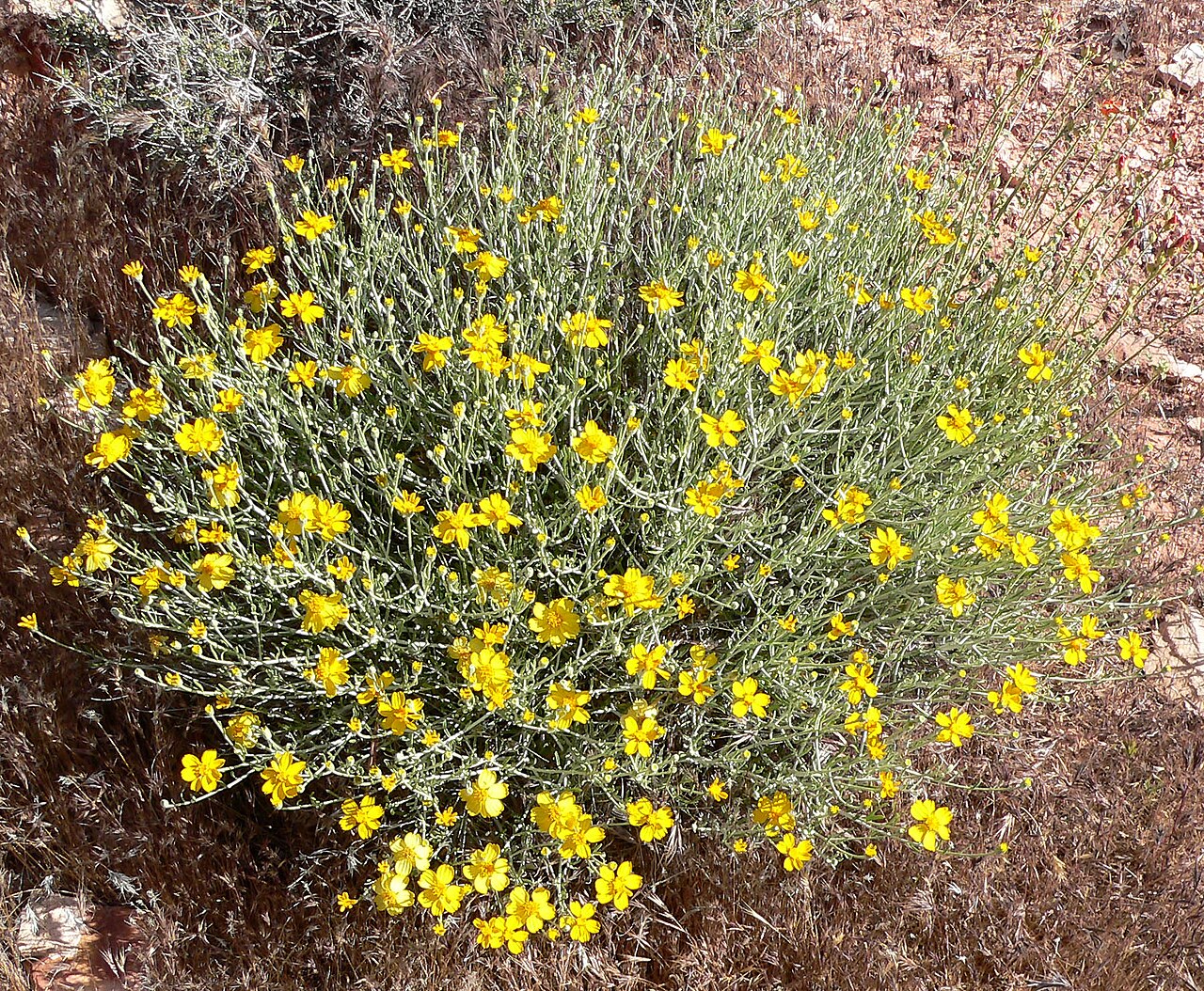
Psilostrophe cooperi, commonly known as Paper Flower, Cooper’s Paperflower, or Whitestem Paperflower, is a low, rounded desert subshrub prized for an almost absurd amount of bloom from a plant that needs almost no water. A member of the Asteraceae (sunflower family), it covers itself in clusters of bright yellow, daisy-like flowers for months at a time, then holds onto the faded, papery blooms — the source of its common name — long after the color fades to a dry, parchment tan.
Native to the Mojave and Sonoran Desert region, Paper Flower forms a mounded, silvery-gray clump 1 to 2 feet tall and slightly wider, with narrow, felted leaves that reflect sunlight and reduce water loss. It is closely related to, but distinct from, the more easterly Paperflower (Psilostrophe tagetina) found on the southern Great Plains and Colorado Plateau; the two overlap only narrowly and are best told apart by range and subtle leaf and bract differences.
Few native shrubs match Paper Flower’s combination of near-continuous bloom, minimal water needs, and compact size, which makes it a favorite for low-water gardens, rock gardens, and roadside plantings throughout its desert range.
Identification
Paper Flower is a small, rounded, woody-based subshrub that is easiest to recognize in bloom, when its bright yellow flower heads blanket the plant, but its silvery, felted foliage is distinctive even without flowers.
Stems & Growth Habit
The plant forms a dense, rounded mound 1 to 2 feet (30–60 cm) tall and about as wide, with numerous slender, whitish stems rising from a woody base — the “whitestem” of one common name. Stems are brittle and covered in fine, appressed hairs that give the whole plant a grayish-white cast.
Leaves
Leaves are narrow and linear to lance-shaped, 1 to 2 inches (2.5–5 cm) long, densely covered in soft white hairs (tomentose) that give them a felt-like, silvery-green appearance. This dense pubescence reflects intense desert sun and helps the plant conserve moisture through long dry spells.
Flowers & Fruit
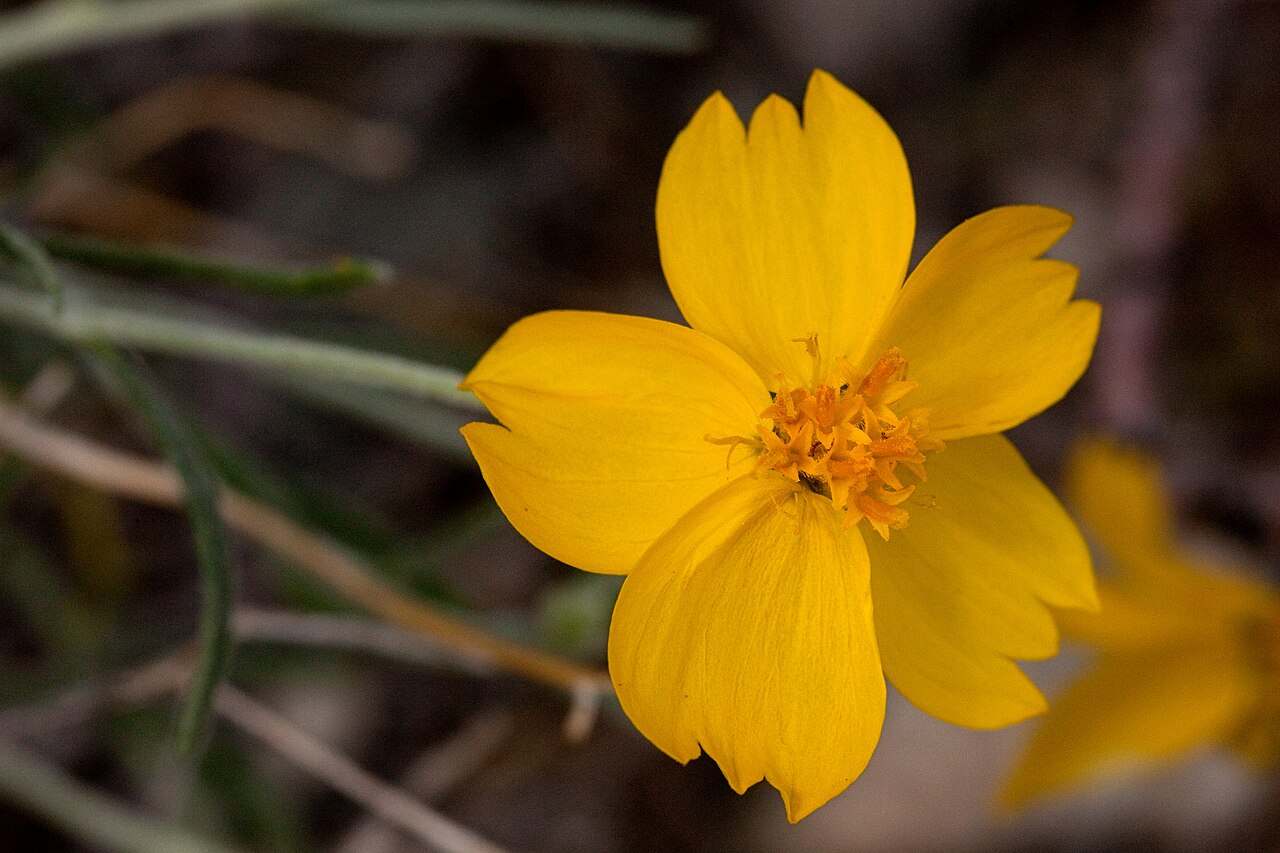
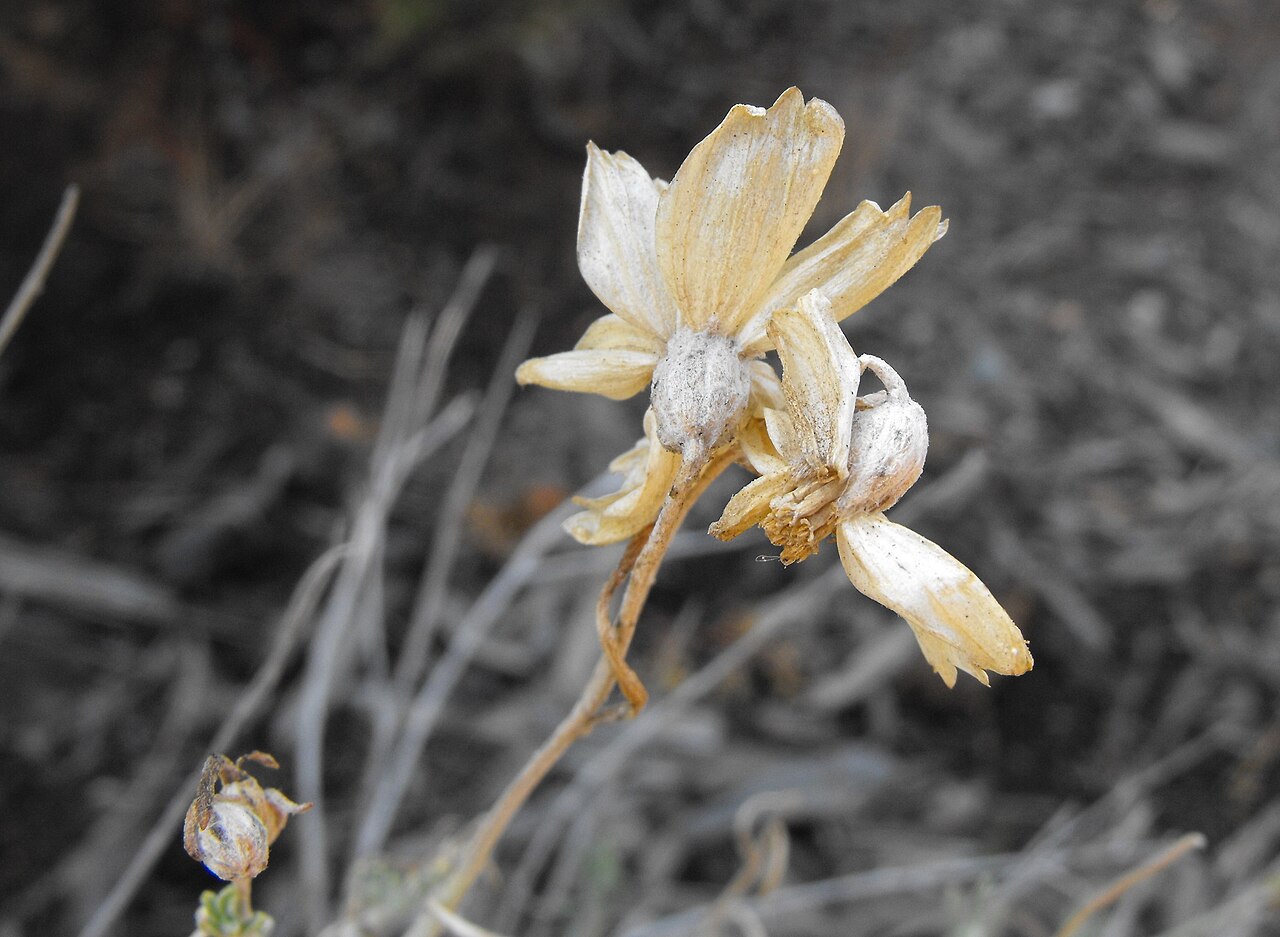
Flower heads are bright yellow, ¾ to 1¼ inches (2–3 cm) across, with 3 to 8 broad, often notched ray florets surrounding a cluster of tubular disc florets, arranged in loose clusters at the stem tips. Bloom is heaviest in spring but can continue intermittently through fall after any rain. As the flowers fade, the papery, straw-colored ray florets persist on the plant rather than dropping cleanly, giving mature plants a two-toned look of fresh yellow and dried tan blooms at once. Seeds are small, dry achenes typical of the sunflower family.
Quick Facts
| Scientific Name | Psilostrophe cooperi |
| Family | Asteraceae (Sunflower) |
| Plant Type | Evergreen Subshrub |
| Mature Height | 1–2 ft (30–60 cm) |
| Mature Spread | 1–2 ft |
| Growth Rate | Moderate |
| Sun Exposure | Full Sun |
| Water Needs | Low |
| Soil Type | Rocky, gravelly or sandy, well-drained |
| Soil pH | 7.0–8.5 (neutral to alkaline) |
| Bloom Time | March – October, heaviest in spring |
| Flower Color | Bright yellow |
| Fall Color | Gray-green (evergreen) |
| Fruit | Small dry achenes, not showy |
| Deer Resistant | Yes |
| USDA Hardiness Zones | 8–10 |
Native Range
Paper Flower is native to the hot deserts of the Southwest, found across southeastern California, southern Nevada, Arizona, southern Utah, and New Mexico, generally at elevations between 1,000 and 5,000 feet.
It grows on dry, rocky slopes, washes, mesas, and gravelly flats within creosote bush scrub, blackbrush scrub, and desert grassland communities, often alongside brittlebush (Encelia farinosa), creosote bush (Larrea tridentata), and various cacti. It is well adapted to disturbed, open ground and is one of the more reliable sources of spring and fall color on bare desert roadsides and washes.
The species ranges into northern Mexico but is absent from the cooler, higher grasslands and plateaus of the central and northern Rockies, where it is replaced by the related Paperflower (Psilostrophe tagetina), a separate species found across the southern Great Plains, Colorado Plateau, and Trans-Pecos Texas.
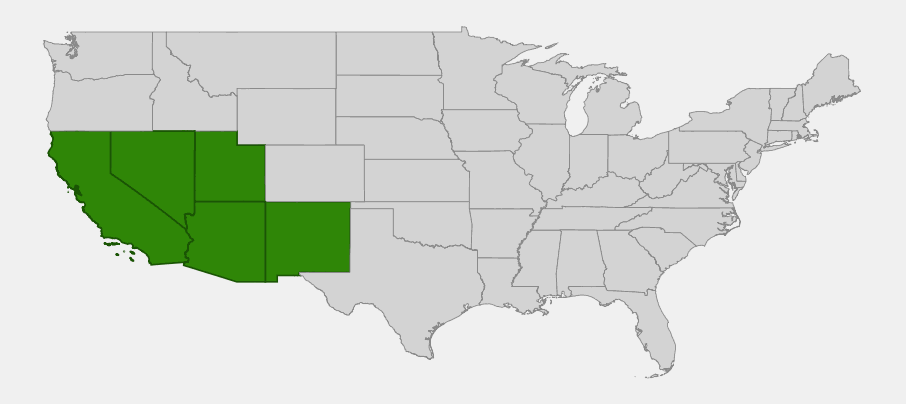
📋 Regional plant lists featuring Paper Flower: California & Nevada · Arizona & New Mexico · Utah & Western Colorado
Growing & Care Guide
Paper Flower is one of the easiest and most rewarding low-water shrubs for a desert garden, rewarding minimal care with months of bright bloom.
Light
Plant in full sun. Paper Flower needs strong, direct light to bloom well and to keep its tidy, compact form; in shade it becomes sparse and leggy.
Soil & Water
It thrives in poor, rocky, or sandy soils with excellent drainage and tolerates alkaline conditions without trouble. Established plants need little to no supplemental water and can rot in heavy, poorly drained, or frequently irrigated soil. During the first growing season, occasional deep watering helps roots establish; after that, natural rainfall is usually sufficient in its native range.
Planting Tips
Set out container plants in fall or early spring. Space plants 18 to 24 inches apart to allow for their mounded spread. Avoid rich, amended soil, which encourages leggy growth and shortens the plant’s lifespan; native, lean desert soil produces a tighter, longer-lived clump.
Pruning & Maintenance
Paper Flower tends to become woody and open with age, typically after 3 to 5 years. A hard cutback by about half in late winter or early spring rejuvenates the plant and encourages fresh, compact growth and heavier bloom. Deadheading spent flower clusters can tidy the look but is not necessary for continued blooming.
Landscape Uses
Paper Flower’s compact size and long bloom season suit it to many low-water settings:
- Rock gardens and gravel beds where its silvery foliage and yellow blooms stand out
- Roadside and median plantings for reliable, low-maintenance color
- Xeriscaping as a true low-water flowering accent
- Pollinator gardens paired with other desert-blooming natives
- Mass plantings on slopes for seasonal color and erosion control
Fire Ecology
Paper Flower occurs in desert scrub communities with naturally sparse fuel and infrequent fire. It is not fire-adapted and is typically killed outright by fire, recolonizing burned areas afterward from wind-blown seed rather than resprouting.
Wildlife & Ecological Value
Despite its tough, drought-adapted nature, Paper Flower is a valuable nectar and pollen source in a landscape where blooming plants can be scarce for much of the year.
For Pollinators
The long bloom season makes Paper Flower an important nectar source for native bees and small butterflies, especially during the heat of late spring and summer when fewer desert wildflowers are in flower. Its flat, open flower heads are easy landing platforms for a range of small pollinating insects.
For Birds & Mammals
Small seed-eating birds forage on the dry achenes left after bloom, and the dense, low mounds offer modest cover for small desert wildlife. Jackrabbits and other herbivores browse the foliage occasionally, though the plant’s hairy leaves make it less palatable than many desert annuals, which helps protect it from heavy grazing pressure.
Ecosystem Role
As one of the more reliably blooming shrubs on the desert floor, Paper Flower helps anchor pollinator activity in open, disturbed, and rocky ground where plant cover is otherwise sparse. Its ability to establish on bare, gravelly sites also gives it a minor role in stabilizing disturbed desert soils after road-building or other ground disturbance.
Cultural & Historical Uses
Paper Flower has no significant documented history of use by Indigenous peoples of the region as food or medicine, unlike some of its more prominent desert neighbors. Its primary historical value has been ecological and ornamental rather than utilitarian.
In more recent decades, Paper Flower has become a staple of Southwestern xeriscape and native-plant horticulture, valued by desert landscapers for its reliable, long-lasting bloom with essentially no irrigation. It is commonly sold at native plant nurseries throughout Arizona, Nevada, and California as a low-water alternative to thirstier ornamental shrubs.
The plant’s enduring, papery dried flowers have also made it a minor subject of interest for dried-flower arrangements and desert botanical displays, where its persistence after bloom — rather than dropping its petals — is considered a distinctive and attractive trait.
Frequently Asked Questions
Is Paper Flower the same plant as Paperflower (Psilostrophe tagetina)?
No. They are closely related but distinct species. Paper Flower (Psilostrophe cooperi) is native to the Mojave and Sonoran Deserts of California, Nevada, Arizona, Utah, and New Mexico, while Paperflower (Psilostrophe tagetina) grows farther east on the southern Great Plains, Colorado Plateau, and Trans-Pecos Texas.
Why does it keep its dead flowers?
The faded ray florets dry to a stiff, papery texture rather than falling off cleanly, which is where both the common name “Paper Flower” and the dried, straw-colored look of older blooms come from.
How much water does Paper Flower need?
Very little once established. It is adapted to arid, rocky desert soils and can suffer root rot with regular irrigation or heavy soil. Occasional deep watering during the first growing season is enough to help it establish.
Does Paper Flower need pruning?
A hard cutback every few years in late winter keeps the plant compact and encourages fuller bloom, since it can become woody and sparse with age if left unpruned.
Is Paper Flower good for pollinators?
Yes. Its long, nearly continuous bloom season provides nectar for native bees and small butterflies during stretches of the year when few other desert plants are flowering.

Looking for a nursery that carries Paper Flower?
Browse our native plant nursery directory: California · Nevada & New Mexico · Arizona · Utah