Chalk Maple (Acer leucoderme)
Acer leucoderme, commonly called Chalk Maple (also whitebark maple or pale-bark maple), is a small understory tree native to the Piedmont and inner coastal plain of the southeastern United States. It belongs to the same close-knit group of sugar maples as sugar maple (Acer saccharum) and Florida maple (Acer barbatum, sometimes still folded into A. saccharum by some authors), and it is frequently mistaken for both. Chalk maple gets its common name from the smooth, pale chalky-white to light gray bark that develops on mature trunks, a trait that makes it easy to pick out in a winter woodland even without leaves.
In the wild, chalk maple stays small — usually 15 to 30 feet tall — and often grows with several leaning trunks rather than one straight one, forming a rounded, airy crown. It favors rocky, well-drained slopes, bluffs, ravines and riverbanks, frequently over limestone or other mafic rock, and it tolerates far drier, rockier sites than its larger cousin sugar maple. This toughness, combined with dependable orange-to-scarlet fall color on a tree that rarely exceeds the footprint of a large shrub, has made chalk maple an increasingly popular choice for smaller native gardens across the Southeast.
Because it is still an uncommon tree in cultivation, chalk maple is also a good conservation-minded planting choice: adding it to a garden or restoration planting helps diversify the local gene pool of maples without competing with the showier but non-native Japanese maple (Acer palmatum) that so often fills the same “small ornamental maple” niche in southern landscapes. Georgia gardeners weighing maple choices for a home landscape may also find our broader roundup of maple trees for Georgia useful for comparing chalk maple against the state’s other native and ornamental options.
Identification
Chalk maple is a small, often multi-trunked tree or large shrub reaching 15 to 30 feet in height, occasionally to 35 feet on the best sites, with a rounded, irregular crown of slender branches. Many wild specimens lean or arch rather than growing a single straight trunk, a habit shaped by the steep, rocky slopes where the species most often grows.
Bark & Stems
The bark is the single best field mark: on young stems and the upper trunk it is smooth, thin, and pale chalky-white to light gray, often described as looking “whitewashed.” As the tree ages, the bark at the base becomes thicker, darker and more furrowed, but the upper trunk and branches typically keep their pale, smooth look. Twigs are slender and reddish-brown, with small, pointed buds.
Leaves
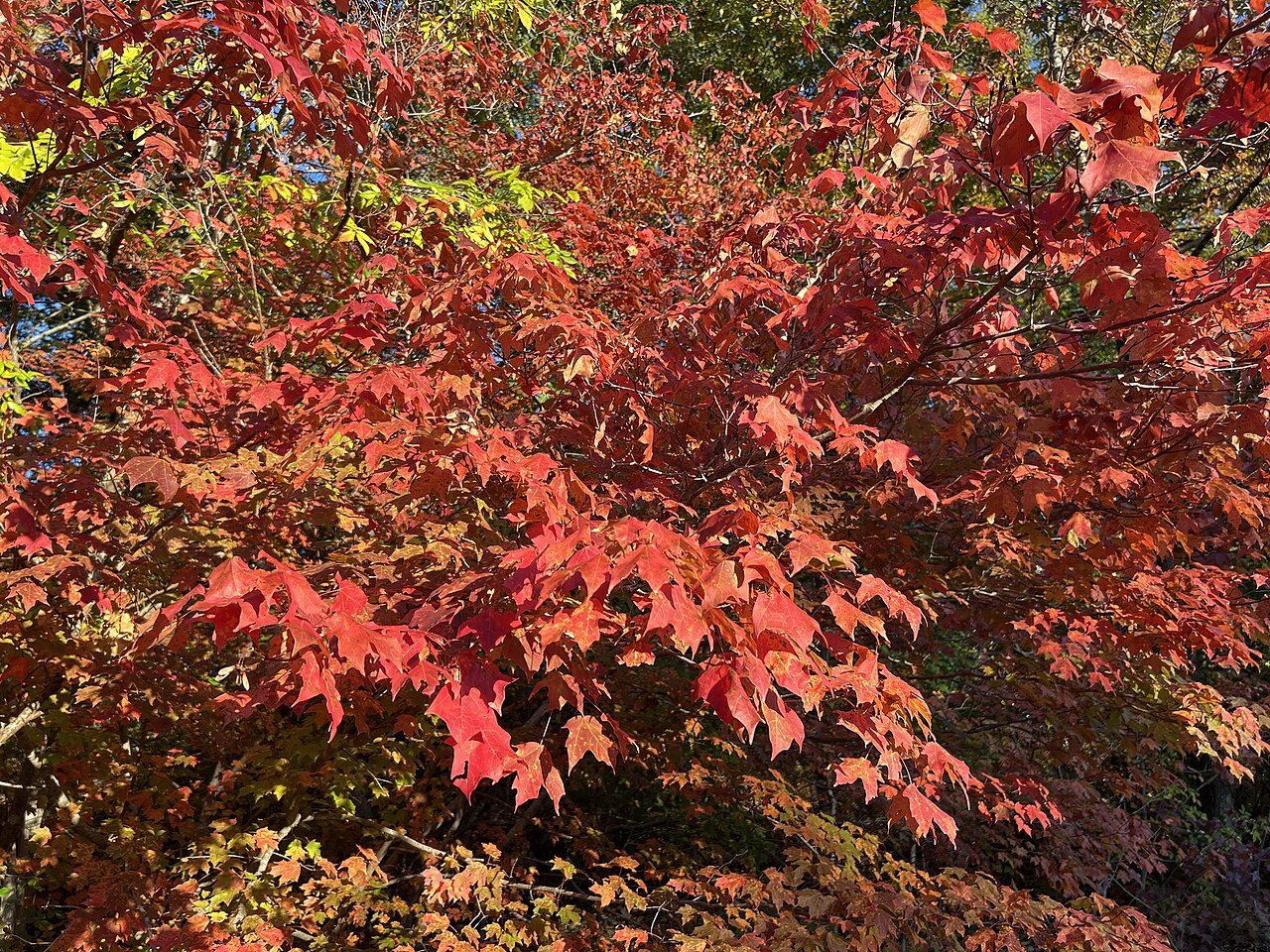
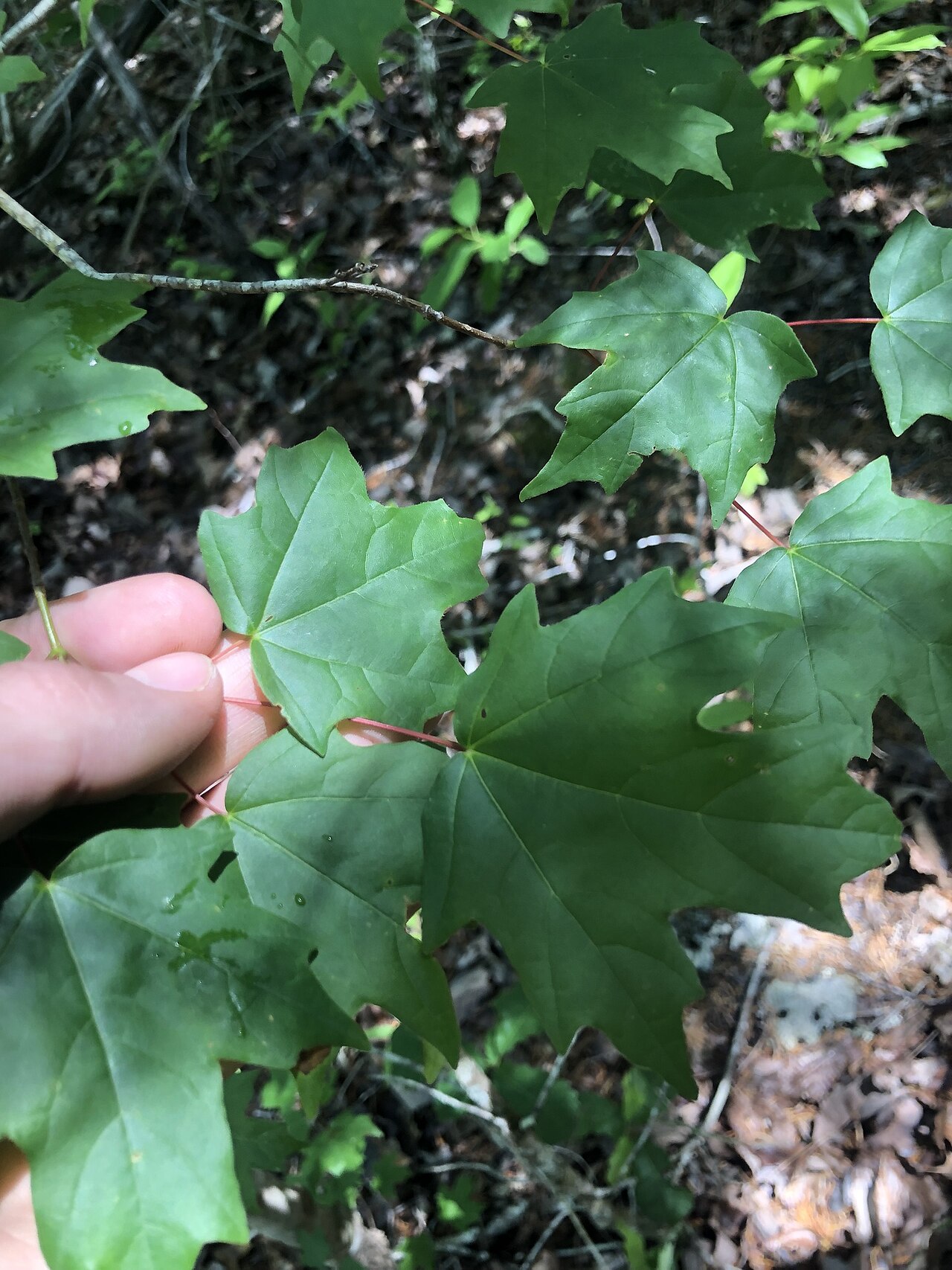
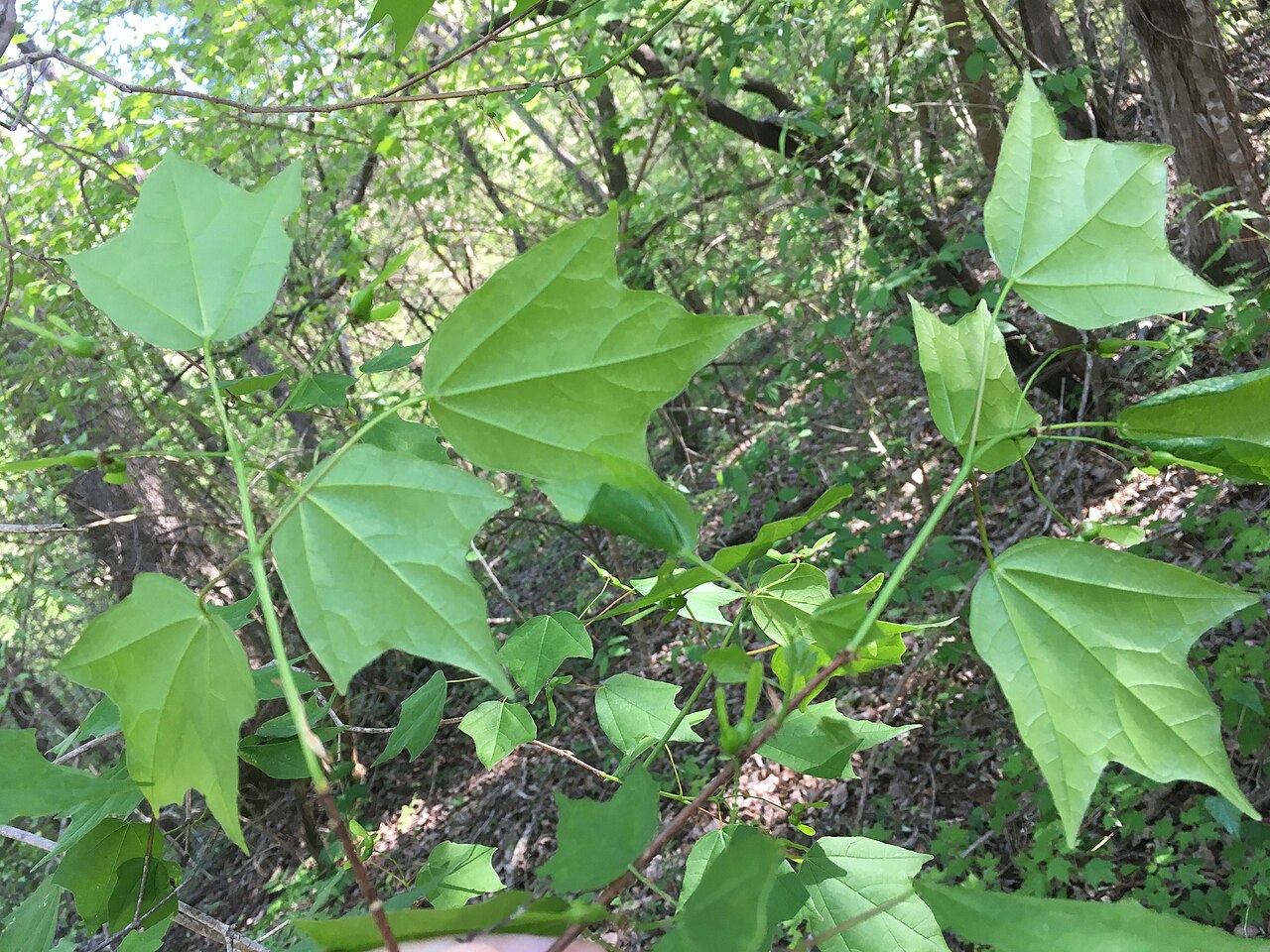
Leaves are opposite, simple, and 2 to 4 inches long and wide, with 3 or 5 shallow, long-pointed lobes and wavy or coarsely toothed margins. They are dark green and hairless above, with a soft, pale yellow-green and finely hairy (pubescent) underside — a key difference from the similar Florida maple, whose leaf undersides are whitish rather than yellow-green. In fall, chalk maple reliably turns shades of yellow, orange, and deep scarlet, often all on the same tree at once.
Flowers & Fruit
Small, yellow-green flowers appear in drooping clusters in early spring, before or as the leaves emerge, and are an early-season nectar source for native bees. The fruit is a paired winged samara (“helicopter seed”), about 1 inch long, maturing from green to brown in autumn and dispersing on the wind through fall and early winter.
Quick Facts
| Scientific Name | Acer leucoderme |
| Family | Sapindaceae (Maple) |
| Plant Type | Deciduous understory tree |
| Mature Height | 15–30 ft (occasionally to 35 ft) |
| Mature Spread | 15–25 ft, often multi-trunked and rounded |
| Growth Rate | Slow to moderate |
| Sun Exposure | Part Shade to Full Sun |
| Water Needs | Average; good drought tolerance once established |
| Soil Type | Rocky, well-drained; tolerates thin or calcareous soils |
| Soil pH | Acidic to neutral; tolerates calcareous soils |
| Bloom Time | March – April |
| Flower Color | Yellow-green |
| Fall Color | Yellow, orange and scarlet, often together |
| Fruit | Paired winged samaras, about 1 in, ripening in fall |
| Deer Resistant | Somewhat (occasional light browsing) |
| USDA Hardiness Zones | 6–9 |
Native Range
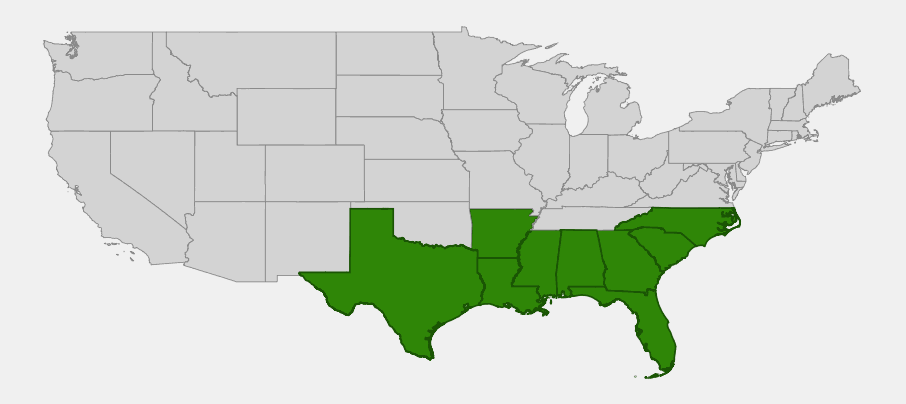
Chalk maple is native to the southeastern United States, ranging from central North Carolina south through South Carolina, Georgia and the Florida panhandle, and west through Alabama, Mississippi, Louisiana and Arkansas to eastern Texas. It is most frequent in the inner coastal plain and Piedmont of Georgia and Alabama, and nowhere in its range is it considered a common tree; it tends to occur as scattered individuals or small colonies rather than as a dominant canopy species.
Typical habitat is rocky, well-drained slopes and bluffs, river and stream banks, ravines, and upland woods, often where the underlying rock is calcareous or otherwise mineral-rich. Chalk maple grows as a true understory tree beneath taller canopy species such as oaks, hickories and loblolly pine, and it tolerates considerably drier, rockier ground than sugar maple, which is one reason the two species sort out into different micro-habitats even where their ranges overlap.
Chalk maple is sometimes confused in herbarium and nursery records with Florida maple and sugar maple, since all three were historically treated as part of one variable species complex. Modern floras recognize chalk maple as its own species, distinguished by its smaller stature, smaller leaves with shallower lobes, and the chalky-white bark that gives it its name. If you are comparing species for a planting plan, see our pages on sugar maple and Florida maple for how the three compare side by side.
📋 Regional plant lists featuring Chalk Maple: North Carolina & South Carolina · Georgia, Alabama & Mississippi · Arkansas, Louisiana, Eastern Oklahoma & Eastern Texas
Growing & Care Guide
Chalk maple is one of the easiest native maples to place in a smaller garden, since it never grows into the kind of large shade tree that outgrows a modest lot. Give it reasonably well-drained soil and it asks for very little else.
Light
In the wild chalk maple grows as an understory tree, so it tolerates part shade very well and often shows its best form there, with an open, layered branching habit. It also does fine in full sun on sites with adequate moisture, where it tends to grow denser and flower and fruit a bit more heavily. Avoid deep, continuous shade, which thins out the crown and dulls fall color.
Soil & Water
Unlike sugar maple, chalk maple is quite tolerant of thin, rocky and even calcareous soils, and it handles summer dry spells better than most maples once established. It still performs best with occasional deep watering during extended drought, especially in the first two or three years after planting. Good drainage matters more than soil richness; avoid heavy, poorly drained clay that stays wet.
Planting Tips
Plant container-grown chalk maple in fall or early spring. Because many wild trees naturally lean or develop multiple trunks, don’t fight this habit by staking hard for a single straight leader — a slightly irregular form is true to the species and part of its charm on a rocky slope or woodland edge. Allow 15 to 20 feet from structures and other trees for the mature spread.
Pruning & Maintenance
Prune only to remove dead, damaged or crossing branches, ideally in late fall or winter after leaf drop when the tree is dormant (maples “bleed” sap heavily if cut in late winter or early spring). Chalk maple needs no regular fertilization on reasonable soils and has few serious pest or disease problems in the Southeast.
Landscape Uses
- Small specimen tree for yards too small for sugar maple or red maple
- Understory planting beneath taller oaks and hickories in a woodland garden
- Slope and bluff plantings, where its tolerance for thin, rocky soil is an asset
- Native alternative to ornamental Asian maples such as Japanese maple for gardeners wanting reliable fall color from a regional native
- Fall color accent near patios and walkways where its compact size fits close to the house
- Restoration and reforestation plantings on rocky, droughty sites where larger maples struggle
Wildlife & Ecological Value
Chalk maple supports many of the same wildlife relationships as its larger maple relatives, at a scale well suited to a smaller garden.
For Pollinators
The early-spring flowers, blooming before most other nectar sources are available, are visited by native bees and other early-season pollinators at a time when little else is flowering in the understory.
For Birds
Songbirds use the dense, twiggy crown for nesting cover and glean caterpillars and other insects from the leaves through the growing season. The winged seeds are eaten by some seed-eating birds in fall and winter, though in smaller quantities than from larger-fruited maples.
For Mammals
Squirrels and chipmunks eat the samaras, and white-tailed deer occasionally browse young growth, though chalk maple is not a preferred browse species. The multi-trunked, brushy form of older trees provides good low cover for small mammals.
Ecosystem Role
As a shade-tolerant understory tree on rocky slopes, chalk maple helps stabilize thin soils and adds structural diversity below the main canopy. Because it tolerates drier, rockier ground than sugar maple, it fills a niche on upland slopes and bluffs that larger maples cannot occupy, broadening the range of sites where native maples contribute to forest structure.
Cultural & Historical Uses
Chalk maple has no major documented history of use by Indigenous peoples or early settlers separate from the broader maple group, likely because its small size and scattered occurrence made it a minor species compared to sugar maple and red maple. It was historically lumped together with Florida maple and sugar maple in older botanical treatments, and some of what was recorded as general “maple” use in the Southeast may have involved all three species interchangeably.
In more recent decades, chalk maple’s main story has been horticultural rather than historical: it has slowly gained recognition among native-plant nurseries and arborists in the Southeast as a compact, tough alternative to larger shade-tree maples, valued for fitting into residential landscapes where a 60-foot sugar maple would quickly become unmanageable.
Its wood, where it has been used at all, follows the general pattern for small hardwood maples: suitable for small turned items and tool handles, but never harvested commercially given the tree’s modest size and scattered distribution. For readers curious how maple wood in general performs as a fuel source, our guide to maple firewood quality covers the properties shared across the maple genus, though chalk maple itself is too small and uncommon to be a meaningful firewood species.
Frequently Asked Questions
How is chalk maple different from sugar maple?
Chalk maple is much smaller (15–30 ft versus 60–80 ft or more for sugar maple), has smaller leaves with shallower lobes, and has smooth, pale chalky-white bark rather than sugar maple’s gray, furrowed bark. Chalk maple also tolerates drier, rockier soils than sugar maple.
How is chalk maple different from Florida maple?
The two are closely related and sometimes confused. Chalk maple generally has a yellow-green, hairy leaf underside, while Florida maple’s leaf underside is whitish. Chalk maple’s bark is more consistently pale and chalky, while Florida maple’s bark is typically darker gray.
Is chalk maple a good small shade tree?
Yes. At 15 to 30 feet tall it fits where larger maples cannot, and it offers reliable, often spectacular yellow-orange-scarlet fall color on a tree scaled to a smaller yard, patio, or foundation planting.
Can chalk maple grow in full sun?
Yes, as long as soil moisture is adequate, though it is naturally an understory tree and often shows a more open, layered form in part shade. Full-sun trees tend to be denser and flower somewhat more heavily.
Is chalk maple drought tolerant?
Reasonably so, more than sugar maple. Its native habitat on thin, rocky slopes means established trees handle short dry spells well, though supplemental water during extended drought keeps the canopy healthiest.

Looking for a nursery that carries Chalk Maple?
Browse our native plant nursery directory: North Carolina · South Carolina & Texas · Georgia & Florida · Alabama & Arkansas · Mississippi & Louisiana