
Ever Red Japanese Maple (Acer palmatum var. dissectum ‘Ever Red’)
Last updated: November 3, 2026
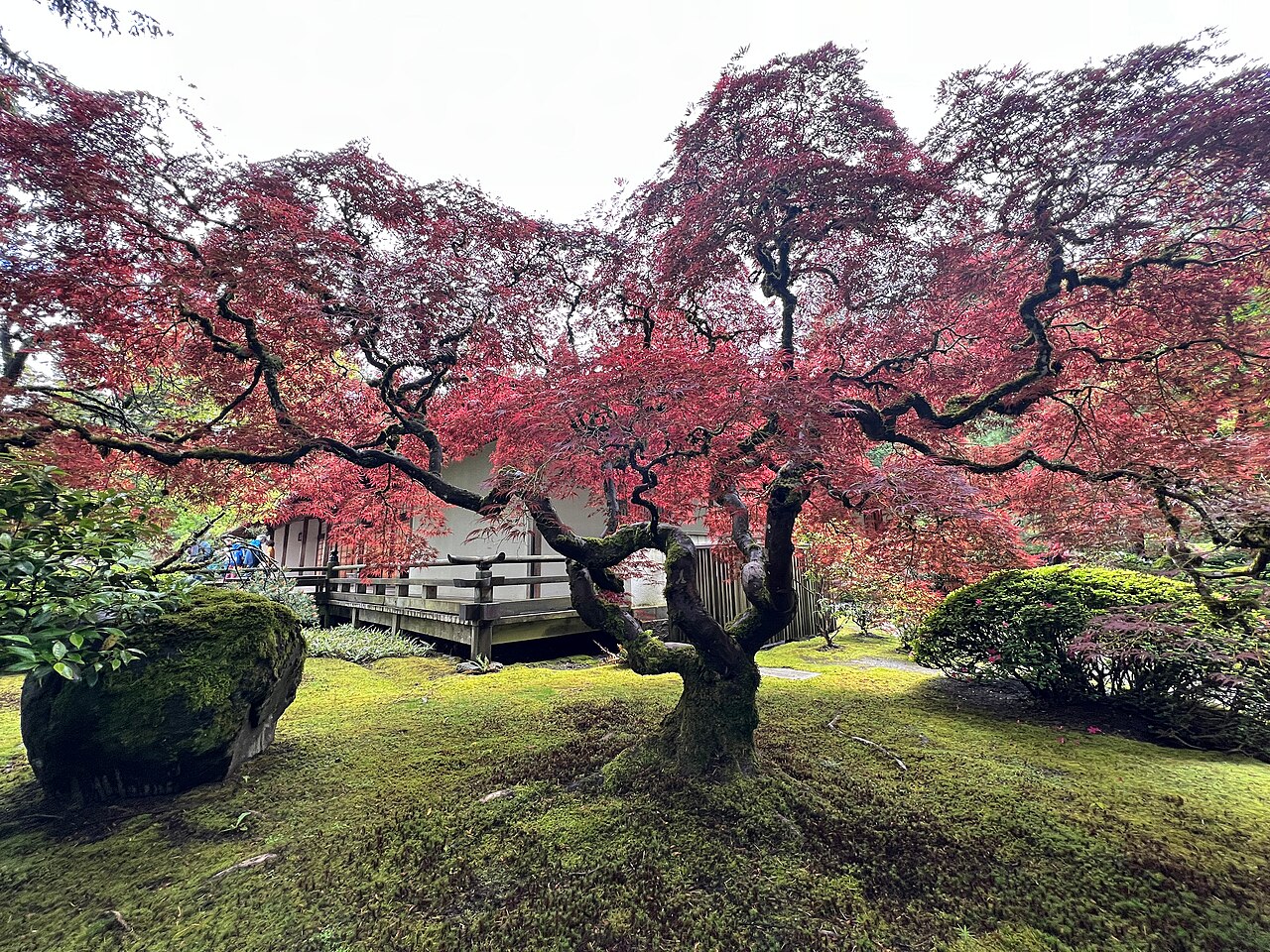
Acer palmatum var. dissectum ‘Ever Red’ is a weeping, finely dissected Japanese maple cultivar grown for its deep burgundy-red, lace-like foliage and its low, cascading mound of a shape. Unlike upright Japanese maple cultivars, ‘Ever Red’ belongs to the dissectum (“cutleaf” or “laceleaf”) group, whose leaves are so deeply divided that each one looks almost feathery, and whose branches arch and weep downward rather than growing upright, producing a dome-shaped mound rather than a conventional tree silhouette.
Gardeners grow ‘Ever Red’ for that classic laceleaf look: a low, weeping red mound that works as a focal point in a small garden, a rock garden, or a large container, without needing the real estate a full-sized shade tree demands. New foliage in spring emerges in softer, almost grayish-red tones before deepening into a rich burgundy-red that holds reasonably well into summer, then shifts to bright scarlet in fall. It is frequently compared to the better-known cultivar ‘Crimson Queen‘, which shares a similar weeping, finely cut red form; nursery sources differ on exactly how tall it ultimately grows, a point worth knowing before you plant it.
Japanese maple (Acer palmatum) is not native to North America; the species is native to Japan, Korea and eastern China, and ‘Ever Red’ is a selected cultivar of it, not a wild-collected plant. It is not on any federal or state noxious-weed list, but Japanese maple seedlings have been documented escaping cultivation into forest understories in parts of the eastern United States, especially the Mid-Atlantic. Weeping dissectum cultivars like ‘Ever Red’ are widely reported to set little viable seed compared with upright, green-leaved seedling-grown trees, but it is still sensible to keep any Japanese maple away from the immediate edge of natural woodland and to remove stray seedlings if they appear.
Identification
‘Ever Red’ is identified by the combination of deep red, finely dissected (lace-cut) leaves and a low, weeping, mounded habit, a profile shared by the broader dissectum group of Japanese maple cultivars.
Bark & Stems
Branches are slender, reddish when young, and arch outward and down rather than growing upright, which is what builds the cascading, mounded shape over time. As the plant matures, the lowest branches often trail close to or onto the ground unless staked or trained upward on a short standard.
Leaves
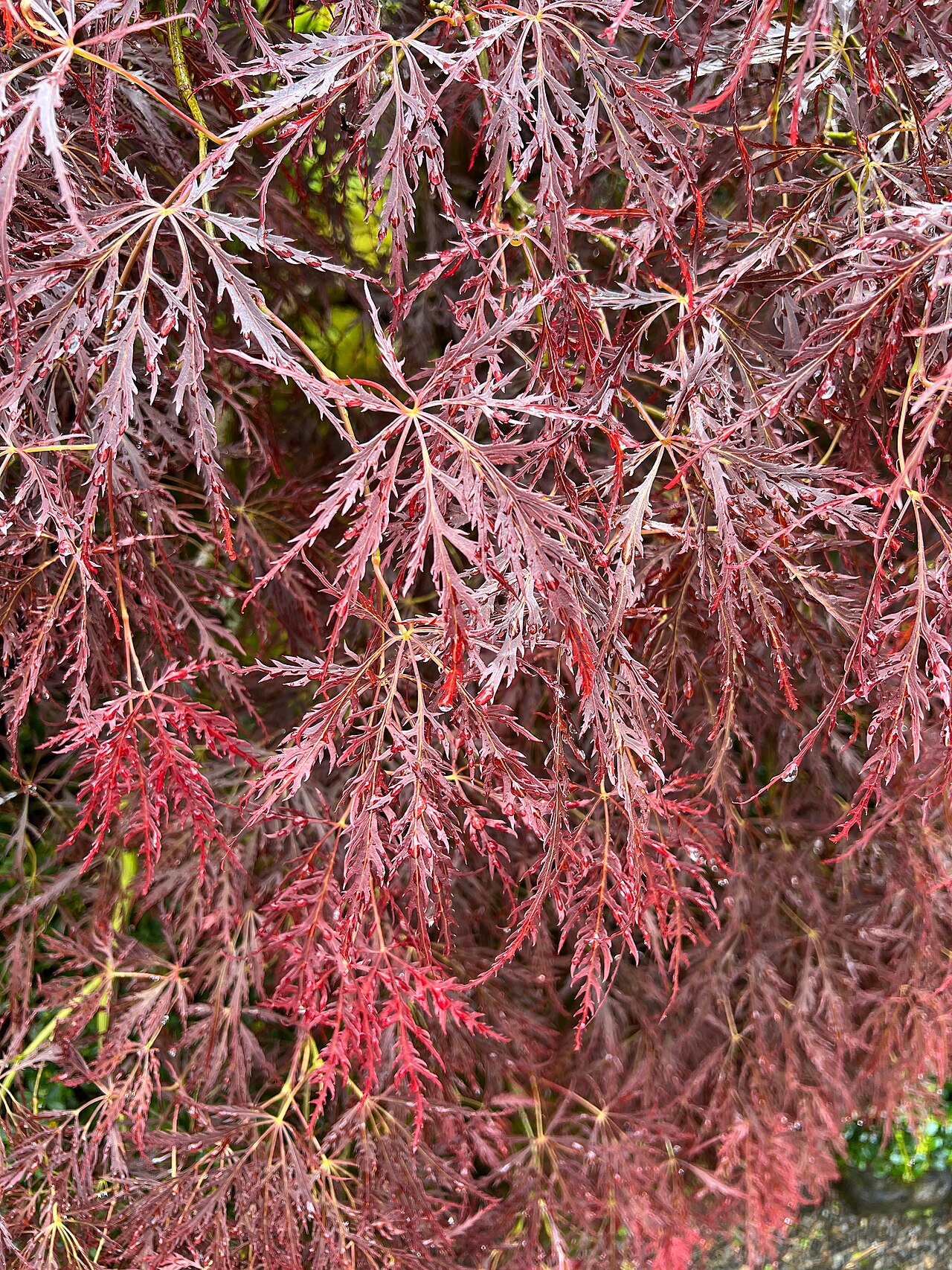
Leaves are palmate but so deeply and finely cut into narrow segments that each leaf looks almost fern- or lace-like rather than maple-shaped at a glance. New growth in spring tends to emerge a softer, grayish-red before maturing to a deep burgundy-red that generally holds into midsummer, with color often intensifying again to bright scarlet in fall.
Flowers & Fruit
Small reddish-purple flowers appear in spring, mostly hidden under the unfolding foliage, followed by small winged samaras. Neither is a significant ornamental feature; the weeping red foliage mass is the plant’s main draw.
Telling It From Other Red Dissectum Cultivars
‘Ever Red’ is frequently compared, and sometimes confused, with ‘Crimson Queen’, another popular red weeping dissectum cultivar with a similar look. Differences between named red laceleaf cultivars can be subtle and are debated even among specialists and nurseries, and mature size estimates for ‘Ever Red’ vary considerably between sources (from roughly 5 feet to well over 10 feet), so gardeners who want a guaranteed mature size should buy from a nursery that can speak to the specific plant in front of them rather than relying on the cultivar name alone.
Quick Facts
| Scientific Name | Acer palmatum var. dissectum ‘Ever Red’ |
| Cultivar | ‘Ever Red’ (also sold as ‘Everred’) |
| Family | Sapindaceae (Maple) |
| Plant Type | Deciduous weeping, mounded shrub |
| Native to North America | No — introduced; species native to Japan, Korea and eastern China |
| Mature Height | Sources disagree widely: roughly 5 ft at the low end to 10 ft or more at the high end |
| Mature Spread | 6–10 ft, often wider than tall as a mature mound |
| Growth Rate | Slow to moderate |
| Sun Exposure | Full sun to part shade; partial shade intensifies red color in hot climates |
| Water Needs | Average, consistent moisture |
| Soil Type | Rich, well-drained loam |
| Soil pH | Slightly acidic to neutral (about 5.5–7.0) |
| Bloom Time | Mid-spring; flowers inconspicuous |
| Leaf / Fall Color | Gray-red spring growth maturing to deep burgundy-red, bright scarlet in fall |
| Fruit | Small winged samaras; not ornamentally significant |
| Deer Resistant | Somewhat (occasional browsing on young plants) |
| USDA Hardiness Zones | 5–8 |
| Invasive Status | Not listed as invasive; weeping dissectum cultivars set little seed; species occasionally self-seeds elsewhere in the eastern U.S. |
Origin & Where It Grows
Acer palmatum is native to the forests and mountains of Japan, the Korean peninsula and parts of eastern China. The dissectum, or “cutleaf,” group of cultivars, prized for weeping habit and finely divided leaves, has been selected and grown in Japan for centuries and later became one of the most popular categories of Japanese maple in Western gardens, since its low, mounded form suits small modern landscapes especially well.
‘Ever Red’ is one of several named red-leafed weeping dissectum cultivars grown commercially, alongside better-documented selections such as ‘Crimson Queen’. Its exact origin and introduction history are less precisely recorded than some older dissectum cultivars, and even specialist growers note that estimates of its mature size vary considerably from nursery to nursery, which is worth keeping in mind when planning how much space to give it.
In the United States, ‘Ever Red’ is grown wherever Japanese maples perform well, including the Pacific Northwest, Mid-Atlantic, Northeast and parts of the Upper South, typically as a specimen or accent shrub rather than a shade tree, given its low, spreading mature form.
Growing & Care Guide
‘Ever Red’ is grown much like other weeping dissectum Japanese maples, with its cascading shape doing most of the design work once established.
Light
Full sun to part shade both work, though in hot-summer climates some afternoon shade helps keep the deep red color from bleaching or scorching and keeps the fine, lacy leaf margins from drying out. In cooler, cloudier climates, more sun generally deepens the red tones.
Soil & Water
Plant in rich, well-drained soil and keep it evenly moist, especially through the first two or three growing seasons. Mulch around the root zone to conserve moisture and protect the shallow roots typical of dissectum types, and avoid letting the soil dry out completely during hot weather.
Planting Tips
Give ‘Ever Red’ room to spread wider than it is tall, since the mature mound is often broader than its height, and choose a site sheltered from strong wind, which can damage the finely cut leaf margins. It is frequently planted on a raised berm, atop a low wall, or beside a water feature so its cascading branches have somewhere to spill without smothering the lawn or path beneath.
Pruning & Maintenance
Minimal pruning is needed to maintain the natural mounded shape; remove dead, crossing or rubbing branches in late winter while dormant. Occasional light thinning inside the canopy improves air circulation, which helps prevent fungal leaf problems in humid climates. Watch for any upright, less-dissected shoots arising below the graft union, a sign of rootstock suckering, and remove them at the base.
Propagation
‘Ever Red’ is propagated by grafting onto seedling Acer palmatum rootstock, which is standard for weeping dissectum cultivars since their mounded, non-upright growth habit does not translate from seed. Seedlings grown from its fruit will not reproduce the weeping form or deep red color.
Landscape Uses
- Focal point in a small garden, rock garden or raised bed
- Cascading accent atop a retaining wall or beside a pond or water feature
- Container specimen on a patio, where its mounded shape and color show well up close
- Companion planting with low groundcovers or dwarf conifers that will not be overtopped by its spreading canopy
Wildlife & Ecological Value
‘Ever Red’, like Japanese maple generally, offers modest wildlife value in North American gardens. Its small spring flowers provide some nectar for early-season bees, and its dense, low canopy can offer shelter for small birds and insects, but it does not support the variety of native caterpillars and other insects that native maples such as vine maple or red maple do, since North American wildlife did not evolve alongside this Asian species. It is best valued as an ornamental accent rather than a habitat planting.
Native Alternatives
Gardeners who like the idea of a low, red-toned specimen tree but prefer a native alternative to an introduced weeping Japanese maple have several options:
- Red maple (Acer rubrum) — a widespread native maple with brilliant red fall color; it grows much larger than ‘Ever Red’ but shares the same red-toned seasonal display.
- Vine maple (Acer circinatum) — a native understory maple with graceful, often arching branches and good red-orange fall color on a more modest scale.
- Eastern redbud (Cercis canadensis) — a small native flowering tree, including weeping cultivars of the species, with reddish-purple spring color.
- Downy serviceberry (Amelanchier arborea) — a compact native tree with spring flowers, summer fruit and red-orange fall color for multi-season interest.
History & Uses
Weeping, finely cut dissectum Japanese maples have been cultivated in Japan for centuries and became especially fashionable in Western gardens over the past several decades, as their low, mounded form proved ideal for smaller modern yards where a full-sized upright maple would not fit. Red-leafed dissectum cultivars like ‘Ever Red’ combine that compact, cascading habit with the dramatic color of the species’ red-leafed lines.
Because named red dissectum cultivars like ‘Ever Red’ and ‘Crimson Queen’ can look quite similar and are sometimes confused or substituted in the nursery trade, buyers who want a specific, documented mature size or precise leaf character are generally better served by visiting a specialist Japanese maple nursery and viewing (or asking about) the actual plant rather than relying solely on the cultivar name.
Its use remains entirely ornamental; ‘Ever Red’ is planted strictly for its weeping form and seasonal red color rather than for any commercial wood or food product.
Frequently Asked Questions
Is Ever Red Japanese maple native to North America?
No. It is a cultivar of Acer palmatum, a species native to Japan, Korea and eastern China. It is introduced, not native, though not considered invasive; weeping dissectum cultivars like this one set little seed, but as with any Japanese maple it is still wise to avoid planting right at the edge of natural woodland in the eastern U.S.
How tall does Ever Red actually get?
Nursery and grower sources disagree considerably, with estimates ranging from around 5 feet to well over 10 feet at maturity. Because of that spread in reported sizes, it is worth asking the specific nursery supplying your plant what size to expect in your climate, and giving it room to grow wider than tall regardless.
How is Ever Red different from Crimson Queen?
Both are popular red weeping dissectum cultivars with a similar lace-leaf look, and the two are sometimes compared directly by growers. Differences in exact leaf color, size and habit between them can be subtle, so buying a correctly labeled plant from a reputable grower matters more than relying on general descriptions.
Does Ever Red hold its red color all season?
Generally yes through much of summer, especially in climates with some afternoon shade, with the deepest red developing in spring and again in fall. In very hot, sunny conditions some fading toward bronze-green can occur in midsummer, as with many red Japanese maple cultivars.
Can Ever Red be grown in a container?
Yes. Its naturally mounded, weeping shape suits container culture well, provided the pot has good drainage and the soil is kept consistently moist, since container-grown plants dry out faster than those planted in the ground.

