Comfortroot (Hibiscus aculeatus)
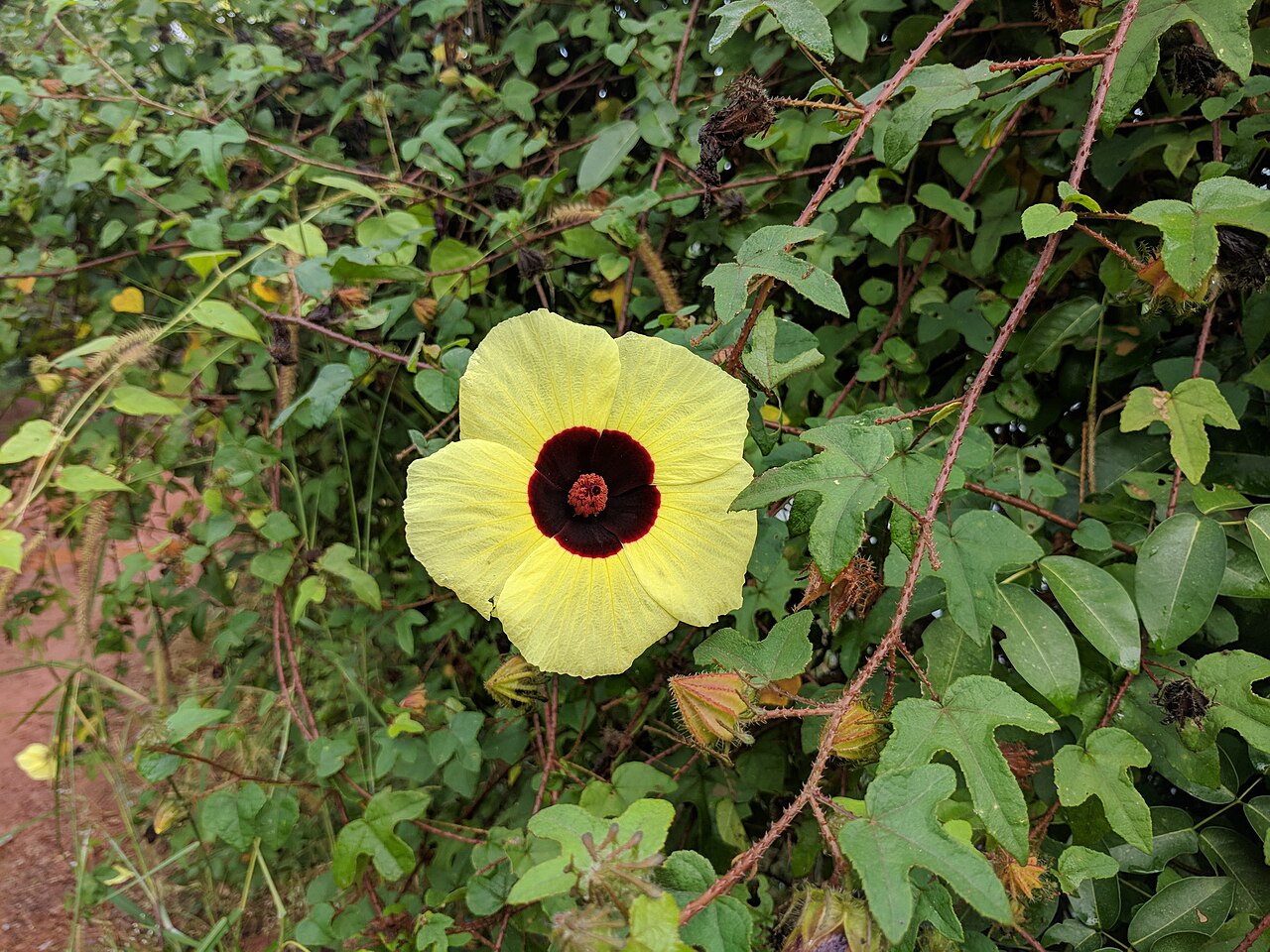
Hibiscus aculeatus, known as Comfortroot or Pineland Hibiscus, is a wiry, rough-stemmed perennial wildflower of the wet pine flatwoods, bogs, and roadside ditches of the southeastern Coastal Plain. Its common name “comfortroot” is a nod to the soothing, mucilaginous quality of its roots, a trait it shares with other members of the mallow family such as the European marsh mallow. The scientific name aculeatus — “prickly” — points to the plant’s harshly scabrous, bristly stems and leaves, a texture you notice the moment you brush against one.
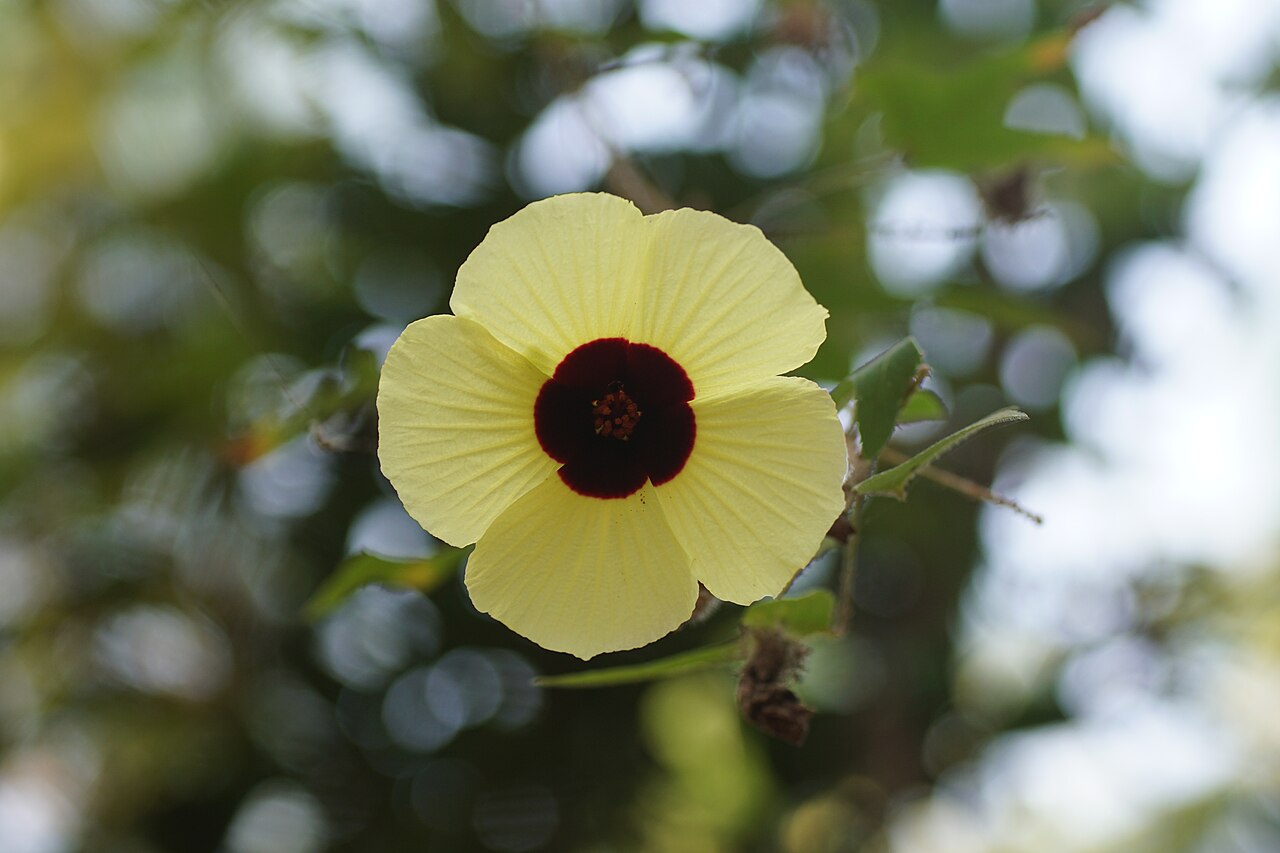
Each flower is a pale cream to soft yellow, roughly 3 to 5 inches across, with a dramatic dark maroon to near-black blotch at the center that fades outward into a lighter halo — a striking bullseye pattern that stands out against the surrounding grasses and sedges of a wet pine savanna. Like most mallows, each individual bloom lasts only a single day, but a healthy plant produces a long, steady succession of flowers from mid-summer well into fall.
Comfortroot is a smaller, more herbaceous relative of the showier swamp hibiscuses, usually standing 3 to 5 feet tall on slender, sparsely branched stems. It thrives in consistently moist, acidic, sandy soils and is an excellent choice for a Southeastern wildflower garden, rain garden, or restoration planting where soil stays damp through the growing season — conditions that are hard to come by in many home landscapes but easy to find along a pond edge, low meadow, or the wet margin of a bioswale.
Identification
Comfortroot is best identified by the combination of its rough, bristly stems and leaves and its pale, dark-eyed flowers — a texture-and-color pairing not shared by most of its mallow relatives.
Stems
Stems are slender, upright, and sparingly branched, typically 3 to 5 feet tall, rising from a perennial rootstock. The entire stem is covered in short, stiff, backward-pointing hairs that feel distinctly rough or even prickly to the touch — hence the species name aculeatus.
Leaves
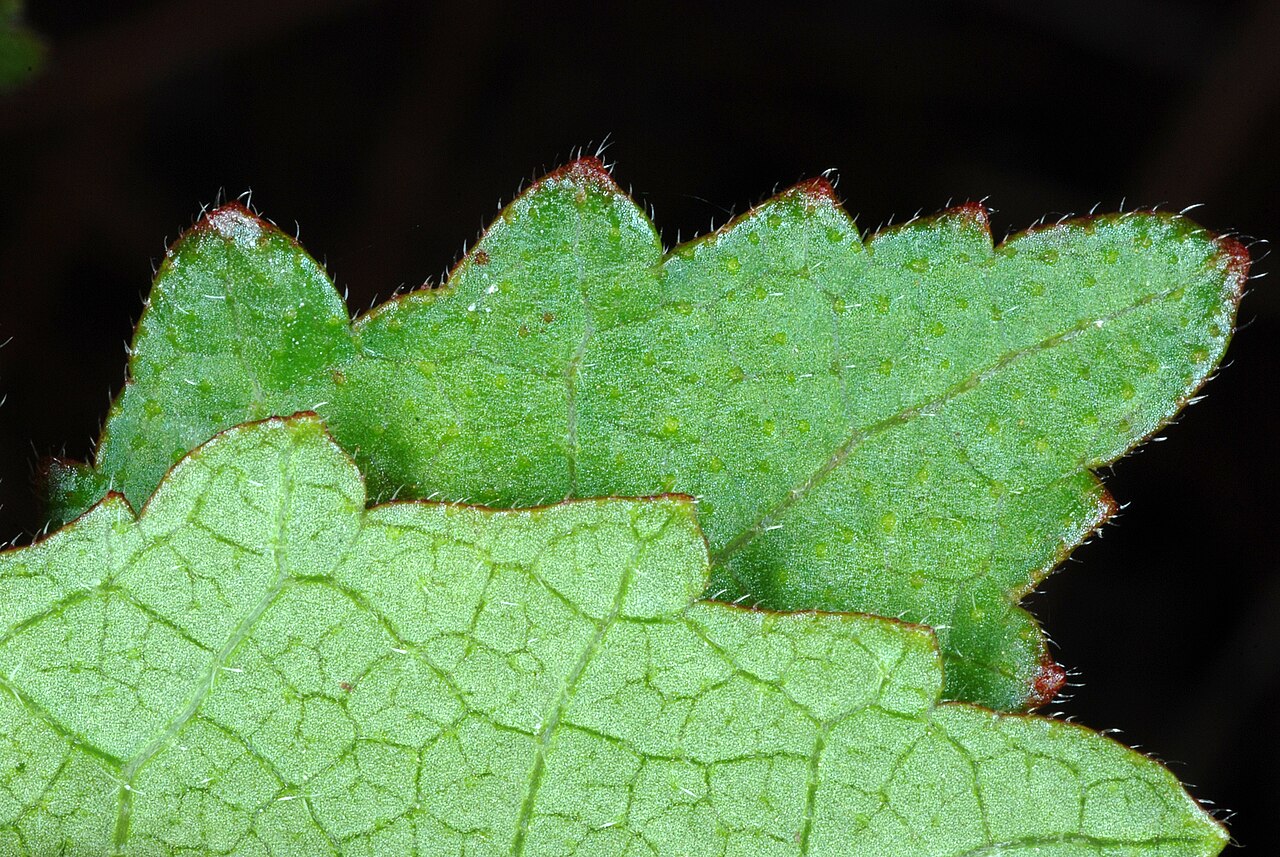
Leaves are alternate and shallowly three-lobed, with toothed margins and the same harshly scabrous texture as the stems on both surfaces. They are smaller and narrower than the broad leaves of swamp rosemallow or swamp rose-mallow, giving the whole plant a more delicate, open appearance.
Flowers
Flowers arise singly from the upper leaf axils on short stalks, opening to 3 to 5 inches across. The five petals are cream to pale yellow, each marked at the base with a dark red to maroon blotch that merges into a conspicuous dark central eye around the staminal column. Flowers open in the morning and typically close by evening, lasting a single day. Bloom runs from late spring through early fall across the range.
Fruit & Seeds
The fruit is an ovoid, bristly-haired capsule that splits open at maturity into five sections, releasing small brown seeds. The persistent, hairy capsules remain visible on the plant well after flowering ends.
Quick Facts
| Scientific Name | Hibiscus aculeatus |
| Family | Malvaceae (Mallow) |
| Plant Type | Herbaceous Perennial |
| Mature Height | 3–5 ft |
| Mature Spread | 1–2 ft |
| Growth Rate | Fast (dies back to the root each winter) |
| Sun Exposure | Full Sun to Light Shade |
| Water Needs | High; consistently moist to wet |
| Soil Type | Moist to wet, acidic sand or peat |
| Soil pH | 4.5–6.5 (acidic) |
| Bloom Time | Late spring – early fall |
| Flower Color | Cream to pale yellow with a maroon center |
| Fruit | Bristly, 5-chambered seed capsule |
| Deer Resistant | Moderate |
| USDA Hardiness Zones | 7–10 |
Native Range
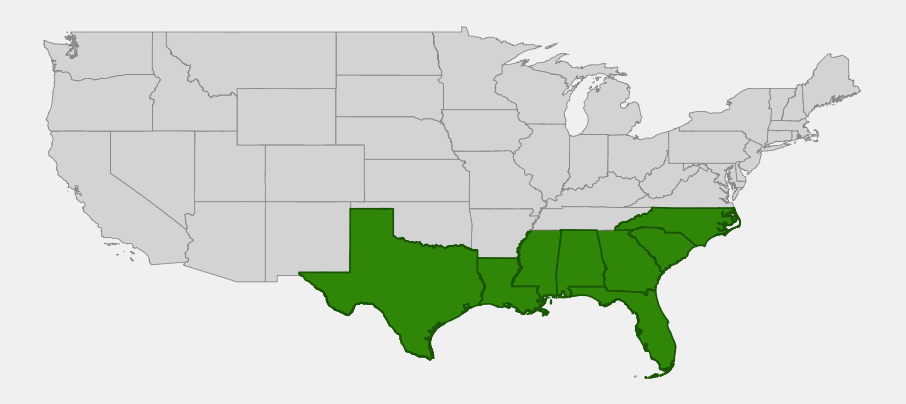
Comfortroot is native to the southeastern Coastal Plain of the United States, from North Carolina and South Carolina south through Georgia and Florida, and west through Alabama, Mississippi, Louisiana, and into eastern Texas. It is a true Coastal Plain specialist and is not found in the Piedmont or mountains of its eastern range states.
Within that range it grows in consistently moist, acidic, sandy soils: wet pine flatwoods, bogs, roadside ditches, savannas, and the edges of cypress ponds, often alongside pitcher plants, sundews, and other acidic-wetland specialists in the Southeast’s famously diverse pine savanna flora. It needs full to nearly full sun and does not tolerate deep shade or competition from taller woody growth, which is why fire-maintained or regularly mowed pine savannas and roadsides are among its best remaining strongholds.
Comfortroot has also been introduced outside the United States, including in Bangladesh, where it is cultivated and has naturalized; within its native Southeastern range, however, it remains a true wild Coastal Plain wetland species rather than a garden escapee.
📋 Regional plant lists featuring Comfortroot: North & South Carolina · Georgia, Alabama & Mississippi · Arkansas, Louisiana, Eastern Oklahoma & Eastern Texas · South & West Texas
Growing & Care Guide
Comfortroot is undemanding once planted in the right spot: a sunny, consistently moist, acidic corner of the garden. Outside that niche it can be short-lived, so matching the site to the plant matters more than any ongoing maintenance.
Light
Plant in full sun for the best flowering and sturdiest growth. Light afternoon shade is tolerated in the hottest parts of its range, but deep or prolonged shade will reduce flowering and weaken the plant over time.
Soil & Water
Comfortroot wants consistently moist to wet, acidic, sandy or peaty soil — the kind found naturally in pine flatwoods and bog margins. It does not perform well in alkaline or heavy clay soils, and it is not drought tolerant; allowing the soil to dry out repeatedly will stress and eventually kill the plant. A rain garden, bog garden, or the damp edge of a water feature are ideal settings.
Planting Tips
Set out container-grown plants in spring once the soil has warmed, spacing them about 18 to 24 inches apart. Mulching lightly with pine straw helps hold soil moisture and reinforces the acidic conditions this species prefers. Once established in a suitably wet site, plants often self-sow.
Pruning & Maintenance
The stems die back to the ground after frost; cut back dead growth in late winter before new shoots emerge. No fertilizer is needed in properly moist, organically rich soil. Wear gloves when handling the plant closely, as the scabrous stems and leaves can feel bristly or mildly irritating to sensitive skin.
Landscape Uses
Comfortroot works well in these settings:
- Bog gardens and rain gardens with acidic, consistently moist soil
- Pine savanna and longleaf pine restoration plantings
- Pollinator gardens in a damp, sunny spot
- Pitcher plant bog companion plantings
- Naturalistic wet meadow or ditch-bank plantings
Wildlife & Ecological Value
Comfortroot is a valued nectar and pollen source in the pine savanna wildflower community, where its long summer bloom period fills a niche between spring and fall wildflower peaks.
For Pollinators
The flowers are visited by a range of bees, with the specialist mallow bees Ptilothrix bombiformis and Melitoma taurea, along with Svastra atripes, documented working comfortroot flowers in northern Florida. Bumblebees are especially effective pollinators of the large, open blooms, and the flowers also attract a variety of other native bees and beneficial insects drawn to the abundant pollen.
For Birds
Like other mallows, comfortroot’s seed capsules provide a modest food source for seed-eating sparrows and other grassland and savanna birds once they ripen and split open in late summer and fall.
Ecosystem Role
As a Coastal Plain wetland and savanna specialist, comfortroot is part of the extraordinarily diverse ground-layer flora associated with longleaf pine ecosystems, one of the most species-rich plant communities in North America. Its persistence depends on the same periodic fire or mowing that keeps these savannas open; without disturbance to control woody competition, comfortroot and many of its bog-dwelling neighbors are gradually shaded out.
Cultural & Historical Uses
The common name “comfortroot” reflects a long folk tradition, shared across the mallow family, of using the mucilaginous root as a soothing poultice or infusion — a use paralleling the European marsh mallow (Althaea officinalis), from which the modern confection originally took its name and texture. This tradition is a matter of historical and ethnobotanical record; comfortroot is not cultivated or marketed as an herbal remedy today, and no medicinal use is recommended here.
Beyond its folk history, comfortroot has mostly been valued for its striking flowers. As interest in native pine savanna and bog gardening has grown, it has become more available through specialty native-plant nurseries in the Southeast, prized for the contrast of its pale, dark-eyed blooms against the surrounding greenery of a wildflower meadow or bog garden.
Frequently Asked Questions
Why is it called Comfortroot?
The name comes from the traditional folk use of the plant’s mucilaginous, soothing root, in the same tradition as the related marsh mallow of Europe. It is a historical name rather than a current herbal recommendation.
How is Comfortroot different from Swamp Rosemallow?
Comfortroot is smaller (typically 3 to 5 feet versus up to 15 feet), has rough, bristly stems and leaves rather than soft velvety ones, and its cream to pale-yellow flowers have a dark maroon eye rather than the pink petals and reddish-purple throat of swamp rosemallow (Hibiscus grandiflorus).
Can Comfortroot handle dry garden soil?
No. It is adapted to consistently moist to wet, acidic soils found in pine flatwoods and bogs, and it does not tolerate drought or well-drained, dry garden conditions for long.
Is Comfortroot toxic or invasive?
No. It is a native, non-toxic wildflower and is not considered invasive within the United States, though it has become naturalized outside its native range in parts of South Asia.
What pollinates Comfortroot?
Bumblebees and several specialist mallow-visiting bees, including Ptilothrix bombiformis and Melitoma taurea, are its primary pollinators, along with a variety of other native bees.

Looking for a nursery that carries Comfortroot?
Browse our native plant nursery directories: North Carolina · South Carolina & Texas · Alabama · Louisiana & Mississippi · Florida & Georgia