Widow’s Cross (Sedum pulchellum)
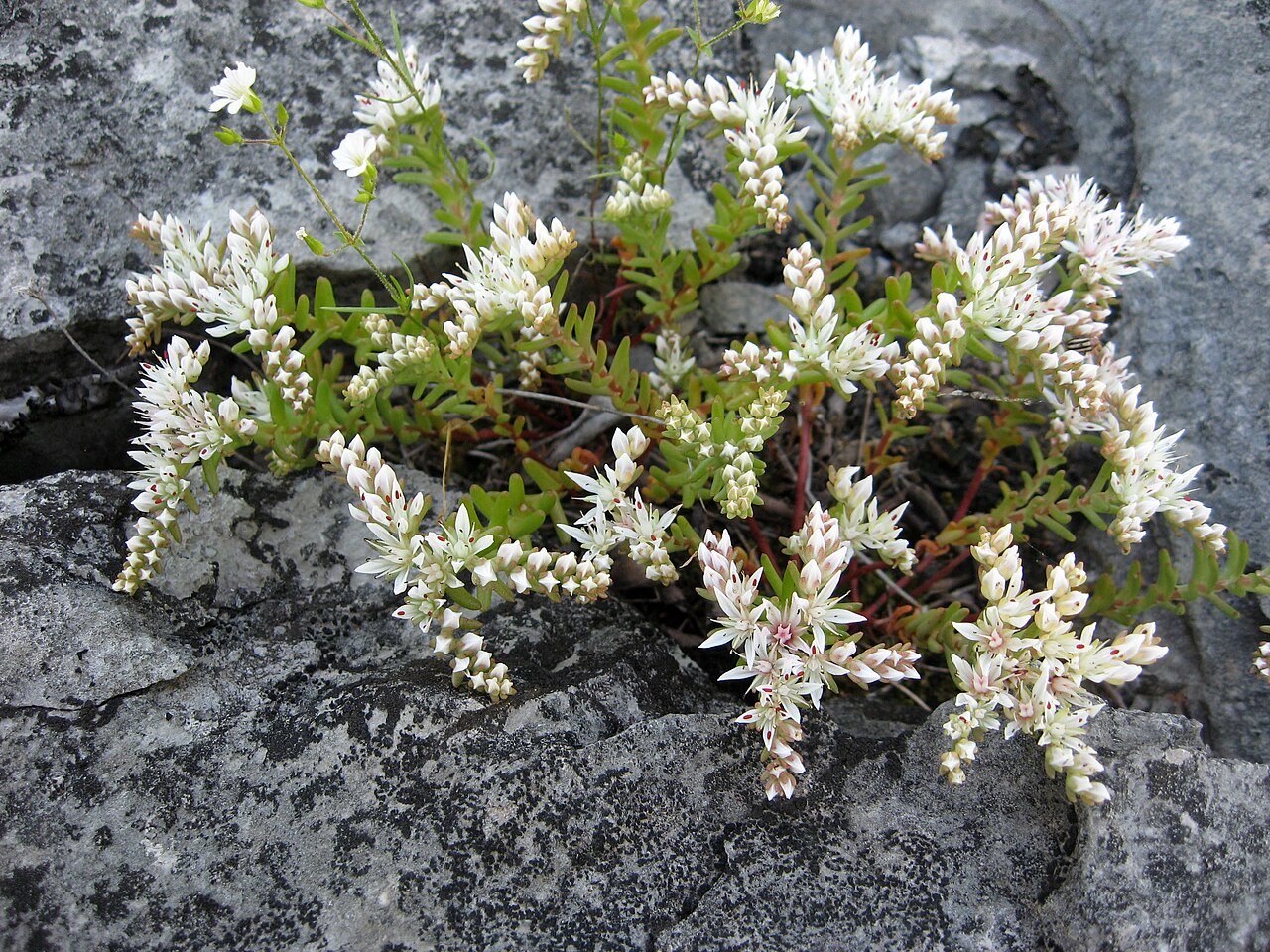
Sedum pulchellum, known as Widow’s Cross (and also called widowscross, rockmoss, or pink stonecrop), is a small, fleshy-leaved succulent with an unusual lifestyle for a member of the stonecrop family: rather than being a long-lived perennial, it is a winter annual, germinating in fall, overwintering as a low rosette, and bursting into a short, intense bloom the following spring before setting seed and dying by early summer. It is native to the calcareous rock outcrops of the South-Central and Southeastern United States, where it is a signature plant of the region’s rare and ecologically distinctive cedar glades.
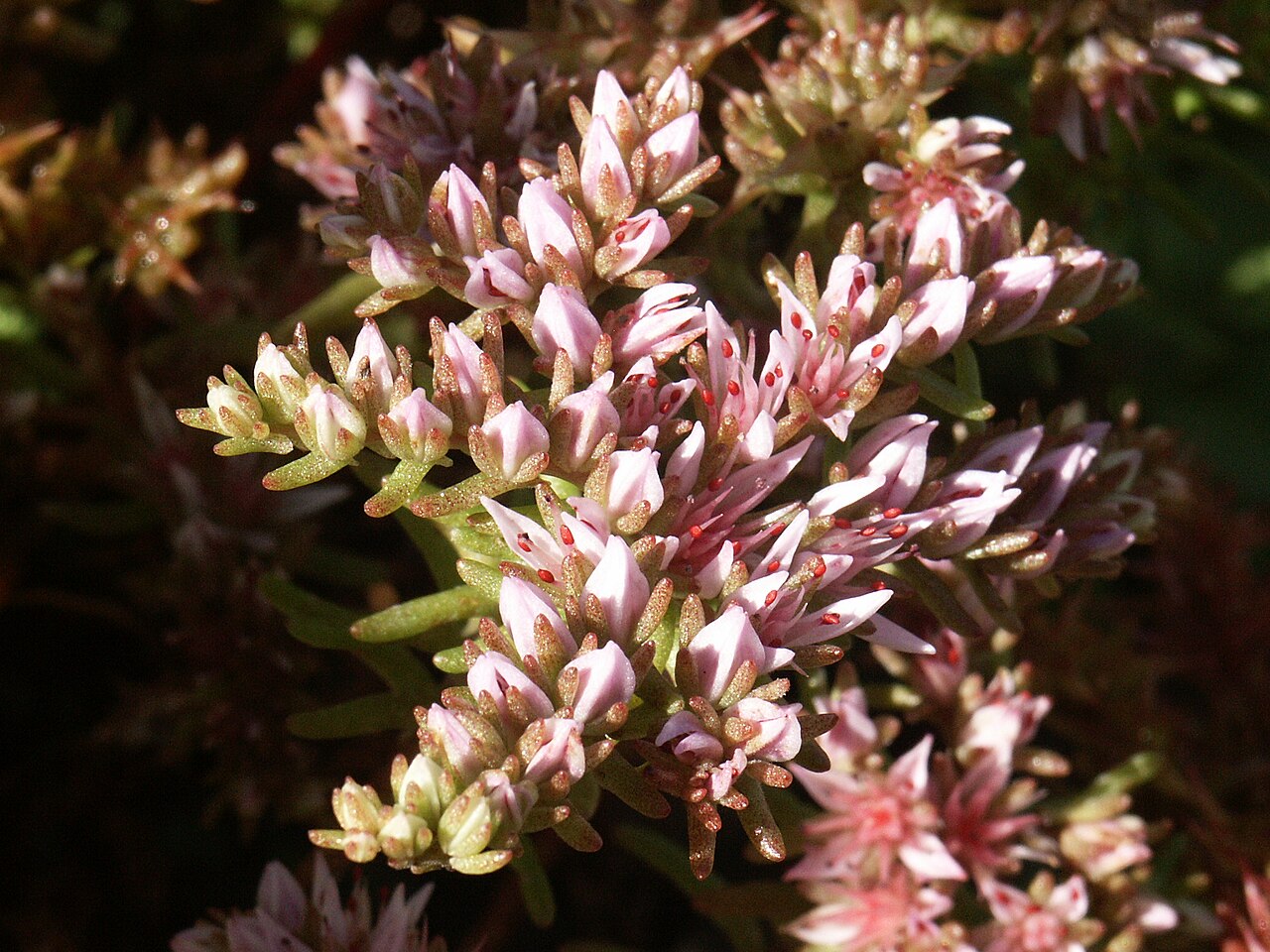
The common name “widow’s cross” comes from the flower cluster’s branching pattern, which forms four forked arms splayed out like a cross — a detail easiest to appreciate up close. Each stem carries clusters of small, star-shaped, pink-white flowers above tight rosettes of blue-green, cylindrical succulent leaves. In the right habitat — thin, dry soil over exposed limestone or dolomite bedrock — it can carpet large areas in dense colonies, especially in the Interior Low Plateau, Ozark, and Ouachita regions.
For gardeners in its native range who have a sunny rock garden, limestone outcrop, or gravel bed, widow’s cross is an easy, self-sustaining annual that reseeds reliably from year to year, filling cracks and thin soil pockets where almost nothing else will grow. It asks for very little — full sun, lean alkaline soil, and good drainage — and rewards that neglect with a cheerful spring bloom that native bees find just as reliable.
Identification
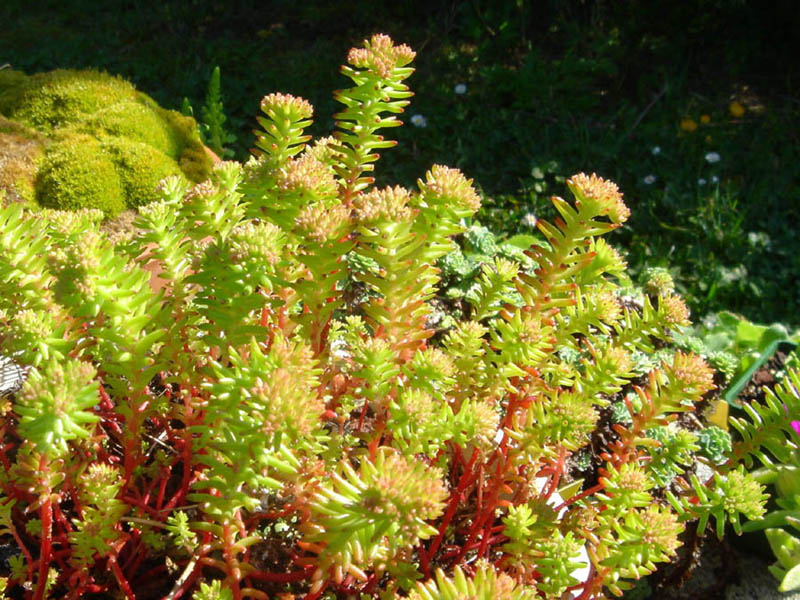
Widow’s cross is a diminutive succulent, usually standing just 4 to 8 inches tall, with a habit that shifts dramatically through its single growing season — from flat, ground-hugging winter rosettes to upright, branched flowering stems by late spring.
Growth Habit
As a winter annual, the plant germinates from seed in fall, overwinters as a small rosette pressed flat against the rock or soil surface, then sends up branching, upright stems in spring. By the time it flowers, individual plants have often fused into dense mats or colonies covering considerable patches of bare rock, a growth pattern well suited to the open, competition-free glade habitats it favors.
Leaves
Leaves are small, fleshy, and cylindrical to slightly flattened, blue-green to gray-green, arranged alternately and densely along the stems. They are classic stonecrop leaves — succulent enough to store water through dry spells on exposed rock, giving the whole plant a slightly glaucous, waxy appearance.
Flowers
From April into June, the branching flower clusters open into small, star-shaped flowers about ⅜ inch across, each with five narrow, pointed petals in shades from near-white to soft pink, often with a deeper pink midrib. The inflorescence characteristically divides into four forking branches — the “cross” of the common name — giving blooming colonies a frothy, star-flecked texture across the rock surface.
Fruit & Seeds
After flowering, each bloom matures into a small cluster of dry follicles that split to release abundant fine seed by early summer, after which the parent plant dies, completing its annual life cycle. This heavy seed set is what allows widow’s cross to return reliably to the same glades, cracks, and gravel patches year after year without any gardener intervention.
Quick Facts
| Scientific Name | Sedum pulchellum |
| Family | Crassulaceae (Stonecrop) |
| Plant Type | Winter Annual Succulent |
| Mature Height | 4–8 in |
| Mature Spread | 6–12 in as colonies merge |
| Growth Rate | Fast (single-season annual) |
| Sun Exposure | Full Sun |
| Water Needs | Low |
| Soil Type | Thin, rocky, calcareous; excellent drainage |
| Soil pH | 6.5–8.0 (alkaline/limestone preferred) |
| Bloom Time | April – June |
| Flower Color | White to pink |
| Fall Color | Not applicable; plant dies back after spring seed set |
| Fruit | Small dry follicles with fine seed |
| Deer Resistant | Yes |
| USDA Hardiness Zones | 5–8 |
Native Range
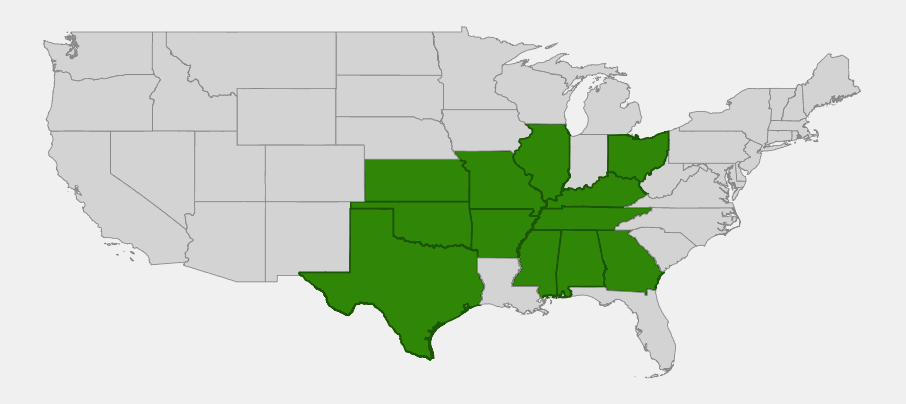
Widow’s cross occurs from Ohio south to the Gulf Coast states, west into Texas, and north to Kansas, with notable gaps — it is not known from Louisiana, Florida, or Indiana despite occurring in most neighboring states. Its heaviest concentrations are in the Interior Low Plateau of Kentucky and Tennessee, and the Ozark and Ouachita Mountains of Missouri, Arkansas, and Oklahoma, regions riddled with the exposed limestone and dolomite bedrock the species depends on.
This is fundamentally a cedar glade and rock-outcrop plant. It grows in thin, dry soils over flat limestone pavement, in rock crevices and bluff faces, and — tellingly — in disturbed gravelly road shoulders and cuts, where it can form large mats wherever similar mineral, well-drained conditions exist. Cedar glades themselves are globally rare plant communities, open rocky barrens within otherwise forested landscapes, and widow’s cross is one of several specialist plants that define them.
Within Ohio, populations are notably restricted compared to the species’ Ozark and Interior Low Plateau strongholds, and gardeners there should not expect it in typical garden soil; like the rest of its range, it needs the same exposed, calcareous rock conditions it uses in the wild. Reaching the northern edge of viable habitat in Ohio also means it is absent from neighboring Indiana, a reminder that county-level rock geology, not just state boundaries, determines where this species can actually establish.
📋 Regional plant lists featuring Widow’s Cross: Ohio & Indiana · Kentucky & Tennessee · Georgia, Alabama & Mississippi · Arkansas, Louisiana, Eastern Oklahoma & Eastern Texas · Illinois, Iowa & Missouri · Nebraska, Kansas & Eastern Colorado
Growing & Care Guide
Widow’s cross is one of the easiest native succulents to naturalize in the right spot, but success hinges on matching its glade origins: full sun, lean alkaline soil, and no competition from taller plants or turf. It is an outstanding choice for a rock garden built for dry sites where limestone gravel or crushed rock mulch is already part of the plan.
Light
Full sun is essential. In its native cedar glades it grows in fully exposed, shadeless rock pavement, and shade from nearby trees or shrubs will suppress both germination and flowering.
Soil & Water
Lean, rocky, alkaline soil is ideal — limestone gravel, crushed dolomite, or any thin, mineral-heavy mix that drains instantly after rain. It needs essentially no irrigation once established; in fact, soil that stays moist or holds organic matter tends to favor weedier competitors over this specialist annual. Avoid rich garden soil and mulch with compost or bark, both of which work against its glade-adapted biology.
Planting Tips
Because it is a winter annual, the best way to establish widow’s cross is by sowing seed in fall directly onto bare, rocky, sunny ground — a limestone-edged path, a gravel bed, or the crevices of a dry rock wall. Avoid heavy raking or covering the fine seed with soil; it germinates on the surface. Once a colony is established, it typically self-sows reliably without further planting.
Pruning & Maintenance
None needed. The plant completes its life cycle naturally each year, dying back after seed set in early summer; simply leave spent plants in place to finish shedding seed rather than cleaning them up early.
Propagation
Propagate entirely by seed, collected from dried follicles in late spring or allowed to self-sow. Division is not practical given the plant’s annual habit.
Landscape Uses
- Limestone rock gardens and glade re-creations
- Gravel paths and crevice plantings in thin, rocky soil
- Dry rock walls where little soil accumulates
- Xeriscaping on alkaline, well-drained sites
- Native glade and prairie restoration projects
- Container plantings with gritty, alkaline soil mix
Wildlife & Ecological Value
Widow’s cross plays an outsized role in the specialized, globally rare cedar glade ecosystem, both as a nectar source and as one of the plants that stabilizes and defines this unusual open habitat type.
For Pollinators
The spring flower clusters attract a variety of small native bees and other short-tongued pollinators at a time of year when glade habitats, otherwise dominated by bare rock, offer few other nectar sources. Because the species often blooms in dense colonies, a glade in full flower can be an important early-to-mid-spring foraging stop for glade-specialist insects, complementing later-blooming perennials highlighted in our guide to butterfly garden plants for Tennessee, where cedar glades are a signature habitat.
For Birds
The tiny seeds contribute modestly to the diet of small, ground-foraging songbirds that work open glade habitat, though the plant is not a primary food source for any particular species.
For Mammals
Mammal use is limited; the succulent foliage is not a preferred browse for deer or other herbivores, which is one reason the species can persist even in glades subject to grazing pressure on surrounding vegetation.
Ecosystem Role
As an annual pioneer of thin, rocky glade soils, widow’s cross helps occupy niches too marginal for longer-lived perennials, contributing leaf litter and organic matter that slowly builds the shallow soils characteristic of cedar glades. Its dense colonies also provide some microhabitat structure and shade for smaller glade-endemic insects and invertebrates in an otherwise exposed, rock-dominated landscape.
Cultural & Historical Uses
Widow’s cross has a modest documented history compared to many native plants, in part because its specialized glade habitat kept it largely out of reach of broad agricultural or medicinal use. Early botanical collectors in Tennessee, Missouri, and the Ozarks noted it as a distinctive, easily recognized component of the region’s limestone glade flora, and it has long served as a useful indicator species for identifying true cedar glade habitat versus similar-looking but ecologically different rocky ground.
Regional common names such as “rockmoss” reflect how settlers and naturalists understood the plant primarily through its growth habit — low, moss-like mats pressed to bare rock — rather than through any significant practical use. Unlike some of its succulent relatives elsewhere in the world, there is no well-documented tradition of culinary or medicinal use specific to this species in North America.
Its modern cultural significance is mostly tied to conservation: cedar glades are increasingly recognized as rare, biodiversity-rich habitats under pressure from development and fire suppression, and widow’s cross has become something of an emblem species for glade conservation and restoration efforts across Tennessee, Missouri, and Arkansas.
Frequently Asked Questions
Is widow’s cross a perennial like other stonecrops?
No. Unlike most garden Sedum species, widow’s cross is a true winter annual — it germinates in fall, flowers in spring, sets seed, and dies by early summer, relying on self-sown seed to return the following year.
Why won’t it grow in my regular flower bed?
Widow’s cross needs thin, rocky, alkaline soil with no competition from grass or richer perennials. Typical garden beds, with organic matter and regular water, favor weedier competitors and suppress this glade specialist.
Does widow’s cross need limestone specifically?
It strongly prefers calcareous (limestone or dolomite) rock and soil, reflecting its origin in cedar glade habitat, though it can also establish in other well-drained, mineral-rich gravel if pH is kept neutral to alkaline.
Will it come back every year on its own?
Yes, once established in suitable conditions. Because it self-seeds heavily each spring, a colony in the right rocky, sunny spot typically persists and even expands without replanting.
Is widow’s cross the same plant as “rockmoss” sold online?
The common name “rockmoss” is sometimes used loosely for several low succulent groundcovers. Confirm the scientific name Sedum pulchellum before buying, since several unrelated and non-native groundcovers share similar common names.

Looking for a nursery that carries Widow’s Cross?
Browse our native plant nursery directory: Illinois & Kansas · Kentucky, Mississippi & Missouri · Oklahoma · Georgia · Tennessee & Texas · Alabama