
Silverleaf Oak (Quercus hypoleucoides)
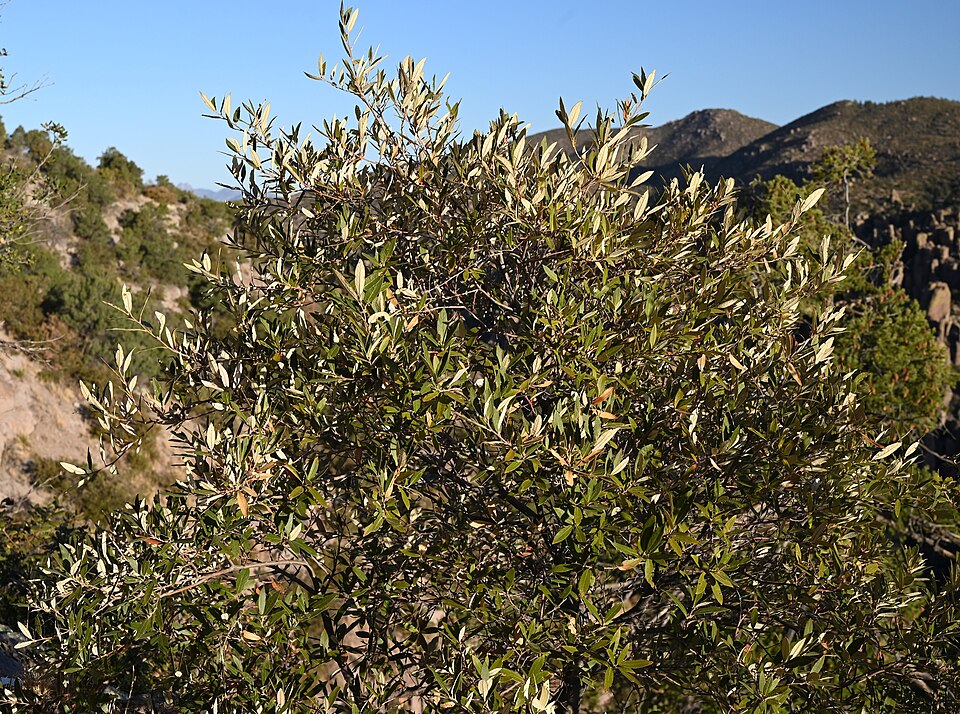
Quercus hypoleucoides, the Silverleaf Oak (also called Whiteleaf Oak), is one of the most visually distinctive oaks of the American Southwest — a species whose narrow, willow-like leaves flash silver-white whenever the wind turns them over. The name comes directly from Greek roots meaning “beneath, white” (hypo- + leuco-), a precise description of the dense, felty white hairs that coat the underside of every leaf. In the pine-oak woodlands of the sky island mountain ranges of Arizona, New Mexico, and the Trans-Pecos of Texas, Silverleaf Oak is instantly recognizable even from a distance, its foliage shimmering pale in the breeze against the darker greens of associated pines and oaks.
Silverleaf Oak occupies a wide range of forms depending on site conditions: on exposed, rocky, fire-prone slopes it often grows as a dense, multi-stemmed shrub, while in sheltered canyons with reliable moisture it can develop into a full-sized tree up to 30 feet tall. This flexibility, combined with a strong tendency to resprout vigorously after fire, makes it one of the more resilient components of its native pine-oak woodland community. It typically grows at middle to high elevations — roughly 5,000 to 8,000 feet — on dry, rocky ridges and in moist canyons alike, often alongside Arizona Oak, Emory Oak, and Gambel Oak.
For gardeners in the Southwest working with a dry-adapted, high-elevation landscape palette, Silverleaf Oak offers striking year-round foliage interest, a tough constitution, and genuine value for wildlife and erosion control on rocky slopes. It is slow-growing and best suited to naturalistic, xeric, or woodland-edge plantings rather than formal garden settings.
Identification
Silverleaf Oak is typically a dense, evergreen to semi-evergreen shrub or small tree, usually 10 to 20 feet tall in exposed habitat but capable of reaching 30 feet or more as a full tree in sheltered, well-watered canyon sites. Multi-stemmed shrub form is common, especially on sites with a history of fire.
Bark
Bark is dark gray, thin, with shallow fissures and narrow, lighter-colored ridges — less deeply furrowed than many larger oaks, consistent with the species’ often shrubby stature.
Leaves
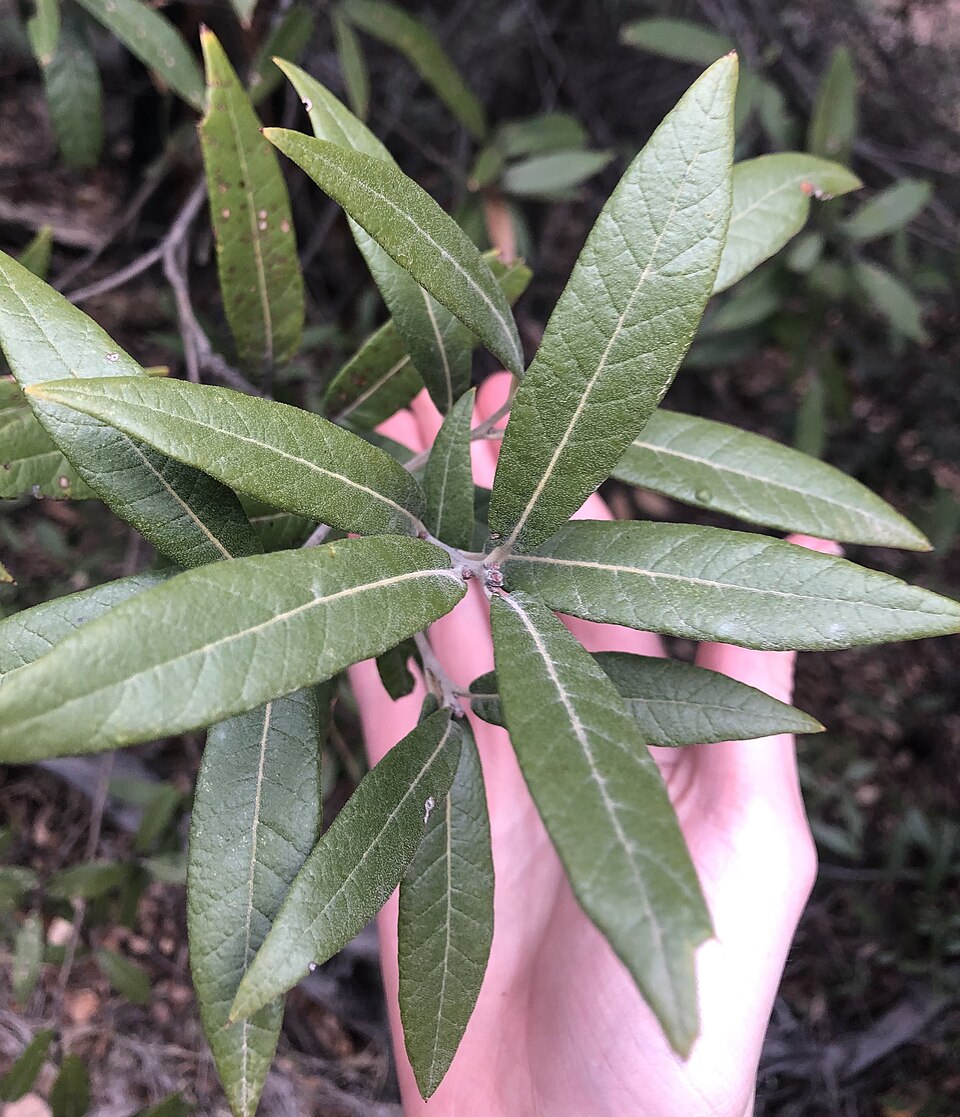
The leaves are the single most distinctive feature: narrow, lance-shaped, 2 to 4 inches long, with smooth to slightly wavy margins (unlike the toothed or lobed leaves of many other oaks). The upper surface is dark green and somewhat leathery; the lower surface is densely covered in fine white to grayish hairs, giving it a felty, silvery-white appearance that is unmistakable once seen. New growth, including young twigs, often shows this same pale, fuzzy texture before it darkens with age. Twigs are reddish-brown, slender to moderate, broadly triangular with a sharp point, and generally covered in white fuzz; terminal buds cluster at branch tips.
Flowers & Fruit
Like other oaks, Silverleaf Oak is monoecious, with inconspicuous drooping male catkins and small female flowers appearing in spring. Acorns are relished by wildlife and, as in other members of the red oak group to which this species belongs, generally require two growing seasons to mature.
Quick Facts
| Scientific Name | Quercus hypoleucoides |
| Family | Fagaceae (Beech/Oak) |
| Plant Type | Evergreen to semi-evergreen Shrub or Small Tree |
| Mature Height | 10–30 ft |
| Mature Spread | 10–20 ft |
| Growth Rate | Slow |
| Sun Exposure | Full Sun to Partial Shade |
| Water Needs | Low |
| Soil Type | Dry, rocky, well-drained mountain soils |
| Soil pH | Neutral to slightly alkaline |
| Elevation Range | 5,000–8,000 ft |
| Foliage | Narrow, dark green above; densely white-felted below |
| Fire Response | Vigorous resprouter from the root crown |
| USDA Hardiness Zones | 7–9 |
Native Range
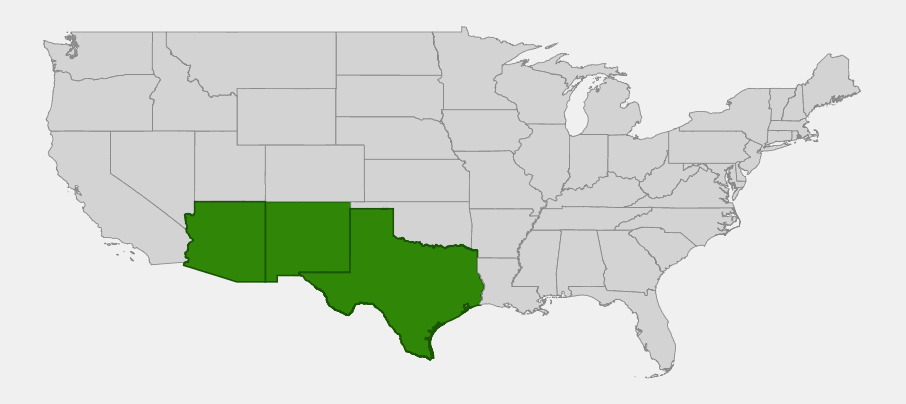
Silverleaf Oak occurs in the mountains of the southwestern United States, found in southern Arizona, southern and central New Mexico, and the Trans-Pecos region of far west Texas, extending south into the Sierra Madre of Sonora, Chihuahua, Coahuila, and Sinaloa, Mexico. Within the United States it is a characteristic species of the “sky island” mountain ranges — isolated ranges rising from the surrounding desert and grassland that support pine-oak woodland quite different from the lowlands around them.
It grows at elevations of roughly 5,000 to 8,000 feet, in both moist canyons and on dry, rocky ridges, typically within pine-oak woodland communities. Notable locations include the Santa Catalina and Chiricahua Mountains of southern Arizona and the Black Range of New Mexico, where it grows alongside Arizona Oak, Emory Oak, and Gambel Oak in a diverse, fire-adapted oak woodland.
📋 Regional plant lists featuring Silverleaf Oak: Arizona & New Mexico · South and West Texas
Growing & Care Guide
Silverleaf Oak is well suited to xeric, high-elevation Southwestern landscapes that mimic its native sky island mountain habitat, but it is not a good fit for low-desert or humid climates far outside its natural range.
Light
Full sun to partial shade both work well, reflecting the range of conditions the species occupies in the wild, from exposed rocky ridges to the dappled light of canyon woodland.
Soil & Water
Silverleaf Oak prefers dry, rocky, well-drained soil and is notably drought-tolerant once established, needing little to no supplemental irrigation in appropriate climates. Good drainage is essential; it does not tolerate consistently wet or poorly drained soils.
Planting Tips
Like other oaks, Silverleaf Oak develops a substantial taproot, so smaller container stock generally transplants more successfully than larger specimens. Choose a site at an elevation and climate similar to its native range — it is best suited to higher-elevation gardens in Arizona, New Mexico, and far west Texas rather than low desert valleys. Allow 10 to 20 feet of eventual spread.
Pruning & Maintenance
Minimal pruning is needed; remove dead or damaged wood as needed. Because Silverleaf Oak resprouts vigorously from the root crown after fire or heavy dieback, light structural pruning can help direct regrowth toward a more tree-like form if a single-trunk habit is preferred over the naturally shrubby growth pattern.
Landscape Uses
Silverleaf Oak’s distinctive silvery foliage and toughness suit several Southwestern landscape roles:
- Xeriscaping and dry woodland gardens at higher elevations in Arizona, New Mexico, and west Texas
- Erosion control on rocky slopes once established
- Ornamental foliage interest — few native shrubs offer such striking silver-white leaf undersides
- Wildlife plantings paired with Arizona Oak and Emory Oak
- Fire-adapted landscaping, given its strong resprouting ability after fire or dieback
Wildlife & Ecological Value
For Mammals & Birds
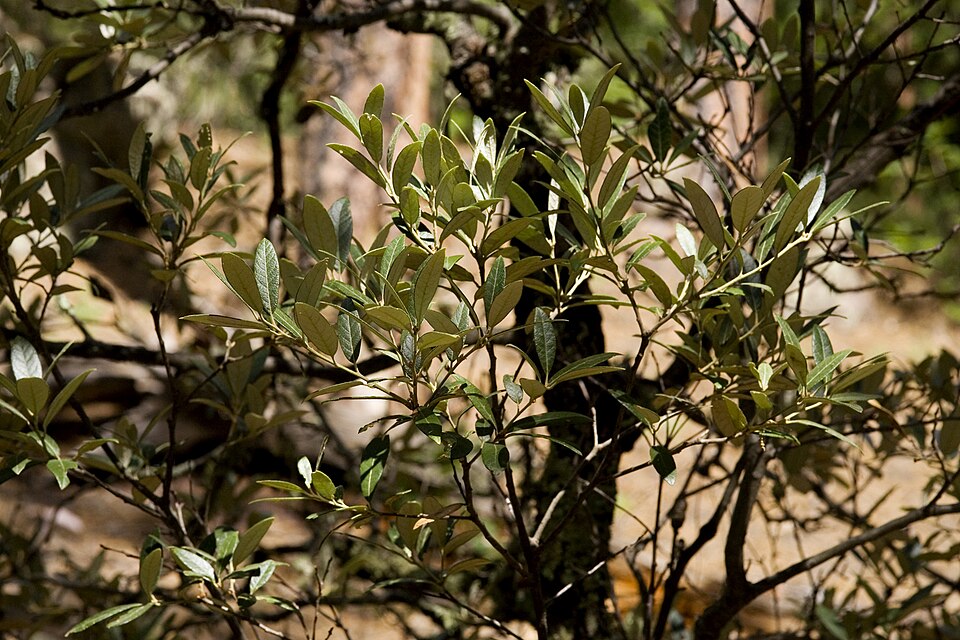
Acorns are eaten by squirrels and a variety of birds, contributing mast to the sky island pine-oak woodland food web. Taller individuals provide shade that offers thermal cover for wildlife during the intense summer heat typical of the Southwest’s mountain foothills.
Fire Ecology
Silverleaf Oak is a vigorous post-fire resprouter, regenerating from the root crown after burns and forming dense, multi-stemmed shrub thickets in areas subject to repeated fire. This resilience makes it an important stabilizing component of fire-adapted sky island woodland, helping the community recover structure and cover relatively quickly after burns.
Ecosystem Role
As one of several oak species forming the diverse pine-oak woodland of the sky island ranges, Silverleaf Oak contributes to one of the most biologically rich habitat types in the Southwest — these isolated mountain ranges function as biogeographic “islands” supporting species assemblages found nowhere else nearby. Its silvery foliage and shrub-to-tree flexibility add structural diversity that benefits a range of woodland wildlife.
Cultural & Historical Uses
As with other oaks of the Southwest, acorns from Silverleaf Oak and related species were historically gathered and processed as food by Indigenous peoples of the region, typically leached to remove bitter tannins before grinding into meal. This reflects documented historical practice rather than a present-day foraging recommendation; correct identification and proper preparation are essential before consuming any wild acorn. The wood, like other oaks, is dense and durable, though the species’ often shrubby, multi-stemmed form in the wild limited its use for large timber compared to taller oak species.
Frequently Asked Questions
Why is it called Silverleaf Oak?
The name refers to the dense coating of fine white to grayish hairs on the underside of the leaves, which gives the foliage a silvery, felty appearance — especially noticeable when wind turns the leaves and exposes their pale undersides.
Is Silverleaf Oak a shrub or a tree?
Both, depending on conditions. On exposed, rocky, fire-prone sites it typically grows as a dense, multi-stemmed shrub, while in sheltered canyons with reliable moisture it can develop into a full tree up to 30 feet tall.
Does Silverleaf Oak lose its leaves in winter?
It is evergreen to semi-evergreen, generally retaining most of its leathery leaves through winter in its native range, though some leaf drop can occur depending on local conditions and severity of the winter.
Can Silverleaf Oak grow outside Arizona and New Mexico?
It is best suited to higher-elevation, dry Southwestern climates similar to its native sky island range. It is not well adapted to low desert heat, humid climates, or regions with significantly colder winters than its native mountain habitat.
How does Silverleaf Oak respond to wildfire?
It resprouts vigorously from the root crown after fire, often forming denser, multi-stemmed shrub growth in areas with a history of repeated burning. This makes it one of the more fire-resilient oaks of the sky island woodlands.

Looking for a nursery that carries Silverleaf Oak?
Browse our native plant nursery directory: Arizona · New Mexico · Texas

