
Dwarf Hackberry (Celtis tenuifolia)
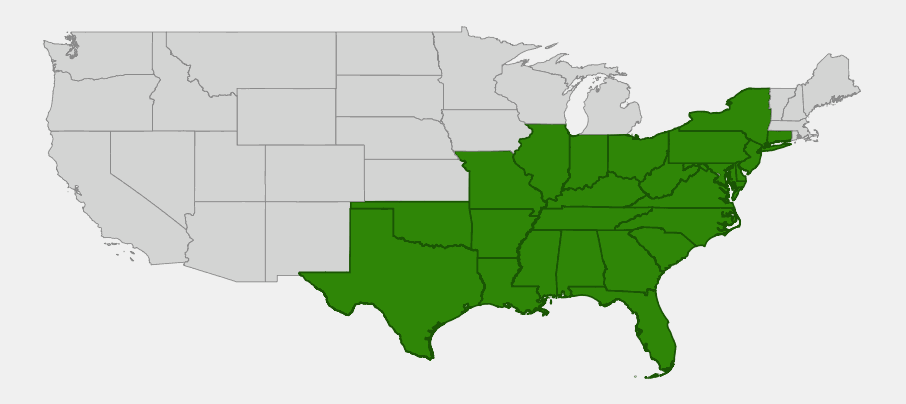
Celtis tenuifolia, commonly called Dwarf Hackberry (also Georgia Hackberry or Upland Hackberry), is a small, shrubby native tree in the hemp family (Cannabaceae) found scattered across a surprisingly wide swath of the eastern United States, from southern Ontario and Connecticut south to Florida and west to Texas. Despite this broad range, it is genuinely uncommon almost everywhere it grows, occurring as scattered individuals or small colonies rather than forming extensive stands — a pattern that earns it tracked or watch-list status in several states.
The USDA PLANTS database lists this taxon under the older name Celtis pumila, but the Flora of North America and most current regional floras treat it as Celtis tenuifolia, the name used throughout this guide and on the Dwarf Hackberry’s regional plant list entries. Unlike its larger relatives, common hackberry and sugarberry, Dwarf Hackberry rarely exceeds 20 to 30 feet and often grows as a multi-stemmed shrub rather than a single-trunked tree.
Dwarf Hackberry favors dry, rocky, often limestone-based soils — bluffs, thin-soiled slopes, and open woodland edges — where it tolerates drought and poor soil better than most other native trees. For gardeners within its range looking for a tough, wildlife-friendly small tree for a difficult rocky or alkaline site, it is an underused option worth seeking out.
Identification
Dwarf Hackberry shares the warty bark and asymmetrical leaf base typical of the hackberry group, but its small stature, shrubby habit, and thinner leaves set it apart from common hackberry and sugarberry.
Bark & Stems
Young bark is smooth and light gray, lacking the rough, corky warts that develop on common hackberry; the characteristic warty texture appears only as the plant reaches medium age, and even then it is usually less pronounced. Twigs are slender and often zigzag slightly between nodes, a trait shared with other hackberries.
Leaves
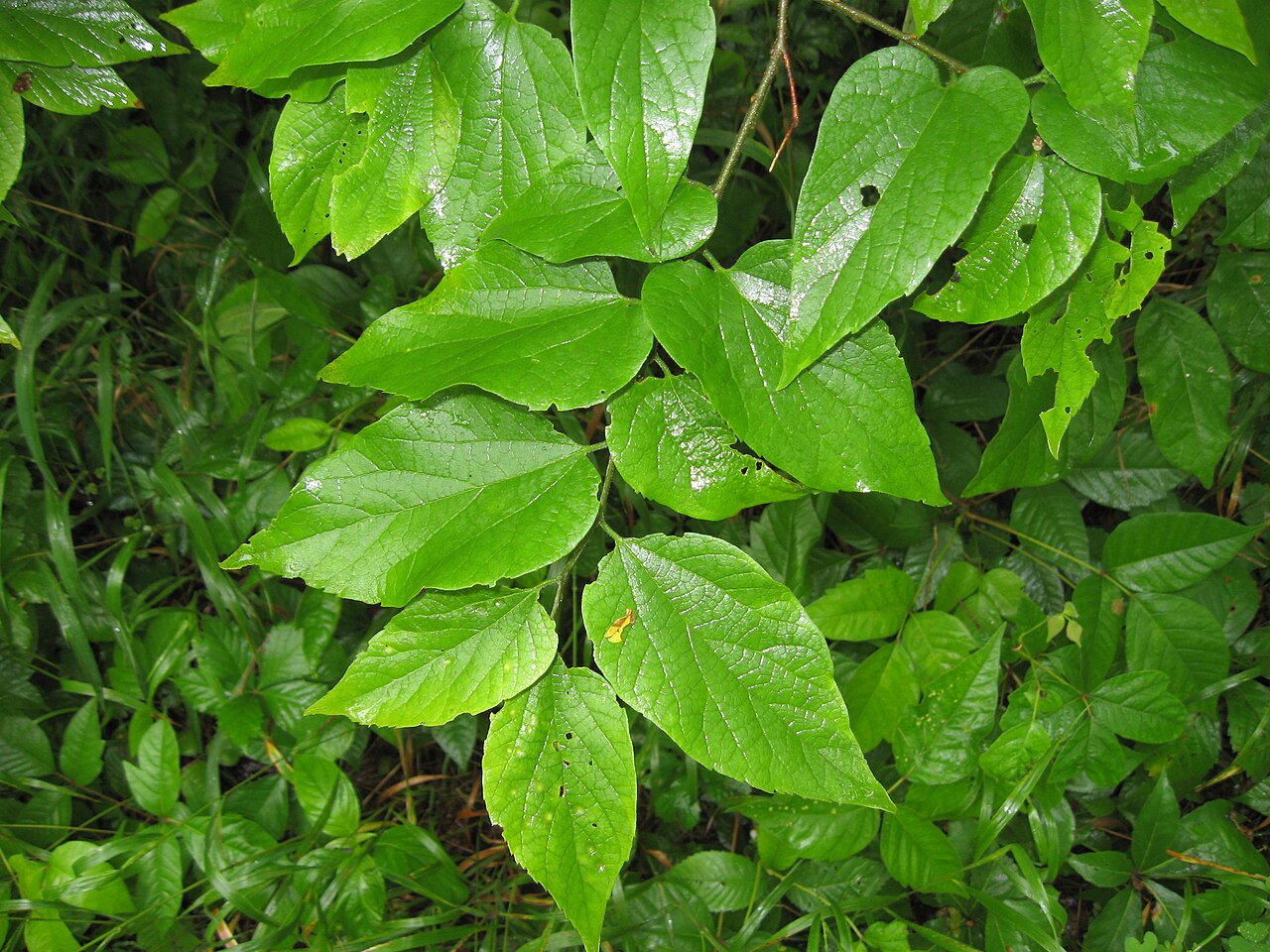
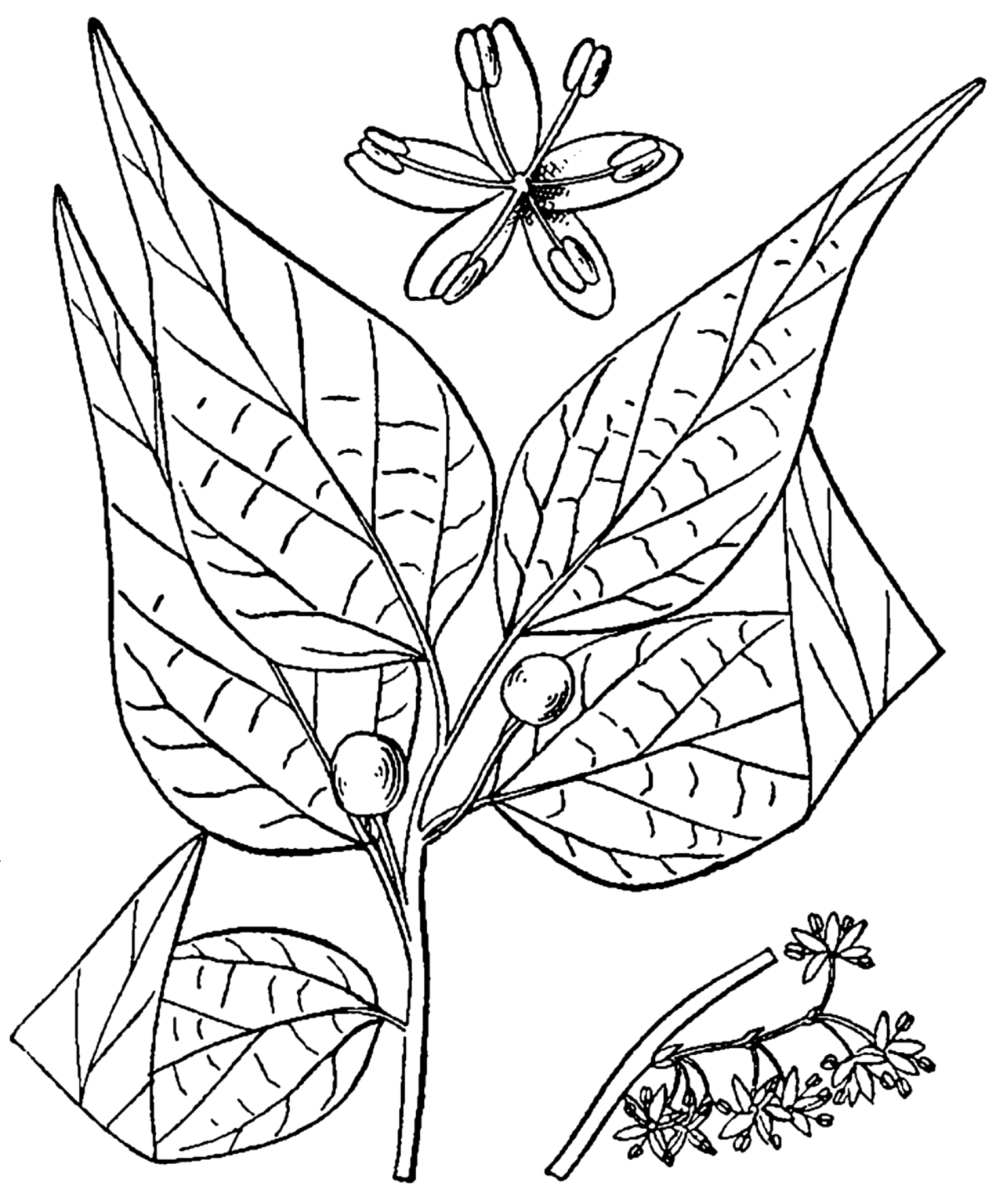
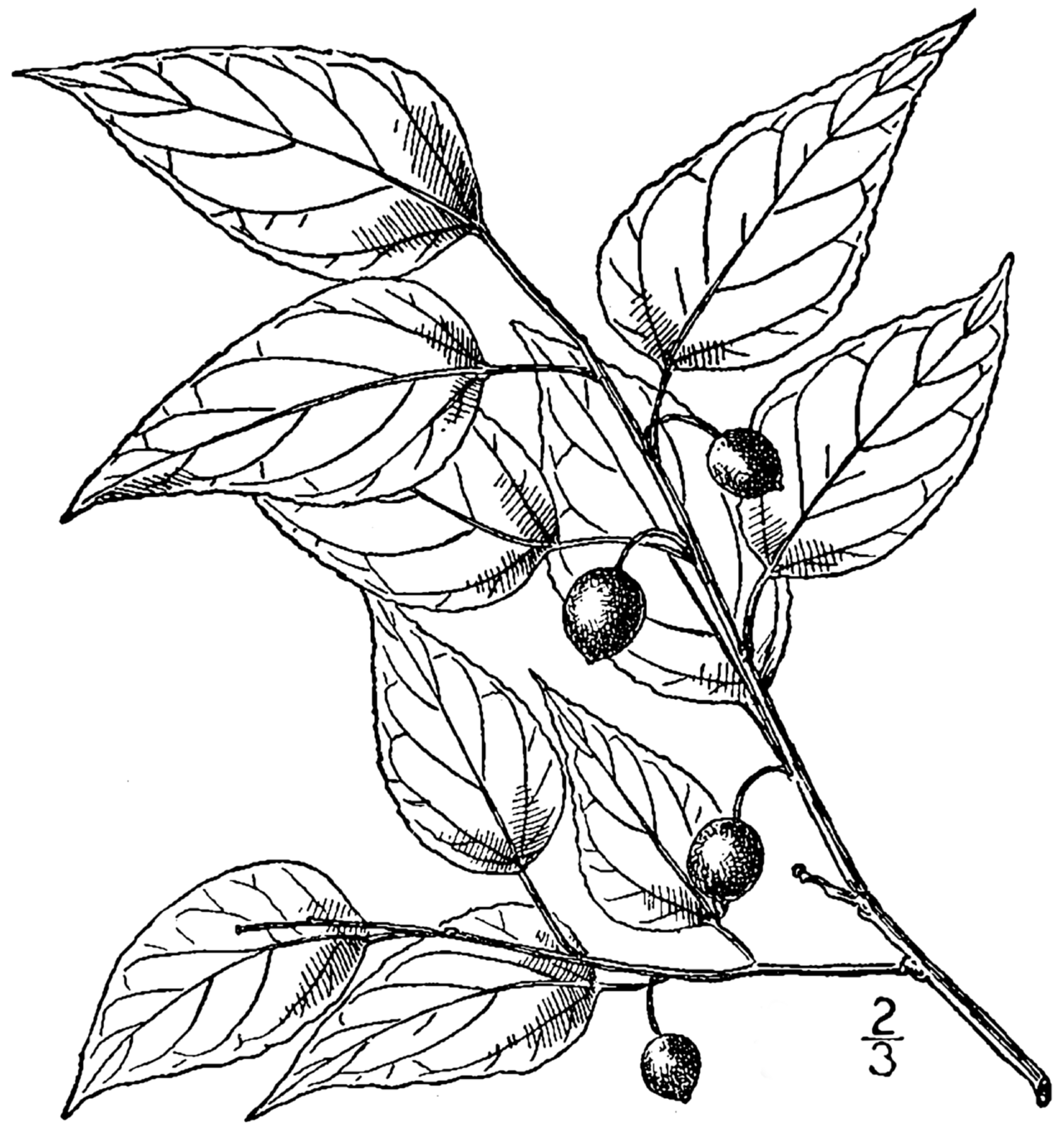
Leaves are simple, alternate, and ovate to lance-shaped, 1.5 to 3 inches long — notably smaller and thinner than those of common hackberry, which is reflected in the species name tenuifolia, meaning “thin-leaved.” The base is asymmetrical (oblique), the tip tapers to a point, and the margins are toothed above the middle but often smooth-edged near the base. Leaf surfaces are usually smooth to slightly rough, dull to semi-glossy green.
Flowers
Like other hackberries, Dwarf Hackberry is wind-pollinated, with small, inconspicuous greenish flowers appearing in spring as the leaves emerge. Male and female flowers occur separately but on the same plant, in small clusters at the leaf axils.
Fruit & Seeds
The fruit is a small, round drupe, about ¼ to ⅓ inch across, ripening from green to orange-red to dark purple-brown in fall. Each fruit contains a single hard seed surrounded by a thin, sweetish, mealy pulp — smaller than the fruit of common hackberry or sugarberry but similarly relished by birds.
Quick Facts
| Scientific Name | Celtis tenuifolia (USDA: Celtis pumila) |
| Family | Cannabaceae (Hemp; formerly Ulmaceae) |
| Plant Type | Deciduous Small Tree / Large Shrub |
| Mature Height | 15–30 ft |
| Mature Spread | 10–20 ft |
| Growth Rate | Slow to Moderate |
| Sun Exposure | Full Sun to Partial Shade |
| Water Needs | Low |
| Soil Type | Thin, rocky, well-drained soils, often over limestone |
| Soil pH | 7.0–8.5 (neutral to alkaline) |
| Bloom Time | April–May |
| Flower Color | Greenish (inconspicuous) |
| Fall Color | Pale yellow, not showy |
| Fruit | Small orange-red to purple-brown drupe, ripening in fall |
| Deer Resistant | Moderate |
| USDA Hardiness Zones | 5–9 |
Native Range
Dwarf Hackberry has one of the broadest latitudinal ranges of any plant in this guide, occurring from southern Ontario and Connecticut in the north, south to the Florida Panhandle, and west to Texas and Oklahoma. Despite this wide geographic spread, it is nowhere abundant: populations are naturally scattered and often small, and the species is tracked as rare, threatened, or a species of special concern in a number of states at the edges of its range, including several in the Northeast and upper Midwest.
Dwarf Hackberry is a calciphile, strongly associated with limestone-derived soils. It typically grows on dry, rocky bluffs, thin-soiled upland slopes, limestone glades, and open woodland edges — drier, poorer sites than those favored by common hackberry or sugarberry, which tend toward richer bottomland and upland forest soils.
Because the species depends on a specific, naturally patchy habitat type (dry calcareous outcrops), rather than on widespread site conditions, its distribution will likely always remain scattered even where protected. Conserving and planting it within its range helps maintain genetic diversity across these isolated, often small populations.
📋 Regional plant lists featuring Dwarf Hackberry: Connecticut, Massachusetts & Rhode Island · New York, Pennsylvania & Northern New Jersey · Delaware, Southern New Jersey & Long Island · Maryland, Virginia & West Virginia · North Carolina & South Carolina · Georgia, Alabama & Mississippi · Kentucky & Tennessee · Ohio & Indiana · Illinois, Iowa & Missouri · Arkansas, Louisiana, Eastern Oklahoma & Eastern Texas
Growing & Care Guide
Dwarf Hackberry is a low-maintenance, drought-tough small tree once established, especially well suited to rocky or alkaline sites where many other natives struggle.
Light
Grows best in full sun to light partial shade. It tolerates some shade at woodland edges but develops a fuller, more floriferous (and fruitful) form with more direct sun.
Soil & Water
Give it well-drained, rocky or thin soil, ideally neutral to alkaline — this species is notably tolerant of poor, calcareous soils that would stress many other trees. Established plants are quite drought-tolerant and should not be overwatered; good drainage matters more than fertility.
Planting Tips
Choose a dry, well-drained spot, such as a rocky slope, gravelly bank, or limestone-influenced garden bed, rather than a low or poorly drained site. Plant young container stock in spring or fall, and water regularly through the first growing season to establish roots, after which supplemental watering is rarely needed.
Pruning & Maintenance
Minimal pruning is required. Remove dead or crossing branches in late winter if shaping into a single-trunked tree form is desired; otherwise, the naturally shrubby, multi-stemmed habit can be left alone. The species has no significant pest or disease problems beyond the minor leaf galls that affect hackberries generally.
Propagation
Propagate from fresh seed collected in fall, cleaned of pulp, and cold-stratified over winter for spring germination. Because populations are naturally scattered and sometimes rare locally, source seed responsibly or buy nursery-propagated stock rather than collecting heavily from any one wild population.
Landscape Uses
- Small specimen or accent tree for rocky, dry, or alkaline garden sites
- Wildlife hedgerow or thicket planting, left to grow in its natural multi-stemmed form
- Limestone glade and dry-woodland restoration within the species’ native range
- Erosion control on thin-soiled rocky slopes and banks
Wildlife & Ecological Value
Like its larger relatives, Dwarf Hackberry punches above its weight ecologically, supporting a range of wildlife despite its modest size and scattered distribution.
For Pollinators
The inconspicuous spring flowers are wind-pollinated, but the foliage is a larval host plant for several butterfly species in the hackberry-feeding group, including hackberry emperor and tawny emperor butterflies, as well as American snout butterflies.
For Birds
The small fall fruits are readily eaten by a variety of songbirds, including robins, waxwings, and mockingbirds, which help disperse the seed to new sites — an important function given the species’ naturally patchy distribution.
For Mammals
Small mammals, including squirrels, also feed on the fruit, and the dense, often thicket-forming growth provides cover for a range of wildlife on the dry, open sites the species favors.
Ecosystem Role
As a calciphile adapted to dry limestone habitats, Dwarf Hackberry helps stabilize soil on thin-soiled bluffs and glades where few other woody plants persist, and it serves as a larval host plant connecting the butterfly community to a specialized, naturally uncommon habitat type. Protecting and planting it supports both butterfly conservation and the broader diversity of limestone glade ecosystems.
Cultural & Historical Uses
Dwarf Hackberry has no significant history of timber use; its small size and shrubby form never made it commercially valuable compared to common hackberry or sugarberry. Where historical records mention it at all, they generally describe it as a minor component of dry upland woods and glades rather than a resource species.
The small, sweet-fleshed fruits have occasionally been noted as an incidental wild food, similar to other hackberries, though they were never gathered at scale given the plant’s naturally scattered occurrence and modest fruit production compared to its larger relatives.
Today, Dwarf Hackberry draws attention mainly from botanists and conservationists documenting rare limestone-glade plant communities, and from native-plant gardeners looking for a genuinely tough, low-water small tree suited to difficult rocky sites.
Frequently Asked Questions
How is Dwarf Hackberry different from common hackberry?
Dwarf Hackberry is much smaller — usually 15 to 30 feet versus 40 to 60-plus feet for common hackberry — with thinner, smaller leaves, and it strongly prefers dry, rocky, often limestone-based soils rather than the richer sites common hackberry tolerates.
Why does USDA list this plant as Celtis pumila?
USDA PLANTS uses Celtis pumila as its accepted name for this taxon, but the Flora of North America and most current regional floras use Celtis tenuifolia, which is the name used on this page and on the plant’s regional list entries.
Is Dwarf Hackberry rare?
It is naturally uncommon to rare throughout its range, occurring in small, scattered populations tied to limestone and calcareous soils, and it is tracked as a species of conservation concern in several states, especially toward the edges of its range.
What soil does Dwarf Hackberry need?
It needs well-drained, often rocky or thin soil, ideally neutral to alkaline. It is notably drought- and poor-soil tolerant, making it a good choice for difficult sites where richer-soil trees struggle.
Does Dwarf Hackberry support butterflies?
Yes. Like other hackberries, its leaves are a larval host plant for hackberry emperor, tawny emperor, and American snout butterflies, making it a valuable addition to a butterfly-friendly native garden.
Two larger relatives are already profiled here: Hackberry and Sugarberry. If you’re weighing firewood options for hackberry wood, see our hackberry firewood guide.

Looking for a nursery that carries Dwarf Hackberry?
Browse our native plant nursery directory: Connecticut, Delaware, Florida & Georgia · New York, New Jersey, North Carolina, Ohio & Oklahoma · Pennsylvania, Virginia, South Carolina, Tennessee & Texas · Maryland, Kentucky, Louisiana, Mississippi & Missouri · West Virginia · Alabama & Arkansas · Indiana & Illinois

