
Key Thatch Palm (Leucothrinax morrisii)
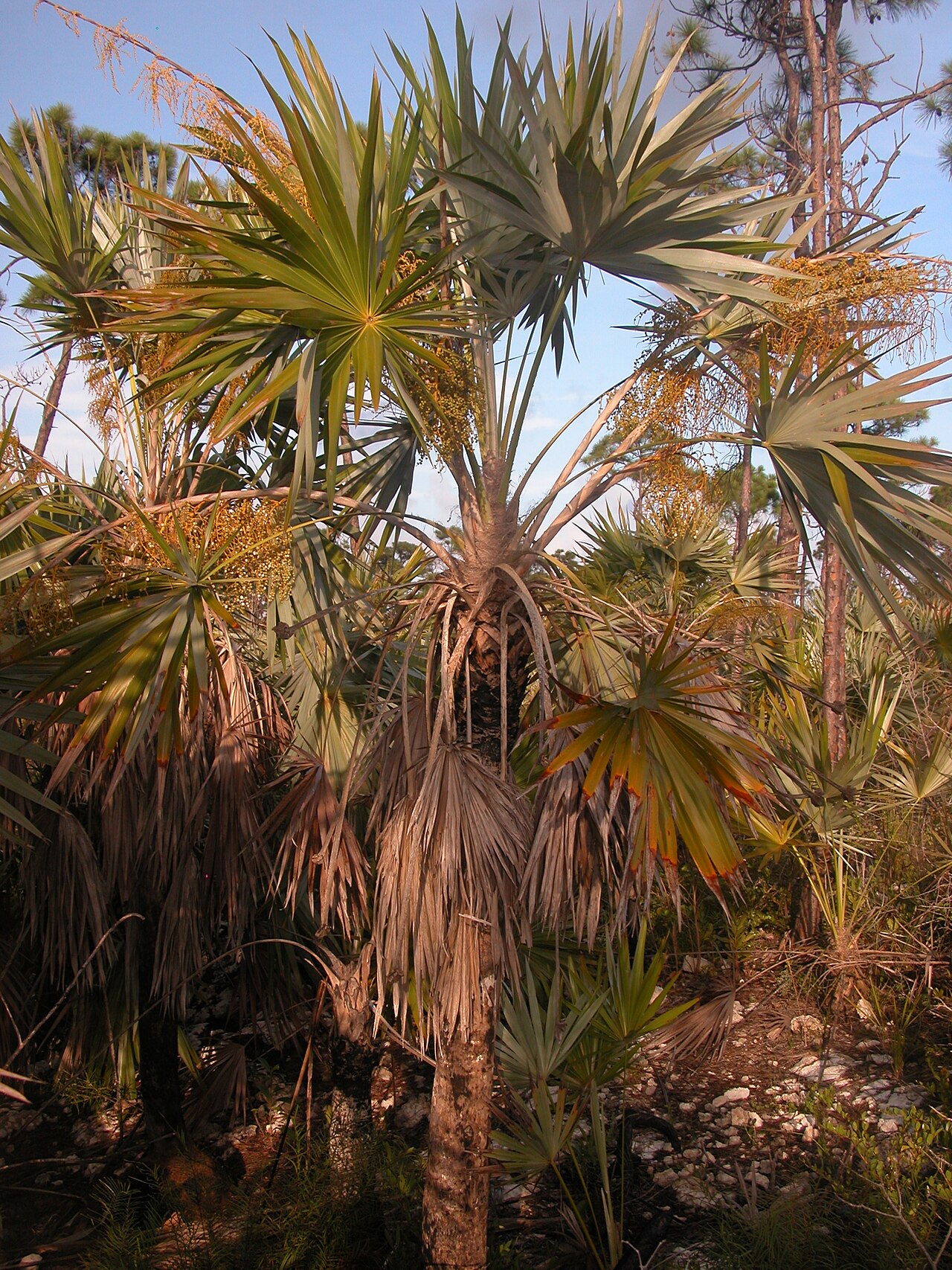
Leucothrinax morrisii, the Key Thatch Palm (also called brittle thatch palm), is a small, slender fan palm native in the United States only to the Florida Keys. It is the sole species in its genus, split off in 2008 from the old genus Thrinax on the strength of DNA evidence, though most Florida gardeners still know it by its older name, Thrinax morrisii.
In the wild it grows along the edges of rockland hammocks, in pine rocklands and on coastal berms throughout the Keys, where limestone is close to the surface and salt spray is a constant. Few native palms handle that combination of drought, thin soil and salt as gracefully: the Key thatch palm is one of the toughest, most storm-resistant landscape palms available to South Florida gardeners, and its slim trunk and airy, silver-backed crown bring a distinctly Keys look to any planting.
Growth is slow and the species is listed as Endangered by the Florida Department of Agriculture and Consumer Services (plant from nursery-propagated stock only, never dig from the wild), but a mature specimen rewards patience with decades of low-maintenance, hurricane-tough structure.
Identification
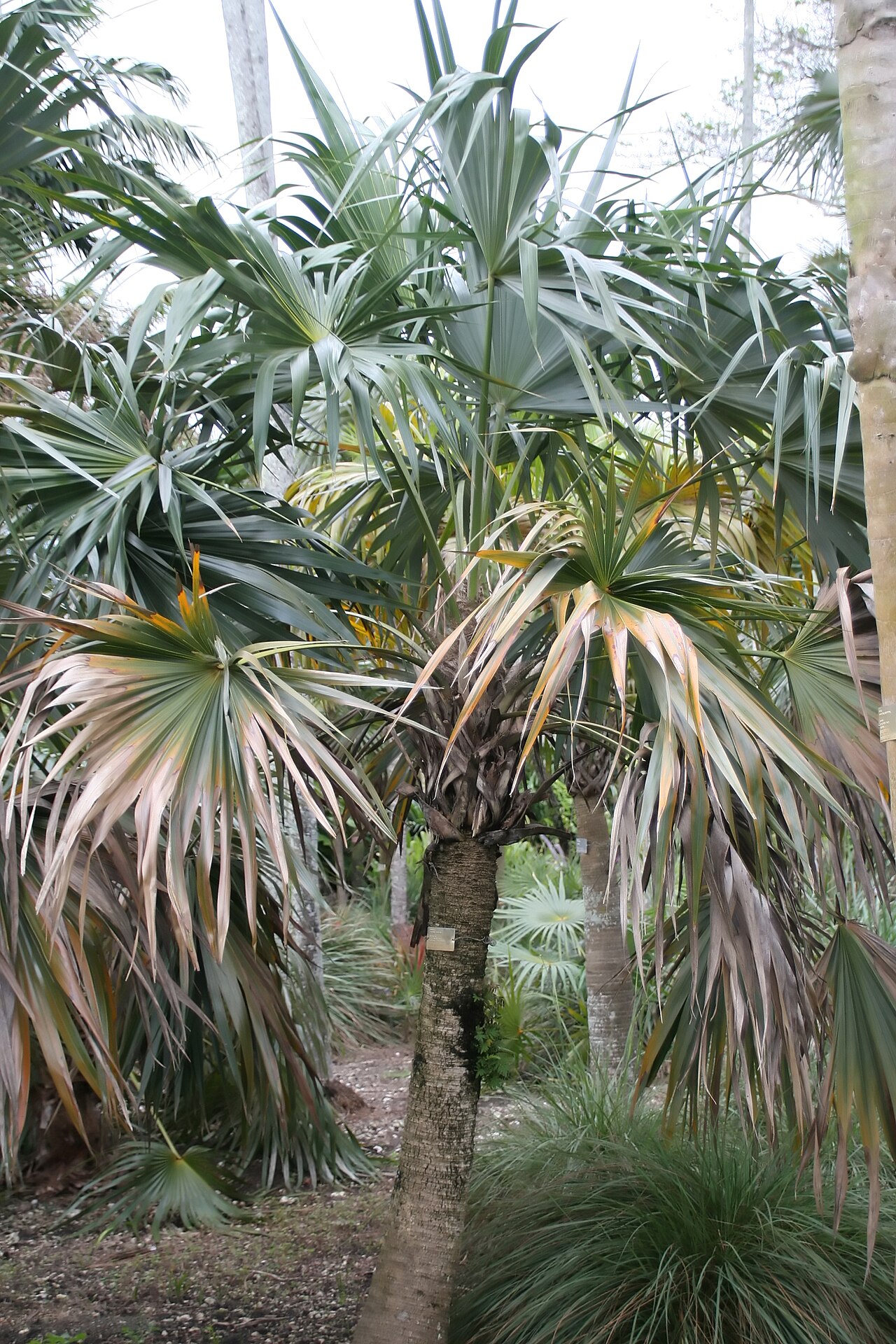
Key thatch palm is a single-trunked, moderately small palm, usually 10 to 20 feet tall in cultivation (wild plants in deep shade can eventually reach taller), with a slender, uncluttered profile that reads almost architectural against the sky. The crown holds a modest number of fan-shaped leaves on long, thin stalks, giving the whole plant an open, breezy look rather than the dense mass of a cabbage palm.
Trunk
The trunk is slim, usually only 3 to 6 inches in diameter, gray to light brown, and marked with closely spaced horizontal leaf-scar rings. It self-cleans with age, dropping old leaf bases to leave a smooth, ringed pole. Despite its delicate look the trunk is flexible and wind-resistant, an adaptation to the hurricane-prone Keys, which is also the source of the alternate name “brittle thatch” (the individual leaflets, not the trunk, tend to split).
Leaves
Leaves are palmate (fan-shaped), roughly 2 to 3 feet across, divided about halfway into stiff, straight segments. The upper surface is blue-green to yellow-green; the underside is strikingly pale, almost silvery-white, and flashes dramatically in coastal breezes. The key identification feature is the hastula, a small flap of tissue where the blade meets the leafstalk: on Key thatch palm it is low and rounded, in contrast to the sharply pointed hastula of the similar Florida thatch palm (Thrinax radiata), which shares its Keys habitat.
Flowers & Fruit
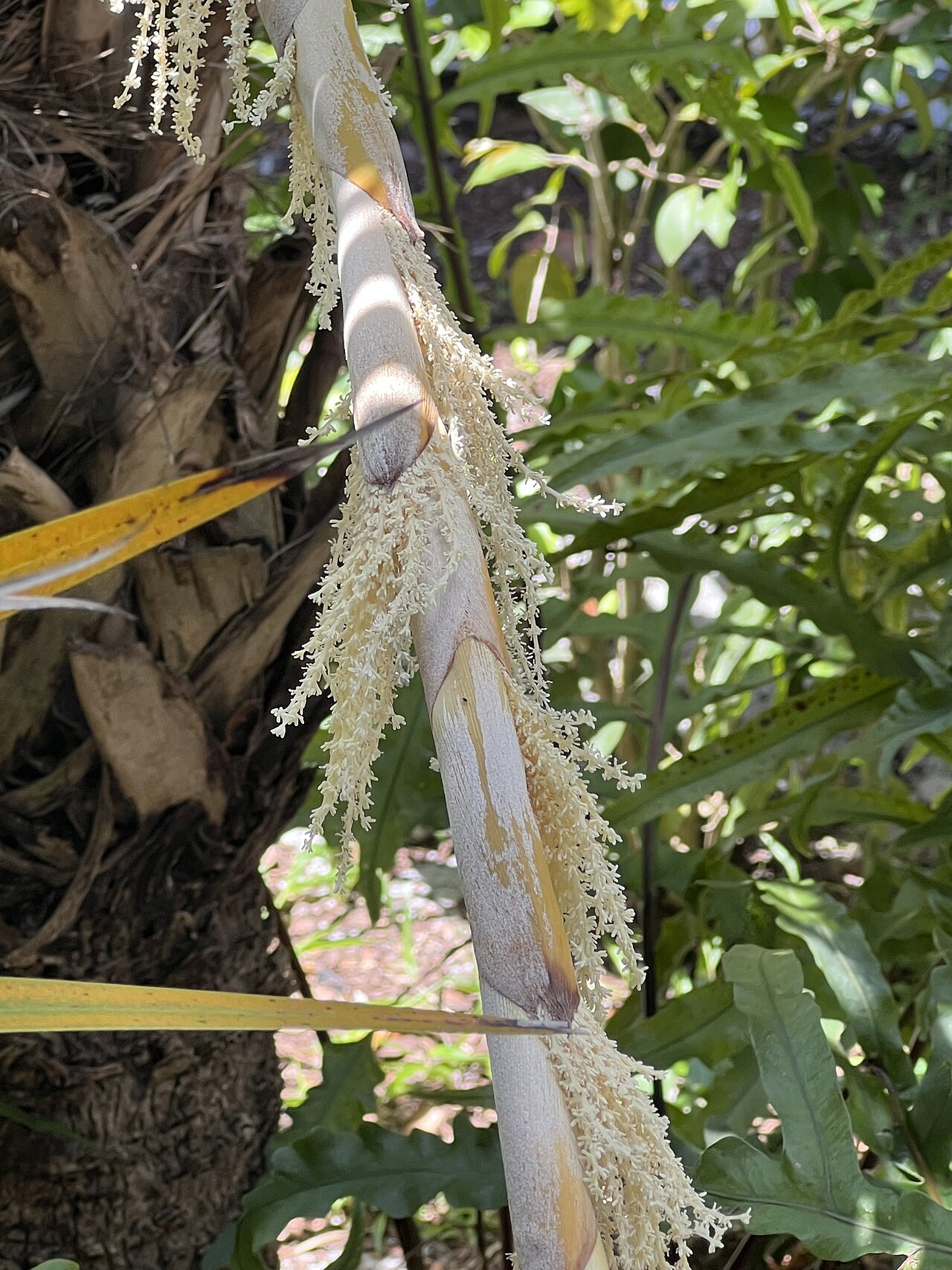
Small, fragrant, creamy-white flowers are borne in branched clusters on a long flower stalk that arches well beyond the leaves, a trait shared with other thatch palms. Flowering can occur more than once a year. The flowers give way to round, pea-sized fruits that start white and ripen to a pale, dull yellow-white, hanging in loose, drooping clusters that birds strip quickly once ripe.
Quick Facts
| Scientific Name | Leucothrinax morrisii (syn. Thrinax morrisii) |
| Family | Arecaceae (Palm) |
| Plant Type | Evergreen single-trunk fan palm |
| Mature Height | 10–20 ft in cultivation |
| Mature Spread | 6–8 ft crown width |
| Growth Rate | Slow |
| Sun Exposure | Full Sun to Part Shade |
| Water Needs | Low once established; very drought tolerant |
| Soil Type | Thin, well-drained limestone or sandy soil |
| Soil pH | Neutral to alkaline |
| Bloom Time | Sporadic, more than once a year |
| Flower Color | Creamy white |
| Fall Color | None (evergreen) |
| Fruit | Round, pea-sized, white ripening to pale yellow-white |
| Salt Tolerance | Very high (spray); not tolerant of saltwater flooding |
| USDA Hardiness Zones | 10b–11 |
Native Range
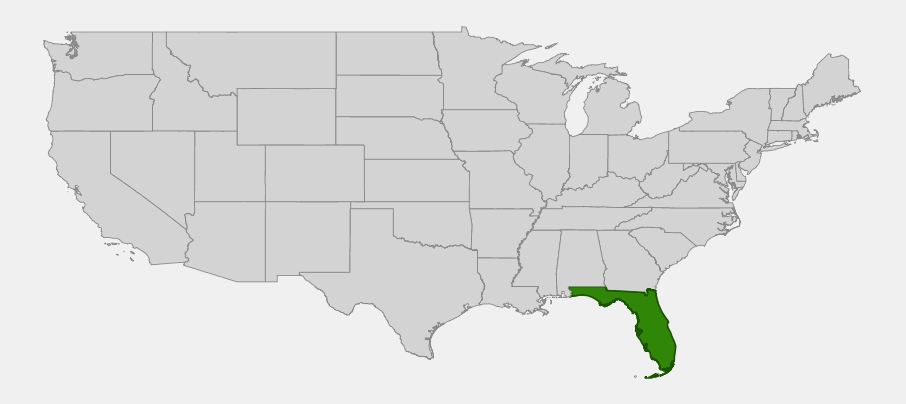
In the United States, Key thatch palm is native only to the Florida Keys (Monroe County), making it one of the most narrowly distributed native trees in the country. Outside Florida its range widens considerably across the Caribbean, including the Bahamas, Cuba, Hispaniola, Puerto Rico, the Virgin Islands and parts of the Lesser Antilles, where it occupies similar dry coastal habitats.
Typical habitat is pine rockland and the dry, sunny margins of tropical hardwood hammocks, plus coastal berms and rocky shorelines where thin limestone soil, full exposure and salt spray would stress most other trees. It often grows alongside Florida silver palm, silver palmetto and poisonwood, forming part of the understory and edge community of the Keys’ globally rare pine rockland and rockland hammock ecosystems.
Because pine rockland and coastal hammock habitat has been drastically reduced by development across the Keys and South Florida, wild populations are limited and the species is state-listed as Endangered. Only buy nursery-propagated plants, which are commonly available from South Florida native nurseries, for any garden use.
📋 Regional plant lists featuring Key Thatch Palm: No Florida regional plant list currently covers this species; browse all Native Plant Profiles. For a similar Keys native often planted alongside it, see Florida Silver Palm and Florida Thatch Palm.
Growing & Care Guide
Key thatch palm is one of the most carefree native palms for South Florida gardens once it is established, asking for little beyond sun and good drainage.
Light
Plant in full sun to light part shade. Seedlings establish best with a bit of overhead protection, but mature plants perform best and hold the tightest, most compact crown in full sun, exactly as they grow on exposed Keys shorelines.
Soil & Water
This palm wants sharply drained soil and is remarkably unfussy about fertility, thriving in thin limestone or sandy soils that would starve most ornamentals. Water young plants regularly through their first one to two years; established plants need supplemental water only during extended drought. Avoid soggy, poorly drained sites and never plant where saltwater can pool around the roots.
Planting Tips
Give Key thatch palm plenty of room from pavement and structures, though its slim profile makes it an easy fit in narrow beds where broader palms would not work. It is highly resistant to wind because the segmented, breakable leaflets release wind load rather than catching it, so it is an excellent choice near patios, pools and coastlines in hurricane country. Because growth is slow, choose a larger container specimen if a visual impact is wanted sooner.
Pruning & Maintenance
Remove only fully brown, dead fronds; green fronds should be left in place to keep feeding the palm, and over-pruning (“hurricane cutting”) weakens palms and should be avoided. The species has very few pest or disease problems in South Florida and does not require routine fertilizing once established, though a light application of palm-specific fertilizer with micronutrients can help on the poorest sites.
Propagation
Propagation is by seed. Collect ripe, pale yellow-white fruit, clean off the thin pulp and sow fresh, since viability drops quickly in storage. Germination is slow, often taking two to six months, and seedling growth afterward is unhurried, so nursery-grown specimens several years old are the practical way most gardeners acquire this species.
Landscape Uses
- Coastal and hurricane-zone landscaping, where its wind tolerance and salt resistance outperform most ornamental palms
- Narrow side yards and foundation beds, thanks to its slender, uncluttered profile
- Native hammock and pine rockland restoration plantings with Florida silver palm
- Poolside and courtyard specimen planting for a breezy, silver-backed accent
- Low-maintenance xeriscaping once established, needing little water or care
- Companion planting in broader South Florida palm designs; see our guide to palm trees for Florida landscapes
Wildlife & Ecological Value
Despite its small stature, Key thatch palm plays a real role in the food web of the Florida Keys’ rare pine rockland and hammock-edge habitats.
For Pollinators
The small, fragrant, creamy flowers attract bees and other small pollinating insects, and because flowering is sporadic and can happen more than once a year, the species offers a recurring nectar source in a landscape where blooms are not always abundant.
For Birds
Ripening fruit draws a steady stream of fruit-eating birds, including white-crowned pigeons, mockingbirds and various migratory songbirds that pass through the Keys, which strip the loose fruit clusters quickly once they ripen. The open, airy crown also offers nesting and perching structure that does not block coastal sightlines the way denser trees do.
For Mammals & Other Wildlife
Raccoons and other small mammals forage on fallen fruit, and the palm’s tolerance of harsh, exposed sites means it often persists as one of the few woody structures available to wildlife along disturbed shorelines and rocky scrub.
Ecosystem Role
As a signature understory and edge species of pine rockland and rockland hammock, Key thatch palm helps define two of the most imperiled plant communities in North America, both reduced to small fragments by development across South Florida. Protecting and planting it supports habitat that many other rare native species depend on.
Cultural & Historical Uses
True to its common name, the leaves of Key thatch palm were traditionally used for roof thatching throughout the Caribbean and the Florida Keys, prized for their durability in salt air. The slender trunks served as poles for construction, and the tough leaf fibers were woven into hats, baskets and cordage by Caribbean and Keys communities for generations, a history echoed in its Cuban name, miraguano, and Puerto Rican name, palma de escoba (“broom palm”), reflecting its use for broom-making as well.
Today the palm’s main role has shifted from building material to landscape asset: its toughness in the face of hurricanes, salt and drought has made it a favorite of South Florida native-plant landscapers looking for authentic, climate-appropriate character rather than imported ornamentals.
Frequently Asked Questions
Is Key thatch palm the same as Florida thatch palm?
No. They are closely related and share Keys habitat, but Key thatch palm (Leucothrinax morrisii) has a low, rounded hastula and a more slender overall build, while Florida thatch palm (Thrinax radiata) has a sharply pointed hastula and typically grows larger leaves.
How salt tolerant is Key thatch palm?
Very. It tolerates direct salt spray and coastal exposure extremely well, which is why it is such a reliable choice for oceanfront and Keys landscaping. It does not, however, tolerate having its roots sit in saltwater or brackish flooding.
Why is Key thatch palm listed as endangered in Florida?
Its native pine rockland and coastal hammock habitat in the Florida Keys has been heavily reduced by development, leaving few wild stands. Because of this, it is state-listed as Endangered, and gardeners should buy only nursery-propagated plants.
How fast does Key thatch palm grow?
Slowly. Expect a young plant to take several years to show significant height gain. Steady watering during establishment and full sun help, but patience is part of growing this species.
Can Key thatch palm handle a hurricane?
Yes, remarkably well. Its slender, flexible trunk and leaflets that split rather than catch the wind make it one of the most wind-resistant palms available for South Florida and Keys landscapes.

Looking for a nursery that carries Key Thatch Palm?
Browse our native plant nursery directory: Florida & Georgia

