
Water Locust (Gleditsia aquatica)
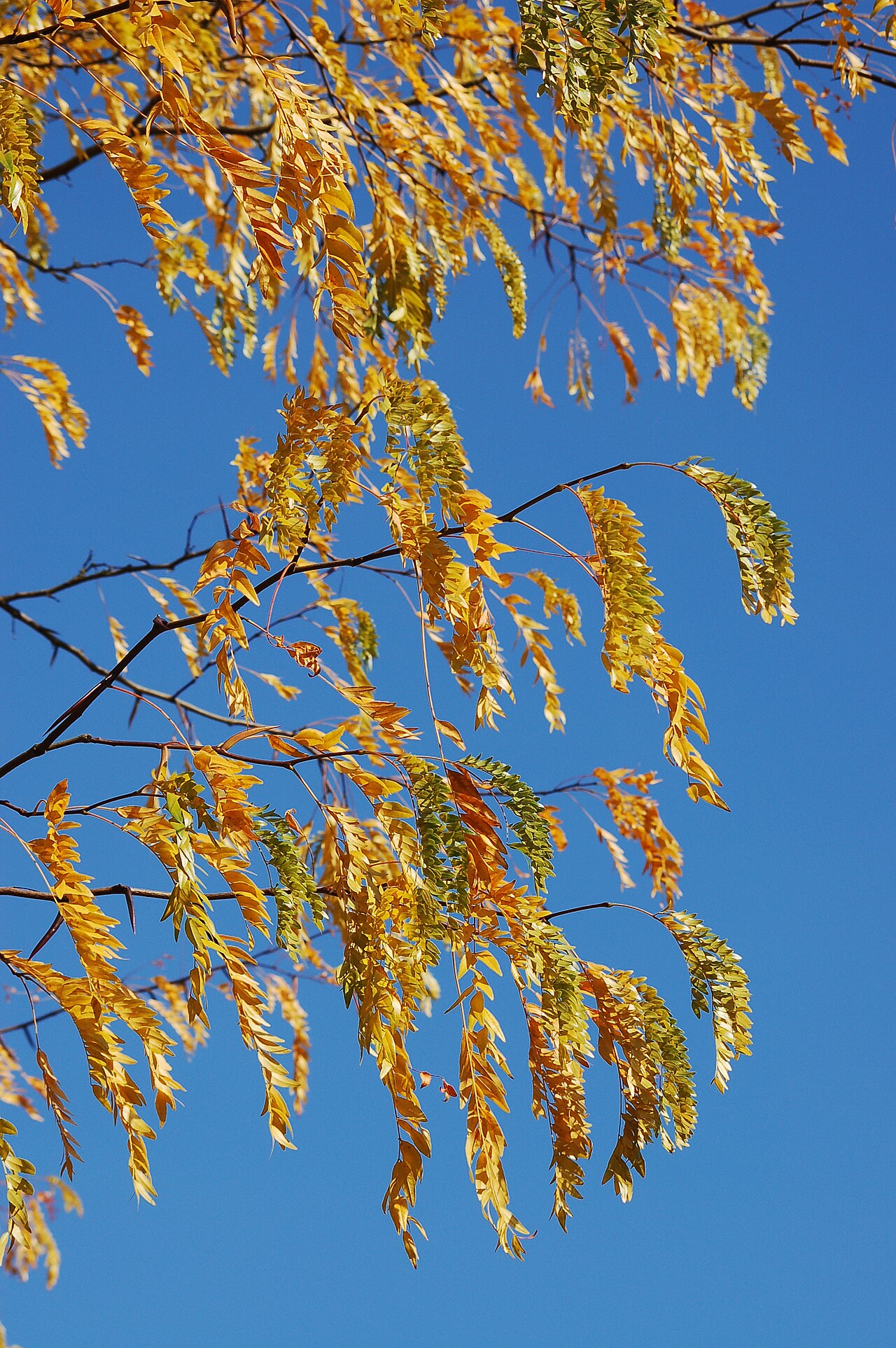
Gleditsia aquatica, commonly known as Water Locust or swamp locust, is a thorny, flood-tolerant tree of the Deep South’s river swamps and backwaters. A member of the legume family (Fabaceae), it is the smaller, lesser-known cousin of the widely planted Honeylocust (Gleditsia triacanthos) — but where Honeylocust tolerates almost any soil, Water Locust is a true wetland specialist, rooted in standing water for much of the year.
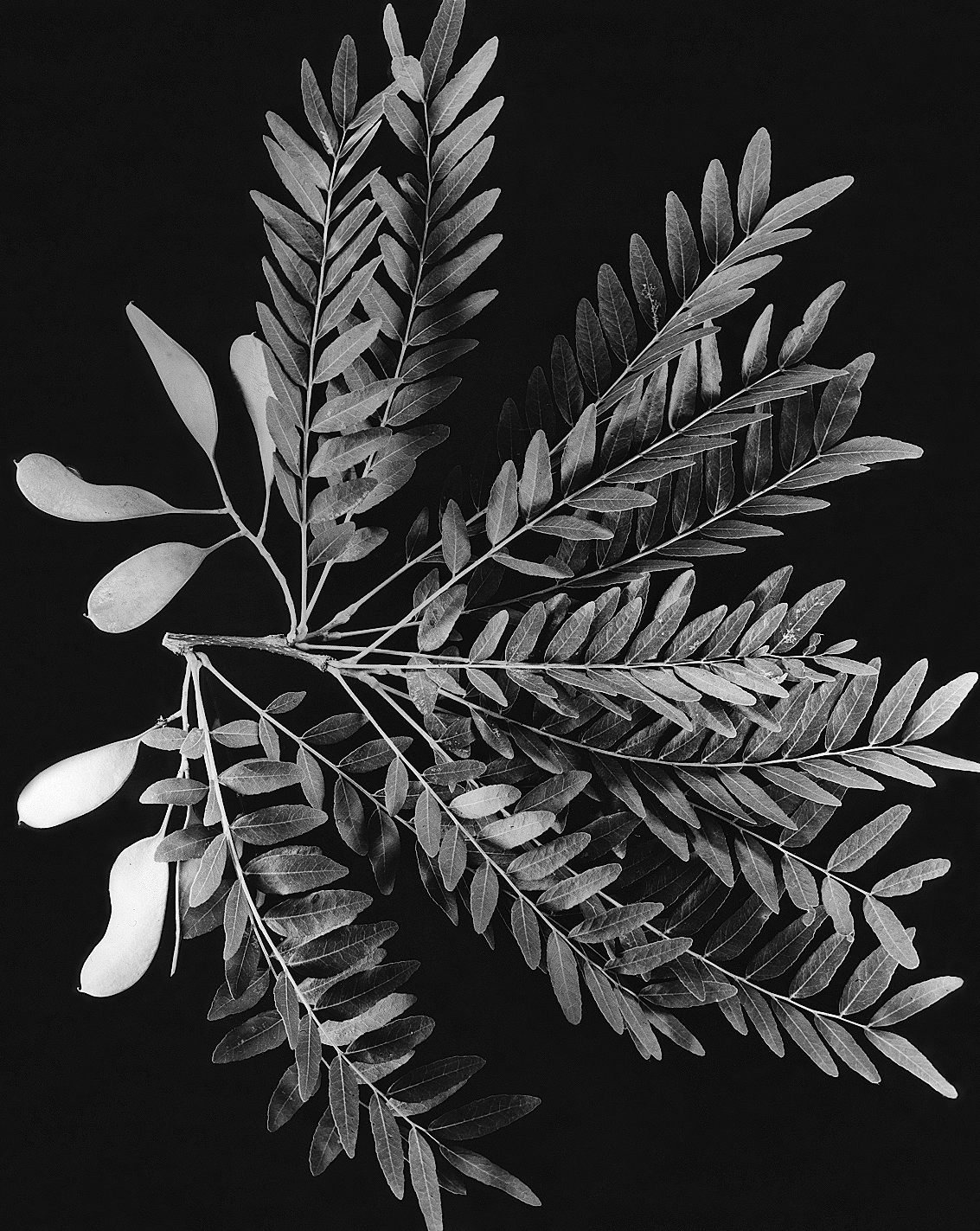
Growing 30 to 60 feet tall with a swollen, buttressed base typical of trees that spend months submerged, Water Locust is armed with stout, flattened thorns on its trunk and branches, though usually fewer and shorter than those of Honeylocust. Its most distinctive feature is its fruit: a flat, broadly oval, single-seeded reddish-brown pod about 1 to 2 inches long, utterly unlike the long, twisted, many-seeded pods of its relative. These buoyant pods are built to float, carrying seeds downstream to colonize new backwater sites.
Water Locust is rarely sold in the nursery trade and almost never planted as a yard tree, but it is an important and under-recognized species for wetland restoration, bottomland reforestation, and streambank stabilization projects across its native range. For anyone restoring a swamp forest, oxbow lake margin, or seasonally flooded bottomland, it belongs on the plant list alongside Bald Cypress and Water Tupelo.
Identification
Water Locust is a small-to-medium deciduous tree, typically 30 to 60 feet tall (occasionally taller on the best sites), with a trunk 1 to 2 feet in diameter. Trees growing in permanently flooded sites often develop a flared, buttressed trunk base, a structural adaptation shared with other deep-swamp trees such as Bald Cypress and Water Tupelo. The crown is open and irregular, rounded in full sun and more lopsided where trees compete for light at the swamp edge.
Bark & Stems
Young bark is smooth and gray-brown; with age it becomes ridged and broken into scaly plates. The trunk and larger branches typically bear stout, flattened, reddish-brown thorns, sometimes forked but usually simple and shorter than the branched thorn clusters of Honeylocust — some individual trees are nearly thornless. Twigs are stout, somewhat zigzag, and gray-brown with light lenticels.
Leaves
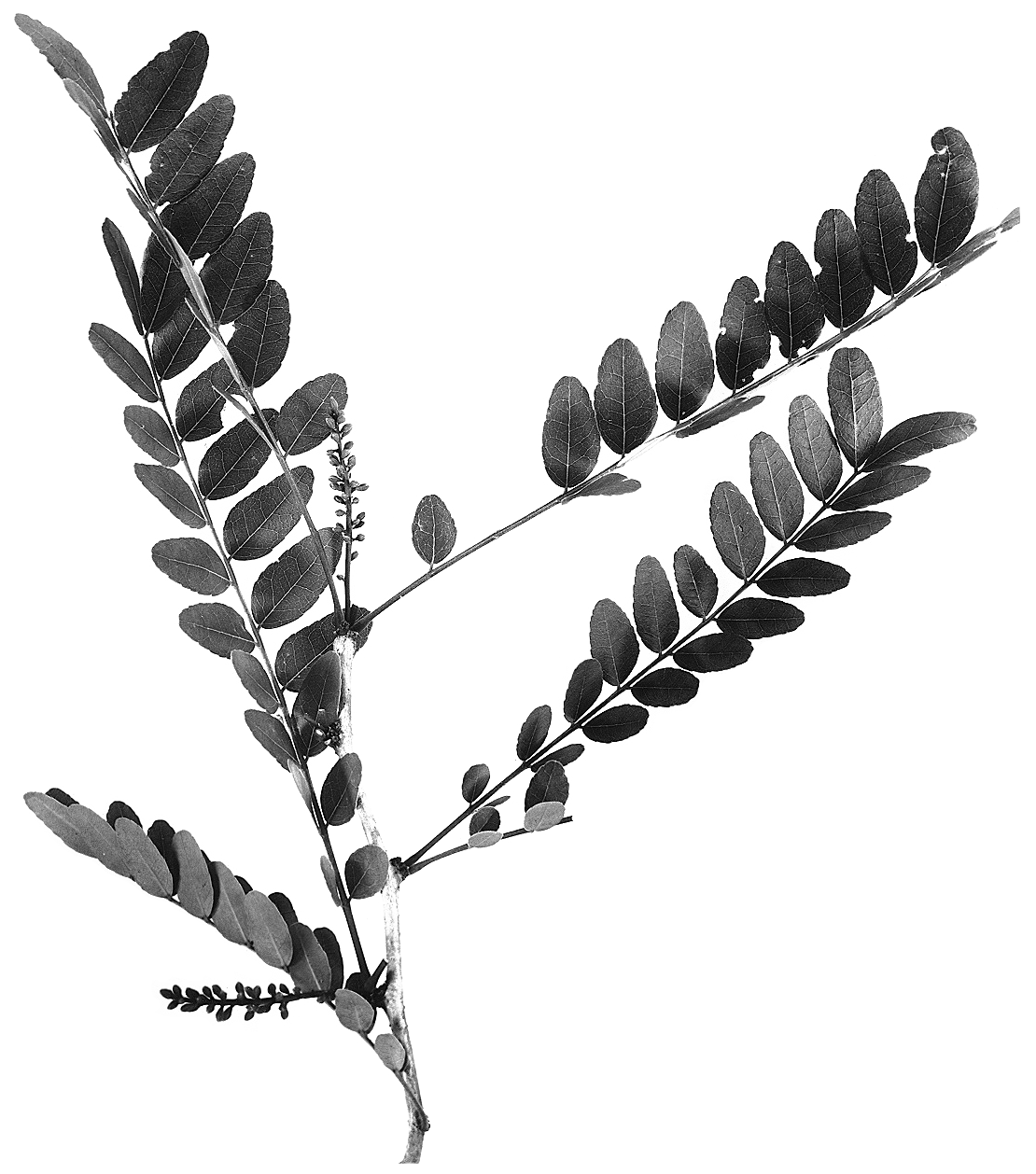
Leaves are once- or twice-pinnately compound, 6 to 8 inches long, with 14 to 32 small, oval to elliptic leaflets per leaf, each about 1 to 2 inches long with finely toothed margins and a glossy dark-green upper surface. The fine, ferny texture of the foliage is one of the tree’s more attractive features, turning a soft yellow before dropping in fall.
Flowers
In May and June, small, greenish-yellow flowers appear in slender, drooping racemes 2 to 3 inches long, arising from the leaf axils. Water Locust is functionally dioecious — individual trees tend to bear mostly male or mostly female flowers — and the blooms are inconspicuous, pollinated primarily by bees and other insects rather than grown for ornamental display.
Fruit & Seeds
The fruit is the tree’s signature identification feature: a flat, broadly oval, reddish-brown pod 1 to 2 inches long and about 1 inch wide, containing a single flattened seed (occasionally two). Unlike the long, curling, many-seeded pods of Honeylocust, Water Locust pods are short, stiff, and buoyant, floating on floodwaters to disperse seed throughout the swamp. Pods mature in fall and often persist on the tree or float on backwater surfaces well into winter.
Quick Facts
| Scientific Name | Gleditsia aquatica |
| Family | Fabaceae (Legume) |
| Plant Type | Deciduous Tree |
| Mature Height | 30–60 ft |
| Mature Spread | 25–40 ft |
| Growth Rate | Moderate |
| Sun Exposure | Full Sun to Part Shade |
| Water Needs | Wet to Average; tolerates standing water |
| Soil Type | Wet clay, muck, or silty alluvial soils |
| Soil pH | 5.5–7.5 |
| Bloom Time | May – June |
| Flower Color | Greenish-yellow |
| Fall Color | Pale yellow |
| Fruit | Flat, oval, single-seeded reddish-brown pod |
| Deer Resistant | Yes (thorny bark and branches discourage browsing) |
| USDA Hardiness Zones | 6–9 |
Native Range
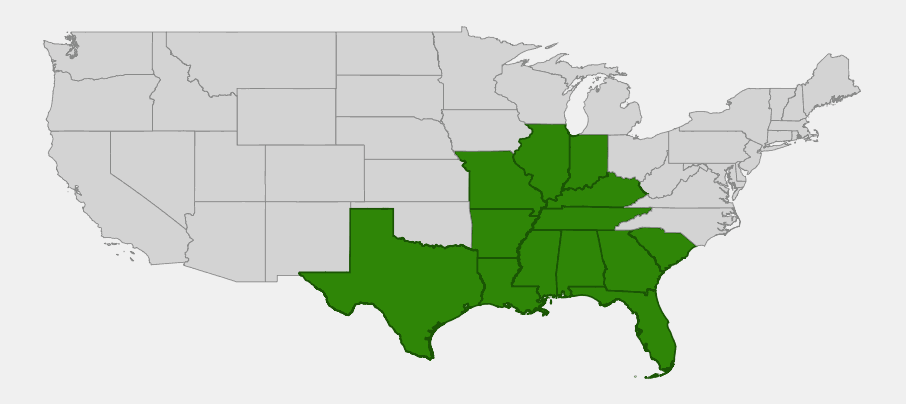
Water Locust is native to the lower Mississippi River valley and the Gulf and South Atlantic coastal plains, from South Carolina south through Georgia and Florida, west through Alabama, Mississippi, Louisiana and into eastern Texas, and north up the Mississippi embayment through Arkansas, Missouri, southern Illinois and Indiana, western Kentucky and Tennessee. It is confirmed by county-level BONAP and Flora of North America records within this range; scattered older reports from further north and east are not supported by current county-level data and are not treated as part of its reliable native range here.
Within this range, Water Locust is a true wetland obligate, confined to deep swamps, river sloughs, oxbow lakes, and seasonally to permanently flooded bottomland hardwood forests. It is most abundant in the batture lands and backswamps of the lower Mississippi alluvial valley, where standing water for much of the growing season excludes most other trees except the most flood-adapted species.
Because it requires sustained wet soils or standing water, Water Locust does not occur on upland sites anywhere in its range, and plantings outside wet bottomland conditions are unlikely to succeed. It is an excellent indicator species for identifying the wettest parts of a bottomland restoration site.
📋 Regional plant lists featuring Water Locust: Georgia, Alabama & Mississippi · Arkansas, Louisiana, Eastern Oklahoma & Eastern Texas · North Carolina & South Carolina · Kentucky & Tennessee · Illinois, Iowa & Missouri (no dedicated Florida list exists on this site; Water Locust is also native there)
Growing & Care Guide
Water Locust is not a conventional landscape tree — it is a specialist for restoration plantings on sites that are simply too wet for almost anything else. If you have a seasonally flooded low spot, pond margin, or swale that stays saturated for months, Water Locust is one of the few trees that will thrive there rather than merely tolerate it.
Light
Water Locust grows best in full sun but tolerates the part shade typical of swamp-forest edges. Young trees establish well in the dappled light beneath an open canopy, gradually pushing into the main canopy as they mature.
Soil & Water
This is a true wetland species, native to muck, silty alluvial soils, and heavy wet clays that stay saturated or flooded for extended periods during the growing season. It tolerates standing water for months at a time and is far more flood-tolerant than Honeylocust. It does not perform well on dry or even average garden soils; attempting to grow it outside consistently wet conditions generally fails.
Planting Tips
Plant bare-root or container stock in late winter to early spring, directly into the saturated soil of a bottomland restoration site, pond margin, or constructed wetland. Because seed pods are buoyant and water-dispersed, direct seeding into flooded areas can also work for larger restoration projects. Space trees 20 to 30 feet apart to allow for mature canopy spread.
Pruning & Maintenance
Established trees require little maintenance beyond removing dead or storm-damaged wood. Because of the stout trunk thorns, use caution and heavy gloves when working near the trunk and lower branches; site trees away from walkways or areas with foot traffic.
Propagation
Water Locust is propagated from seed. The hard seed coat benefits from scarification (nicking or brief acid treatment) followed by cold stratification to improve germination. Because the pods float, seed collected from backwater surfaces in fall and winter is often already naturally scarified by time in the water.
Landscape Uses
Water Locust’s uses are narrow but valuable:
- Bottomland hardwood restoration on permanently or seasonally flooded sites
- Streambank and oxbow lake stabilization
- Constructed wetland and stormwater basin plantings where standing water is expected
- Wildlife plantings in duck-hunting and waterfowl habitat areas
- Swamp forest diversification alongside Bald Cypress and Water Tupelo
It is rarely, if ever, appropriate for a typical residential yard given its thorns and strict wet-soil requirement.
Wildlife & Ecological Value
Within the flooded swamp forests it calls home, Water Locust plays a quiet but important ecological role, especially for species adapted to deep-water habitats.
For Pollinators
The small, nectar-rich flowers attract native bees and other insects during the brief late-spring bloom, providing a food source in the otherwise flower-poor interior of a flooded swamp forest.
For Birds
Wood Ducks and other waterfowl that nest and forage in bottomland swamps use Water Locust stands as part of the flooded-forest habitat mosaic, and songbirds glean insects from its foliage through the growing season.
For Mammals
Squirrels and other small mammals feed on the seeds when pods are accessible on dry hummocks or fallen logs; deer rarely browse the thorny foliage, making Water Locust naturally deer-resistant.
Ecosystem Role
As one of the few trees able to persist in standing water for extended periods, Water Locust helps anchor soil in the wettest parts of bottomland forests and backwater sloughs, reducing erosion along channel margins. Its buoyant, water-dispersed pods are a textbook example of hydrochory (water-based seed dispersal), allowing the species to recolonize newly flooded or disturbed oxbow and slough habitats after high-water events.
Cultural & Historical Uses
Water Locust has never been a major commercial timber species; its wood is heavy and hard but the trees are typically too small, crooked, and scattered through inaccessible swamps to support significant harvest. Where cut, the wood has occasionally been used locally for fence posts and rough construction, valued for decay resistance in wet conditions.
The tree has drawn more interest from wetland ecologists and foresters studying flood tolerance in woody plants than from the ornamental nursery trade, given its thorny branches and narrow habitat requirements make it unsuited to most landscape use. It remains, however, an important reference species for understanding how trees survive prolonged inundation — a trait increasingly relevant to floodplain and wetland restoration work in the Southeast.
In restoration and conservation circles, Water Locust is valued today precisely for the traits that make it unsuitable as a yard tree: its tolerance of standing water makes it one of the few native trees that can be planted directly into the wettest parts of a bottomland restoration without fear of drowning the roots.
Frequently Asked Questions
How is Water Locust different from Honeylocust?
Water Locust is smaller, has shorter and simpler thorns, and bears short, flat, single-seeded oval pods about 1–2 inches long, instead of the long, twisted, many-seeded pods of Honeylocust (Gleditsia triacanthos). Most importantly, Water Locust is a strict wetland species that tolerates standing water, while Honeylocust prefers average to dry upland soils.
Can Water Locust grow in a regular garden?
Generally no. Water Locust needs consistently wet to flooded soil and will struggle or fail in typical garden conditions. It is best reserved for bottomland restoration, pond margins, or constructed wetlands that stay saturated for much of the growing season.
Are Water Locust thorns dangerous?
The trunk and branch thorns are stout and sharp enough to cause injury, so the tree should be sited away from walkways and areas with foot or vehicle traffic. Wear heavy gloves when pruning or working near the trunk.
Do the seed pods float?
Yes — the flat, buoyant pods are specifically adapted to float on floodwaters, which is how the species disperses seed through swamp and slough habitats during high-water events.
Is Water Locust good for wildlife?
It provides modest wildlife value: nectar for native bees during its brief bloom, seeds for squirrels and other small mammals when accessible, and structural habitat within flooded bottomland forests used by Wood Ducks and other waterfowl.

Looking for a nursery that carries Water Locust?
Browse our native plant nursery directory: Alabama & Arkansas · Florida & Georgia · Illinois & Indiana · Kentucky, Louisiana, Mississippi & Missouri · South Carolina, Tennessee & Texas
For other backwater-swamp associates, see our pages on Bald Cypress and Water Tupelo, or compare it with the upland-tolerant Honeylocust. For wet-site planting guidance generally, see our rain garden plant selection guide, our overview of the benefits of planting native trees, and tips on attracting songbirds with native plants.

