
Swamp Cottonwood (Populus heterophylla)
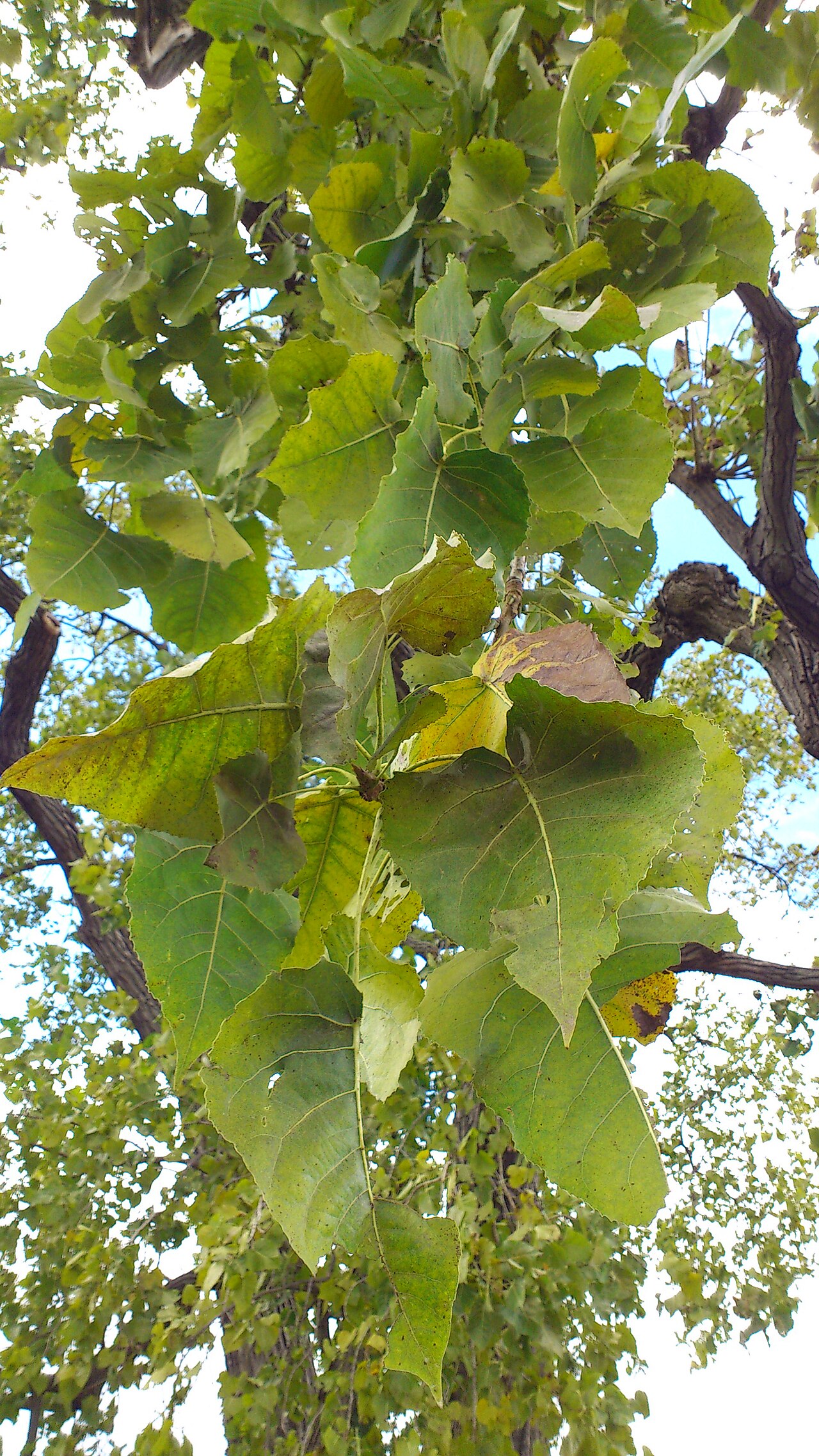
Populus heterophylla, commonly called Swamp Cottonwood or downy poplar, is an obligate wetland tree of the eastern floodplain forest, so tied to standing water that it is rarely seen more than a few feet from a swamp, slough, or seasonally flooded bottomland. Its species name, heterophylla (“different leaves”), refers to the marked size difference between its early-season and later-season leaves — young spring leaves are notably smaller than the large, heart-shaped leaves produced as the growing season advances.
Growing 60 to 90 feet tall with a broad, rounded crown, Swamp Cottonwood is easily told apart from the more common Eastern Cottonwood (Populus deltoides) by its larger, more rounded (rather than triangular) leaves, downy young twigs and leaf undersides, and much stricter wetland habitat requirement. Its cottony seeds, released from the female trees in late spring, drift through swamp forest clearings in a brief but conspicuous seasonal display.
Swamp Cottonwood is a true specialist, found almost nowhere outside permanently or seasonally flooded bottomland forest. It is an excellent, under-planted choice for anyone restoring a true swamp forest alongside Red Maple, Green Ash, and Pin Oak.
Identification
Swamp Cottonwood is a medium-to-large deciduous tree, typically 60 to 90 feet tall, with a broad, rounded crown and a trunk 2 to 3 feet in diameter. Compared with Eastern Cottonwood, it is generally a smaller, more modestly proportioned tree with a less massive trunk.
Bark & Stems
Bark is gray and relatively smooth on young trees, becoming deeply furrowed into flat-topped ridges with age, similar in texture to other large poplars. Young twigs are notably downy-hairy (unlike the hairless twigs of Eastern Cottonwood), a key identification feature in combination with the leaves.
Leaves
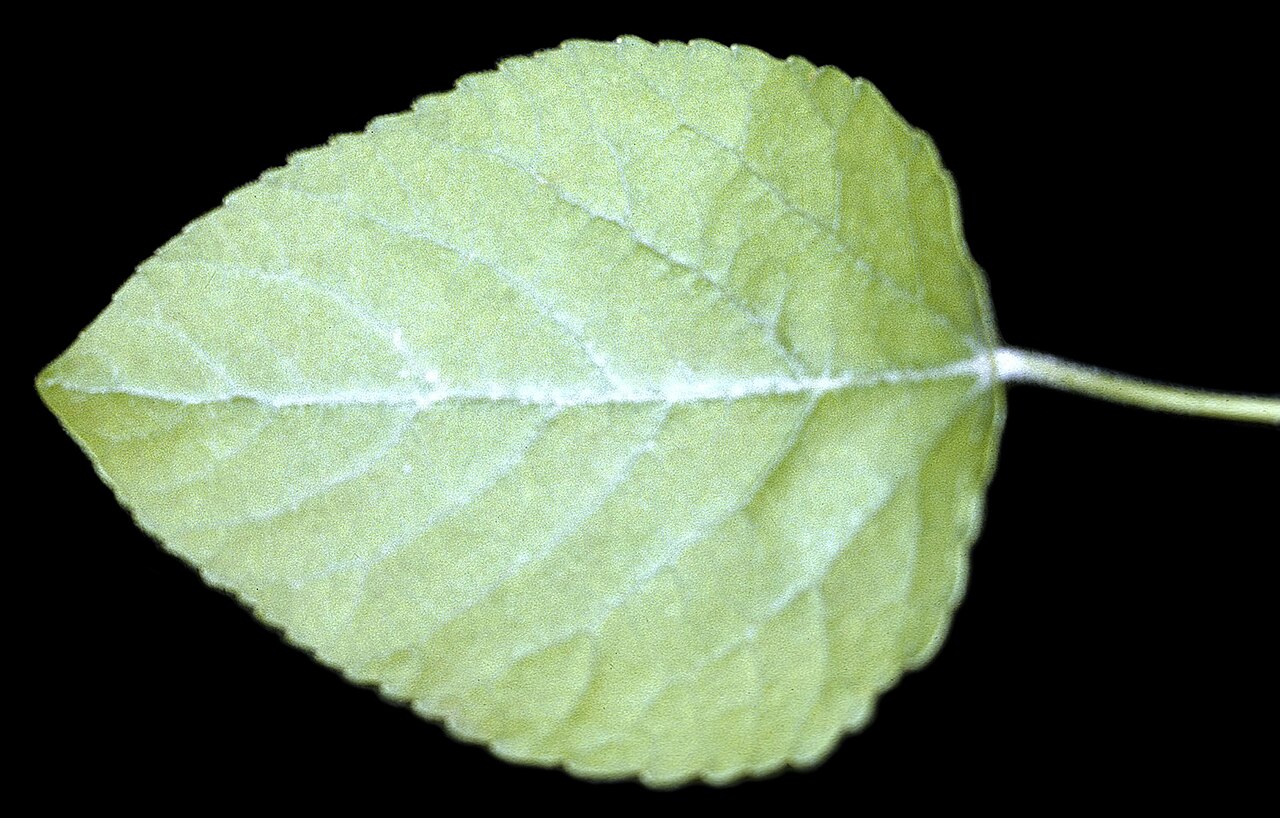
Leaves are large, broadly ovate to nearly heart-shaped, 4 to 8 inches long, with a rounded (not triangular) base and blunt-toothed margins. The upper surface is dull dark green, the underside noticeably paler and often downy, especially along the veins. True to the species name, early-season leaves are distinctly smaller than the large leaves produced later in the growing season.
Flowers
Like other poplars, Swamp Cottonwood is dioecious, with separate male and female trees. In early spring, before leaf-out, both sexes produce drooping catkins — male catkins are reddish and shed pollen, while female catkins lengthen and develop the seed capsules that give the species its “cottonwood” name.
Fruit & Seeds
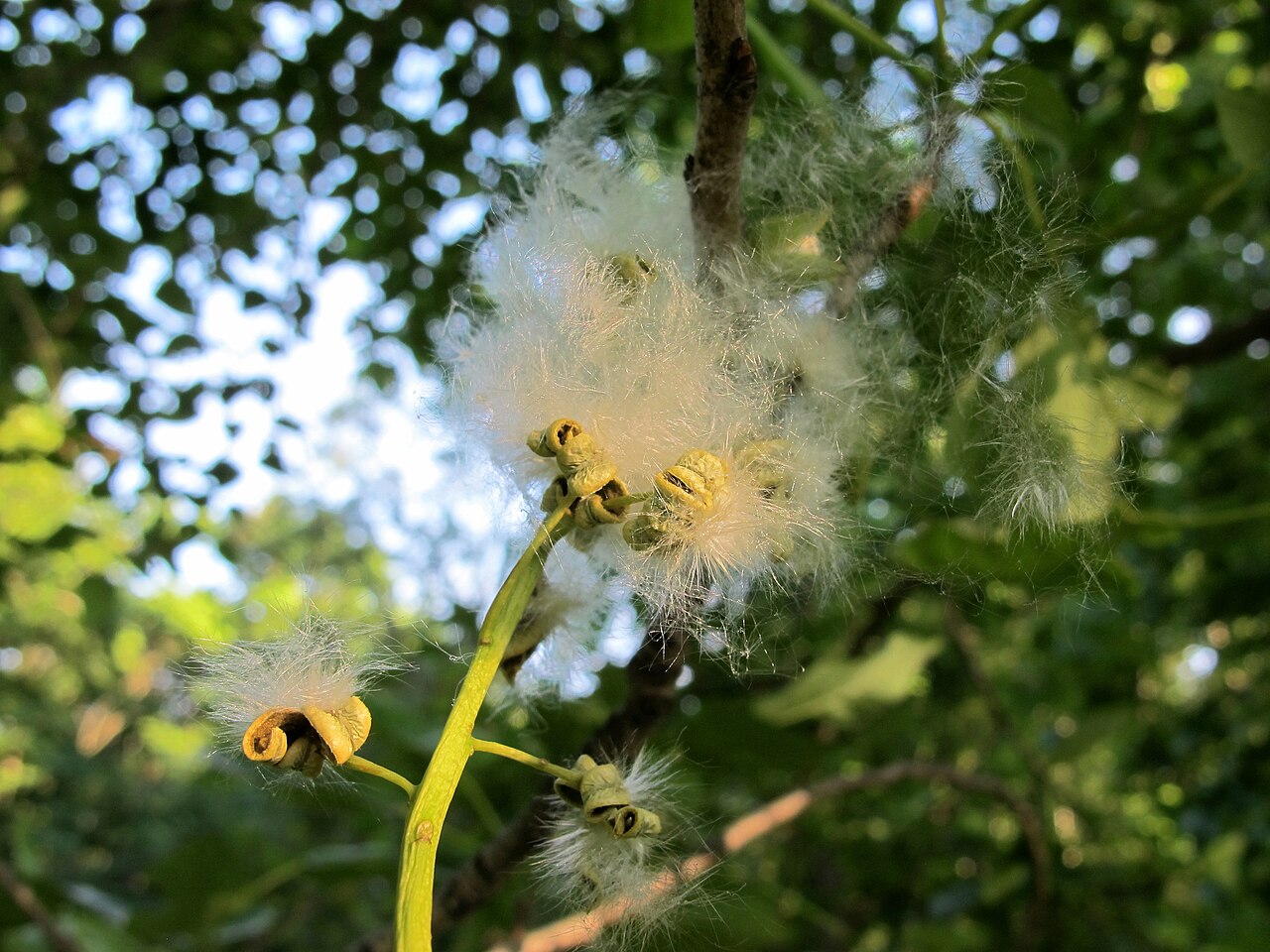
Female trees produce drooping catkins of small capsules that split open in late spring, releasing tiny seeds attached to tufts of cottony white hair. These seeds drift on the wind for considerable distances, though the extremely narrow window for landing on consistently wet, exposed soil limits successful establishment to suitable bottomland sites.
Quick Facts
| Scientific Name | Populus heterophylla |
| Family | Salicaceae (Willow) |
| Plant Type | Deciduous Tree |
| Mature Height | 60–90 ft |
| Mature Spread | 35–50 ft |
| Growth Rate | Fast |
| Sun Exposure | Full Sun to Part Shade |
| Water Needs | Wet; obligate wetland, tolerates standing water |
| Soil Type | Wet clay, muck, or silty bottomland soils |
| Soil pH | 5.0–7.5 |
| Bloom Time | March – April |
| Flower Color | Reddish (male); green (female) catkins |
| Fall Color | Dull yellow |
| Fruit | Small capsules with cottony-tufted seeds |
| Deer Resistant | No (deer browse young growth) |
| USDA Hardiness Zones | 4–9 |
Native Range
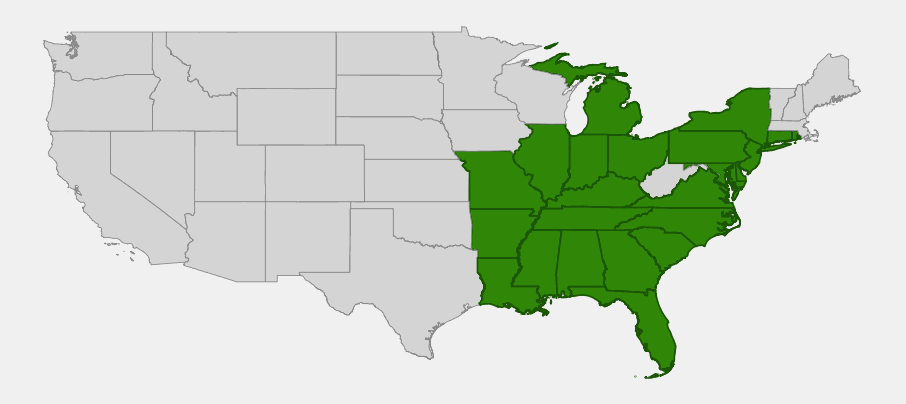
Swamp Cottonwood occurs in a broad but patchy band across the eastern United States, from Connecticut and Rhode Island south along the Atlantic coastal plain through New York, New Jersey, Delaware, Maryland, Virginia, and the Carolinas to Georgia and the Florida panhandle, west along the Gulf Coast through Alabama, Mississippi, and Louisiana. A second branch of its range follows the Mississippi and Ohio River valleys through Missouri, Arkansas, Illinois, Indiana, Ohio, Kentucky, and Tennessee, reaching north into southern Michigan.
Throughout this range, Swamp Cottonwood is an obligate wetland species, confined to permanently or seasonally flooded bottomland hardwood forests, swamp margins, and sloughs of the lower Mississippi River basin and southeastern Atlantic coastal plain, with scattered populations along the lower Great Lakes. Illinois lies at the species’ approximate northwestern range limit.
Because its range is genuinely discontinuous and it is uncommon even within suitable habitat in parts of the north, a site-specific check against county-level BONAP or a state natural heritage program is worthwhile before planting at the edges of its documented range.
📋 Regional plant lists featuring Swamp Cottonwood: Georgia, Alabama & Mississippi · Arkansas, Louisiana, Eastern Oklahoma & Eastern Texas (Arkansas and Louisiana only) · North Carolina & South Carolina · Maryland, Virginia & West Virginia (not native in West Virginia) · Kentucky & Tennessee · Ohio & Indiana · Illinois, Iowa & Missouri (not native in Iowa) · Michigan, Wisconsin & Eastern Minnesota (Michigan only) · Connecticut, Massachusetts & Rhode Island (not native in Massachusetts) · New York, Pennsylvania & Northern New Jersey · Delaware, Southern New Jersey & Long Island, New York (no dedicated Florida list exists on this site; Swamp Cottonwood is also native in the Florida panhandle)
Growing & Care Guide
Swamp Cottonwood is a fast-growing but strictly wetland-dependent tree, best reserved for bottomland restoration, swamp forest reconstruction, or the wettest margins of a large property — not a typical yard tree.
Light
Grows best in full sun to light shade. As a fast-growing pioneer species of swamp forest openings, it establishes quickly in good light and gradually becomes shaded out by longer-lived canopy trees as a stand matures.
Soil & Water
Swamp Cottonwood is an obligate wetland species, requiring consistently wet to seasonally flooded soil. It tolerates standing water for extended periods and is intolerant of dry sites; plantings outside reliably wet bottomland conditions are unlikely to succeed.
Planting Tips
Plant bare-root or container stock in late winter to early spring directly into saturated or seasonally flooded bottomland soil. Given its eventual large size and fast growth, allow 35 to 50 feet between trees. Because it is dioecious, both male and female trees are needed nearby for seed production, though vegetative spread from root suckers can also occur.
Pruning & Maintenance
Minimal pruning is needed beyond removing dead or storm-damaged wood; like other poplars, branches can be somewhat weak-wooded and prone to breakage in storms, so avoid planting near structures. The tree is generally free of serious pest or disease problems within its native wetland habitat.
Propagation
Propagated from seed collected in late spring, which must be sown quickly since poplar seeds lose viability within days to weeks. Hardwood cuttings taken in dormant season also root readily, a common propagation method for poplars generally.
Landscape Uses
Swamp Cottonwood’s uses are narrow but valuable in the right setting:
- Bottomland hardwood forest restoration on seasonally to permanently flooded sites
- Swamp forest and slough margin plantings
- Fast-growing canopy cover in large wetland restoration projects
- Wildlife habitat plantings alongside Red Maple and Pin Oak
Wildlife & Ecological Value
As a fast-growing pioneer tree of bottomland swamp forests, Swamp Cottonwood provides meaningful structural and food value within its specialized habitat.
For Pollinators
Early spring catkins provide an early pollen source for bees active before most understory wildflowers bloom, though the species is primarily wind-pollinated.
For Birds
Cavity-nesting birds and woodpeckers use mature trunks, and the tree’s abundant, fine cottony seed material is used by some songbirds as nesting material in spring.
For Mammals
Deer and other browsers feed on young shoots and foliage, particularly in restoration plantings, and beavers may use the soft wood where it overlaps with their wetland habitat.
Ecosystem Role
Swamp Cottonwood’s fast growth and tolerance of prolonged flooding make it an important early-succession tree in disturbed or newly flooded bottomland sites, helping stabilize soil and shade out competing vegetation while slower-growing, longer-lived species such as oaks and gums establish beneath its canopy.
Cultural & Historical Uses
Swamp Cottonwood wood has seen only limited commercial use, generally grouped with other soft, lightweight cottonwood and poplar lumber for pulpwood, pallets, and low-grade construction material where accessible stands exist. Its scattered distribution in difficult bottomland terrain has always limited large-scale harvest.
The alternate name “downy poplar” reflects the soft hairs on its young twigs and leaf undersides, a feature naturalists have long used to distinguish it from the closely related and far more common Eastern Cottonwood. The tree has drawn more interest from wetland ecologists studying bottomland forest succession than from the timber trade.
Today, Swamp Cottonwood is valued chiefly in restoration contexts, where its fast growth and strict flood tolerance make it a useful early-establishment species for reforesting degraded bottomland sites alongside slower-growing hardwoods.
Frequently Asked Questions
How is Swamp Cottonwood different from Eastern Cottonwood?
Swamp Cottonwood has larger, more rounded, heart-shaped leaves (versus the triangular leaves of Eastern Cottonwood), downy young twigs and leaf undersides, and a stricter obligate-wetland habitat. Eastern Cottonwood (Populus deltoides) tolerates a much broader range of soil moisture and grows larger overall.
Can Swamp Cottonwood grow in a regular yard?
Only on a consistently wet or seasonally flooded site. It is an obligate wetland tree and will generally fail in average garden soil. It is best used in bottomland restoration, swamp margin, or large wetland plantings.
Why are the leaves different sizes on the same tree?
The species name heterophylla (“different leaves”) refers to the marked difference between smaller early-season leaves and the larger, more typical leaves produced later in the growing season — a trait visible on close inspection of a single branch.
Do male and female trees look different?
Yes — male trees produce reddish, pollen-shedding catkins in early spring, while female trees produce green catkins that develop into seed capsules, releasing cottony-tufted seeds in late spring. Only female trees produce the characteristic cotton.
Is Swamp Cottonwood fast-growing?
Yes, it is one of the faster-growing native wetland trees, which makes it useful for quickly establishing canopy cover in bottomland restoration projects, though like other poplars its wood is relatively soft and branches can be prone to storm breakage.

Looking for a nursery that carries Swamp Cottonwood?
Browse our native plant nursery directory: Alabama & Arkansas · Connecticut, Delaware, Florida & Georgia · Illinois & Indiana · Kentucky, Louisiana, Maryland, Michigan, Missouri & Mississippi · North Carolina, New Jersey, New York & Ohio · Pennsylvania, Rhode Island, South Carolina, Tennessee & Virginia
For other bottomland swamp associates, see our pages on Red Maple, Green Ash, and Pin Oak. For more on wetland tree planting, see our overview of the benefits of planting native trees and our rain garden plant selection guide.

