
Florida Thatch Palm (Thrinax radiata)
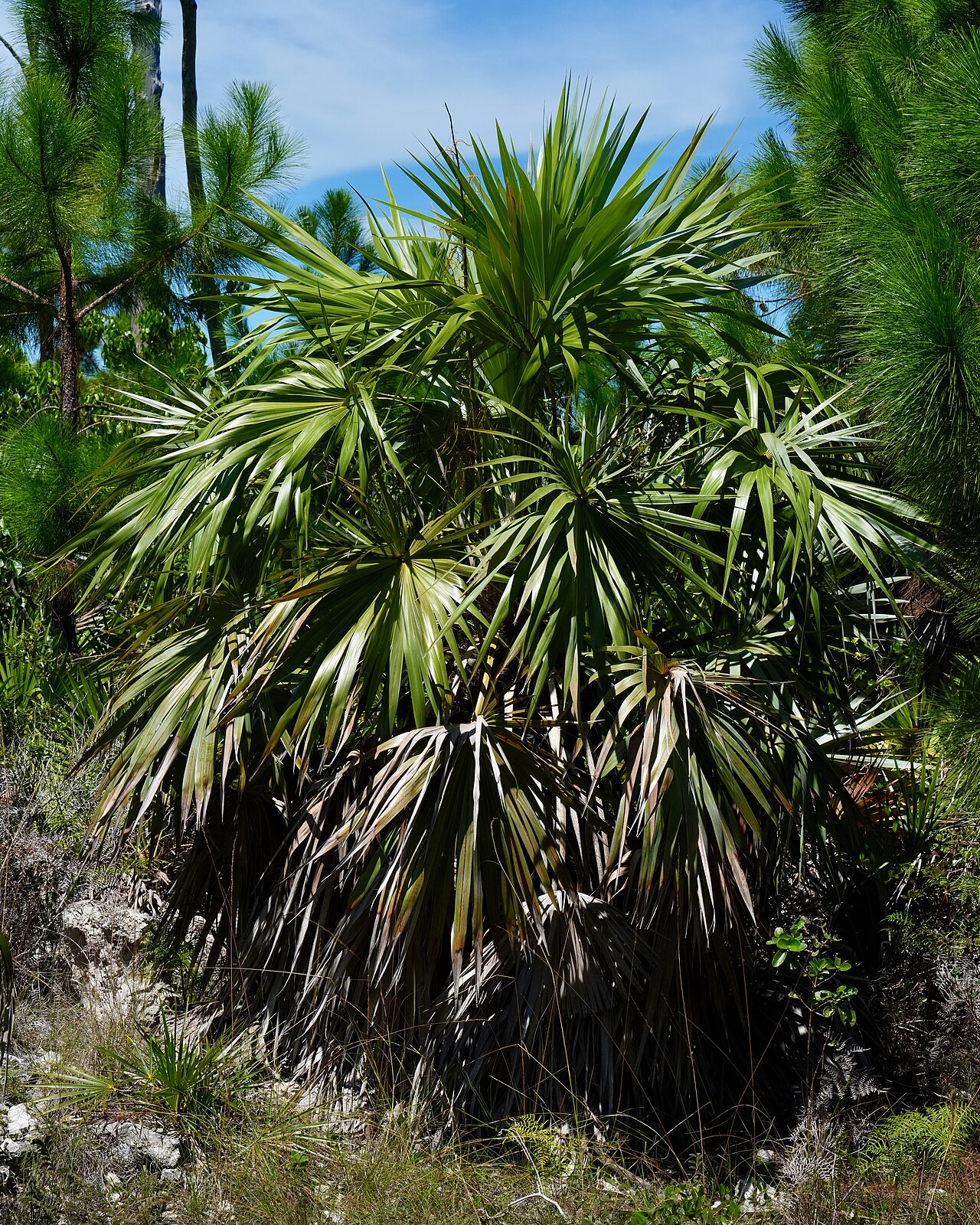
Thrinax radiata, commonly known as the Florida Thatch Palm, is a small, elegant fan palm found in the United States only in the Florida Keys and a narrow strip of the adjacent mainland coast. It is one of two native thatch palms in Florida (the other being the related Key Thatch Palm, Thrinax morrisii), and both are now listed as endangered by the state of Florida, the result of a naturally narrow range further squeezed by coastal development.
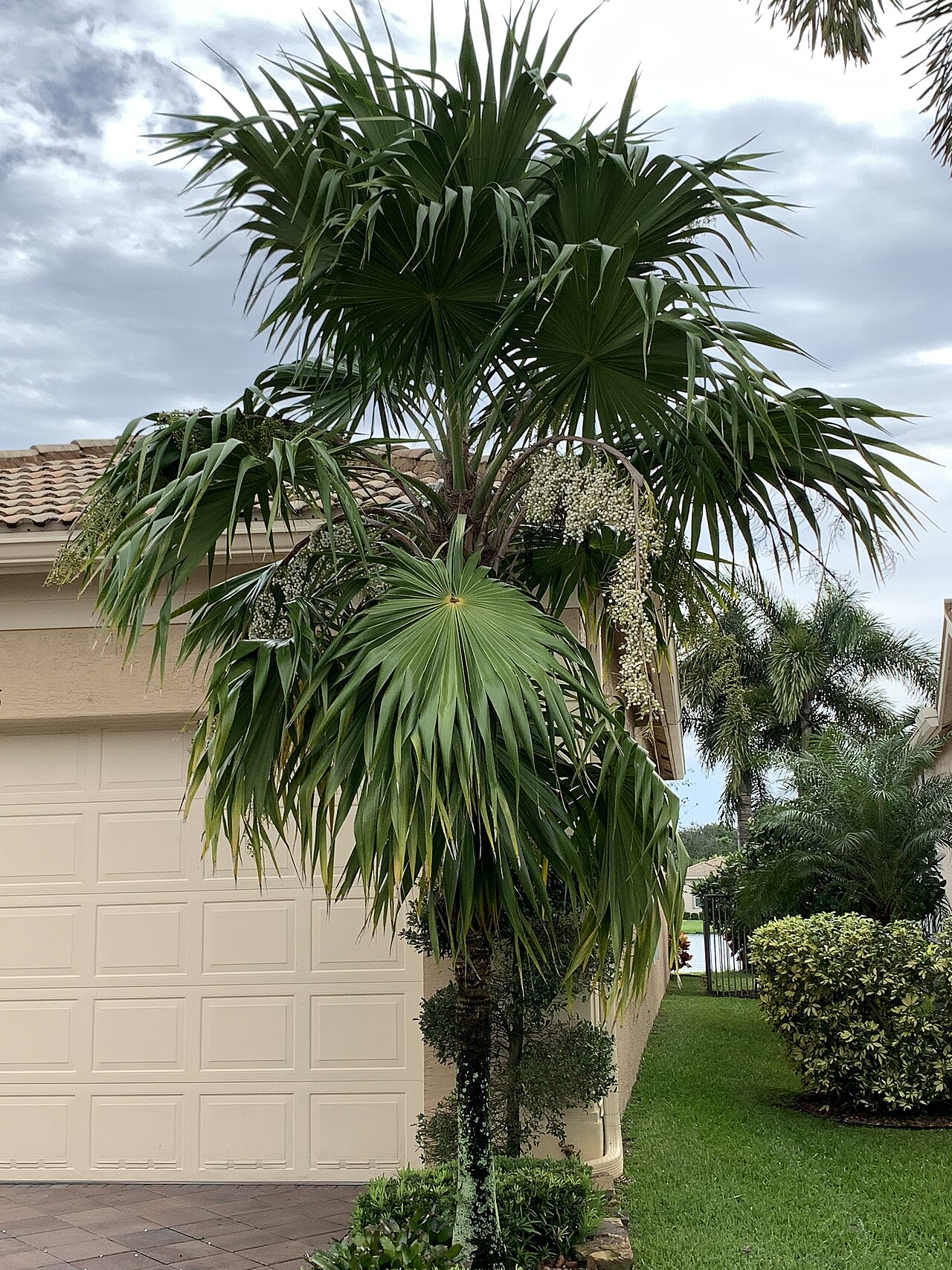
Florida Thatch Palm grows as a single, slender, unarmed trunk topped by a rounded crown of stiff, fan-shaped fronds that are glossy dark green above and silvery beneath, a two-tone effect that catches every breeze. Small, fragrant white flowers appear nearly year-round, with the heaviest bloom in summer, followed by clusters of small white fruits that hang conspicuously below the crown and feed a range of Keys wildlife.
For South Florida and Keys gardeners, Florida Thatch Palm is a genuinely native alternative to the many non-native ornamental palms that dominate the regional landscape trade. It is slow-growing, salt- and drought-tolerant, and small enough to fit a modest yard, making it one of the best true natives for coastal and limestone-based South Florida gardens, provided plants come from nursery propagation rather than wild collection.
Identification
Florida Thatch Palm is a small, single-trunked palm typically reaching 15 to 20 feet tall, though it grows slowly and many landscape specimens stay considerably shorter for years. The trunk is slender, usually 4 to 6 inches in diameter, smooth and gray, and unarmed, a useful trait distinguishing it from many spiny palms.
Trunk & Crown
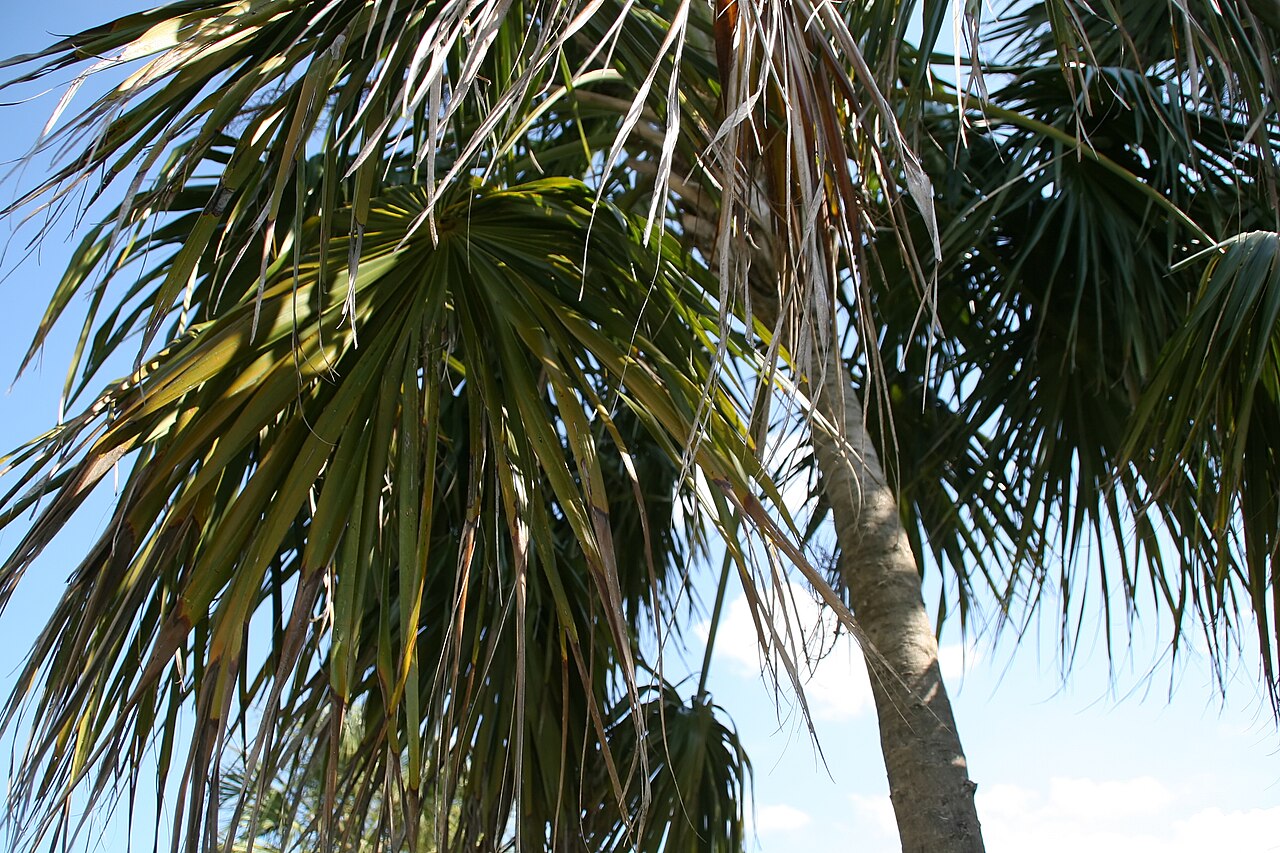
The trunk is ringed with the scars of old leaf bases and is noticeably thin relative to the crown it supports, giving the whole plant a graceful, slightly top-heavy look. The crown holds a moderate number of fan-shaped fronds radiating outward and somewhat upward rather than drooping heavily, forming a rounded, airy canopy.
Leaves
Leaves are costapalmate (fan-shaped with a slight rib), 2 to 3 feet across, divided nearly to the base into many stiff, narrow, pointed segments. The upper surface is glossy dark green, while the underside is distinctly silvery to pale green, a hallmark feature that helps separate this species from similar palms at a glance. Leaf stalks are smooth and unarmed, unlike the spine-edged petioles of some related fan palms.
Flowers & Fruit
Small, fragrant, creamy white flowers form on branched flower stalks that emerge from among the leaves and can appear nearly any time of year, with the heaviest flowering in summer. The flowers develop into small, round, white fruits about a third of an inch across, held in loose, drooping clusters that hang well below the crown of fronds, making them conspicuous and easy to spot even from a distance.
Quick Facts
| Scientific Name | Thrinax radiata |
| Family | Arecaceae (Palm) |
| Plant Type | Evergreen, single-trunk fan palm |
| Mature Height | 15–20 ft (slow to reach full height) |
| Mature Spread | 8–10 ft crown spread |
| Growth Rate | Slow |
| Sun Exposure | Full Sun to Part Shade |
| Water Needs | Low to moderate; drought tolerant once established |
| Soil Type | Limestone-based, sandy, well-drained |
| Soil pH | Neutral to alkaline |
| Bloom Time | Nearly year-round; heaviest in summer |
| Flower Color | Creamy white, fragrant |
| Fall Color | None (evergreen) |
| Fruit | Small white drupes in drooping clusters |
| Deer Resistant | Yes |
| USDA Hardiness Zones | 10b–11 (cold-sensitive) |
Native Range
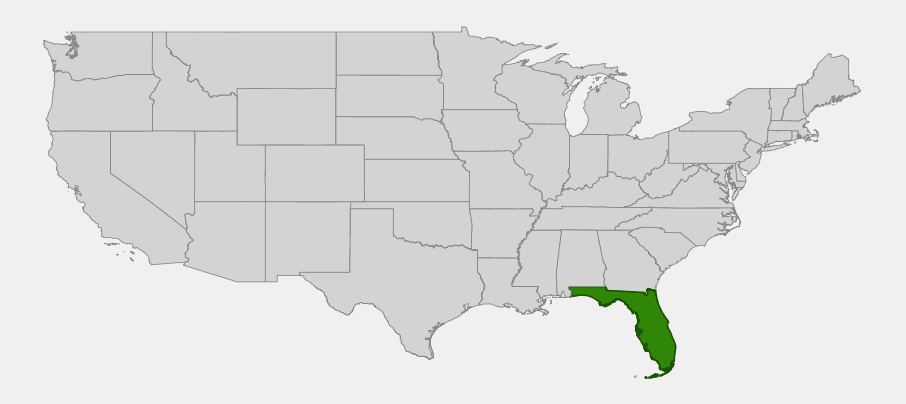
In the United States, Florida Thatch Palm is native only to the Florida Keys and a narrow band of the adjacent South Florida mainland coast, primarily in Miami-Dade and Monroe counties. Its broader range extends through the Caribbean, including the Bahamas, Cuba and other islands, and along parts of the Yucatán Peninsula and Central American coast, but its toehold in the continental U.S. is genuinely narrow.
Typical native habitat is pine rockland, coastal hammocks and littoral scrub growing directly on exposed or shallow limestone, often within reach of salt spray near the shoreline. This limestone and coastal affinity explains both its excellent drought and salt tolerance and its vulnerability: the pine rockland and coastal hammock habitats it depends on are themselves among the most reduced and fragmented plant communities in Florida.
Florida Thatch Palm is listed as endangered by the state of Florida. Historic habitat loss from coastal development, along with the small, scattered nature of remaining wild populations, has made the species a conservation priority; the Key Thatch Palm (Thrinax morrisii), its close relative, shares both the habitat and the endangered status. Gardeners can support the species by choosing only nursery-propagated plants, which are widely available in the South Florida trade, and never collecting from the wild.
📋 Regional plant lists featuring Florida Thatch Palm: this site does not currently publish a dedicated South Florida regional list; see the Florida nursery directory below.
Growing & Care Guide
Florida Thatch Palm is a forgiving, low-maintenance palm for South Florida gardens, provided it is given the sun, drainage and warmth that match its natural coastal limestone habitat.
Light
Plant Florida Thatch Palm in full sun to part shade. It tolerates a range of light levels well, though full sun generally produces the fullest, most compact crown and best flowering and fruiting display.
Soil & Water
This palm is well adapted to the thin, limestone-based, well-drained soils typical of the Florida Keys and coastal South Florida, and it has good drought tolerance once established. It also tolerates salt spray and some exposure to brackish conditions, making it a reliable choice for near-coastal landscaping where many other ornamentals struggle. Regular water speeds establishment in young plants, but mature specimens need little supplemental irrigation beyond normal rainfall in South Florida.
Planting Tips
Plant container-grown Florida Thatch Palm in warm weather for best establishment, and choose nursery-propagated stock only, since the species is endangered in the wild. Site it in well-drained soil; it does not tolerate standing water or prolonged wet feet the way some Florida wetland palms do. Because it is slow-growing and stays relatively compact, it fits well in smaller gardens or as an understory accent beneath taller canopy trees.
Pruning & Maintenance
Little pruning is needed beyond removing fully dead fronds as they occur; avoid over-pruning healthy green fronds, which the palm needs for energy production, especially given its slow growth rate. Florida Thatch Palm has few serious pest or disease problems in South Florida landscapes and needs minimal fertilization once established, though a light palm-specific fertilizer can help young plants establish on very poor sites.
Propagation
Florida Thatch Palm is propagated from seed. Collect ripe white fruit, clean off the pulp, and sow fresh seed in well-drained potting mix; germination can take several weeks to a few months. Growth is slow in the nursery as well as in the landscape, so container-grown plants command a premium but are well worth the investment for a genuinely native, conservation-friendly choice.
Landscape Uses
- Coastal and near-coastal landscaping, thanks to strong salt and wind tolerance
- Small-space specimen palm for yards too modest for larger palms
- Native plant and conservation gardens as a true South Florida endemic
- Mixed hammock-style plantings alongside cabbage palm, saw palmetto and green buttonwood
- Xeriscaping on limestone or very well-drained sites
Wildlife & Ecological Value
As a native component of pine rockland and coastal hammock communities, Florida Thatch Palm supports a range of wildlife in habitats that are themselves increasingly rare in South Florida.
For Pollinators
The small, fragrant flowers, blooming over an unusually long season, attract bees and other insects, providing a nectar source across more of the year than most South Florida natives, which can be especially valuable during gaps in bloom from other plants.
For Birds
The conspicuous white fruit clusters are eaten by a variety of birds, which also help disperse the seeds. The crown of fronds offers nesting and roosting cover, a resource of particular value in the comparatively open pine rockland habitat where tall woody cover can be limited.
For Mammals
Small mammals feed on the fallen fruit and use the base of the palm and surrounding understory for cover. In the fragmented hammock and rockland patches where this palm persists, every mature individual contributes modestly but meaningfully to local habitat structure.
Ecosystem Role
Florida Thatch Palm is a characteristic, if now uncommon, species of South Florida’s imperiled pine rockland and coastal hammock ecosystems. Its presence signals relatively intact habitat, and because so little of this habitat remains outside of parks and preserves, every wild and cultivated specimen plays a small part in maintaining the species’ genetic diversity and visibility in the regional landscape.
Cultural & Historical Uses
As the common name suggests, thatch palms including this species were historically used by Florida Keys and Caribbean communities for roof thatching, their stiff, durable fronds woven into waterproof coverings for simple structures long before manufactured roofing materials became widely available. The durable fiber of the leaves also saw use in basketry and cordage in various parts of its Caribbean range.
In the Florida Keys, thatch palms including this species became closely associated with the distinctive vernacular architecture and landscape character of the islands, and their use in roofing gave rise to the common name that persists today even though thatched roofs are now largely historical rather than practical.
Today the primary human relationship with Florida Thatch Palm is horticultural and conservation-focused. As one of Florida’s few true native palms suitable for small coastal gardens, and as a state-endangered species, it occupies a valued place in native plant landscaping and restoration efforts throughout its limited South Florida range.
Frequently Asked Questions
Is Florida Thatch Palm endangered?
Yes, it is listed as endangered by the state of Florida, a result of its naturally narrow range in the Keys and coastal South Florida combined with historic loss of pine rockland and coastal hammock habitat to development. Only buy nursery-propagated plants, never wild-collected ones.
How is Florida Thatch Palm different from Key Thatch Palm?
The two species are closely related and share similar habitat and endangered status in Florida. Florida Thatch Palm (Thrinax radiata) generally grows somewhat larger and has a more upright crown than the typically smaller, more compact Key Thatch Palm (Thrinax morrisii), though distinguishing them in the field can require close comparison.
Is Florida Thatch Palm cold-hardy?
No, it is a genuinely tropical palm suited to USDA zones 10b through 11 and is sensitive to cold. It is best suited to the Florida Keys and the warmest parts of the South Florida mainland coast.
Does Florida Thatch Palm tolerate salt spray?
Yes, it has good salt tolerance, reflecting its native coastal and Keys habitat, which makes it a strong choice for near-shoreline landscaping where many other ornamental plants struggle.
How fast does Florida Thatch Palm grow?
It is a slow-growing palm, which is part of why mature specimens command a premium in the nursery trade. Patience is rewarded with a long-lived, low-maintenance, genuinely native landscape palm.

Looking for a nursery that carries Florida Thatch Palm?
Browse our native plant nursery directory: Florida. See also our guides to palm trees for Florida and palm trees for Tampa.

