
White Stopper (Eugenia axillaris)
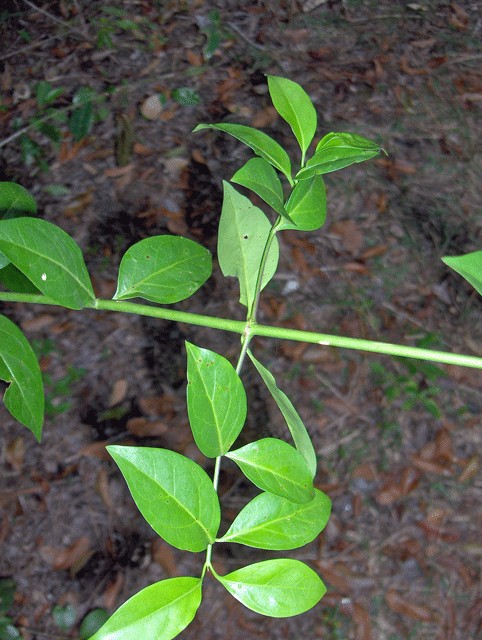
Eugenia axillaris, commonly known as White Stopper, is a small evergreen tree or large shrub in the myrtle family (Myrtaceae), native to peninsular Florida, the Caribbean, Bermuda, and parts of eastern Mexico and Central America. It is one of Florida’s most widely used native “stopper” species in landscaping, prized for its dense, glossy foliage, adaptability, and resilience to wind, salt, and drought.
White stopper is best known for a quirky identification trait: crush a leaf and it releases a strong, musky, almost skunk-like odor — earning it an informal nickname, the “skunk tree,” among Florida naturalists. Despite the smell, the plant itself is far from unpleasant in the landscape; it forms an attractive, naturally rounded hedge or small tree with reddish new growth, clusters of small white flowers, and dark berries that songbirds readily eat.
Growing wild in coastal hammocks and sandy woodlands throughout much of Florida, white stopper is equally at home as a clipped hedge, an unclipped wildlife screen, or a small specimen tree in residential and commercial landscapes across its native range.
Identification
White stopper typically grows as a multi-trunked shrub or small tree 10 to 25 feet tall, with smooth, light gray bark and a dense, twiggy branching habit. It often develops several trunks from the base, giving it a naturally full, screening form.
Leaves
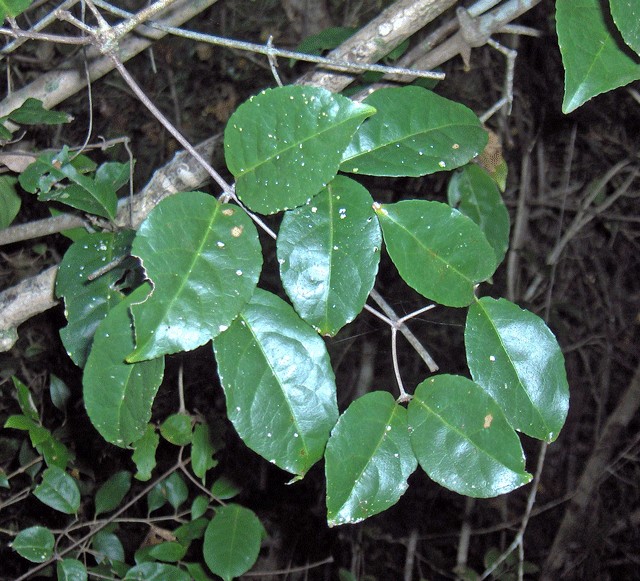
Leaves are opposite, simple, elliptic to oval, 1 to 3 inches long, with a glossy dark green upper surface and a duller pale green underside. New growth frequently emerges reddish-bronze before maturing to green. The leaves have fine, pellucid (translucent) dots visible when held up to light, typical of the myrtle family, and release a distinctive musky, earthy odor when crushed — a quick and reliable way to confirm identification in the field.
Flowers
Small, four-petaled white flowers with prominent clusters of stamens form in the leaf axils, usually in spring and summer, and are lightly fragrant, drawing bees and other pollinating insects.
Fruit
The fruit is a small, rounded berry about ¼ to ⅓ inch across that ripens from green to dark red or nearly black. The berries are an important food source for songbirds, which disperse the seeds throughout the hammock.
Quick Facts
| Scientific Name | Eugenia axillaris |
| Family | Myrtaceae (Myrtle) |
| Plant Type | Evergreen Shrub / Small Tree |
| Mature Height | 10–25 ft |
| Growth Rate | Moderate |
| Sun Exposure | Full Sun to Partial Shade |
| Water Needs | Low to Moderate |
| Soil Type | Sandy, limestone, or well-drained loam |
| Flower Color | White |
| Fruit | Red to black berry, bird food |
| Salt Tolerance | High |
| USDA Hardiness Zones | 9b–11 |
Native Range
White stopper is native to central and southern Florida, the Caribbean, Bermuda, eastern Mexico, and Central America. Within Florida it ranges considerably further north than many of its South Florida hammock associates, reaching into the central peninsula rather than being confined to Miami-Dade and the Keys. It is not native to any other part of the continental United States.
It typically grows in partly shaded coastal hammocks, pinelands, and other sandy, well-drained sites, often alongside other native “stopper” species such as Simpson’s Stopper (Myrcianthes fragrans), as well as hammock trees such as Gumbo Limbo (Bursera simaruba) and Saffron Plum (Sideroxylon celastrinum).
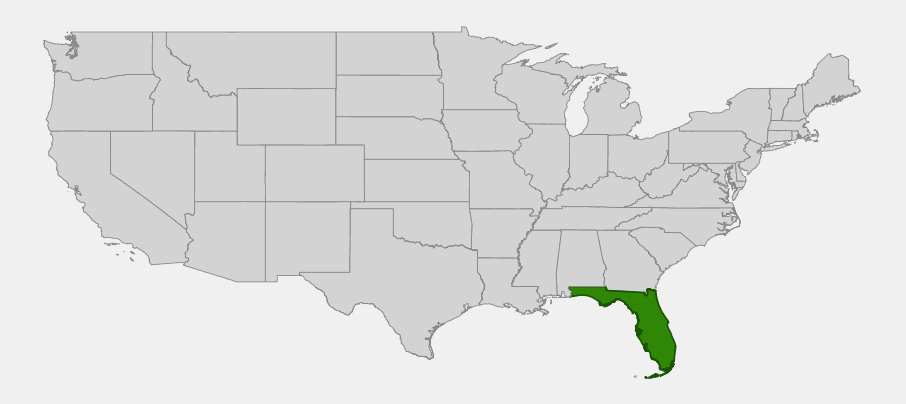
📋 Regional plant lists featuring White Stopper: none yet — no plantnative.org regional list currently covers peninsular Florida; see our full native plant directory for other Florida-native species.
Growing & Care Guide
White stopper is one of the easiest native shrubs to grow in Florida landscapes, tolerant of a wide range of soils and conditions once established.
Light
It grows well in full sun to partial shade. In the wild it often establishes in the dappled light of hammock understories, but mature plants fill out densest and flower most in brighter conditions.
Soil & Water
White stopper adapts to sandy, limestone-based, and loamy soils as long as drainage is reasonable, and it is notably salt and wind tolerant, making it a reliable choice for coastal landscapes. It is drought tolerant once established but also handles the seasonal heavy rains of Florida’s wet season well.
Planting Tips
Plant container-grown stock in spring or early summer. Space plants 6 to 10 feet apart for a natural hedge or screen, or give a single specimen more room to develop its full rounded form. Regular watering during the first growing season speeds establishment; after that, irrigation needs drop substantially.
Pruning & Maintenance
White stopper tolerates shearing well and is a popular hedge plant in South and Central Florida, but it also looks attractive left unpruned in its natural, multi-trunked form. Prune after flowering if a formal shape is desired. It is generally pest- and disease-resistant.
Landscape Uses
- Clipped or informal hedge — a traditional South Florida landscape staple
- Coastal and salt-tolerant plantings
- Wildlife gardens — berries and flowers support birds and pollinators
- Hammock restoration plantings
- Privacy screen given its dense, multi-trunked growth
Wildlife & Ecological Value
White stopper’s small white flowers attract bees and other pollinating insects, while its ripening red-to-black berries are an important food source for a wide range of songbirds, including migratory species passing through Florida. The dense, twiggy growth habit also provides valuable nesting cover and shelter for small birds.
Ecosystem Role
As a common understory and edge species in Florida’s coastal hammocks, white stopper contributes to the dense, layered structure that defines these increasingly fragmented habitats. Its tolerance of salt spray and wind makes it an especially useful component of coastal hammock margins, where it helps buffer more sensitive interior species from harsh conditions.
Pest & Disease Notes
White stopper is generally trouble-free in the landscape, with few serious pest or disease issues reported in Florida plantings. Its relatively tough, leathery leaves resist most common chewing insects, and the plant’s drought tolerance once established means root problems from overwatering are a more common issue than any pest. As with many Myrtaceae, keeping air circulation reasonable in dense hedge plantings helps avoid the occasional fungal leaf spot that can appear in consistently damp, shaded conditions.
Cultural & Historical Uses
The “stopper” name shared by white stopper and its relatives (Simpson’s Stopper, Spanish Stopper, and others in the Myrtaceae) traces to a historical use of the astringent bark and fruit in folk remedies to treat diarrhea — the bark’s tannin content gave it a binding, “stopping” effect in traditional use. This historical use is recorded in regional folk medicine accounts rather than modern clinical practice, and the plant today is valued almost entirely for landscaping and wildlife habitat rather than any herbal application. Its memorable skunky leaf scent has also made it a favorite “fun fact” plant for Florida nature walks and hammock tours.
Frequently Asked Questions
Why does white stopper smell bad when I crush the leaves?
This is a normal identification trait of the species. Crushed leaves release a strong, musky, skunk-like odor from volatile oils, which is harmless but distinctive — it is one of the easiest ways to confirm you have the right plant in the field.
Is white stopper a good hedge plant?
Yes. It tolerates regular shearing well and naturally grows dense and full, making it a long-standing favorite for both formal clipped hedges and informal privacy screens in Florida landscapes.
Do birds eat white stopper berries?
Yes, the ripe red-to-black berries are readily eaten by a range of native and migratory songbirds, which also disperse the seeds.
How salt tolerant is white stopper?
Very. It handles coastal wind and salt spray well, making it a reliable choice for landscaping near the Florida coast, though it is not a true saltwater wetland plant like mangroves.
What is the difference between white stopper and Simpson’s stopper?
Both are native Florida “stopper” shrubs in the myrtle family, but Simpson’s Stopper (Myrcianthes fragrans) has smaller, more aromatic (pleasantly fragrant) leaves and tends to have showier, more fragrant flowers, while white stopper is best identified by its distinctive musky leaf odor.
Does white stopper need fertilizer?
Generally no. Once established in reasonably fertile Florida soils, white stopper grows well without regular fertilization. A light application of a balanced, slow-release fertilizer in spring can help young plants establish faster, but established shrubs rarely need ongoing feeding.
Can white stopper handle occasional flooding?
It tolerates the brief seasonal wet periods common in Florida hammocks and low areas reasonably well, but it is not a wetland species and should not be planted in consistently waterlogged soil, where root rot can become a problem over time.

Looking for a nursery that carries White Stopper?
Browse our native plant nursery directory: Florida

