
Joewood (Jacquinia keyensis)
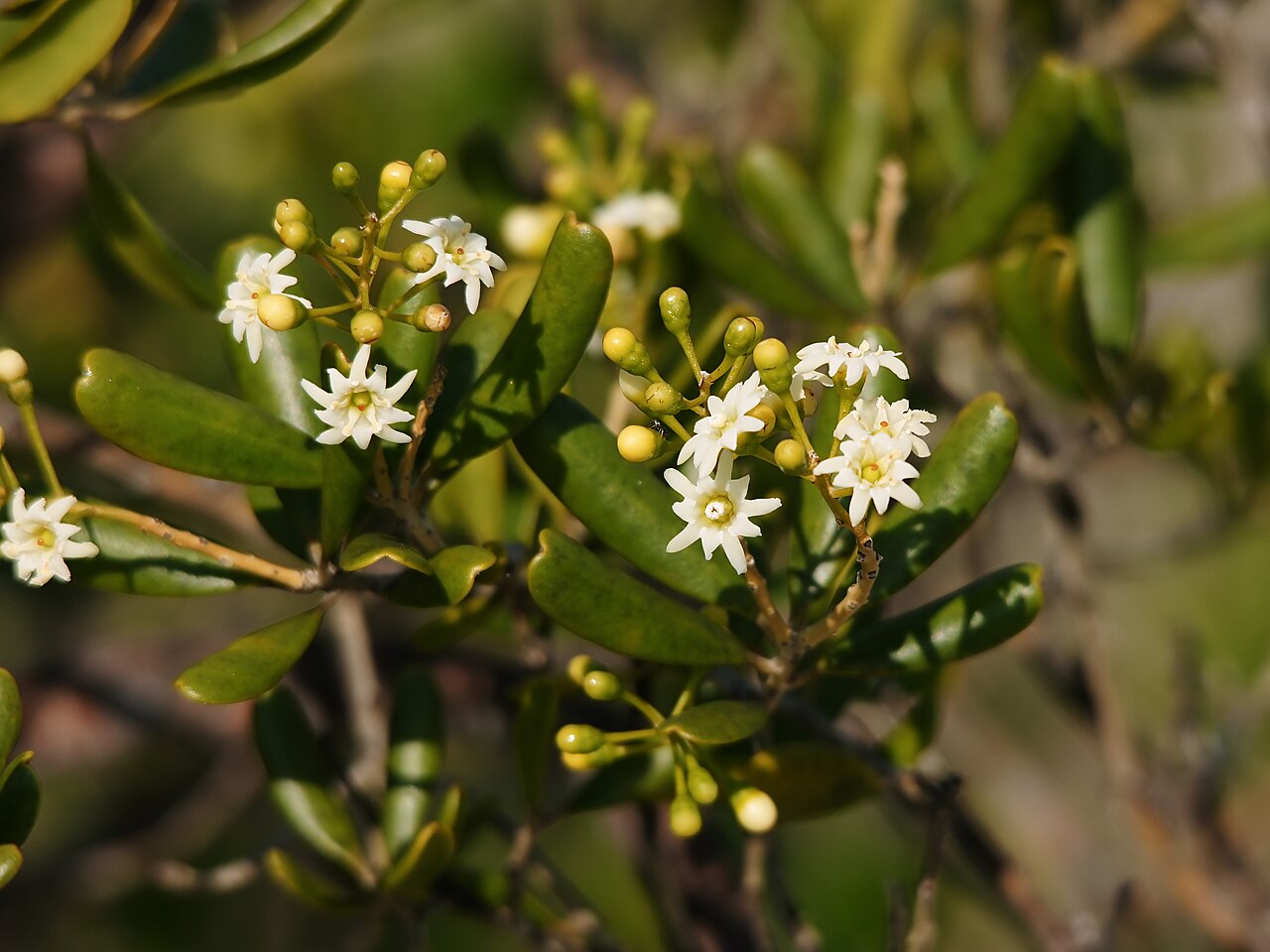
Jacquinia keyensis, commonly called Joewood, is a tough, salt-tolerant evergreen shrub — occasionally a small tree — native to the coastal margins of the Florida Keys. A member of the Primulaceae family (formerly classified in Theophrastaceae), Joewood is a fixture of the narrow ecotone where mangrove swamps give way to drier hammock, where its stiff, leathery leaves and compact, rounded crown help it withstand salt spray, wind, and periodic flooding better than almost any of its hammock neighbors.
Growing slowly into a medium to large, round-topped shrub typically 4 to 10 feet tall (occasionally to 14 feet in South Florida), Joewood produces small, fragrant, star-shaped white flowers scattered along its branches through much of the year, followed by small fruit valued by wildlife. Its thin, gray bark and stout, usually straight trunk give older specimens real character, especially once they reach the upper end of their size range.
Joewood’s range is unusual: fairly common along the Florida Keys and the northern shoreline of Florida Bay, it reappears as a disjunct population in coastal thickets of Lee and Charlotte counties on the Gulf coast, with little to nothing documented in between. This makes it an excellent, salt-tough specimen shrub for coastal gardeners in either of those specific regions, but not a species to plant outside its native coastal range.
Identification
Joewood is a medium to large shrub, rarely a small tree, with a compact, round-topped crown arising from a single stout trunk.
Bark & Stems
Trunks are usually short and straight, up to about 10 inches in diameter though typically much smaller, with thin, smooth, gray bark. The overall form is dense and rounded, well-suited to withstanding coastal wind.
Leaves
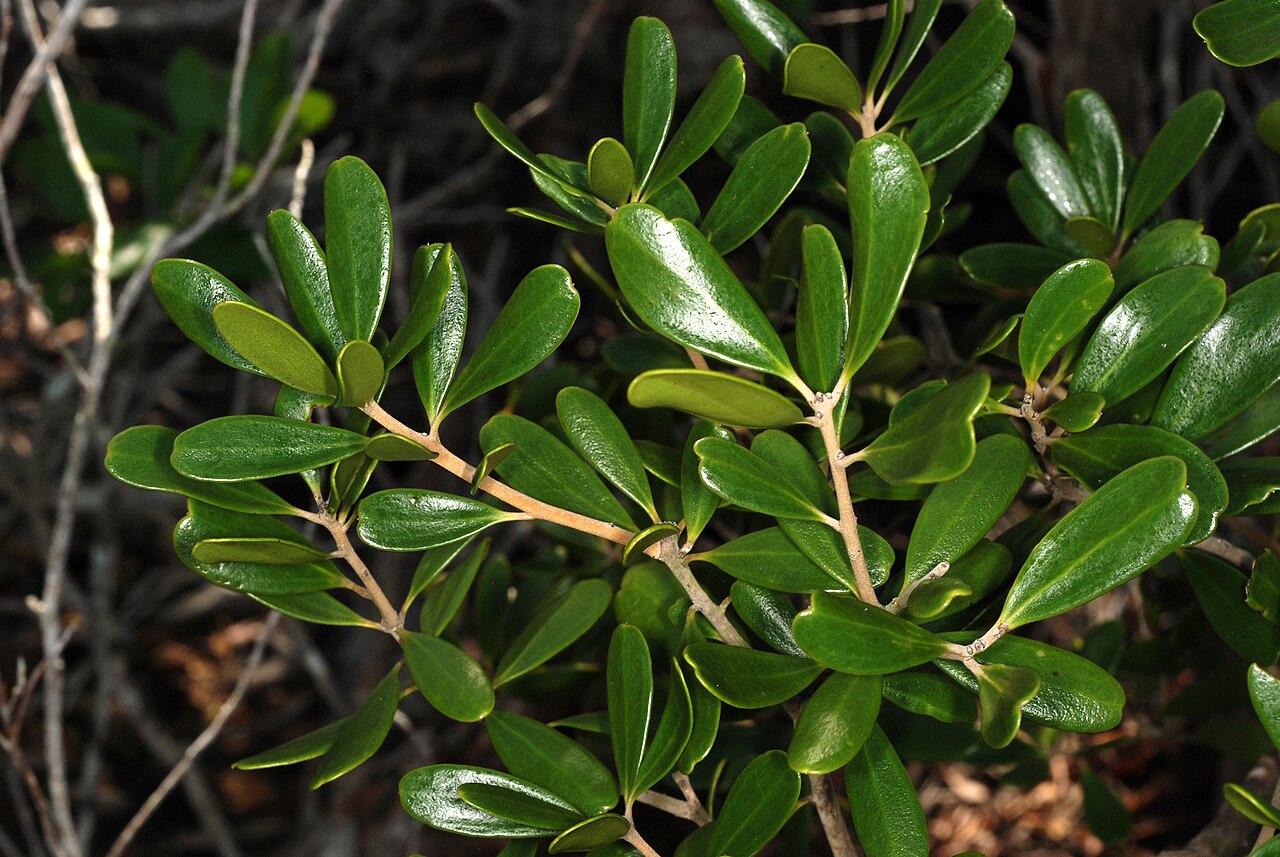
Leaves are leathery and stiff, about 1 to 3 inches long, clustered toward branch tips, and well adapted to conserving moisture and resisting salt exposure, a hallmark of plants that grow at the immediate edge of mangrove habitat.
Flowers
Small, fragrant, star-shaped white flowers with five petals cluster in groups along the branches, often appearing alongside developing fruit and buds in various stages. Flowering occurs over an extended period rather than a single tight bloom window.
Fruit & Seeds
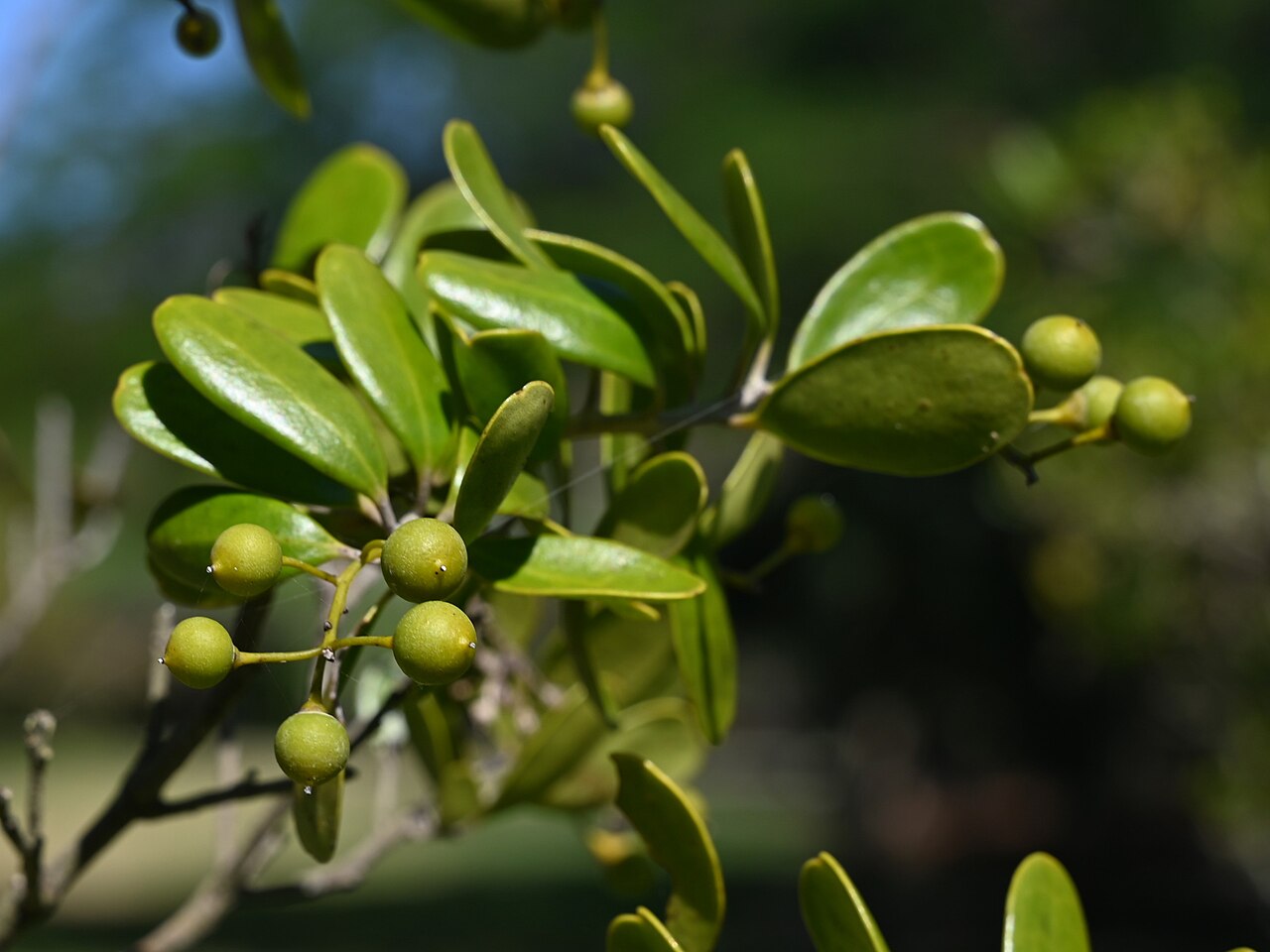
Fruit is small and rounded, maturing from green to a darker color, and forms in clusters near the branch tips similar to the flowers. The fruit is an important food source for coastal wildlife adapted to this narrow habitat zone.
Quick Facts
| Scientific Name | Jacquinia keyensis |
| Family | Primulaceae |
| Plant Type | Evergreen Shrub, rarely a Small Tree |
| Mature Height | 4–10 ft, to 14 ft in South Florida |
| Mature Spread | About as broad as tall |
| Growth Rate | Very slow |
| Sun Exposure | Full Sun to Part Sun |
| Water Needs | Low once established |
| Soil Type | Sandy or limestone, well-drained, salt-influenced coastal soils |
| Soil pH | Neutral to alkaline |
| Bloom Time | Nearly year-round, heaviest in warmer months |
| Flower Color | White |
| Fall Color | None; evergreen |
| Fruit | Small rounded drupes, green ripening darker |
| Deer Resistant | Yes |
| USDA Hardiness Zones | 10b–11 |
Native Range
Joewood’s core native range is the Monroe County Keys and the northern shoreline of Florida Bay, including the Long Pine Key region of Everglades National Park in Miami-Dade County, where it is fairly common along the ecotone between mangrove swamps and drier hammock. A disjunct population also occurs on a handful of barrier islands in Lee and Charlotte counties on Florida’s Gulf coast, including coastal thickets from Sanibel Island to Cayo Costa; the species is very rare or absent in between these two areas.
Across its range, Joewood grows in the transitional zone where mangrove habitat meets upland hammock or coastal scrub, tolerating sandy or limestone soils with significant salt influence that few other shrubs can handle as well. This is also the habitat shared by associates such as Sea Grape and the true mangroves, including Red Mangrove, Black Mangrove, and White Mangrove.
Gardeners in the Florida Keys, coastal Miami-Dade, or the barrier islands of Lee and Charlotte counties are in Joewood’s authentic native range and can plant it as a historically accurate, extremely salt-tolerant landscape shrub; elsewhere it should not be treated as a native planting choice.
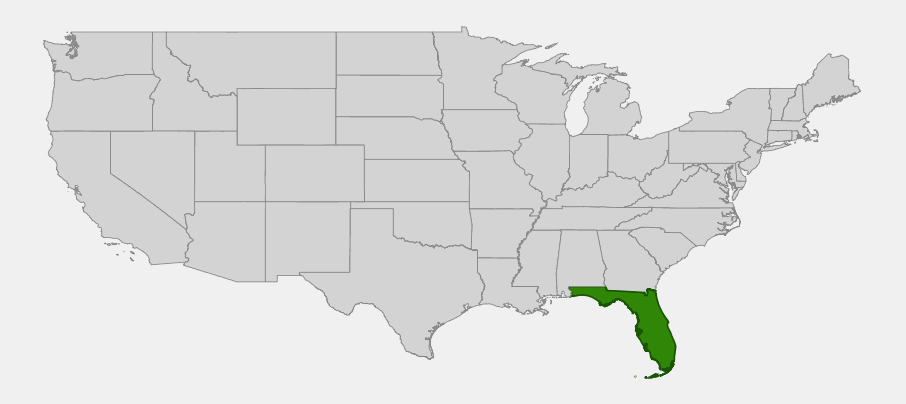
📋 Joewood’s U.S. range is confined to a few coastal counties of Florida and is not currently covered by any of our regional native plant lists.
Growing & Care Guide
Joewood is one of the toughest, most salt-tolerant native shrubs available to coastal Florida gardeners within its native range, and it asks for very little once established. See our guide on the benefits of planting native trees for more on why a species like this earns a spot over a non-native hedge.
Light
Full sun to part sun suits Joewood well, matching the open, exposed coastal sites where it grows naturally along the mangrove-hammock edge.
Soil & Water
It prefers sandy or limestone soils that drain well, and it is remarkably tolerant of salt-influenced coastal conditions compared to most landscape shrubs, though it does not want to sit in standing water. Once established, Joewood needs very little supplemental irrigation.
Planting Tips
Plant in full sun with good drainage, ideally in a coastal or near-coastal setting that matches its natural ecotone habitat. Because growth is very slow, start with the largest container size practical if you want a mature-looking specimen sooner rather than later.
Pruning & Maintenance
Joewood needs little pruning thanks to its naturally compact, rounded form. Remove only dead or storm-damaged wood; heavy shaping is rarely necessary and the plant’s very slow growth rewards a hands-off approach.
Propagation
Propagation is from seed collected from ripe fruit. Because the species is very slow-growing, patience is required from germination through to a landscape-sized plant, and nursery stock, where available, is worth the wait.
Landscape Uses
- Coastal specimen shrub for exposed, salt-influenced sites
- Mangrove-edge restoration plantings in the Keys and barrier islands
- Low-maintenance hedge or screen in salt-tolerant coastal gardens
- Fragrant flowering accent for a native coastal landscape
Wildlife & Ecological Value
Growing right at the boundary between mangrove and hammock habitat, Joewood supports wildlife that uses both ecosystems, making it an unusually versatile habitat plant within its narrow range.
For Birds
The fruit provides food for coastal and hammock-edge birds, while the dense, compact crown offers nesting cover that can withstand strong coastal winds better than more open-growing shrubs.
For Pollinators
The fragrant, star-shaped white flowers, produced over an extended season, are visited by a variety of native bees and other pollinating insects, offering a more consistent nectar source than many shrubs with a single short bloom period.
Ecosystem Role
Joewood helps stabilize the transition zone between mangrove swamp and upland hammock, a narrow but ecologically important ecotone. Its salt tolerance allows it to colonize sites too harsh for most other hammock shrubs, adding structural diversity exactly where the two habitat types meet. For more on how shrubs like this support local wildlife, see our guide to planting native trees for wildlife.
Cultural & Historical Uses
Joewood has no significant history of commercial use, likely owing to its small stature and very slow growth, but it has long been recognized by Florida botanists and naturalists as a characteristic plant of the Keys’ coastal ecotone. Its tolerance for salt and poor soils made it a useful indicator species for early surveys mapping the boundary between mangrove and upland hammock habitat.
Within the native plant community, Joewood is valued today mainly for coastal landscaping and restoration rather than for any traditional product; its toughness in harsh seaside conditions is its primary historical and present-day appeal.
Joewood’s fruit and foliage contain saponins that are toxic, especially to fish; Caribbean and Keys traditions record the crushed fruit and leaves being used to stupefy fish in shallow tide pools, a practice behind an old folk name, “fishfuddle.” No part of the plant should be assumed safe to eat. Joewood is also listed as a Threatened species by the State of Florida, so plant only nursery-propagated stock and never collect from the wild. Today it is grown strictly as an ornamental and restoration shrub.
Frequently Asked Questions
How salt-tolerant is Joewood?
Very. Joewood grows naturally right at the boundary between mangrove swamp and hammock, one of the most salt-influenced habitats any Florida native shrub occupies, making it an excellent choice for harsh coastal sites.
Why does Joewood have such a strange, split range?
It occurs in two separate areas: the Florida Keys and northern Florida Bay shoreline, and a disjunct population on barrier islands in Lee and Charlotte counties on the Gulf coast. It is very rare or absent in the mainland areas between these two regions.
How fast does Joewood grow?
Very slowly. Mature specimens, especially those reaching the upper end of its height range, often represent many years of growth, so patience is part of growing this species.
Does Joewood need full sun?
It does best in full sun to part sun, similar to the open, exposed coastal sites where it grows in the wild, though some part-day shade is tolerated.
Can I buy Joewood outside South Florida?
It is grown by a limited number of native plant nurseries in South Florida and by the Sanibel-Captiva Conservation Foundation near its Gulf coast population; it is not a species to plant outside its native coastal range.

Looking for a nursery that carries Joewood?
Browse our native plant nursery directory: Florida and nearby states

