
Guiana Plum (Drypetes lateriflora)
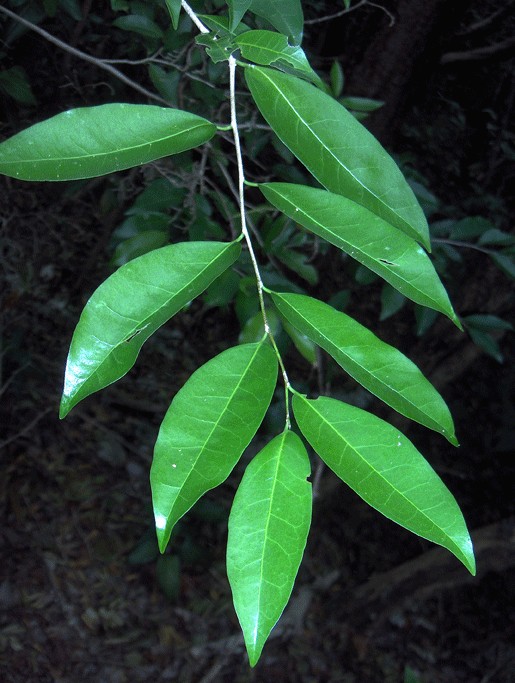
Drypetes lateriflora, commonly called Guiana Plum, is a small to medium evergreen tree of South Florida’s coastal and rockland hammocks. Like its rarer relative Milkbark (Drypetes diversifolia), it belongs to the Putranjivaceae family and is dioecious, with separate male and female trees. Guiana Plum is distinguished from several similar-looking hammock neighbors by leaves that have no fragrance when crushed, in contrast to aromatic species such as Lancewood, and by its small, bright red fruit.
Growing as an erect tree with slender, ascending branches, Guiana Plum typically reaches 20 to 30 feet tall, occasionally taller in favorable South Florida conditions, with reddish to light brown bark and shiny, dark green leaves. It is an occasional to locally common element of coastal hammocks and the Miami Rock Ridge, rather than a dominant canopy tree, making a mature specimen a nice addition to a native hammock planting without overwhelming the available growing space.
Guiana Plum has a considerably wider Florida range than many of its rare hammock relatives, occurring from the Florida Keys north along both coasts into Central Florida. Within that range it is a good choice for gardeners wanting an authentic, low-maintenance native tree for a shaded or partly shaded hammock-style landscape.
Identification
Guiana Plum is a medium, erect tree with small ascending branches and a crown that is noticeably taller than it is broad, typically growing slowly to moderately.
Bark & Stems
Bark ranges from reddish to light brown, generally smoother on younger growth and slightly rougher with age. Branching is upright and relatively sparse compared to bushier hammock species, giving the tree a somewhat open, erect silhouette.
Leaves
Leaves are thin but firm, shiny dark green above and paler below, roughly 3 to 4 inches long, with an elliptical to oblong shape and a pointed tip. A useful field test: unlike Lancewood’s aromatic foliage, Guiana Plum’s crushed leaves have no noticeable fragrance.
Flowers
As a dioecious species, Guiana Plum bears small, inconspicuous flowers on separate male and female trees. Flowering is not showy and is easy to miss among the foliage.
Fruit & Seeds
Female trees produce small, bright red fruit, one of the more visually distinctive features of the species and a useful way to tell it apart from similar hammock trees such as the darker-fruited Guiana Plum’s own cousin, Milkbark.
Quick Facts
| Scientific Name | Drypetes lateriflora |
| Family | Putranjivaceae |
| Plant Type | Evergreen Tree |
| Mature Height | 20–30 ft, to about 31 ft in South Florida |
| Mature Spread | Narrower than tall |
| Growth Rate | Slow to moderate |
| Sun Exposure | Part Shade to Part Sun |
| Water Needs | Average |
| Soil Type | Moist, well-drained sandy or limestone soils, humusy top layer |
| Soil pH | Neutral to alkaline |
| Bloom Time | Spring |
| Flower Color | Greenish-white, inconspicuous |
| Fall Color | None; evergreen |
| Fruit | Small bright red drupes on female trees |
| Deer Resistant | Generally yes |
| USDA Hardiness Zones | 10a–11 |
Native Range
Guiana Plum ranges more widely across Florida than many of its hammock neighbors, occurring from the Monroe County Keys north along the coasts to Brevard County on the Atlantic side and Collier County on the Gulf side. Outside the United States it also occurs in the Bahamas, the Greater Antilles, Mexico, and Central America.
It grows as an occasional to rare element of coastal hammocks and the limestone outcrop known as the Miami Rock Ridge, favoring moist, well-drained sandy or limestone soils with a humusy top layer similar to the conditions required by other hammock hardwoods such as Gumbo Limbo and West Indian Mahogany.
Because it is not confined to a single small island group the way Milkbark is, Guiana Plum is a more practical choice for a broader swath of coastal Central and South Florida gardeners who want an authentic native hammock tree without the extreme rarity constraints of some of its relatives. It is still listed as a Threatened species by the State of Florida, so plant only nursery-propagated stock and never collect from the wild.
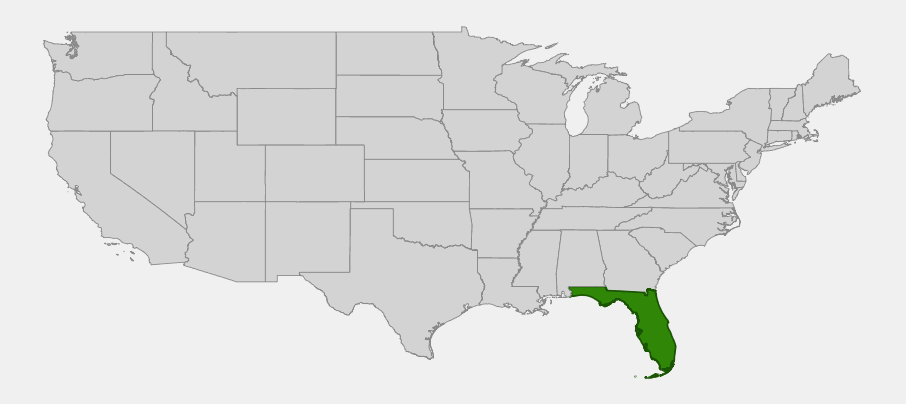
📋 Guiana Plum’s U.S. range is confined to Florida and is not currently covered by any of our regional native plant lists.
Growing & Care Guide
Guiana Plum is an easygoing native tree for Florida gardeners within its coastal range, prized for its glossy evergreen foliage and bright red fruit rather than for showy flowers. For background on why natives like this one are worth prioritizing, see our guide to the benefits of planting native trees.
Light
It grows best in part shade to part sun, similar to the light hammock canopy conditions it experiences in the wild. A site with some midday or afternoon shade tends to produce the healthiest foliage.
Soil & Water
Guiana Plum needs moist, well-drained sandy or limestone soil with a humusy top layer, and benefits from moderate to high organic content; it may struggle in very nutrient-poor sites. It has low tolerance for salt water and should not be planted where it could face prolonged flooding by brackish or salt water.
Planting Tips
Because the species is dioecious, plant more than one individual if fruit production and wildlife value are priorities. Choose a site sheltered from strong coastal wind, especially outside the immediate Keys where winter temperatures can dip lower.
Pruning & Maintenance
Minimal pruning is needed; remove dead or damaged wood after storms and let the naturally upright, open form develop. Avoid heavy shaping, which can slow an already unhurried grower even further.
Propagation
Propagation is from seed collected from ripe red fruit on female trees. As with many hammock hardwoods, germination can be slow, and young trees benefit from light shade until established.
Landscape Uses
- Hammock restoration plantings along the Florida coast
- Understory or mid-canopy tree beneath taller hammock species
- Wildlife garden accent valued for its red fruit
- Shaded native landscape specimen for coastal Central and South Florida
Wildlife & Ecological Value
Guiana Plum contributes food and structure to South Florida’s coastal hammocks, which support a distinctive community of wildlife found in few other U.S. habitats.
For Birds
The small, bright red fruit produced by female trees is attractive to fruit-eating hammock birds, which help disperse the seeds to new hammock openings and edges.
For Pollinators
Though the flowers are small and inconspicuous, they attract a range of native insects that pollinate many of the understory trees found in Florida’s coastal hammocks.
Ecosystem Role
As an occasional but reliable element of Florida’s hammock hardwood community, Guiana Plum adds canopy diversity and contributes leaf litter that supports the hammock’s humusy soil layer, which in turn benefits neighboring trees and ground-layer species. For more ways to extend this kind of value into a garden setting, see our article on planting native trees for wildlife.
Cultural & Historical Uses
Guiana Plum has no significant commercial history in Florida and was documented mainly by early 20th-century botanists cataloging the state’s tropical hammock flora. It does not appear in historical accounts as a cultivated fruit or timber tree, unlike some of its larger hammock neighbors.
The common name “plum” refers only to the general appearance of its small fruit, not to any culinary tradition; the fruit is not a food crop and has no documented history of being eaten by people. Its chief historical value has always been ecological, as part of the native hammock community that early Florida naturalists worked to describe and that conservationists later worked to protect.
There is no record of medicinal use for Guiana Plum, and no part of the plant should be assumed safe to eat. Today it is valued strictly as an ornamental and restoration tree for native hammock gardens.
Frequently Asked Questions
Is Guiana Plum the same as Milkbark?
No. Both are in the genus Drypetes and share a family resemblance, but Guiana Plum (Drypetes lateriflora) has a much wider Florida range and red fruit, while Milkbark (Drypetes diversifolia) is confined to the Keys and has pale, blotchy bark.
Does Guiana Plum have fragrant leaves?
No, and that is actually a useful identification clue. Unlike the aromatic foliage of Lancewood, Guiana Plum’s crushed leaves have no noticeable scent.
Can Guiana Plum tolerate full sun?
It performs best in part shade to part sun, similar to its natural hammock understory conditions, and may struggle in very exposed, full-sun sites, especially when young.
Is Guiana Plum’s fruit edible?
There is no reliable record of the fruit being eaten by people, and it should not be treated as a food source. It is, however, valuable to fruit-eating birds in its native hammock habitat.
Where does Guiana Plum grow natively in Florida?
From the Florida Keys north along both coasts to roughly Brevard County on the Atlantic side and Collier County on the Gulf side, always within coastal or rockland hammock habitat.

Looking for a nursery that carries Guiana Plum?
Browse our native plant nursery directory: Florida and nearby states

