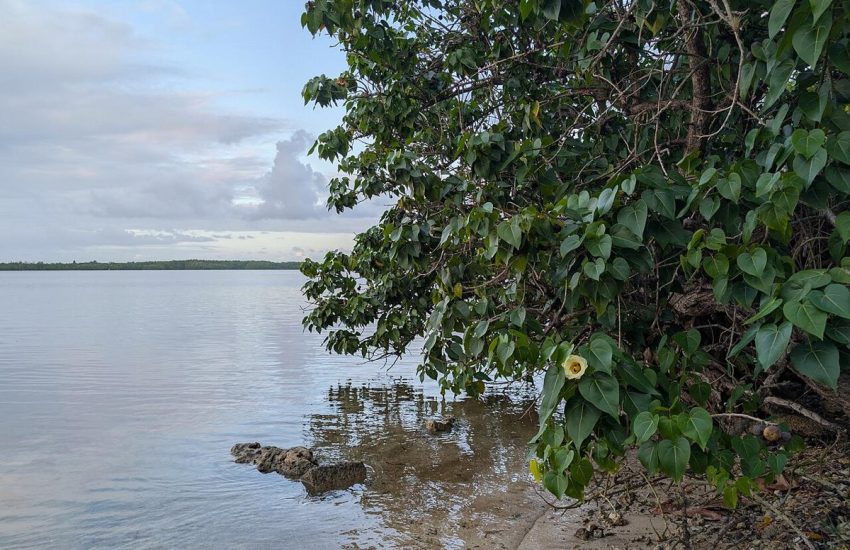
Bonpland Willow (Salix bonplandiana)
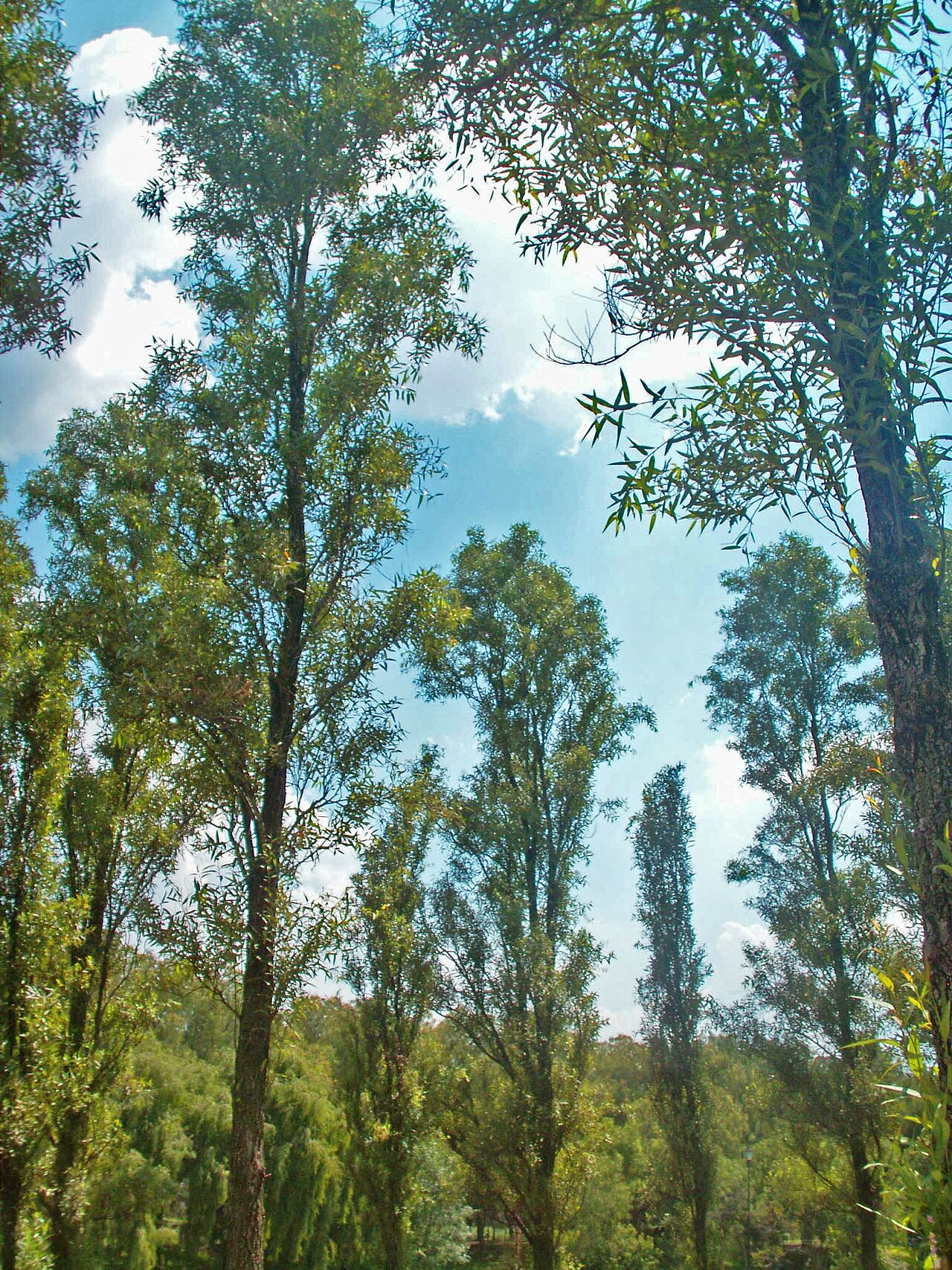
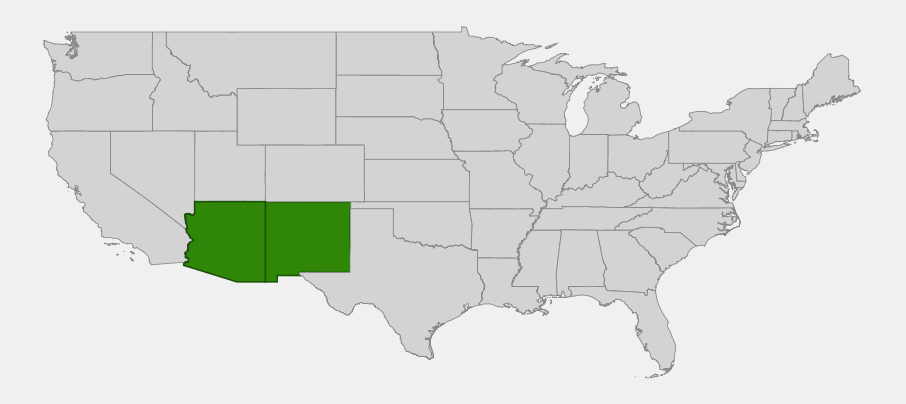
Salix bonplandiana, known as Bonpland Willow or by its Nahuatl-derived Mexican name ahuejote, is an unusual willow for the Southwest: instead of the familiar weeping, broad-crowned shape of most native willows, it grows tall, narrow, and upright, with a distinctly columnar silhouette. In the United States it reaches the northern edge of its range in central and southeastern Arizona and the extreme southwestern corner of New Mexico, where it grows along desert streams and canals with permanent or near-permanent water.
Bonpland Willow is far more widespread and culturally significant through the rest of its range in Mexico, where it extends south through the highlands to Guatemala. It is best known internationally as the signature tree of Xochimilco’s floating gardens (chinampas) near Mexico City, where rows of ahuejote willows have been planted along canal edges for centuries to anchor the soil of the artificial garden islands with their dense, water-loving root systems — a practice far outside this species’ native U.S. range but a vivid illustration of how useful the tree is wherever reliable water allows it to grow.
In its native Arizona and New Mexico range, Bonpland Willow is a worthwhile streamside and canal-edge tree for riparian restoration and water-adjacent landscaping, offering a narrower, more upright profile than other Southwestern willows and reasonably good, partially evergreen foliage in milder years.
Identification
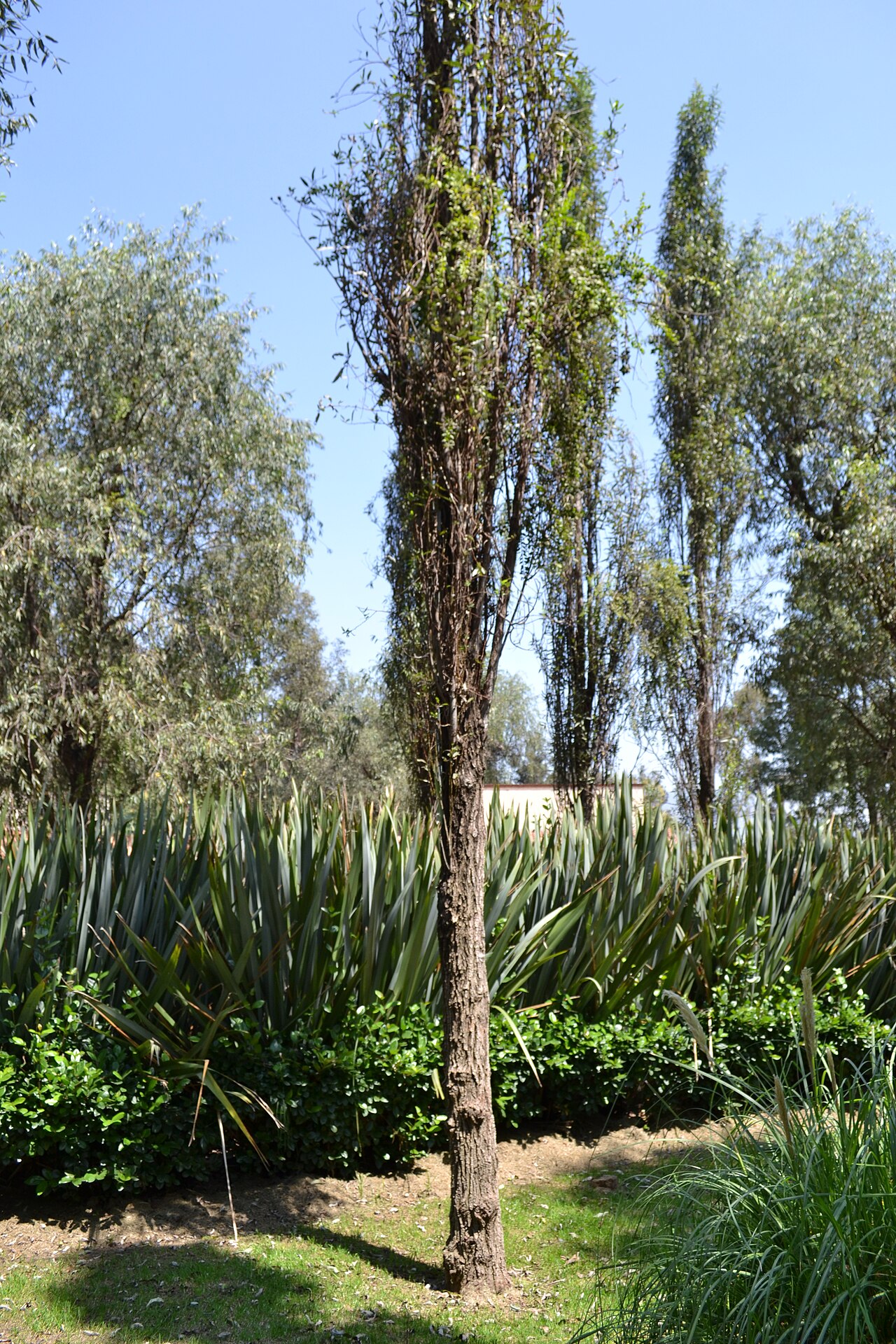
Bonpland Willow is a medium to large tree, typically 30 to 50 feet tall in the U.S. portion of its range and reportedly capable of reaching 65 feet or more in favorable conditions farther south. Its most distinctive feature is its growth habit: rather than the broad, rounded or weeping crown typical of many willows, it grows upright and narrow, with closely ascending branches that give mature trees a columnar, almost poplar-like silhouette.
Leaves
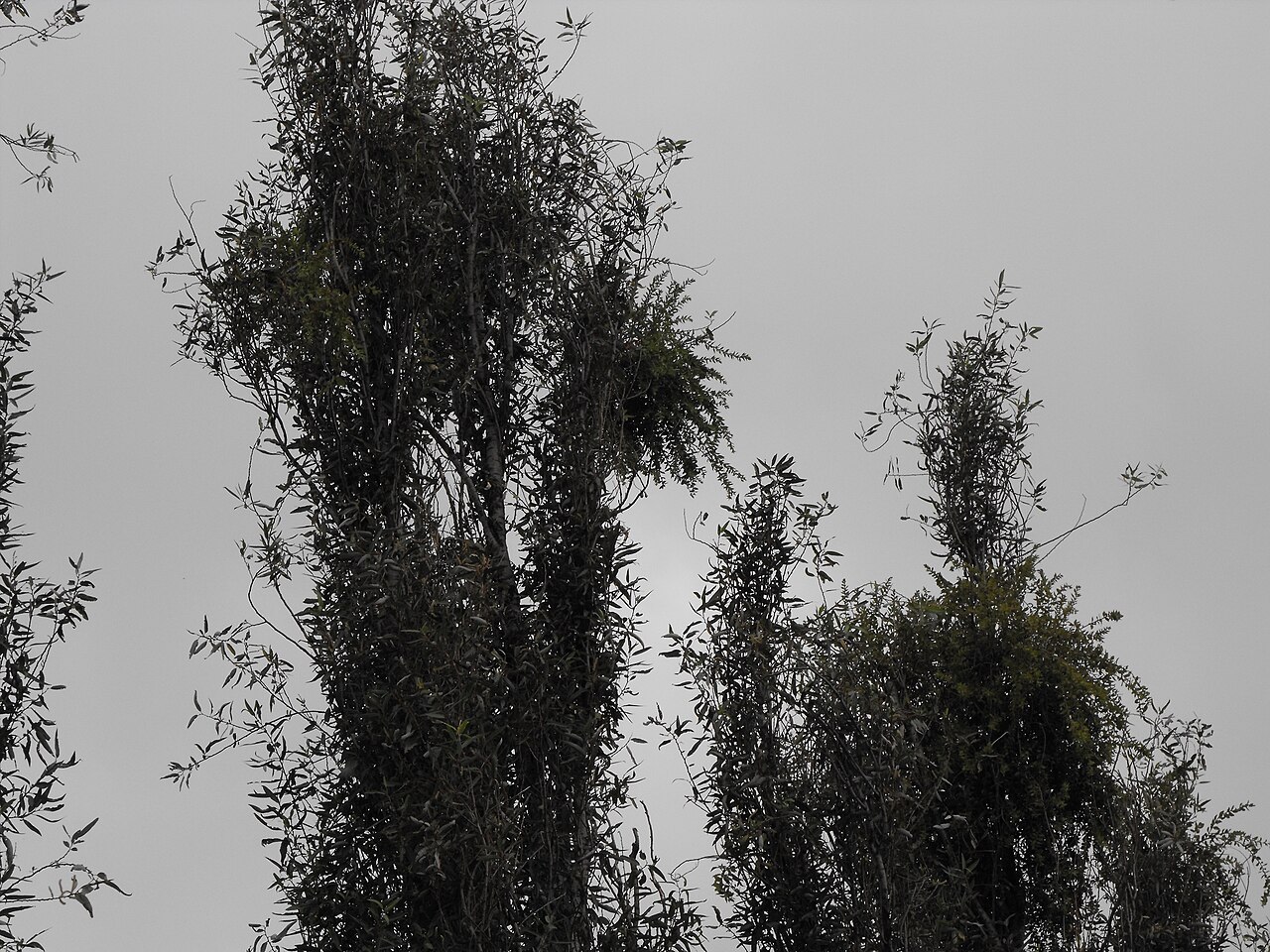
Leaves are narrow and lance-shaped (linear-lanceolate), 3 to 6 inches long, with finely toothed margins. The upper surface is glossy dark green and the underside paler, sometimes with a slight waxy bloom. In the warmer, milder parts of its range, Bonpland Willow holds much of its foliage through winter, making it semi-evergreen to evergreen where climate allows — a trait that sets it apart from the fully deciduous willows more typical of the Southwest.
Bark
Bark on young stems is smooth and gray-brown, becoming darker, rougher, and shallowly furrowed with age, broadly similar to other large native willows.
Flowers
Like all willows, Bonpland Willow is dioecious, with separate male and female trees. Catkins appear in spring, typically with or shortly before new leaf growth, and are wind-pollinated, though they are also visited by early-season bees and other insects for pollen.
Quick Facts
| Scientific Name | Salix bonplandiana |
| Family | Salicaceae (Willow) |
| Plant Type | Semi-Evergreen to Deciduous Tree |
| Mature Height | 30–50 ft in the U.S. |
| Growth Rate | Fast (with reliable water) |
| Sun Exposure | Full Sun |
| Water Needs | High — streamside, canal-edge, or regularly irrigated sites |
| Soil Type | Moist, well-drained alluvial or sandy-loam streamside soils |
| Soil pH | 6.0–7.5 |
| Growth Habit | Narrow, upright, columnar (unlike most weeping willows) |
| USDA Hardiness Zones | 8–10 |
Native Range
In the United States, Bonpland Willow reaches the northern limit of its range in central and southeastern Arizona, with scattered occurrences in the extreme southwestern corner of New Mexico, typically below about 5,000 feet elevation. From there its range extends much more extensively south through Sonora and the rest of Mexico and into Guatemala, where it is a widespread and ecologically and culturally important riparian tree of mid-elevation streams, canals, and wetlands.
Within its U.S. range, Bonpland Willow grows along desert streams, canal banks, and other sites with permanent or near-permanent water, often alongside other Southwestern riparian species such as Goodding’s Willow, Arroyo Willow, and Fremont Cottonwood. It is generally less common and more localized in Arizona than those more widespread native willows.
📋 Regional plant lists featuring Bonpland Willow: Arizona & New Mexico
Growing & Care Guide
Bonpland Willow needs the same essential ingredient as every willow: reliable water. Given that, its narrow, upright habit makes it a useful choice where a tall but space-efficient streamside or canal-edge tree is wanted.
Light
Plant Bonpland Willow in full sun, which it receives along the open streambanks and canal edges where it naturally grows. It does not perform well in significant shade.
Soil & Water
This is a water-dependent tree that needs consistently moist, well-drained alluvial or sandy-loam soil. It is best suited to a streamside, pond-edge, or canal-bank site, or a landscape setting with regular, reliable irrigation that mimics those conditions. It does not tolerate extended drought, though its generally deep root system gives it somewhat more resilience than some other willows once well established.
Planting Tips
Plant young container stock, or — as willows readily allow — rooted hardwood cuttings taken in the dormant season, directly into moist soil near a water source. Space trees according to their narrow, upright mature form; because the canopy stays relatively slim, Bonpland Willow can be planted closer together than broader-crowned willows if a dense streamside screen or windbreak effect is wanted.
Pruning & Maintenance
Remove dead, damaged, or crossing branches in the dormant season. Because of its naturally narrow, upright form, little corrective pruning is typically needed to maintain an attractive shape. Watch for leaf scorch or premature leaf drop, usually a sign of insufficient water rather than disease.
Landscape Uses
Bonpland Willow’s upright form gives it a few distinct landscape niches:
- Streambank and canal-edge plantings where erosion control and root stabilization are needed
- Narrow windbreaks or screens along water features, where a tall but slim profile is preferred
- Riparian restoration in Arizona desert stream corridors
- Accent tree for a pond or water garden, where its columnar form contrasts with broader-crowned natives
Wildlife & Ecological Value
Like other native willows, Bonpland Willow plays an outsized ecological role in the water-scarce Southwest, where riparian corridors support a disproportionate share of regional biodiversity.
For Birds & Pollinators
The dense canopy provides nesting and foraging habitat for riparian songbirds, and early-spring catkins offer a valuable nectar and pollen source for native bees and other pollinators at a time when few other plants are flowering in the desert Southwest.
For Streamside Ecology
Like other willows, Bonpland Willow’s extensive root systems help stabilize streambanks and canal edges against erosion, while its canopy shades the water below, helping moderate water temperature for fish and aquatic invertebrates. These functions are the same ones that have made ahuejote willows essential, for centuries, to holding together the soil of Xochimilco’s chinampa garden islands farther south in Mexico.
Ecosystem Role
In Arizona’s desert riparian corridors, Bonpland Willow is one of several native willows that together form the backbone of streamside gallery vegetation — among the rarest and most ecologically valuable habitat types in the arid Southwest, supporting a vastly disproportionate share of the region’s bird and wildlife diversity relative to the small fraction of land riparian corridors actually occupy.
Cultural & Historical Uses
Bonpland Willow’s most famous cultural role lies outside its native U.S. range entirely: in the chinampa (floating garden) system of Xochimilco, near Mexico City, where the tree is known as ahuejote — a name derived from Nahuatl. For centuries, rows of ahuejote willows have been planted along the edges of artificial agricultural islands built up from canal mud, their dense roots binding the soil together and preventing erosion, a practice that continues today and is recognized as part of a UNESCO World Heritage cultural landscape.
In Arizona and the broader U.S. Southwest, Bonpland Willow has seen more limited documented traditional use, generally overshadowed by the more widespread Goodding’s Willow and other native willows. Like other willows, its bark contains salicin, the compound related to aspirin’s active ingredient, though no specific regional ethnobotanical record of its use for that purpose is well documented for this species in the United States.
Frequently Asked Questions
Why does Bonpland Willow grow so narrow and upright?
Unlike the broad, weeping form of many willows, Bonpland Willow has a naturally columnar growth habit with closely ascending branches — a distinctive trait that sets it apart from other Southwestern willows and makes it useful where a tall, narrow tree is wanted.
What is an “ahuejote”?
Ahuejote is the Nahuatl-derived Mexican common name for Bonpland Willow, especially associated with the chinampa floating gardens of Xochimilco near Mexico City, where the tree has been planted for centuries to stabilize the soil of artificial garden islands.
Is Bonpland Willow evergreen?
It can be semi-evergreen to nearly evergreen in the milder, warmer parts of its range, holding much of its foliage through winter — unusual among Southwestern native willows, which are typically fully deciduous.
Can Bonpland Willow grow without a stream or pond?
Not reliably over the long term. Like other willows, it depends on consistent moisture and is best suited to streamside, canal-edge, or regularly and heavily irrigated sites rather than typical dry-climate landscaping.
How is Bonpland Willow different from Goodding’s Willow?
Bonpland Willow is distinguished by its narrower, more upright, columnar growth form and partially evergreen foliage, compared to the broader-crowned, fully deciduous habit of Goodding’s Willow, the more widespread native willow across much of the Southwest.

Looking for a nursery that carries Bonpland Willow?
Browse our native plant nursery directory: Alabama, Alaska, Arizona & Arkansas · Nebraska, Nevada, New Hampshire, New Jersey, New Mexico, New York, North Carolina, North Dakota, Ohio & Oklahoma
For other Southwestern native willows, see our pages on Goodding’s Willow, Arroyo Willow, and Sandbar Willow. For more on riparian planting, see our overview of whether willow trees make good firewood.