Coahuila Scrub Oak (Quercus intricata)
Quercus intricata, commonly known as Coahuila Scrub Oak (also called dwarf oak or intricate oak), is a tough little evergreen oak of the Chihuahuan Desert mountains. In the United States it is known from only two places in the world: a single population in the Chisos Mountains of Big Bend National Park, and a second site near Eagle Peak about 15 miles southwest of Van Horn, Texas. Everywhere else it grows, it is a plant of Mexico — the mountain ranges of Coahuila, Nuevo León, Durango, and Zacatecas — which makes the handful of Texas colonies a genuine botanical outlier worth knowing about.
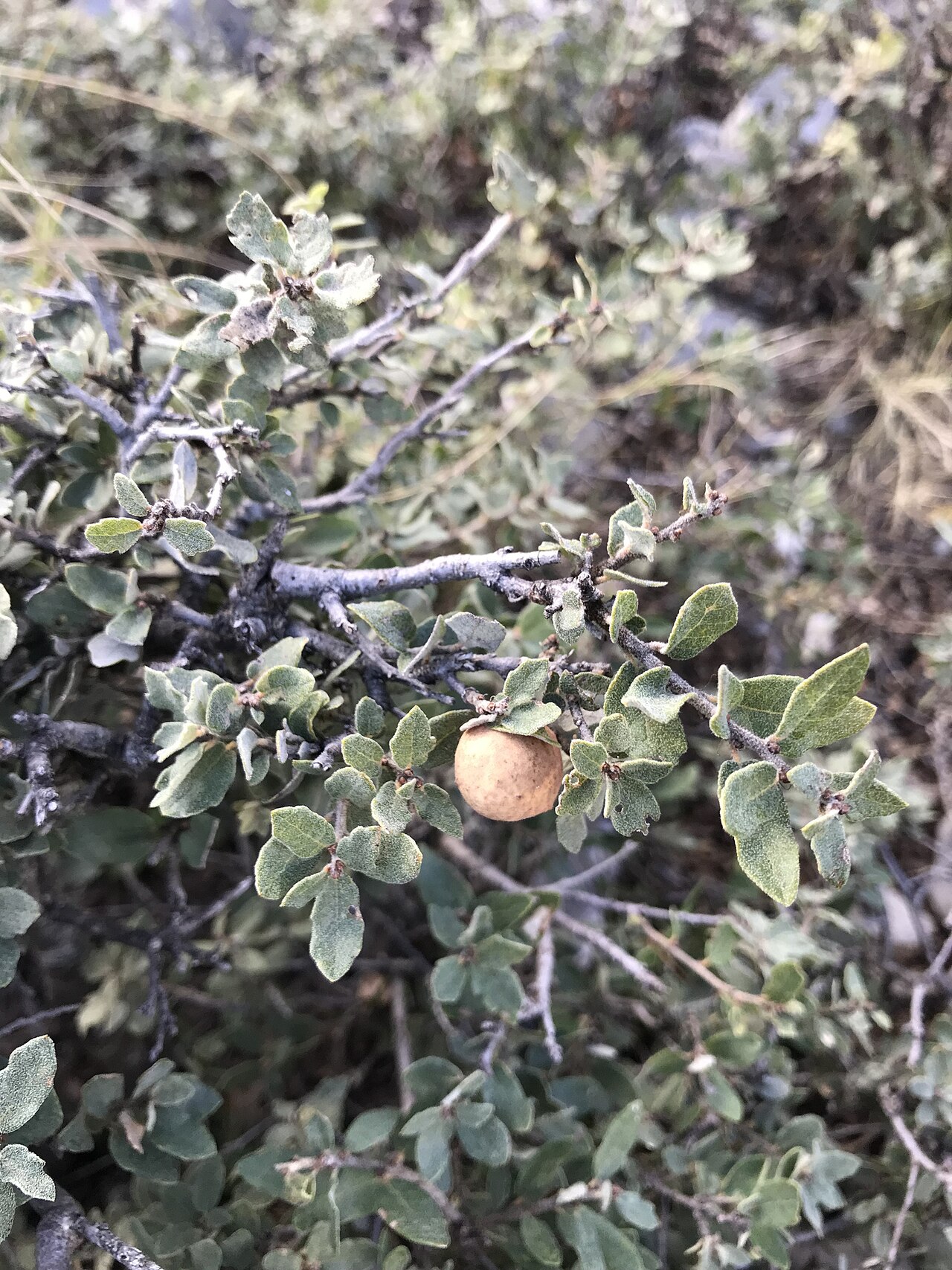
This is not a tree in the way most people picture an oak. Coahuila Scrub Oak is a low, tangled, intricately branched evergreen shrub, rarely more than waist to chest height, that spreads by underground rhizomes to form dense colonies covering rocky slopes. Its small, thick, curl-edged leaves are coated with fine hairs that give the foliage a grayish, felted look — an adaptation that helps the plant survive intense sun, thin soil, and long dry spells on exposed desert mountainsides. Where it occurs, it is often the dominant low shrub for considerable stretches of slope.
Because its U.S. range is so narrow and so remote — restricted to protected, high-elevation terrain inside Big Bend National Park and one isolated Trans-Pecos mountain — Coahuila Scrub Oak is not a plant anyone will find at a nursery, and it should never be collected from the wild. It is included here as a native plant worth recognizing precisely because of how little territory it holds in this country, and how much that territory depends on the integrity of a few undisturbed desert mountain slopes.
Identification
Coahuila Scrub Oak belongs to the white oak group (section Quercus) and is unmistakably shrubby and evergreen, in contrast to most of the deciduous oaks gardeners are used to. Its most reliable field marks are its small size, its tightly tangled branching (“intricata” refers to this intricate branch architecture), and its small, stiff, curly-haired leaves.
Growth Habit
The plant typically grows as a dense, rounded, multi-stemmed shrub a few feet tall, spreading clonally by rhizomes to form broad colonies rather than standing as individual specimens. This clonal habit means that what looks like a thicket of many small shrubs on a hillside may in fact be one genetic individual repeated many times over — a strategy that helps the species persist through drought, browsing, and fire by resprouting from protected underground parts.
Leaves
Leaves are evergreen, thick and leathery, oblong to ovate in outline, and often distinctly wavy along the margin, up to about 1 inch (2.5 cm) long. The upper leaf surface is green with scattered tufts of small curly hairs; the underside is densely covered in curly hairs that make it look white to brown, a strong contrast with the darker upper surface. The small leaf size and heavy leaf hair (pubescence) are both classic adaptations to the intense sun and aridity of its desert-mountain habitat.
Acorns
Like other white oaks, Coahuila Scrub Oak produces acorns that mature in a single growing season, borne singly or in small numbers on short stalks, with a scaly cup enclosing roughly a third to half of the nut. Acorn crops in this species are not well documented in the horticultural literature, a reflection of how little this plant has been studied outside its narrow range.
Quick Facts
| Scientific Name | Quercus intricata |
| Family | Fagaceae (Beech/Oak) |
| Plant Type | Evergreen shrub (rhizomatous, colony-forming) |
| Mature Height | 3–6 ft (1–2 m) |
| Mature Spread | Spreads indefinitely by rhizomes, forming colonies |
| Growth Rate | Slow |
| Sun Exposure | Full Sun |
| Water Needs | Low (arid-adapted) |
| Soil Type | Rocky, thin, well-drained desert-mountain soils |
| Soil pH | Neutral to alkaline |
| Bloom Time | Spring (catkins, inconspicuous) |
| Flower Color | Greenish-yellow (wind-pollinated catkins) |
| Fall Color | None (evergreen) |
| Fruit | Acorn, maturing in one season |
| Deer Resistant | Moderate |
| USDA Hardiness Zones | 7–9 |
Native Range
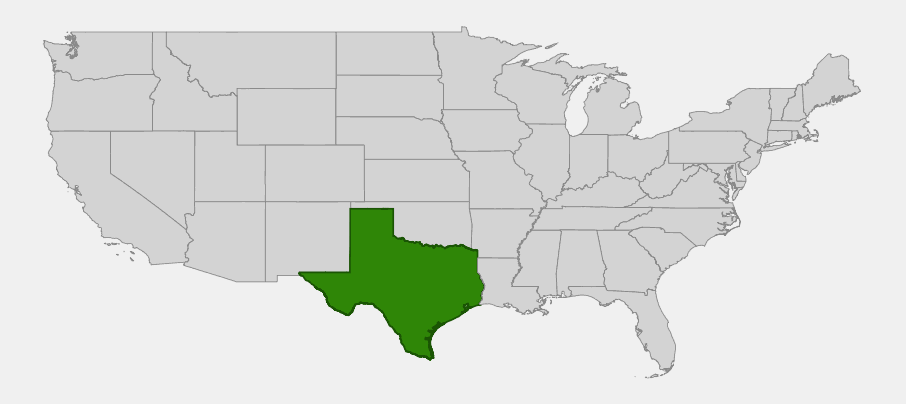
Coahuila Scrub Oak is, first and foremost, a Mexican plant. It is common across mountain ranges of the Chihuahuan Desert in the states of Coahuila, Nuevo León, Durango, and Zacatecas, where it is one of the characteristic low evergreen oaks of desert-mountain chaparral and oak woodland. In the United States, however, it reaches the very northern edge of its range in just two known locations, both in the Trans-Pecos region of far western Texas.
The first U.S. site is in the Chisos Mountains inside Big Bend National Park, where it grows on rocky slopes alongside other Chihuahuan Desert oaks and chaparral shrubs. The second is near Eagle Peak, roughly 15 miles southwest of Van Horn, Texas, an isolated desert range far from any other known Texas population. Botanists consider both occurrences to represent the species pushing just across the international border from its Mexican stronghold rather than a historically widespread Texas population that has since contracted.
Because its entire U.S. presence sits within one national park and one remote, privately or state-held desert range, Coahuila Scrub Oak has effectively no cultivated or horticultural distribution in this country. There is no evidence of range expansion, naturalization, or planting outside these native sites, and the species should be treated as a highly range-restricted native rather than a candidate for general landscape use.
📋 Regional plant lists featuring Coahuila Scrub Oak: South and West Texas
Growing & Care Guide
Coahuila Scrub Oak is essentially unavailable in cultivation, and given its extremely narrow native footprint in the United States, it is best appreciated in place rather than sought out for the home landscape. The notes below describe the conditions it needs in the wild and would require if ever propagated responsibly from seed by a specialty native-plant grower, rather than guidance for typical garden use.
Light
Full sun. In its native habitat this shrub grows on open, exposed desert-mountain slopes with little canopy cover, and it has no tolerance for shade.
Soil & Water
Rocky, shallow, fast-draining soils are essential; this is a plant of thin desert-mountain substrate, not garden loam. Once established it needs very little supplemental water and is adapted to long dry periods punctuated by infrequent rain, typical of the Chihuahuan Desert climate.
Planting Tips
Because this species has no U.S. nursery trade and its wild populations are so limited, planting is not recommended. Anyone encountering it in Big Bend National Park or on the Eagle Peak range should observe and photograph it rather than collect seed, cuttings, or plants — removal of any part of a wild specimen from a national park is also illegal.
Pruning & Maintenance
Not applicable for a wild, uncultivated population; the species requires no maintenance in its native setting and regenerates from rhizomes after disturbance such as fire or browsing.
Landscape Uses
- Not currently used in landscaping — this is a conservation-value native, not a nursery plant
- Research and education value as an example of a Chihuahuan Desert species reaching its range limit in Texas
- Desert chaparral restoration within its narrow native range, where appropriate and permitted
Wildlife & Ecological Value
Like other scrub oaks, Coahuila Scrub Oak plays a disproportionately large ecological role relative to its small stature. Its dense, tangled branches provide cover for small desert birds and mammals, and its acorns — though not well studied in this particular species — follow the general oak pattern of being an important food source for rodents, javelina, and birds where the plant is common across its Mexican range.
For Wildlife
In the Chihuahuan Desert mountains where it is abundant, this species contributes to the oak-chaparral community that supports desert mule deer, javelina, and numerous small mammals and ground-foraging birds that rely on acorn mast and dense shrub cover for food and shelter.
Ecosystem Role
As a clonal, colony-forming shrub, Coahuila Scrub Oak helps stabilize rocky desert-mountain slopes and contributes structural diversity to otherwise sparse chaparral vegetation. Its drought and fire tolerance, driven by its rhizomatous growth habit, make it a resilient component of these harsh, exposed plant communities.
Cultural & Historical Uses
Coahuila Scrub Oak has no significant documented history of use by Indigenous peoples or settlers in Texas, almost certainly a reflection of how restricted and remote its U.S. populations are — tucked into high desert-mountain terrain far from historic population centers. Across its much larger Mexican range, oaks of the Chihuahuan Desert chaparral have generally been used for firewood and browse by livestock, but no specific ethnobotanical record exists for this species.
Its primary significance today is scientific and conservation-related: as a species that reaches the very edge of its geographic range in the United States, it is a useful indicator of how Chihuahuan Desert plant communities extend northward into Texas, and its persistence depends entirely on the protection of the small, specific sites where it grows.
Because the entire known U.S. population sits within Big Bend National Park and one additional protected desert range, the species’ continued presence in this country is tied directly to land stewardship and the exclusion of grazing, development, or collection pressure from those sites.
Frequently Asked Questions
Is Coahuila Scrub Oak the same as other “scrub oaks” in Texas?
No. Texas has several unrelated shrubby oaks called “scrub oak,” including Havard oak and shin oak. Coahuila Scrub Oak (Quercus intricata) is a distinct Chihuahuan Desert species found only in the Trans-Pecos, distinguished by its small, thick, wavy, curly-haired leaves and rhizomatous, colony-forming habit.
Can I buy Coahuila Scrub Oak from a nursery?
No. It is not in commercial cultivation in the United States. Its entire U.S. range is two remote sites in far west Texas, one of them inside a national park, so there is no legal wild source of seed or plants for sale.
Is Coahuila Scrub Oak endangered?
It is listed as Least Concern globally by the IUCN because it is common across a wide area of northern Mexico. In the United States, however, its presence is limited to two small, isolated sites, making it a species of local conservation interest in Texas even though it is not globally threatened.
Why is it called a “dwarf” oak?
Its alternate common name, dwarf oak, refers to its small, shrubby stature — rarely more than a few feet tall — in contrast to the large canopy trees most people associate with the genus Quercus.
Where is the best place to see it in the wild?
The most accessible population is in the Chisos Mountains within Big Bend National Park, where it grows on rocky slopes alongside other Chihuahuan Desert oaks and chaparral shrubs. As with all plants in the park, observe without collecting.

Looking for a nursery that carries native Trans-Pecos plants?
Browse our native plant nursery directory: Texas