Washoe Pine (Pinus washoensis)
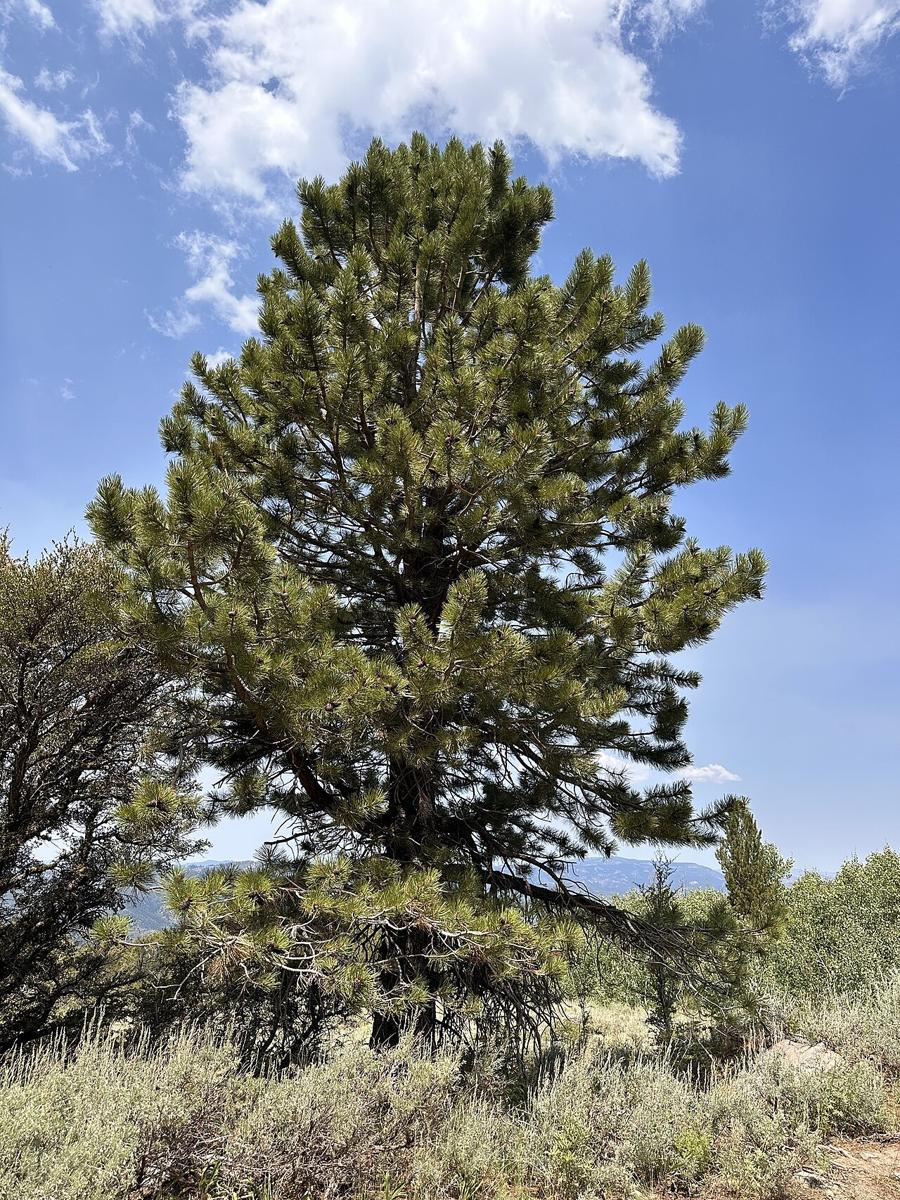
Pinus washoensis, the Washoe Pine, is one of the rarest conifers in the American West, known from only a handful of isolated mountain stands in extreme northeastern California and extreme western Nevada. Named for the Washoe people whose traditional homeland includes the Lake Tahoe and Carson Range area where the type population grows, this pine was first described in 1945 from trees on the east slope of Mount Rose above Reno, and its status as a distinct species versus a local variant of ponderosa pine has been debated by botanists for decades.
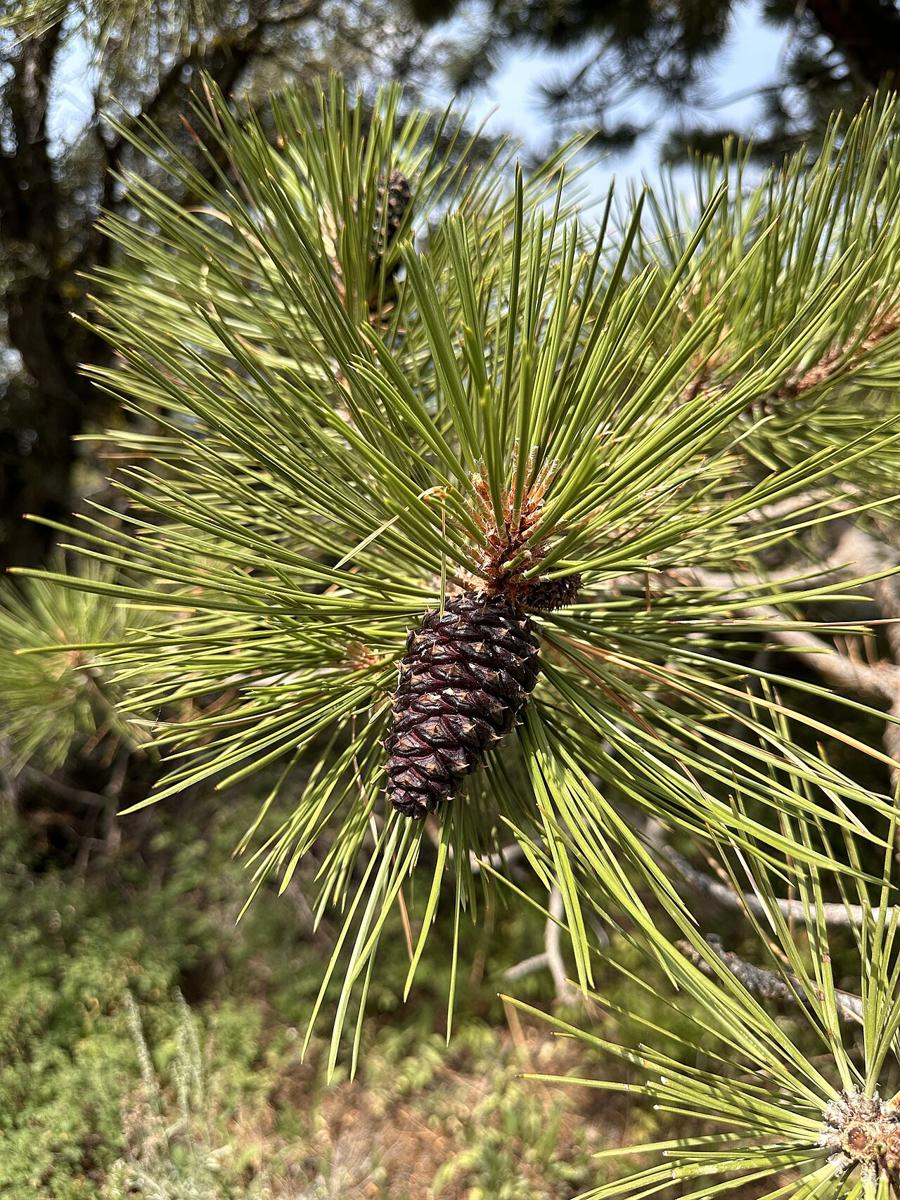
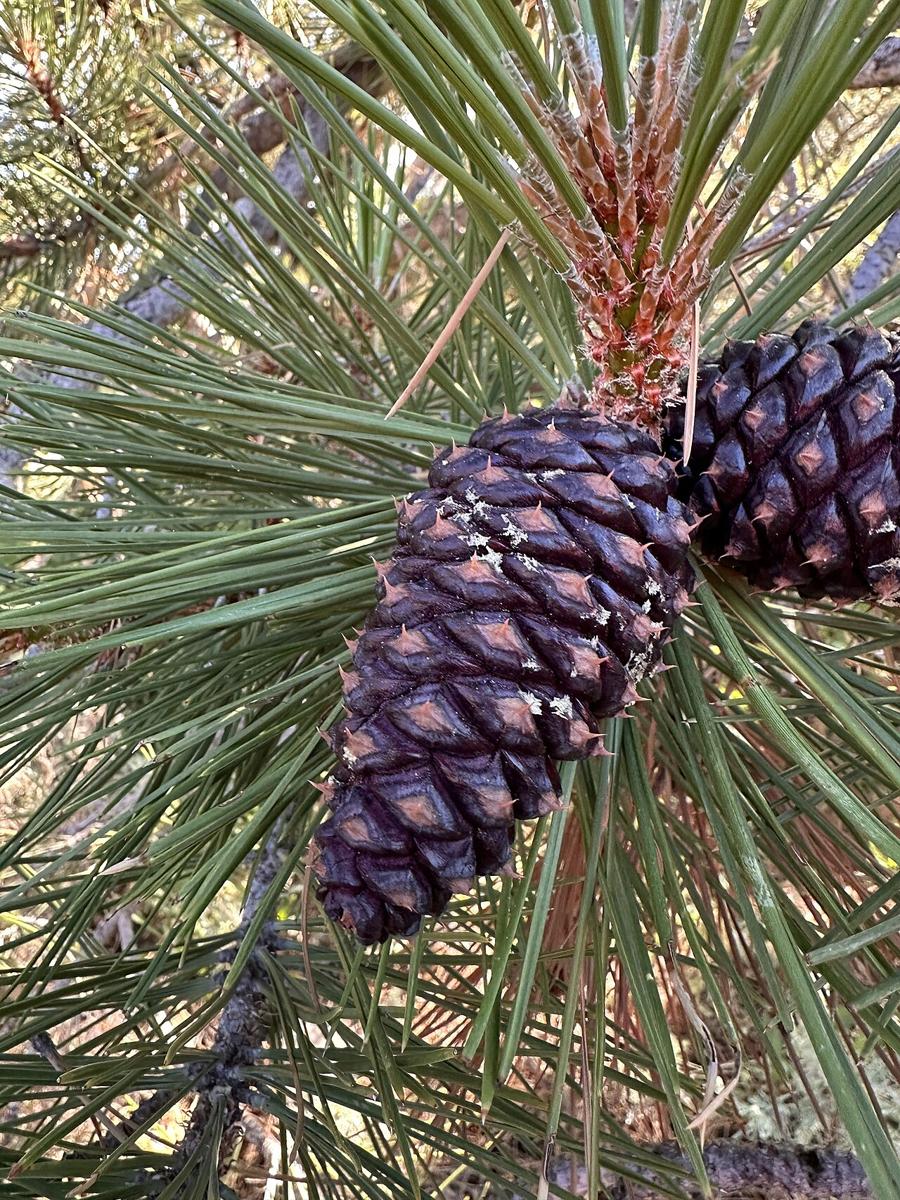
Washoe Pine closely resembles both Jeffrey pine and ponderosa pine, the two much more common yellow pines it grows alongside, but is distinguished by its notably short needles, smaller cones with a distinctive dark, almost purplish-brown color, and prickles that curve outward on the cone scales rather than inward. Recent genetic work places it in a lineage close to ponderosa pine, and the USDA PLANTS database still lists it formally as Pinus ponderosa var. washoensis, but Flora of North America and most working conifer taxonomists continue to treat it as a distinct species based on its consistent cone and needle differences.
Because the entire known population numbers only a few thousand trees scattered across a few square miles of mountain terrain, Washoe Pine is ranked globally vulnerable (G3) by NatureServe. It is not available from mainstream nurseries, and the handful of wild stands that exist should never be a source of wild-collected seed or cuttings; any interest in the species is best satisfied by visiting the Mount Rose or Warner Mountains populations respectfully rather than attempting to propagate wild material.
Identification
Washoe Pine is a large, straight-trunked yellow pine best told apart from its lookalikes by its unusually short needles for a tree in this group, small dark cones with outward-curving prickles, and orange-brown, rough young twigs. Positive identification in the field benefits from comparing needle length and cone color directly against nearby Jeffrey pine, since the two species often grow side by side.
Bark & Stems
Mature bark is yellow-brown to red-brown and breaks into flat, scaly plates similar to ponderosa and Jeffrey pine, though trees in the known stands are mostly second-growth, having regenerated after 19th-century logging, so classic old-growth plated bark is uncommon. Young twigs are stout, orange, and rough-textured, aging to gray.
Leaves
Needles grow in bundles of two or three, 10 to 15 cm (4 to 6 inches) long, gray-green, and persist for four to six years. This needle length is notably shorter than the 15 to 25 cm needles typical of nearby ponderosa and Jeffrey pine, making needle length one of the more reliable field characters for separating Washoe Pine from its relatives.
Flowers
Like other pines, Washoe Pine is monoecious, with small reddish male pollen cones clustered near branch tips in spring and tiny reddish female cones that take two growing seasons to mature into full-sized seed cones. There are no petals or showy flowers; wind carries the pollen between trees.
Fruit & Seeds
Seed cones are 6 to 10 cm long, noticeably smaller than those of Jeffrey or ponderosa pine, with a distinctive dark, almost purple-brown color and scales bearing small outward-curved prickles. Cones mature over two years and release winged seeds that are dispersed short distances by wind and cached by birds and squirrels.
Quick Facts
| Scientific Name | Pinus washoensis |
| Family | Pinaceae (Pine) |
| Plant Type | Evergreen conifer tree |
| Mature Height | 60–100 ft |
| Mature Spread | 20–35 ft |
| Growth Rate | Slow to moderate |
| Sun Exposure | Full sun |
| Water Needs | Low once established |
| Soil Type | Rocky, well-drained montane soils |
| Soil pH | Slightly acidic to neutral |
| Bloom Time | Late spring (pollen cones) |
| Flower Color | Reddish, inconspicuous |
| Fall Color | Evergreen; no fall color change |
| Fruit | Dark brown cone, 6–10 cm, matures in 2 years |
| Deer Resistant | Yes |
| USDA Hardiness Zones | 6–7 |
Native Range
Washoe Pine is known from only a few disjunct mountain stands: the largest population occupies the southern Warner Mountains of northeastern California, with smaller groups reported from Lassen Volcanic National Park, the Bald Mountains, and Last Chance Creek in Plumas County, all in California. In Nevada it is restricted to the headwaters of Galena Creek on Mount Rose, in the Carson Range above Reno, and a small population in the Mosquito Mountains in the extreme northwestern part of the state.
Within these ranges, Washoe Pine grows on rocky, well-drained montane slopes and ridges at moderate to high elevation, typically alongside Jeffrey pine, white fir, and mountain sagebrush, in a transitional zone between lower-elevation ponderosa pine forest and higher subalpine forest. The Mount Rose stand, the type locality for the species, regenerated largely from logging in the 1860s and remains the most accessible and well-studied population.
Washoe Pine is native only to these scattered sites in California and Nevada; it is not native to Oregon, Idaho, or any other state despite superficial resemblance to the far more widespread ponderosa and Jeffrey pines found throughout the interior West. Because the species is so rare and locally restricted, treat any reported population outside the documented Warner Mountains, Lassen, Plumas County, and Mount Rose/Mosquito Mountains sites with caution until confirmed by a conifer specialist.
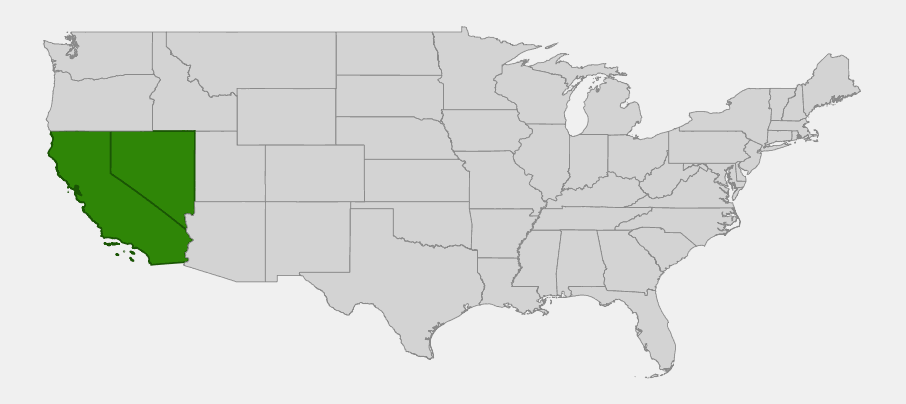
Native Range
| U.S. States | California (Warner Mountains, Lassen area, Plumas County), Nevada (Mount Rose/Carson Range, Mosquito Mountains) |
| Canada | Not present |
| Ecoregion | Sierra Nevada–Cascade transition, Modoc Plateau, Carson Range |
| Elevation Range | 5,500–8,500 ft |
| Habitat | Rocky montane ridges and slopes in mixed-conifer forest |
| Common Associates | Jeffrey pine, white fir, mountain sagebrush |
📋 Washoe Pine is native to parts of the area covered by California and Nevada.
Growing & Care Guide
Light
Like its ponderosa and Jeffrey pine relatives, Washoe Pine requires full sun and does not tolerate shaded or crowded planting sites. In the wild it grows in open-canopied montane forest with abundant direct light.
Soil & Water
This pine is adapted to rocky, well-drained montane soils and tolerates drought well once established, reflecting its native habitat on exposed mountain ridges. It does not tolerate heavy, poorly drained, or consistently wet soils.
Planting Tips
Because Washoe Pine is not commercially available and wild collection from its few known stands is inappropriate given its rarity, home gardeners interested in a similar yellow pine for the landscape should consider the far more widely available and horticulturally similar Jeffrey pine or ponderosa pine, both close relatives with similar growing requirements and genuine nursery availability. If you do encounter Washoe Pine seedlings through a conservation program or botanical garden, give them the same open, well-drained, high-elevation site conditions as ponderosa pine.
Pruning & Maintenance
As with other yellow pines, limit pruning to removing dead or damaged branches, and avoid pruning in seasons when bark beetles are active, since fresh pruning wounds can attract them. Established trees require minimal maintenance beyond occasional deadwood removal.
Propagation
Washoe Pine is propagated from seed under controlled conditions by botanical gardens and conservation programs studying the species; wild seed collection from the existing populations is strongly discouraged given their small size and vulnerable conservation status. There is no legitimate home-propagation pathway for this species at this time.
Landscape Uses
- Not recommended for general landscape use due to extreme rarity and unavailability
- Conservation and ex-situ collection plantings at botanical gardens and arboreta
- Specimen of interest for high-elevation native plant collections where sourced ethically
- Subject of ongoing conifer taxonomy and conservation research
Wildlife & Ecological Value
For Pollinators
As a wind-pollinated conifer, Washoe Pine does not attract pollinating insects, though its spring pollen release contributes to the broader montane forest pollen cycle that some insects incidentally use.
Birds
Clark’s nutcrackers, jays, and woodpeckers forage on and around Washoe Pine for seeds and bark insects, much as they do in neighboring ponderosa and Jeffrey pine stands, and the mature canopy provides nesting and roosting structure in its limited range.
Mammals
Douglas squirrels and chipmunks cache and feed on the seeds, playing a role in local seed dispersal, while the open understory of these montane stands supports mule deer browsing on associated shrubs rather than the pine itself.
Ecosystem Role
Because the entire global population occupies only a few square miles of mountain terrain, every stand of Washoe Pine carries outsized conservation importance for maintaining the genetic diversity of this rare lineage within the yellow pine group, and the trees anchor small but ecologically distinct patches of montane forest where they occur alongside Jeffrey pine and white fir, much as discussed in our guide on the benefits of planting native trees.
Cultural & Historical Uses
Washoe Pine takes its name from the Washoe people, whose traditional homeland in the Lake Tahoe and Carson Range region overlaps closely with the Mount Rose population, the type locality where botanists Herbert Mason and William Stockwell first described the species in 1945. There is no record of a documented traditional use specific to this pine as distinct from the broader yellow pine group the Washoe and neighboring peoples utilized for timber and other purposes within the region.
The species has been a subject of ongoing scientific debate since its description, with botanists disagreeing for decades over whether it merited status as a full species or should be classified as a regional variant of ponderosa pine; this question was only partly resolved by genetic studies published in the 2020s that placed it in a lineage closely related to, but distinct from, the typical ponderosa pine of the Pacific states.
Today the primary significance of Washoe Pine is conservation-focused: its small, scattered populations and global Vulnerable (G3) NatureServe ranking make it a species of interest for land managers and conifer researchers studying rare pine genetics in the Sierra Nevada and Great Basin border region, discussed further in our overview of planting native trees for wildlife and the broader value of protecting locally rare tree populations.
Frequently Asked Questions
How is Washoe Pine different from ponderosa pine and Jeffrey pine?
Washoe Pine has distinctly shorter needles (10–15 cm versus 15–25 cm) and smaller, darker, almost purple-brown cones compared with the longer needles and larger, lighter cones of both ponderosa and Jeffrey pine, which it otherwise closely resembles and often grows beside.
Is Washoe Pine the same species as ponderosa pine?
Taxonomists disagree. USDA PLANTS formally lists it as Pinus ponderosa var. washoensis, but Flora of North America and most conifer specialists treat it as the distinct species Pinus washoensis based on consistent cone and needle differences, even though recent DNA studies place it in a lineage close to ponderosa pine.
Can I buy or plant a Washoe Pine?
No legitimate nursery source currently exists, and wild collection from its few known populations is inappropriate given the species’ rarity and NatureServe Vulnerable (G3) status. Gardeners wanting a similar yellow pine should plant Jeffrey pine or ponderosa pine instead.
Where can I see a Washoe Pine in the wild?
The most accessible population grows on the east slope of Mount Rose above Reno, Nevada, the species’ type locality, with the largest population in the southern Warner Mountains of northeastern California.
Is Washoe Pine endangered?
It is not federally listed but is ranked globally Vulnerable (G3) by NatureServe due to its extremely small, fragmented population across only a few mountain sites in California and Nevada.
Looking for a nursery that carries native plants for your area? Visit our regional nursery directory: California and Nebraska to Oklahoma (includes Nevada) for growers near Washoe Pine’s native range; note that Washoe Pine itself is not nursery-propagated, so these directories are best used for the related Jeffrey and ponderosa pines.