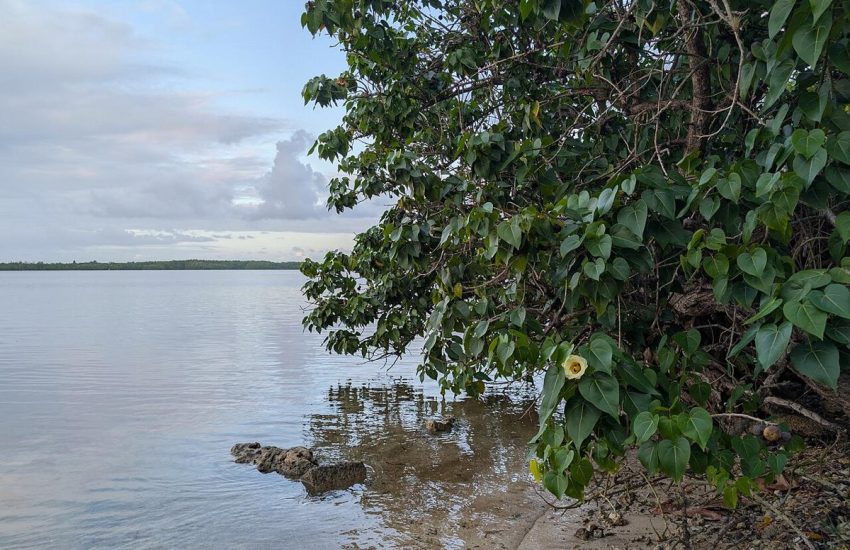
Maua (Xylosma hawaiiense)
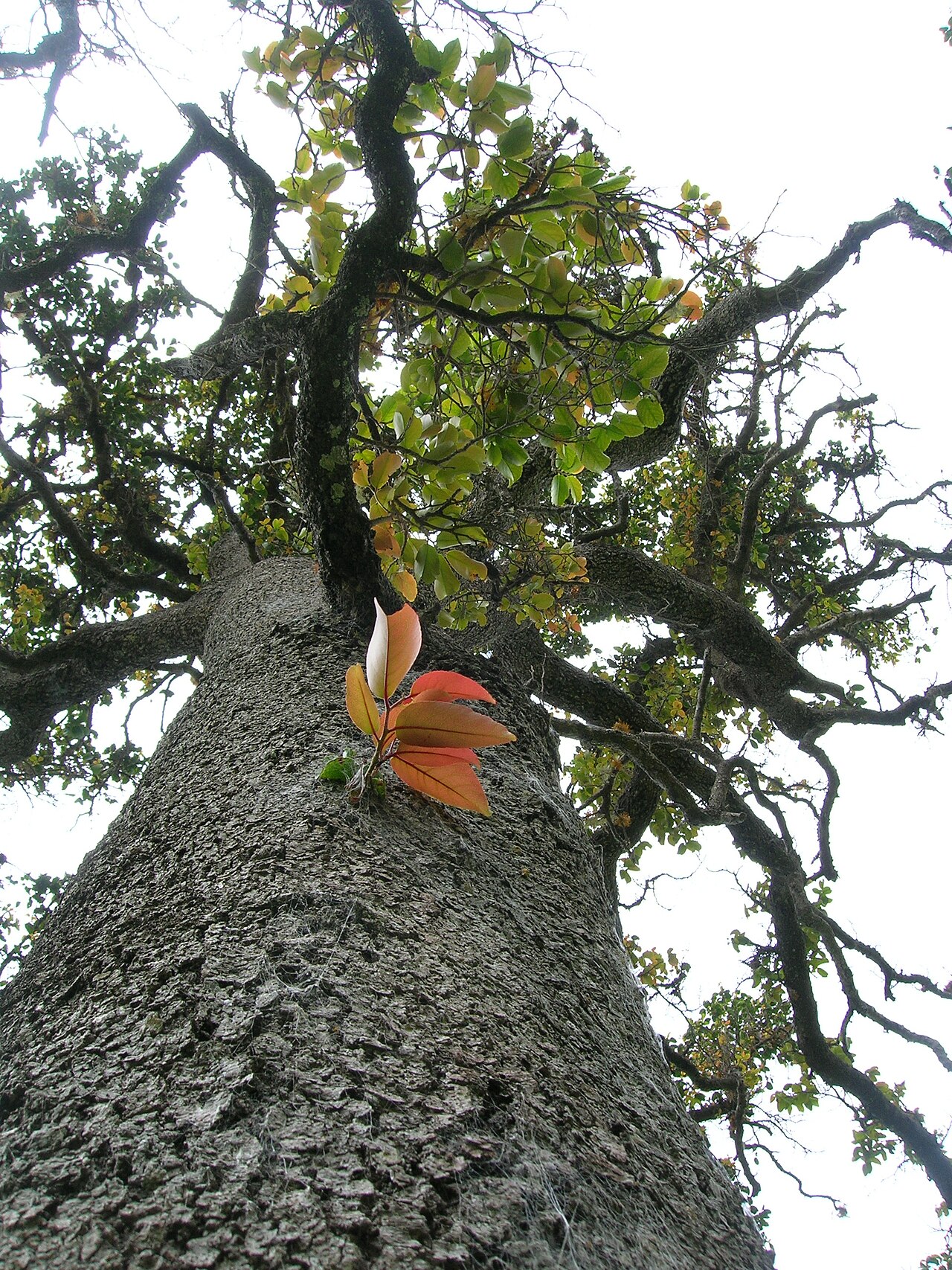
Xylosma hawaiiense, known in Hawaiian as Maua (and as aʻe on Maui), is a small native tree that quietly anchors some of Hawaiʻi’s driest and most threatened forest communities. It belongs to the willow family, Salicaceae — an unexpected family connection for a plant that looks nothing like a willow, with its glossy, deep green leaves and reddish new growth.
Maua is a small, often deciduous tree reaching roughly 10 to 30 feet tall, prized by native-plant restoration projects for its toughness in dry, rocky conditions where few trees thrive. Its young leaves emerge in striking bronze, red, or copper tones before maturing to a shiny dark green, giving the tree seasonal visual interest well beyond its modest flowers. Female trees produce abundant small red berries in summer and fall that are a reliable food source for native birds.
For Hawaiʻi gardeners building a dry-forest native landscape, Maua pairs beautifully with other dryland natives and asks for very little once established. It has become a signature species of dry forest restoration efforts on Maui, most notably at the Auwahi project, where it has been successfully reestablished alongside other native trees in an area once dominated by invasive grasses and grazing animals.
Identification
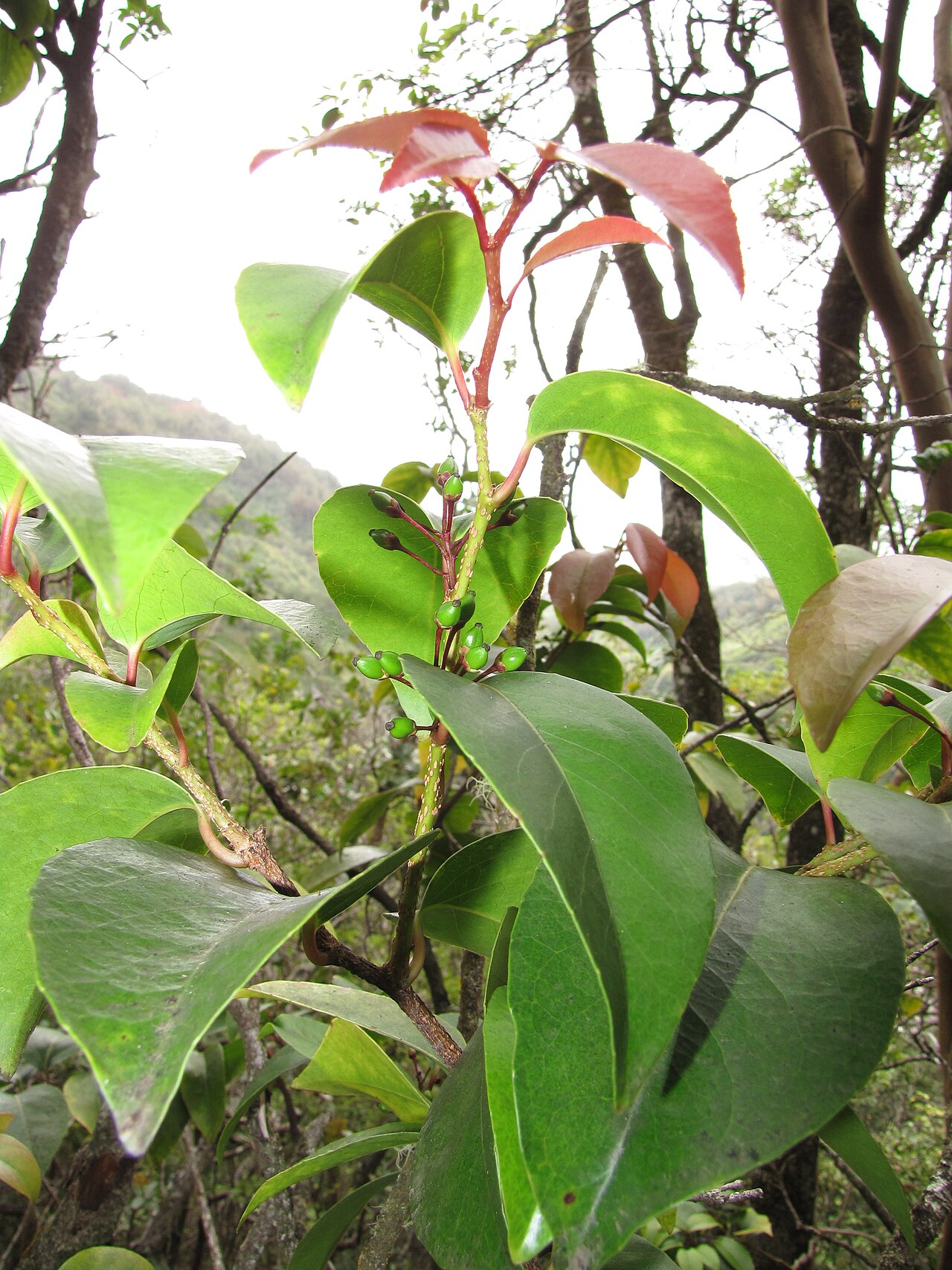
Maua grows as a small, often deciduous tree, typically reaching 10 to 30 feet (3 to 9 meters) in height. Twigs are dark red when young, maturing to dark brown.
Leaves
Leaves are alternate, elliptical, 2 to 4 inches long and 1 to 3 inches wide, held on thin petioles. New growth is bronze-green, reddish, or copper-colored with conspicuous red veins, aging to a shiny dark green above and a slightly glossy green below — one of the most reliable identification clues for Maua in the field.
Flowers
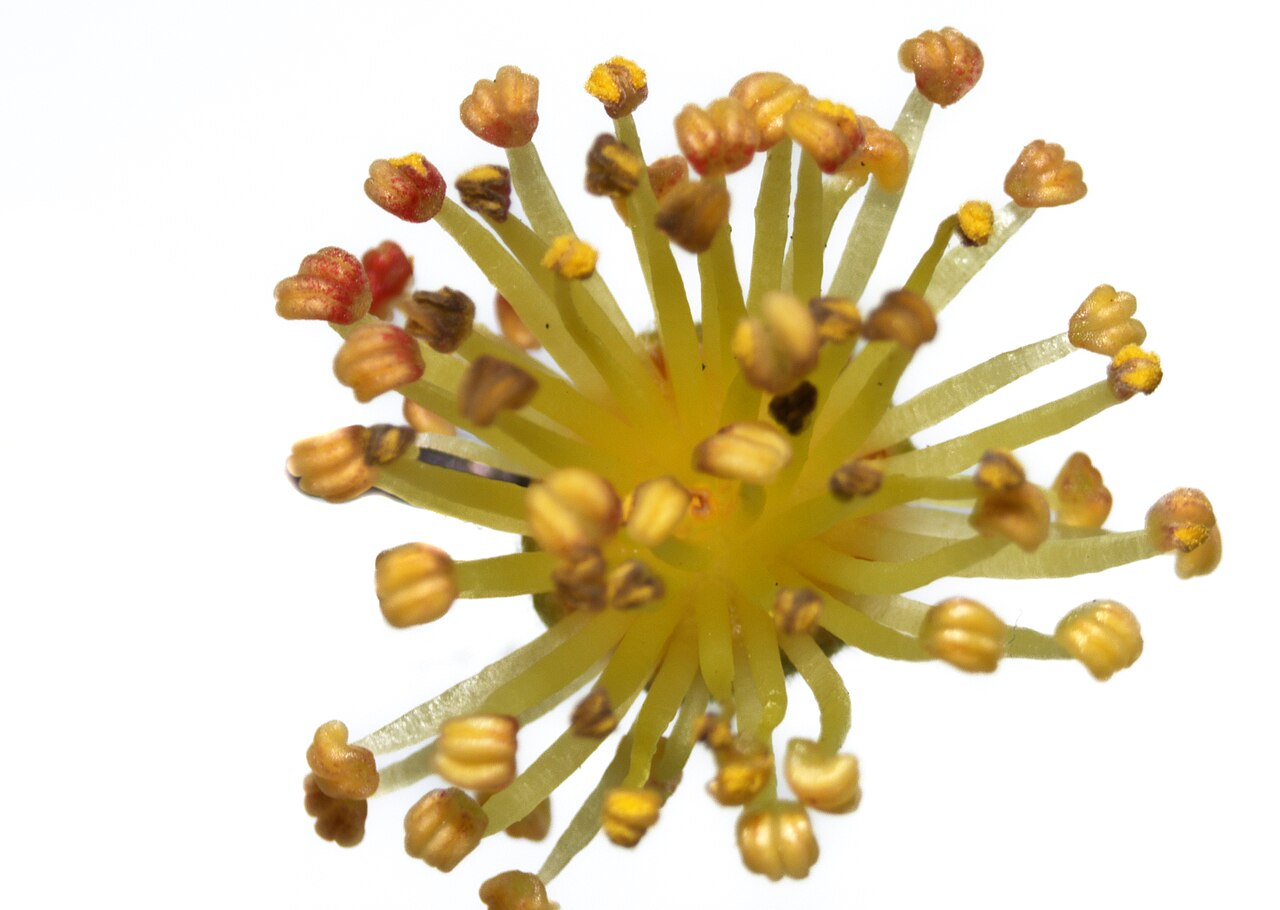
Maua is dioecious, meaning individual trees are either male or female. Flowers are small, greenish or reddish, about a quarter inch across, and produced in short racemes near the bases of new leaves or along the backs of older leaves. They are easy to miss compared to the tree’s colorful new foliage.
Fruit
Female trees produce abundant berries in summer and fall, about two-fifths of an inch across, ripening to a deep, glossy red. Male trees never produce fruit, so a fruiting specimen confirms you are looking at a female tree.
Quick Facts
| Scientific Name | Xylosma hawaiiense |
| Family | Salicaceae (Willow) |
| Plant Type | Small Deciduous Tree |
| Mature Height | 10–30 ft |
| Growth Rate | Slow to Moderate |
| Sun Exposure | Full Sun to Part Shade |
| Water Needs | Low once established |
| Soil Type | Well-drained, rocky to average soils |
| Flower Color | Greenish to reddish, inconspicuous |
| Fruit | Small red berries (female trees only) |
| Conservation Status | IUCN Least Concern; NatureServe Vulnerable |
| USDA Hardiness Zones | 10b–12 |
Native Range
Maua is endemic to the Hawaiian Islands, found in dry forest, mixed mesic forest, and occasionally wet forest between roughly 1,300 and 4,000 feet in elevation. It grows across several of the main islands and is a defining species of Hawaiian dry forest, one of the most endangered ecosystem types in the United States.
Maua has become a flagship species for dry forest restoration, most visibly at the Auwahi Forest Restoration Project on the southern slopes of Haleakalā, Maui, where fenced exclosures protect reestablished Maua and its dry-forest associates from the cattle and feral ungulates that devastated the original forest.
In this habitat, Maua grows with other dryland natives including Hao (Rauvolfia sandwicensis), Wiliwili (Erythrina sandwicensis), and Māmane (Sophora chrysophylla). Our guide to canopy trees of Hawaiʻi covers several of Maua’s native neighbors in more depth.
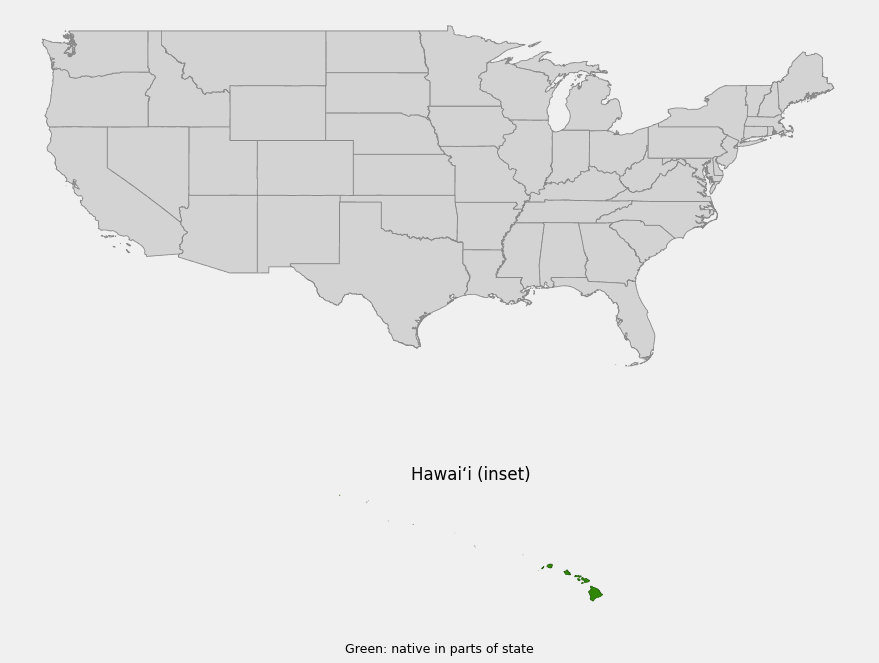
📋 Regional plant lists featuring Maua: Hawaii
Growing & Care Guide
Maua is well suited to dry-forest and xeriscape native gardens, with the bonus of colorful reddish new growth that gives it ornamental appeal beyond its modest flowers.
Light
Plant Maua in full sun to light part shade. It grows naturally in open dry forest with filtered canopy shade, so it tolerates some shade from taller companion trees, but performs best with good light.
Soil & Water
Maua needs well-drained soil and tolerates rocky, mineral-poor ground typical of Hawaiian dry forest. Water consistently while young to establish a deep root system; mature trees are drought tolerant and need little supplemental irrigation.
Planting Tips
If growing both male and female Maua, planting more than one tree increases the odds of seeing fruit, since trees are dioecious. Give Maua room to develop its naturally open, spreading crown, and avoid planting in low spots where water collects.
Pruning & Maintenance
Little pruning is required beyond removing dead or crossing branches. Because new growth is one of Maua’s most attractive features, avoid heavy shearing that would remove the colorful young foliage.
Landscape & Restoration Uses
- Dry forest restoration plantings, particularly in fenced ungulate-exclosure projects
- Xeriscape and rock gardens for its drought tolerance and textured bark
- Bird-friendly gardens, since female trees provide fruit for native and introduced birds
- Specimen planting for its seasonal bronze-red new growth
Wildlife & Ecological Value
Maua’s small flowers attract a variety of native and introduced insect pollinators, while the abundant red berries produced by female trees in summer and fall are an important food source for birds moving through Hawaiian dry and mesic forest. As one of the characteristic trees of this rare habitat type, Maua plays a structural role that supports a broader community of native insects and birds.
Ecosystem Role
Hawaiian dry forest, where Maua is one of the defining native trees, is considered one of the most endangered forest types in the United States, reduced by grazing, fire, and invasive grasses to a small fraction of its historic extent. Restoration projects that reintroduce Maua alongside associates like Hao, Wiliwili, and Māmane are working to rebuild this habitat structure, as discussed in our article on the benefits of planting native trees.
Cultural & Historical Uses
Maua does not carry the extensive documented ethnobotanical record of some other Hawaiian native trees, but it has long been recognized as a characteristic tree of the islands’ dry forest zone, and its Hawaiian names — Maua across most islands, and aʻe specifically on Maui — reflect its long familiarity to island residents. Its durable, fine-grained wood historically saw some local use, though it was never a major timber species compared to larger native trees.
In recent decades, Maua’s cultural significance has shifted toward its role as a conservation and restoration icon. At sites like Auwahi on Maui, replanting Maua alongside other native dry forest species has become a visible symbol of community-driven efforts to reclaim degraded ranchland for native Hawaiian forest, connecting present-day conservation work to the islands’ deeper ecological history.
Frequently Asked Questions
Why are some Maua trees covered in red berries and others never fruit?
Maua is dioecious, meaning individual trees are either male or female. Only female trees produce the small red berries; male trees produce flowers but never fruit.
Is Maua really related to willows?
Yes, taxonomically. Maua belongs to the willow family, Salicaceae, though its appearance — glossy evergreen-to-semi-deciduous leaves and a small tree form — looks nothing like a typical willow.
What makes Maua’s new growth reddish?
Young leaves emerge bronze, red, or copper-colored with prominent red veins before maturing to glossy dark green, a seasonal color display that is one of Maua’s most attractive garden features.
Is Maua endangered?
Maua is assessed as Least Concern by the IUCN but as Vulnerable by NatureServe, reflecting its dependence on increasingly rare and threatened Hawaiian dry forest habitat even though the species itself is not acutely rare.
Where can I see Maua growing in a restored native forest?
The Auwahi Forest Restoration Project on Maui’s leeward Haleakalā slopes is one of the best-known sites where Maua has been successfully reestablished within fenced native dry forest exclosures.

Looking for a nursery that carries Maua?
Browse our native plant nursery directory: Hawaii