Onion Seedlings Falling Over: Water, Light, and Disease Checks
Last updated: November 6, 2026
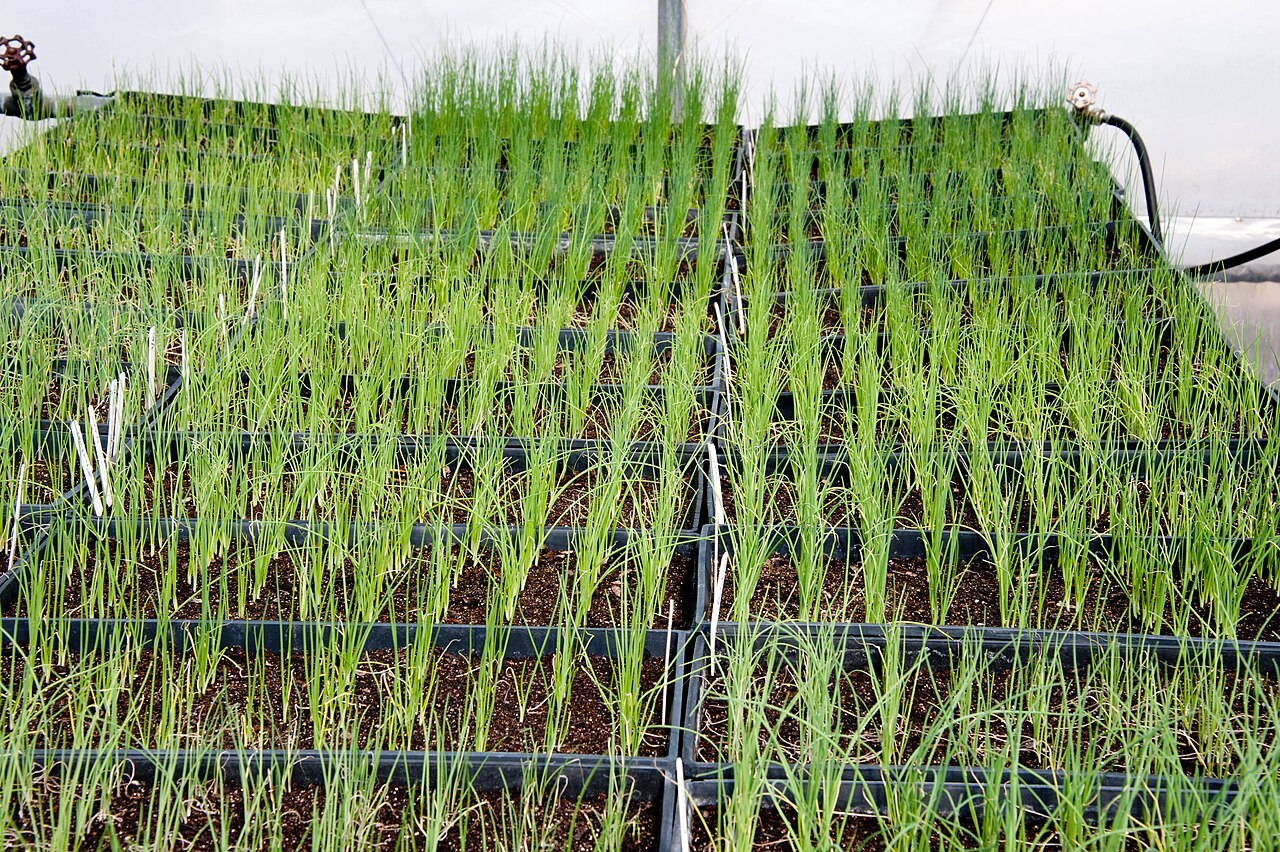
Onion seedlings are thin to begin with. So when a tray that stood up straight yesterday is lying flat this morning, it is hard to tell whether you are looking at a minor stretch or the start of a die-off.
There are three usual suspects: not enough light, the wrong amount of water, and damping-off, a seedling disease that rots the stem at the soil line. Each one looks a little different up close.
Use the checks below in order. The first two are quick to fix. The third needs fast action to save the rest of the tray.
The Short Answer
Find out which kind of “falling over” you have:
- Long, pale, floppy but firm at the base: not enough light. Move lights to 2–4 inches above the tops.
- Limp and dry-looking, mix pulling from the cell edges: underwatered. Water from below and let it soak up.
- Limp, dark mix, standing water in the tray: overwatered. Drain, then let the surface dry slightly.
- Pinched, thread-thin or mushy stem at the soil line, dying in patches: damping-off. Remove affected seedlings and change conditions now.
- Tall seedlings bending under their own weight: normal for onions. Trim the tops to a few inches.
How Healthy Onion Seedlings Grow
Onion seedlings look like fine grass. Each plant makes one leaf at a time from the base, and the leaves are hollow and narrow, so they bend more easily than a broad-leaved seedling.
They are usually started indoors well before the last frost. University of Minnesota Extension’s guides put indoor sowing at roughly 10 to 15 weeks before planting out, with onions and leeks among the first vegetables started each year. That long indoor stretch is why light and watering mistakes show up so clearly in onions.
Minnesota Extension also notes that onions and leeks can be started together in one larger flat rather than individual cells, and transplanted while still small without harm.
Onion Seedling Conditions at a Glance
| Light | 12–16 hours a day under fluorescent or LED lights, 2–4 inches above the tops, with a dark period at night. |
| Mix | Fresh, sterile seed-starting mix. No garden soil or compost. |
| Soil warmth | A heat mat holding the mix at about 70–75°F helps prevent damping-off. |
| Water | Moist but not soggy. Drain any water left standing in the tray. |
| Feeding | Quarter-strength soluble fertilizer once a week after several true leaves. |
Figures from University of Minnesota Extension seed-starting and damping-off guides.
Check 1: Are They Stretching for Light?
Stretched onion seedlings are longer, paler and thinner than they should be. They flop over at the top but the base is still firm and green.
University of Minnesota Extension calls lack of light the major cause of elongated, skinny stems. It recommends keeping lights no more than 4 inches above seedlings, with 2 inches ideal, for 12 to 16 hours a day.
A windowsill is the usual culprit. The same guide notes that windowsill seedlings tend to be too tall, with thin, bent stems, and that sills are often the coldest spot in the house at night. South Dakota State Extension adds that baby onions without enough light will be weak and spindly and will not transplant well.
Fix: lower the lights, put them on a timer, and give them a nightly dark period. If you are shopping for a fixture, our guide to choosing an LED grow light covers the basics.
Check 2: Too Dry or Too Wet?
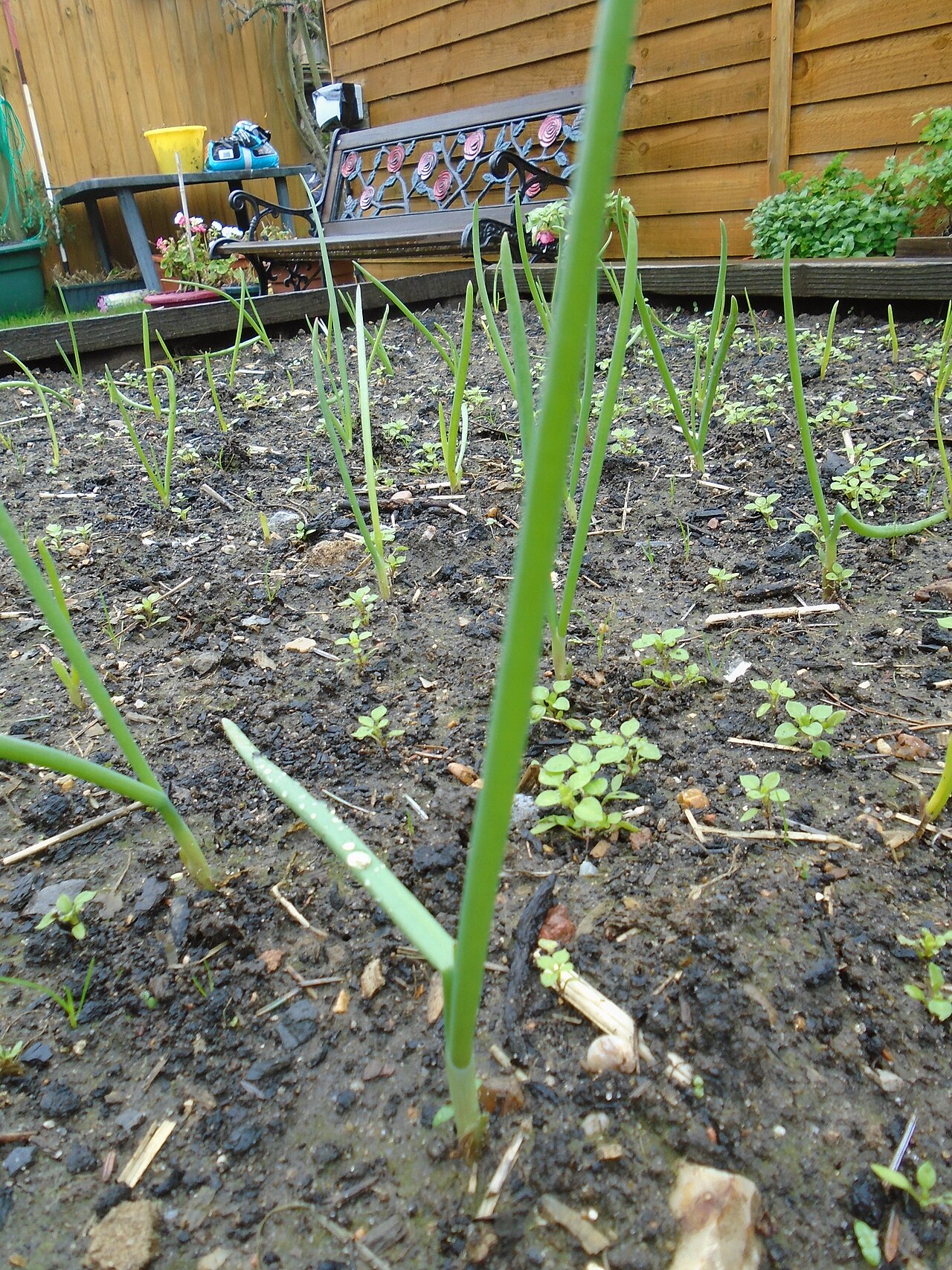
Press a finger into the mix and lift the tray. A dry tray feels light, and the mix may shrink from the cell walls. A waterlogged tray feels heavy, the mix stays dark, and water pools in the bottom tray.
Minnesota Extension advises keeping the mix moist while seeds germinate, then watering gently. You can also add water to the tray and let it move up into the mix, but drain any excess that stays behind.
Underwatered onions usually perk up within an hour of a good soak. Overwatered onions are the bigger worry, because constantly wet, cool mix is exactly where damping-off starts.
Water by weight, not by the calendar. Lift the tray after a thorough watering to learn what “wet” feels like, and water again when it feels clearly lighter.
Check 3: Is It Damping-Off?
Damping-off is a disease of young seedlings caused by soil fungi and water molds. University of Minnesota Extension names Rhizoctonia, Fusarium and the water mold Pythium as the most common causes.
Look closely at the base of the fallen seedlings. Minnesota Extension describes stems that become water-soaked and thin, almost thread-like, where infected, along with roots that are stunted or have gray-brown spots. In humid conditions you may see fluffy white growth.
The pattern is a clue too. Seedlings often die in patches that spread across the tray, and Wikipedia notes that groups of seedlings may die in roughly circular patches, with lesions at ground level.
Seedlings with damping-off rarely recover. The goal is to save the healthy ones around them.
Light, Water or Disease? Quick Comparison
| Not enough light | Long, pale, firm base. Flops at the top. Whole tray affected evenly. |
| Too dry | Limp but recovers after watering. Mix light and pulling away from edges. |
| Too wet | Limp, yellowing, mix dark and heavy, water in the tray. Often leads to damping-off. |
| Damping-off | Pinched, thread-thin or mushy stem at the soil line. Dies in spreading patches. Does not recover. |
What to Do Right Now If It’s Damping-Off
- Remove the collapsed seedlings and any obviously pinched neighbors.
- Dry the surface down. Stop top-watering, empty standing water, and water lightly from below only when the tray feels light.
- Add air movement. Wikipedia notes that drier conditions with better air circulation help prevent spread. Take off any humidity dome.
- Warm the mix. Minnesota Extension recommends a heating mat holding the mix at 70–75°F.
- Stop fertilizing for now. Minnesota Extension lists high salts from overfertilizing among the conditions linked to more damping-off.
- Resow if needed. Onion seed is cheap and there is usually still time. Use clean containers and fresh mix.
Check 4: Are They Just Too Tall?
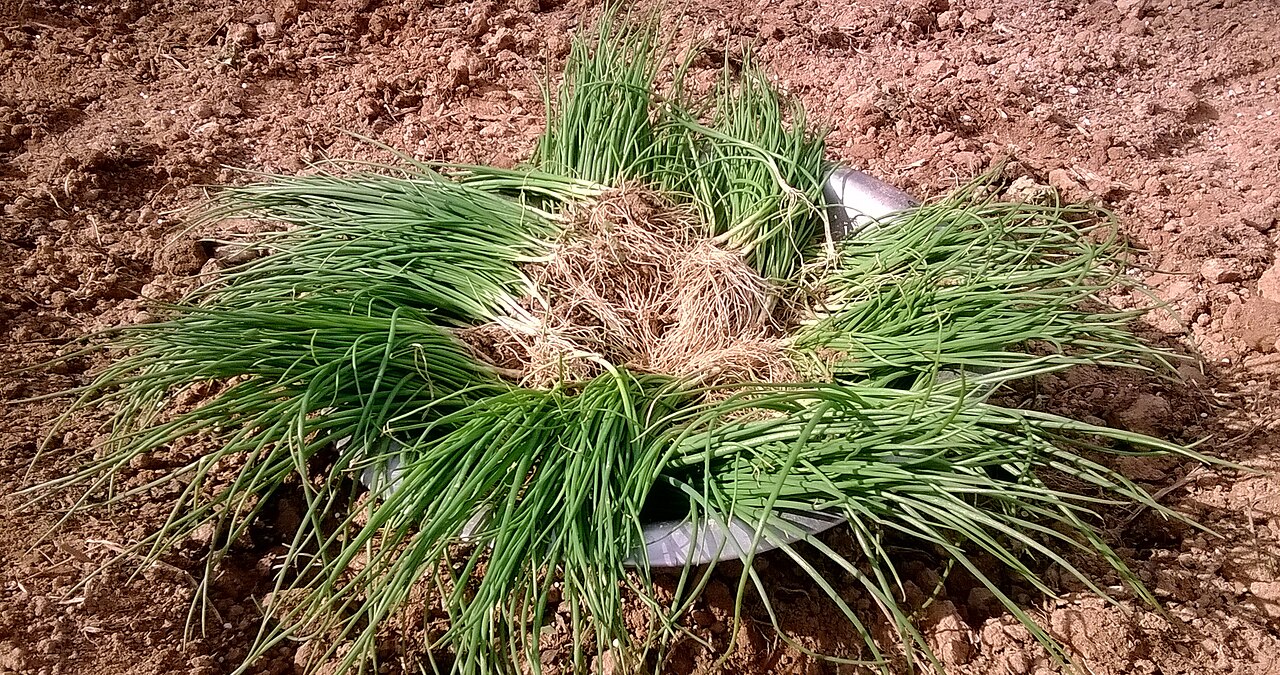
Healthy onion seedlings under good light can still outgrow their own strength and bend over by mid-spring. That is not a problem in itself.
University of Maryland Extension notes that onion transplant tops that become too long can be snipped. University of Minnesota Extension trims tops to 4 inches, and roots to half an inch, when transplanting.
Use clean scissors and cut straight across. The plant keeps growing from the base, and a shorter top stands up better and loses less water after transplanting.
Check 5: Falling Over After Transplanting
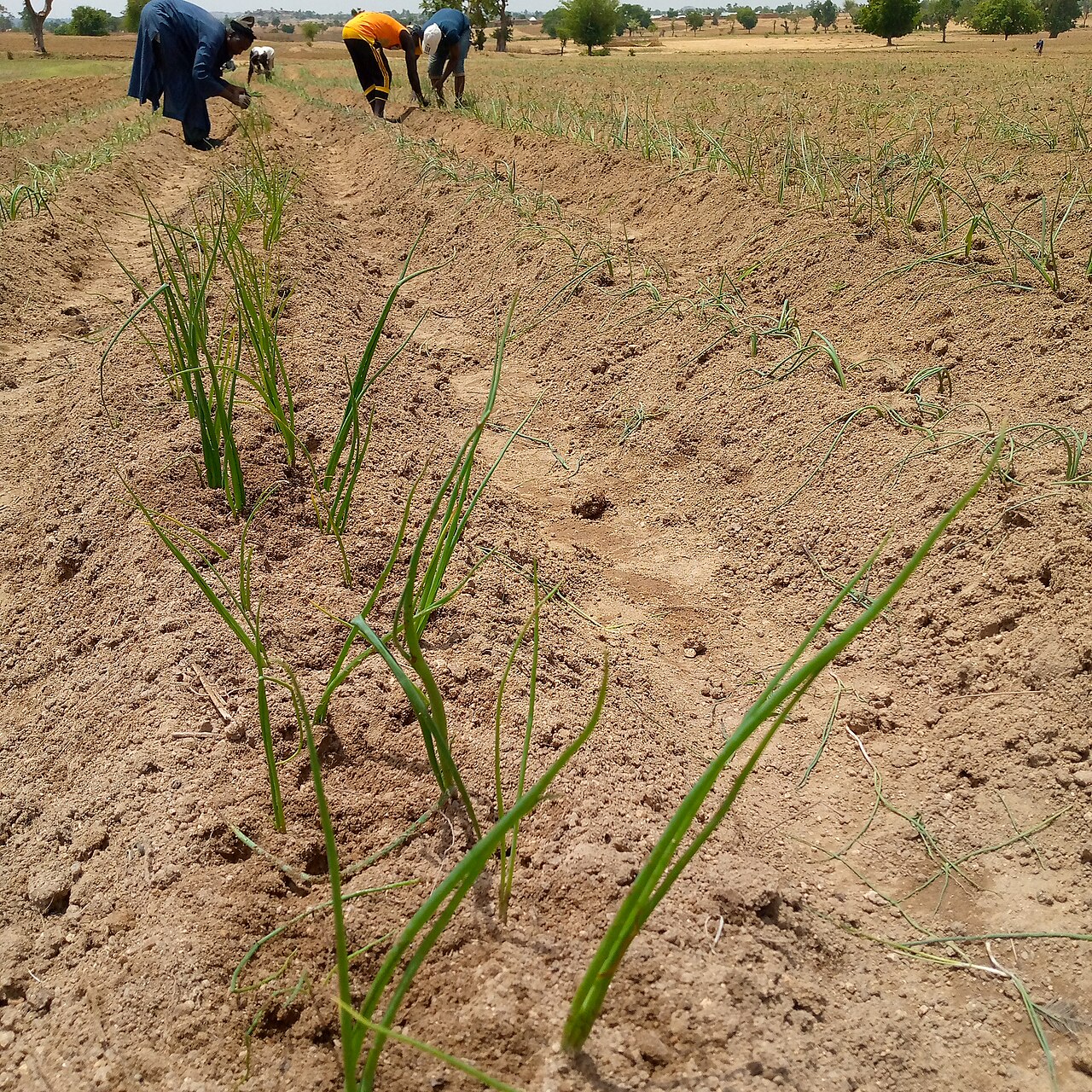
Seedlings that flop right after planting out are usually reacting to sun, wind and dry soil they were not used to. Minnesota Extension recommends hardening off over about two weeks, starting with a few hours of afternoon shade and building up.
At planting, Oregon State University Extension advises setting transplants at, or just slightly above, the original soil line, without burying or bending the necks, and watering in gently.
South Dakota State Extension says seedlings with two or three leaves are large enough to plant, and recommends watering again if the soil dries so the young plants do not suffer water stress. Heavy, poorly drained ground makes recovery slower; see our tips on improving clay soil or grow them in a raised bed.
Troubleshooting at a Glance
| Whole tray long and floppy | Raise light intensity: lamps to 2–4 inches, 12–16 hours. |
| Limp, recovers after watering | Water more consistently; bottom-water and check tray weight. |
| Patches collapsing, pinched stems | Damping-off. Remove, dry the surface, warm the mix, add air. |
| Healthy but bending at 6+ inches | Trim tops to about 4 inches. |
| Flopping after planting out | Harden off longer; water in; don’t bury the necks. |
How to Prevent It Next Time
Most damping-off is prevented before you sow. Minnesota Extension recommends soaking used pots and trays in a 10% household bleach solution for 30 minutes, filling them with new potting mix, and never using garden soil or compost in seed trays.
Clean tools and hose ends matter too. Minnesota Extension notes Pythium is often introduced on dirty hands, tools or hose ends, and that fungus gnats can carry Fusarium spores.
Then set up the conditions that keep seedlings growing quickly: strong light close to the tops, a warm root zone, careful watering and a gentle fan or open air. Our guides to starting onions from seed and growing onions from seed to harvest cover the full timeline.
A Season-by-Season Plan
- Late winter (before sowing): sterilize trays, buy fresh mix, set up lights on a timer and a heat mat on its own plug.
- Sowing: sow onions in a flat roughly 10–15 weeks before your planting-out date. Keep evenly moist and warm.
- First weeks: keep lights 2–4 inches above the tops. Water by tray weight and drain standing water.
- Mid-indoor period: start quarter-strength feeding once several true leaves form. Trim tops if they flop.
- Two weeks before planting: harden off. Plant out at the original depth and water in. If spring weather turns harsh, our guide to bolting onion sets explains why cold spells matter later on.
Raising chives or leeks as well? The same light and damping-off rules apply. See growing chives from seed. Once your onions are in the ground, matching the day-length type to your latitude is the next thing that decides whether they bulb. Later in the season, see when to stop watering bulbing onions and curing onions in humid weather.
Frequently Asked Questions
Is it normal for onion seedlings to fall over?
Some bending is normal because the leaves are thin and hollow. A whole tray lying down usually means low light, and seedlings pinched or rotting at the soil line point to damping-off.
Can floppy onion seedlings recover?
Stretched or thirsty seedlings usually recover once you fix light or watering, and trimming the tops helps them stand. Seedlings with damping-off generally do not recover.
Should I cut my onion seedlings?
Yes, if they are long and flopping. University of Maryland Extension notes overlong tops can be snipped, and Minnesota Extension trims them to about 4 inches at transplant.
Do onion seedlings need a fan?
A fan is not required, but air movement and a slightly drier surface make damping-off less likely. Remove humidity domes once seedlings are up.
Can I use garden soil to start onion seeds?
No. Minnesota Extension warns that garden soil often contains damping-off pathogens and recommends fresh, sterile seed-starting mix.
Sources
- University of Minnesota Extension, Starting seeds indoors: light distance and hours, windowsills, onion flats, watering, feeding, hardening off.
- University of Minnesota Extension, How to prevent seedling damping off: pathogens, symptoms, causes, sanitation, heat mats.
- University of Minnesota Extension, Growing onions in home gardens: trimming roots and tops at transplant.
- University of Maryland Extension, Growing Onions in a Home Garden: snipping long transplant tops.
- South Dakota State University Extension, Growing Onions: light for onion seedlings, transplant size and watering.
- Oregon State University Extension, Plant onions early for bigger summer bulbs: transplant depth and hardening off.
- Wikipedia, Damping off: patch pattern, pathogens, air circulation.