Onions Growing Leaves but No Bulbs: Check Variety and Day Length
Last updated: November 6, 2026
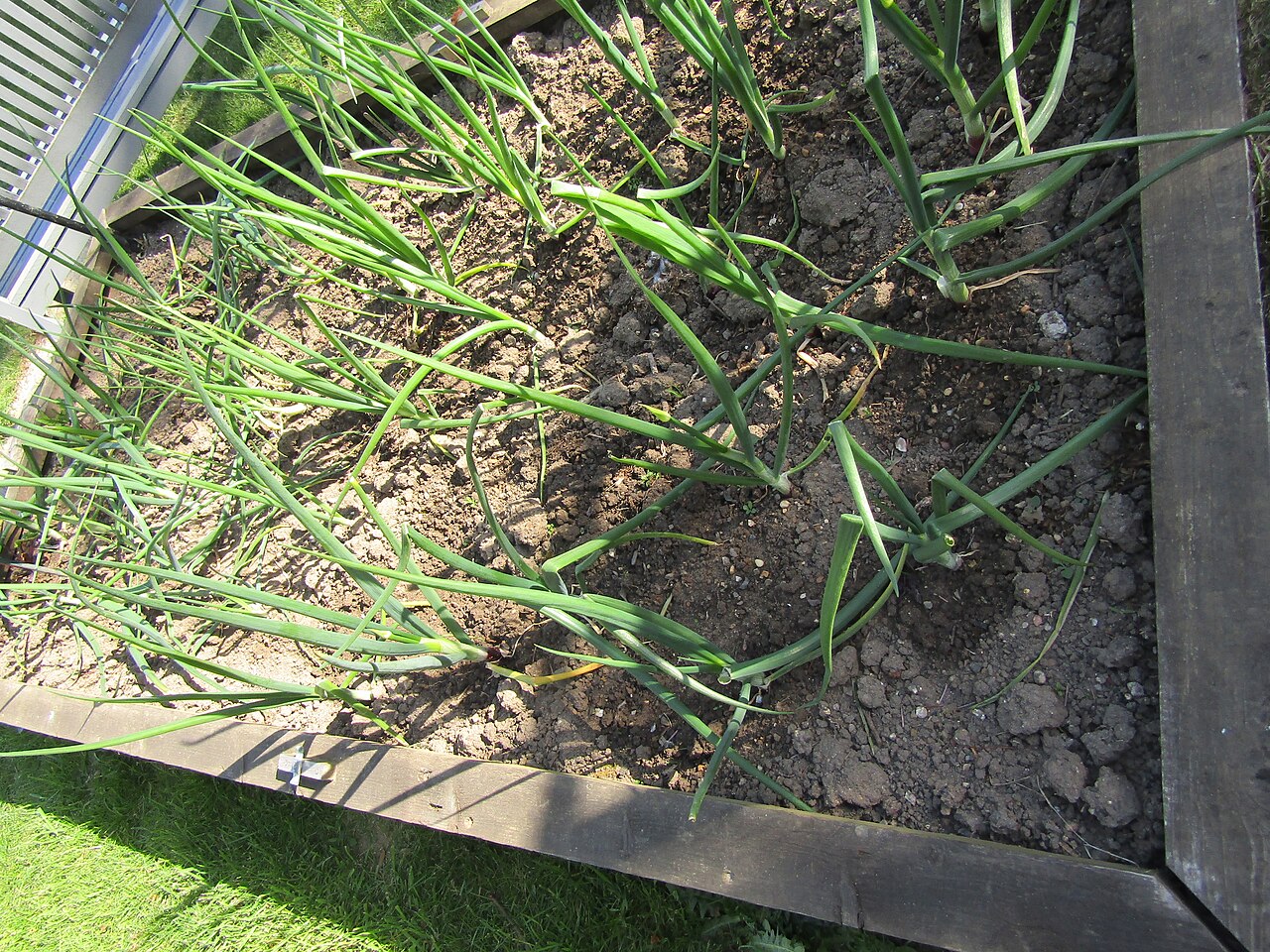
Your onion bed looks great from a distance. The leaves are tall, blue-green and healthy. But when you pull one up, there is no bulb, just a thick white stem like an oversized scallion.
This is one of the most common onion complaints, and it is rarely a disease. Onions decide when to bulb by reading day length, so the usual cause is a variety that doesn’t match your latitude or a planting date that left the plant out of step with the season.
Work through the checks below before you add more fertilizer. Most of them take a minute with a seed packet, a calendar, and a trowel.
The Short Answer
Bulb onions (Allium cepa) switch from making leaves to filling a bulb when daylight reaches a set length. Leaves with no bulb usually traces back to one of these:
- The wrong day-length type for your latitude, such as a long-day variety grown in the South.
- Late planting, so the plant was still small, or the trigger had already passed, when bulbing began.
- Too much nitrogen, which keeps the plant making leaves and delays maturity.
- Crowding, shade or dry soil, which shrink bulbs until they are easy to miss.
- A bunching onion or a bolted plant, neither of which forms a proper storage bulb.
- Simple timing. Bulbs swell fast late in the season, and you may just be looking too early.
How an Onion Decides to Make a Bulb
An onion spends its first weeks building leaves. Each leaf has a white sheath at the base, and those sheaths stack up into what will become the bulb.
When daylight reaches the length the variety is bred for, the plant stops producing new leaves and starts moving food reserves down into the leaf bases. Wikipedia’s onion entry describes this directly: the bulb begins to swell when a certain day length is reached.
That trigger is fixed by genetics, not by plant size or age. University of Maryland Extension’s Maryland Grows blog adds that onions also respond to temperature, which is why a cold spell or a heat wave can shift the timing.
Onion Day-Length Types
| Short-day | Starts bulbing at about 10–12 hours of daylight. Suited to the South, generally below 36° N, and usually planted in fall or winter. |
| Intermediate-day | Starts bulbing at roughly 12–15 hours. A flexible choice across the middle latitudes. |
| Long-day | Needs about 14–16 hours of daylight. Best north of 36° N, planted in early spring. |
Ranges from University of Maryland Extension (Maryland Grows). Other extension services quote slightly different cut-offs, so treat the numbers as bands, not hard lines.
Check 1: Is the Variety Matched to Your Latitude?
Look at the seed packet, plant bundle tag or catalog listing. It should say short-day, intermediate-day (sometimes “day-neutral”), or long-day.
Long-day onions in the South are the classic leaves-only problem. In Rockville, Maryland, the longest day of the year is about 14 hours 55 minutes, and Maryland Grows warns that long-day varieties wanting 16 hours will not bulb up very well even there. Farther south, days are shorter still.
Short-day onions in the North fail the other way. University of Minnesota Extension notes that sweet, short-day onions grown in Minnesota generally develop small bulbs. South Dakota State Extension says they will not likely develop a very large bulb there either.
If your onions never bulbed at all, the variety-latitude match is the first thing to fix for next season. Intermediate types are the forgiving middle ground for many gardens.
Check 2: When Did You Plant?
Bulb size is set by how big the plant is when bulbing begins. Jim Myers, a vegetable breeder at Oregon State University, puts it plainly: early planting is critical if you want large onions.
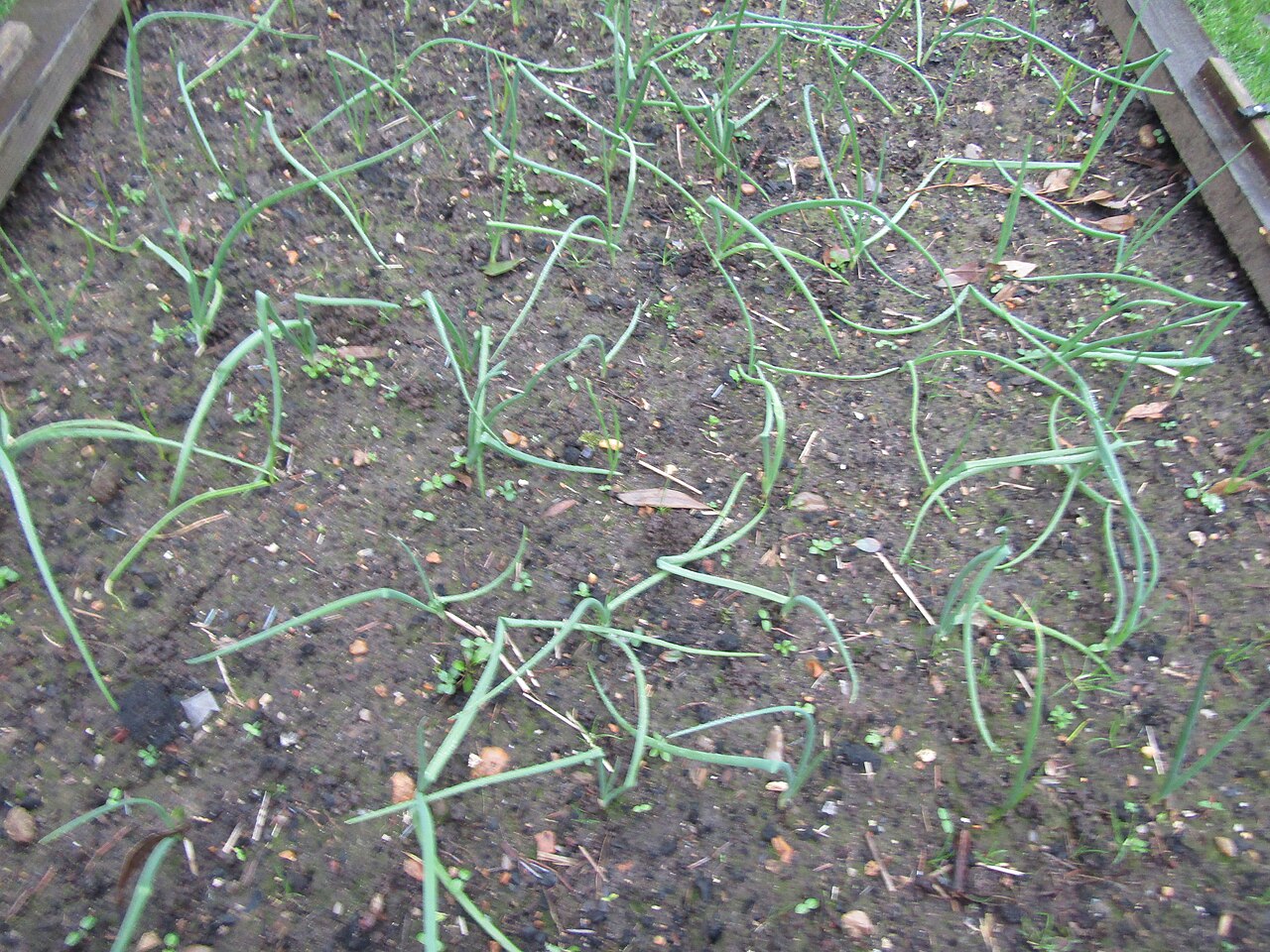
Plant late, and the day-length trigger arrives while the plant is still small. Utah State University Extension goes further: if bulb onions are planted too late in spring, most will grow leaves and never form a bulb.
For spring plantings, extension services generally recommend getting sets or transplants in as soon as the soil can be worked. If you are in the South growing short-day onions, the plants need to be established through the cooler months before days lengthen.
Our step-by-step guides to planting onion sets and growing onions from seed cover timing and depth if you are planning a redo. Raising your own transplants? Keep them sturdy with our onion seedling checks.
Check 3: Is It Getting Full Sun?
University of Maryland Extension lists full sun as at least 6 hours of direct light a day, with 8 to 10 hours preferred for bulb onions. Green onions, by contrast, can manage with about 5.
University of Minnesota Extension adds that overcast skies and cool temperatures delay bulb formation. A bed that loses afternoon sun to a fence, a tree or tall tomatoes behaves a bit like a cloudy summer.
Walk the bed at midday and late afternoon. If shade covers the onions for much of the day, move them next year.
Check 4: How Much Nitrogen Did They Get?
Onions need a good supply of nitrogen, but more is not better. University of Minnesota Extension warns that too much nitrogen can cause late maturity, large necks that are difficult to cure, soft bulbs and poor storage.
Utah State University Extension recommends that Utah gardeners stop fertilizing after mid-July, because extra nitrogen stimulates late leaf growth and reduces storage quality. Your local cut-off will depend on when your onions bulb.
Fresh manure, heavy lawn fertilizer drift and repeated high-nitrogen feeds all push leaves at the bulb’s expense. A soil test before planting is the cleanest way to know what the bed actually needs. If you are unsure which products feed the soil and which feed the plant, see our explainer on compost versus fertilizer.
Check 5: Are You Looking in the Right Place?
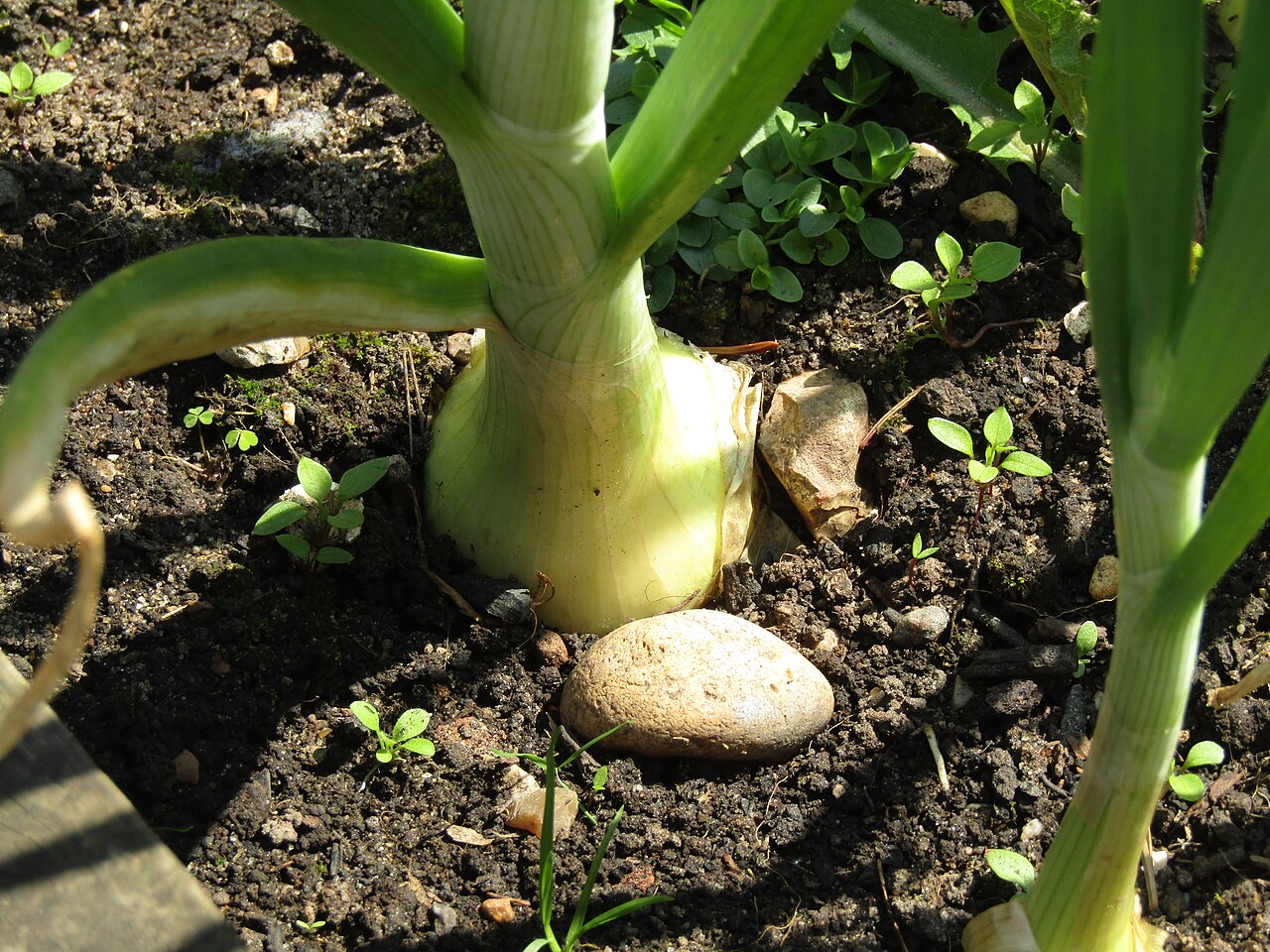
A forming bulb does not sit deep in the ground. University of Maryland Extension notes that bulbs emerge above the soil as they enlarge, and advises against hilling soil over them, since it encourages stem rot.
If you have been mounding soil around the stems, you may be hiding the early swelling, and inviting rot. Brush the soil back so the shoulders show.
Also check the calendar. Maryland Extension gives 85 to 120 days to mature bulbs. Much of the visible swelling happens in the last few weeks, so a plant that looks like a scallion in early summer may still be on schedule.
Check 6: Crowding and Water
Spacing changes bulb size more than most gardeners expect. University of Maryland Extension suggests thinning to about 4 inches apart for moderate bulbs and 8 inches for large ones; at 2 inches you are effectively growing green onions.
Utah State notes that high-density plantings reduce bulb size unless extra water and nutrients are supplied. Crowded onions can produce bulbs so small they pass for thick stems.
Water matters too. Onions are shallow-rooted, and Oregon State warns that drought triggers early, small bulbs. Maryland Extension goes as far as saying bulb size is directly proportional to the water applied over the season. Even moisture through drip irrigation and a light mulch keeps the root zone steady.
Check 7: Is It Actually a Bulbing Onion?
Some onions are not meant to bulb. University of Minnesota Extension describes bunching onions, including scallions and Egyptian walking onions, as types grown for their green stalks. Japanese bunching onion is a separate species, Allium fistulosum.
If seed came from a mixed packet or a friend’s garden, you may have bunching onions. They will stay slim no matter what you do.
Finally, look for a stiff, hollow flower stalk in the center of the plant. A bolted onion puts its energy into flowering instead of the bulb. That is a different problem with its own fixes, covered in our guide to onion sets bolting early.
Troubleshooting at a Glance
| All leaves, no swelling by late summer | Wrong day-length type or very late planting. Change variety and timing next year. |
| Small bulbs that formed early | Short-day type in the North, drought, or crowding. |
| Thick necks, late, soft bulbs | Too much nitrogen, often late in the season. |
| Slim bulbs in a shady corner | Not enough sun. Move to 8+ hours of direct light. |
| Never bulbs, stays like a scallion | Probably a bunching onion. |
| Hard stalk up the middle | Bolting. Use those onions first. |
What to Do With This Year’s Crop
If your onions are leafy and the season is still young, keep watering evenly, stop extra nitrogen, and pull back any mounded soil. A plant that is simply early may still bulb.
If it is late in the season and nothing has swollen, the trigger has probably passed. Harvest the plants as green onions or cooking onions and use them fresh. They will not store like cured bulbs.
Then plan next year around the cause: a different day-length type, an earlier planting date, more sun, wider spacing, or less fertilizer. If you also grow shallots, our shallot growing guide covers a close relative that bulbs into clusters on similar cues.
A Season-by-Season Plan for Next Year
- Winter: look up your latitude and choose a day-length type to match. Order seed, sets or transplants that name their type. Get a soil test.
- Early spring (or fall in the South): plant as early as your region allows, in full sun, with spacing set for the bulb size you want. A well-drained bed, such as a raised vegetable bed, helps the soil warm and drain early.
- Leaf-building weeks: water deeply and evenly, keep weeds out, and feed moderately according to the soil test.
- Bulbing: keep moisture steady, stop extra nitrogen, and don’t hill soil over the bulbs.
- Late season: when the tops begin to fall, ease off watering and get ready to harvest. If the weather turns muggy, see curing onions in humid weather.
Prefer a low-input onion relative for a sunny border? Nodding wild onion is a native perennial grown for its flowers and pollinator value rather than for bulbs. It is a garden ornamental, not a replacement for kitchen onions.
Frequently Asked Questions
Why are my onions all tops and no bulbs?
Usually the variety’s day-length type does not match your latitude, or the onions went in too late. Too much nitrogen, crowding and shade can also keep bulbs small enough to miss.
Will onions still bulb if I wait?
Sometimes. If it is early summer, give them time, even moisture and sun. If the season is ending and nothing has swollen, harvest them as green onions.
Should I bend over the tops to force a bulb?
No. Bending tops does not trigger bulbing. South Dakota State Extension also advises against breaking over tops to hasten maturity, because it cuts short bulb growth.
Are onion sets more reliable than seed?
Sets are easy and fast, but University of Minnesota Extension notes most sets sold there are short-day types, which make smaller bulbs in the North. Seed or transplants let you choose the day-length type more precisely.
Can I grow big sweet onions in the North?
Classic sweet onions are mostly short-day types and tend to bulb small in the North. Look for intermediate-day or long-day sweet varieties listed for your latitude.
Sources
- University of Minnesota Extension, Growing onions in home gardens: long-day and short-day types, cloud and cool delays, nitrogen effects, bunching onions.
- University of Maryland Extension, Growing Onions in a Home Garden: sun hours, spacing for bulb size, days to maturity, no hilling, water and bulb size.
- University of Maryland Extension, Maryland Grows, Onions and day length: day-length bands, latitude, temperature effects.
- Oregon State University Extension, Plant onions early for bigger summer bulbs: plant size at bulbing, drought and small bulbs.
- Utah State University Extension, How to Grow Onions in Your Garden: late planting, density, nitrogen timing.
- South Dakota State University Extension, Growing Onions: day-length types in the northern Plains, tops.
- Wikipedia, Onion: plant structure and day-length bulbing.