Fireweed in a Garden Bed: When a Spreading Colony Makes Sense
Last updated: November 6, 2026
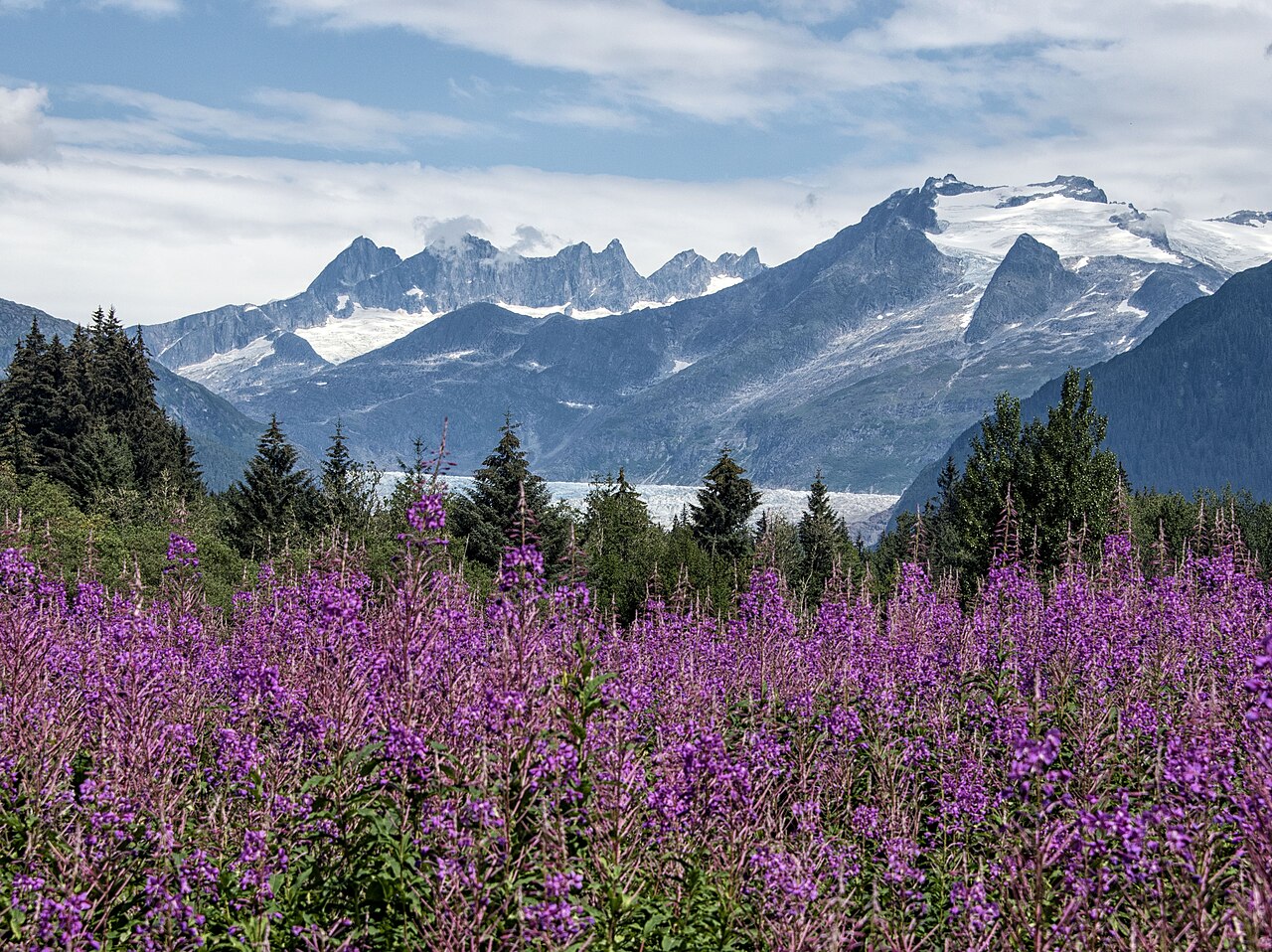
Fireweed is the magenta wildflower that floods burned forests, roadsides and northern meadows every summer. It is beautiful, tall and loved by bees.
It is also a colony plant. Fireweed spreads by underground rhizomes and by wind-blown seed, and in the right conditions it will not stay where you put it.
That does not rule it out of a garden bed. It means you should decide first whether a spreading colony fits your space, then plan the edges, the companions and the maintenance around that choice. This guide walks through that decision.
Plan at a Glance
| Site | Open, sunny ground with cool summers: northern gardens, mountain areas, the Pacific Northwest and Alaska |
| Size | At least 6 × 10 feet for a contained drift; larger meadow areas for a free colony |
| Sun | Full sun; fewer and weaker stems in part shade |
| Soil | Average to lean, well-drained mineral soil; moist but not waterlogged |
| Maintenance | Moderate: edge control, seedling editing and seed-head timing |
| Best regions | Canada, Alaska, the northern U.S. and western mountains; poor fit for hot, humid lowlands |
First, Is Fireweed Right for Your Climate?
Fireweed has a huge range, but it is a cool-climate plant. The Lady Bird Johnson Wildflower Center describes its habitat as disturbed soil in cool areas, from lowlands well into the mountains. In the East, its listed range runs south to North Carolina and Tennessee.
The PlantNative profile notes that toward the southern edge of the range, fireweed becomes more limited to higher elevations and cooler spots. If your summers are long, hot and humid, expect a weak, short-lived planting at best.
Two subspecies grow in North America. Minnesota Wildflowers notes that subsp. circumvagum is the common one across much of the continent and is generally the larger, hairier plant.
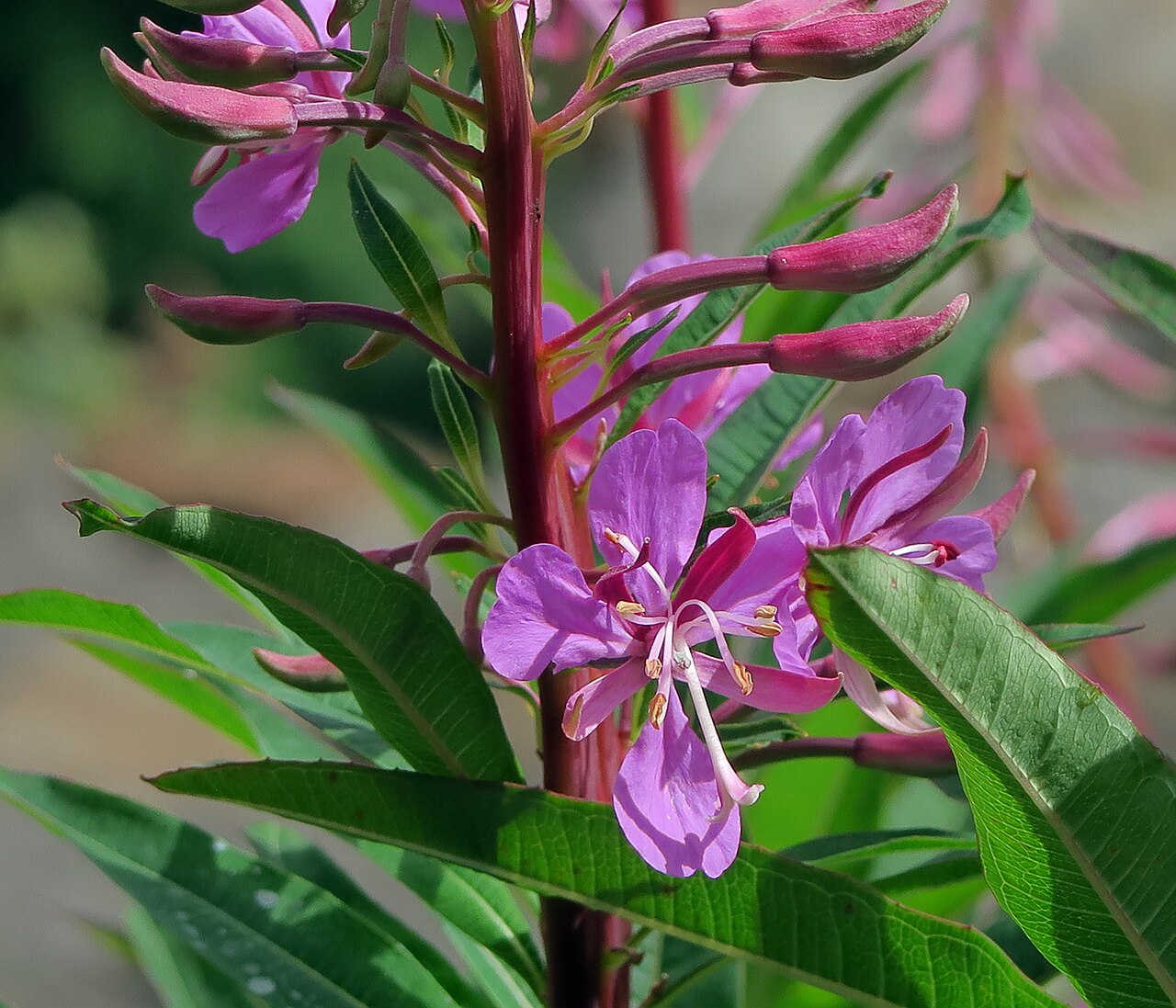
Buy from a nursery that sells local-origin native stock, and check that the plant is labeled correctly. Minnesota Wildflowers notes fireweed is often confused with invasive purple loosestrife, which has opposite leaves and six-petaled flowers. Fireweed has alternate leaves and four petals.
How a Fireweed Colony Grows
The U.S. Forest Service Fire Effects Information System (FEIS) describes fireweed as a robust perennial with single stems 3 to 9 feet tall. Minnesota Wildflowers gives a garden-relevant range of 3 to 7 feet.
Under the soil, the rhizomes do most of the work. FEIS reports that vegetative spread is more common than spread by seed, with most rhizomes in the top 6 inches of soil and some reaching about 18 inches down.
One excavated four-year-old rhizome in a study cited by FEIS measured 20 feet long, with 56 buds. FEIS adds that rhizome length depends on soil fertility and competition, so a plant crowded by neighbors spreads less than one in open ground.
Breaking rhizomes stimulates new shoots, according to FEIS. That matters for garden care: digging or tilling through a colony can multiply stems rather than remove them.
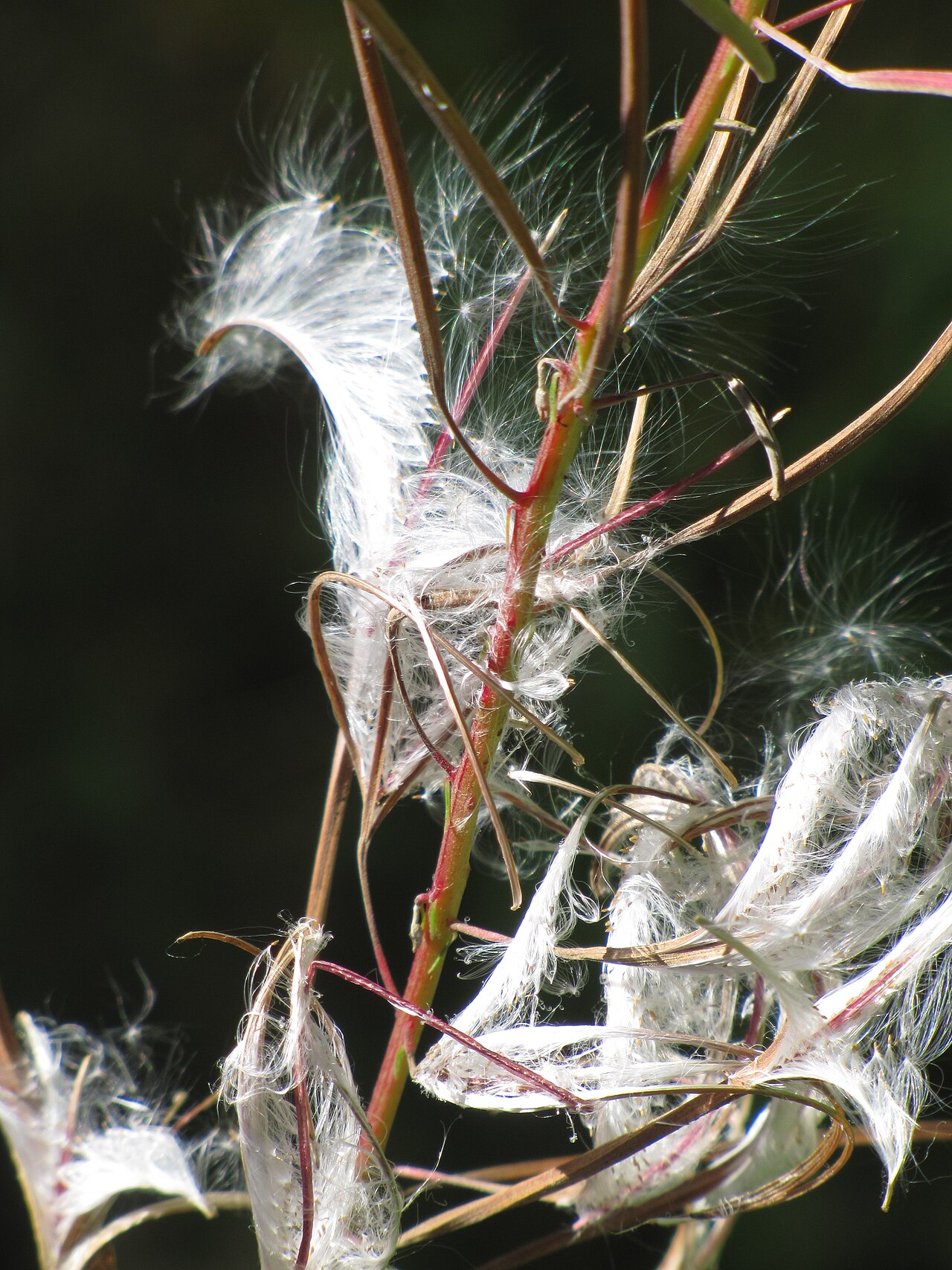
Seed is the second route. FEIS notes each capsule holds 300 to 500 seeds with silky hairs that travel on the wind, but the seeds are not dormant and do not form a long-lived seed bank. Most lose viability within 18 to 24 months.
There is one more trait worth knowing. Fireweed is a pioneer plant. FEIS describes it as shade intolerant and reports that it declines as competing vegetation and canopy close in. A colony in a crowded bed may thin out over the years on its own.
When a Spreading Colony Makes Sense
Fireweed works in a garden when its spreading is either welcome or easy to stop. Use these questions to decide.
- Do you have a natural boundary? A bed bordered by mown lawn, paving, a building foundation or a driveway is easy to hold. Mowing and hard edges stop shoots that cross the line.
- Is there room for the colony to shift? A meadow strip, a slope or a back corner can absorb a patch that grows on one side and thins on another.
- Are the neighbors tough? Fireweed next to small, slow perennials will overwhelm them. Next to vigorous grasses and clumping wildflowers, it holds its own without taking over.
- Is the soil lean? Rich, fertilized beds encourage longer rhizomes. A lean, mineral soil keeps growth more modest.
- Will seed reach places you care about? Wind-borne seed can land in nearby beds or a neighbor’s yard. Plan to cut seed heads if that is a concern.
If you answer no to most of these, fireweed is a poor fit for a mixed border. Grow it in a meadow area instead, or skip it in favor of a clumping wildflower.
Designing the Bed
Place fireweed at the back of a one-sided bed or the center of an island. At 3 to 7 feet, it towers over most perennials and needs a backdrop of sky, fence or larger shrubs.
Plant it as a single drift rather than scattered plants. The colony will fill in, and a drift with a clear edge looks planned. The PlantNative profile suggests 2 to 3 feet between starter plants; the rhizomes close the gaps.
Surround the drift with a buffer zone of sturdy, clump-forming plants. These neighbors slow the colony and give the bed structure when fireweed stems are still short in early summer.
Leave an access path or a strip of lawn between the fireweed drift and anything you want to protect. A mown edge is the cheapest containment tool you will ever use.
Plant Palette
Heights and ranges are from the Lady Bird Johnson Wildflower Center unless noted. Check that each plant is native to your state before buying.
| Plant | Role | Height | Sun / moisture | Native range |
|---|---|---|---|---|
| Fireweed (Chamaenerion angustifolium) | Colony-forming back layer | 3–7 ft (Minnesota Wildflowers) | Sun / moist, well-drained | Most of Canada and the West; east to NL, south to NC and TN |
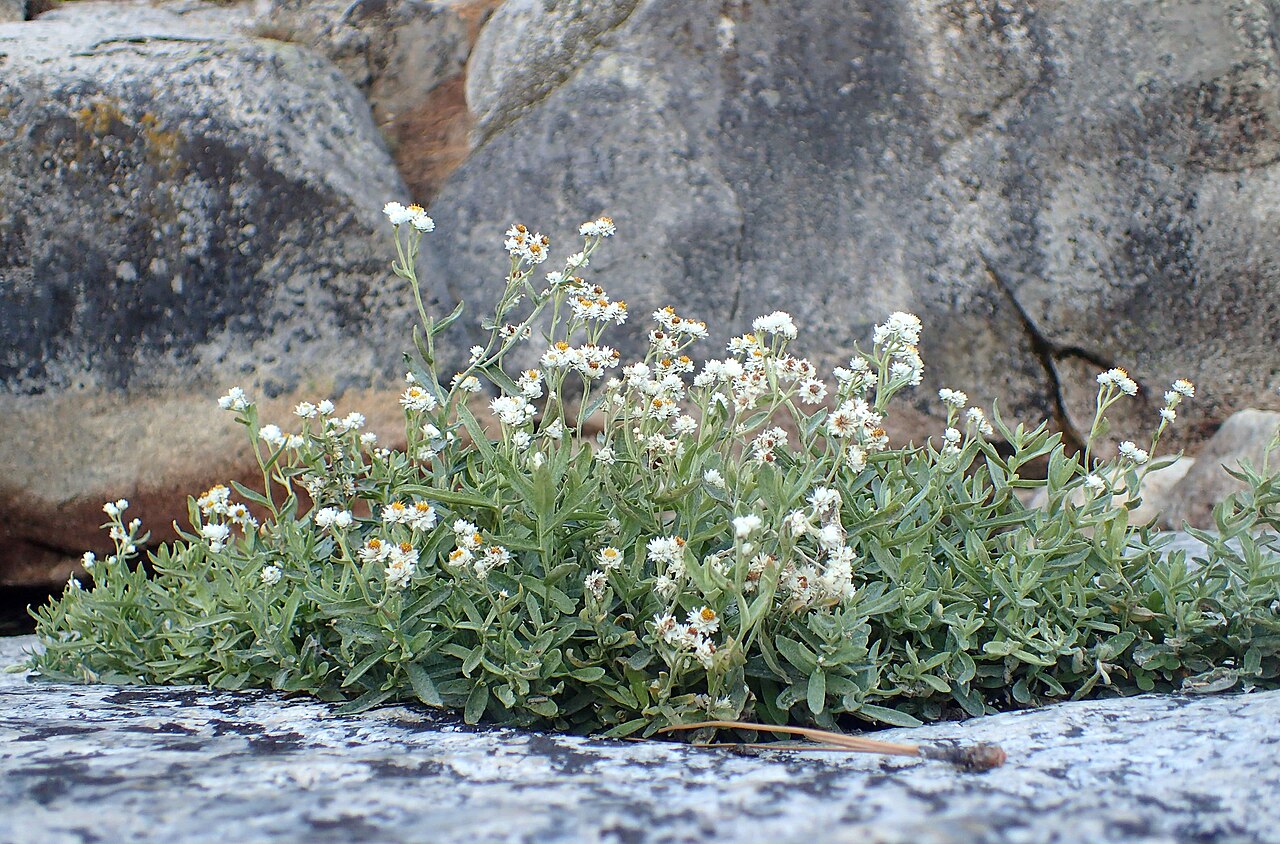
| Pearly everlasting (Anaphalis margaritacea) | Silver foliage, white flowers | Up to about 3 ft | Sun to part shade / dry | NL to AK, south to VA, IA, NM and CA |
| Yarrow (Achillea millefolium) | Low front-of-bed filler | Up to about 3 ft | Sun to part shade / dry | Most of temperate North America |
| Smooth blue aster (Symphyotrichum laeve) | Late-season bloom | Up to about 4 ft | Sun / dry | Much of North America except FL, CA and the far north |
| Canada wild rye (Elymus canadensis) | Sturdy grass buffer | 2–6 ft | Sun to part shade / moist | Que. to B.C., south to NC, TX and AZ |
| Harebell (Campanula rotundifolia) | Delicate front edge | Up to about 15 in | Sun to shade / dry | Canada south to MD, n. IN, NE and n. CA; mountains to TX |
Regional Alternates
Fireweed itself fits most cool regions, but the best partners change from place to place. Use these as starting points and confirm them on your state list.
- Pacific Northwest and coastal Alaska: big-leaf lupine grows in meadows and streambanks from California to Alaska and blooms in late spring, well before fireweed.
- Rocky Mountains and Intermountain West: silvery lupine (Oregon and California east to Alberta, the western Dakotas and New Mexico) and blanket flower suit drier, sunny beds around fireweed.
- Upper Midwest and Northeast: showy goldenrod and smooth blue aster add late color. Canada wild rye works as the grass buffer.
- Hot, humid lowlands: skip fireweed. Choose a heat-tolerant native with a similar vertical effect, such as blazing star; our blazing star and native grasses border plan shows one way to use it.
Containment Options That Actually Work
Start with the easiest controls and add more only if you need them. If you have handled other running natives, the same ideas apply; our guide to managing common milkweed spreading beyond the bed covers boundary maintenance in more detail.
- Mow or edge around the bed. Shoots that come up in a mown strip are cut every week and cannot build up the rhizome.
- Pull stray shoots early. Pull or cut shoots outside the drift as soon as they appear, rather than digging, which can fragment the rhizomes.
- Use a deep barrier only where it counts. Because FEIS reports rhizomes down to about 18 inches, a shallow lawn edging is easy to bypass. A barrier needs real depth to help, and it is most practical along one critical edge, such as next to a vegetable bed.
- Control seed. Cut flower spikes after bloom, before the pods split, if you do not want seedlings elsewhere.
Sample Layout: 6 × 10 Foot Bed
| Fireweed | 5 plants in one drift at the back, 2–3 feet apart |
| Canada wild rye | 3 plants flanking the drift as a buffer |
| Smooth blue aster | 3 plants mid-bed for fall color |
| Pearly everlasting | 5 plants mid-to-front |
| Yarrow | 5 plants along the front |
| Harebell | 5–7 plants at the front edge, in gaps between yarrow |
Installation Steps
Step 1: Clear the bed. Remove turf and weeds. Fireweed seedlings and young shoots establish best on open mineral soil, which FEIS notes holds moisture more evenly and supplies more nutrients as a seedbed.
Step 2: Skip the compost. Do not enrich the bed. FEIS ties longer rhizomes to soil fertility, and lean soil helps keep the colony modest.
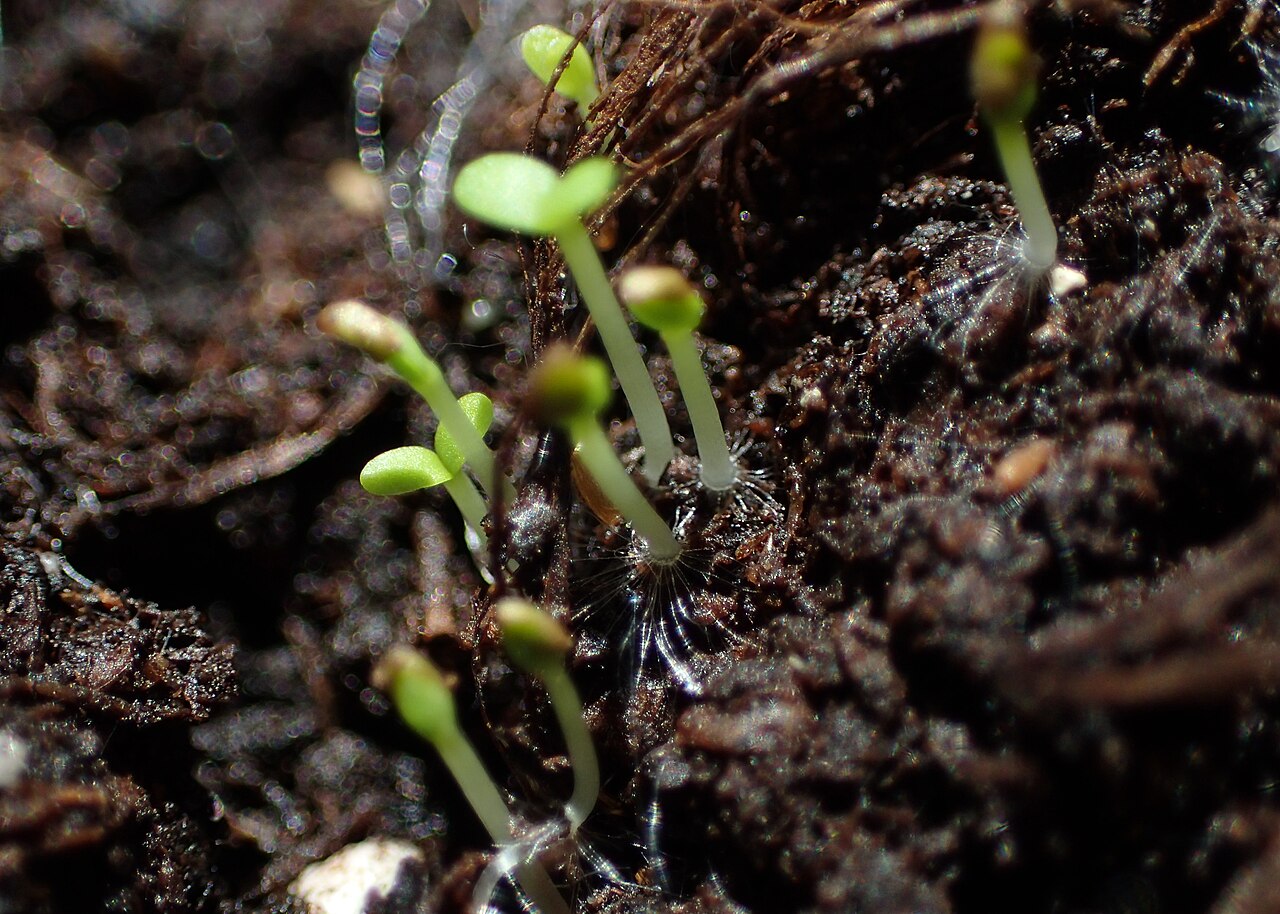
Step 3: Set out plants or sow seed. Plant nursery stock in spring. If sowing, press seed onto the surface; FEIS reports it is not dormant and germinates best in warm, bright, humid conditions, so sow onto moist soil and keep it from drying out.
Step 4: Water through establishment. Water new plants during dry spells in the first season. After that, the rhizomes carry the colony.
Step 5: Mark the boundary. Decide where the drift ends and mark it with edging, stones or a mown strip from day one. A visible boundary makes later editing easier.
The First Three Years
- Year one: expect modest growth. Water during dry spells and weed often. Note where new shoots appear.
- Year two: the colony usually expands. Remove shoots beyond the boundary as soon as you see them. Cut seed heads if you do not want seedlings.
- Year three: the drift should fill in. Watch whether the buffer plants are holding. If fireweed is crowding small companions, move them to the front or replace them with sturdier plants.
- Every spring: cut old stems to the ground before new growth starts.
Mistakes to Avoid
- Planting in a small mixed border. Fireweed overwhelms small perennials. Give it a bed or meadow where spreading is acceptable.
- Enriching the soil. Compost and fertilizer encourage more rhizome growth.
- Digging out strays. Fragmenting rhizomes can produce more shoots. Pull or cut instead, and keep at it.
- Letting every seed head open. If neighbors or nearby beds matter, cut flower spikes after bloom.
- Expecting it to thrive in the heat. In hot, humid lowlands, choose a different tall wildflower.
- Buying mislabeled plants. Confirm four petals and alternate leaves, not purple loosestrife.
📋 Find plants for your region: see the full Fireweed (Epilobium angustifolium) profile or our native plant lists for Alaska, California & Nevada, and the Dakotas & Western Minnesota.
Frequently Asked Questions
Is fireweed invasive in gardens?
It is native across much of North America, so it is not invasive in the regulatory sense, but it does spread aggressively by rhizomes and seed. Plan for containment or give it a space where spreading is welcome.
How tall does fireweed grow?
Minnesota Wildflowers lists 3 to 7 feet, and FEIS reports stems from 3 to 9 feet. Cool climates, full sun and moist soil tend to produce the tallest stems.
Can fireweed grow in shade?
Not well. FEIS describes it as shade intolerant, with reduced growth in partial shade. Colonies fade as trees and shrubs close in overhead.
Will fireweed seed spread to my neighbor’s yard?
It can. The seeds have silky hairs and travel on the wind. Cutting flower spikes after bloom, before the pods split, limits seeding.
Does fireweed grow in the southern United States?
Only in limited, cooler areas. The Wildflower Center lists its eastern range south to North Carolina and Tennessee, and it favors higher elevations near the southern edge.
Sources
- USDA Forest Service, Fire Effects Information System, Chamerion angustifolium: stem height, rhizome depth and length, response to fragmentation, seed production and viability, shade intolerance and decline with competition.
- Minnesota Wildflowers, Fireweed: height, habitat, subspecies and confusion with purple loosestrife.
- Lady Bird Johnson Wildflower Center, Chamerion angustifolium: habitat in cool disturbed areas and native distribution. Companion data from Wildflower Center pages for pearly everlasting, yarrow, smooth blue aster, Canada wild rye, harebell, big-leaf lupine and silvery lupine.