Switchgrass as a Seasonal Screen: What It Can and Cannot Hide
Last updated: November 6, 2026
Switchgrass is often sold as a native privacy screen, and in the right place it does that job well. By late summer, a row of tall clumps can hide a fence line, a compost bin or a neighbor’s patio.
But a grass screen is not a hedge. It disappears for part of the year, it is partly see-through at the top, and it has limits on height and density that no amount of fertilizer will change.
This guide explains what a switchgrass screen can and cannot hide, how to plan the row, which cultivars give the most height, and how to pair it with evergreens for the months it is down.
Plan at a Glance
| Site | Property line, patio edge, utility area or garden divider in full sun |
| Size | A row or double row, 3 to 6 feet deep; any length |
| Sun | Full sun; part shade makes clumps looser and floppier |
| Soil | Dry to moist; tolerates clay, sand and occasional flooding |
| Maintenance | Low: one late-winter cutback, edge and seedling control |
| Best regions | Most of North America east of the Rockies; not native to the westernmost states |
What a Switchgrass Screen Can Hide
Switchgrass is a warm-season grass. The Morton Arboretum notes its most active growth comes in summer, and it remains standing in winter. NC State Extension suggests it for massing at the back of a border or as a screen.
From midsummer through winter, a well-grown row can screen:
- Ground-level clutter: trash bins, compost, rain barrels, a woodpile or a parked trailer.
- Low fences and chain link: foliage alone reaches 3 to 4 feet, according to NC State.
- Seated views: a patio or deck where people sit. Seated eye level is low, so a 4- to 6-foot grass hides more than you might expect.
- A vegetable garden or play area you would rather not see from the street.
It also softens a hard edge. Even where it does not block a view fully, a moving, light-catching wall of grass draws the eye away from what is behind it.
What It Cannot Hide
Be honest about the limits before you plant. A switchgrass screen will not do these things:
It will not screen in spring. NC State recommends cutting switchgrass back severely in late winter to early spring. After that, the row is stubble until new growth fills in. As a warm-season grass, it does most of its growing in summer, so expect a gap of several months each year.
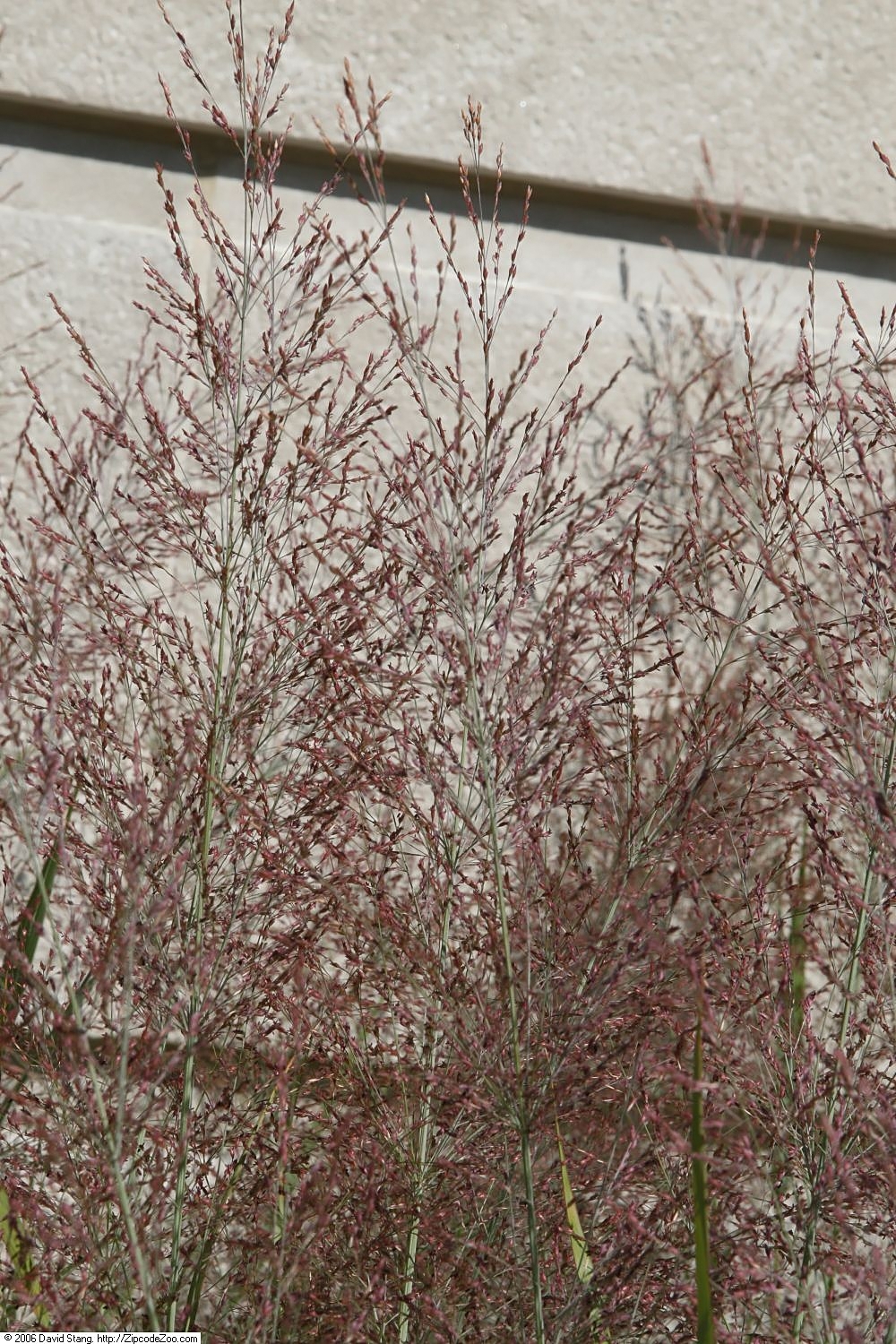
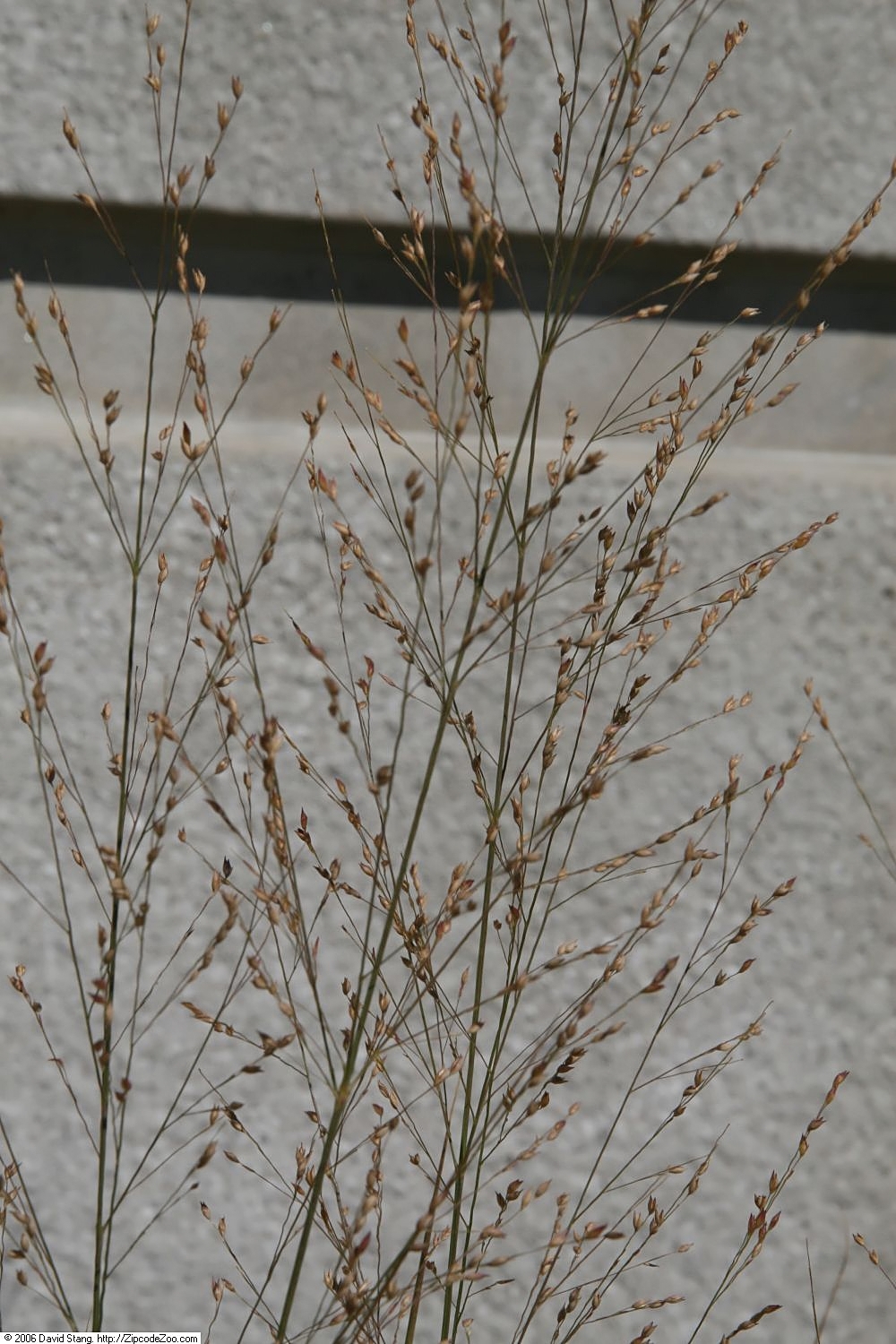
It will not block views at full flowering height. NC State lists 3 to 4 feet of foliage with flower plumes up to 7 feet. The plumes are open and airy. They blur a view but do not block it. Plan on the leafy part as your real screen height.
It will not hide a second-story window. Even tall cultivars top out around 7 to 8 feet, per the Morton Arboretum. For views from above, you need a shrub or tree.
It will not stay upright in shade. NC State notes that in part shade the clump will not grow as tightly and may flop over. A leaning screen hides less.
It is not a fire buffer. NC State gives switchgrass a high flammability rating and says it should not be planted within the defensible space of your home. Do not use it as a screen hugging the house where wildfire is a risk.
It is not a sound barrier or a security fence. Grass moves and rustles, and anyone can walk through it.
Screen Reality Check
- Late winter to early summer: little or no screening after the cutback while new growth fills in.
- Midsummer: foliage at full height; solid screening up to roughly leaf height.
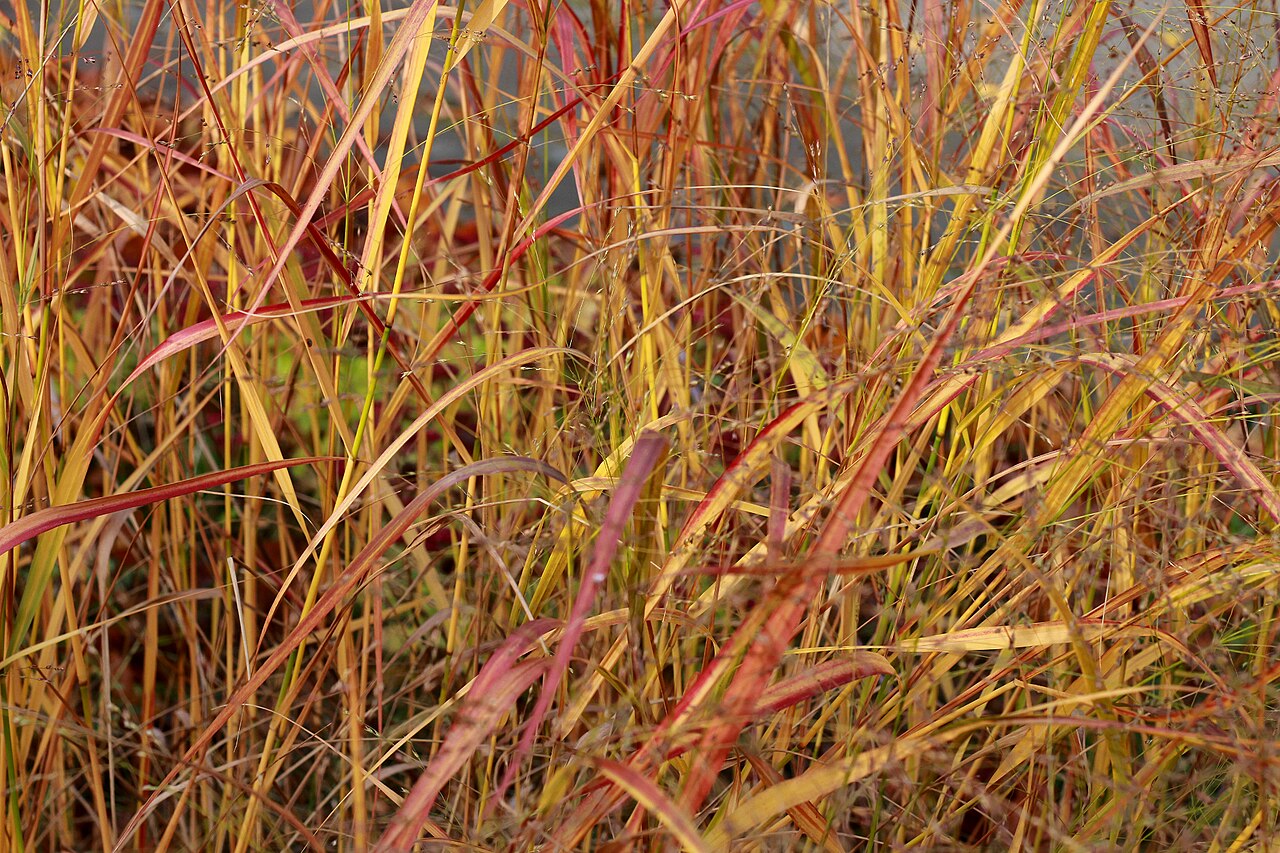
- Late summer to fall: panicles add height as a see-through haze; fall color.
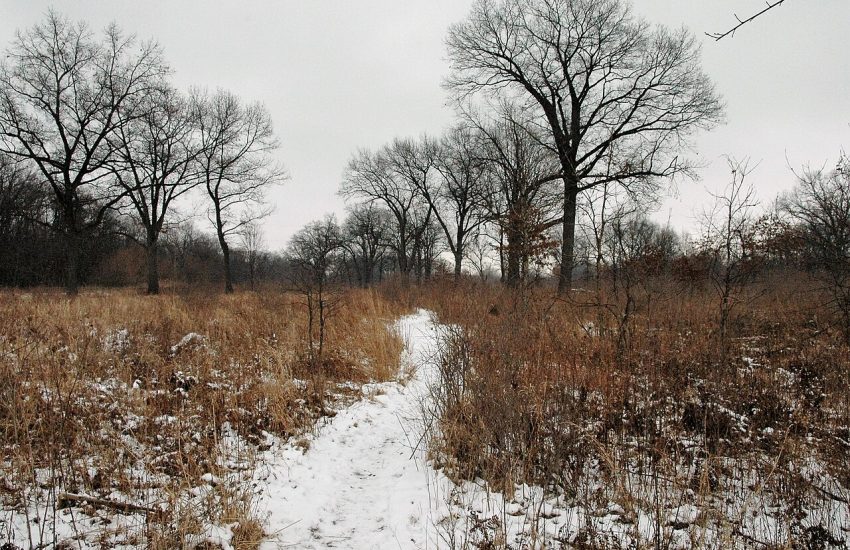
- Winter: tan foliage stays standing (NC State, Morton), but heavy snow can bend it down.
Choosing a Cultivar for Height
For screening, height and stiffness matter most. The Morton Arboretum lists these tall selections:
- ‘Cloud Nine’: 7 to 8 feet, blue leaves, golden fall color. The tallest option.
- ‘Northwind’: 5 to 6 feet, very sturdy and drought tolerant, blue-green leaves. NC State describes it as erect.
- ‘Dallas Blues’: 5 to 6 feet, blue-gray leaves, purplish-rose flowers.
- ‘Prairie Sky’: about 5 feet, upright to arching.
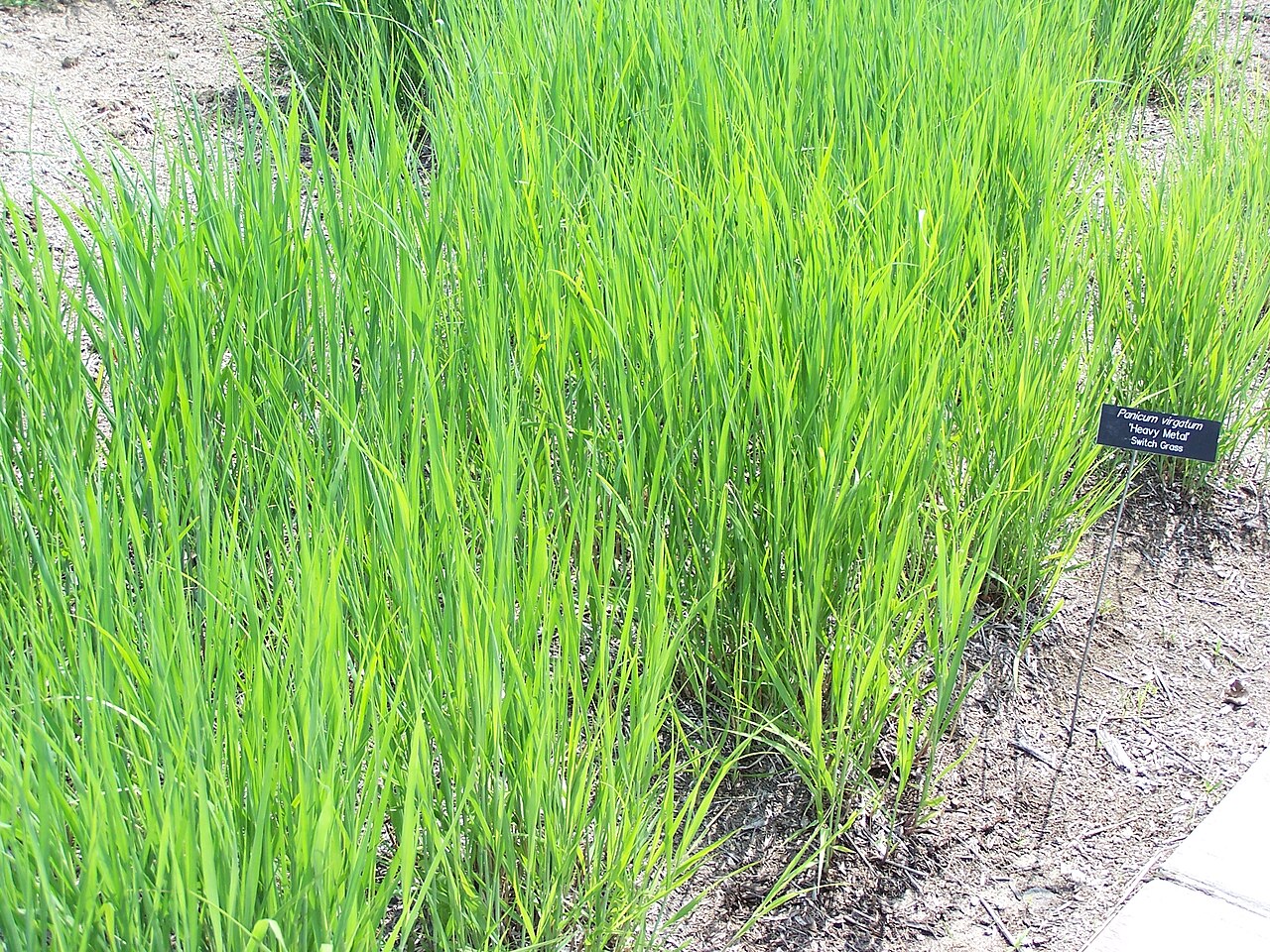
Shorter selections like ‘Heavy Metal’ (3 to 4 feet) and ‘Shenandoah’ (about 4 feet) work for screening seated views or bins, not standing eye level. Compare sizes in our guide to little bluestem vs. switchgrass.
Straight species switchgrass from local seed varies in height. The Wildflower Center gives up to about 10 feet, often shorter. It is a good habitat choice but less predictable as a screen. Big bluestem is another tall option; see big bluestem in a small yard for where it fits.
Laying Out the Screen
Single row or double row. A single row leaves gaps between clumps for the first few years. A staggered double row, with the second row offset to cover the gaps, screens faster.
Spacing. Our switchgrass profile recommends 18 inches apart for mass plantings and 2 to 3 feet apart for individual specimens. For a screen, use the closer spacing.
Distance from fences and paths. NC State lists switchgrass at 2 to 3 feet wide, and it spreads slowly by rhizomes. Keep the row at least 2 feet off a fence and a path so you can reach the back side for the spring cutback.
Utilities. Leave the clearance your air conditioner, meter or gas line requires, and never block access to them. A screen a few feet in front of a unit hides it from the yard without crowding it.
Curves beat straight lines. A gently curving row, or groups of three to five clumps, looks more natural than a single straight line, and it screens views from more angles.
Quantity Guide
- Single row at 18 inches: about 8 plants per 12 feet.
- Staggered double row at 18 inches: about 16 plants per 12 feet.
- Accent groups: 3 to 5 plants per group at 2 feet apart, repeated along the line.
Pairing With Evergreens for Year-Round Screening
The best answer to the spring gap is to combine switchgrass with evergreen shrubs or small trees. Put an evergreen where you need privacy all year, and switchgrass between them to fill in summer and fall.
Plant Palette
Sizes and ranges are from the Lady Bird Johnson Wildflower Center unless noted. Pick the evergreen that is native to your region and suits your soil.
| Plant | Role | Height | Sun / moisture | Native range |
|---|---|---|---|---|
| Switchgrass (Panicum virgatum) | Seasonal screen, summer to winter | Up to about 10 ft, often shorter; cultivars 2.5–8 ft (Morton) | Sun to part shade / dry to moist | Que. to Sask. and MT, south through FL and all but the westernmost U.S. |
| Eastern red cedar (Juniperus virginiana) | Evergreen anchor for large lots | Up to about 90 ft as a tree | Sun to shade / dry | N.S. to SD, south to n. FL and c. TX |
| Wax myrtle (Morella cerifera) | Evergreen shrub screen, southern regions | Usually up to 12 ft | Sun to part shade / moist to wet | NJ west to s.e. OK and e. TX, south through FL |
| Inkberry (Ilex glabra) | Evergreen shrub for damp, partly shaded ends | Up to 12 ft | Part shade / moist to wet | Coastal plain from N.S. to FL, west to LA |
| Wild bergamot (Monarda fistulosa) | Summer bloom in front of the grass | Up to about 5 ft | Sun to part shade / dry to moist | Most of southern Canada and the U.S. east of the Rockies |
Eastern red cedar becomes a large tree, so use it only where it has room. Wax myrtle and inkberry are shrubs that suit the coastal and southern states where they are native. In the northern Plains and Upper Midwest, check your regional list for a native evergreen that fits your space.
Installation Steps
Step 1: Mark the line. Stand where you sit or look out and have a helper hold a stake where the screen needs to be. Mark the row from your viewpoint, not from the property line.
Step 2: Clear the strip. Remove turf and weeds from a strip at least 3 feet wide for a single row.
Step 3: Skip fertilizer. Our switchgrass profile notes that overly rich soil can lead to soft, floppy growth. A floppy screen hides less.
Step 4: Plant in spring. Set plants at their final spacing, with the crown level with the soil. Larger container plants close gaps faster than plugs.
Step 5: Water the first season. Water deeply during dry spells until plants establish. NC State lists switchgrass as resistant to drought, but new plants still need help through their first summer.
The First Three Years
- Year 1: expect a thin screen. Growth goes into roots. Water in dry spells and keep weeds out of the gaps.
- Year 1, winter: leave everything standing. NC State recommends leaving seed on the plant as a winter food source for birds and small mammals.
- Year 2, late winter: cut back before new growth begins. For technique, see how to prune switchgrass.
- Year 2, summer: the row should reach close to full height. Fill any gaps with new plants or divisions.
- Year 3 on: trim the outer edge if rhizomes push the row wider than you want, and pull seedlings. The Morton Arboretum notes switchgrass can be an aggressive seeder.
Mistakes to Avoid
- Expecting year-round privacy. Plan for the spring gap, or add evergreens.
- Counting the plumes as screen height. The see-through panicles blur a view but do not block it.
- Planting in shade. Clumps grow looser and may flop.
- Planting right against the house in fire-prone areas. Keep it out of the defensible space, as NC State advises.
- Cutting back in fall. You lose your winter screen and the seed birds use.
- Crowding utilities. Leave clearance and access around meters and equipment.
📋 Find plants for your region: see the full Switchgrass (Panicum virgatum) profile or our native plant lists for New York, Pennsylvania & Northern New Jersey, Delaware, Southern New Jersey & Long Island, Maryland, Virginia & West Virginia, North Dakota, South Dakota & Western Minnesota, and Arkansas, Louisiana, Eastern Oklahoma & Eastern Texas.
Frequently Asked Questions
How tall does a switchgrass screen get?
NC State lists 3 to 4 feet of foliage, with plumes up to 7 feet. Tall cultivars like ‘Cloud Nine’ reach 7 to 8 feet, per the Morton Arboretum. Count the leafy part as your real screen.
Does switchgrass provide privacy in winter?
Partly. The tan foliage stays standing through winter, but heavy snow can bend it. After the late-winter cutback there is no screen until new growth fills in during the warm season.
How fast will a switchgrass screen fill in?
Expect a thin row the first year while roots establish. Most of the screening comes in the second season and after. Closer spacing and a staggered double row fill in faster.
Can switchgrass grow in a wet spot along a property line?
Yes. The Wildflower Center says poor drainage is okay, and NC State notes it withstands occasional flooding. That makes it useful along low edges where many shrubs fail.
Is switchgrass safe to plant near my house?
In fire-prone areas, no. NC State gives it a high flammability rating and advises against planting it within the defensible space of your home. Place the screen farther out.
Sources
- NC State Extension Gardener Plant Toolbox, Panicum virgatum: size, screen use, shade and flopping, winter persistence, late-winter cutback, wildlife seed, flooding and drought tolerance, flammability rating, cultivar notes.
- The Morton Arboretum, Switch grass: warm-season growth, winter standing, self-seeding, cultivar heights.
- Lady Bird Johnson Wildflower Center: Panicum virgatum (range, height, drainage tolerance), plus eastern red cedar, wax myrtle, inkberry and wild bergamot.