A Dry-Shade Native Border Under Established Trees: Plant Without Damaging Roots
Last updated: November 6, 2026
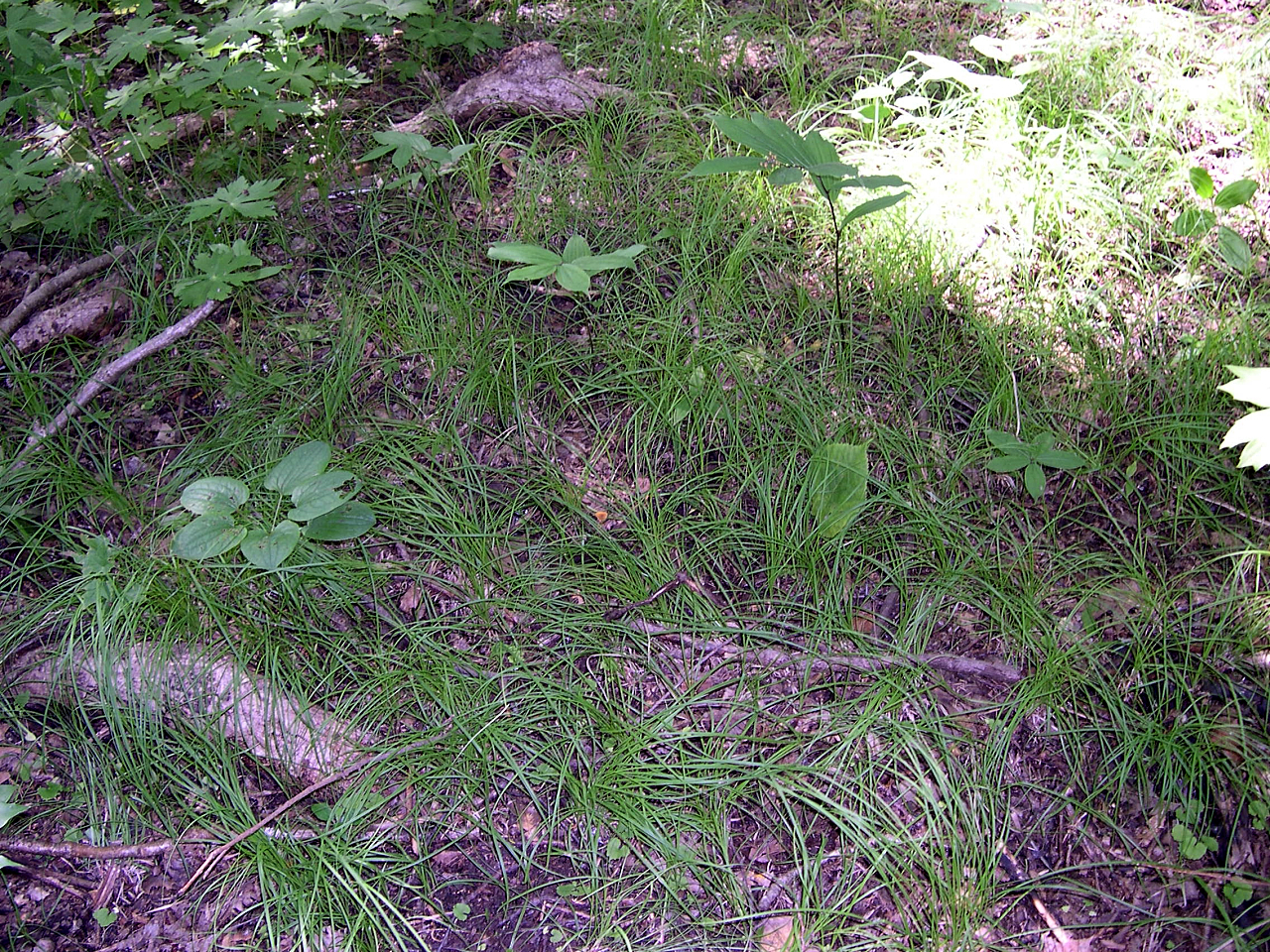
The ground under a big shade tree is one of the hardest places in any yard to plant. The canopy blocks rain, the roots drink up what does fall, and grass gives up in thin, patchy tufts.
The usual fix makes things worse. People haul in a load of soil, build a raised bed around the trunk, or dig big holes with a spade. Each of those can injure the tree you are trying to garden under.
This plan does it the other way around. You work with the dry shade that is already there, plant small natives in small holes, and leave the tree’s roots and grade alone.
Plan at a Glance
| Site | The root zone of an established deciduous tree, where grass struggles and the soil stays dry |
| Size | Any; start with a crescent 4 to 6 feet deep on the side you see most |
| Sun | Part shade to full shade; dappled light in spring before leaf-out |
| Soil | Existing soil, root-filled and dry; no added fill beyond a thin topdressing |
| Maintenance | Moderate in years one and two (watering), then low |
| Best regions | Eastern North America for the plants named here; choose dry-shade natives from your regional list elsewhere |
How Tree Roots Shape the Planting
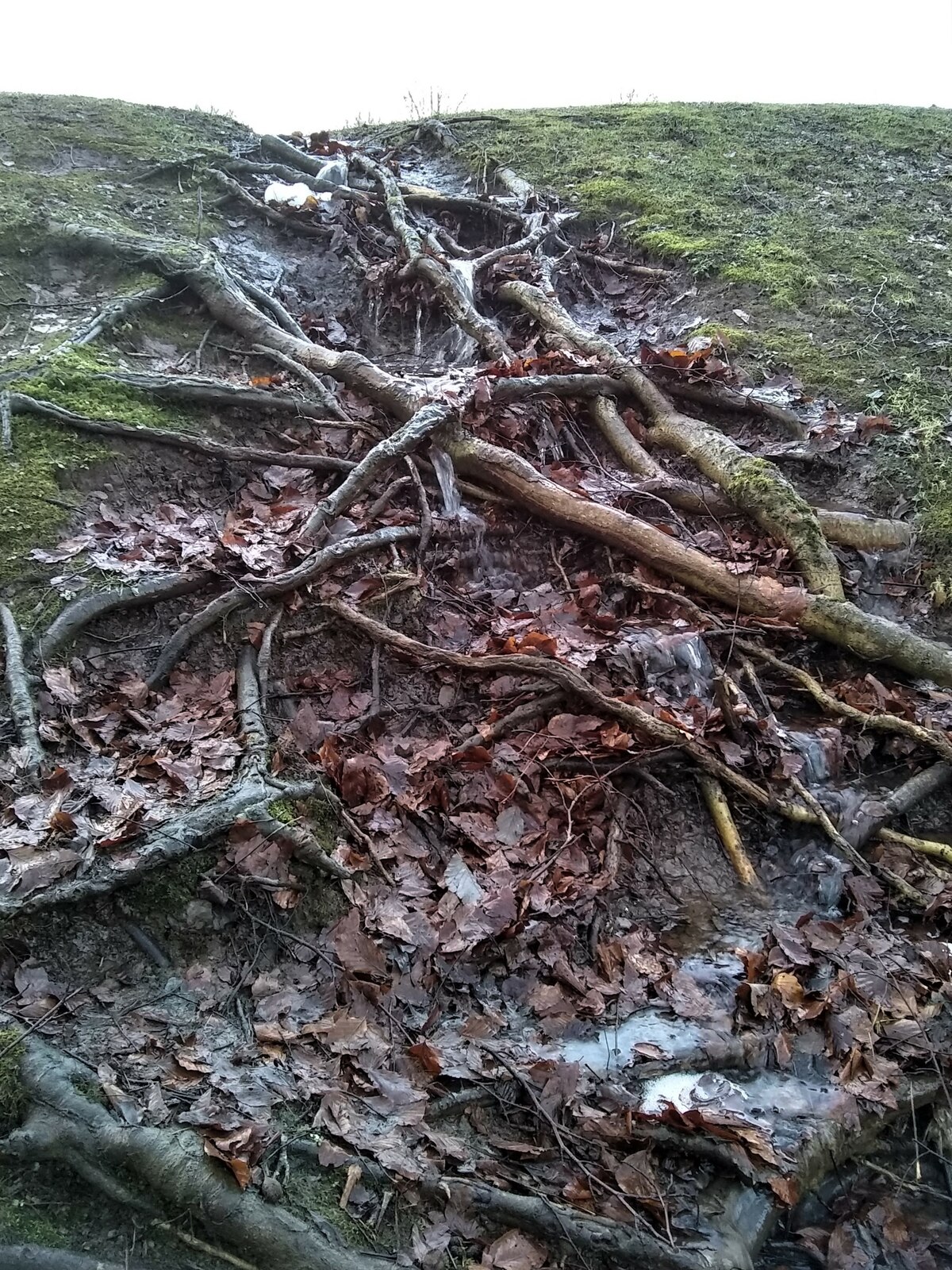
Colorado State University Extension says most tree roots grow in the top 6 to 24 inches of soil and spread over an area two to four times the diameter of the crown. University of Illinois Extension goes further: over 90% of root mass is in the upper 18 inches, and almost half of that is in the upper 6 inches.
Illinois Extension also notes that roots are concentrated around the dripline, the ring under the outer edge of the canopy. So the outer part of the bed is not “safe” ground. It is often the busiest root zone of all.
Those fine roots near the surface absorb water and need air. Colorado State lists soil compaction and changes in soil depth among the things that injure roots. That is why fill, heavy digging and foot traffic are the main threats here.
Site Assessment
Identify the tree
Penn State Extension notes that tree species react differently to soil disturbance; some are sensitive and others tolerate it. Find out what you have before you dig. If it is a large, valuable or already-stressed tree, ask a certified arborist to look at it first.
Watch for black walnut. Penn State warns that its roots are allelopathic and prevent many plants from growing in the root zone. Under a walnut, use a plant list specifically tested for walnut tolerance.
Read the light and the moisture
Note how much sun the area gets in early spring and in midsummer. Most deciduous trees let in a burst of spring light, then close over. Check soil moisture a few days after rain by pushing a trowel into the ground; dry, root-matted soil a few inches down is the norm.
Find the root flare
The root flare is where the trunk widens into the main roots at the soil line. Penn State says to preserve it. If it is buried under mulch or old fill, have it uncovered carefully before you plant around it.
Mark a no-dig ring
Penn State advises starting the planting about one foot from the trunk and adding no soil within one foot of it. Mark that ring with a hose so nobody digs or piles mulch there.
Design: A Border That Follows the Tree
Shape the border as a crescent or ring following the canopy, rather than a straight-edged bed that cuts across roots. Keep it shallow and loose at the edges so it blends into the surrounding lawn or leaf litter.
Fewer plants, bigger swaths
Penn State recommends limiting choices to a few plants and planting them in swaths for a natural look. In dry shade, three to five species repeated across the bed look better and survive better than a collection.
Layers that do not need deep soil
- Groundcover layer: a low sedge that knits between roots.
- Evergreen structure: ferns that hold their fronds through winter, which Penn State suggests for year-round structure.
- Flowering layer: late-summer and fall bloomers that tolerate dry shade.
Skip shrubs close to the trunk. Their larger root balls need bigger holes, which means cutting more tree roots.
Paths and access
Lay stepping stones on top of the soil rather than digging a path base. That keeps your feet, and the compaction they cause, off the root zone.
The Plant Palette
Every plant below is native to eastern North America and listed by the Lady Bird Johnson Wildflower Center for shade. Check each one against your state’s native range.
Pennsylvania sedge is the best groundcover for dry shade. The Wildflower Center lists it for dry to moist woods, 6 to 12 inches high, spreading “relentlessly” by rhizomes. That spreading habit is exactly what you want between roots.
Christmas fern gives evergreen structure. Penn State names it among ferns that tolerate dry conditions. The Wildflower Center adds that it needs good drainage, will not take clay or standing water, and does best kept cool and shaded, so water it well the first year.
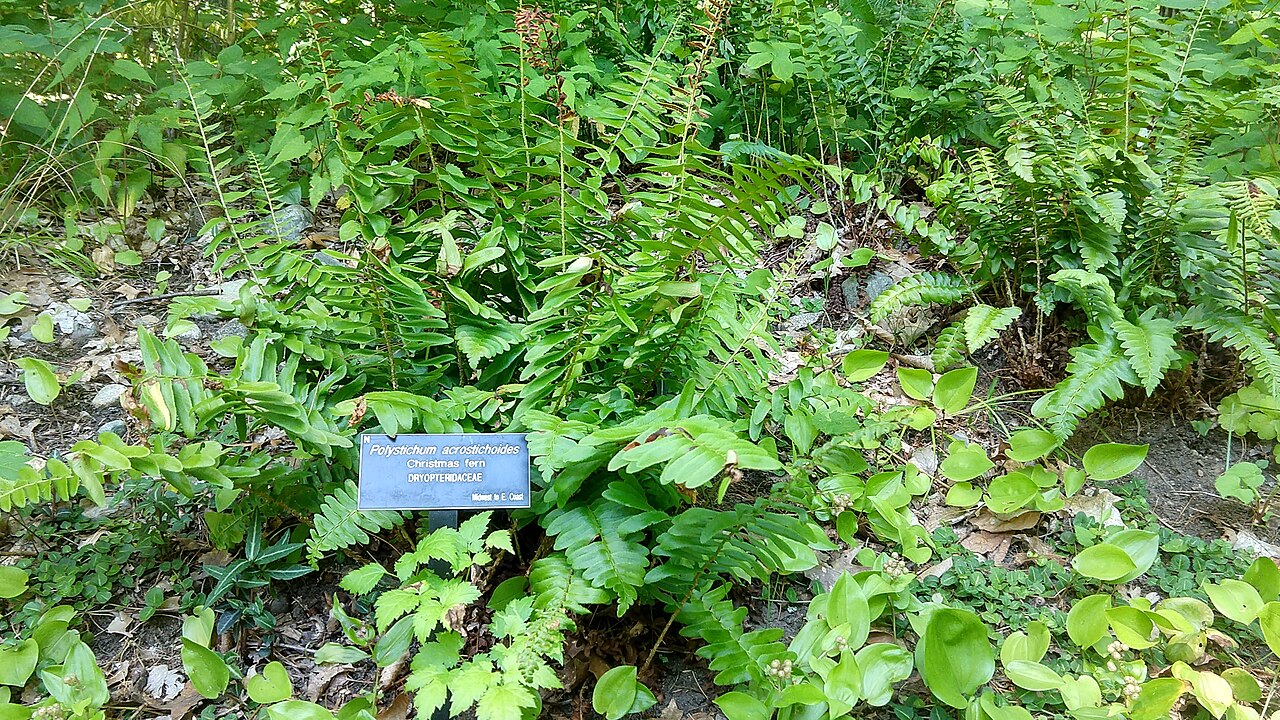
Marginal wood fern is another evergreen fern Penn State lists for dry shade. The Wildflower Center notes it likes rocky soil and an oak-leaf winter cover but is rather sensitive to heat. Use it in the North and in cool mountain areas, and lean on Christmas fern farther south.
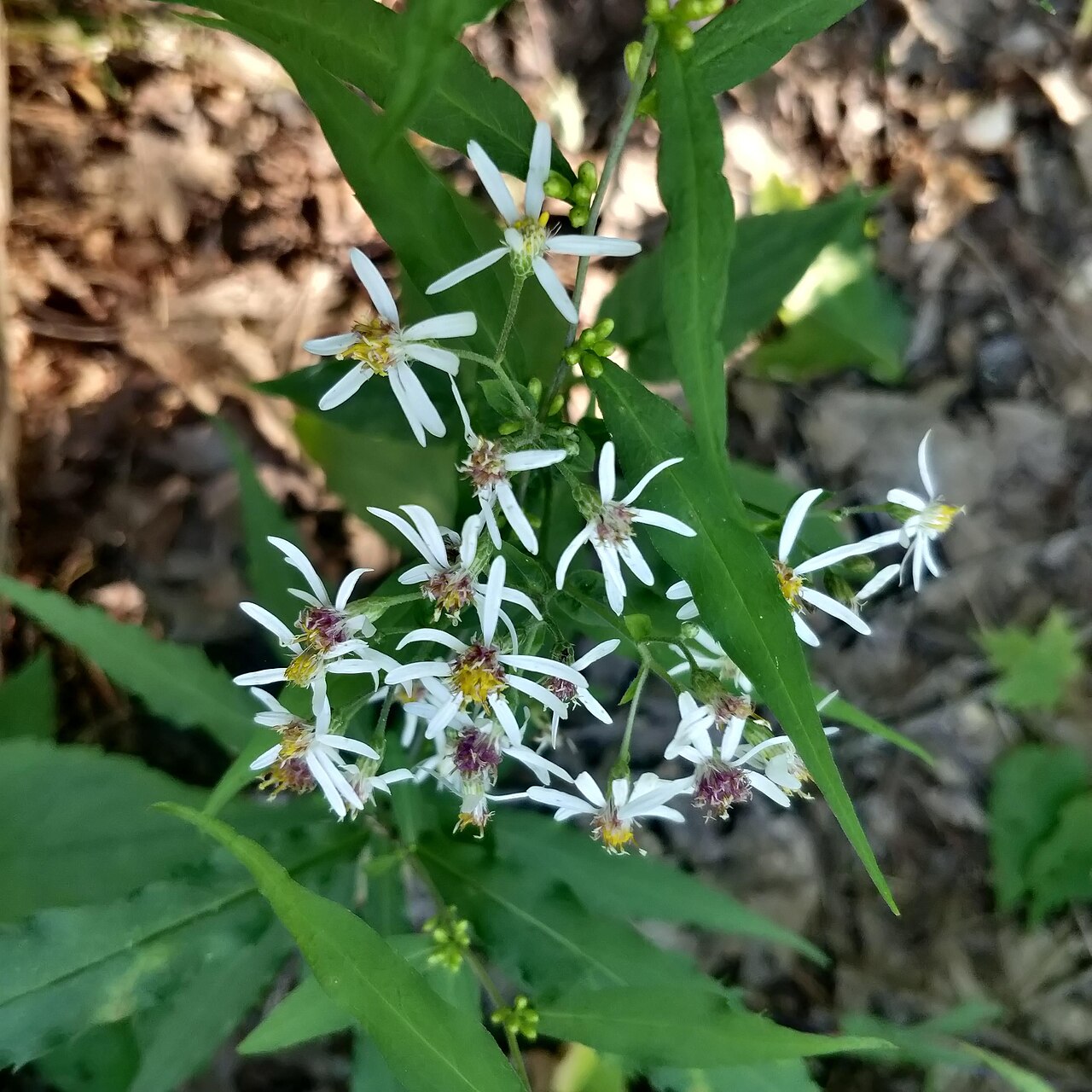
White wood aster is one of the few flowering perennials truly at home in dry shade. The Wildflower Center lists it for dry soil in part shade to shade and calls it vigorous, even aggressive, in dry shade. It blooms from midsummer into fall.
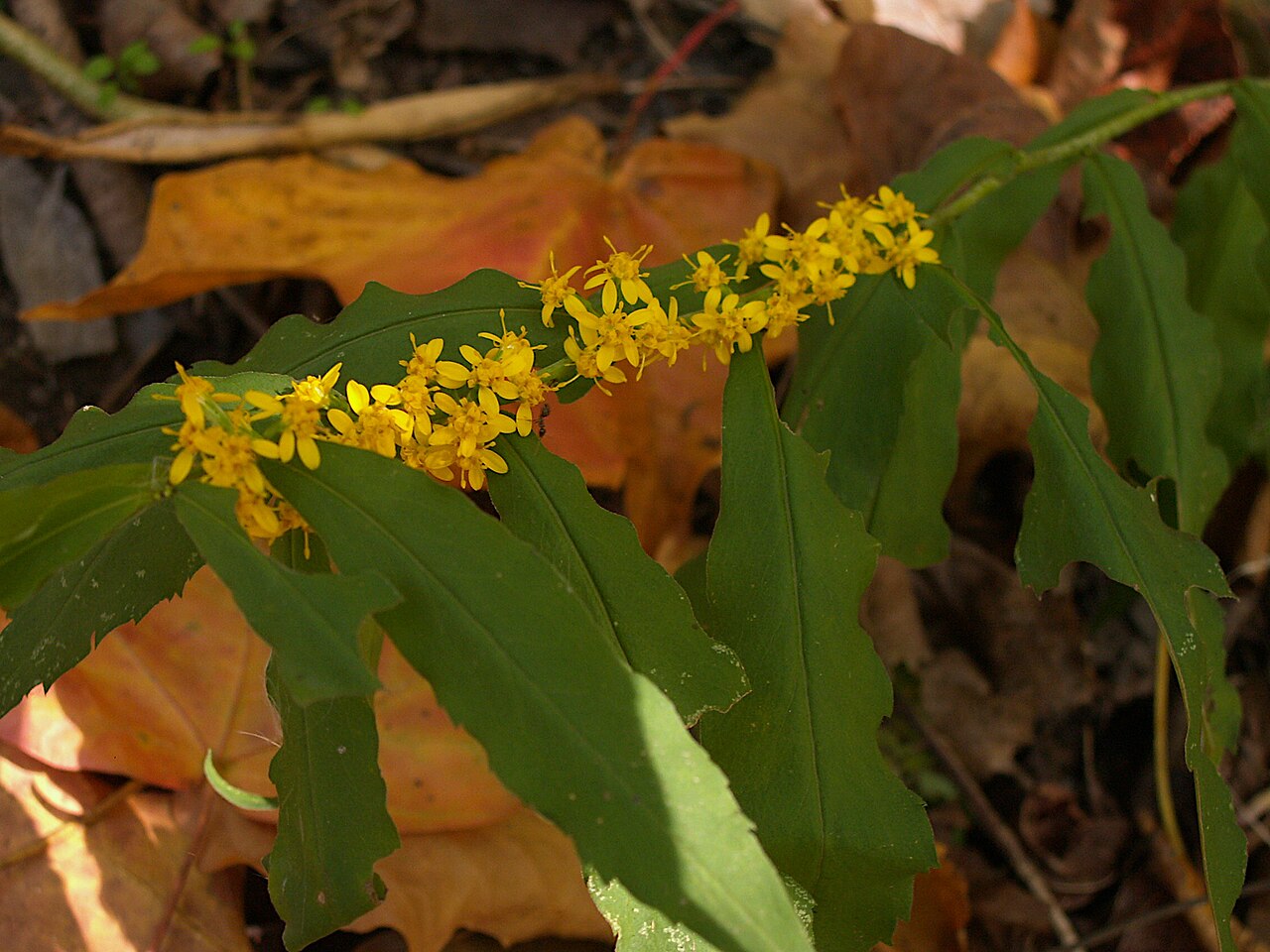
Wreath goldenrod adds late-season yellow on arching 1- to 3-foot stems. The Wildflower Center lists it for dry soil and notes it is a small goldenrod that is not aggressive. It blooms from August to October.
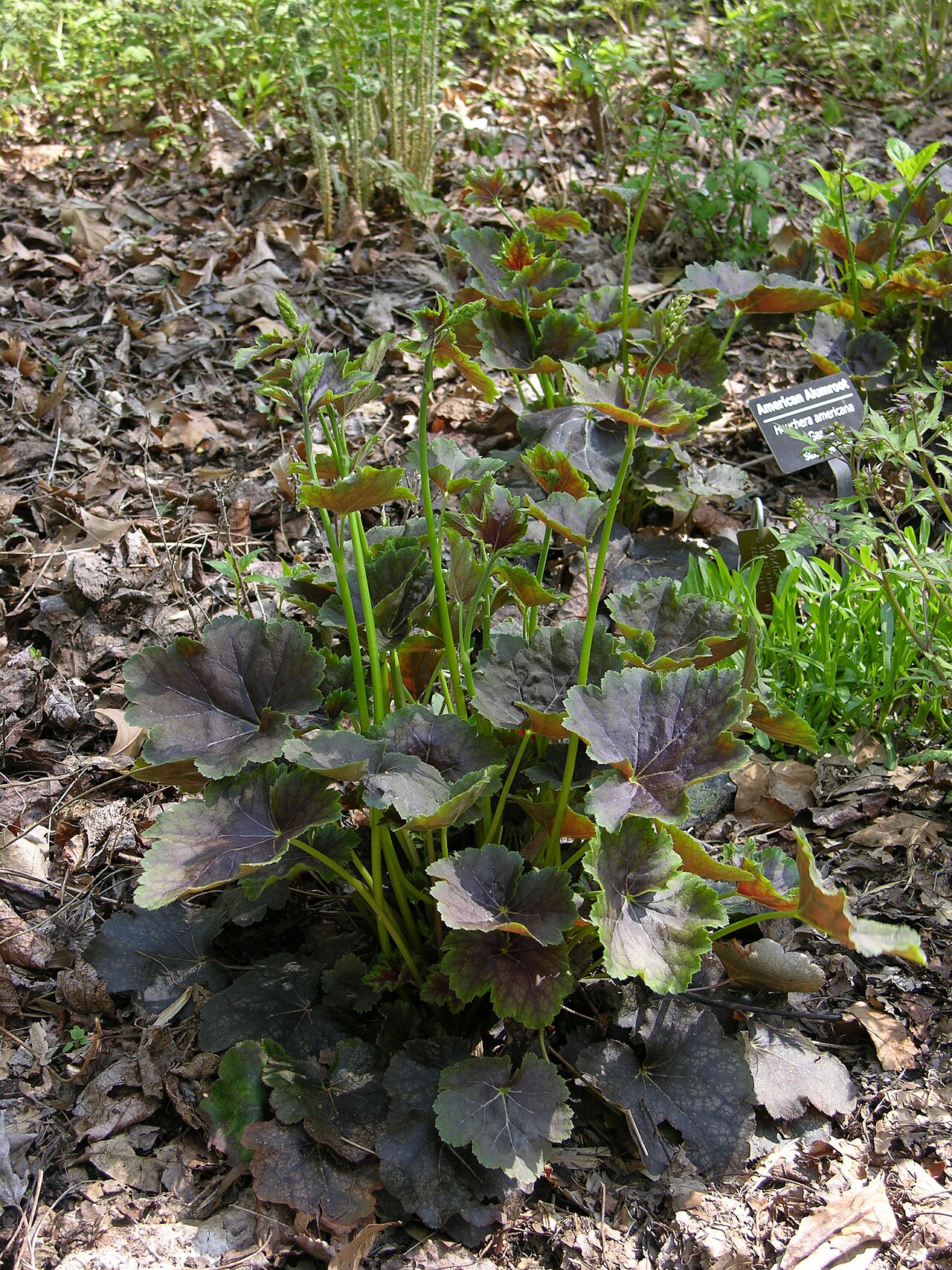
American alumroot is a low foliage plant for the front edge. The Wildflower Center lists it for dry to moist, well-drained soil and says it tolerates poor soil and low moisture.
Plant Palette
Heights and ranges are from the Lady Bird Johnson Wildflower Center. Confirm each plant is native to your state.
| Plant | Role | Height | Light / moisture | Native range |
|---|---|---|---|---|
| Pennsylvania sedge (Carex pensylvanica) | Groundcover between roots | 6–12 in. | Sun–shade; dry–moist | S. Quebec & Ontario to ND & MT, south to GA, AR & WY |
| Christmas fern (Polystichum acrostichoides) | Evergreen structure | 1.5–2 ft | Part shade–shade; moist, well-drained | Nova Scotia to se. MN, south to c. FL & e. TX |
| Marginal wood fern (Dryopteris marginalis) | Evergreen structure, cooler regions | About 20 in., up to 3 ft | Part shade–shade; moist, rocky | New England & e. Ontario to GA, TN, AR, e. OK & e. KS |
| White wood aster (Eurybia divaricata) | Fall flowers, spreading | Up to ~4 ft, often shorter | Part shade–shade; dry | Eastern states from GA & AL to ME |
| Wreath goldenrod (Solidago caesia) | Late flowers | 1–3 ft | Sun–part shade; dry | Eastern U.S. west to WI, MO & TX |
| American alumroot (Heuchera americana) | Front-edge foliage | About 18 in., flower stalks to 3 ft | Part shade–shade; dry–moist | CT to Ontario & MI, south to GA & OK |
Sample Planting for a 4 × 15-Foot Crescent
Plugs or small pots only. Spacing is a starting point; tuck plants between roots rather than on a strict grid.
| Layer | Plants |
|---|---|
| Groundcover | 25 Pennsylvania sedge plugs, about 1 foot apart, filling the front half |
| Evergreen structure | 5 Christmas fern (or marginal wood fern in the North) in two loose groups |
| Flowers | 5 white wood aster at the back; 3 wreath goldenrod in a sunnier pocket |
| Edge | 5 American alumroot along the lawn side |
Installation Steps
- Plant in spring or early fall. Avoid summer, when the tree and new plants compete hardest for water.
- Remove grass by hand. Penn State says to clear grass and weeds with a hand trowel, because shovels and spades can nick roots and bark, and to never use herbicide for this job.
- Do not raise the grade. Penn State warns that adding a large volume of soil or compost compacts the soil and blocks gas exchange in the roots, and can kill the tree. Add no more than 2 inches of soil or compost, and none within a foot of the trunk.
- Use small plants. Plugs, seedlings and small divisions, as Penn State suggests, have small root masses that fit between tree roots.
- Dig the smallest hole that works. Work with a trowel or soil knife. Penn State says fine roots will regenerate, but if you hit a root 2 inches or more across, refill the hole and move over.
- Never cut exposed roots. Penn State warns that cutting them with an ax can make a tree unstable.
- Mulch thinly. Spread an inch or two of finely shredded bark or compost, per Penn State, and keep it off the trunk and root flare.
- Water deeply. Penn State recommends a deep weekly watering rather than frequent sprinkles, for the first year or even two.
First-Three-Years Maintenance Calendar
Year one
- Weekly in dry weather: water deeply. Tree roots win every contest for moisture, so new plants depend on you.
- Summer: pull weeds by hand. Do not hoe or cultivate; you would be cutting fine tree roots.
- Fall: let the tree’s leaves stay as mulch. Penn State says woodland natives do well under a light blanket of leaves and that intact litter shelters overwintering insects.
Year two
- Spring: fill gaps with divisions of whatever is thriving, especially sedge.
- Summer: keep watering in droughts. Penn State notes dry-shade plants should be drought tolerant once established, but still need water during drought stress.
- Fall: rake only where leaves pile thick enough to smother small plants, as Penn State suggests.
Year three
- Spring: thin white wood aster if it crowds the ferns or goldenrod.
- Summer: water only in long dry spells.
- Any time: watch the tree. Thinning foliage or dieback is a reason to call an arborist, not to dig more.
Mistakes to Avoid
- Building a raised bed around the trunk. Penn State warns this can kill the tree.
- Piling soil or mulch against the trunk. Penn State warns that moisture held by new soil near the trunk can rot the bark.
- Using a spade or tiller. Both cut the fine roots that live in the top few inches.
- Planting big nursery pots. Large root balls need large holes.
- Choosing moisture-loving woodland plants. Many classic shade plants want rich, moist soil. Save those for a moist woodland floor of ferns, sedges and spring flowers, and use the dry-shade list here.
📋 Find plants for your region: see our native plant lists for Maryland, Virginia & West Virginia and Delaware, Southern New Jersey & Long Island, or the list for your own state, and filter for dry shade.
For more shade design ideas, see our guides to woodland garden design with natives, a spicebush woodland-edge garden, and companions for a part-shade border.
Frequently Asked Questions
Can I add topsoil under a tree to plant a garden?
Only a thin layer. Penn State Extension says to add no more than 2 inches of soil or compost and none within a foot of the trunk. Thick fill compacts the soil and blocks gas exchange in the roots.
How close to the trunk can I plant?
Penn State suggests starting about one foot from the trunk. Keep that ring free of fill and mulch so the root flare and bark stay dry.
What is the best native groundcover for dry shade under trees?
Pennsylvania sedge is a strong choice in its range. The Wildflower Center lists it for dry to moist woods at 6 to 12 inches high, spreading by rhizomes.
What do I do if I hit a big root while planting?
Stop, refill the hole, and move over. Penn State says fine roots regenerate, but roots 2 inches or more across should be left alone.
Do I need to water native plants under a tree?
Yes, for the first year or two. Penn State recommends a deep weekly soak. After that, dry-shade natives should cope, but water during droughts.
Sources
- Penn State Extension, Underplanting Trees – Respect the Roots: hand clearing, no herbicide, no root cutting, root flare, fill limits, trunk setback, plug-size plants, root-size rule, mulch, watering, leaf litter, black walnut, dry-tolerant ferns.
- Colorado State University Extension, Healthy Roots and Healthy Trees: root depth, spread relative to the crown, causes of root injury.
- University of Illinois Extension, Clearing misconceptions around tree roots: share of root mass in the upper 18 and 6 inches; roots concentrated at the dripline.
- Lady Bird Johnson Wildflower Center plant database: Pennsylvania sedge, Christmas fern, marginal wood fern, white wood aster, wreath goldenrod, American alumroot: light, moisture, height and native range.