A Sunny Native Border for Sandy Soil: Match the Plants Before Adding Amendments
Last updated: November 6, 2026
Sandy soil comes with a standard prescription: dig in compost, and lots of it, until the sand behaves like loam. For vegetables and thirsty perennials, that advice makes sense.
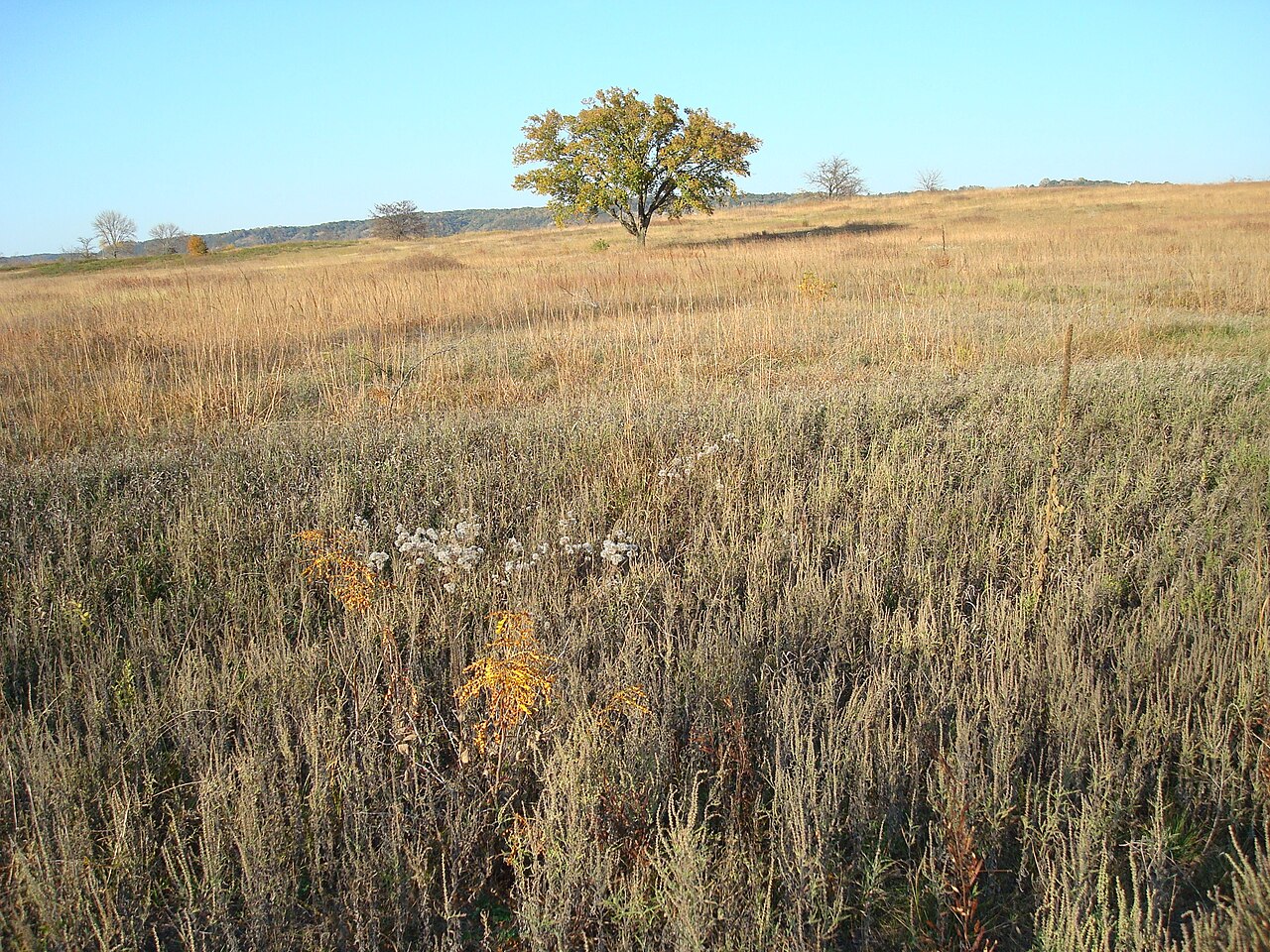
For a native border, it is often backwards. Many sunny natives evolved on sand hills, sand prairies and dunes. The fast drainage and low fertility that frustrate a vegetable gardener are exactly the conditions they are built for.
This plan starts with the plants instead of the amendments. You confirm what your sand is like, choose natives that the Lady Bird Johnson Wildflower Center lists for dry, sandy soil, and amend only where a specific plant or problem calls for it.
Plan at a Glance
| Site | A sunny bed, foundation strip or front-yard border on sandy, fast-draining soil |
| Size | Any; the sample plan is a 6 × 20-foot border |
| Sun | Full sun, at least six hours of direct light |
| Soil | Sand or loamy sand; little or no amendment for the core plants |
| Maintenance | Low: water to establish, one late-winter cutback, edit self-seeders |
| Best regions | Eastern and central U.S. for the plants named here; use your regional list elsewhere |
What Makes Sandy Soil Different
Utah State University Extension describes sand as the largest soil particle, 0.05 to 2 millimeters across. Wet sandy soil feels gritty and will not hold a ball when you squeeze it.
Because sand has little surface area and low charge, it does not hold water or nutrients well. Utah State says it drains freely and is typically nutrient-poor. Its water intake rate is 1 to 10 inches per hour, and about half an inch of water recharges a foot of sandy soil.
N.C. Cooperative Extension in Hoke County adds that sandy soil heats up near the surface and dries quickly, and that it is often acidic. It also points out that one way to garden on sand is simply to grow plants that do well in your native soil.
Site Assessment
Confirm it really is sand
Rub a pinch of moist soil between your fingers. Gritty, loose soil that falls apart when squeezed is sandy, per Utah State. If it smears into a ribbon, you have more clay than you think, and our heavy clay native garden plan may be a better guide.
Test the soil
Hoke County Extension recommends a soil test, mainly to check pH, since sandy soils often run acidic. Plants like wild lupine prefer acidic soil, so a low pH may be an asset rather than a problem. The test tells you whether anything truly needs correcting.
Check sun and exposure
Note how many hours of direct sun the border gets and whether it faces reflected heat from pavement or a south wall. Hot, sandy strips favor the most drought-tolerant plants on the list.
Look for a moister end
Many sandy yards have a low corner or a downspout that stays damper. That spot can take plants that need a little more moisture, or it can be the one place you add compost.
Match the Plants First
The core idea is to choose plants whose natural habitat looks like your yard. For each plant below, the Wildflower Center lists dry, sandy or well-drained sandy soil among its preferred conditions.
Little bluestem is the backbone grass. The Wildflower Center lists it for well-drained soils including sand, forming dense mounds 18 to 24 inches tall that turn mahogany-red in fall. It reseeds readily, so edit seedlings in small borders. For layout ideas, see our plan for little bluestem in a front-yard border.
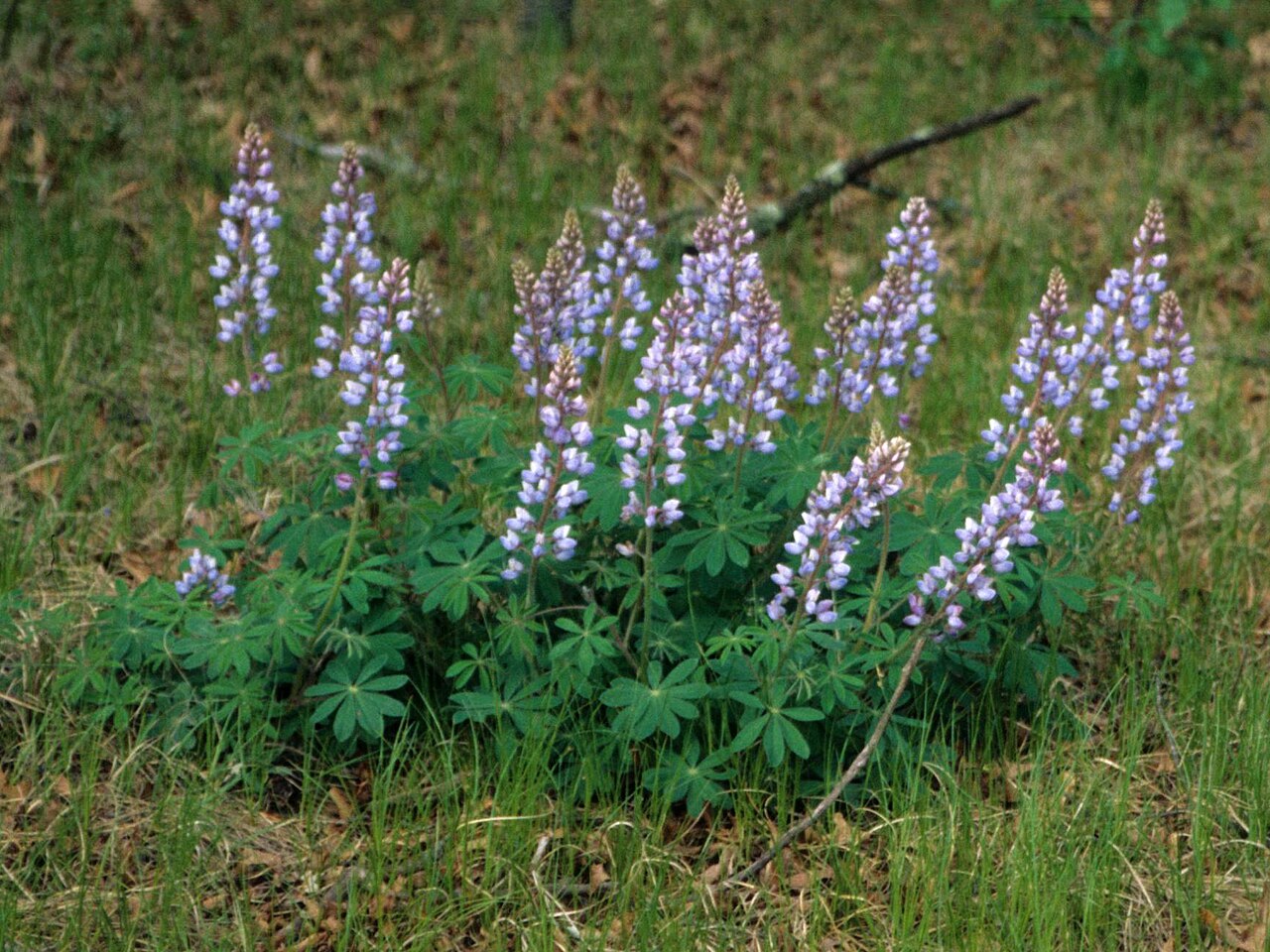
Wild blue lupine grows in sand hills and clearings, according to the Wildflower Center, which lists it for dry, sandy, acidic soil and good drainage. It reaches about 2 feet and blooms in spring. The Wildflower Center warns that lupines, especially the seeds, can be toxic if eaten.
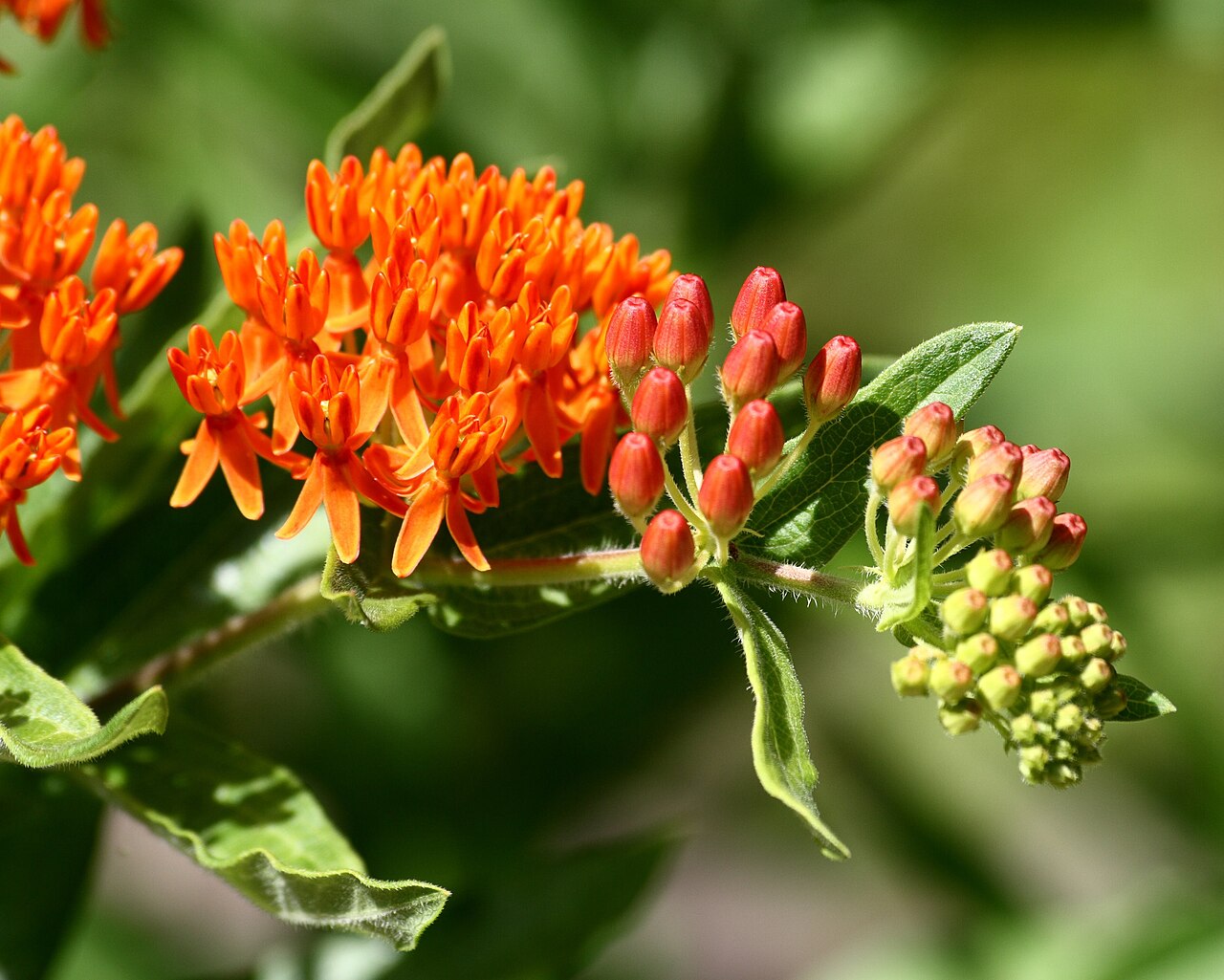
Butterfly weed prefers well-drained sandy soil and tolerates drought, per the Wildflower Center. It stays 1 to 2 feet tall with bright orange flowers from May into September. Its roots and sap are listed as poisonous if eaten in large quantities.
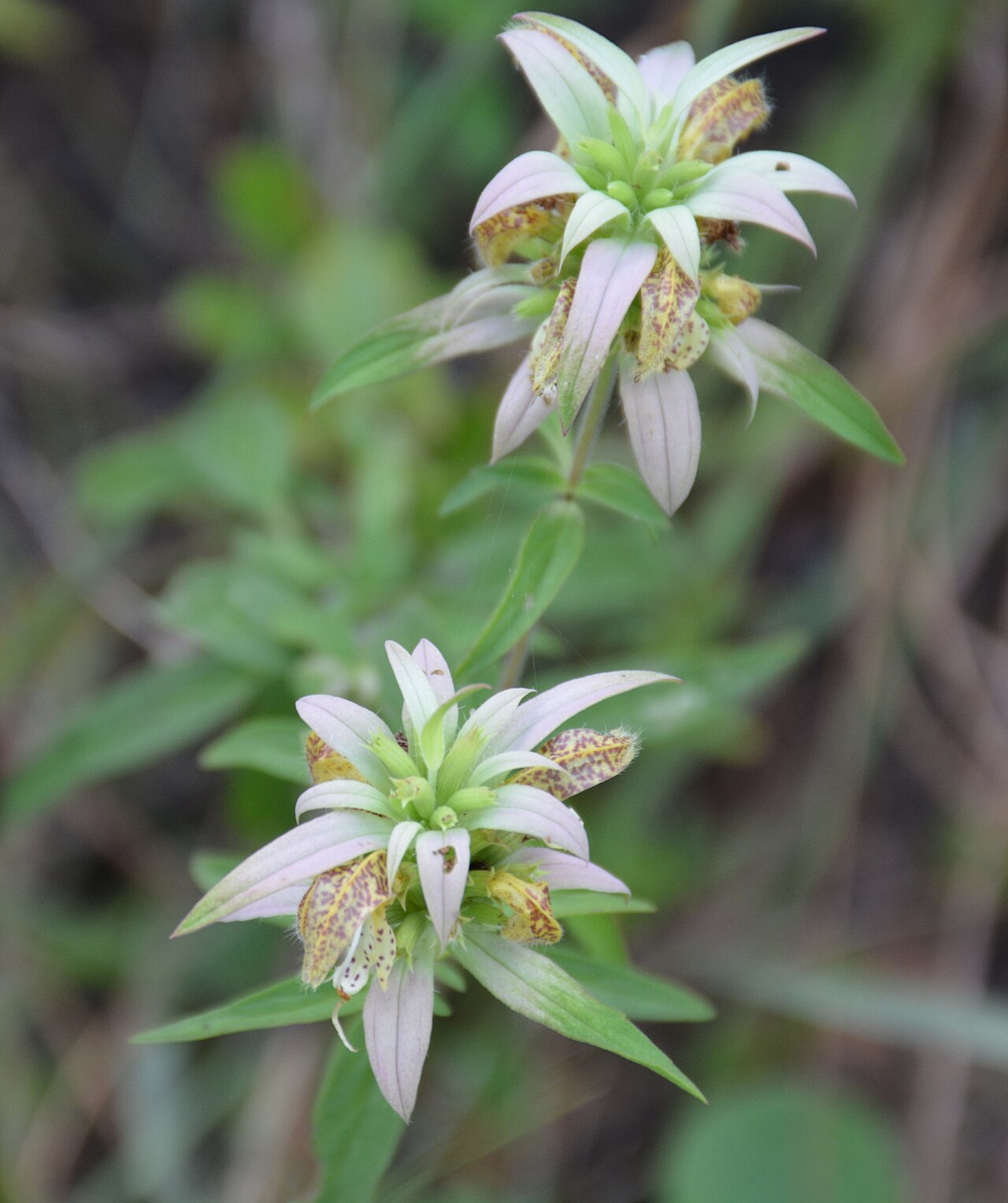
Spotted beebalm is a plant of dry, sandy soils in full sun. The Wildflower Center describes pale yellow, purple-spotted flowers set on white to lavender bracts, with oregano-scented leaves, on plants up to about 3 feet.
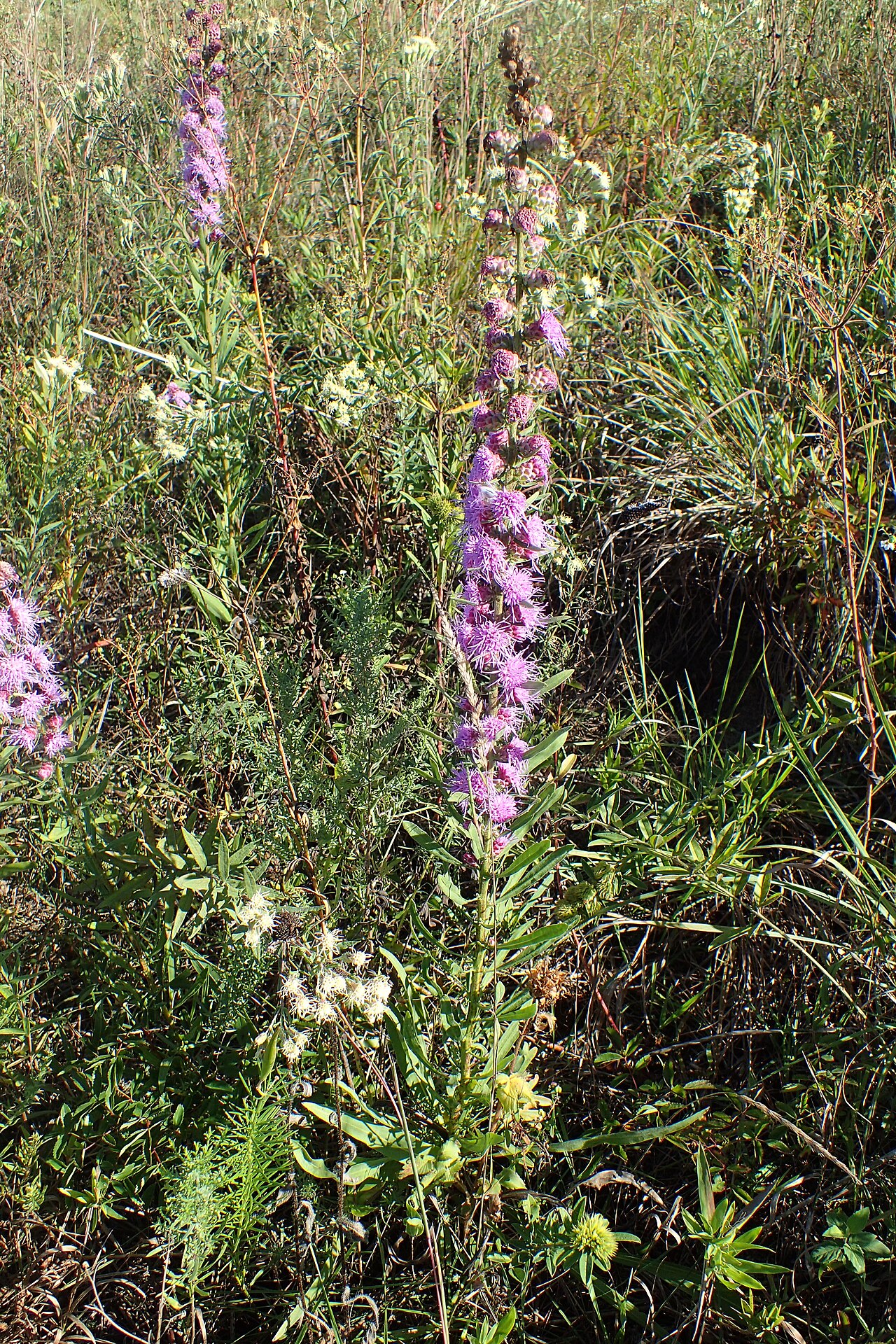
Rough blazing star gives tall late-summer spikes. The Wildflower Center lists it for sandy or rocky soils in full sun, calls it drought tolerant, and notes its August to September bloom feeds swallowtails and sulphur butterflies.
Lanceleaf coreopsis adds yellow daisies from April to June. The Wildflower Center calls it easy and drought tolerant on sandy, gravelly soil, but not reliably perennial; it self-sows to persist. It is naturalized beyond its range in the Northeast, so check that it is native where you live.
Gray goldenrod (Solidago nemoralis) handles dry, sandy or rocky soil, according to the Wildflower Center. It grows up to about 3 feet and blooms from June into October.
For a small shrub, leadplant grows up to about 3 feet in well-drained sandy or rocky soil. Its gray-hairy leaves and purple flower spikes suit the front of a prairie-style border.
Design the Border
Repeat a grass as the base
Plant little bluestem in a loose, repeated rhythm through the whole border. Its steady texture ties the flowers together and holds sandy soil in place.
Group the flowers by bloom time
Place spring bloomers (lupine, coreopsis) near the front where you will see them early. Summer bloomers (butterfly weed, spotted beebalm) go in the middle. Rough blazing star and gray goldenrod carry color into late summer and fall at the back.
Layer by height
Keep leadplant, butterfly weed and lupine in front at 1 to 3 feet. Put spotted beebalm and gray goldenrod in the middle, and rough blazing star, which can reach about 6 feet, toward the back.
Leave room for self-seeders
Lanceleaf coreopsis and little bluestem reseed. Leave a few open pockets for them and pull extras each spring.
Plant Palette
Heights, conditions and ranges are from the Lady Bird Johnson Wildflower Center. Confirm each plant is native to your state.
| Plant | Role | Height | Sun / soil | Native range |
|---|---|---|---|---|
| Little bluestem (Schizachyrium scoparium) | Repeated grass | 18–24 in. mounds | Sun–part shade; well-drained, incl. sand | Much of N. America east of the Rockies |
| Wild blue lupine (Lupinus perennis) | Spring flower | To ~2 ft | Sun–part shade; dry, sandy, acidic | NH to s. Ontario, n. IL, n. IN & e. MN, south to FL & LA |
| Butterfly weed (Asclepias tuberosa) | Summer flower | 1–2 ft | Sun; well-drained sandy | New England & Ontario to FL, west to TX, CO & MN |
| Spotted beebalm (Monarda punctata) | Summer flower | To ~3 ft | Sun; dry, sandy | VT to MN, south to TX & NM, east to the coast |
| Rough blazing star (Liatris aspera) | Late-summer spikes | To ~6 ft | Sun; sandy or rocky | S. Ontario to WV & SC, west to ND & e. TX |
| Lanceleaf coreopsis (Coreopsis lanceolata) | Spring flower, self-sows | To ~2 ft | Sun–shade; sandy, gravelly | FL to e. TX & n. NM, north to VA, Ontario, MI, WI, MO & CO |
| Gray goldenrod (Solidago nemoralis) | Fall flower | To ~3 ft | Sun–shade; dry, sandy or rocky | S. Canada through much of the U.S. east of the Rockies |
| Leadplant (Amorpha canescens) | Small shrub | To ~3 ft | Sun–part shade; well-drained sandy or rocky | N. IN & se. MI to Manitoba & MT, south to AR, TX & NM |
When to Amend Sandy Soil, and When Not To
Amendments are tools for specific problems, not a default step.
| Situation | What to do | |
|---|---|---|
| Planting the sand-adapted natives above | Plant into the existing sand; mulch lightly. Rich, moisture-holding soil is not what these plants are adapted to. | |
| Soil test shows a pH or nutrient problem | Follow the test’s recommendations, as Hoke County Extension advises. | |
| A damper corner for plants that need more moisture | Work compost into that area only, and choose plants listed for moist soil there. | |
| Vegetable or annual beds nearby | Add organic matter, which Utah State calls the best amendment for sand; see our guide to {{a:soil-amendment-for-sandy-soils | soil amendments for sandy soils}}. |
Installation Steps
- Plant in spring or early fall. Cooler weather gives roots time to grow before summer heat, when sand dries fastest.
- Remove turf and weeds. Strip sod or smother it. Sand makes hand weeding easy, so start clean.
- Do not blanket the bed with compost. Plant the core natives directly into the sand.
- Use small plants. Plugs and quart pots establish quickly in loose sand.
- Water deeply and less often. Hoke County Extension recommends watering infrequently but deeply so roots grow down. Utah State notes water moves straight down in sand rather than spreading sideways, so place drip emitters right over each root zone.
- Mulch thinly. Hoke County Extension suggests 2 to 4 inches of mulch on sandy soil to moderate temperature and weeds. For prairie natives, stay at the lighter end and keep it off the crowns.
First-Three-Years Maintenance Calendar
Year one
- Spring and summer: water new plants deeply about once a week in dry spells. Sandy soil dries fast, so check more often in heat waves.
- Summer: weed regularly until plants fill in.
- Fall: leave stems and seed heads standing over winter.
Year two
- Late winter: cut back last year’s growth before new shoots appear.
- Spring: pull extra coreopsis and little bluestem seedlings.
- Summer: water only during long droughts.
Year three
- Spring: replace any plant that has struggled with more of whatever is thriving.
- Summer: most of these plants should now manage on rainfall alone.
- Fall: enjoy the bluestem’s fall color and the late goldenrod and blazing star.
Mistakes to Avoid
- Amending first, choosing plants second. Pick sand-adapted plants, then decide whether any part of the bed needs help.
- Frequent shallow watering. It keeps roots near the hot surface. Water deeply and less often.
- Planting moisture lovers in pure sand. Without heavy amendment and irrigation, they struggle all season.
- Thick mulch piled on crowns. Keep mulch light and pulled back from the base of each plant.
- Ignoring native range. Wild lupine, rough blazing star and leadplant each have limited ranges. Check them against your state.
📋 Find plants for your region: start with the profiles linked above, then see our native plant lists for Michigan, Wisconsin & Eastern Minnesota and Maryland, Virginia & West Virginia, or the list for your own state.
Frequently Asked Questions
Do I need to add compost to sandy soil before planting natives?
Not for natives adapted to sand. The plants in this guide are listed by the Wildflower Center for dry or well-drained sandy soil. Save compost for vegetable beds or any damper spot where you want moisture-loving plants.
What is the best native grass for sandy soil?
Little bluestem is a strong choice across much of the East and Midwest. The Wildflower Center lists it for well-drained soils including sand.
How often should I water a new border on sand?
Water deeply and infrequently. Utah State notes about half an inch of water recharges a foot of sandy soil, and Hoke County Extension recommends deep, less frequent watering so roots grow down.
Why is my sandy soil acidic?
Hoke County Extension notes that sandy soils are often acidic. A soil test will tell you how acidic. Some natives, like wild lupine, prefer acid soil.
Is lanceleaf coreopsis native everywhere?
No. The Wildflower Center lists its native range from Florida to Texas and north to Virginia, Ontario, Michigan, Wisconsin, Missouri and Colorado, and notes it has naturalized in the Northeast.
Sources
- Utah State University Extension, Gardening in Sandy Soils: sand particle size, feel test, water and nutrient retention, infiltration rate, water needed to recharge sand, drip placement, organic matter as an amendment.
- N.C. Cooperative Extension, Hoke County, Gardening in Sandy Soils: heat and drying, acidity, soil testing, deep infrequent watering, mulch, planting for native soil.
- Lady Bird Johnson Wildflower Center plant database: little bluestem, wild blue lupine, butterfly weed, spotted beebalm, rough blazing star, lanceleaf coreopsis, gray goldenrod, leadplant: soil, light, height, bloom time, warnings and native range.