How to Keep a Small Meadow Visually Organized With Paths and Edges
Last updated: November 6, 2026
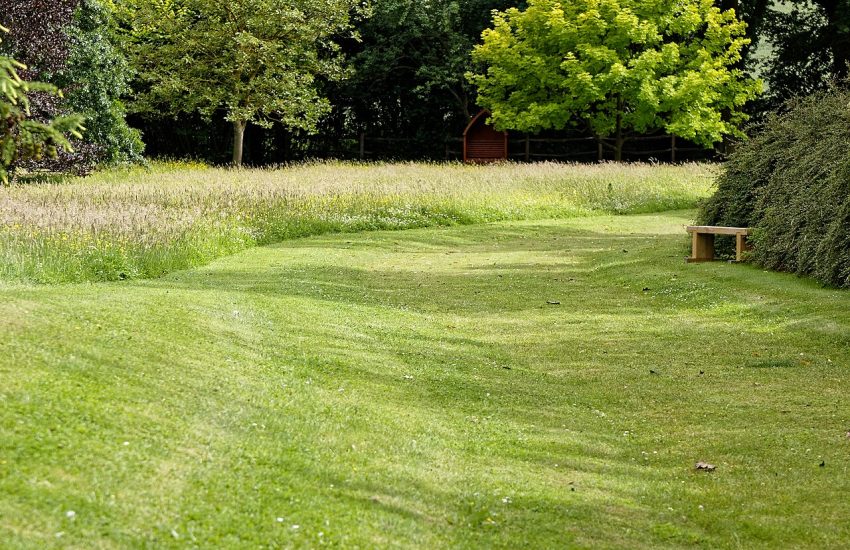
A small meadow can look glorious to the person who planted it and like an abandoned lot to everyone else. The plants are often the same in both cases. What differs is the frame around them.
Clean edges, a mown path and a few deliberate repeats tell visitors that the tall growth is on purpose. Landscape architect Joan Nassauer called these signals “cues to care,” and extension services and the Xerces Society now recommend them for home meadows.
This guide shows how to frame a small meadow of a few hundred to a few thousand square feet, where to put paths, what to plant along the edges, and how to mow it all through the first three years. If you are still deciding whether to convert lawn at all, start with our guide to replacing lawn with wildflowers.
Plan at a Glance
| Site | A backyard or side-yard meadow, seeded or planted from plugs |
| Size | Sample layout 30 × 40 feet (1,200 square feet) |
| Sun | Full sun |
| Soil | Unamended native soil; the edge band uses the same soil as the meadow |
| Maintenance | Mow paths and edges like lawn; mow the meadow itself once a year |
| Best regions | Anywhere a meadow suits the climate; edge plants must match your region |
Assess How the Meadow Is Seen and Used
Before you mow a single path, walk the site and answer three questions.
- Where is it seen from? The kitchen window, the street and the neighbor’s patio each need a tidy face. Those are the edges that get the most framing.
- Where do people already walk? Worn lines in the lawn to the shed, compost or gate are your future paths. Fighting them rarely works.
- What can you mow? Measure your mower deck. Path and edge widths are easiest when they are exact multiples of it.
Also note structures. Pennsylvania’s Department of Conservation and Natural Resources suggests keeping about 30 feet between meadows and buildings in its lawn-to-meadow guidance. In a small yard, that usually means the area nearest the house stays as lawn, patio or garden bed, and the meadow sits farther out.
Frame It: The Mown Edge
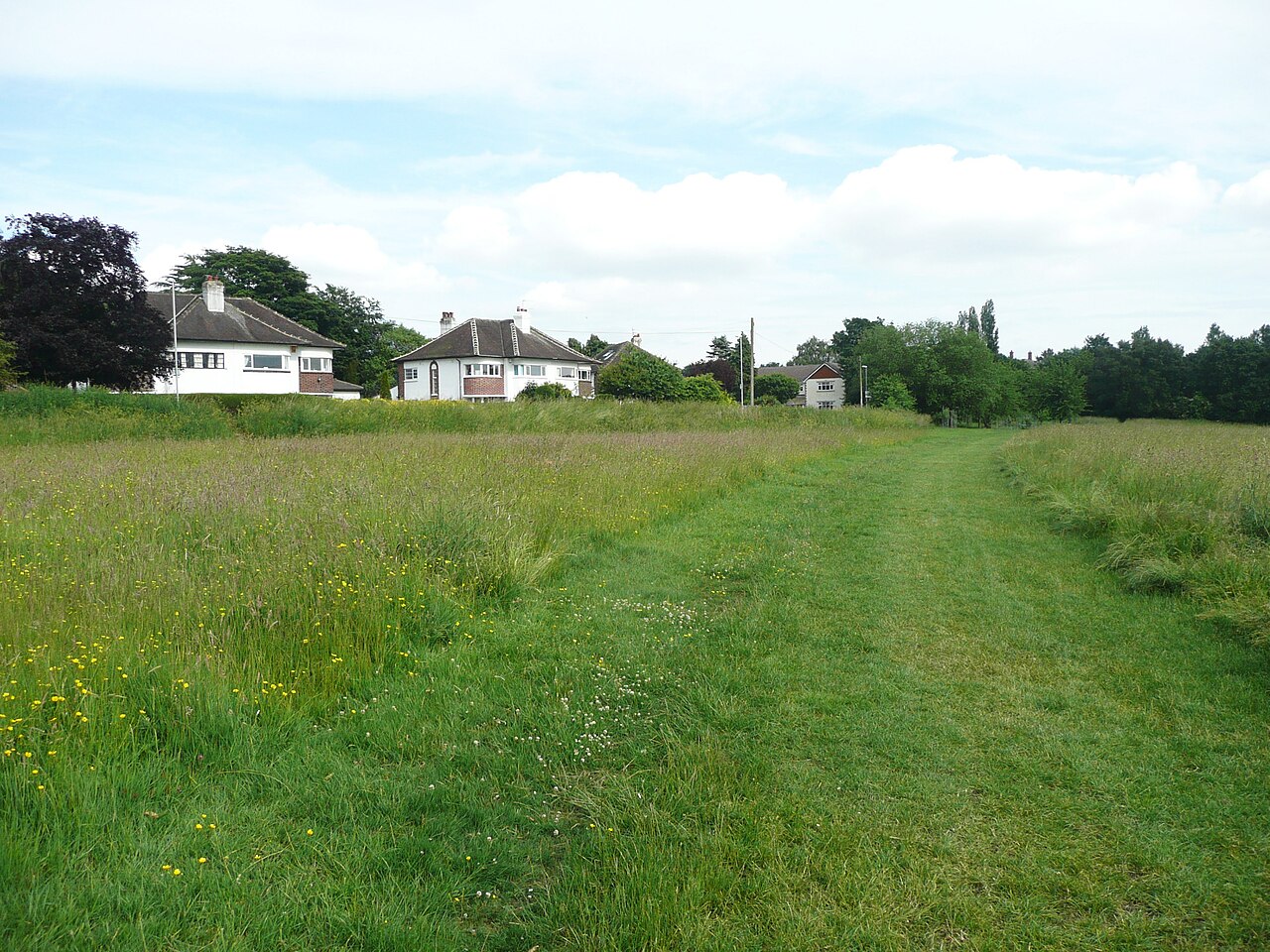
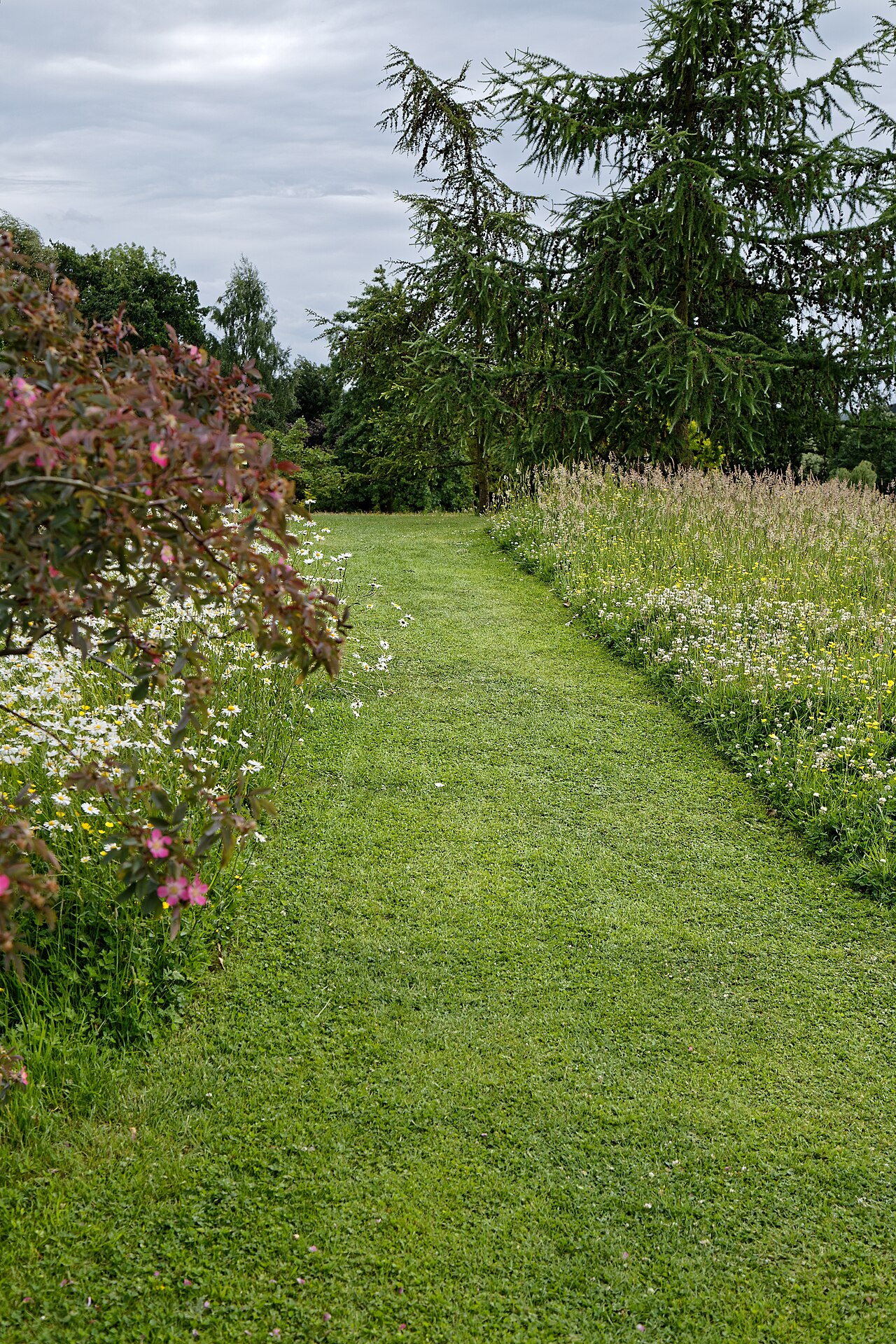
The single most effective cue is a strip of short grass around the meadow. Cornell Cooperative Extension compares a mowed border to the frame of a painting: it protects, sets off and signals value. It also keeps tall plants from flopping onto walks, where they get in people’s way and block views.
The Xerces Society’s meadow guidelines describe two ways to make that edge. You can simply mow a strip of the meadow short, or you can plant the strip with turf seed or sod. Either way, its main job, they note, is symbolic: it shows the meadow is intentional and cared for.
Make the strip at least one mower pass wide, and wider on the side facing the street or house. Where the strip meets paving or a garden bed, keep a crisp cut edge with a spade or edger, as Cornell recommends.
Design the Paths
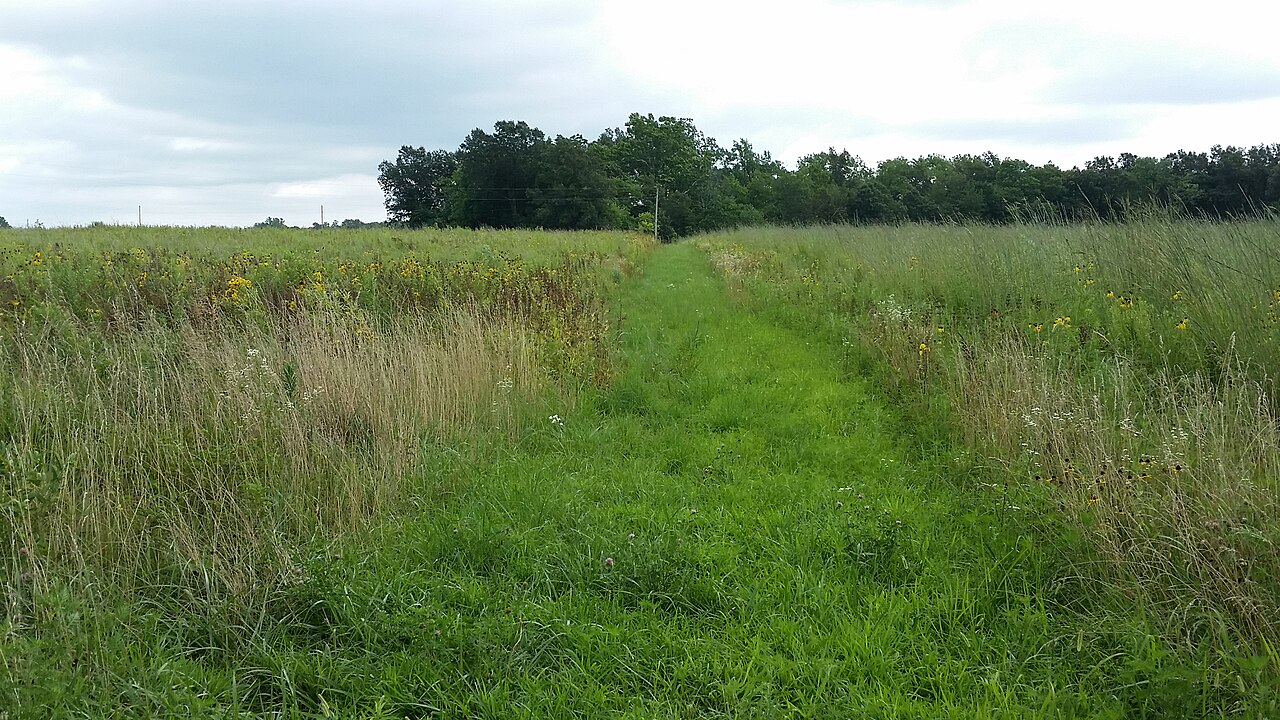
Paths do two things. They let you walk into the meadow to weed, watch birds or pick flowers, and they divide a large mass of tall plants into smaller, readable pieces.
Give each path a destination
A path that wanders and stops reads as an accident. End it at something: a bench, a birdbath, a gate or a tree. Cornell Extension lists benches, arbors, bird feeders and birdbaths as structural cues that show a planting is meant for people as well as wildlife.
Use broad, mowable curves
Gentle curves look natural and are easy to follow with a mower; sharp zigzags leave scalped corners and uncut tufts. In a small meadow, one main path is usually enough. A loop works well if the meadow is wide enough that both halves stay generous.
Choose a surface
Cornell Extension suggests paths of mown grass, stone or mulch. Mown turf is cheapest and blends in. Stepping stones or gravel suit a path you use daily, such as a route to a shed, and stay clean in wet weather.
Plant a Short Edge Band
On the sides that matter most, add a band of shorter plants between the mown edge and the tall meadow. The Xerces guidelines recommend shorter or more familiar grasses and perennials here, using a mix of only two or three species drawn from the meadow itself, so the soil and care match.
The same guidelines note that areas next to lawns and walkways suit fine-textured, short plants, and that a band of potted plants fills in faster than a seeded meadow. A 3-foot band is usually enough to step the height down from the meadow to the mown edge. For deeper plantings, our plan for a meadow transition with short plants at the lawn edge grades heights in three zones.
If the meadow includes spreading plants such as common milkweed, the edge band and mown strip also act as a boundary. See our guide to common milkweed spreading beyond the bed for how to hold that line.
Plant Palette: Edge-Band Choices
Pick two or three that are native to your area and already in your meadow mix. Heights from NC State Extension or the Wildflower Center (LBJ); ranges from the Wildflower Center.
| Plant | Role | Height | Sun / moisture | Native range |
|---|---|---|---|---|
| Prairie dropseed (Sporobolus heterolepis) | Neat grass mounds | 2–3 ft (NC State) | Sun / dry | Que. to Sask., locally south to NC, KY, e. TX and CO |
| Purple lovegrass (Eragrostis spectabilis) | Lowest grass, red haze | 8–14 in (NC State) | Sun / well-drained | ME to MN, south to FL and AZ |
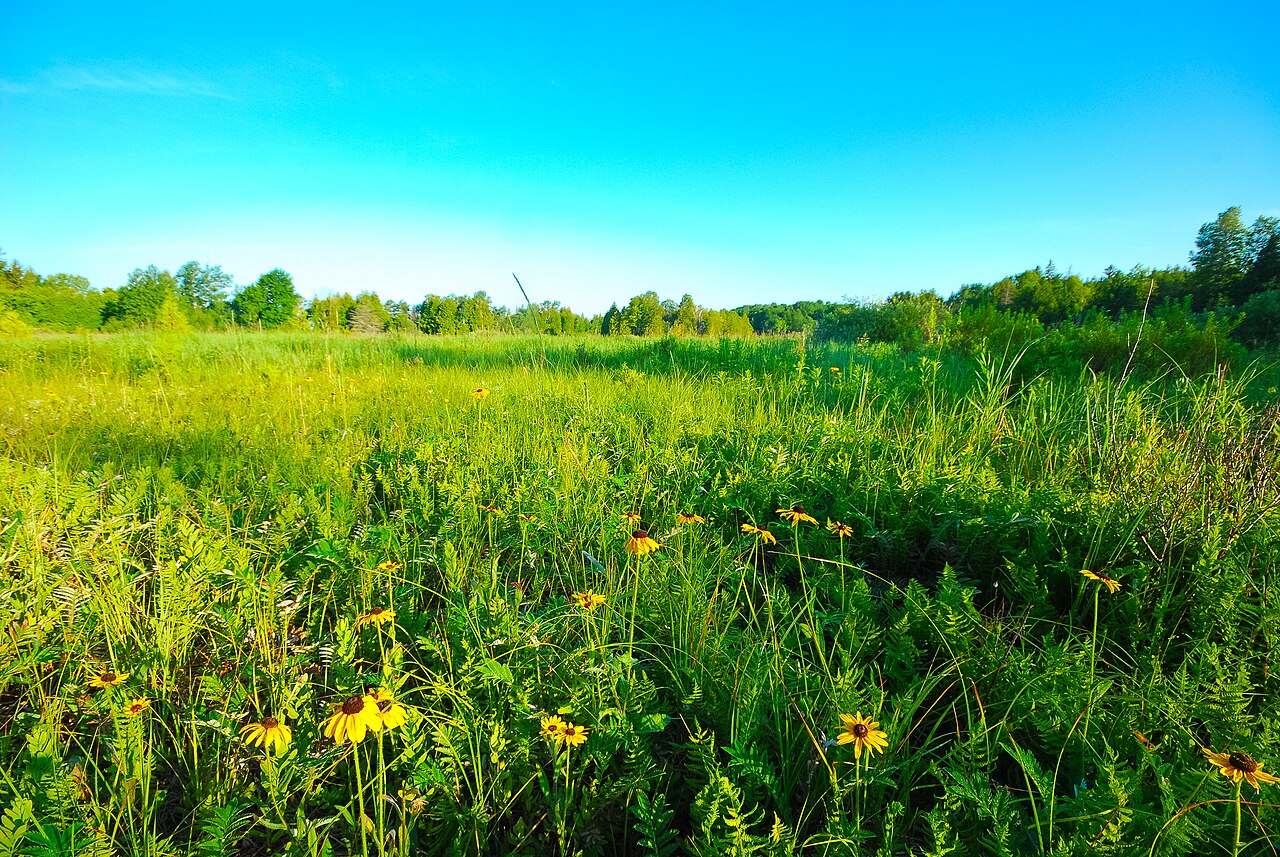
| Black-eyed Susan (Rudbeckia hirta) | Familiar summer color | Up to about 3 ft (LBJ) | Sun / dry to moist | W. MA to Man. and WY, south to FL and NM |
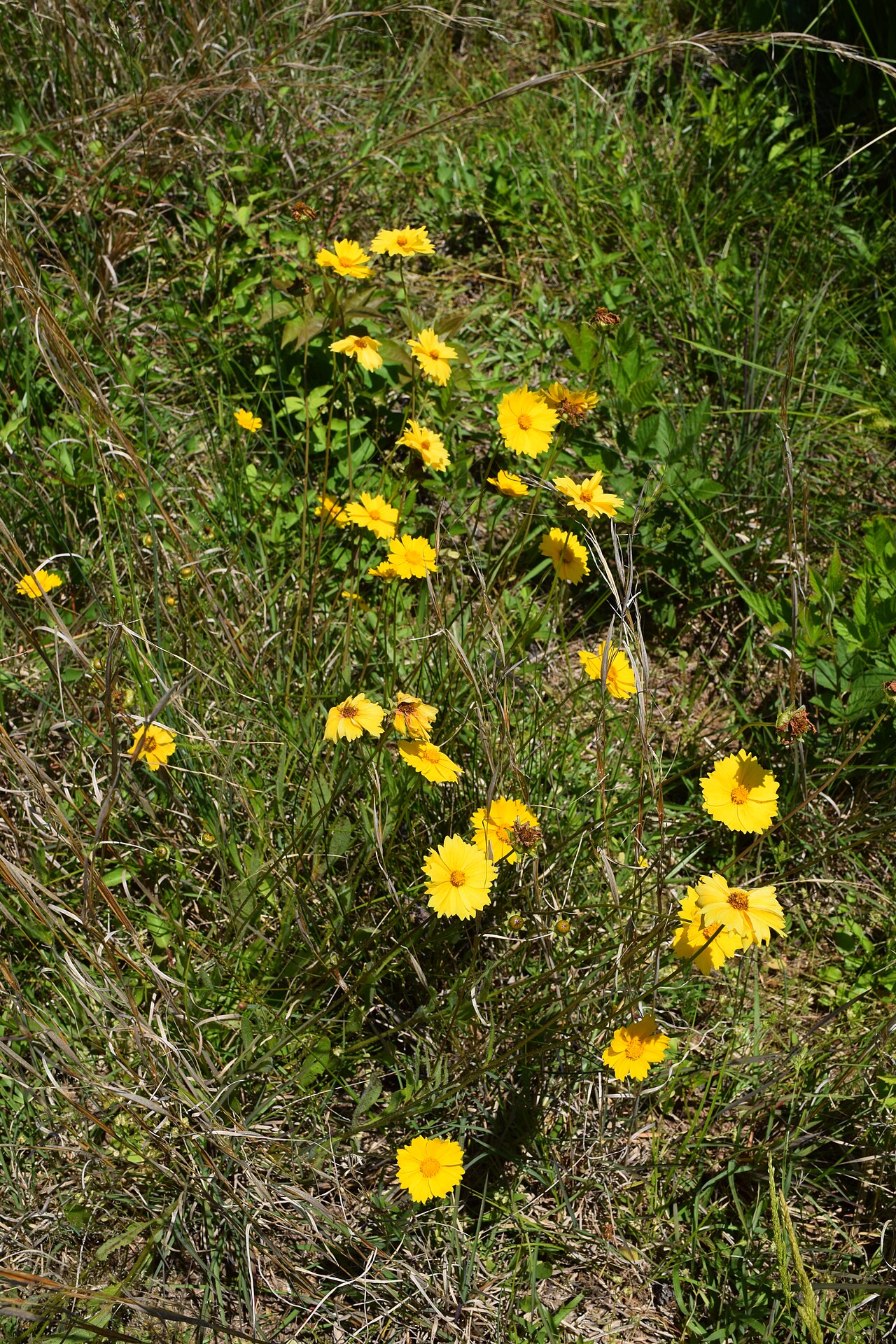
| Lanceleaf coreopsis (Coreopsis lanceolata) | Early-summer yellow | 1–2 ft (LBJ) | Sun to part shade / dry | FL to e. TX and n. NM, north to VA, Ont., MI, WI, MO and CO |
| Butterfly weed (Asclepias tuberosa) | Orange accent, monarch host | 1–2 ft (NC State) | Sun / dry to medium | New England to FL, west to TX, north to MN |
| Blue grama (Bouteloua gracilis) | Western edge grass; see blue grama in a dry-site planting | Leaves to about 4 in; seed heads 1–2 ft (LBJ) | Sun / dry | Western North America, east into the Great Plains |
Two cautions. NC State describes black-eyed Susan as a biennial or short-lived perennial, so expect it to move around by seed. The Wildflower Center notes that lanceleaf coreopsis is not reliably perennial, self-sows readily and can become weedy; it is naturalized beyond its range in the Northeast, so plant it only where it is native.
Repeat a Few Plants Across the Meadow
The Xerces guidelines note that limiting the number of species, or making sure a few distinctive ones repeat across the site, helps a meadow look intentional. Cornell Extension makes the same point about drifts that repeat through a planting.
In practice, choose one or two showy flowers your neighbors will recognize, such as black-eyed Susan or butterfly weed, and make sure they appear in the edge band and again in patches deeper in the meadow. The eye links them, and the whole planting looks designed.
The same logic works at bed scale; our five-species prairie-style bed shows how to balance a few repeated flowers against a grass matrix.
Sample Layout: 30 × 40-Foot Meadow
- Mown frame: one mower pass on the back and sides; two passes along the long side facing the house.
- Edge band: a 3-foot band along the 40-foot house side, about 120 square feet. At roughly 18 inches apart, that is about 50 plants of two or three species, for example 25 prairie dropseed, 15 black-eyed Susan and 10 butterfly weed.
- Path: one curving mown path, two mower passes wide, entering from the house side and ending at a bench or birdbath near the back.
- Repeats: three or four patches of the same edge-band flowers set deeper in the meadow.
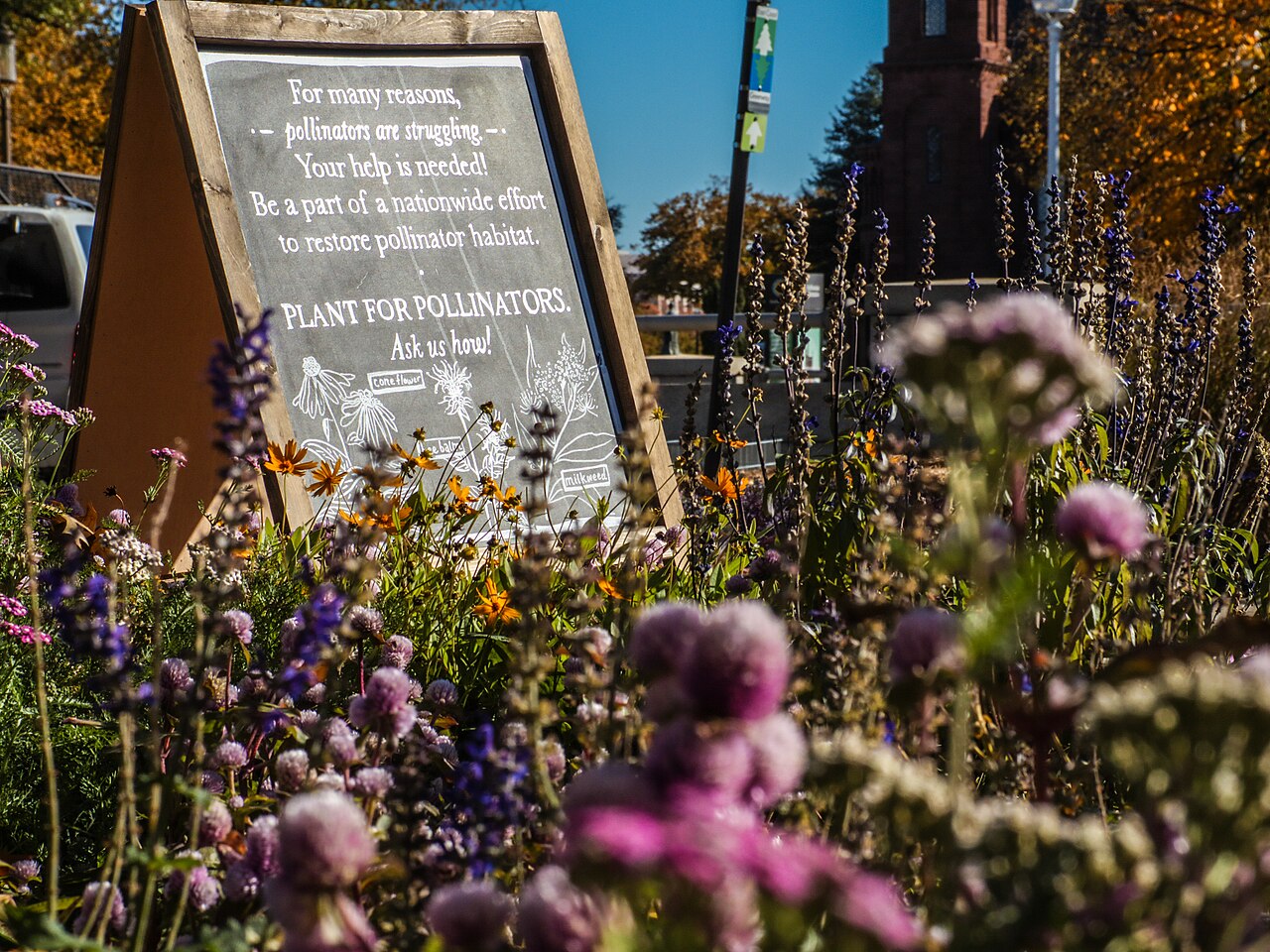
- Sign: a small habitat sign at the corner nearest the street or neighbor.
Add a Sign and One Structure
A sign is the cheapest cue of all. The Xerces guidelines, Cornell Extension, UMN Extension and Pennsylvania DCNR all suggest one. A sign is especially useful while a meadow is young and still looks rough, and it opens conversations with neighbors.
Add one built element, too: a bench, a birdhouse on a post or a short stretch of fence. The Xerces guidelines mention ornamental fences, gates and even a simple post-and-rope edge as ways to frame a meadow.
Installation Steps
- Mark the frame and paths. Lay out hoses or marking paint for the outer edge, the path and the edge band. Walk the path to check that it feels natural.
- Prepare the meadow area. Remove or smother the existing turf where the meadow and edge band will go. Leave the paths and frame as existing lawn if it is healthy.
- Plant the edge band from pots. Set plants about 18 inches apart in a staggered pattern.
- Seed or plug the meadow. Follow your seed supplier’s rates, or plant plugs in drifts.
- Set the sign and structure. Put them in on day one; they matter most while the meadow is young.
The First Three Years
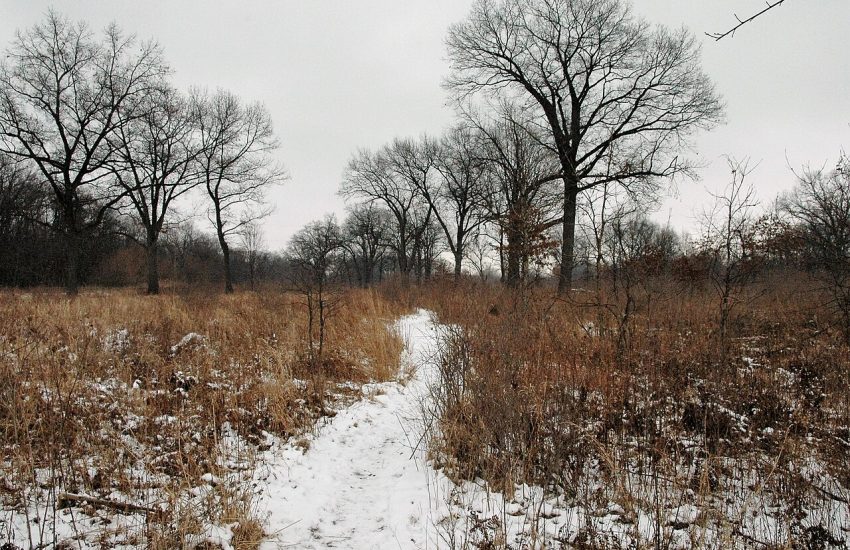
- Year 1: Mow paths and the frame on your lawn schedule. For a seeded meadow, the Xerces guidelines recommend mowing the whole meadow to about 8 inches each time it reaches 12 to 18 inches, to stop annual weeds from seeding. Water and weed the edge band.
- Year 2: Keep paths and edges crisp. Mow or hand-weed the meadow as needed to keep weeds from setting seed. Replace any gaps in the edge band.
- Year 3 and after: Per Xerces, mow the meadow once a year in late winter or early spring, while plants are still dormant: either half the meadow to 4 to 6 inches, or all of it to 8 to 12 inches. Mowing half leaves winter cover for wildlife. Keep paths and edges mown all season.
Mistakes to Avoid
- No frame at all. Without a mown edge, even a beautiful meadow can look neglected to neighbors.
- Paths narrower than the mower. They close in by midsummer and become a chore to cut.
- A mulched shrub bed right against the meadow. The Xerces guidelines warn against this: shrub beds need different soil and can’t be mowed, which complicates both installation and maintenance.
- Too many species at the edge. Two or three repeated plants look tidier than ten single ones.
- Tall, coarse plants beside the walk. Xerces suggests keeping big, bold plants such as cup plant for the back of the site, not next to an entrance.
- Mowing the whole meadow in fall. Wait for late winter so seed heads and stems shelter wildlife.
📋 Find plants for your region: see our native plant lists for Illinois, Iowa & Missouri, Ohio & Indiana, Michigan, Wisconsin & Eastern Minnesota, Maryland, Virginia & West Virginia, and North & South Carolina.
Frequently Asked Questions
How wide should a mown path through a meadow be?
At least one mower pass, and two if people will walk side by side. Matching the width to your mower keeps the edges clean and the job quick.
How often should I mow meadow paths?
On the same schedule as your lawn. Paths and edges look best when they stay short all season, while the meadow itself is mown only once a year once established.
What should I plant along the edge of a meadow?
Two or three short species from your meadow mix, such as prairie dropseed, black-eyed Susan or butterfly weed where they are native. The Xerces Society recommends shorter, familiar plants for these transition areas.
How do I keep my meadow from looking messy to neighbors?
Use cues to care: a mown edge, a clear path with a destination, repeated familiar flowers and a small sign. UMN Extension also suggests talking with neighbors about the change.
Can a meadow go right up to my house?
Pennsylvania DCNR suggests keeping about 30 feet between meadows and structures. In small yards, keep lawn, patio or garden beds closest to the house.
Sources
- Alice Sturm and Stephanie Frischie, Mid-Atlantic Native Meadows: Guidelines for Planning, Preparation, Design, Installation, and Maintenance, Xerces Society and Mahan Rykiel Associates: mown edges, edge bands, repetition, framing, signage, mowing schedule.
- Cornell Cooperative Extension, Putnam County, Is Your Pollinator Garden Messy? “Cues to Care” Can Help: mowed borders and paths, crisp edges, structural cues, signs.
- Wild Ones, Cues to Care: The Language of Neighborly Landscaping: background on Joan Nassauer’s research.
- Pennsylvania DCNR, Request Help Converting Your Lawn to a Meadow: mowed edges, shorter edge plants, setback from structures, signs.
- University of Minnesota Extension, Planting and Maintaining a Prairie Garden: mowed edges, signs and talking with neighbors.
- NC State Extension Gardener Plant Toolbox: prairie dropseed, purple lovegrass, black-eyed Susan, butterfly weed.
- Lady Bird Johnson Wildflower Center plant database: black-eyed Susan, lanceleaf coreopsis, prairie dropseed, purple lovegrass, butterfly weed, blue grama: ranges, heights and habit notes.