Native Plants for a Seasonally Wet Yard: Design by How Long Water Stands
Last updated: November 7, 2026
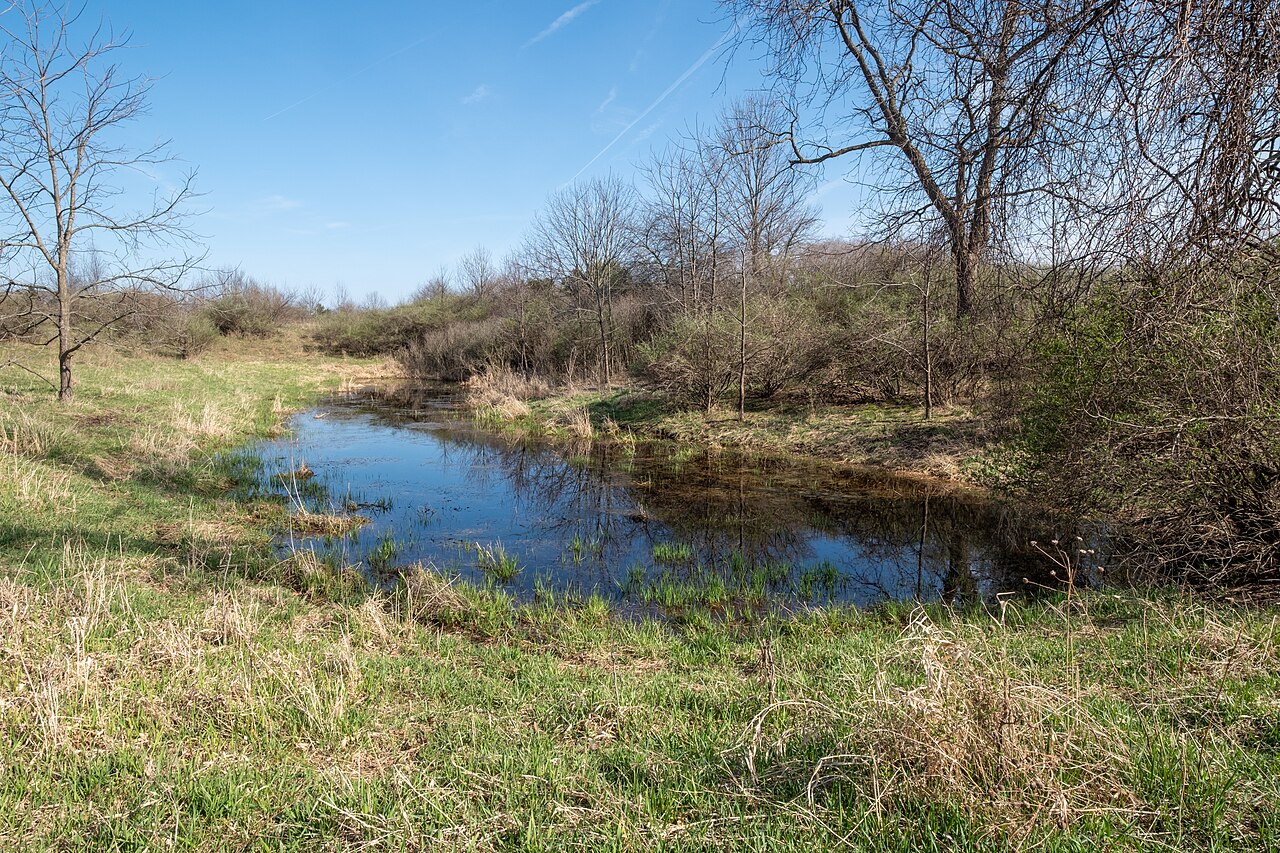
Most yards with a soggy corner get the same advice: plant a rain garden. That works only when the water leaves fast. If puddles sit for a week every April, or the ground squelches until June, rain-garden plants and rain-garden rules are the wrong tools.
The most useful number for a seasonally wet yard isn’t how much rain falls. It’s how long the water stands after it falls. One low spot can drain in an afternoon at its edge and hold water for three weeks at its center.
This guide shows you how to time the water, map those differences into zones, and choose native plants for each zone. Swap in regional alternates as you go, because no single plant list works coast to coast.
Plan at a Glance
| Site | Low lawn areas, swales, and backyard dips that pond after rain or snowmelt, often drying by late summer |
| Size | Any. The examples assume a 15 × 25-foot low area |
| Sun | Full sun to part shade; nearly every plant below is listed for sun or part shade |
| Soil | Usually silty or clayey, with gray or mottled subsoil where water sits longest |
| Maintenance | Low after year two. Expect weeding, cutting back in late winter, and replacing a few losses |
| Best regions | Eastern and central North America for the main palette, with Pacific Coast alternates listed |
Why Duration Matters More Than “Wet”
Plant tags lump everything into “moist” or “wet,” but roots care about how long they sit without air. A few hours of ponding after a storm is a different world from two weeks of standing water every spring.
North Carolina State Extension’s plant database makes this explicit. Its soil drainage field separates “Occasionally Wet,” “Occasional Flooding,” and “Frequent Standing Water.” Only a small set of garden natives carry that last label.
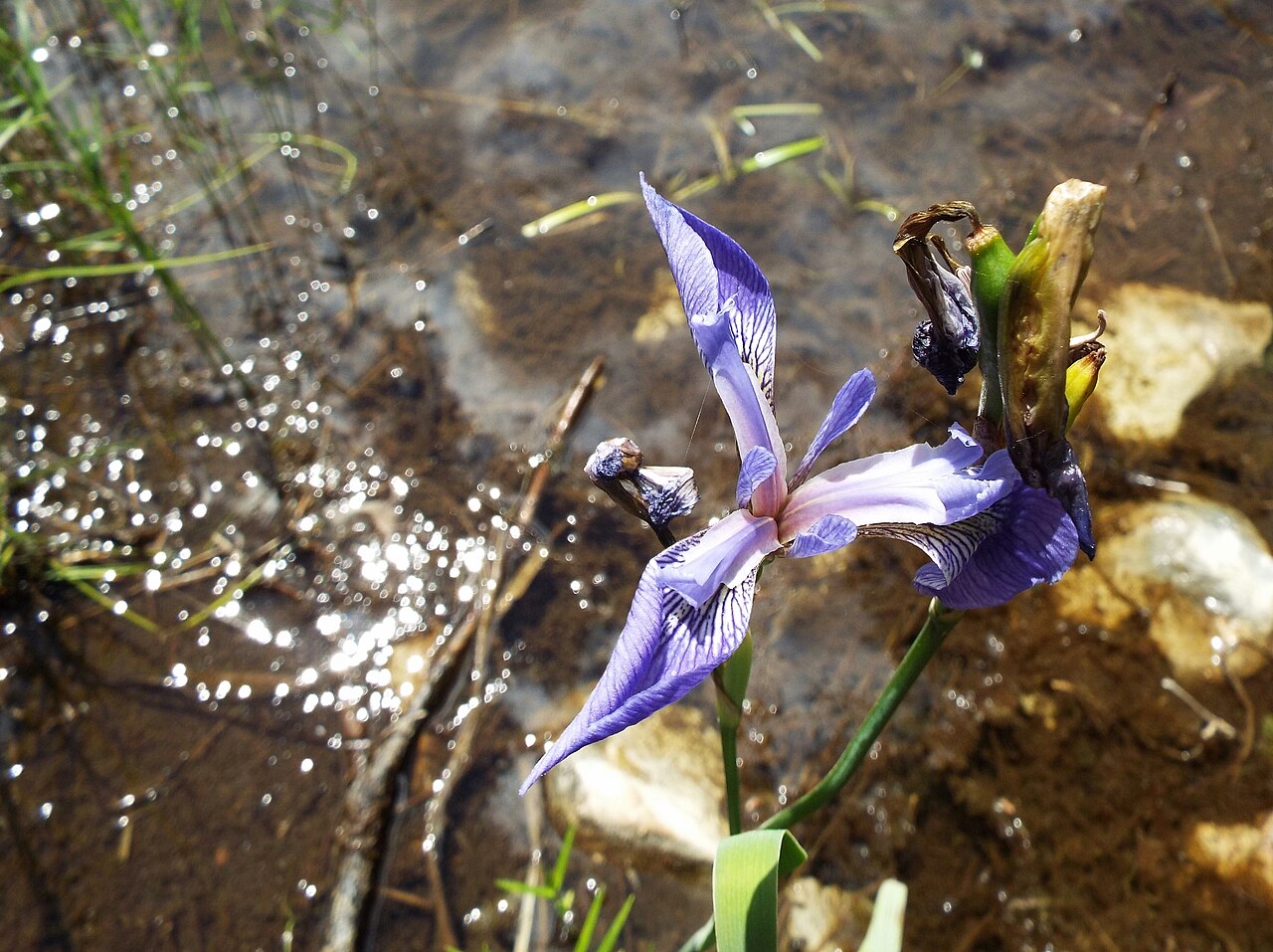
Buttonbush and larger blue flag iris are listed for frequent standing water. Swamp milkweed, cardinal flower, and turtlehead are listed for moist to occasionally wet soil, which is a very different promise.
The U.S. wetland indicator system works the same way, rating species from obligate wetland (almost always in wetlands) to obligate upland. Ratings differ by region, so check your own region’s rating in the National Wetland Plant List.
Site Assessment: Time the Water
Don’t guess from one storm. Watch the low area through a spring and a summer if you can, because snowmelt and early-season rain usually cause the longest ponding.
Stake the water line
After a soaking rain, push short stakes in at the edge of the standing water. Every 12 to 24 hours, add a stake where the edge has retreated and note how many days have passed.
Those rings become your planting zones.
Run a simple drainage test
The University of Minnesota Extension describes a quick check for rain-garden sites. Dig a wide hole about 10 inches deep, fill it with water, and see if it empties within 48 hours.
Minnesota picks 48 hours to keep plants from drowning and mosquitoes from breeding. Virginia Cooperative Extension’s rain-garden fact sheet allows two to four days, noting that mosquitoes breed in about seven.
If your test hole still holds water on day three, you’re planting a seasonal wetland edge, not a rain garden.
Read the soil color
Dig a spade’s depth in the wettest and driest parts of the area and compare. Purdue University’s soil drainage guide explains that soils saturated for long periods turn gray, and soils with a fluctuating water table develop a mottled mix of brown and gray.
Gray or mottled soil near the surface means the water table rises in wet seasons. Virginia’s fact sheet says a rain garden’s bottom should sit at least 2 feet above the seasonal high water table, so don’t dig a basin there.
Check what you can’t change
Both extension guides keep rain gardens at least 10 feet from foundations, and Minnesota adds 35 feet from a septic drain field. If water pools against your house, fix the grading or downspouts first.
Some low spots are natural wetlands, and work near lakes and streams can fall under local rules. Minnesota suggests checking with your local Soil and Water Conservation District first.
Map the Yard Into Duration Zones
Turn your stake rings into bands, each with its own plant list.
Duration Zones at a Glance
Use the time water typically stands after a soaking spring rain, not after a light shower.
| Zone | How long water stands | What it behaves like | Plant types |
|---|---|---|---|
| Zone 1: Long-wet center | A week or more in spring | Seasonal pool or marsh edge | Plants rated for frequent standing water |
| Zone 2: Pulse zone | Two to six days | Wet meadow | Occasionally wet to occasional flooding |
| Zone 3: Quick-drain rim | Under 48 hours | Rain-garden conditions | Moist to occasionally wet; some dry tolerance |
| Zone 4: Upland edge | Never ponds | Ordinary garden soil | Tie-in plants and trees |
Zone 1: the long-wet center
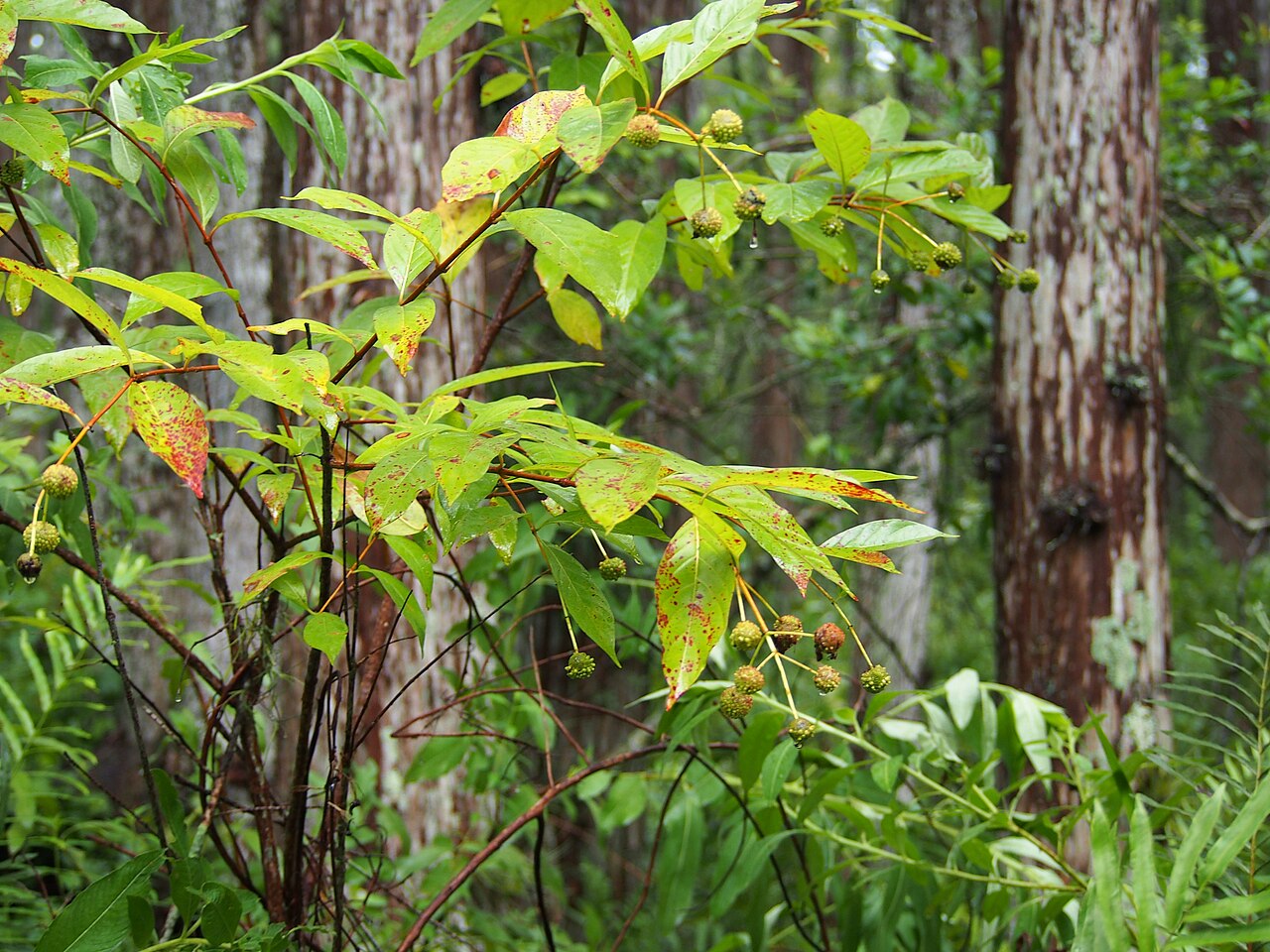
Choose species whose sources describe standing water, swamps, or submergence, not just “moist soil.” Buttonbush grows 5 to 8 feet tall in sun or part shade. The Lady Bird Johnson Wildflower Center describes tussock sedge for wet soil to standing water in swamps and swales. It also notes that larger blue flag iris can tolerate complete submergence.
In the Southeast coastal plain, southern blue flag (Iris virginica) fills the iris role. On the Pacific Coast, slough sedge is the wet-ground sedge, native from British Columbia to California.
Zone 2: the pulse zone
Water sits a few days, then the ground slowly dries. This band suits wet-meadow perennials that don’t want weeks underwater.
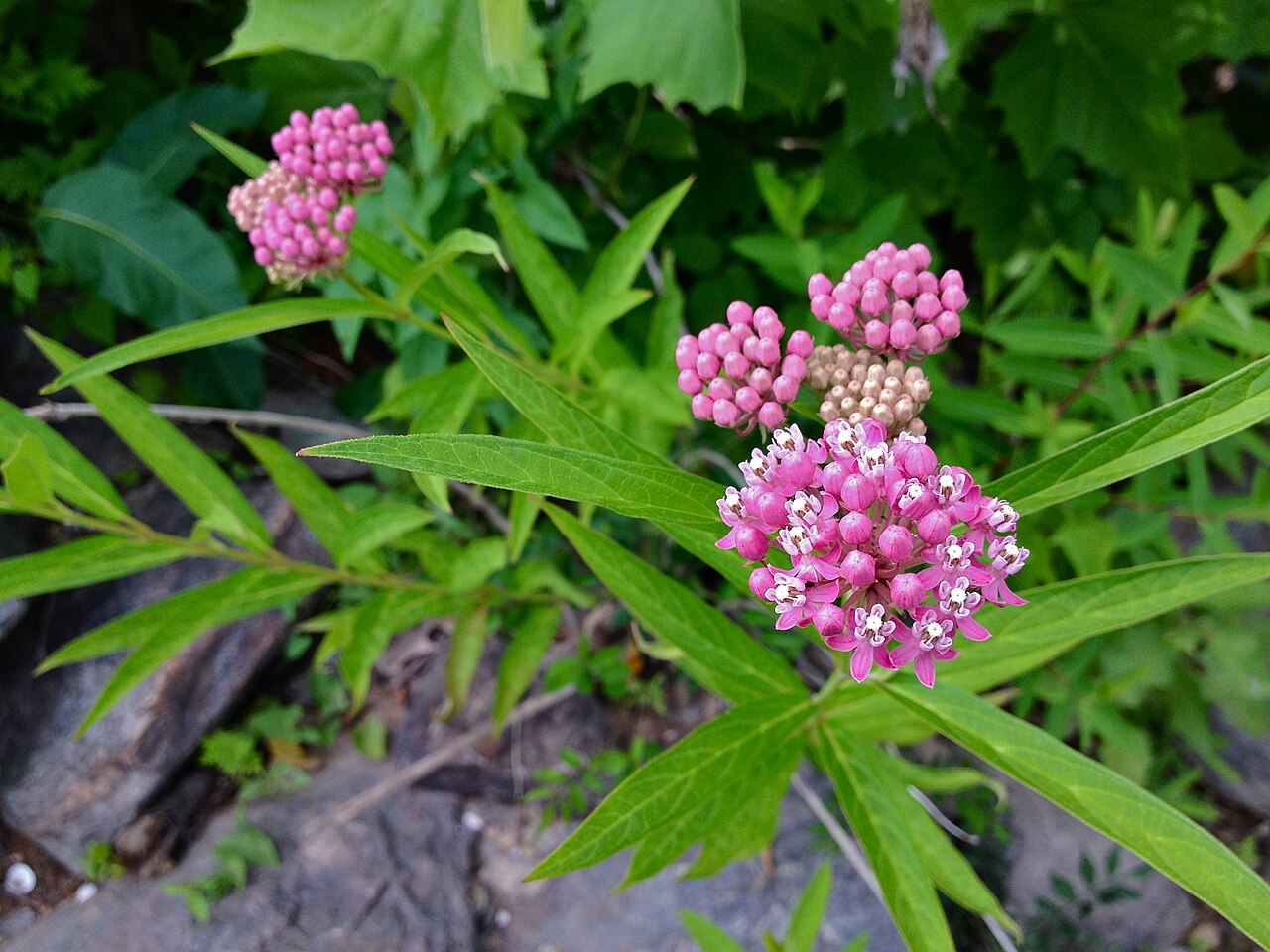
Swamp milkweed is the anchor here. The Wildflower Center calls it one of the few ornamentals that thrives in mucky clay, and NC State lists it for moist to occasionally wet soil at 3 to 5 feet tall.
Eastern rosemallow adds big summer flowers, and blue vervain, soft rush, and turtlehead fill in around them. Our guide to blue vervain in a wet-meadow planting goes deeper on height and repetition in this zone.
Zone 3: the quick-drain rim
The rim behaves like a classic rain garden: brief wet spells and drier stretches in between. Cardinal flower belongs here if the soil stays damp, since the Wildflower Center warns it must be kept moist or wet at all times.
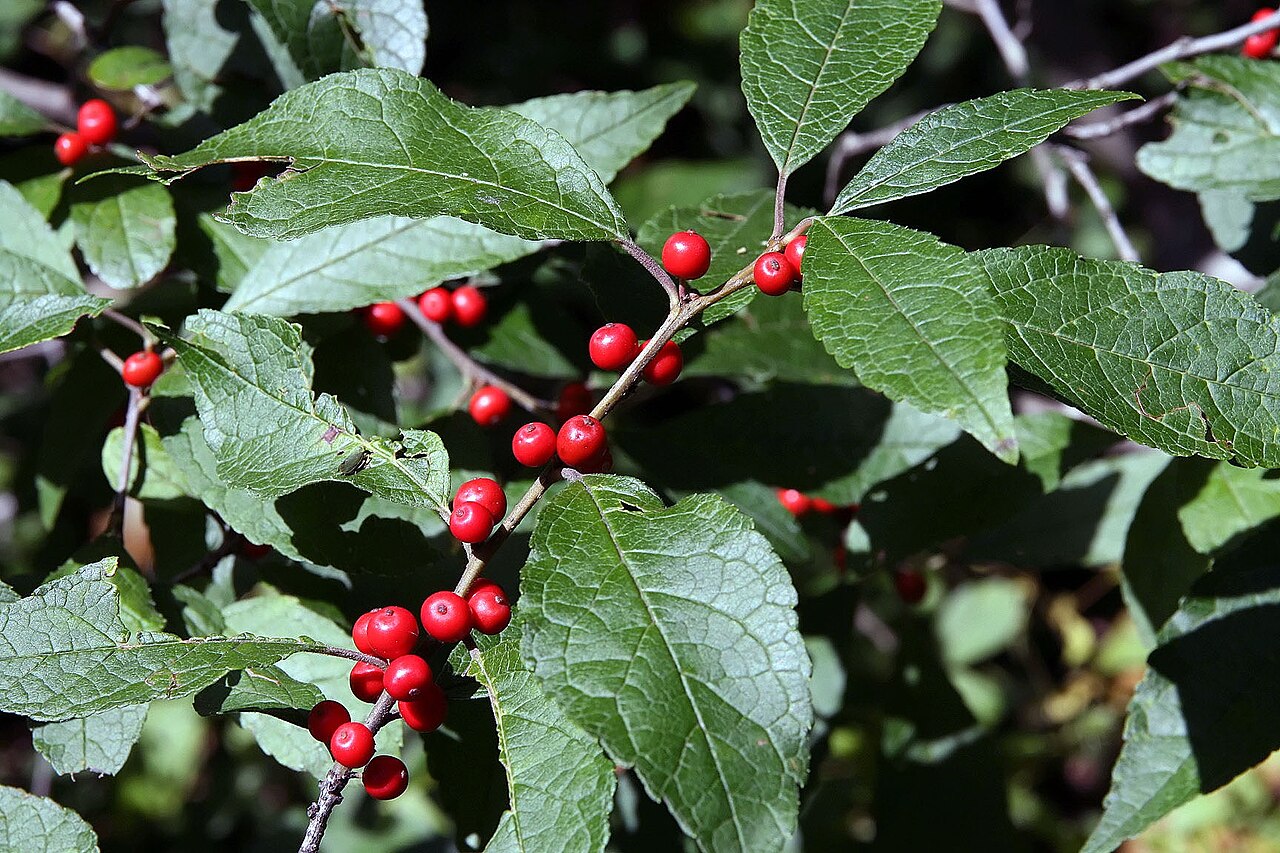
Shrubs carry the structure. Winterberry holly is listed by the Wildflower Center for dry, moist, and wet soils, a useful range where summers turn dry. Redosier dogwood tolerates occasional flooding and occasional dryness in NC State’s listing, which makes it a good bridge plant.
If your low spot is a clay pan that swings between soggy and baked, see a native garden for heavy clay too.
Zone 4: the upland edge
This is regular garden ground for paths and tie-in plants. River birch suits the boundary between zones 3 and 4. The Wildflower Center says it handles periodically wet areas, but NC State lists it at 30 to 70 feet tall, so plant it only where that fits.
Design and Layout
Keep the lowest zone simple: fewer species in larger drifts read as intentional. Repeat two or three signature plants, such as swamp milkweed and blue vervain, across zones 2 and 3 so the planting reads as one composition.
Put tall plants at the center or far side and shorter plants near the viewing edge. Run paths along zone 4 or on stepping stones across zone 3, never through the long-wet center.
Plant Palette
Heights and drainage ratings come from NC State Extension and the Lady Bird Johnson Wildflower Center. Confirm each plant is native to your county before buying.
| Plant | Zone and role | Height | Sun / water | Native range (summary) |
|---|---|---|---|---|
| Buttonbush | 1: center shrub | 5–8 ft | Sun–part shade; frequent standing water | New Brunswick to the upper Mississippi Valley, south to Florida and Texas |
| Larger blue flag | 1: flowering edge | 2–3 ft | Sun–part shade; standing water | Labrador to Manitoba, south to Virginia and Ohio |
| Southern blue flag (Iris virginica) | 1: Southern alternate | 1–2.5 ft | Sun; wet | Coastal Plain, Virginia to Texas |
| Tussock sedge | 1: matrix sedge | Tussocks to about 5 ft (LBJ) | Sun; wet soil to standing water | New Brunswick to Ontario, south to NC, TN, KS |
| Slough sedge | 1–2: Pacific Coast sedge | 2–4 ft | Part shade; wet | British Columbia to California |
| Swamp milkweed | 2: anchor perennial | 3–5 ft | Sun–part shade; moist to occasionally wet | Most of eastern and central North America |
| Eastern rosemallow | 2: summer flowers | 2–6 ft | Sun–part shade; moist to occasionally wet | Florida to Texas, north to NJ, OH, IN |
| Blue vervain (Verbena hastata) | 2: vertical accent | 2–5 ft | Sun–part shade; moist to occasionally wet | Nova Scotia to British Columbia, south to FL, KS, NM, CA |
| Soft rush (Juncus effusus) | 1–2: fine texture | To about 4 ft | Sun; moist to wet | Much of North America |
| Turtlehead (Chelone glabra) | 2–3: late bloom, shade-tolerant | 1–3 ft | Sun–part shade; moist to occasionally wet | Newfoundland to Minnesota, south to Georgia |
| Cardinal flower | 3: hummingbird accent | 4–5 ft (NC State) | Sun–shade; always moist | New Brunswick to Minnesota, south to Florida, Texas and southern California |
| Winterberry | 3: winter fruit | 3–15 ft | Sun–shade; dry to wet | Nova Scotia to Minnesota, south to Florida and Texas |
| Redosier dogwood | 3: bridge shrub | 5–9 ft | Sun–part shade; occasional flooding and dryness | Newfoundland to Alaska, south to VA, NE, NM mountains, n. CA |
Regional alternates
- Southeast coastal plain: Swap in southern blue flag and consider bald cypress for a very large yard. The Wildflower Center notes it is adapted to riverine habitats and grows in swamps.
- Pacific Northwest: Build around slough sedge, soft rush, and redosier dogwood. Add western spirea (Spiraea douglasii), which the Wildflower Center describes from low, damp places from British Columbia to northern California.
- Arid West: Wet spots are usually irrigation or runoff problems. Fix the source and ask a local native plant society about riparian species.
Sample Quantities for a 15 × 25-Foot Low Area
Assumes a long-wet center of about 60 square feet, a pulse band of about 150 square feet, and a rim of about 165 square feet.
| Zone | Plants | Spacing guide |
|---|---|---|
| Zone 1 | 2 buttonbush, 9 tussock sedge, 7 blue flag iris | Shrubs 5–6 ft apart; sedges and iris 18–24 in |
| Zone 2 | 9 swamp milkweed, 5 rosemallow, 7 blue vervain, 5 soft rush | 2–3 ft apart in groups of 3–5 |
| Zone 3 | 3 winterberry (with 1 male), 1 redosier dogwood, 7 cardinal flower, 5 turtlehead | Shrubs at mature width; perennials 18–24 in |
Virginia’s fact sheet recommends groups of three to five and spacing shrubs at their mature width. Winterberry needs a male plant of the same species that blooms at the same time, or the females won’t fruit.
Installation Steps
- Plant when the ground is workable, often late summer or fall once the low spot has dried. Avoid digging saturated soil.
- Mark zones with flags along the stake lines you recorded.
- Remove turf and weeds without lowering the grade, since deepening a low spot lengthens the ponding.
- Skip heavy amendments in the wettest zones. They won’t change how long water stands.
- Plant from the center outward and set crowns at the depth they grew in the pot.
- Mulch thinly in zone 1, where light mulch floats away. Virginia’s guide suggests 2 to 3 inches elsewhere.
- Water new plants through their first dry spell.
First-Three-Years Maintenance Calendar
Year one
- Spring: Record how long water stands this year.
- Summer: Water during dry spells and pull weeds while they’re small.
- Fall: Move any plant that drowned or dried out into the zone it needs.
Year two
- Late winter: Cut back last year’s perennial stems before new growth starts, or leave some standing for wildlife.
- Spring: Fill gaps with more of whatever thrived, not new experiments.
Year three
- Spring: Divide crowded iris or sedges and use the divisions to fill gaps.
- Summer: Prune shrubs only to remove dead or crossing wood. Thin redosier dogwood by removing a few of the oldest stems.
- Ongoing: After big storms, check the inflow point for erosion.
Mistakes to Avoid
- Planting a rain-garden list in a seasonal pool. Plants rated “occasionally wet” will rot where water stands for weeks.
- Planting a wetland list on the rim. Plants chosen for standing water may sit in dry soil once the rim dries out in July. Give the rim plants with a wider moisture range.
- Digging a basin into high groundwater. It becomes a mosquito-friendly pond.
- Trusting one year. Wet and dry springs shift the zone lines, so plant bridge species at the boundaries.
- Ignoring the inflow. If a downspout feeds the low spot, see our plan for native plants at a downspout area to handle the pulse at its source.
- Choosing buttonbush for every wet spot. It’s the right shrub for long ponding, but see where buttonbush fits in a rain garden and where it doesn’t before using it in a fast-draining bed.
📋 Find species confirmed for your area in our regional lists, such as the native plant list for Illinois, Iowa and Missouri, the list for New York, Pennsylvania and northern New Jersey, and the list for western Oregon and Washington.
Frequently Asked Questions
How long can native plants sit in standing water?
It depends on the species. Buttonbush and blue flag iris are listed for frequent standing water, while swamp milkweed and cardinal flower are better where water leaves within a few days.
Can I put a rain garden in a spot that already floods?
Usually not. Extension guides expect rain gardens to drain in 48 hours to four days, so a spot that holds water longer needs a wetland-edge planting instead.
Will a wet-yard planting breed mosquitoes?
Water standing about a week or more can, according to Virginia Cooperative Extension. Don’t deepen low spots into permanent puddles.
Should I add sand or compost to make the soil drain?
Not in the wettest zones. No amendment fixes a high water table, so match plants to the water you have.
What if my yard is wet in spring but bone dry in August?
Choose plants with a wide moisture range for the rim and bridge zones, such as winterberry and redosier dogwood. Water new plantings through their first summer.
Sources
- Virginia Cooperative Extension: Stormwater Management for Homeowners, Fact Sheet 5: Rain Gardens
- University of Minnesota Extension: Rain gardens
- Purdue University: Determining natural soil drainage
- Wikipedia: Wetland indicator status
- NC State Extension Plant Toolbox: Cephalanthus occidentalis (also Iris versicolor, Asclepias incarnata, Hibiscus moscheutos, Lobelia cardinalis, Chelone glabra, Cornus sericea, Ilex verticillata, Betula nigra, Verbena hastata, Iris virginica)
- Lady Bird Johnson Wildflower Center: Carex stricta
- Lady Bird Johnson Wildflower Center: Asclepias incarnata
- Lady Bird Johnson Wildflower Center: Iris versicolor
- Lady Bird Johnson Wildflower Center: Lobelia cardinalis
- Lady Bird Johnson Wildflower Center: Ilex verticillata
- Lady Bird Johnson Wildflower Center: Taxodium distichum
- Lady Bird Johnson Wildflower Center: Cornus sericea
- Lady Bird Johnson Wildflower Center: Spiraea douglasii
- Lady Bird Johnson Wildflower Center: Betula nigra
- Wikipedia: Carex obnupta