
Georgia Tickseed (Coreopsis nudata)
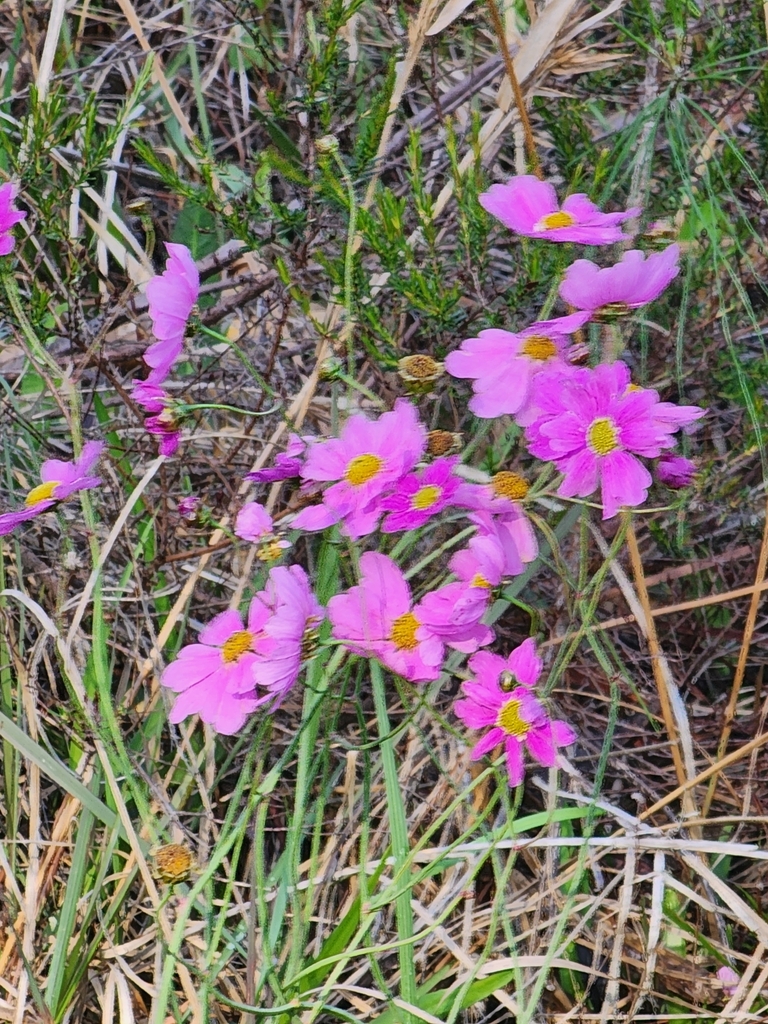
Coreopsis nudata, called Georgia Tickseed or pink tickseed, is a wetland wildflower of the southeastern Coastal Plain and one of the few tickseeds with pink rather than yellow flowers. In April and May its slender, nearly leafless stems rise 2 to 4 feet out of wet pine flatwoods, savannas, bog edges and roadside ditches, each topped with a few flower heads that have rose-pink to lavender rays around a golden-yellow center. A patch in full bloom looks more like wild cosmos than the yellow tickseeds most gardeners know.
It is a member of the aster family (Asteraceae). The species name nudata means “made bare” and refers to the flowering stems, which carry only a few small, thread-like leaves. Most of the foliage is near the base of the plant, where long, round, rush-like leaves are easy to mistake for a clump of grass or rush when the plant is not in flower.
Georgia tickseed grows only from southeastern Georgia and northern Florida west along the Gulf Coast to southeastern Louisiana. It is a plant of fire-maintained, seasonally flooded pinelands, and it has lost ground as those wetlands were drained, planted in dense pine, or left unburned. This guide covers how to recognize it, where it grows, and how to grow it in a sunny, wet spot such as a rain garden, bog garden or pond edge.
Identification
When it is in bloom, Georgia tickseed is easy to identify: few other wetland wildflowers in its range combine pink, toothed rays, a yellow disk and wiry, almost bare stems. Out of flower, look for the clump of round, hollow-feeling basal leaves in wet, sandy or peaty ground.
Stems & Roots
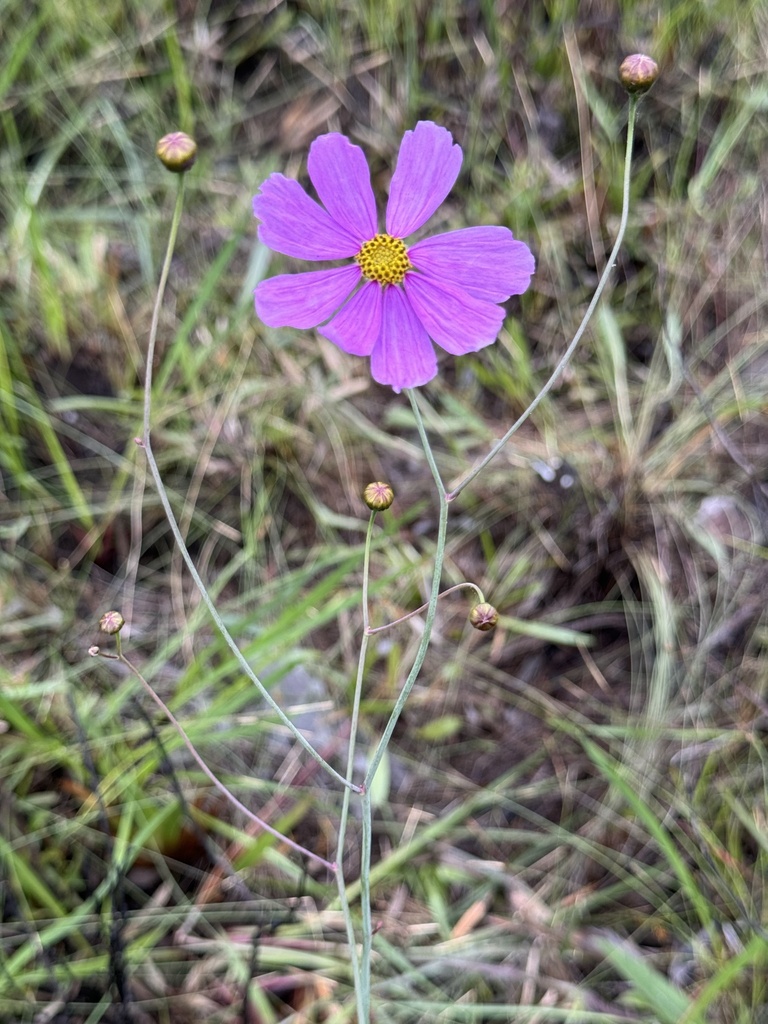
Georgia tickseed is a herbaceous perennial. Each spring it sends up one to several smooth, slender, unbranched or sparingly branched stems from a short base, usually 2 to 3 feet tall and sometimes nearly 4 feet in rich, wet sites. The stems are green and very thin for their height, and they sway above surrounding grasses and sedges.
Leaves
The basal leaves are the most distinctive feature when the plant is not flowering. They are long, narrow and round in cross-section (terete), often 8 to 16 inches long, smooth and somewhat spongy, much like the leaves of a rush. Higher on the stem the leaves become few and very small, so the flowering stems look nearly naked. This leaf shape separates it from other Coastal Plain tickseeds, which have flat, broader or divided leaves.
Flowers
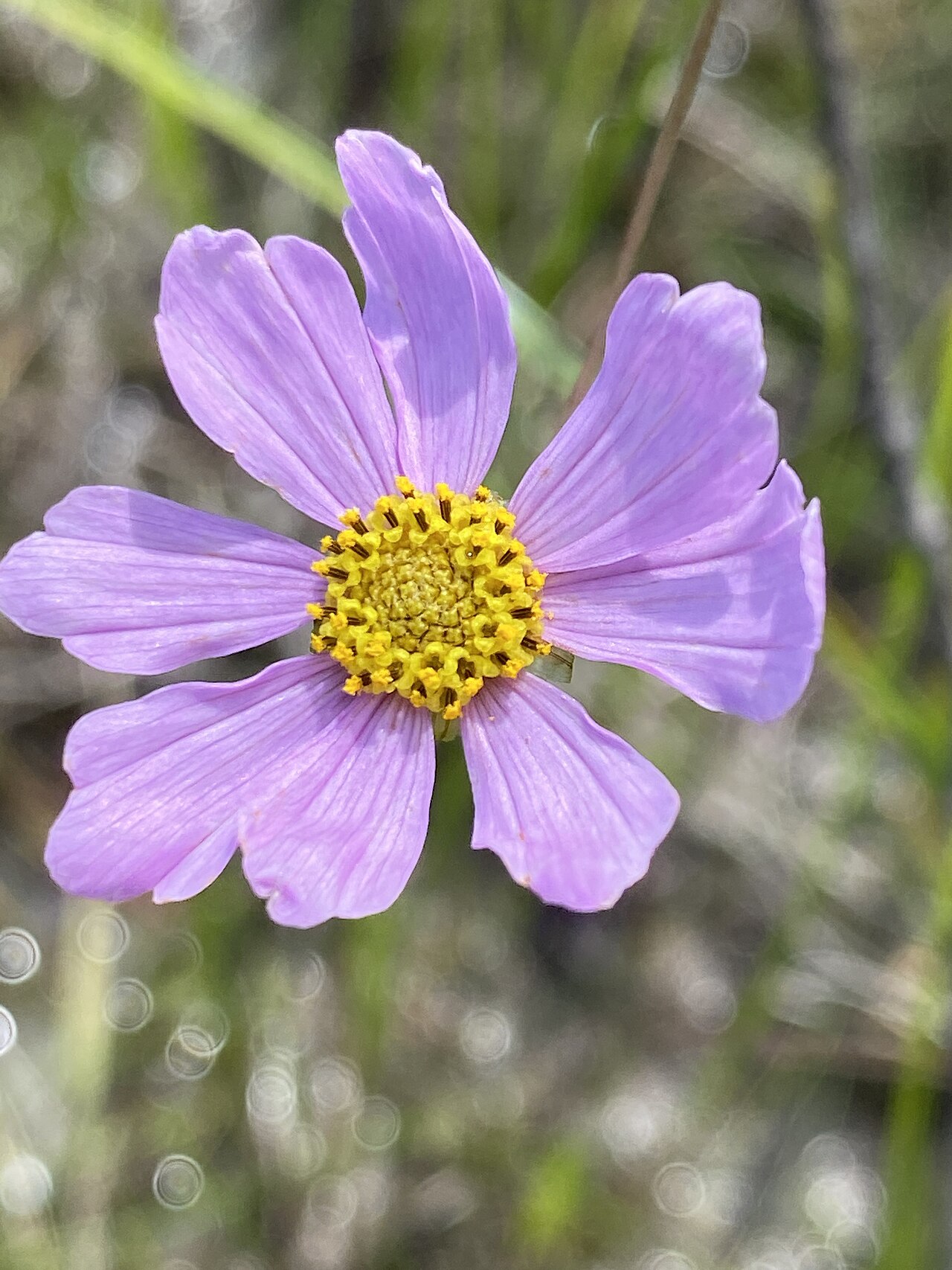
Each stem ends in one to a few flower heads about 1½ to 2½ inches across. The heads have usually 8 broad ray florets that are rose-pink to lavender-pink, often with a slightly darker band near the base and three or more small teeth at the tip. The central disk is yellow and about half an inch wide. Below the head are two rows of bracts, a typical tickseed feature: an outer row of short, narrow bracts and an inner row of broader, papery ones.
Flowering is concentrated in April and May. In some years a few heads appear into early summer, especially after a spring fire or in plants with steady water.
Fruit & Seeds
After the rays drop, the disk ripens into a cluster of small, flat, dark seeds (cypselae). Like other Coreopsis, the seeds are shaped somewhat like a tick, which gives the group the name tickseed. They are not barbed, though, and do not cling to clothing. Seeds fall near the parent plant or float on standing water, which helps the plant spread along ditches and pond margins.
Quick Facts
| Scientific Name | Coreopsis nudata Nutt. |
| Family | Asteraceae (aster family) |
| Plant Type | Herbaceous perennial wildflower |
| Mature Height | 2–4 ft in flower |
| Mature Spread | 6–12 in per clump |
| Growth Rate | Moderate |
| Sun Exposure | Full sun to light shade |
| Water Needs | High; moist to wet, seasonally flooded soil |
| Soil Type | Acidic sand, peaty sand or muck |
| Soil pH | Acidic, about 4.5–6.0 |
| Bloom Time | April–May (occasionally into June) |
| Flower Color | Rose-pink to lavender rays with a yellow disk |
| Fall Color | None; basal leaves persist in mild winters |
| Fruit | Small flat dark cypselae (seeds) |
| Deer Resistant | Moderate; occasionally browsed |
| USDA Hardiness Zones | 8–9 |
Native Range
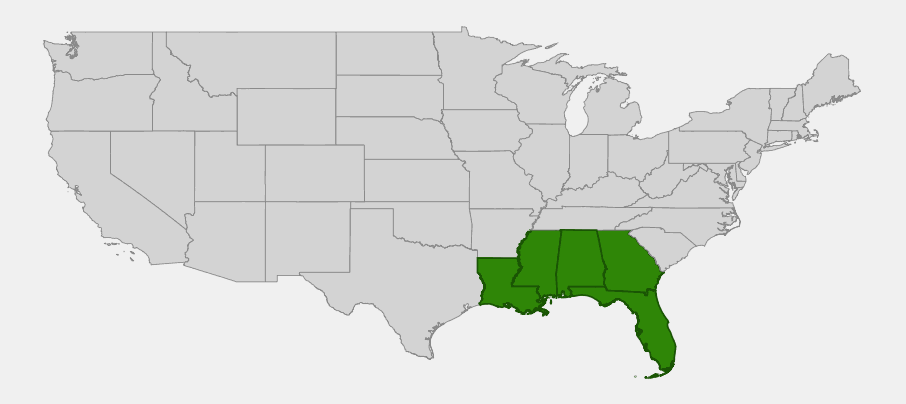
Georgia tickseed has a small range on the outer Coastal Plain of the Southeast. USDA PLANTS and the Lady Bird Johnson Wildflower Center record it from five states: Alabama, Florida, Georgia, Louisiana and Mississippi. It reaches from southeastern Georgia south into north Florida and west through the Florida Panhandle and the coastal counties of Alabama and Mississippi to the Florida Parishes of southeastern Louisiana.
In Florida the Atlas of Florida Plants maps it across the northern part of the state, most often in the Panhandle and the Big Bend, where large tracts of wet flatwoods and savanna remain in places such as Apalachicola National Forest and Tate’s Hell State Forest. It is not known from peninsular south Florida. Throughout its range it is tied to wet, sunny, acidic sites with a high water table in winter and spring.
Typical habitats include wet pine flatwoods and savannas, the edges of cypress domes and bay swamps, herb bogs, seepage slopes, wet prairies and the margins of ponds. Like many savanna plants, it also turns up in roadside ditches and power-line corridors, where mowing keeps the ground open in the same way that fire once did.
📋 Regional plant lists featuring Georgia Tickseed: North & South Florida · Alabama, Georgia & Mississippi · Arkansas, Louisiana, Eastern Oklahoma & Eastern Texas
Growing & Care Guide
Georgia tickseed is not hard to grow once you match its needs: full sun, acidic soil, and moisture that never runs out in spring. It is offered by a small number of native plant nurseries in Florida and the Gulf states, usually as plugs or 1-gallon pots, and it can also be grown from purchased or garden-saved seed. Do not dig plants from the wild; wet savannas are shrinking habitats.
Light
Plant in full sun for the best flowering. Light shade for part of the day is tolerated, but plants in shade grow thin, lean toward the light and produce few flowers. In the wild it fades away when shrubs such as gallberry and wax myrtle close in over a savanna.
Soil & Water
Use acidic, sandy or peaty soil that stays moist to wet from late winter through spring. Georgia tickseed thrives in a rain garden, the shallow edge of a pond, a lined bog garden, or a low spot in the yard that holds water after storms. It tolerates short periods of standing water and some drying in late summer, but it does not do well in ordinary, well-drained garden beds unless watered regularly. Avoid lime and heavy fertilizer, which favor weeds and lead to floppy growth.
Planting Tips
Set out plugs or potted plants in fall or late winter, about 12 inches apart, so they can root while the soil is cool and wet. Groups of five or more look far better than single plants, because each clump has only a few slender stems. Place them among low grasses, sedges or other bog plants that will help hold the stems upright.
Pruning & Maintenance
Leave the stems standing after flowering if you want seed to drop, then cut them back in summer. In a meadow-style planting, a late-winter mowing or (where permitted and safe) a prescribed burn imitates the natural fire cycle and keeps woody seedlings out. Clear away leaf litter that piles up over the basal leaves. No fertilizer is needed.
Propagation
Georgia tickseed is grown from seed or by dividing established clumps in late winter. Sow fresh seed on the surface of moist, acidic seed mix in fall or early spring and keep it constantly damp; seedlings usually bloom in their second year. Plants also self-sow in wet, open ground.
Landscape Uses
- Rain gardens: the lower, wetter zone of a sunny rain garden in acid soil
- Pond and bog margins: alongside pitcher plants, meadow beauties and yellow-eyed grasses
- Wet meadow and savanna restoration: within its native Gulf Coast range, from local seed sources
- Pollinator gardens: an early-season nectar flower for small bees and butterflies
- Naturalistic drifts: repeated in groups so the pink flowers read as a sweep of color
Wildlife & Ecological Value
Georgia tickseed is part of the rich spring flowering season of Gulf Coast pine savannas, which hold some of the highest plant diversity in temperate North America.
For Pollinators
The open flower heads offer easy access to nectar and pollen. They are visited by small native bees such as sweat bees and leafcutter bees, by bee flies and hover flies, and by butterflies including skippers and sulphurs. Because it blooms in spring, before many savanna wildflowers, it fills an early gap in nectar supply.
For Birds
Seed-eating birds such as sparrows and finches pick seeds from ripe heads, as they do with other tickseeds. The wet savannas where it grows also support Bachman’s sparrows, wading birds and wintering sparrows.
For Mammals
Deer and rabbits sometimes nip the flowering stems, but the plant is of minor importance as mammal food.
Ecosystem Role
Georgia tickseed is adapted to frequent, low-intensity fire. Fire removes dead grass and shrubs, and the plants resprout from their bases and often flower heavily the following spring. Its presence usually signals a savanna or flatwoods that still has a natural water table and has been burned within the past few years.
Cultural & Historical Uses
Thomas Nuttall described Coreopsis nudata in 1818 in his Genera of North American Plants. Its common name, Georgia tickseed, reflects the early collections from the Georgia Coastal Plain. It has kept the same scientific name ever since, which is unusual among southeastern wildflowers.
There is no well-documented record of Native American use of this particular species. The genus as a whole has a place in Florida culture: in 1991 the Florida Legislature named Coreopsis the state wildflower, and the Florida Department of Transportation has since planted and protected tickseeds along highways. Most of those plantings use yellow species such as Florida Tickseed and lanceleaf tickseed, which makes the pink Georgia tickseed a surprise for people who know the genus only as yellow.
Today it is valued mainly by native plant gardeners and savanna restorationists in the Florida Panhandle and along the Gulf Coast. Its pink flowers and tolerance of wet ground make it one of the more ornamental choices for the low, soggy parts of a native landscape.
Frequently Asked Questions
Is Georgia tickseed really a Coreopsis if it is pink?
Yes. Most tickseeds have yellow rays, but Georgia tickseed and pink tickseed (Coreopsis rosea) of the Northeast have pink rays. They share the typical tickseed flower structure, including the two rows of bracts under the head.
Will Georgia tickseed grow in a regular flower bed?
Usually not for long. It needs acidic soil that stays wet through spring. In an ordinary, well-drained bed it struggles unless watered heavily. A rain garden, pond edge or bog garden is a better fit.
When does Georgia tickseed bloom?
Mainly in April and May, with a few late flowers into June in some years.
How tall does Georgia tickseed get?
Flowering stems are usually 2 to 3 feet tall and can reach about 4 feet. The basal leaves form a low clump only a foot or so high.
Can I grow Georgia tickseed outside the Southeast?
It is native only to the Gulf and lower Atlantic Coastal Plain and is generally hardy only in about USDA zones 8 and 9. Gardeners farther north usually have better luck with pink tickseed (Coreopsis rosea), which is native to the Northeast.

Looking for a nursery that carries Georgia Tickseed?
Browse our native plant nursery directory: Alabama · Florida & Georgia · Louisiana & Mississippi