
Florida Betony (Stachys floridana)
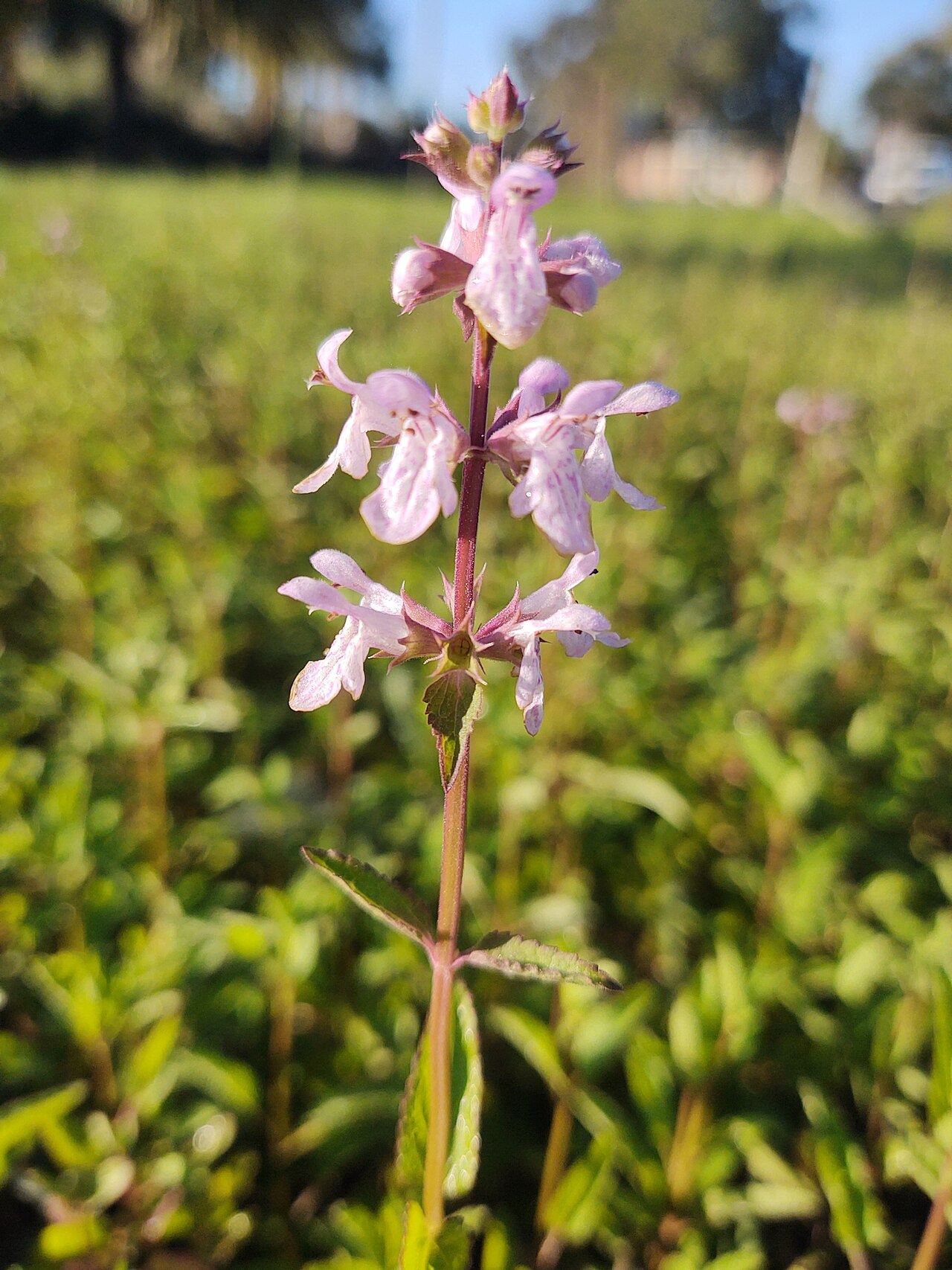
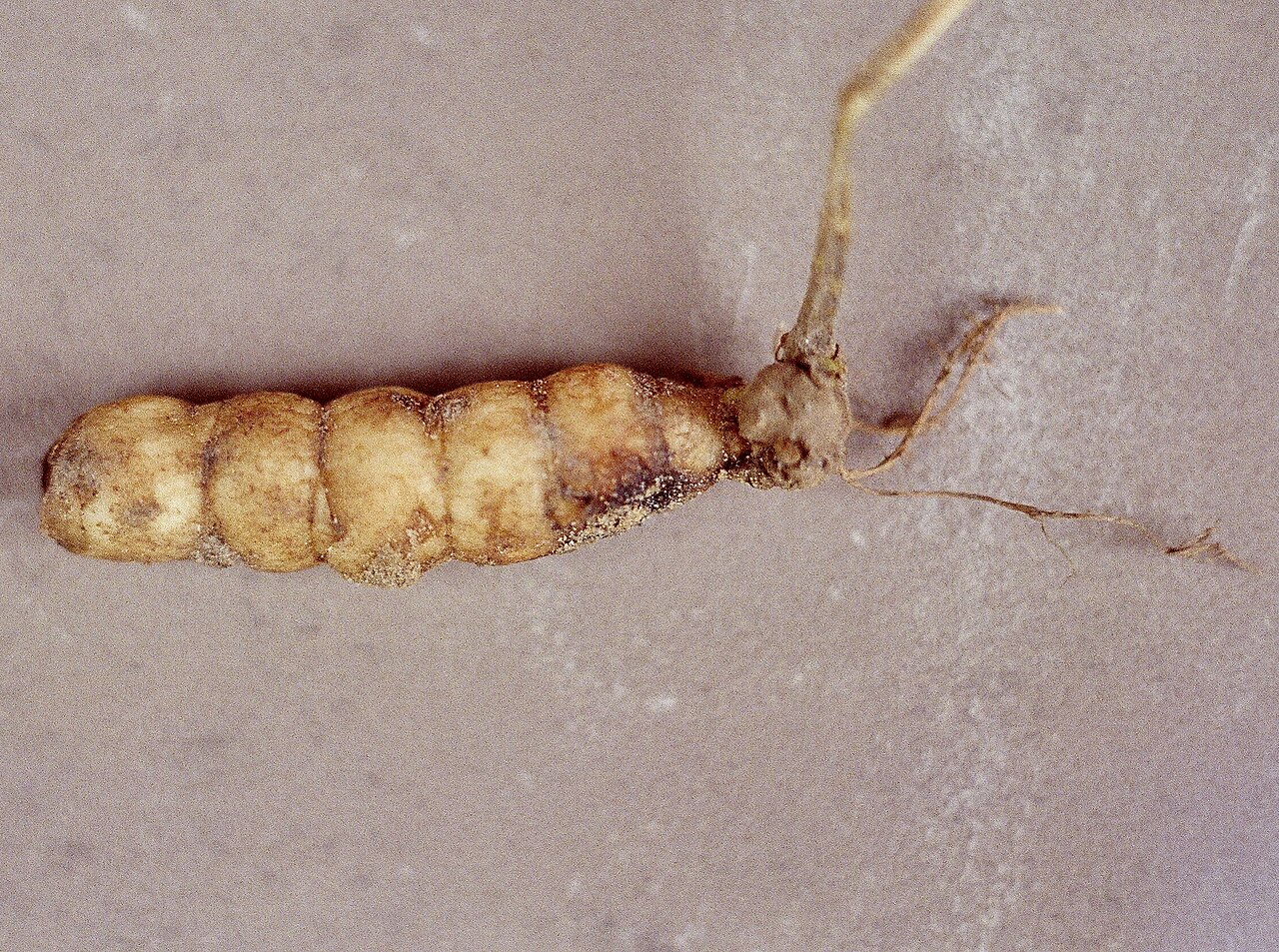
Stachys floridana, known as Florida Betony, Florida hedgenettle (the USDA name) or rattlesnake weed, is a low perennial in the mint family (Lamiaceae). In spring it sends up square stems with paired, toothed leaves and short spikes of small pink-and-white flowers spotted with purple. Underground it produces crisp, white, segmented tubers that look remarkably like a rattlesnake’s rattle.
To be plain about it: most people know Florida betony as a weed. It spreads aggressively by those tubers and by thin underground stems, and it is one of the most persistent weeds of lawns, flower beds and nursery containers in the Southeast. Every tuber left in the soil can grow a new plant, so hand-pulling rarely gets rid of it. It is native and harmless to wildlife, but it is not a plant to introduce to a garden.
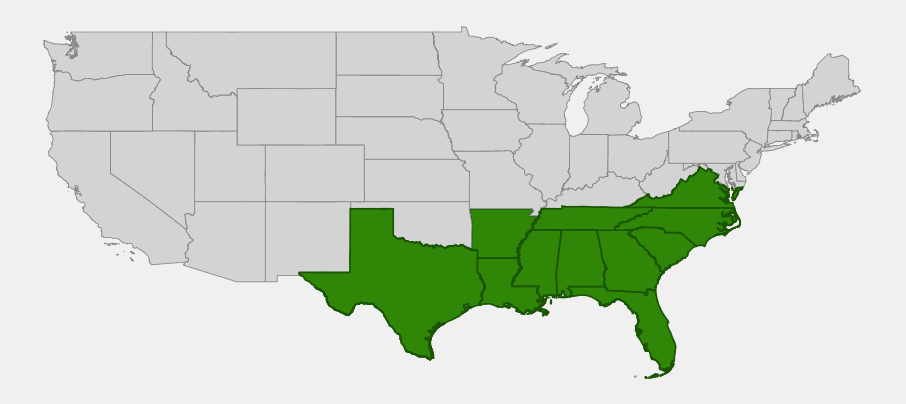
Many botanists regard Florida as its original home, and it has spread across the Southeast in the twentieth century, often carried in nursery soil and containers. USDA PLANTS treats it as native in 11 southeastern states. This guide explains how to identify it, where it grows, what (if anything) it is good for, and how to manage it in lawns and beds.
Identification
Florida betony is easy to recognize once you know it. Look for square stems, paired leaves, spikes of small two-lipped flowers in spring and, if you dig, white segmented tubers.
Stems & Habit
The stems are square in cross-section, like most mints, and are usually 8 to 20 inches tall, sometimes taller. They are often sparsely hairy and may sprawl in lawns or stand upright in beds. Plants grow in dense patches connected by slender underground rhizomes, and in mowed lawns they stay low and spread sideways.
Leaves
Leaves are opposite, oblong to lance-shaped or triangular, about 1 to 3 inches long, with rounded teeth along the edges and a blunt tip. They are bright green and somewhat rough or hairy. The lower leaves have short stalks, while the upper ones are nearly stalkless. Crushed leaves have only a mild smell, unlike many strongly scented mints.
Flowers
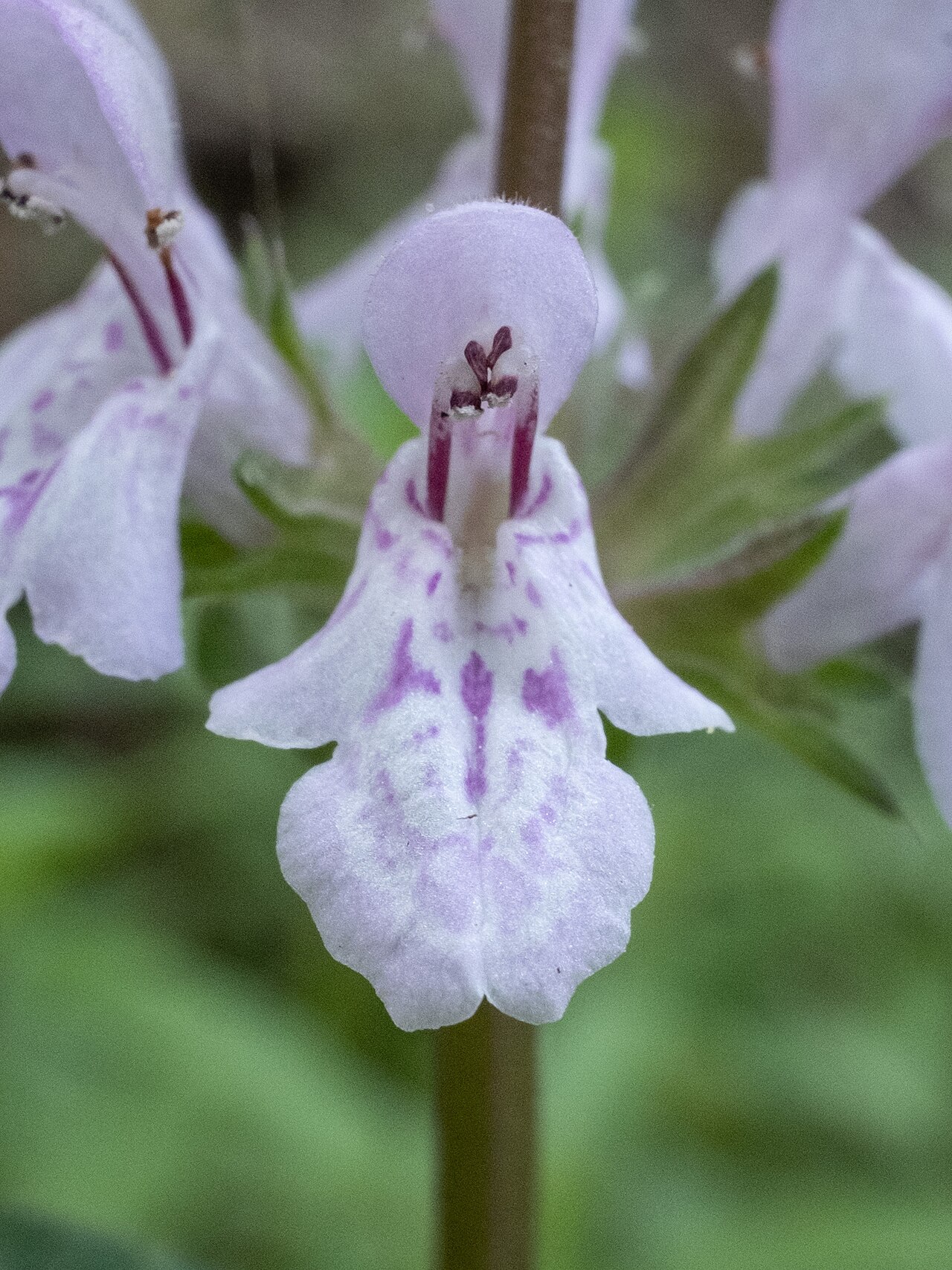
The flowers grow in whorls of several at intervals along a short spike at the top of the stem. Each is about ½ inch long and tubular, with a small, hooded upper lip and a broad, three-lobed lower lip. They are white to pale pink or lavender, with darker purple spots and lines on the lower lip. Flowering is mainly from late winter through spring, sometimes into early summer and again in fall.
Tubers & Roots
The most distinctive feature is underground. Rhizomes end in white tubers that are usually 1 to 3 inches long and constricted into segments, like a string of beads or a rattlesnake rattle. These tubers store energy for regrowth after summer heat and winter cold, and they break easily when pulled, leaving pieces in the soil. Plants also produce seeds, but tubers are the main way they spread.
Quick Facts
| Scientific Name | Stachys floridana Shuttlw. ex Benth. |
| Family | Lamiaceae (mint family) |
| Plant Type | Herbaceous perennial from rhizomes and tubers |
| Mature Height | 8–20 in (occasionally to 2 ft) |
| Mature Spread | Indefinite; spreads by rhizomes and tubers |
| Growth Rate | Fast; aggressive |
| Sun Exposure | Full sun to part shade |
| Water Needs | Medium; moist soil, tolerates short dry spells |
| Soil Type | Sand, loam or clay; thrives in irrigated lawns and beds |
| Soil pH | About 5.0–7.5 |
| Bloom Time | Late winter–spring (March–June); sometimes again in fall |
| Flower Color | White to pale pink or lavender with purple spots |
| Fall Color | None; top growth dies back in summer heat and regrows in fall |
| Fruit | Four small nutlets in each calyx |
| Deer Resistant | Mostly; rarely browsed |
| USDA Hardiness Zones | 7–10 |
Native Range
USDA PLANTS and the Lady Bird Johnson Wildflower Center list Florida betony as native in 11 states: Florida, Georgia, Alabama, Mississippi, Louisiana, Texas, Arkansas, Tennessee, North Carolina, South Carolina and Virginia. The Atlas of Florida Plants lists it as native to Florida, where it occurs throughout most of the state. The plant was described in the 1840s from Florida specimens.
Outside Florida, the picture is less clear. Older floras recorded it from a much smaller area, and extension services in several states describe it as spreading in the twentieth century with nursery stock, sod and landscape soil. Its tubers are easily moved in container soil and on equipment. Today it is common in lawns, landscape beds, roadsides and disturbed ground across much of the Southeast.
In natural areas it grows in moist, open woods, floodplains, and the edges of fields and ditches, but it is far more common in irrigated, mowed and disturbed settings. Cool, moist weather favors it: it grows actively from fall through spring, and in hot summers much of the top growth dies back while the tubers rest.
📋 Regional plant lists featuring Florida Betony: North & South Florida · Alabama, Georgia & Mississippi · North & South Carolina · Maryland, Virginia & West Virginia · Kentucky & Tennessee · Arkansas, Louisiana, Eastern Oklahoma & Eastern Texas
Growing & Care Guide
Florida betony is not a plant most gardeners should grow. This section explains how it behaves and how to control it. If you do want it, for example as a curiosity or for its edible tubers, grow it only in a container or a bed enclosed by a deep barrier, and never share soil or potted plants that might carry its tubers.
Light
It grows in full sun to part shade. It is most vigorous in sunny, irrigated lawns and beds, where competition is weak and soil stays moist.
Soil & Water
It thrives in moist, loose, fertile soil, which is why watered lawns and mulched beds suit it so well. Reducing irrigation, especially in fall and spring when it grows most actively, can slow it down. Dense, healthy turf and thick mulch help suppress new plants.
Planting Tips
The best advice is not to plant it. Check new nursery plants, sod and bulk soil for its white segmented tubers before planting, and remove any you find. If you choose to grow it on purpose, keep it in a container that cannot drain into garden soil.
Pruning & Maintenance
Mowing does not kill it; plants simply stay low and keep spreading. To remove it from beds, dig out plants and as many tubers as possible, repeating whenever new shoots appear. Each round weakens the patch. Several broadleaf lawn herbicides list Florida betony on their labels, and repeated fall and spring applications can reduce it in turf. Always follow label directions, and expect to need persistence over more than one season.
Propagation
It propagates itself readily from tubers, rhizome pieces and seed. A single tuber left in the soil can start a new patch, which is the main reason it is so hard to eradicate.
Landscape Uses
- Edible tubers: the crisp tubers are edible raw or cooked and are related to the Chinese artichoke (Stachys affinis)
- Containers only: grow it as a curiosity in a contained pot, never in open beds
- Natural areas: where it already grows naturally in moist woods and floodplains, it can be left alone
- Education: a good example of how tubers and rhizomes let a native plant become a persistent weed
Wildlife & Ecological Value
Florida betony is a native plant, and it has some value to wildlife, even though gardeners usually see it as a weed.
For Pollinators
The small spring flowers are visited by bees, including small native bees, and occasionally by butterflies. Like many mints, they offer nectar and pollen early in the season.
For Birds
It has little direct value to birds, though birds forage for insects among dense patches.
For Mammals
Rodents may dig up and eat the tubers. Deer and rabbits rarely browse the foliage.
Ecosystem Role
In natural floodplains and moist woods it is one of many low herbs in the ground layer. In developed landscapes, its ability to regrow from tubers allows it to outcompete lawn grasses and ornamentals, which is why it is managed as a weed.
Cultural & Historical Uses
Florida betony was described by the English botanist George Bentham in 1848, using a name proposed by Robert James Shuttleworth from specimens collected in Florida. That history is why its authors are written “Shuttlw. ex Benth.” The genus name Stachys comes from the Greek for “ear of grain” or “spike,” referring to the flower spikes.
The tubers are crisp, mild and somewhat sweet, and they can be eaten raw in salads, pickled or lightly cooked. They are closely related to the Chinese artichoke or crosne (Stachys affinis), a tuber crop grown in Asia and Europe. Foragers in the South sometimes collect them from lawns that have not been treated with herbicides. Only collect from untreated ground and be certain of identification.
The common name “rattlesnake weed” comes from the tubers’ resemblance to a rattlesnake’s rattle. The name is also used for unrelated plants, so the scientific name Stachys floridana is the clearest way to refer to it.
Frequently Asked Questions
Is Florida betony a weed?
In most gardens, yes. It is native, but it spreads aggressively by underground tubers and rhizomes and is a persistent weed in lawns, beds and nursery containers across the Southeast. It is not recommended for planting in open garden soil.
How do I get rid of Florida betony?
Dig out plants and as many tubers as possible, and repeat whenever new shoots appear. In lawns, broadleaf herbicides labeled for Florida betony, applied in fall and spring when it grows actively, can reduce it over several seasons. Healthy, dense turf and less frequent watering also help.
Are Florida betony tubers edible?
Yes. The crisp white tubers are edible raw or cooked, much like the related Chinese artichoke. Collect only from areas that have not been treated with herbicides or other chemicals.
Why does Florida betony disappear in summer?
It is a cool-season plant. In hot summer weather much of its top growth dies back, and the tubers rest until cooler weather returns in fall.
Is Florida betony the same as Florida hedgenettle?
Yes. USDA PLANTS uses the common name Florida hedgenettle for Stachys floridana. It is also called rattlesnake weed because of its tubers.

Looking for a nursery that carries Florida Betony?
Browse our native plant nursery directory: Alabama & Arkansas · Florida & Georgia · Louisiana & Mississippi · North Carolina · South Carolina, Tennessee, Texas & Virginia