
Coastal Plain Palafox (Palafoxia integrifolia)
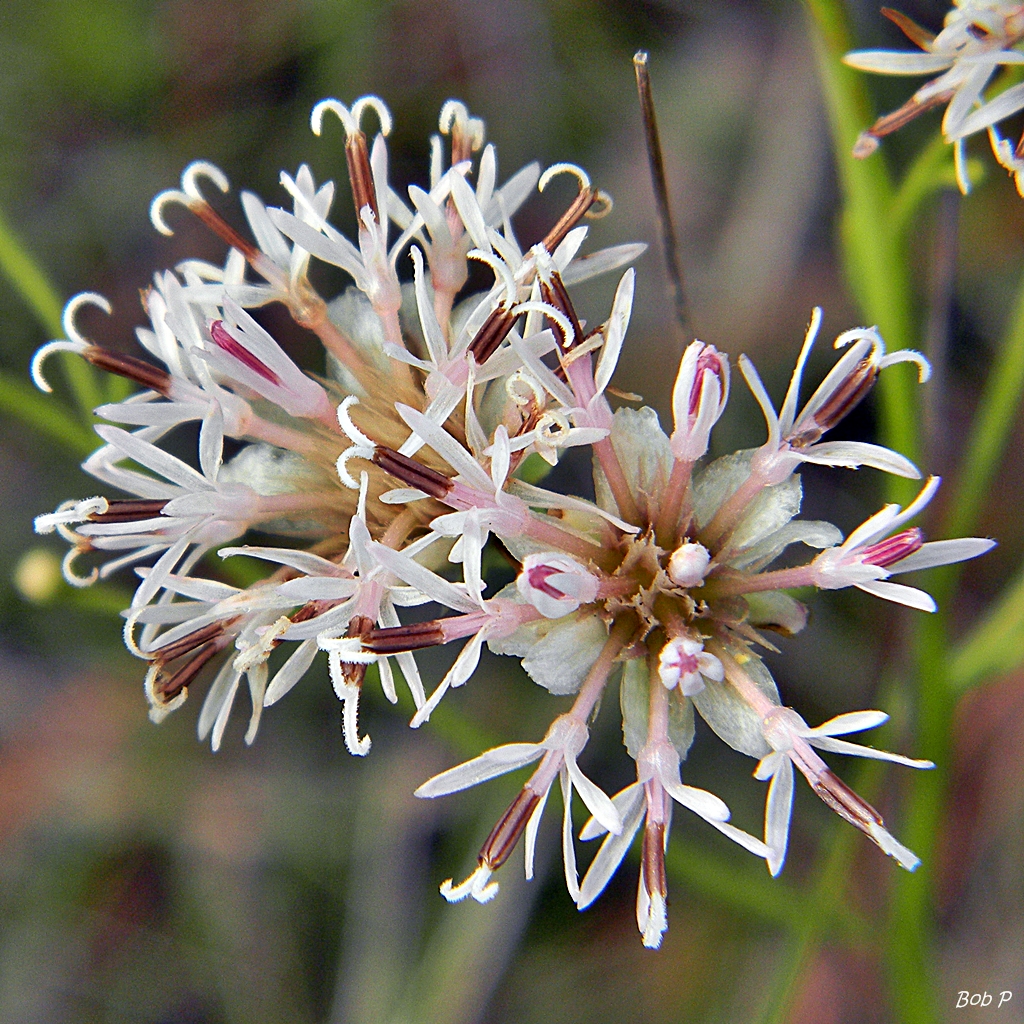
Palafoxia integrifolia, known as Coastal Plain Palafox (also coastalplain palafox), is a tall, slender wildflower of the dry, sandy pinelands and scrub of Florida and southern Georgia. From late summer into fall, and in south Florida for much of the year, its wiry stems carry loose clusters of creamy white to pale pink flower heads that look lacy and delicate up close. It belongs to the aster family (Asteraceae).
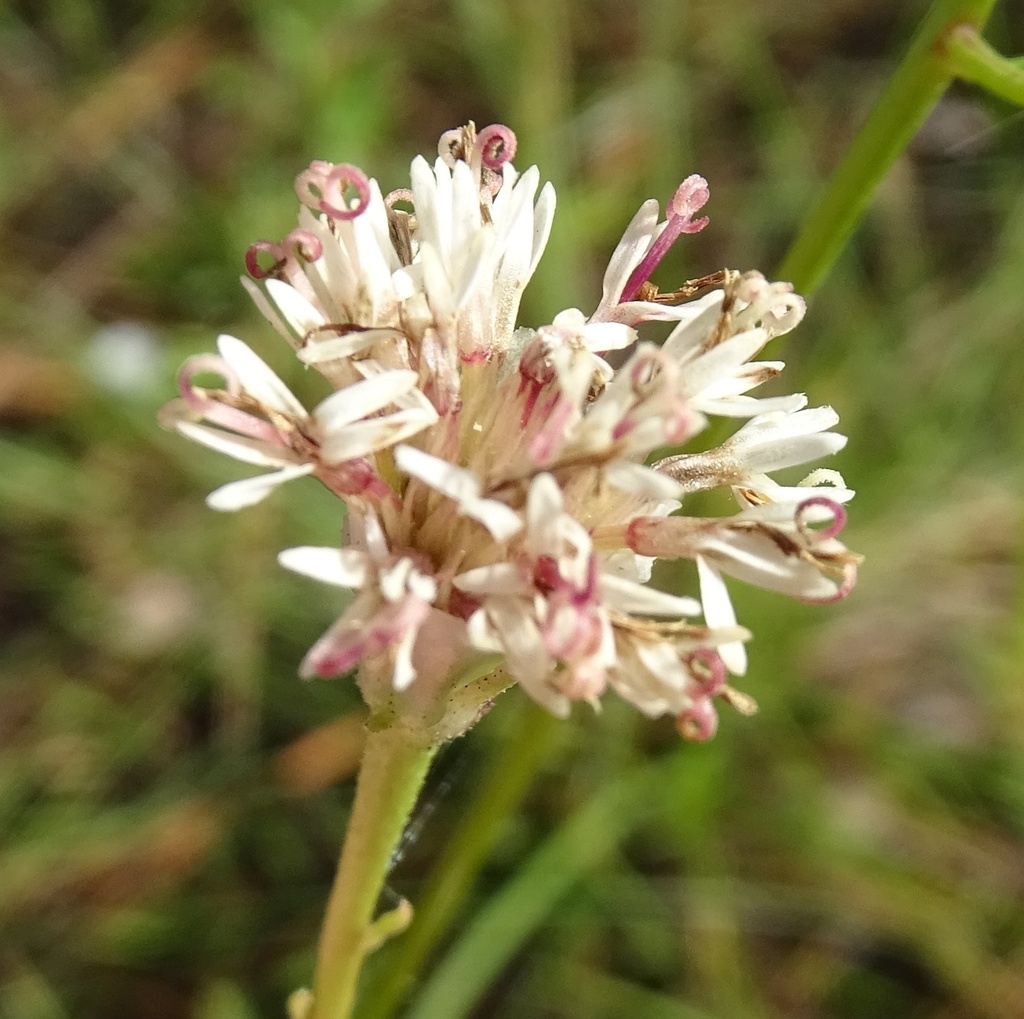
Palafox flower heads have no petal-like ray flowers. Each head is a cluster of narrow, tubular disk florets, and each floret has five slender, spreading lobes and a long, two-branched style that curls outward. Together these give the heads a feathery, starburst look, often white with touches of pink or lavender. The species name integrifolia means “with entire leaves,” referring to the smooth-edged, narrow leaves.
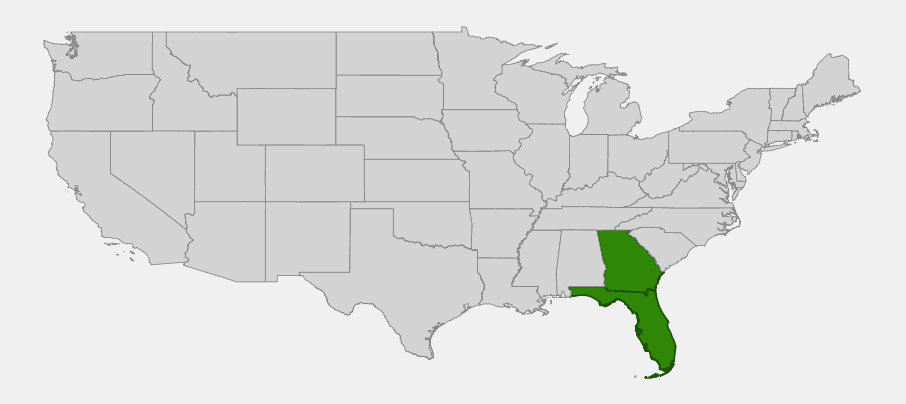
Coastal plain palafox is nearly a Florida specialty. USDA PLANTS records it only from Florida and Georgia, and it grows throughout much of the Florida peninsula and parts of the Panhandle. It is a good, low-maintenance plant for sunny, sandy native gardens, where it provides late-season nectar for butterflies, bees and other pollinators.
Identification
Coastal plain palafox is a lanky, sparsely leafy plant that is easy to overlook until it blooms. Several other palafoxes grow in the Southeast. Florida’s other common species, Feay’s palafox (Palafoxia feayi), is a woody-based shrub with broader leaves and pinkish heads that grows in peninsular scrub. Coastal plain palafox is more herbaceous, with narrower leaves and usually whiter heads.
Stems & Habit
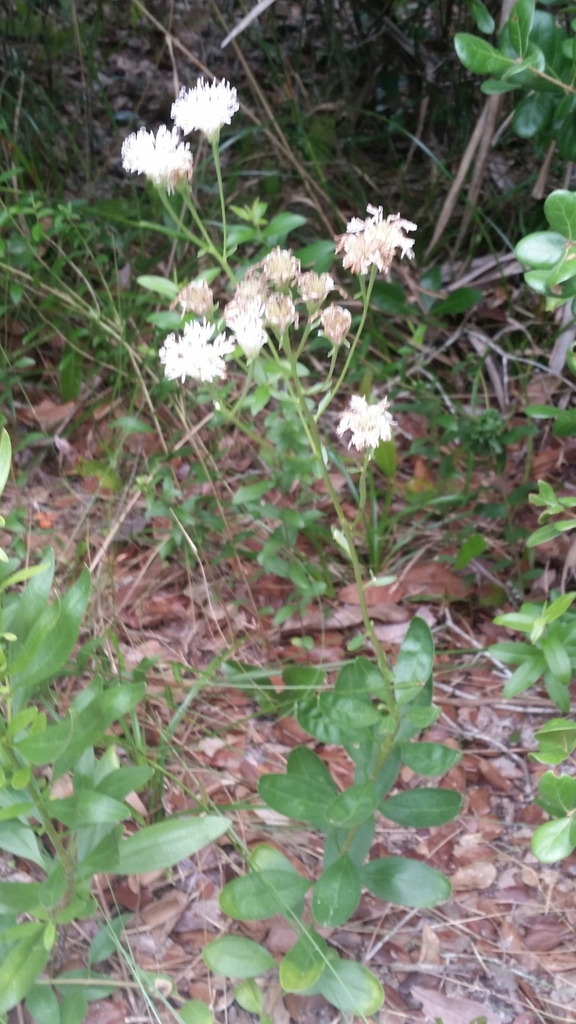
Plants have one to several slender, upright stems, often 2 to 4 feet tall and occasionally up to about 5 feet. The stems branch mainly toward the top, are covered with fine, short hairs, and can lean or droop under the weight of flowers because they are less woody than those of Feay’s palafox. Most sources describe it as a perennial with a somewhat woody base, though some treat it as short-lived.
Leaves
The leaves are alternate, narrow, lance-shaped to linear, about 1 to 3 inches long and generally less than ½ inch wide, with smooth (entire) margins. Lower leaves are longer and somewhat broader; upper leaves become very narrow. They are slightly rough or finely hairy and dull green. The plant looks rather sparse, with much of its height in bare stems.
Flowers
The flower heads are borne in open, flat-topped to rounded clusters at the stem tips. Each head is about ¾ to 1 inch across and contains roughly 15 to 30 tubular florets surrounded by narrow, green bracts. The florets are white to creamy white, often with a pink or lavender tinge, and their deeply cut, narrow lobes and long, curling styles create a fringed, airy effect. Flowering occurs mainly from August through October, starting as early as late spring, and in south Florida plants can bloom in most months.
Fruit & Seeds
The fruits are slender, four-angled, dark achenes (cypselae) about ¼ inch long, topped by a crown of small, pointed scales (the pappus). They ripen a few weeks after flowering and drop near the parent plant or are carried short distances by wind and animals.
Quick Facts
| Scientific Name | Palafoxia integrifolia (syn. Polypteris integrifolia; USDA symbol PAIN8) |
| Family | Asteraceae (aster family) |
| Plant Type | Herbaceous perennial, sometimes short-lived |
| Mature Height | 2–4 ft (occasionally to about 5 ft) |
| Mature Spread | 1–2 ft |
| Growth Rate | Moderate |
| Sun Exposure | Full sun |
| Water Needs | Low; dry, well-drained sand |
| Soil Type | Deep sand or sandy loam |
| Soil pH | Acidic (about 4.5–6.5) |
| Bloom Time | August–October (sometimes from late spring; nearly year-round in south Florida) |
| Flower Color | White to creamy white, often tinged pink or lavender |
| Fall Color | None |
| Fruit | Slender four-angled achene with a crown of small scales |
| Deer Resistant | Moderate |
| USDA Hardiness Zones | 8–10 |
Native Range
Coastal plain palafox has a small range centered on Florida. USDA PLANTS and the Lady Bird Johnson Wildflower Center record it only in Florida and Georgia. In Georgia it is limited to the southern Coastal Plain near the Florida line.
In Florida it is found through most of the peninsula, from the northern counties south to the Everglades region, and in parts of the Panhandle. It grows in sandhills, scrub and scrubby flatwoods, dry to moist pine flatwoods, and sandy openings, and it readily colonizes disturbed sandy ground such as roadsides, firebreaks and old fields.
Like many wildflowers of Florida pinelands, it depends on regular fire or other disturbance to keep its habitat open. It thrives in the sunny gaps between saw palmetto, scrub oaks and wiregrass, and becomes scarce where pinelands are left unburned and grow dense.
📋 Regional plant lists featuring Coastal Plain Palafox: North & South Florida · Alabama, Georgia & Mississippi
Growing & Care Guide
Coastal plain palafox is an easy, low-maintenance plant for sunny, sandy gardens in Florida and south Georgia. It thrives on neglect in poor soil and tends to sprawl and become floppy if given rich soil or too much water.
Light
Plant it in full sun. In shade the stems grow weak and lean, and the plant blooms poorly.
Soil & Water
Use well-drained, sandy soil without amendments or fertilizer. Water new plants until they are established; after that, rainfall is usually enough. It tolerates long dry spells well but can rot in soil that stays wet.
Planting Tips
Set plants out in spring or at the start of the summer rainy season, about 12 to 18 inches apart. Because the stems are slender and can flop, plant it among bunchgrasses, low shrubs or other wildflowers that will help support it. It looks best in natural drifts in a meadow or pineland-style planting rather than as a single specimen in a formal bed.
Pruning & Maintenance
Little care is needed. If plants become leggy, cut them back by about half in early summer to encourage bushier growth and more flowers. Leave seed heads in fall for birds and self-sowing, then cut old stems back in late winter.
Propagation
Grow it from fresh seed sown in spring or early summer on the surface of moist, sandy soil. Seedlings grow fairly quickly and may bloom in their first year. Plants also self-sow modestly in open sand.
Landscape Uses
- Pollinator gardens: late-season nectar for butterflies, bees and beetles
- Sandhill and scrub gardens: with saw palmetto, gopher apple and other dry-sand natives
- Pine flatwoods and meadow plantings: in drifts with native grasses
- Roadside and disturbed-site restoration: colonizes open sandy ground within its range
- Wildflower borders: adds airy white texture to native plantings
Wildlife & Ecological Value
Coastal plain palafox blooms when many pinelands wildflowers have finished, offering nectar to insects in late summer and fall.
For Pollinators
The flower heads attract many insects, including butterflies such as skippers and hairstreaks, a variety of native bees and wasps, and flower-visiting beetles. Palafoxes are known to attract bees and butterflies, and coastal plain palafox is a common late-season nectar source in Florida pinelands.
For Birds
Seed-eating birds such as sparrows may pick seeds from the dry heads in fall and winter. Insects drawn to the flowers also provide food for insect-eating birds.
For Mammals
It is of minor importance to mammals; deer may occasionally browse the plants.
Ecosystem Role
Coastal plain palafox is one of many fire-adapted wildflowers in Florida pinelands. It recovers quickly after fire or disturbance and helps maintain the diversity of flowering plants in the open, grassy ground layer of sandhills and flatwoods.
Cultural & Historical Uses
The genus Palafoxia is named after José de Palafox y Melzi (1776–1847), a Spanish general who led the defense of Zaragoza (Saragossa) against Napoleon’s armies. Coastal plain palafox was first described by Thomas Nuttall as Polypteris integrifolia, a name still listed as a synonym.
There is no well-known history of human use for this plant. It is valued today as a native wildflower and pollinator plant.
Coastal plain palafox is one of many modest pineland wildflowers that are getting more attention as Florida gardeners turn to local native plants for pollinator gardens and low-maintenance landscapes. When buying plants or seed, look for Florida-grown stock from native plant nurseries.
Frequently Asked Questions
How is coastal plain palafox different from Feay’s palafox?
Feay’s palafox (Palafoxia feayi) is a woody shrub of Florida scrub with broader leaves and pinkish heads. Coastal plain palafox is more herbaceous, with narrower leaves, more slender stems, and usually whiter flower heads.
When does coastal plain palafox bloom?
Mainly from August through October, sometimes starting in late spring. In south Florida it can bloom in most months of the year.
Does coastal plain palafox attract butterflies?
Yes. Its flower heads are visited by butterflies, bees, wasps and beetles, which makes it a good addition to pollinator gardens in sunny, sandy sites.
Where is coastal plain palafox native?
It is native only to Florida and southern Georgia, where it grows in sandhills, scrub, pine flatwoods and sandy disturbed areas.
Why is my palafox floppy?
The stems are naturally slender. Rich soil, too much water or too much shade make the problem worse. Grow it in full sun and lean sand, plant it among supporting grasses, or cut it back by about half in early summer.

Looking for a nursery that carries Coastal Plain Palafox?
Browse our native plant nursery directory: Florida & Georgia