
Catclaw Blackbead (Pithecellobium unguis-cati)
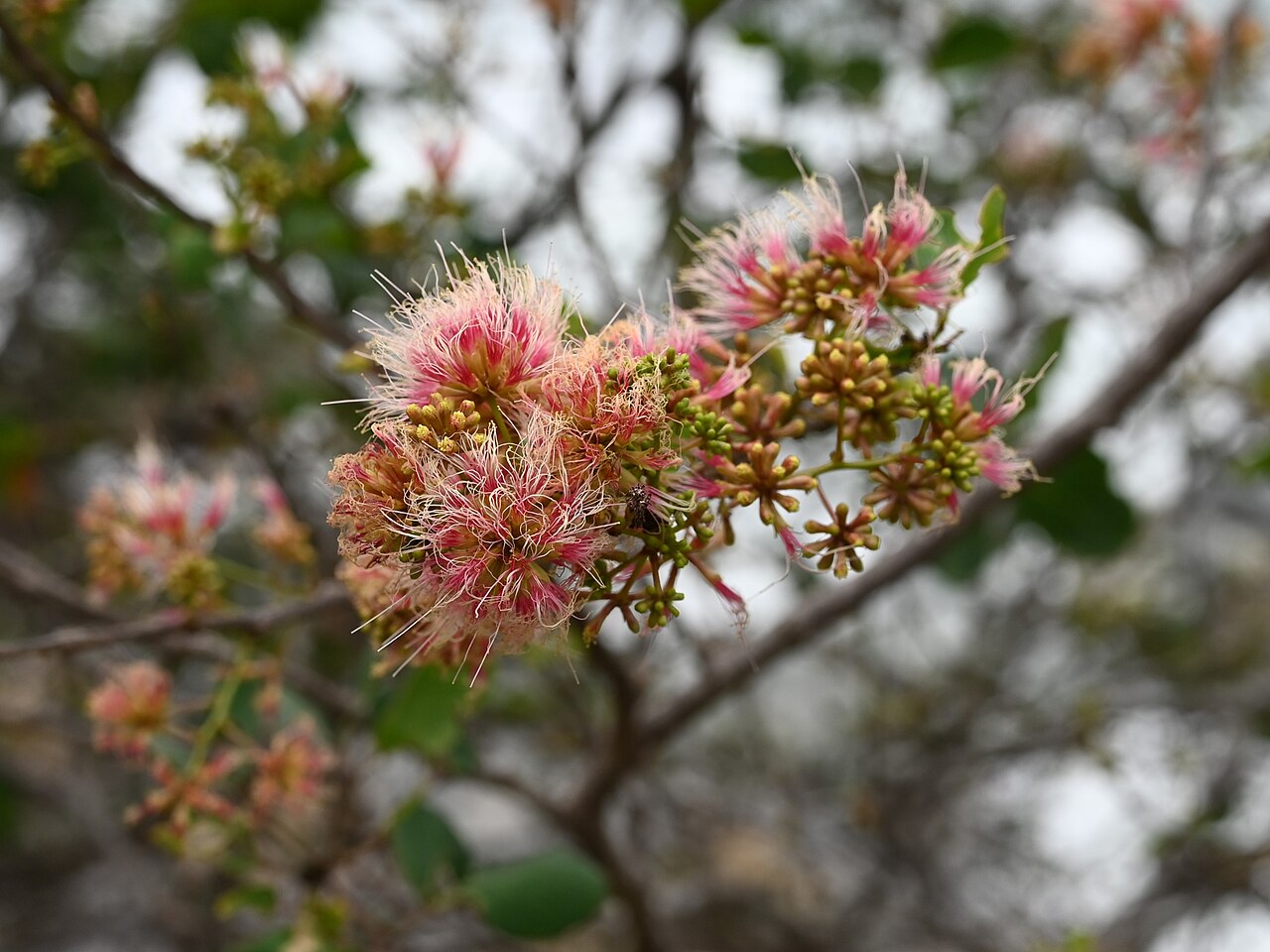
Pithecellobium unguis-cati, known as Catclaw Blackbead, is a spiny evergreen shrub or small tree of the pea family (Fabaceae) that grows in coastal hammocks of southern Florida and throughout the Caribbean. It typically reaches 10 to 15 feet, sometimes more than 20, with spreading, zigzag branches armed with pairs of sharp spines. Its rounded leaflets come in sets of four, and for much of the year it carries fragrant, fluffy, pink-and-cream flower heads that look like small powder puffs. These are followed by curiously coiled pods that split open to show shiny black seeds on a bright red aril.
The species name unguis-cati is Latin for “cat’s claw,” a reference to the curved spines at the base of each leaf. The common name blackbead refers to the black seeds. It is closely related to Florida Keys blackbead (Pithecellobium keyense), which grows in many of the same places, and more distantly to the introduced Manila tamarind (Pithecellobium dulce), which is invasive in parts of south Florida.
Catclaw blackbead is a valuable plant for wildlife: its flowers feed butterflies and bees, its foliage feeds the caterpillars of several south Florida butterflies, and birds eat its arils. Its thorns make it an excellent barrier or buffer hedge near the coast. This guide covers how to identify it, where it grows, how to grow it in a south Florida landscape, and its role in coastal hammock ecology.
Identification
Catclaw blackbead is easiest to identify by the combination of paired spines, leaves with only four leaflets, fluffy flower heads and coiled pods. It can be confused with its close relative, Florida Keys blackbead.
Growth Habit & Bark
It is a large shrub or small tree with a short trunk, up to about 8 inches thick, and an irregular, spreading crown. Many plants stay as dense, multi-stemmed thickets. The bark is reddish brown to gray and becomes fissured with age. Almost every part of the plant is spiny: a pair of short, sharp spines (modified stipules) sits at the base of each leaf, giving the zigzag twigs their “cat’s claw” grip.
Leaves
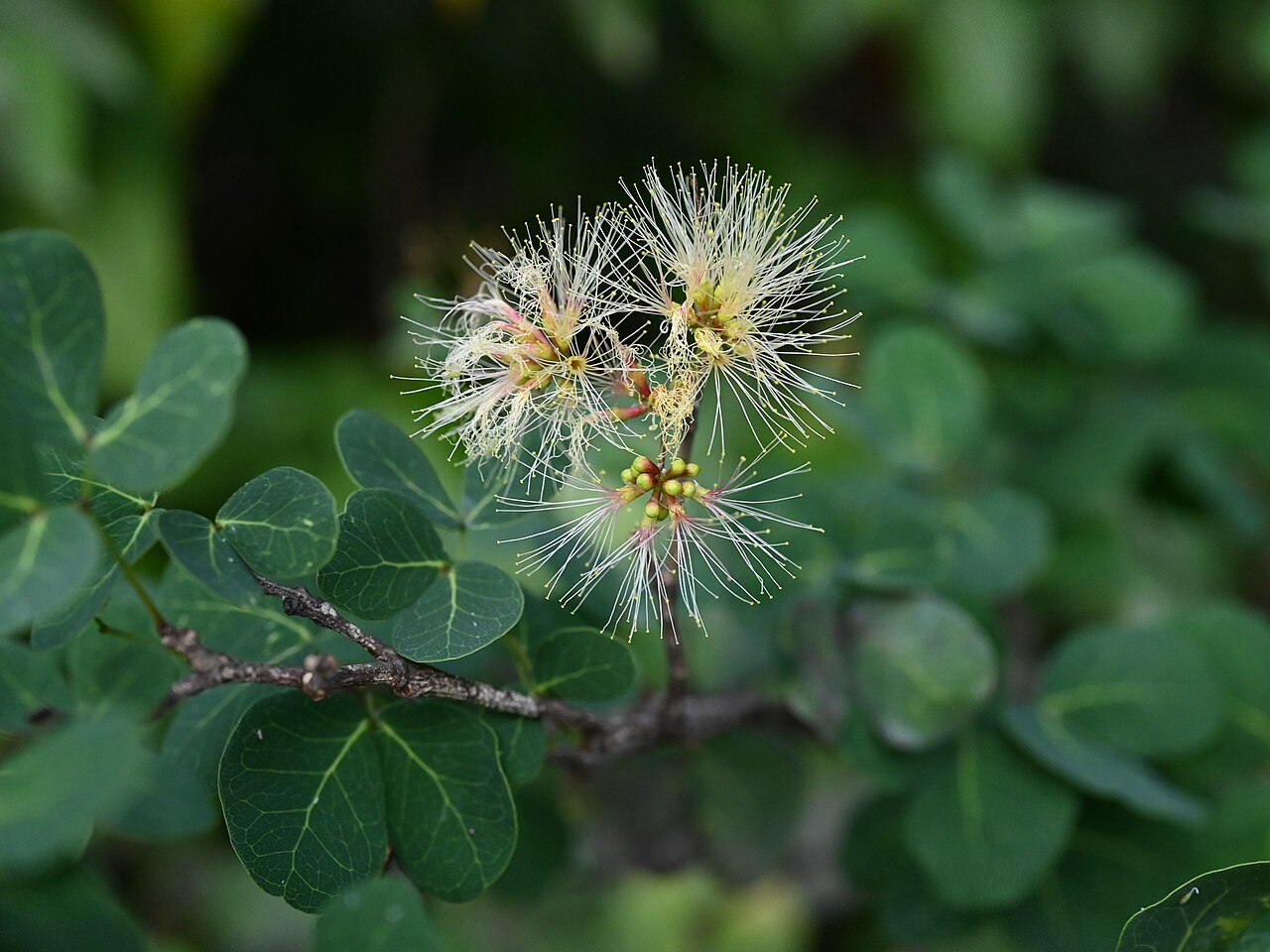
The leaves are alternate and twice-compound, but very simply so: each leaf has a single pair of side stalks, and each of those carries a single pair of leaflets, so the whole leaf has just four leaflets. The leaflets are about 1 to 2 inches long, rounded to obliquely oval, slightly leathery, and dull to bright green. They often look like a pair of butterfly wings sitting at the end of each stalk.
Flowers
The tiny flowers are grouped into round, fluffy heads about an inch across, held on short stalks along the twigs. The petals are small and inconspicuous; the show comes from the many long stamens, which are white to greenish yellow, often flushed pink or red. The flowers are fragrant. In south Florida catclaw blackbead can bloom in any month, with a peak in late spring and summer.
Fruit & Seeds
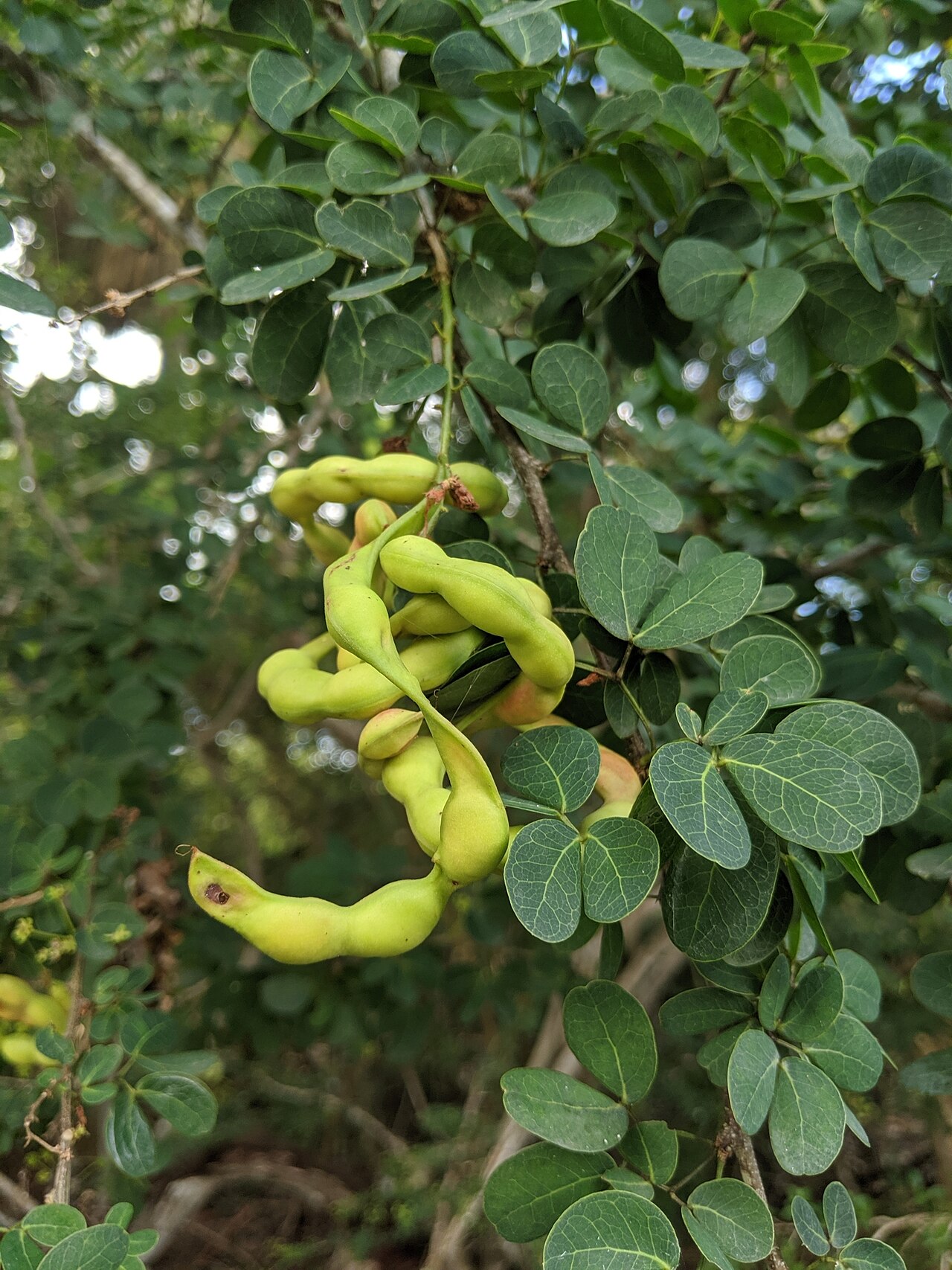
The pods are flattened legumes several inches long that twist and coil into spirals or loose rings as they grow. They ripen from green to reddish brown, then split along their edges to reveal several glossy black seeds, each partly wrapped in a fleshy red or pinkish aril. The bright arils are a strong visual signal to birds.
Similar Species
Florida Keys blackbead (Pithecellobium keyense) grows in similar coastal hammocks and is often confused with catclaw blackbead; the two differ in details of the leaflets, spines and flowers, and botanists use technical keys to separate them. Manila tamarind (Pithecellobium dulce), an introduced tree from Mexico and Central America, has similar four-leaflet leaves and coiled pods but becomes a much larger tree and should not be planted in Florida.
Quick Facts
| Scientific Name | Pithecellobium unguis-cati |
| Family | Fabaceae (pea or legume family) |
| Plant Type | Spiny evergreen shrub or small tree |
| Mature Height | 10–15 ft (occasionally to about 24 ft) |
| Mature Spread | 10–15 ft; often as broad as tall |
| Growth Rate | Moderate |
| Sun Exposure | Full sun to light shade |
| Water Needs | Low; drought tolerant once established |
| Soil Type | Well-drained sand or limestone with some organic matter |
| Soil pH | About 6.5–8.5 (neutral to alkaline) |
| Bloom Time | Year-round; peak in late spring–summer |
| Flower Color | White to greenish yellow, often flushed pink |
| Fall Color | None; evergreen |
| Fruit | Coiled pod with black seeds and red arils |
| Deer Resistant | Fairly; the spines deter browsing |
| USDA Hardiness Zones | 10–11 |
Native Range
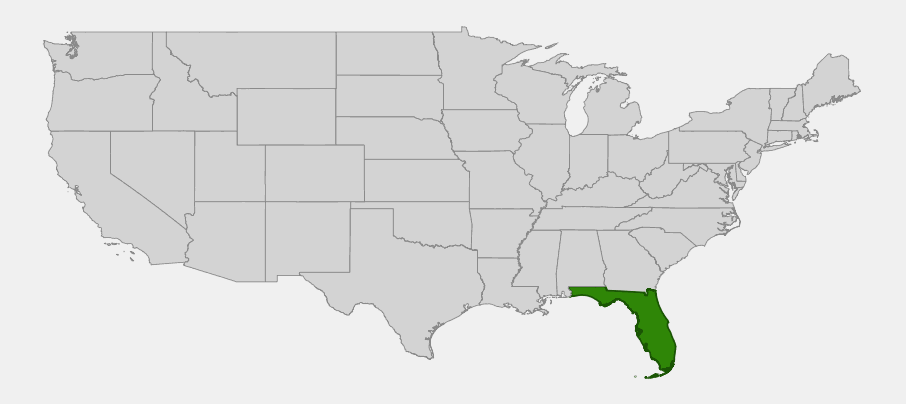
Catclaw blackbead reaches the United States only in southern Florida. USDA PLANTS lists it as native in Florida, Puerto Rico and the U.S. Virgin Islands. In Florida, the Institute for Regional Conservation records it from the Florida Keys in Monroe County and the islands around Elliott Key in Biscayne National Park, and north along the Gulf Coast to about Hillsborough County (Tampa Bay). It is not known from the Miami-Dade mainland.
Outside the United States it grows throughout the West Indies, and in parts of Mexico, Central America and northern South America. In much of the Caribbean it is a common shrub of dry coastal thickets, beach edges and disturbed ground.
In Florida it is mainly a plant of coastal hammocks, along with the edges of mangroves, shell mounds and coastal strand. It grows close to salt water but usually behind other vegetation that shields it from direct salt spray. Its native status in Florida is not in doubt, but it has a relatively small Florida range, so planting nursery-grown stock in coastal landscapes helps support this useful wildlife plant.
📋 Regional plant lists featuring Catclaw Blackbead: North & South Florida
Growing & Care Guide
Catclaw blackbead is available from native plant nurseries in south Florida and is an excellent choice for coastal gardens, wildlife plantings and barrier hedges. Its spines demand some care in placement and handling, but it needs very little maintenance once established.
Light
It grows best in full sun to light shade. In full sun it becomes dense and flowers heavily. In more shade it grows taller and more open.
Soil & Water
Plant it in well-drained sandy or limestone soil with some organic matter. It tolerates poor soils but grows better with a little humus. Water regularly for the first few months; after that it is highly drought tolerant and needs no supplemental irrigation. It tolerates moderate salt wind but not long-term flooding by salt or brackish water, so plant it behind the front line of beach plants.
Planting Tips
Plant at any time of year in frost-free areas, ideally at the start of the rainy season. Because of its spines, keep it away from walkways, play areas and places where people will brush against it. It makes an excellent impenetrable hedge along property lines or under windows, spaced about 4 to 6 feet apart. As a specimen, give it room to spread 10 feet or more.
Pruning & Maintenance
Wear heavy gloves and long sleeves when pruning. It tolerates shearing as a hedge, though lighter, selective pruning keeps more flowers and fruit. Remove low branches if you want a small tree form. No fertilizer is needed. Fallen pods and arils can be slightly messy near patios.
Propagation
Grow it from fresh seed. Remove the seeds from the red aril, place them on top of a well-drained mix and barely cover them, and keep the container moist in light shade. Germination is usually quick. Seedlings grow at a moderate rate.
Landscape Uses
- Barrier and security hedges: dense, spiny growth discourages trespassers
- Butterfly gardens: larval host for cassius blue and large orange sulphur, and a nectar plant
- Coastal buffer plantings: tolerates salt wind behind the dune line
- Bird gardens: arils and seeds feed birds; thorny cover protects nests
- Coastal hammock restoration: in the Keys and along the southwest coast, using local stock
Wildlife & Ecological Value
Catclaw blackbead packs a lot of wildlife value into a small, thorny package, and it is one of the better native shrubs for butterfly gardens in south Florida.
For Pollinators
The fragrant flower heads are visited by bees, wasps and butterflies. The Institute for Regional Conservation lists it as a nectar plant for the cassius blue and giant swallowtail and, presumably, the endangered Miami blue. It is also a larval host plant for the cassius blue and large orange sulphur, and presumably the Miami blue, whose caterpillars feed on the flower buds and young leaves.
For Birds
The bright red arils attached to the black seeds attract birds such as mockingbirds, catbirds, and other fruit-eating songbirds, which spread the seeds. The dense, thorny branches give small birds safe cover and nest sites, protected from cats and other predators.
For Mammals
The spiny branches limit browsing. Small mammals may eat fallen seeds and pods.
Ecosystem Role
Like many legumes, catclaw blackbead can form root partnerships with nitrogen-fixing bacteria, adding nitrogen to poor coastal soils. Its thickets stabilize hammock edges and coastal sand and shelter seedlings of other hammock trees. As a host plant for several small butterflies, including the rare Miami blue, it plays an important role in the food web of coastal south Florida.
Cultural & Historical Uses
Linnaeus described the species in 1753 as Mimosa unguis-cati. It was later placed in Pithecellobium, a genus name built from Greek words meaning “monkey’s earring,” a reference to the curled, coiled pods of these plants.
In the Caribbean, catclaw blackbead goes by many local names. The fleshy arils of related species, especially Manila tamarind, are eaten in Mexico and Central America, but catclaw blackbead is valued mainly as a hedge and wildlife plant rather than for food.
In south Florida landscapes, it has become a favorite of butterfly gardeners and of native plant enthusiasts looking for a tough, salt-tolerant hedge.
Frequently Asked Questions
Why is it called catclaw blackbead?
The name refers to the pair of curved spines at the base of each leaf, which catch skin and clothing like a cat’s claws, and to the shiny black seeds that are exposed when the pods split. The scientific name unguis-cati also means “cat’s claw.”
Is catclaw blackbead good for butterflies?
Yes. It is a larval host plant for the cassius blue and large orange sulphur, and presumably the endangered Miami blue, and its fragrant flowers provide nectar for many butterflies, including giant swallowtails.
Is it salt tolerant?
It tolerates moderate salt wind and grows near the coast, but it does best when shielded from direct salt spray and should not be planted where it will be flooded by salt or brackish water.
How is it different from Manila tamarind?
Manila tamarind (Pithecellobium dulce) is an introduced, much larger tree from Mexico and Central America with similar leaves and coiled pods. It is invasive in parts of south Florida. Catclaw blackbead is a native shrub or small tree, usually under 15 feet.
Can catclaw blackbead grow outside south Florida?
It is a tropical plant that does not tolerate hard freezes, so it is suited to zones 10 and 11. In colder areas it can only be grown in a container moved indoors in winter.

Looking for a nursery that carries Catclaw Blackbead?
Browse our native plant nursery directory: Florida