
May Hawthorn (Crataegus aestivalis)
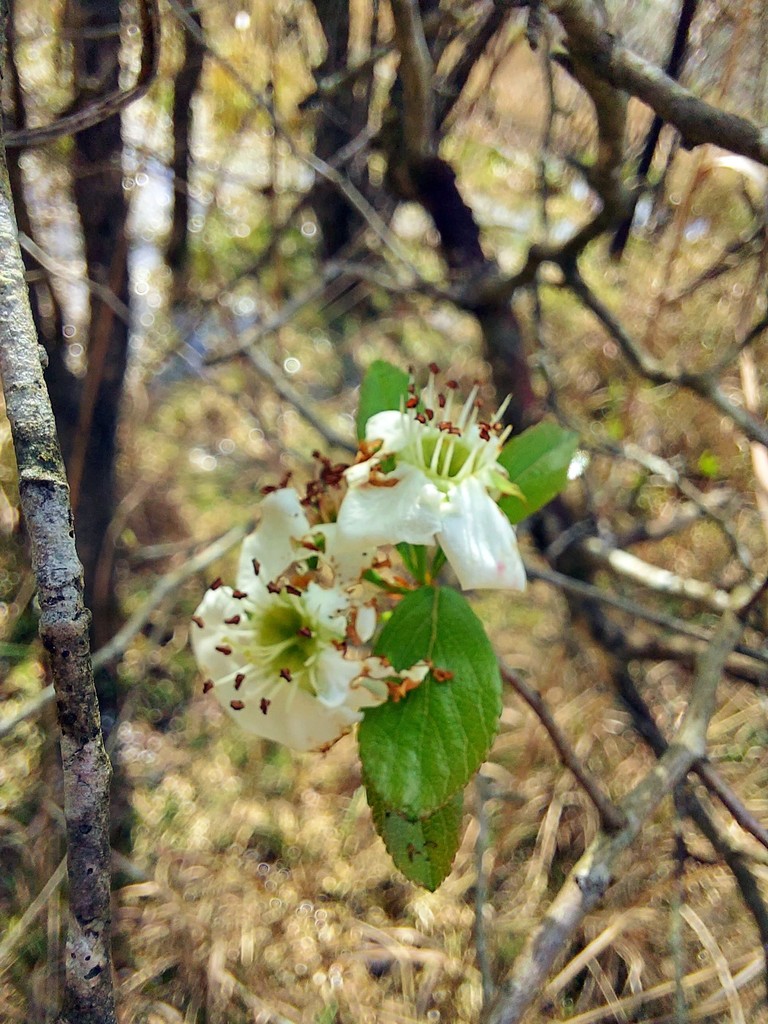
Crataegus aestivalis, the May Hawthorn, also called eastern mayhaw or simply mayhaw, is a small, thorny tree of ponds and swamps on the southeastern Coastal Plain. It is a member of the rose family (Rosaceae) and one of the earliest hawthorns to bloom, covering its bare branches with white flowers in late winter, often while it stands in water.
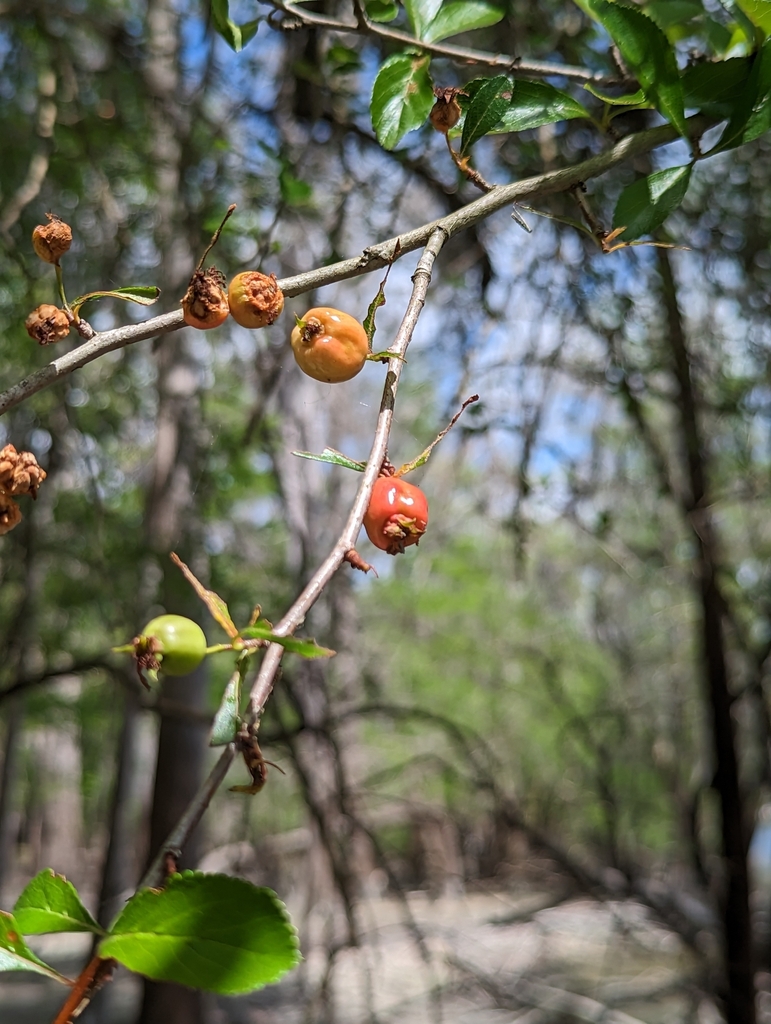
May hawthorn is best known for its fruit. Unlike most hawthorns, which ripen in fall, it produces its glossy red, cherry-sized fruit in spring, around April and May, which is how it got the name mayhaw. The fruit is too tart to eat out of hand but makes a famous clear, rosy jelly, and families in south Georgia and north Florida have gathered mayhaws from pond edges for generations, often scooping them off the surface of the water.
There are two mayhaws in the Southeast. This page covers the eastern species of the Atlantic and eastern Gulf Coastal Plain. The western mayhaw, Crataegus opaca, grows from Alabama and Mississippi west to Texas and Arkansas and has its own page: Mayhaw (Crataegus opaca). The two are similar in fruit and habitat but differ in their leaves and range, as described below.
Identification
Hawthorns are notoriously hard to identify, but May hawthorn is one of the easier ones. Look for a small, thorny tree in wet ground with narrow, glossy, spoon-shaped leaves, flowers in late winter and red fruit in spring.
Form & Bark
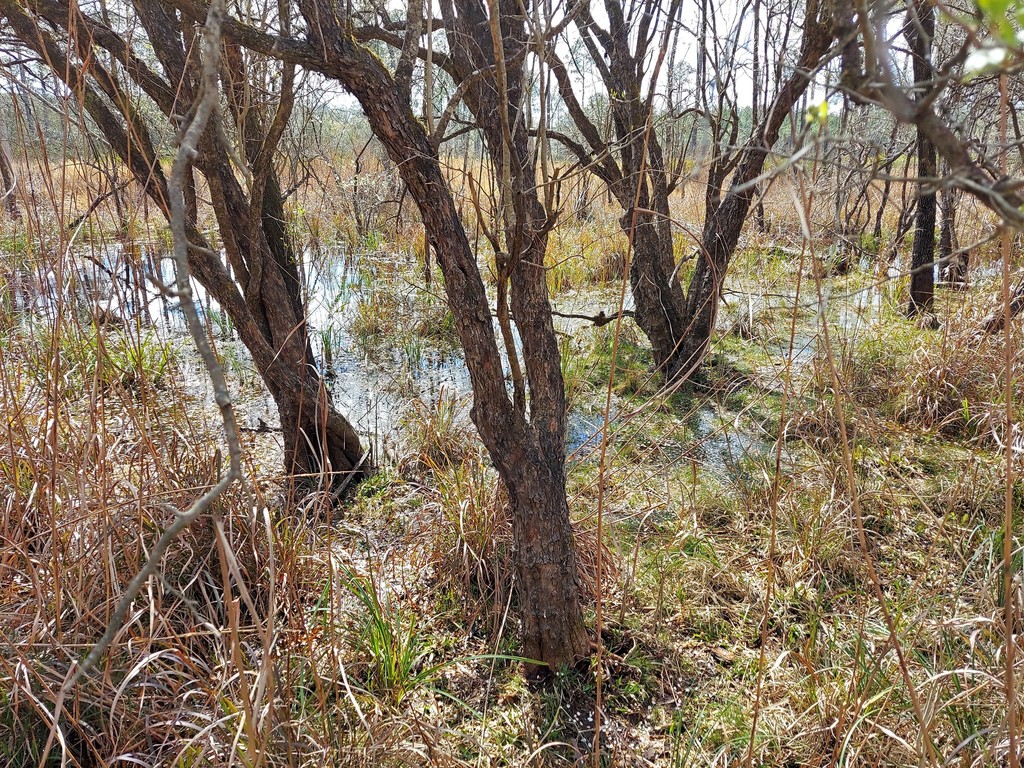
May hawthorn is a shrub or small tree, usually 15 to 30 feet tall and occasionally taller, often with several leaning trunks and a rounded, irregular crown. The branches are crooked and usually carry straight, sharp thorns about ½ to 1 inch long. The bark is dark gray-brown to reddish, scaly and flaking on older trunks.
Leaves
The leaves are alternate, deciduous and fairly small, usually 1 to 2½ inches long. They are narrowly obovate to spoon-shaped (widest near the tip and tapering to the base), with shallow teeth or small lobes mainly toward the tip. The upper surface is dark green and shiny. Beneath, the leaves are paler, with small tufts of rusty hairs in the vein axils but otherwise mostly smooth. The western mayhaw (C. opaca) has broader, more elliptic leaves with dense rusty wool on the underside, which is the best way to tell them apart.
Flowers
The white flowers are about 1 inch across, with five rounded petals and about 20 stamens with dark red to purple anthers. They open in late winter and early spring, from February into March, singly or in small clusters of two or three, just before or with the new leaves. The flowers have the faint, musky scent typical of hawthorns.
Fruit
The fruit is a small, round pome about ½ to ¾ inch across, ripening from green through orange to glossy red from about April into May, with some trees fruiting into June. Each contains several small, hard seeds. The flesh is juicy, aromatic and sharply tart.
Quick Facts
| Scientific Name | Crataegus aestivalis (syn. Mespilus aestivalis) |
| Family | Rosaceae (rose family) |
| Plant Type | Deciduous small tree or large shrub |
| Mature Height | 15–30 ft (occasionally to about 40 ft) |
| Mature Spread | 15–25 ft |
| Growth Rate | Moderate |
| Sun Exposure | Full sun to part shade |
| Water Needs | High; wet to moist soils, tolerates standing water |
| Soil Type | Wet sandy, loamy or peaty soils; pond and swamp margins |
| Soil pH | About 4.5–6.5 (acid) |
| Bloom Time | February–March |
| Flower Color | White with red anthers |
| Fall Color | Not showy; leaves turn dull yellow-brown |
| Fruit | Glossy red pomes, April–May |
| Deer Resistant | No; deer browse foliage and eat fallen fruit |
| USDA Hardiness Zones | 7–9 |
Native Range
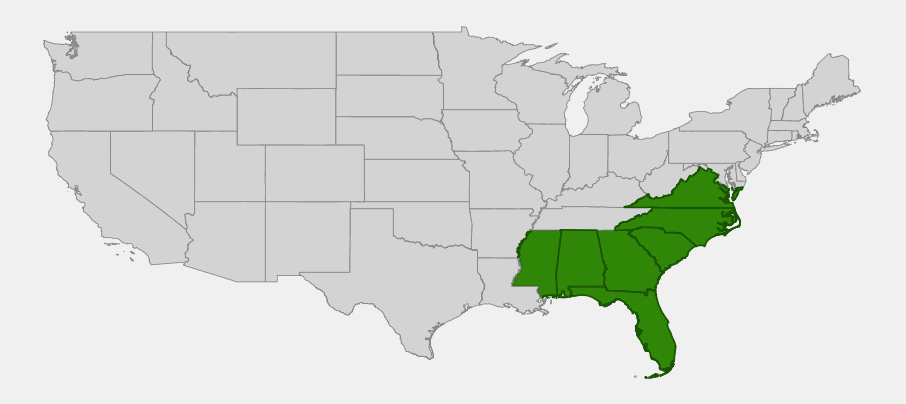
May hawthorn grows on the southeastern Coastal Plain. USDA PLANTS lists it as native to Alabama, Florida, Georgia, Mississippi, North Carolina, South Carolina and Virginia, and the Lady Bird Johnson Wildflower Center describes its range as the Coastal Plain from Virginia to Florida and Mississippi.
It is most common in southern Georgia, north Florida and the southern Alabama and Mississippi coastal plain. In Florida it grows through the Panhandle and the northern peninsula, south to about Alachua and Flagler counties. Farther west, in Louisiana, Arkansas and Texas, the similar western mayhaw (C. opaca) takes its place.
Its habitats are wet: the margins of shallow ponds, seasonally flooded depressions and cypress ponds, river and creek swamps, wet woods and wet flatwoods. It is rated an obligate wetland plant in Florida, and it often grows where water stands for weeks or months in winter and spring.
📋 Regional plant lists featuring May Hawthorn: North & South Florida · Alabama, Georgia & Mississippi · North & South Carolina · Maryland, Virginia & West Virginia
Growing & Care Guide
May hawthorn is an attractive, wildlife-friendly small tree for wet sites in the Southeast, and it is also grown for its fruit. Selected mayhaw cultivars are sold for jelly production, though many of these are western mayhaws or hybrids, so check the label if you want the eastern species.
Light
It flowers and fruits best in full sun. It tolerates part shade, as at the edge of a swamp forest, but produces less fruit there.
Soil & Water
Plant it in moist to wet, acid soil. It thrives at pond and ditch edges, in rain gardens and in low spots that hold water in winter, and it tolerates flooding for long periods. Once established it also handles ordinary, well-watered garden soil, though it grows slowly in dry sand. Avoid alkaline soils.
Planting Tips
Plant in fall or winter while dormant. Choose a site away from walkways, because the branches are thorny. For fruit, plant two or more trees to improve pollination and fruit set. Keep it away from eastern red cedar if possible, since cedar rusts spend part of their life cycle on junipers and can spot the leaves and fruit of hawthorns.
Pruning & Maintenance
Prune in late winter, after the risk of hard freezes but before flowering, to remove crossing branches and suckers or to train a single trunk. Rake up and dispose of leaves and fruit heavily infected with rust or fire blight. Otherwise it needs little care.
Propagation
Seeds have hard coats and need a long period of warm and then cold stratification and may take one or two years to germinate. Named fruiting selections are usually grafted onto seedling hawthorn rootstock. Softwood cuttings root only with difficulty.
Landscape Uses
- Pond and lake margins: one of the few small flowering trees that thrive with wet feet
- Rain gardens and wet swales: tolerates seasonal flooding and helps stabilize soil
- Edible landscaping: spring fruit for traditional mayhaw jelly, syrup and wine
- Wildlife plantings: early flowers for bees and spring fruit for birds, mammals and fish
- Wetland restoration: depression ponds and floodplain edges within its native range
Wildlife & Ecological Value
May hawthorn feeds wildlife at a time of year when few other plants do: its flowers open in late winter, and its fruit ripens in spring, months before most wild fruits.
For Pollinators
The early white flowers are visited by small native bees, early bumblebee queens, flies and beetles. The Xerces Society lists it as of special value to native bees. Hawthorns are also larval host plants for many moths and for butterflies such as the striped hairstreak and red-spotted purple.
For Birds
Fruit that stays on the tree is eaten by birds including cedar waxwings, northern mockingbirds, American robins and wild turkeys. The thorny branches make protected nesting sites for small songbirds.
For Mammals
Fallen fruit is eaten by white-tailed deer, raccoons, opossums, squirrels, foxes and feral hogs. Deer also browse the leaves and young shoots.
Ecosystem Role
Because it grows in and over water, much of its fruit drops into ponds and swamps, where it is eaten by fish and turtles. This spring pulse of fruit is an unusual food source in Coastal Plain wetlands. May hawthorn trees also add structure to the edges of cypress and tupelo ponds.
Cultural & Historical Uses
Thomas Walter described this tree in his Flora Caroliniana in 1788 as Mespilus aestivalis, from South Carolina. John Torrey and Asa Gray moved it to Crataegus in 1840. The species name means “of summer”, probably referring to the early ripening of its fruit, which is unusual among hawthorns.
Mayhaw jelly is a Southern tradition with deep roots in rural south Georgia, north Florida, Louisiana and east Texas. Families gathered the fruit in spring by shaking the trees over ponds and skimming the floating fruit with nets or buckets. The juice makes a clear, pink-orange jelly with a distinctive flavor, and towns in the region hold mayhaw festivals in spring. Colquitt, Georgia, is especially known for its annual Mayhaw Festival.
In the late twentieth century growers began planting mayhaw orchards and selecting cultivars for larger fruit and more reliable crops. Many of these selections come from the western mayhaw, C. opaca, or hybrids, so the eastern May hawthorn remains mostly a wild-gathered fruit and a native ornamental for wet ground.
Frequently Asked Questions
Is May hawthorn the same as mayhaw?
Yes, May hawthorn is one of two species called mayhaw. The eastern mayhaw (Crataegus aestivalis) grows from Virginia to Florida and Mississippi. The western mayhaw (Crataegus opaca) grows from Alabama and Mississippi west to Texas and Arkansas. Both have red, spring-ripening fruit used for jelly.
How do I tell eastern and western mayhaw apart?
Look at the leaves. May hawthorn has narrow, spoon-shaped, shiny leaves that are mostly smooth beneath except for small hair tufts in the vein angles. Western mayhaw has broader leaves with dense, rusty-brown wool on the underside, especially when young.
Can you eat mayhaw fruit raw?
The fruit is edible but very tart, so most people cook it. It is best known as mayhaw jelly, and it is also made into syrup and wine. Do not eat the seeds in quantity, as hawthorn seeds, like those of apples, contain compounds that can release cyanide.
Will May hawthorn grow in a normal yard?
Yes, if the soil is acidic and does not dry out completely. It does best in moist or wet ground, such as a pond edge, rain garden or low spot, and in full sun.
Why are there orange spots on my mayhaw leaves?
These are usually cedar rust diseases, fungi that alternate between hawthorns and junipers such as eastern red cedar. Light infections are mostly cosmetic. Removing infected leaves and fruit and keeping hawthorns away from cedars reduces the problem.

Looking for a nursery that carries May Hawthorn?
Browse our native plant nursery directory: Alabama · Florida & Georgia · Mississippi · North Carolina · South Carolina & Virginia