
Coontie (Zamia integrifolia)
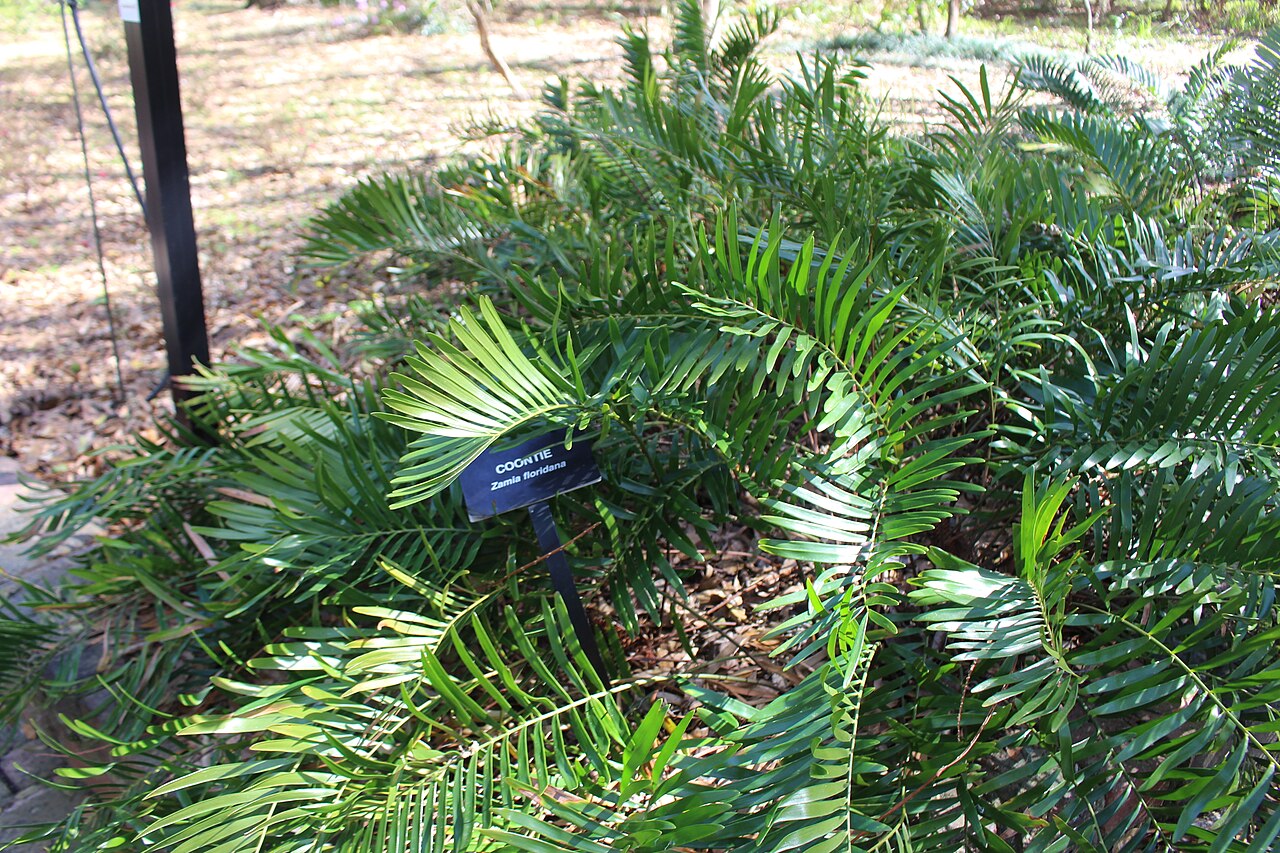
Zamia integrifolia, known as Coontie or Florida arrowroot, is the only cycad native to the continental United States. It looks a bit like a fern or a small palm, but it is neither. Cycads are an ancient group of cone-bearing seed plants whose ancestors were widespread in the age of dinosaurs. Coontie grows from a thick, mostly underground stem and forms clumps of stiff, glossy, feather-like leaves, usually 1 to 3 feet long. It is a member of the family Zamiaceae.
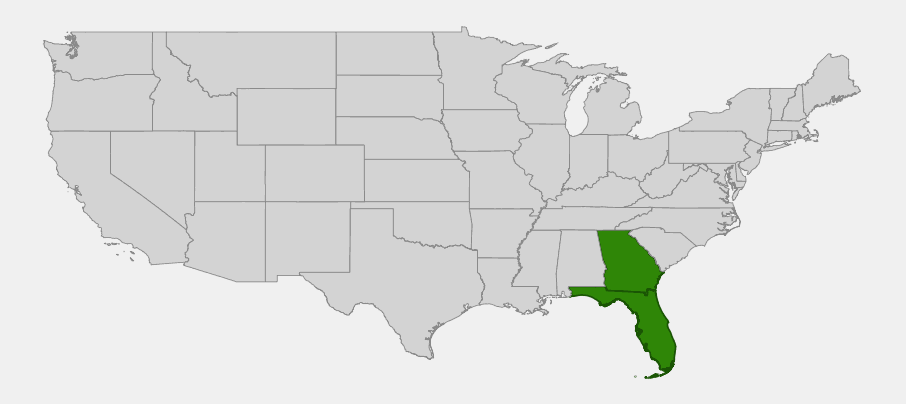
Coontie is the name used by the Atlas of Florida Plants and by most Florida nurseries. USDA PLANTS includes it in a broader Zamia pumila, and older books call it Zamia floridana. In the wild it grows in pine flatwoods, sandy hammocks, scrubby woodlands and shell mounds throughout much of peninsular Florida and in a few places in southeastern Georgia.
Coontie is one of the most popular native landscape plants in Florida: evergreen, drought tolerant, nearly pest-free and suitable for sun or shade. It is also the only larval host of the Atala butterfly, a once nearly vanished jewel of South Florida. All parts of the plant are toxic to people and pets, however, and this guide explains how to grow it safely, how to identify it, where it grows, and its long history as a source of starch.
Identification
Coontie is easy to recognize once you know it. The tough, stiff leaflets and the cones at the base of the plant distinguish it from ferns, and the absence of a trunk distinguishes it from palms and most other cycads.
Stem & Roots
The stem is a thick, starchy, carrot- or turnip-shaped structure that is mostly or entirely underground, often with only the crown at the soil surface. Old plants can branch underground and form clumps with several crowns. Coontie also has specialized coralloid roots near the surface that house nitrogen-fixing cyanobacteria, allowing it to grow in nutrient-poor sand.
Leaves
Each crown produces a few to many leaves, usually 1 to 3 feet long, that arch outward. They are pinnately divided into many narrow, stiff, leathery leaflets, dark glossy green, with smooth or slightly toothed tips. New leaves appear in a flush, often in spring, and are pale green and soft at first. Leaflet width varies across Florida: plants in southern Florida tend to have broader, flatter leaflets, while those in the north and in scrub often have narrower leaflets.
Cones
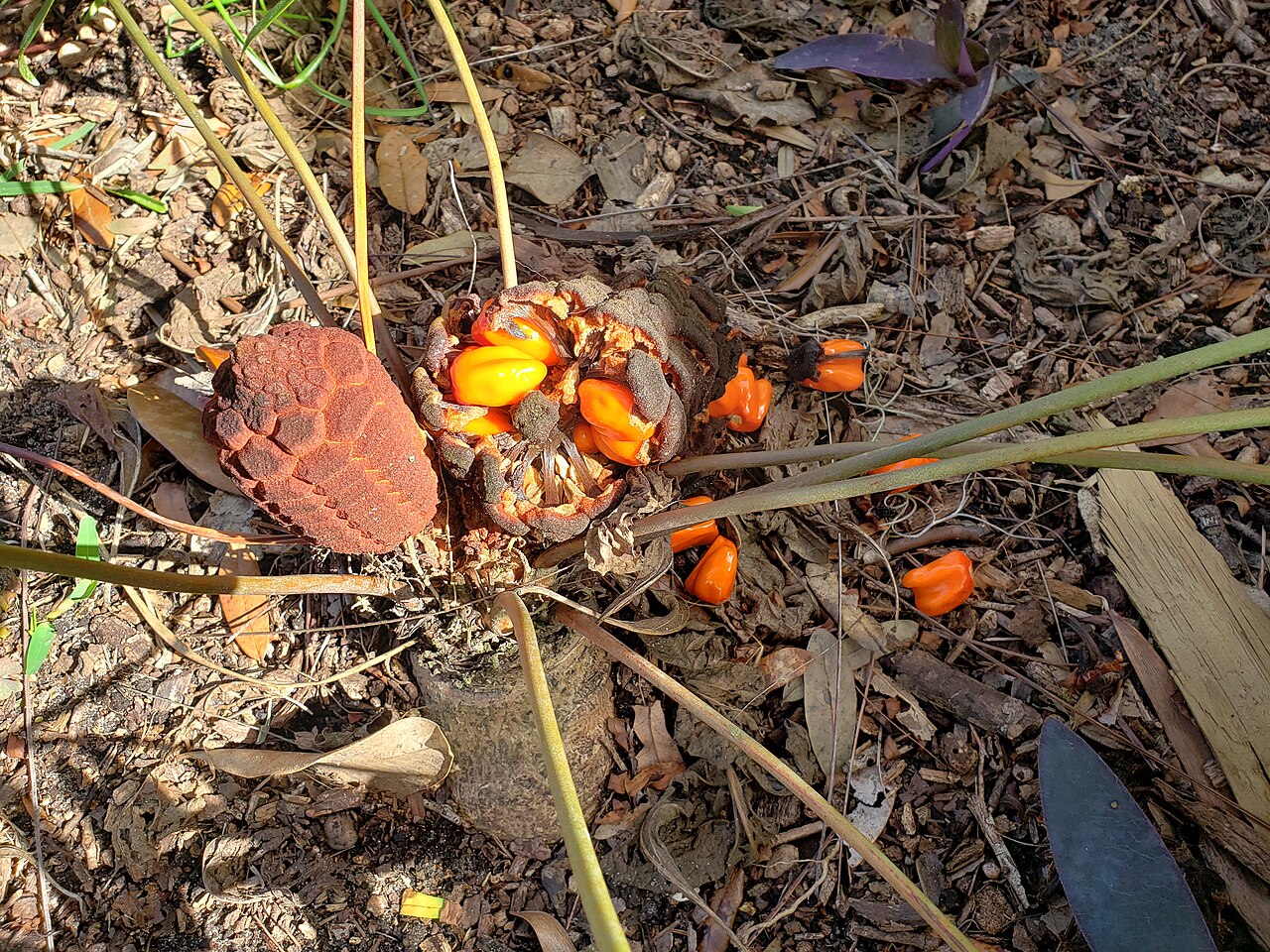
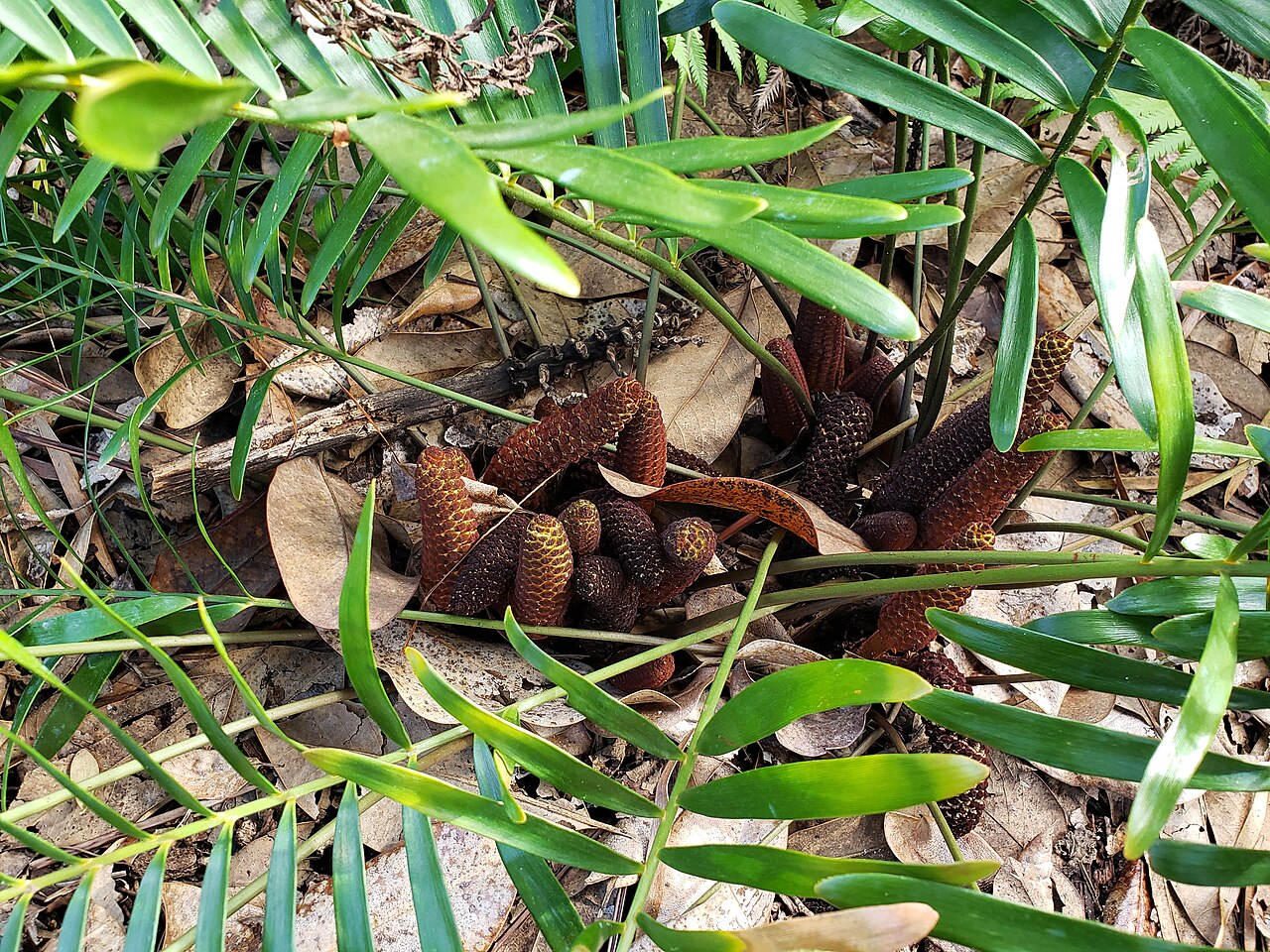
Like all cycads, coontie does not flower. Male and female cones grow on separate plants. Male plants produce clusters of slender, cylindrical, brown pollen cones, each a few inches long. Female plants produce one or a few stout, egg-shaped, rusty-brown, velvety seed cones, 4 to 7 inches long. Cones emerge from the crown in summer or fall, and pollination takes place mostly in late winter or spring, carried out by small beetles that live in the cones.
Seeds
When ripe, the female cone breaks apart and releases dozens of seeds, each about 1 inch long and covered with a bright orange to scarlet fleshy coat. The seeds are very toxic. They ripen roughly a year after pollination, usually in fall or winter.
Quick Facts
| Scientific Name | Zamia integrifolia (syn. Z. pumila per USDA, Z. floridana) |
| Family | Zamiaceae (zamia family; cycads) |
| Plant Type | Evergreen cycad with an underground stem |
| Mature Height | 1–3 ft |
| Mature Spread | 2–4 ft; old clumps wider |
| Growth Rate | Slow |
| Sun Exposure | Full sun to shade |
| Water Needs | Low; very drought tolerant once established |
| Soil Type | Well-drained sand, shell or limestone soils |
| Soil pH | About 5.5–8.0 |
| Bloom Time | No flowers; cones develop summer–fall, seeds ripen fall–winter |
| Flower Color | None (brown cones; orange seeds) |
| Fall Color | None; evergreen |
| Fruit | Bright orange, fleshy-coated seeds released from a brown cone |
| Deer Resistant | Yes; toxic and rarely browsed |
| USDA Hardiness Zones | 8–11 |
Native Range
Coontie is native to Florida and southeastern Georgia. The Lady Bird Johnson Wildflower Center records it from Florida and Georgia and describes it as a plant of central and southern Florida. The Atlas of Florida Plants records it from much of the peninsula, and it reaches its northern limit in a few sites in southeastern Georgia. Closely related plants grow in the Bahamas, Cuba and other parts of the Caribbean, and USDA PLANTS lumps these into a broad Zamia pumila, which it lists as native to the lower 48 states and Puerto Rico.
In Florida it grows in a wide range of well-drained habitats: pine flatwoods, sand pine scrub, oak hammocks and tropical hammocks, shell middens and coastal dunes, and the pine rocklands of Miami-Dade County. It often grows beneath pines and oaks in partial shade, and it is well adapted to fire, resprouting from its underground stem after burns.
Wild coontie populations were heavily harvested in the 1800s and early 1900s for starch, and later dug for the landscape trade. Much of its habitat has been lost to development. Today coontie is widely grown from seed by nurseries, so there is no reason to remove plants from the wild. Buy nursery-propagated plants.
📋 Regional plant lists featuring Coontie: North & South Florida · Alabama, Georgia & Mississippi
Growing & Care Guide
Coontie is one of the most dependable native plants for Florida landscapes, widely available from nurseries and garden centers. It is slow-growing, long-lived and adaptable. Because all parts of the plant, especially the seeds, are toxic, plant it where small children and pets will not chew on it, and pick up fallen seeds.
Light
Coontie grows in full sun to fairly deep shade. Plants in sun are more compact and have shorter, stiffer, yellow-green leaves; plants in shade have longer, darker, more arching leaves. It is one of the few native plants that do well under oaks and in the dry shade of buildings.
Soil & Water
It needs well-drained soil and rots in soggy ground. Sand, shell, sandy loam and limestone soils are all suitable. Water new plants regularly until established, which can take a few months; after that it survives on rainfall in most of Florida. It tolerates moderate salt spray. Use little or no fertilizer; a light dose of palm fertilizer with magnesium can help yellowing plants in poor soil.
Planting Tips
Plant container-grown coontie at the same depth it grew in the pot, with the crown at or slightly above the soil surface. Space plants 2 to 3 feet apart for a massed groundcover or low border. They are slow to fill in, so be patient. Choose a site away from play areas and dog runs, because of the toxic seeds.
Pruning & Maintenance
Remove old, brown leaves at the base if you like a tidy look. Do not cut back leaves that are damaged by Atala caterpillars; the plant will put out new leaves. Collect and dispose of seeds from female plants, or pick them up for propagation, to keep them away from pets. Coontie occasionally has scale insects, which can be controlled with horticultural oil if needed.
Propagation
Grow coontie from seed. Clean the orange flesh off ripe seeds (wear gloves), then sow them in a well-drained mix, half buried. Germination is slow and irregular, often taking several months to a year. Seedlings grow slowly and take several years to reach a landscape size. Large plants can be divided, but cycads resent root disturbance.
Landscape Uses
- Butterfly gardens: the only larval host of the Atala butterfly in Florida
- Foundation plantings and borders: a tidy, low evergreen for sun or shade around homes
- Groundcover under trees: tolerates dry shade beneath oaks and pines
- Coastal and xeric landscapes: handles drought, sand and moderate salt spray
- Containers: slow growth makes it suitable for pots and planters
Wildlife & Ecological Value
Coontie’s most famous relationship is with the Atala butterfly, but it also supports a set of specialized insects and other animals.
For Pollinators
Coontie is pollinated by small beetles, especially weevils of the genus Rhopalotria and other specialized beetles that breed in the male cones and carry pollen to female cones. Coontie is the only larval host plant in Florida of the Atala butterfly (Eumaeus atala), a striking black hairstreak with iridescent blue spots and a bright red abdomen. The bright red, yellow-spotted caterpillars feed in groups on coontie leaves and absorb the plant’s toxins, which make them distasteful to predators. After wild coontie was overharvested, the Atala became so rare in Florida by the mid-1900s that it was feared lost there, and only small colonies survived. Its recovery has been largely due to coontie planted in South Florida landscapes. Gardeners who plant coontie should expect some leaf damage, which the plant recovers from.
For Birds
Birds rarely eat coontie seeds, which are toxic. The low, dense clumps provide cover for ground-feeding birds.
For Mammals
Coontie is toxic to mammals. Some small mammals cache or nibble the seeds, but most avoid the plant. The seeds are particularly dangerous to dogs, which may chew them and suffer serious liver damage.
Ecosystem Role
Coontie fixes nitrogen through cyanobacteria in its coralloid roots, adding nutrients to poor sandy soils. It is fire-adapted, resprouting from the underground stem after burns. As a relic of an ancient plant group, it is also an important part of Florida’s botanical heritage.
Cultural & Historical Uses
Coontie was an important food plant for Native American peoples of Florida, who learned to remove its toxins by grating, soaking, washing and fermenting the starchy stem, then drying the starch into flour. The name “coontie” comes from the Seminole word konti or kunti, often explained as meaning “flour root.” Seminoles used coontie flour for bread and a kind of gruel.
In the 1800s and early 1900s, coontie starch became a commercial product. Mills in South Florida, especially around Miami, ground coontie stems into “Florida arrowroot” starch, which was sold for baking and biscuits. The industry faded in the 1920s, after wild populations had been largely exhausted.
Today coontie is valued as a landscape plant and as a symbol of Florida’s native flora. Its toxins, mainly cycasin, can cause severe liver damage and neurological effects, so the plant should never be eaten. If a child or pet chews on any part of a coontie, especially the seeds, contact a poison control center or veterinarian right away.
Frequently Asked Questions
Is coontie a fern or a palm?
Neither. Coontie is a cycad, an ancient group of cone-bearing seed plants. It has fern-like leaves and a palm-like growth habit, but it reproduces with cones and seeds, not spores or flowers.
Is coontie poisonous?
Yes. All parts of the plant are toxic to people and pets, and the bright orange seeds are especially dangerous. Dogs that chew the seeds can develop liver failure. Plant coontie away from play areas, and pick up seeds from female plants.
Why is my coontie being eaten by red caterpillars?
Those are probably Atala butterfly caterpillars, which feed only on coontie and other cycads. They can strip a plant, but coontie regrows new leaves. Many gardeners plant coontie specifically to host this butterfly.
What is the difference between Zamia integrifolia, Zamia pumila and Zamia floridana?
They are names for the same Florida plant under different classifications. The Atlas of Florida Plants uses Z. integrifolia, USDA PLANTS includes it in Z. pumila, and Z. floridana is an older name.
How fast does coontie grow?
Slowly. Seedlings may take several years to reach landscape size. Established plants usually produce one flush of new leaves a year, more with regular water and light fertilizer.

Looking for a nursery that carries Coontie?
Browse our native plant nursery directory: Florida & Georgia