
Eastern Smooth Beardtongue (Penstemon laevigatus)
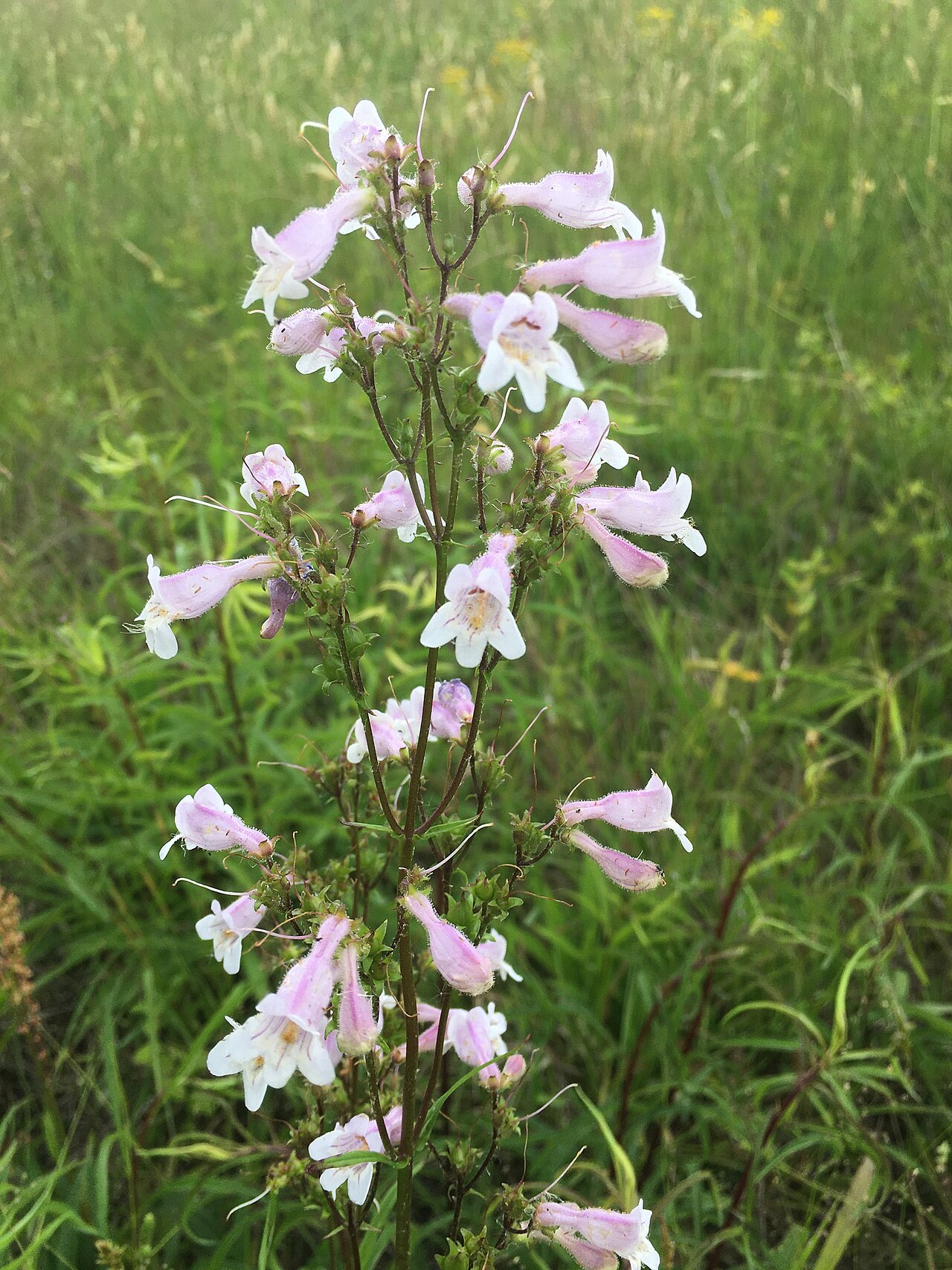
Penstemon laevigatus, Eastern Smooth Beardtongue, is a native perennial wildflower of the eastern United States with airy spikes of pale lavender to pinkish-white tubular flowers in late spring and early summer. It grows 2 to 4 feet tall from a low rosette of leaves, in open woods, woodland edges, meadows and old fields.
It is a member of the plantain family (Plantaginaceae), which now includes the penstemons. Its name comes from its smooth (laevigatus) stems and leaves, which separate it from hairy relatives, and from the bearded staminode that sits in the throat of every flower.
It is a close relative of the popular foxglove beardtongue (Penstemon digitalis) and is just as easy to grow, but is less often sold. In Florida it is at the southern edge of its range and is found mainly in the Panhandle.
Identification
Eastern smooth beardtongue is one of several pale-flowered eastern penstemons. The shape of the flowers and the smooth stems are the best clues.
Leaves
The basal leaves form a rosette and are oblong to spoon-shaped and stalked. The stem leaves are opposite, lance-shaped, 2 to 6 inches long, stalkless and often clasp the stem, with finely toothed or nearly smooth margins. Leaves and stems are smooth (hairless) or nearly so, except in the flower clusters.
Stems
One to several upright stems, 2 to 4 feet tall, rise from each rosette in spring. They are smooth and green to purplish, and branch near the top into an open flower cluster.
Flowers
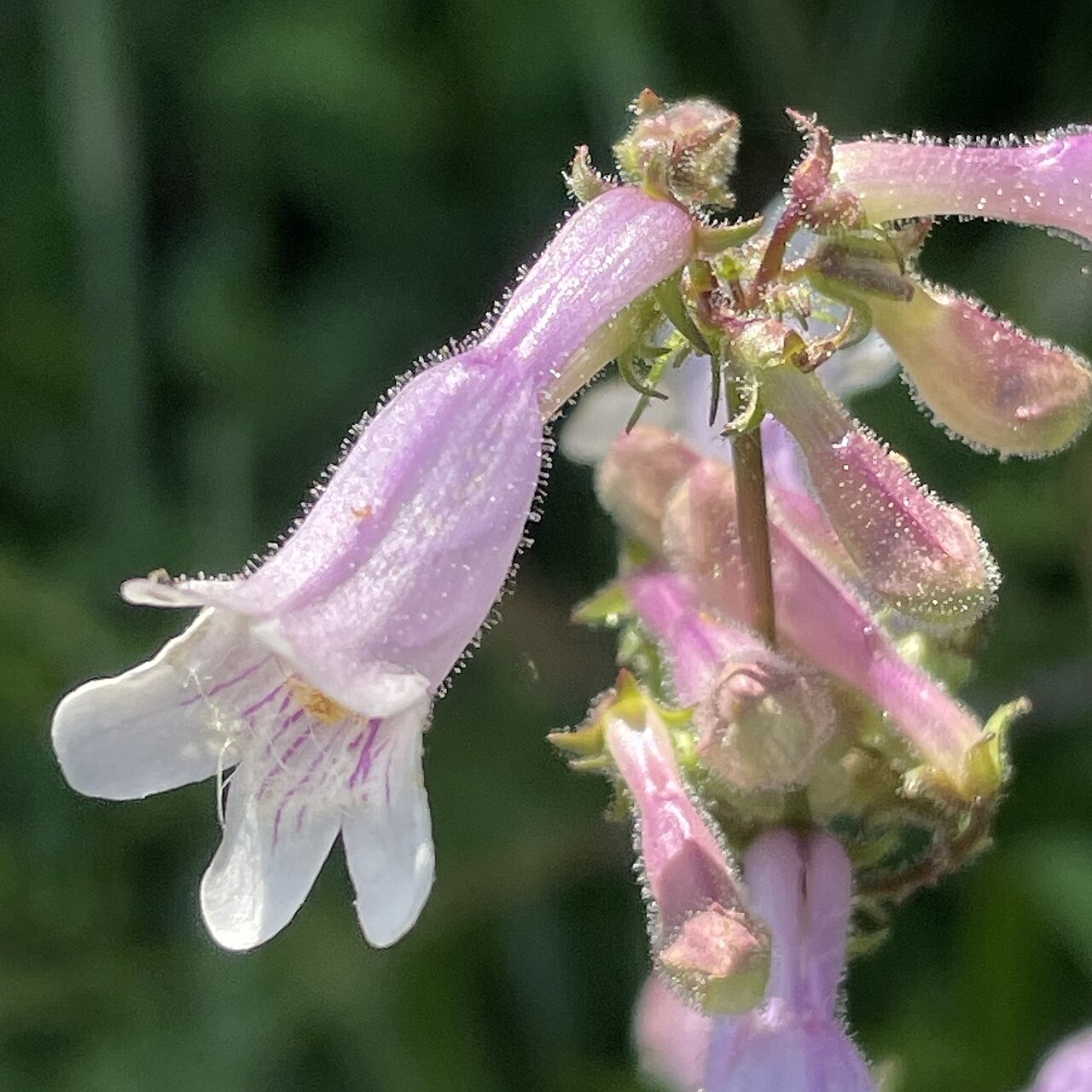
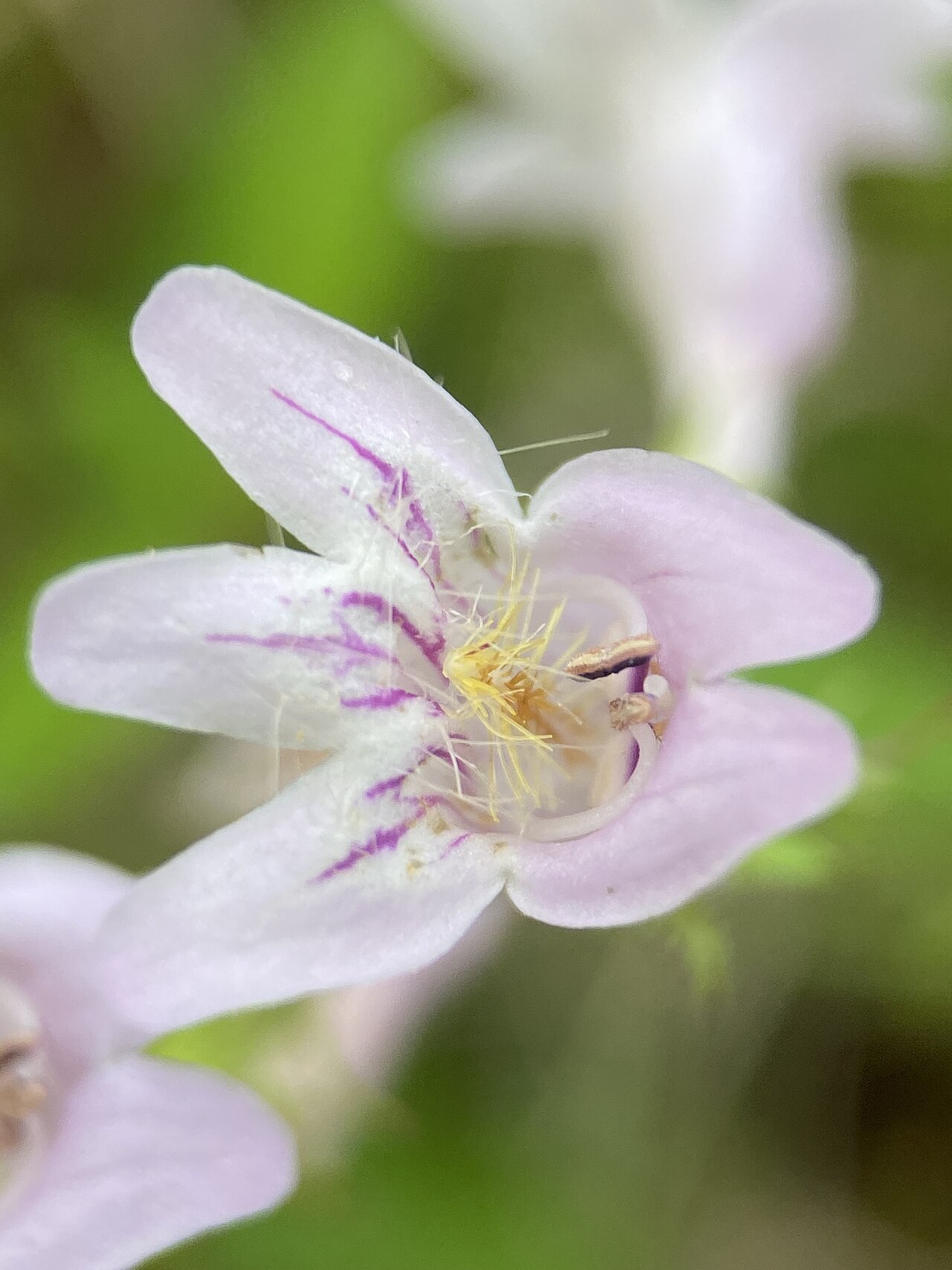
The flowers are tubular, about ¾ to 1 inch long, and two-lipped, with two upper and three lower lobes. They are pale lavender to pinkish or nearly white on the outside, paler inside, with fine purple lines (nectar guides) in the throat. The outside of the flower is covered in fine glandular hairs. Inside is a sterile stamen (staminode) with a tuft of yellow hairs, the “beard.” Flowering is from April to July, earlier in the South.
Similar Species
Foxglove beardtongue (Penstemon digitalis) has larger, white flowers that widen abruptly into a bell-shaped throat. Eastern smooth beardtongue has smaller, lavender-tinged flowers whose tube widens more gradually. Hairy beardtongue (P. hirsutus) has hairy stems and a nearly closed throat.
Fruit & Seeds
The fruit is a small, pointed, egg-shaped capsule that turns brown and splits in summer, releasing many tiny, angular seeds. The dry stalks stay standing into fall.
Quick Facts
| Scientific Name | Penstemon laevigatus |
| Family | Plantaginaceae (plantain family) |
| Plant Type | Herbaceous perennial wildflower |
| Mature Height | 2–4 ft |
| Mature Spread | 1–1.5 ft |
| Growth Rate | Moderate |
| Sun Exposure | Full sun to part shade |
| Water Needs | Moderate; moist to fairly dry, well-drained soil |
| Soil Type | Loamy, sandy or clay soils with organic matter |
| Soil pH | About 5.0–7.0 |
| Bloom Time | April–July |
| Flower Color | Pale lavender, pinkish or white |
| Fall Color | Basal leaves often reddish in winter |
| Fruit | Small capsules with tiny seeds |
| Deer Resistant | Moderately |
| USDA Hardiness Zones | 5–9 |
Native Range
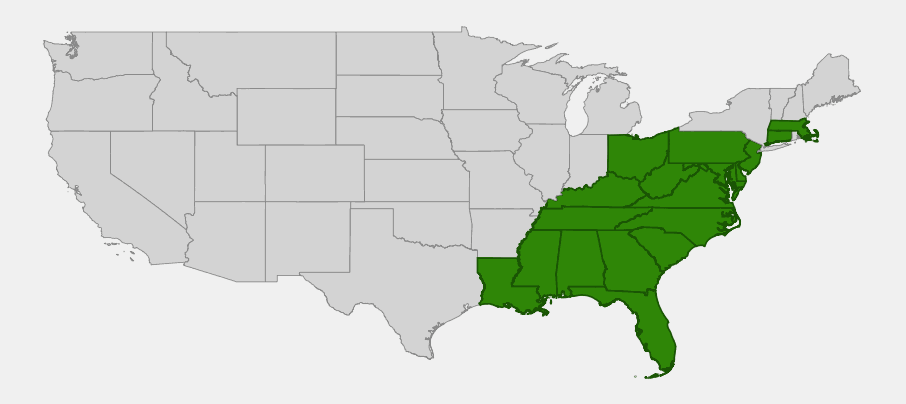
Eastern smooth beardtongue is native to the eastern United States. USDA PLANTS records it from Alabama, Connecticut, the District of Columbia, Delaware, Florida, Georgia, Kentucky, Louisiana, Massachusetts, Maryland, Mississippi, North Carolina, New Jersey, Ohio, Pennsylvania, South Carolina, Tennessee, Virginia and West Virginia. Its core range is the Piedmont and Coastal Plain from Pennsylvania and New Jersey south to the Gulf states.
It grows in rich woods and fields, open deciduous and pine woodlands, woodland edges, meadows, clearings and roadsides, usually in moist but well-drained soil. In the Coastal Plain it grows in open pine woods and the edges of hardwood forests.
In Florida it is at the southern edge of its range and is uncommon, found mainly in the central Panhandle and Big Bend, from the Apalachicola River region to the Tallahassee area. Farther north, from Georgia and the Carolinas to Pennsylvania, it is fairly common in suitable habitat.
📋 Regional plant lists featuring Eastern Smooth Beardtongue: North & South Florida · Alabama, Georgia & Mississippi · North & South Carolina · Maryland, Virginia & West Virginia · Kentucky & Tennessee · Arkansas, Louisiana, Eastern Oklahoma & Eastern Texas · Ohio & Indiana · New York, Pennsylvania & Northern New Jersey · Delaware, Southern New Jersey & Long Island · Connecticut, Massachusetts & Rhode Island
Growing & Care Guide
Eastern smooth beardtongue is an easy, adaptable wildflower for sunny or lightly shaded beds and meadows across the eastern United States. It is less often sold than foxglove beardtongue, so check native nurseries and seed suppliers.
Light
It flowers best in full sun to part shade. In the Deep South, a little afternoon shade helps it through summer heat.
Soil & Water
Plant it in well-drained soil of average fertility. It handles loam, sand and clay that does not stay soggy, and tolerates moderate drought once established. Avoid sites that stay wet in winter, where the crowns can rot.
Planting Tips
Plant in groups of three or more, about 12 to 18 inches apart, in borders, meadows or woodland edges. Its slender stems look best mixed with grasses and other wildflowers that support it.
Pruning & Maintenance
Cut the flowering stems back after bloom if you want to prevent self-seeding or tidy the plant, or leave them for the seed heads. The basal rosette stays green in winter. Clumps are short-lived to moderately long-lived and renew themselves by self-sowing.
Propagation
Sow seed outdoors in fall, or give it 4 to 8 weeks of cold, moist stratification before sowing in spring. Seed is tiny and needs light, so press it onto the surface of the soil. Clumps can also be divided in early spring.
Landscape Uses
- Pollinator gardens: an excellent late-spring nectar and pollen plant for native bees
- Meadows and woodland edges: graceful spikes among grasses and other wildflowers
- Perennial borders: pale lavender flowers in late spring
- Restoration: open woods, fields and roadsides in its native range
Wildlife & Ecological Value
Penstemons are among the best plants for native bees, and eastern smooth beardtongue is no exception.
For Pollinators
The tubular flowers are designed for bees. Bumble bees crawl right into the flowers, and many smaller native bees collect pollen and nectar. The Xerces Society lists it as having special value to native bees, and some specialist bees collect pollen only from penstemons. Hummingbirds and butterflies occasionally visit as well.
For Birds
Some birds pick seeds from the dry capsules in fall and winter, but it is of minor importance as bird food.
For Mammals
Deer and rabbits sometimes browse the plants but usually avoid them.
Ecosystem Role
As a late-spring bloomer, it bridges the gap between spring ephemerals and summer wildflowers in open woods and meadows. Its basal rosettes stay green all winter.
Cultural & Historical Uses
The name Penstemon comes from the Greek for “almost a stamen,” a reference to the staminode, the sterile fifth stamen. The bearded staminode gives the genus its common name, beardtongue.
Penstemon is the largest genus of flowering plants found only in North America, with about 250 to 280 species, most of them in the West. Only a handful are native to the eastern states, and eastern smooth beardtongue is one of the most widespread in the Southeast.
Penstemons were long placed in the figwort family (Scrophulariaceae). DNA studies moved them, along with snapdragons and foxgloves, into the plantain family (Plantaginaceae).
Frequently Asked Questions
What is the difference between eastern smooth beardtongue and foxglove beardtongue?
Foxglove beardtongue (Penstemon digitalis) has larger, white flowers with an abruptly widened, bell-shaped throat. Eastern smooth beardtongue has smaller, pale lavender to pinkish flowers that widen gradually.
Is eastern smooth beardtongue native to Florida?
Yes, but it is uncommon there and grows mainly in the central Panhandle and Big Bend, at the southern edge of its range. It is much more common from Georgia and the Carolinas north to Pennsylvania.
When does eastern smooth beardtongue bloom?
From April to July, earlier in the South and later in the North.
Does it attract pollinators?
Yes. It is a favorite of bumble bees and other native bees, and hummingbirds sometimes visit.
Is eastern smooth beardtongue easy to grow?
Yes. It adapts to most well-drained soils in sun or part shade, tolerates some drought and often self-sows. It is less widely sold than foxglove beardtongue, so look for it at native plant nurseries.

Looking for a nursery that carries Eastern Smooth Beardtongue?
Browse our native plant nursery directory: Alabama · Connecticut, Delaware, Florida & Georgia · Kentucky, Louisiana, Maryland, Massachusetts & Mississippi · New Jersey, North Carolina & Ohio · Pennsylvania, South Carolina, Tennessee & Virginia · West Virginia