
Tall Ironweed (Vernonia angustifolia)
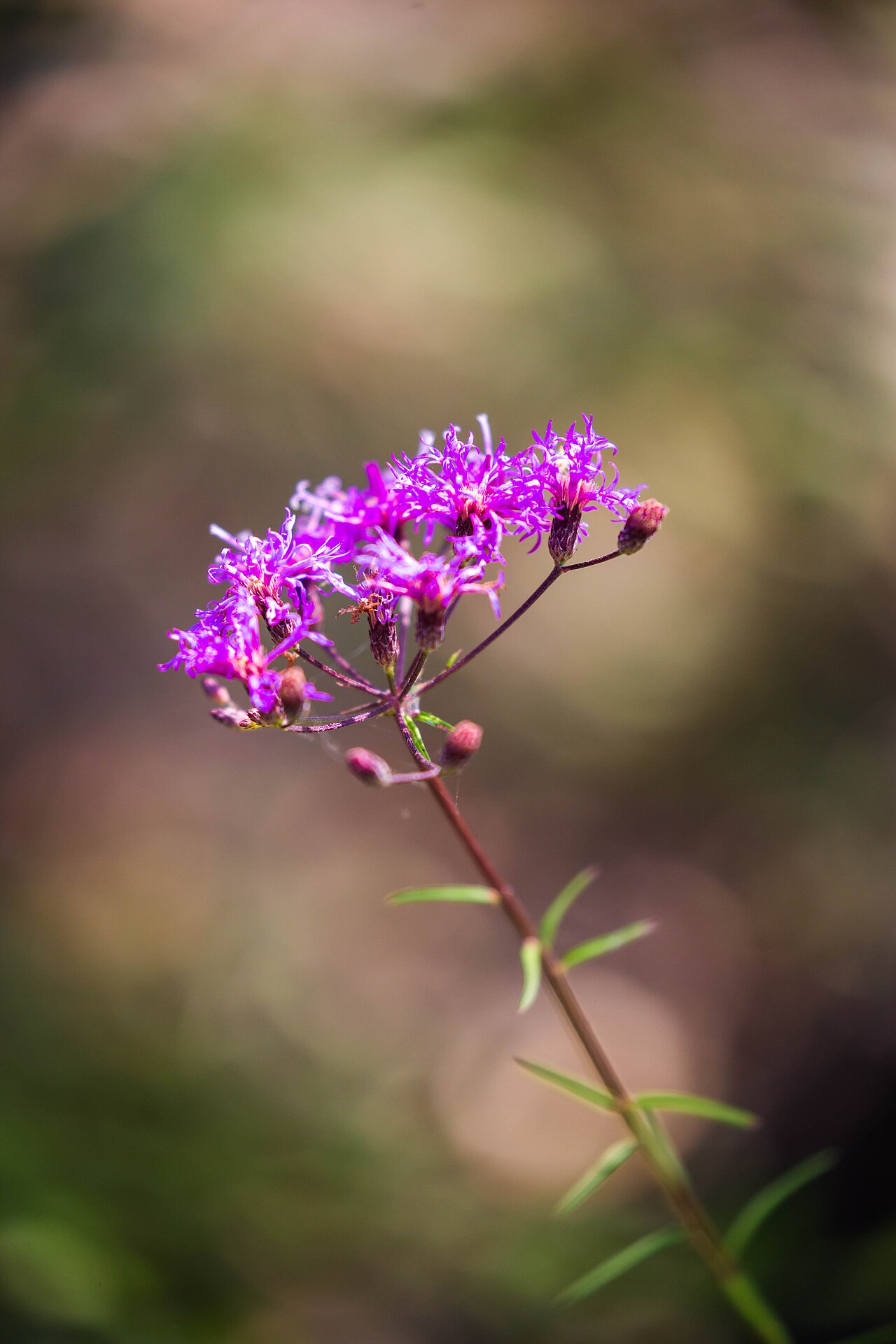
Vernonia angustifolia, known as Tall Ironweed or narrowleaf ironweed, is a perennial wildflower of the sandhills and dry pinelands of the southeastern Coastal Plain. In summer its slender stems, 2 to 3 feet tall and lined with very narrow, almost grass-like leaves, are topped by loose clusters of vivid purple, fringed flower heads that draw butterflies and bees. It belongs to the aster family (Asteraceae).
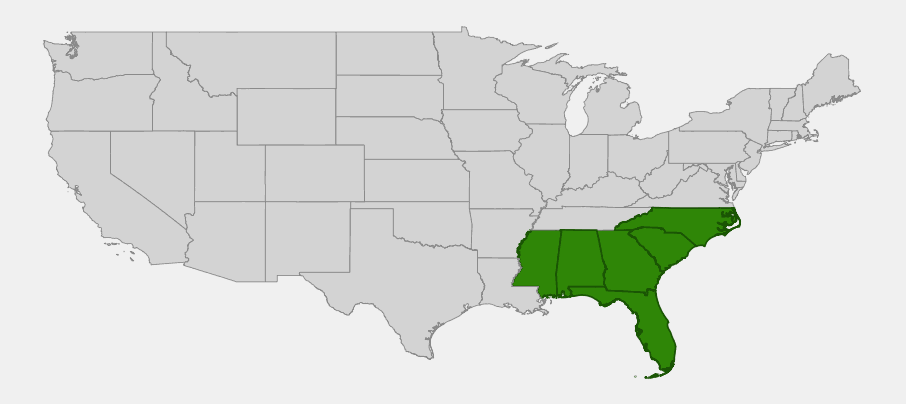
USDA PLANTS uses the common name tall ironweed for this species, while FNPS and most field guides call it narrowleaf or narrow-leaf ironweed. It should not be confused with Giant Ironweed (Vernonia gigantea), which is also sometimes called tall ironweed but grows much taller, has broad leaves and favors moist ground. USDA records V. angustifolia from Florida, Georgia, Alabama, Mississippi and the Carolinas, and it is not listed as threatened in Florida.
It is one of the best ironweeds for small, dry, sunny gardens, being shorter and finer-textured than the big ironweeds of moist meadows. This guide covers how to identify tall ironweed, where it grows, and how to grow it.
Identification
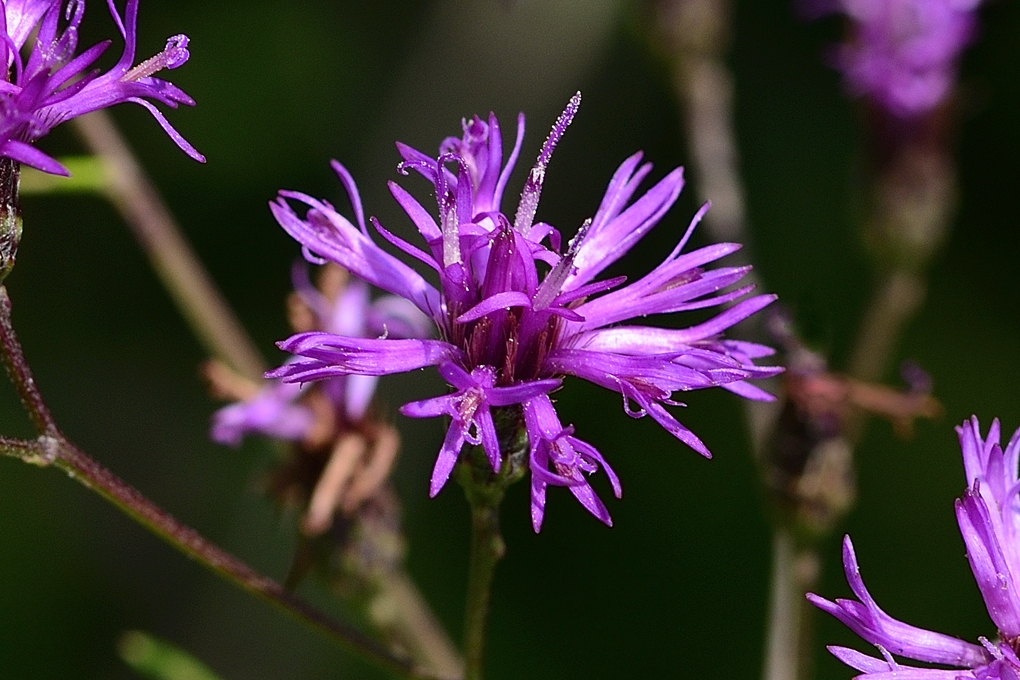
Look for a slender, upright plant with crowded, very narrow leaves and, in summer, open, flat-topped clusters of bright purple heads that have no ray petals.
Growth Habit
A short-lived perennial, according to FNPS, with one to several erect stems from a short rootstock. Plants are usually 2 to 3 feet tall, occasionally up to 4 feet; the Lady Bird Johnson Wildflower Center gives a height of up to about 40 inches. Stems branch near the top to form the flower cluster and die back to the ground in winter.
Leaves
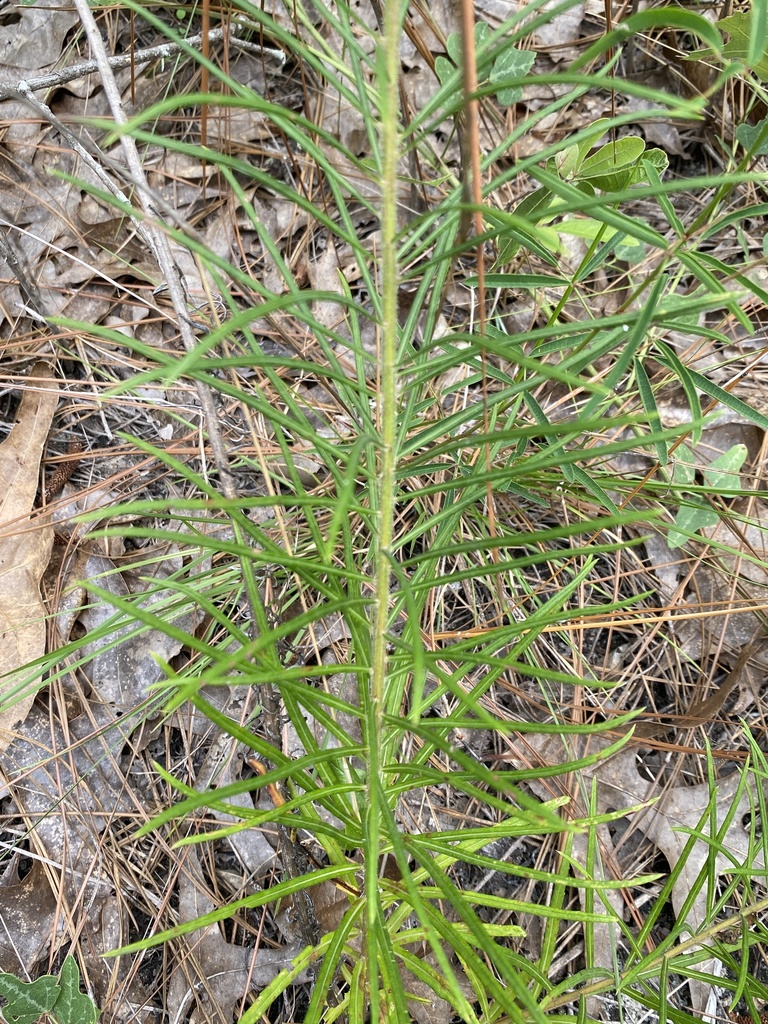
The leaves are numerous and alternate, long and very narrow (linear), typically a few inches long and less than 1/4 inch wide, with edges that are often rolled under. They are crowded along the stem so that young plants look like a narrow bottlebrush. The species name angustifolia means narrow-leaved.
Flowers
Flower heads are about 1/2 inch across and held in loose, flat-topped to rounded clusters at the stem tips. Each head is made up of small tubular disk florets, usually bright purple to reddish purple and rarely white, with long, protruding styles that give the head a fringed look. The bracts (phyllaries) around the head are narrow and taper to fine points. The Lady Bird Johnson Wildflower Center lists bloom from June through August, and plants in Florida can flower into fall.
Fruit & Seeds
The heads ripen into small, ribbed achenes (cypselae) topped with a tuft of tan to purplish bristles (pappus) that carries the seeds on the wind.
Similar Species
Giant Ironweed (V. gigantea) reaches 6 feet or more and has broad, lance-shaped leaves. New York Ironweed (V. noveboracensis) also has larger, broader leaves and grows in moist meadows. Blazing stars (Liatris) have similar purple flowers, but their heads are arranged in a tall spike, not a flat-topped cluster.
Quick Facts
| Scientific Name | Vernonia angustifolia (accepted by USDA PLANTS and the Atlas of Florida Plants) |
| Family | Asteraceae (aster family) |
| Plant Type | Herbaceous perennial wildflower (short-lived) |
| Mature Height | 2–3 ft (occasionally 4 ft) |
| Mature Spread | 1–1.5 ft |
| Growth Rate | Moderate |
| Sun Exposure | Full sun to part sun |
| Water Needs | Low to moderate; dry to moderately moist sand |
| Soil Type | Well-drained sand or sandy loam |
| Soil pH | Acidic to neutral (about 4.5–7.0) |
| Bloom Time | June–August, sometimes into fall |
| Flower Color | Bright purple to reddish purple, rarely white |
| Fall Color | None notable; dies back in winter |
| Fruit | Small achenes with tan to purplish bristles |
| Deer Resistant | Generally; ironweeds are seldom browsed |
| USDA Hardiness Zones | 7b–9b |
Native Range
Tall ironweed is a southeastern Coastal Plain species. USDA PLANTS and the Lady Bird Johnson Wildflower Center record it from Alabama, Florida, Georgia, Mississippi, North Carolina and South Carolina. It is especially characteristic of the Sandhills region of the Carolinas and Georgia and of the sandy uplands of north and central Florida and the Florida Panhandle.
FNPS lists its natural habitats in Florida as dry-mesic to xeric pine flatwoods, dry open woods, sandhills and secondary woods. It typically grows in deep, well-drained sand under longleaf pine and turkey oak, among wiregrass and other sandhill wildflowers. The National Wetland Plant List rates it as a facultative upland plant, meaning it usually grows in non-wetland sites.
Like other sandhill wildflowers, it depends on frequent fire to keep the ground layer open and sunny. It remains fairly common where longleaf pine habitats are managed with fire, and it also turns up on sunny road shoulders and in old fields on sandy soil.
📋 Regional plant lists featuring Tall Ironweed: North & South Florida · Alabama, Georgia & Mississippi · North & South Carolina
Growing & Care Guide
Tall ironweed is a good choice for dry, sandy, sunny native gardens in the Southeast. FNPS lists it as available from native nurseries, specialty providers and as seed through the Florida Wildflower Growers Cooperative.
Light
Full sun gives the best flowering and sturdiest stems. FNPS notes it also tolerates part sun.
Soil & Water
Plant it in well-drained sand or sandy loam. FNPS describes its moisture range as somewhat moist without flooding through to short very dry periods, and acidic to neutral soils. Once established it rarely needs watering. It has some tolerance of salty wind but not direct salt spray.
Planting Tips
Space plants about 12 to 18 inches apart in groups of three or more. Combine with bunchgrasses and other sandhill wildflowers for a natural look; its fine, narrow foliage contrasts nicely with broader-leaved plants. Because it is short-lived, let some seed drop so new plants appear.
Pruning & Maintenance
Leave seed heads standing until late winter, then cut stems to the ground. Avoid fertilizer and rich soil, which make stems flop. In larger plantings, a winter mowing or a prescribed burn where allowed keeps the planting open.
Propagation
FNPS lists propagation by seed and division. Sow fresh seed in fall on the surface of a sandy mix. Divide clumps in late winter before new growth begins.
Landscape Uses
- Butterfly gardens: summer nectar for swallowtails, skippers and other butterflies
- Dry, sandy wildflower beds: thrives in poor, well-drained soil
- Sandhill and pineland restoration: a characteristic ground-layer wildflower of longleaf pine habitats
- Small gardens: shorter and finer-textured than the large meadow ironweeds
- Native bee habitat: attracts many native bees
Wildlife & Ecological Value
Tall ironweed is a strong summer nectar plant in dry pinelands, where its bright purple heads stand out among the grasses.
For Pollinators
FNPS notes that it attracts butterflies, native bees and other pollinators. The long, tubular florets are well suited to butterflies, and skippers, swallowtails and fritillaries are frequent visitors.
For Birds
Small seed-eating birds forage on the seed heads in fall and winter.
For Mammals
Ironweeds are bitter and seldom browsed by deer or rabbits, so they often persist in grazed or browsed areas.
Ecosystem Role
Tall ironweed is part of the diverse, fire-adapted wildflower layer of longleaf pine sandhills and dry flatwoods, contributing summer nectar between the spring bloom and the big fall flush of asters and goldenrods.
Cultural & Historical Uses
The genus Vernonia honors William Vernon, an English botanist who collected plants in Maryland in the late seventeenth century. The common name ironweed is usually explained by the tough, hard stems of many species, or by the rusty color of the old flower heads.
The species was described by the French botanist André Michaux, who traveled widely in the southeastern United States in the 1780s and 1790s and named many of its plants.
Ironweeds are bitter, and their bitterness helps protect them from grazing animals. For gardeners this is a benefit, since ironweeds are among the native wildflowers least bothered by deer.
Frequently Asked Questions
Is tall ironweed the same as giant ironweed?
No. USDA PLANTS uses the name tall ironweed for Vernonia angustifolia, a 2- to 3-foot plant with very narrow leaves. Giant ironweed, Vernonia gigantea, is sometimes also called tall ironweed but grows 6 feet or more, with broad leaves, in moist soils.
Where does tall ironweed grow?
In sandhills, dry pine flatwoods and dry open woods of the Coastal Plain in Florida, Georgia, Alabama, Mississippi and the Carolinas.
Is tall ironweed good for butterflies?
Yes. Its bright purple, nectar-rich flower heads attract many butterflies and native bees in summer.
Does tall ironweed need wet soil?
No. Unlike most ironweeds, it is a dry-site plant that grows best in well-drained sand and tolerates short dry periods.
How long does tall ironweed live?
FNPS describes it as a short-lived perennial. Let some seed fall around the plants so new seedlings replace older ones.

Looking for a nursery that carries Tall Ironweed?
Browse our native plant nursery directory: Alabama · Florida & Georgia · Mississippi · North Carolina · South Carolina