
Wild Cane (Gynerium sagittatum)
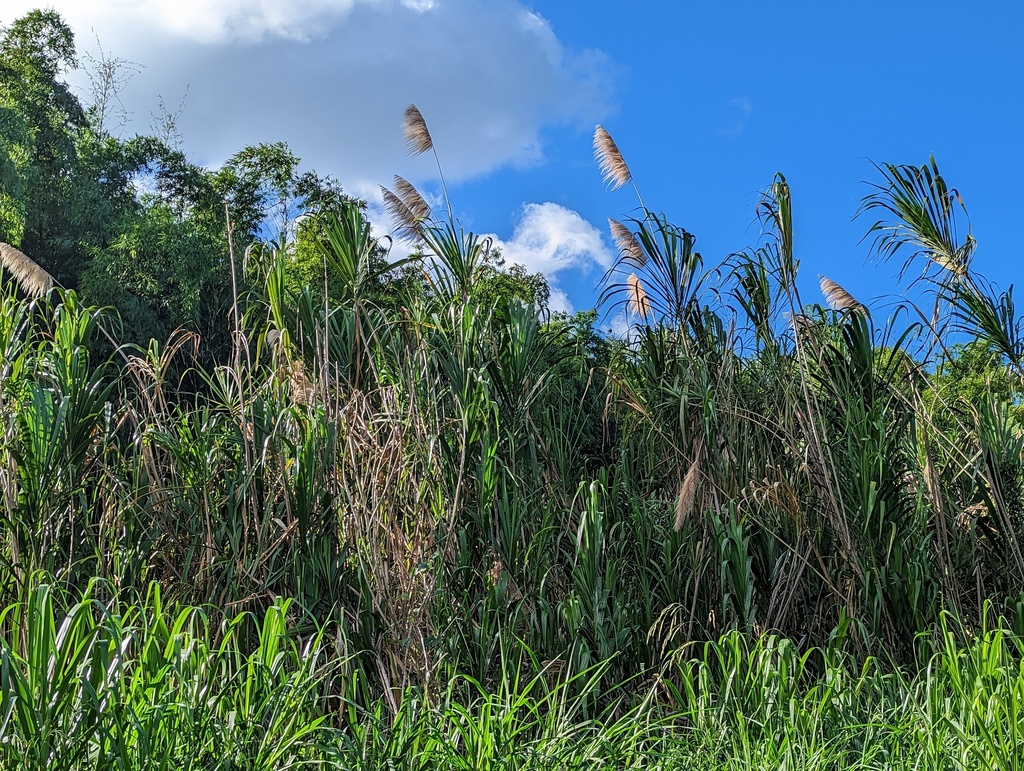
Gynerium sagittatum, Wild Cane (USDA: wildcane), is a giant grass of tropical riverbanks. In Puerto Rico it is known as caña brava, caña cimarrona and caña india. It grows into dense thickets of stiff canes, commonly 10 to 20 feet tall, each topped by a striking fan of long, arching leaves and, in season, by a tall, feathery, silvery-white to tan plume. It belongs to the grass family, Poaceae, and is the only species in its genus.
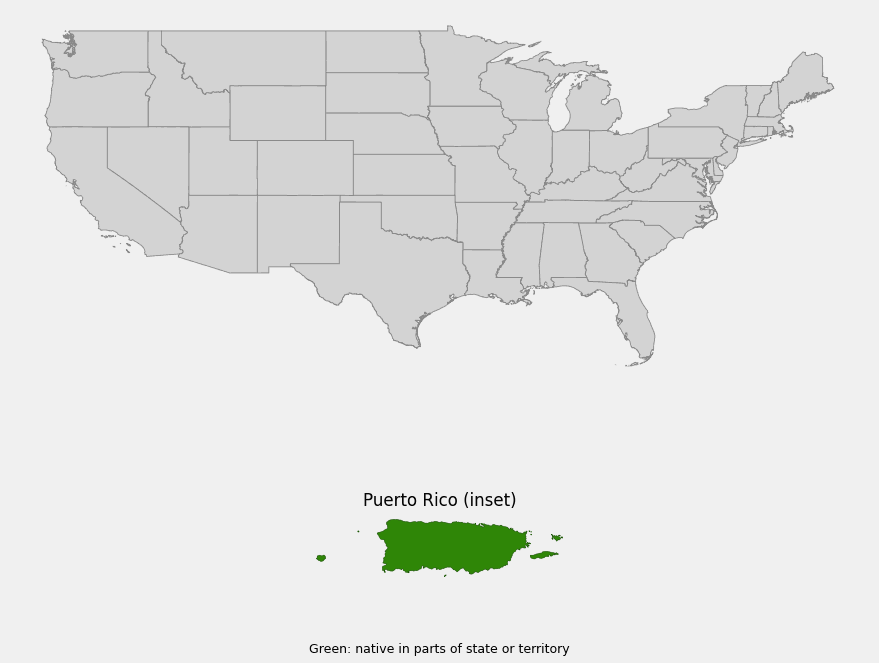
Wild cane has one of the largest native ranges of any Neotropical grass. The Smithsonian’s Flora of the West Indies records it as native in Puerto Rico (including Vieques), Cuba, Hispaniola, Jamaica and the Lesser Antilles, and it extends through Mexico and Central America to South America as far as Paraguay. In Puerto Rico it lines rivers and streams from the coastal plain into the foothills, colonizing sand and gravel bars, riverbanks and damp low ground.
It is a pioneer: wind carries its tiny seeds to fresh river deposits, and once established it spreads by stout underground rhizomes into thickets that hold soil against floods. People throughout its range have used its straight flower stalks for arrows, crafts and building. This guide covers how to identify it, where it grows, how (and where) it can be planted, and its role along Puerto Rico’s rivers.
Identification
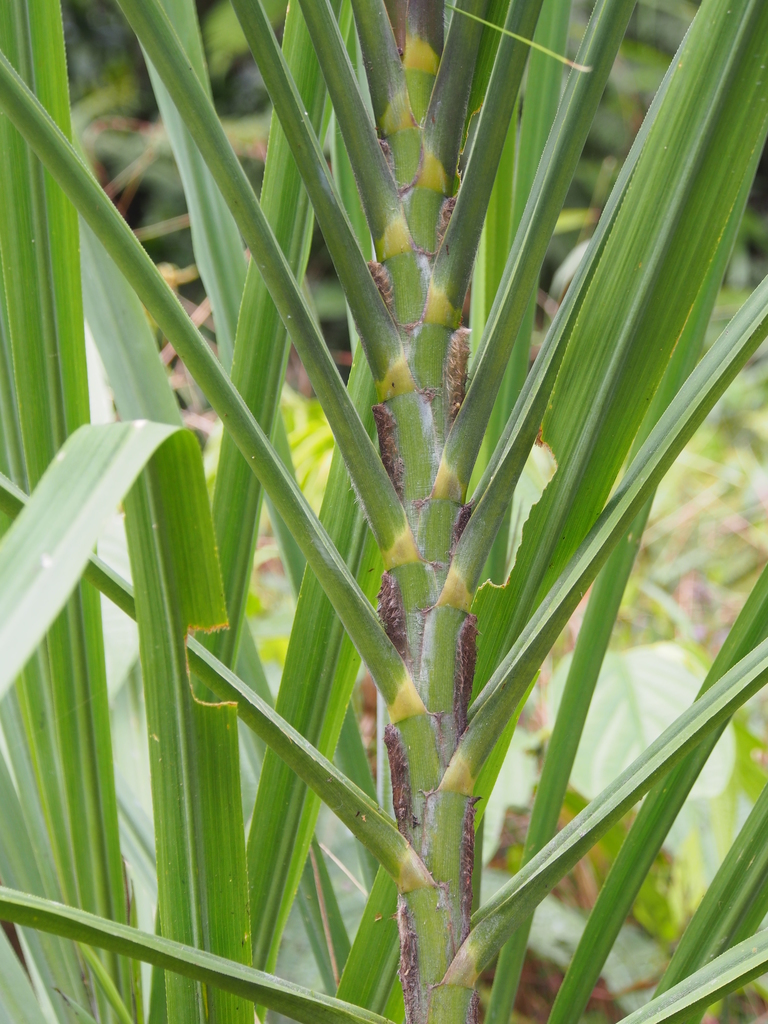
Several tall grasses grow along Puerto Rico’s rivers, including the introduced giant reed (Arundo donax) and sugarcane and its relatives. Wild cane is easiest to recognize by the way its leaves are arranged: in a flat, open fan at the top of each cane, like the ribs of a hand fan.
Canes & Rhizomes
Wild cane grows from thick, creeping rhizomes that send up many canes close together, so a single plant can become a colony many yards across. The canes are solid, straight and unbranched, about an inch or more thick near the base, and commonly reach 10 to 20 feet; very vigorous stands can grow taller. The lower part of each cane is bare or wrapped in old, fraying leaf sheaths, because the lower leaves fall as the cane grows.
Leaves
The leaves are borne in two ranks near the top of the cane and overlap at the base to form a broad, flat fan, which is the plant’s most distinctive feature. Each blade is long, narrow and arching, often 3 to 6 feet long and 1 to 3 inches wide, with a pale midrib. The margins are finely toothed and sharp enough to cut skin, so handle the plant with gloves.
Flowers
Wild cane is dioecious: male and female flowers grow on separate plants, and a clonal stand is usually all one sex. Flowering canes produce a long, smooth, leafless stalk above the leaf fan, ending in a large, plume-like panicle, often 2 to 3 feet long. Female plumes are especially feathery, because their spikelets are covered with long silky hairs; this “female wool” gave the genus its name, from Greek gyne (female) and erion (wool). Plumes are silvery-white to pale tan or lavender when fresh and fade to buff.
Fruit & Seeds
The tiny grains of female plants are carried away on the wind by their hairs. They germinate on bare, moist sand and silt, which is why new colonies appear on freshly deposited river bars after floods. Most local spread, however, is vegetative, by rhizomes and by pieces of cane and rhizome carried downstream.
Quick Facts
| Scientific Name | Gynerium sagittatum (Aubl.) P. Beauv. (syn. Saccharum sagittatum, Gynerium saccharoides) |
| Family | Poaceae (grass family) |
| Plant Type | Giant perennial grass forming thickets from rhizomes; USDA common name “wildcane” |
| Mature Height | 10–20 ft; occasionally taller |
| Mature Spread | Spreads indefinitely by rhizomes; single clumps 3–6 ft in a few years |
| Growth Rate | Fast |
| Sun Exposure | Full sun |
| Water Needs | High; moist to wet soil, tolerates periodic flooding |
| Soil Type | Sandy, gravelly or silty alluvial soil; riverbanks and sand bars |
| Soil pH | Acid to slightly alkaline (about 5.5–7.5) |
| Bloom Time | Seasonal; not every cane flowers |
| Flower Color | Silvery-white to tan or lavender plumes |
| Fall Color | None; evergreen |
| Fruit | Tiny grains carried by silky hairs |
| Deer Resistant | Not applicable in Puerto Rico; mature leaves are tough and sharp-edged |
| USDA Hardiness Zones | 10–12 (frost-free) |
Native Range
Wild cane is native from Mexico through Central America and the West Indies to South America, reaching as far south as Paraguay. In the Caribbean, the Smithsonian’s Flora of the West Indies records it from Cuba, Hispaniola, Jamaica, Puerto Rico (including Vieques) and the Lesser Antilles. Within the United States it is native only in Puerto Rico; USDA PLANTS lists it as native there and from no U.S. state.
Herbarium specimens from Puerto Rico document it along rivers and streams across much of the island: the Río Arecibo, the Río de la Plata near Cayey, the rivers of Fajardo, Naguabo and Río Grande in the east, riverbeds around Jayuya and Adjuntas in the Cordillera Central, and low, damp ground near Mayagüez, Vega Baja, Manatí and Toa Baja on the coastal plains. One collection near Dorado came from a wet swale at the edge of a mangrove swamp. Most records are from near sea level up to about 400 m (1,300 ft).
Its habitat everywhere is the same: open, sunny, frequently disturbed river corridors. Wild cane colonizes newly deposited sand and gravel bars, riverbanks, and wet floodplain fields, and it is one of the first plants to take hold after floods reshape a riverbed. On the great rivers of the Amazon basin it forms extensive belts on new sandbars, a classic stage in floodplain forest succession.
📋 Regional plant lists featuring Wild Cane: Puerto Rico
Growing & Care Guide
Wild cane is a plant for large spaces. It is a fast, aggressive grower that spreads by rhizomes into dense thickets, so it is best suited to stabilizing riverbanks, ponds and drainage channels or to screening large properties in Puerto Rico, not to small gardens. On the U.S. mainland it can only be grown outdoors in frost-free areas such as South Florida and Hawaii; elsewhere it is a curiosity for large conservatories. Plant it only within its native range and away from natural areas where it is not native.
Light
Give it full sun. It is a plant of open riverbanks and becomes thin and weak in shade.
Soil & Water
It does best in deep, moist sandy or silty soil near water, and it tolerates periodic flooding and the deposit of fresh sediment. Once established it can survive short dry spells, but it grows best with constant moisture. It is not fussy about fertility.
Planting Tips
Plant rhizome divisions or rooted cane pieces at the start of the rainy season, spacing them 3 to 6 feet apart along a bank you want to stabilize. Where you need to keep it in bounds, plant it inside a deep root barrier or between a stream and a mowed area, and be prepared to dig out spreading rhizomes. Wear gloves and long sleeves; the leaf edges are sharp.
Pruning & Maintenance
Cut out old, dead canes at ground level to keep a stand tidy, and remove canes that lean over paths. Cut flowering stalks when the plumes are fresh if you want them for dried arrangements. Avoid fertilizing; the plant is vigorous enough without it.
Propagation
Divide rhizomes with a sharp spade or machete, keeping several buds on each piece. Sections of cane with nodes can also root when laid in wet soil. Seed is rarely used because plants are separate sexes and many stands are a single clone.
Landscape Uses
- Riverbank stabilization: in Puerto Rico, to bind soil on stream and pond banks and in drainage channels
- Large screens and windbreaks: on big properties where its spread can be managed
- Crafts and dried flowers: straight flower stalks and plumes for crafts and arrangements
- Wildlife cover: dense thickets shelter birds and other small animals
Wildlife & Ecological Value
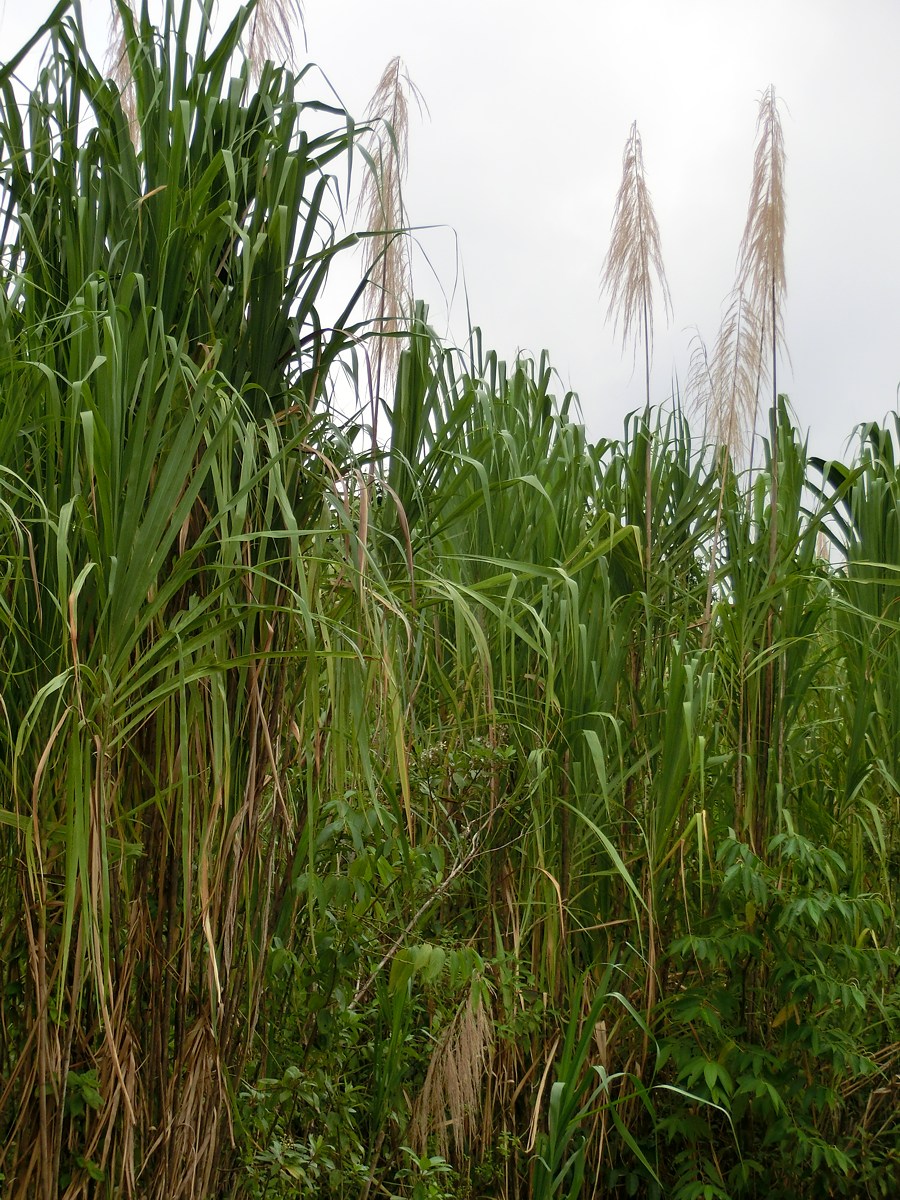
Thickets of caña brava are a characteristic feature of Puerto Rico’s rivers. They hold sand and gravel in place, slow floodwaters and give cover to animals along the water’s edge.
For Pollinators
Like most grasses, wild cane is wind-pollinated and offers little to bees and butterflies, although insects may visit for pollen.
For Birds
Dense cane stands provide nesting and roosting cover and protected perches near water. Seed-eating birds such as grassquits forage in river-edge grasses, and herons and other waterbirds hunt along cane-lined banks.
For Mammals
Puerto Rico has few native land mammals other than bats. Bats hunt insects over rivers along cane-lined corridors.
Ecosystem Role
Wild cane is a pioneer of river floodplains. Its rhizomes and canes trap sediment, stabilize newly formed bars and banks, and create the conditions in which riverside trees can later establish. In the large river systems of South America, belts of wild cane on young sandbars are a well-studied early stage in the succession of floodplain forests.
Cultural & Historical Uses
The species was first described in 1775 by the French botanist Jean Baptiste Aublet as Saccharum sagittatum, placing it with sugarcane, from plants in French Guiana. The epithet sagittatum comes from Latin sagitta, “arrow,” because its straight flower stalks were used for arrow shafts by many Indigenous peoples of tropical America. Palisot de Beauvois later moved it to its own genus, Gynerium. Pampas grass was once placed in the same genus as Gynerium argenteum, before being moved to Cortaderia.
Wild cane has many names across its range: caña brava in Puerto Rico, the Dominican Republic, Colombia and Peru; caña flecha, cana-do-rio and ubá in Brazil; and roseau in Haiti. In Colombia, strips from its leaves (caña flecha) are woven into the sombrero vueltiao, a traditional hat that has become a national symbol.
In Puerto Rico, caña brava and caña india have long been familiar names along rivers and in the countryside. The canes have been used in many parts of the Caribbean and Latin America for light construction, fencing, trellises and crafts, and the plumes for decoration.
Frequently Asked Questions
Is wild cane the same as sugarcane or giant reed?
No. Sugarcane (Saccharum officinarum) and giant reed (Arundo donax) are introduced in Puerto Rico. Wild cane is a native grass and the only species of the genus Gynerium; it is recognized by its flat, fan-shaped tufts of leaves at the top of each cane.
Where can I see it in Puerto Rico?
Along many rivers and streams on the coastal plains and in the foothills, for example along the Río Grande de Arecibo and rivers in the east of the island, especially on sand and gravel bars and banks.
Is it invasive?
It is native in Puerto Rico and spreads vigorously by rhizomes, so it can take over a small garden. Plant it where its spread is welcome, such as along a bank you want to stabilize, or contain it with a root barrier.
Can I grow it on the U.S. mainland?
Only outdoors in frost-free areas such as South Florida or Hawaii, and only where its size and spread can be accommodated.
Is it endangered?
No. It is widespread and common through tropical America and is not listed under the U.S. Endangered Species Act.

Looking for a nursery that carries Wild Cane?
Our nursery directory does not yet include Puerto Rico. Browse the native plant nursery directory by state: Alabama–Arkansas · California · Colorado–Hawaii · Idaho–Kansas · Kentucky–Montana · Nebraska–Oklahoma · Oregon · Pennsylvania–Virginia · Washington · West Virginia–Wyoming