
Smallcane (Lasiacis divaricata)
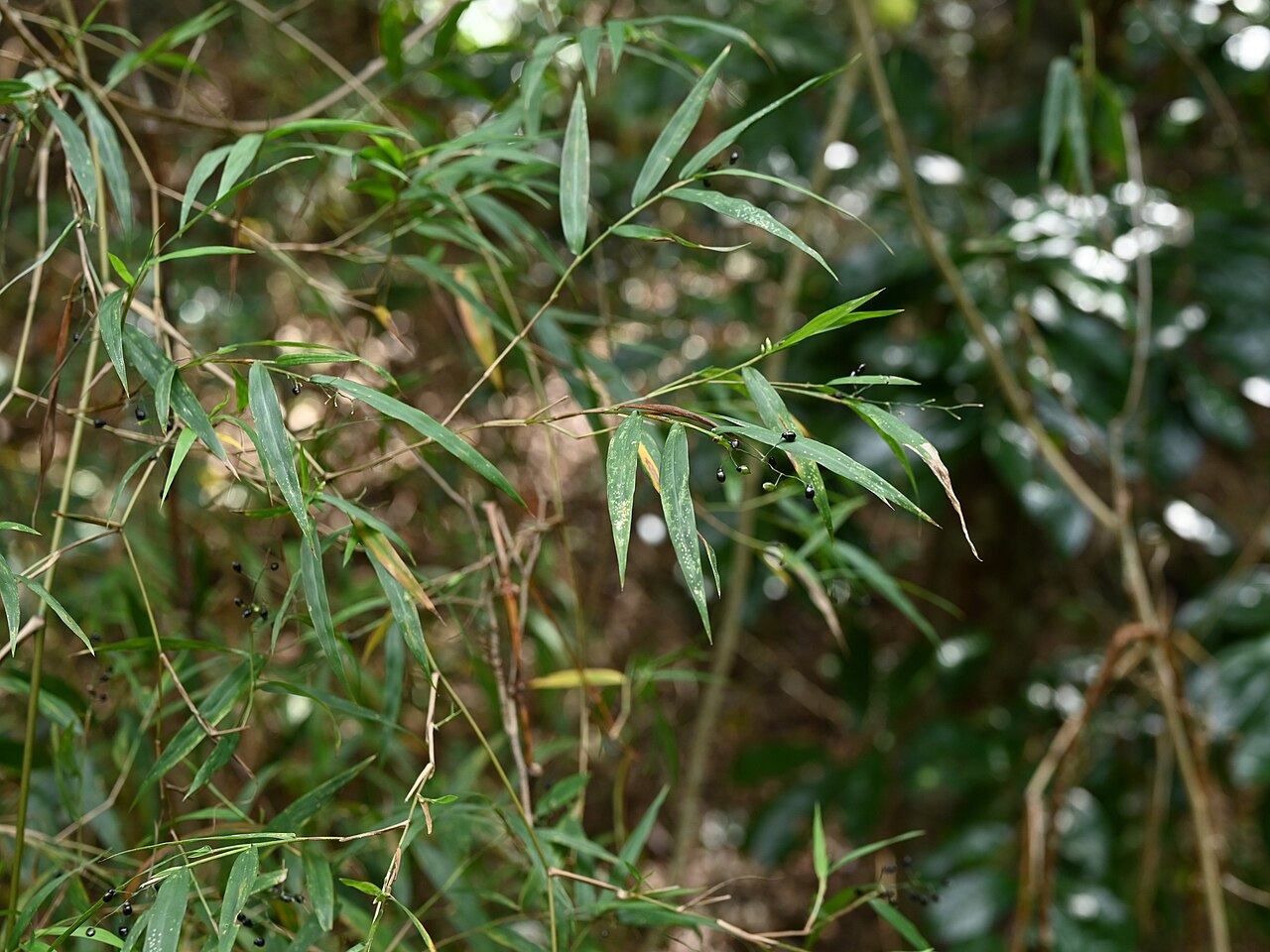
Lasiacis divaricata, known as Smallcane or Florida tibisee, and in Puerto Rico as pito or yerba de caña, is a large, almost woody grass that looks like a miniature bamboo. Its slender, jointed stems arch, sprawl and climb through shrubs, carrying narrow, pointed leaves and, in late summer and fall, loose clusters of spikelets that ripen into shiny black, berry-like fruits. It is native from Florida and the West Indies through Mexico and Central America to South America.
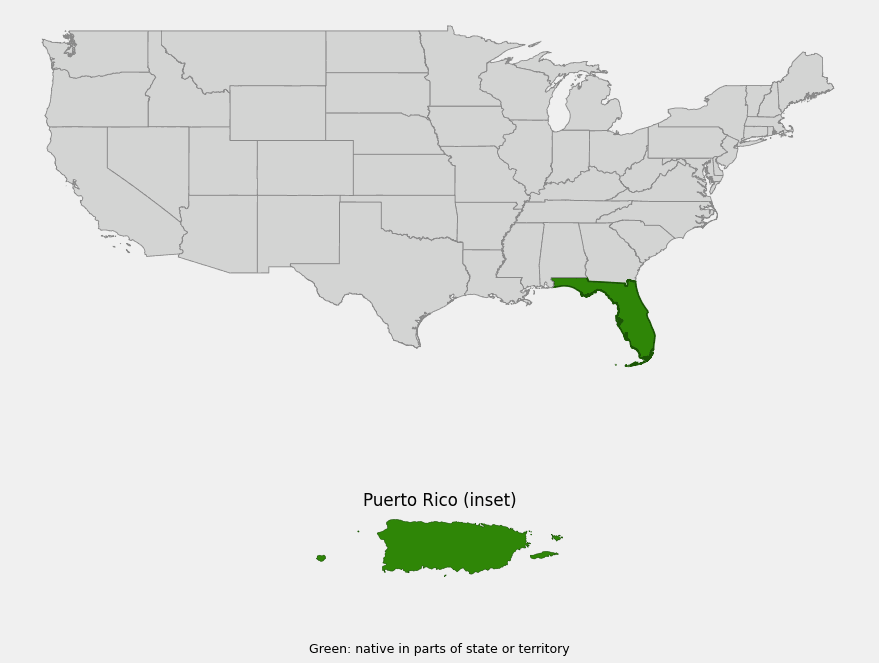
USDA PLANTS lists smallcane as native in Florida, Puerto Rico and the U.S. Virgin Islands, and the Atlas of Florida Plants also treats it as native in Florida. In Florida it grows in hammocks from the Keys north along the coasts to Brevard and Lee counties. In Puerto Rico the Institute for Regional Conservation (IRC) records it in 11 conservation areas, from Guánica and Ceiba in the dry south and east to El Yunque, Carite, Maricao and the northern karst forests of Cambalache, Guajataca and Río Abajo.
This guide covers how to recognize smallcane, where it grows, and how to use it in shady native gardens in Florida and Puerto Rico. Older references may list it as Panicum divaricatum or Lasiacis harrisii, names now treated as synonyms.
Identification
Smallcane is easy to mistake for a small bamboo. Look for its slender, woody, branching stems, lance-shaped leaves and, in fall, glossy black fruits that look like tiny beads among the leaves.
Stems
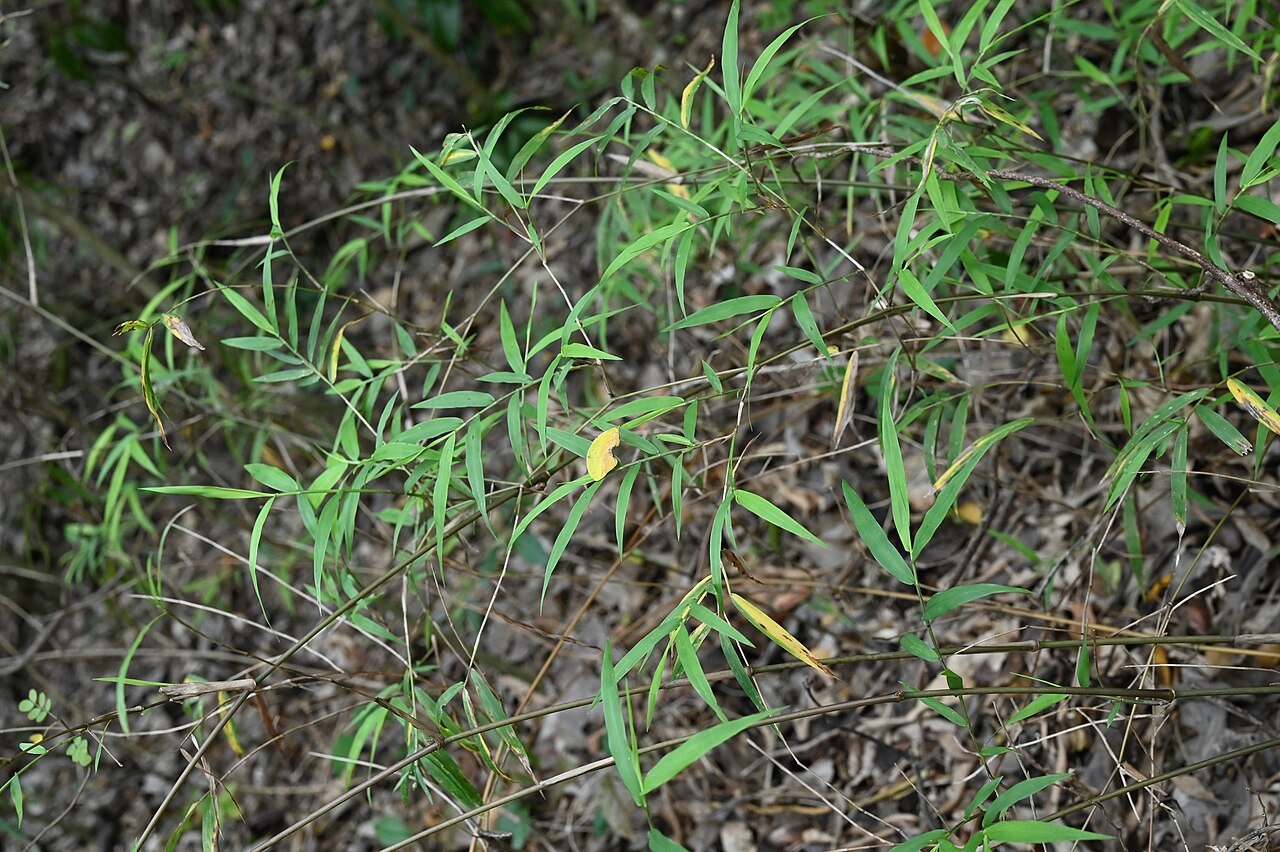
The stems (culms) are slender, hollow and jointed like bamboo, becoming hard and almost woody with age. They branch freely at the joints and arch, sprawl or climb over brush. The Lady Bird Johnson Wildflower Center gives the culms as up to about 20 feet long, bending to the ground when unsupported; IRC’s Natives for Your Neighborhood gives a typical height of about 3 to 6 feet, more when climbing.
Leaves
The leaves are narrowly lance-shaped, a few inches long, tapering to a fine point, and arranged along the branches in two rows, much like bamboo leaves. They are bright to medium green and smooth.
Flowers
The flower clusters are loose, open panicles at the ends of the branches, with small, rounded spikelets. The flowers are greenish and inconspicuous. LBJ gives the bloom time as September to November; NFYN gives summer to fall.
Fruit
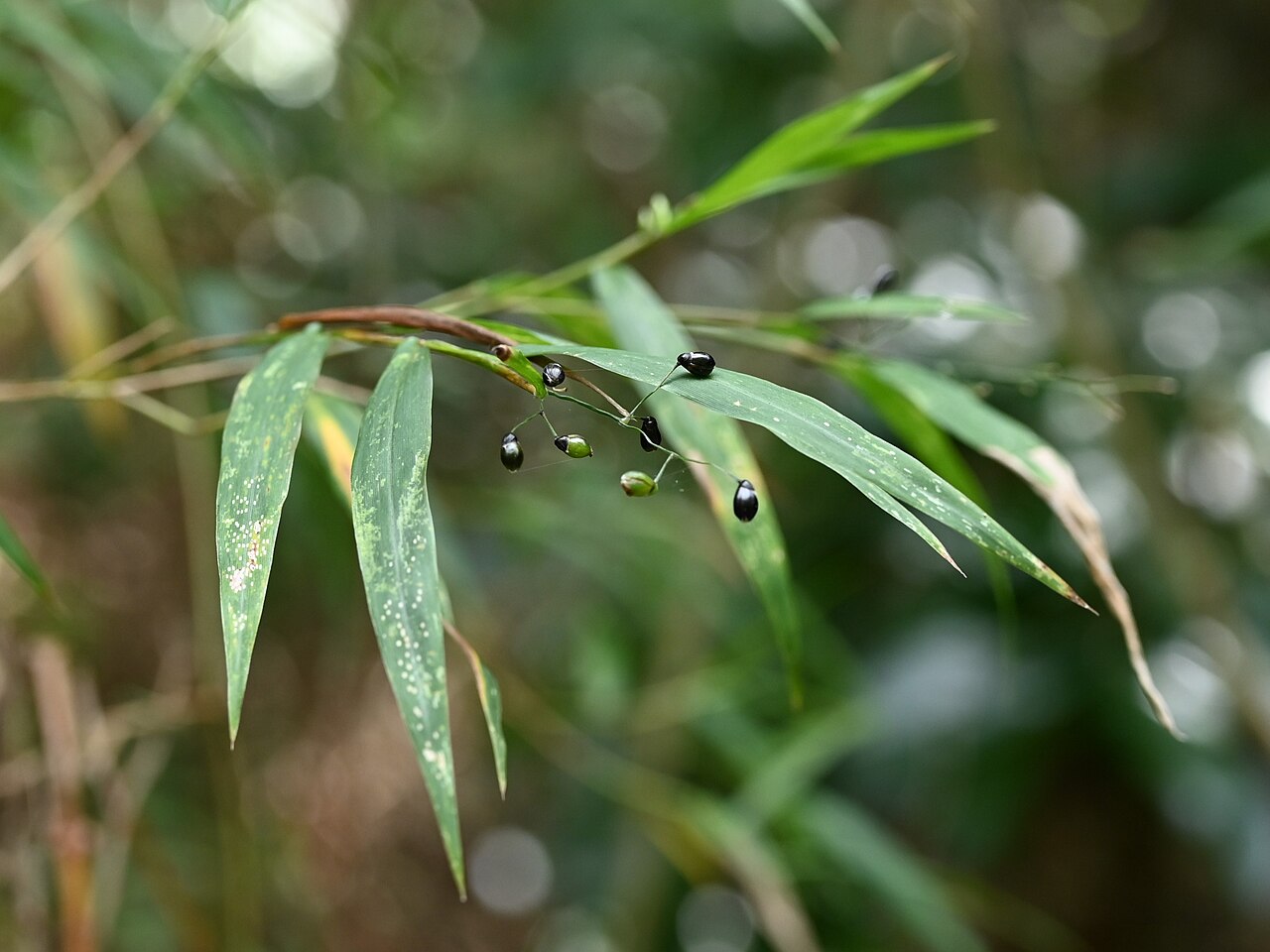
The most distinctive feature is the fruit. Each ripe spikelet turns glossy black and swollen, looking more like a tiny berry or bead than a grass seed. NFYN describes the fruit as a shiny black caryopsis. Unripe fruits are green.
Quick Facts
| Scientific Name | Lasiacis divaricata (L.) Hitchc.; USDA common name: smallcane |
| Family | Poaceae (grass family) |
| Plant Type | Perennial, bamboo-like, sprawling or climbing grass |
| Mature Height | 3–6 ft; stems to about 20 ft when climbing |
| Mature Spread | 3–6 ft or more as stems arch and sprawl |
| Growth Rate | Moderate |
| Sun Exposure | Light shade to partial shade |
| Water Needs | Moderate; tolerates short dry spells once established |
| Soil Type | Moist, well-drained limestone or sandy soil with a humus-rich top layer |
| Soil pH | Neutral to alkaline; often on limestone |
| Bloom Time | Late summer to fall (September–November) |
| Flower Color | Greenish; inconspicuous |
| Fall Color | None; evergreen in frost-free areas |
| Fruit | Shiny black, berry-like grains in fall |
| Deer Resistant | Not reliably |
| USDA Hardiness Zones | 10–12 |
Native Range
Smallcane is a tropical American grass. IRC gives its native range as the West Indies (the Bahamas and the Greater and Lesser Antilles), peninsular Florida, Mexico, Central America and South America. Within the area PlantNative covers, USDA PLANTS lists it as native in Florida, Puerto Rico and the U.S. Virgin Islands, and the Atlas of Florida Plants also lists it as native in Florida.
In Florida NFYN gives its range as the Monroe County Keys north, mostly along the coasts, to Brevard and Lee counties. It is very rare north of the Miami River in southeastern Florida, possibly never present or extirpated in Broward and Palm Beach counties, and known from a single location in Martin County. LBJ describes its habitat as usually hammocks, occasionally pinelands, and NFYN recommends it for hammock plantings. Fairchild Tropical Botanic Garden has identified it as a native that does especially well in shade.
In Puerto Rico IRC records it in 11 conservation areas covering most of the island’s forest types: the dry forests of Guánica, Ceiba and Punta Guaniquilla; the northern karst forests of Cambalache, Guajataca and Río Abajo; the wet forests of El Yunque and Carite; and the serpentine and volcanic uplands of Maricao and Susúa. It grows on limestone, karst and serpentine soils at low and middle elevations, usually at forest edges and in the understory.
📋 Regional plant lists featuring Smallcane: Puerto Rico · North & South Florida
Growing & Care Guide
Smallcane is rarely sold by native plant nurseries, according to NFYN, but it is easy to grow from seed and makes a graceful, bamboo-like accent in shady native gardens in South Florida and Puerto Rico. It is native and not invasive, unlike the exotic bamboos it resembles.
Light
Plant it in light shade, such as the edge of a hammock or under tall trees. NFYN lists its light requirement as light shade. In deeper shade it grows thinner and climbs toward the light; in full sun it may yellow during dry spells.
Soil & Water
Give it moist, well-drained limestone or sandy soil with a humus-rich layer on top, as in a hammock. It needs some organic matter to thrive. Once established it tolerates short droughts, but it is not tolerant of flooding by salt or brackish water, and salt wind burns the leaves.
Planting Tips
Use it as an open groundcover or accent in the understory of a native hammock planting, where its arching stems can lean on shrubs. Space plants 3 to 4 feet apart. It looks best when allowed to drape naturally over a low wall, rock or shrub.
Pruning & Maintenance
Cut out old, dead or untidy stems at the base each year, ideally in late winter or spring. Long stems that climb too far into shrubs can be trimmed back at any time. No fertilizing is needed in soils with good leaf litter.
Propagation
NFYN notes that it can be grown from seed. Collect the black fruits when ripe in fall and sow them fresh in a well-drained mix, barely covered. Clumps can also be divided in the warm season.
Landscape Uses
- Hammock gardens: a native, bamboo-like understory accent
- Shade groundcover: open, arching cover under trees
- Bird gardens: glossy black fruits in fall
- Habitat restoration: hammock and forest-edge plantings
- Alternative to exotic bamboo: a native look-alike for shady spots
Wildlife & Ecological Value
Smallcane adds structure to the forest understory and edges, and its unusual black fruits make it one of the few native grasses with fleshy, bird-attracting fruit.
For Pollinators
Like most grasses it is wind-pollinated and offers little to pollinators. Small insects may shelter in the leaves.
For Birds
The glossy black, oily fruits are unlike typical grass seeds and are eaten by birds, which help spread the seeds through the forest. The tangled stems also give small birds cover.
For Mammals
Small mammals may eat fallen fruits, and the dense stems give shelter, but it is not a major food plant for mammals.
Ecosystem Role
As a sprawling understory grass, it helps fill gaps and edges in hammocks and dry forest, holding soil and adding leaf litter. Its bird-dispersed fruits let it reach new gaps and forest edges.
Cultural & Historical Uses
Linnaeus first described this grass in the eighteenth century as Panicum divaricatum. The American agrostologist Albert Spear Hitchcock later moved it to Lasiacis, a genus of bamboo-like tropical American grasses with fleshy, black fruits. The name Lasiacis refers to the woolly tips of the spikelet bracts, and divaricata means “spreading,” for its wide-spreading branches.
The Puerto Rican names pito (“whistle”) and yerba de caña (“cane grass”) are recorded by IRC. In Florida it is also called Florida tibisee, the second common name listed by the Atlas of Florida Plants. Other names in older references include Lasiacis harrisii; IRC also notes that some Puerto Rico records were published under the misapplied name Lasiacis grisebachii.
NFYN sums up its appeal in one line: it “looks like a miniature bamboo.” For gardeners who want the look of bamboo without planting an invasive exotic, smallcane is a native alternative in the frost-free parts of Florida and throughout Puerto Rico.
Frequently Asked Questions
Is smallcane native to Florida and Puerto Rico?
Yes. USDA PLANTS lists Lasiacis divaricata as native in Florida, Puerto Rico and the U.S. Virgin Islands, and the Atlas of Florida Plants lists it as native in Florida.
Is smallcane a bamboo?
No. It belongs to the grass family like bamboos, but it is a different group of grasses. Its jointed stems and narrow leaves make it look like a miniature bamboo.
What are the black berries on it?
They are its ripe grains (caryopses). Unlike most grasses, the ripe spikelets turn shiny black and swollen, which attracts birds that eat them and spread the seeds.
Will it spread like bamboo?
No. It is a native grass whose stems arch and sprawl from the base; it does not spread aggressively by running underground stems the way many exotic bamboos do.
What is it called in Spanish?
In Puerto Rico it is known as pito or yerba de caña.

Looking for a nursery that carries Smallcane?
Our nursery directory does not yet include Puerto Rico. Browse the native plant nursery directory by state: Alabama–Arkansas · California · Colorado–Hawaii · Idaho–Kansas · Kentucky–Montana · Nebraska–Oklahoma · Oregon · Pennsylvania–Virginia · Washington · West Virginia–Wyoming