
Vega Blanca (Brunfelsia lactea)
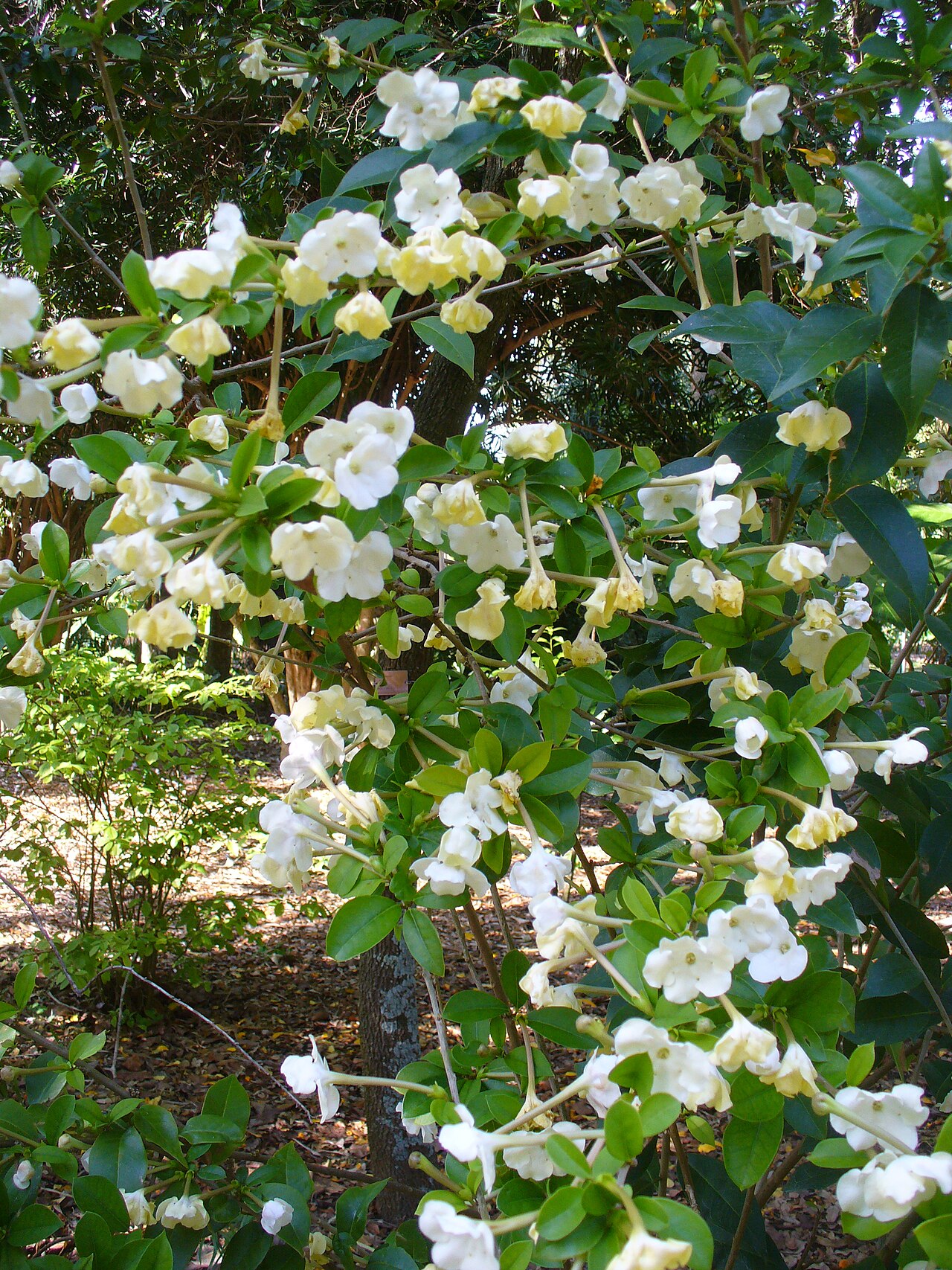
Brunfelsia lactea, known in Puerto Rico and in USDA PLANTS as vega blanca, is a flowering shrub or small tree found in the wild nowhere else on Earth. It is a Puerto Rico endemic, a member of the nightshade family (Solanaceae) that grows in the forests of the island’s eastern mountains, including the Luquillo Mountains of El Yunque.
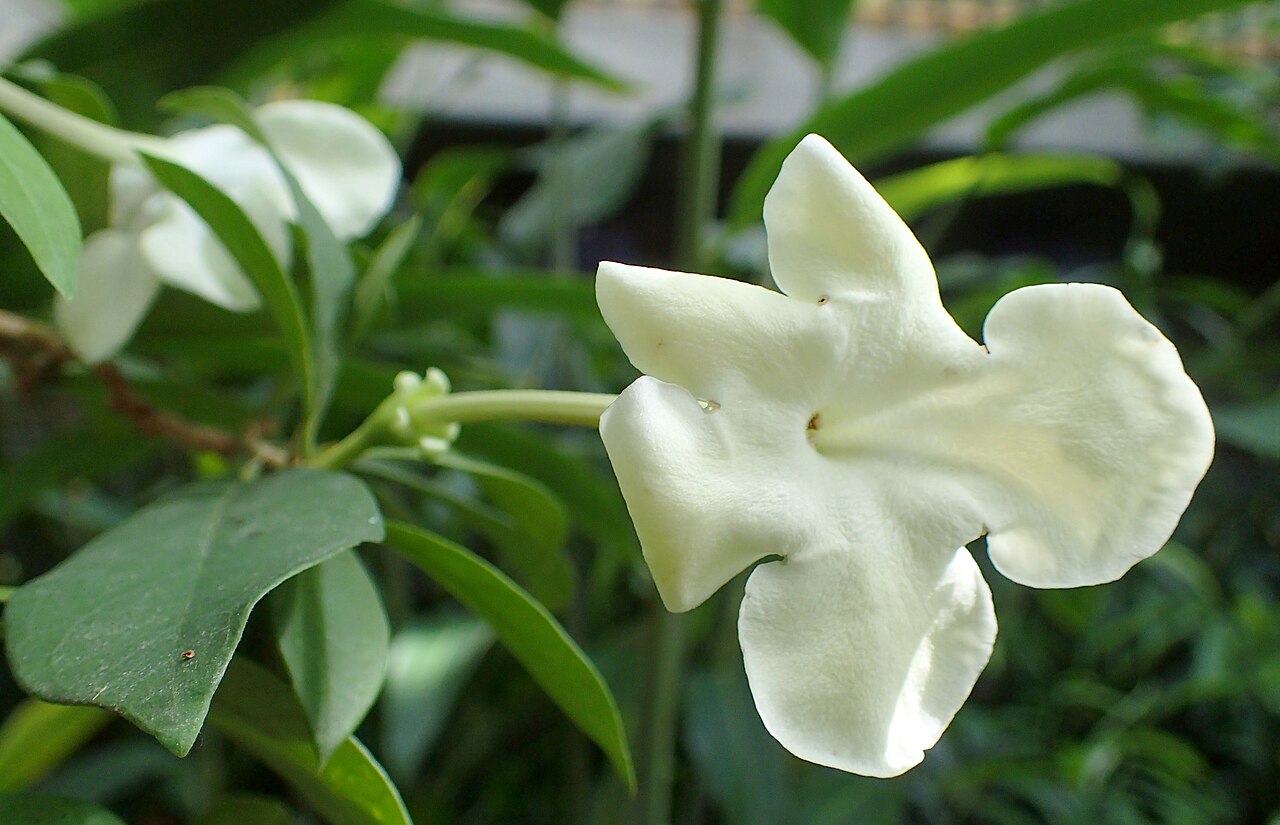
Its appeal is the flowers. Each one is a long, slender tube that opens into a flat, five-lobed face 2 inches or more across, creamy white at first and fading to soft yellow, sometimes with a faint pink tinge. A plant in full bloom is covered in them, and the clean, glossy foliage looks good the rest of the year. The species name lactea means “milky,” for the color of the flowers.
This guide covers how to recognize vega blanca, where it grows in Puerto Rico, how to grow it in a frost-free garden or a container, its role in the forest, and the history behind the name. One point of confusion first: the name “lady of the night” belongs to a different species, Brunfelsia americana, although it is sometimes attached to this plant in the nursery trade.
Identification
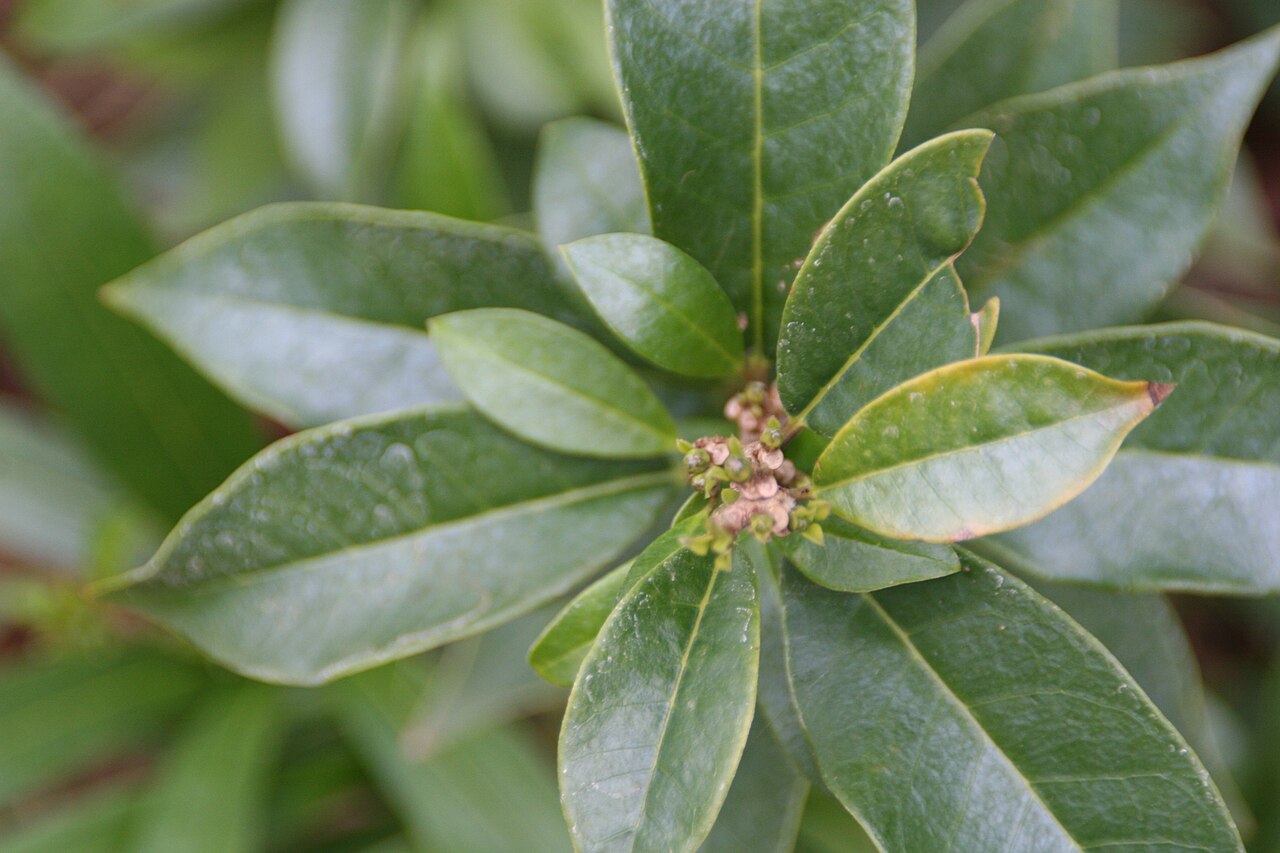
Vega blanca is easiest to identify in flower. Out of flower, look for smooth, hairless, elliptic leaves crowded toward the tips of short branches on a shrubby, many-stemmed plant.
Growth Form
A shrub usually 3 to 10 feet (1 to 3 m) tall, sometimes growing into a small tree with a trunk about 4 inches (10 cm) thick. All parts of the plant are hairless. The branches are slender, grey-brown and fairly stiff, and the plant has an open, upright habit.
Leaves
The leaves are alternate, either scattered along the twigs or clustered at the ends of short branches. They are elliptic, oval or broadest above the middle, about 2 to 6 inches (5 to 15 cm) long and 1 to 2½ inches (2.5 to 6.5 cm) wide, on short stalks. They range from thin to leathery, with a pointed or blunt tip and usually about six pairs of side veins that loop together near the margin.
Flowers
The flowers are borne singly at the tips of short shoots, on stalks about ⅓ inch (1 cm) long. The calyx is bell-shaped and about ½ inch long. The corolla is the showy part: a sturdy tube about 2 to 2¾ inches (5 to 7 cm) long, ending in a flat limb about 2 to 2⅓ inches (5 to 6 cm) across, with broad, rounded lobes. The color is creamy white or pale yellow, often turning slightly pink with age.
Fruit
The fruit is a round capsule about ¾ to 1 inch (2 to 2.5 cm) across, containing elliptic brown seeds about ⅙ inch (4 mm) long.
Quick Facts
| Scientific Name | Brunfelsia lactea Krug & Urb.; USDA common name: vega blanca |
| Family | Solanaceae (nightshade family) |
| Plant Type | Evergreen flowering shrub or small tree |
| Mature Height | 3–10 ft, occasionally taller as a small tree |
| Mature Spread | 3–6 ft |
| Growth Rate | Moderate |
| Sun Exposure | Partial shade to bright filtered light |
| Water Needs | Moderate; keep evenly moist, not wet |
| Soil Type | Rich, well-drained, organic soil |
| Soil pH | Slightly acidic to neutral |
| Bloom Time | Flushes through much of the year; heaviest in the warm season |
| Flower Color | Creamy white aging to pale yellow |
| Fall Color | None; evergreen |
| Fruit | Round capsule ¾–1 in across |
| Deer Resistant | Not applicable in Puerto Rico; foliage is toxic |
| USDA Hardiness Zones | 10b–12; frost-free only |
Native Range
USDA PLANTS lists Brunfelsia lactea as native to Puerto Rico and nowhere else in the United States, and the Smithsonian flora of the West Indies treats it as a Puerto Rico endemic. It does not occur naturally in the Virgin Islands, the rest of the Caribbean or the mainland.
Within Puerto Rico it is a plant of the eastern mountains. Henri Alain Liogier’s Descriptive Flora of Puerto Rico places it at higher elevations in the eastern ranges, and most records come from the Luquillo Mountains, the range that holds El Yunque National Forest, and the forested foothills around them. There it grows as an understory shrub in moist to wet forest, in the shade and humidity under a taller canopy.
Vega blanca is not listed under the U.S. Endangered Species Act. Because it grows wild only in one part of one island, any planting should start from nursery-propagated plants or seed grown in cultivation. Never dig plants or collect cuttings in El Yunque or other protected forest.
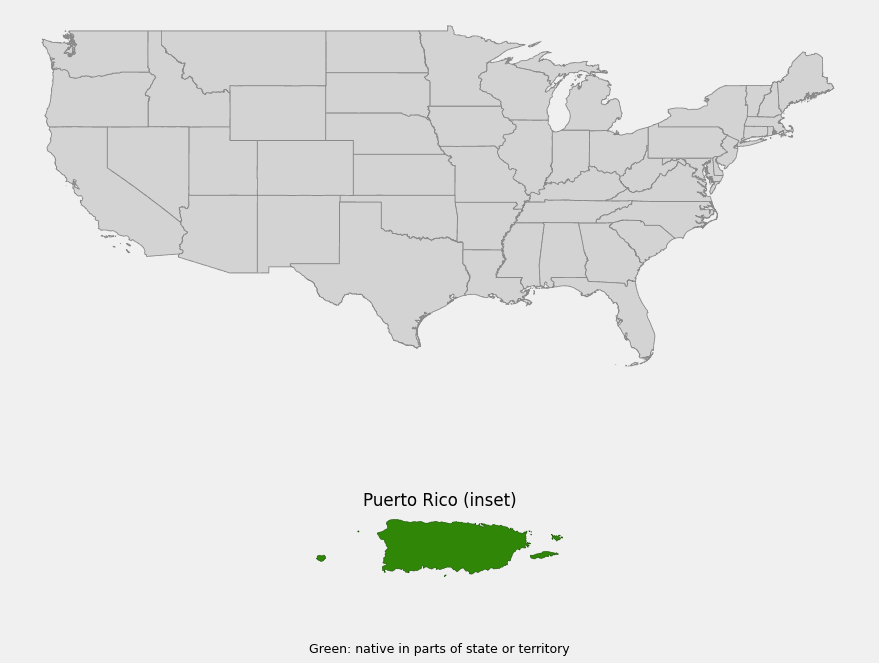
📋 Regional plant lists featuring Vega Blanca: Puerto Rico
Growing & Care Guide
Vega blanca is a forest-understory shrub, and it grows best in conditions that resemble a cool, humid mountain forest: bright shade, steady moisture, rich soil that drains, and no frost. In Puerto Rico it suits gardens in the wetter uplands and shady, irrigated gardens on the coast. On the mainland it is a plant for frost-free gardens only, in practice South Florida, Hawaii and the mildest parts of coastal Southern California, where it is grown at botanical gardens such as Fairchild in Miami and the Huntington near Los Angeles. Elsewhere, grow it in a large container and bring it into a bright greenhouse or sunroom well before the first cold night.
Light
Give it partial shade or bright, filtered light, such as under high trees or on the east side of a building. Morning sun is fine. Hot afternoon sun in the lowlands can scorch and yellow the leaves; too much shade means fewer flowers.
Soil & Water
Plant in rich, organic, well-drained soil, slightly acidic to neutral. Keep it evenly moist and do not let it dry out completely, especially when it is flowering, but avoid soggy soil, which rots the roots. A 2- to 3-inch layer of leaf mulch keeps the roots cool and moist, much like forest leaf litter. On alkaline coastal soils, yellowing between the leaf veins usually means an iron or manganese shortage; amend with compost and use an acid-forming fertilizer.
Planting Tips
Plant at the same depth it grew in the pot, in a hole twice as wide as the root ball, and water thoroughly. Space plants 4 to 6 feet apart. It works well as an understory shrub beneath palms or trees, at the edge of a woodland garden, or near a path or patio where the flowers can be seen up close. Its sap and berries are toxic, so keep it away from areas where young children or pets play unsupervised.
Pruning & Maintenance
Little pruning is needed. Shape it lightly right after a flush of bloom, since flowers form at the tips of new shoots. Feed lightly two or three times during the growing season with a balanced or acid-forming fertilizer. Watch for scale insects and mealybugs on stems and leaf undersides, especially on container plants indoors.
Propagation
Propagate from semi-hardwood cuttings taken in the warm season, treated with rooting hormone and kept in a humid, shaded propagator, or from fresh seed sown on a moist, well-drained mix. Use only cultivated plants as a source: this species grows wild only in Puerto Rico’s eastern mountain forests.
Landscape Uses
- Shade gardens: a flowering shrub for bright shade where many sun-loving shrubs fail
- Native Puerto Rico gardens: an endemic that grows nowhere else, for collections that showcase the island’s flora
- Woodland edges: a natural understory layer beneath palms and native trees
- Containers: the practical way to grow it outside frost-free areas
- Botanical and educational collections: a Puerto Rican endemic of the nightshade family
Wildlife & Ecological Value
Vega blanca is one strand in the dense web of plants that make up the understory of Puerto Rico’s eastern mountain forests. Its specific wildlife relationships are not well studied, so the notes below stay general.
For Pollinators
Long, narrow, pale flower tubes like these are typical of flowers pollinated by moths and other long-tongued insects, which can reach nectar at the bottom of the tube. The open, flat face also gives visiting insects a landing platform.
For Birds
Dense evergreen shrubs in the forest understory provide cover and perches for small forest birds. The fruits are dry capsules, not fleshy berries, so this is not a significant food plant for fruit-eating birds.
For Mammals
Bats are Puerto Rico’s only native land mammals, and none is known to depend on this shrub. Like other Brunfelsia, it contains compounds that are toxic if eaten, which discourages browsing.
Ecosystem Role
As an endemic understory shrub, vega blanca is part of what makes El Yunque’s forests unique. Endemics like this one are the reason Puerto Rico’s montane forests are a regional conservation priority, and they help rebuild layered forest structure in restoration plantings within their natural range.
Cultural & Historical Uses
The genus Brunfelsia was named by the French botanist Charles Plumier in honor of Otto Brunfels, a 16th-century German botanist and one of the “fathers of botany” whose illustrated herbal helped set the stage for scientific plant description. Linnaeus kept the name, and it now covers several dozen species across the Caribbean and tropical America.
Brunfelsia lactea itself was described in 1895 by Leopold Krug and Ignatz Urban, the German botanists whose work, together with the collections of their contemporaries, built the foundation of the modern flora of Puerto Rico and the West Indies. The epithet lactea, “milky,” refers to the creamy white flowers.
Several Brunfelsia are widely grown for their flowers, including the yesterday-today-and-tomorrow plants of South America and the fragrant lady of the night, Brunfelsia americana. Vega blanca is far less common in gardens, which is a good reason for Puerto Rican gardeners and nurseries to grow it: a showy shrub whose wild home is only the mountains of their own island.
Frequently Asked Questions
Is vega blanca the same as lady of the night?
No. “Lady of the night” is the common name of Brunfelsia americana, a related species of the Caribbean with very long, narrow flower tubes. Vega blanca, Brunfelsia lactea, is a separate species found in the wild only in Puerto Rico, though nursery labels sometimes mix the two names up.
Is it poisonous?
Treat it as toxic. Brunfelsia species contain compounds that are poisonous to people and especially to dogs and other pets if leaves, flowers or fruit are eaten. Plant it away from where pets and small children play.
Can I grow it in Florida or California?
Yes, in frost-free gardens. It is grown at Fairchild Tropical Botanic Garden in Miami and at the Huntington near Los Angeles. It is not native to either state, so treat it as an ornamental there and use locally native shrubs where habitat value is the goal. Elsewhere, grow it in a container and bring it indoors for winter.
Is it endangered?
It is not listed under the U.S. Endangered Species Act. It is a Puerto Rico endemic with a limited natural range, so buy nursery-propagated plants only and never take plants or cuttings from the wild.
Why are the leaves turning yellow?
The most common causes are too much direct sun, alkaline soil that locks up iron and manganese, or roots kept too wet. Move it to brighter shade, mulch with organic matter, use an acid-forming fertilizer, and make sure the soil drains.

Looking for a nursery that carries Vega Blanca?
Our nursery directory does not yet include Puerto Rico. Browse the native plant nursery directory by state: Alabama–Arkansas · California · Colorado–Hawaii · Idaho–Kansas · Kentucky–Montana · Nebraska–Oklahoma · Oregon · Pennsylvania–Virginia · Washington · West Virginia–Wyoming