
Crowpoison (Nothoscordum bivalve)
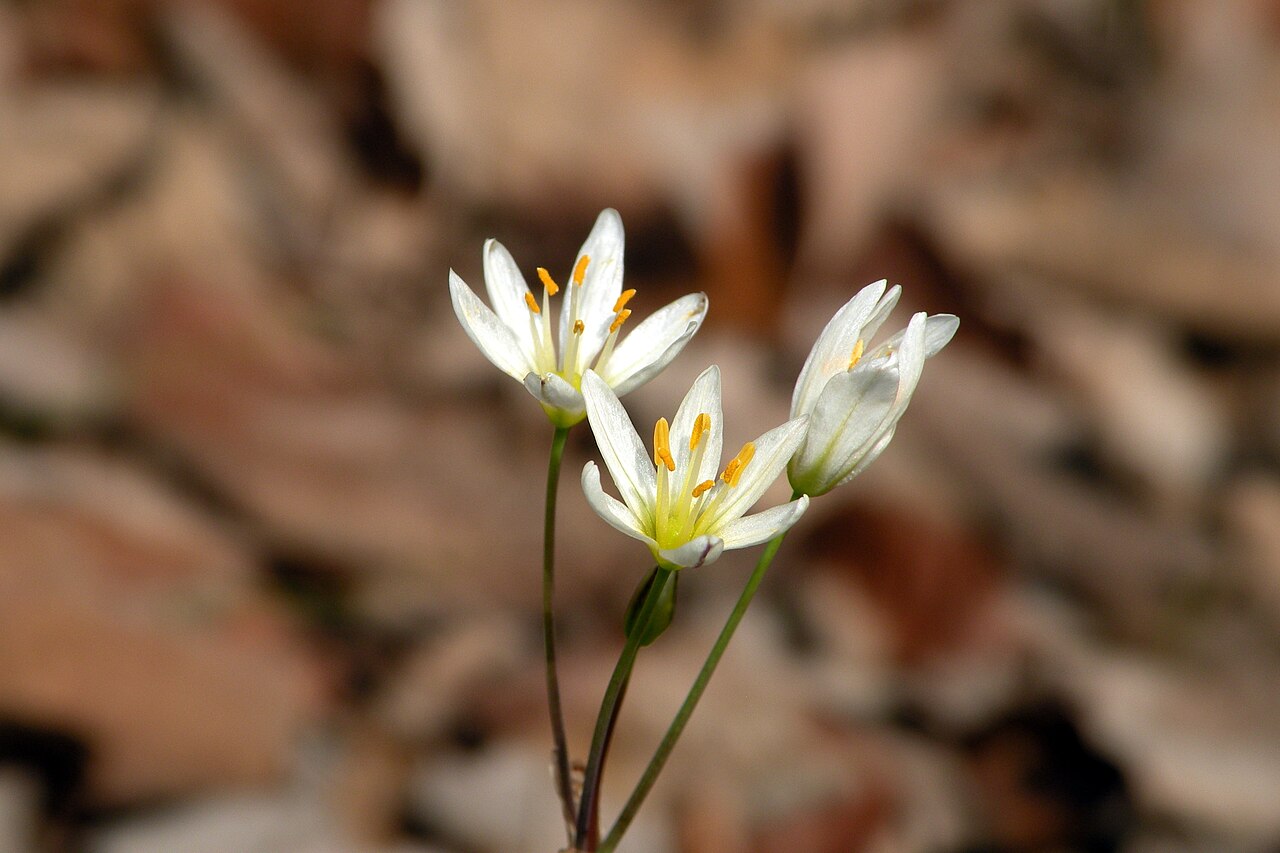
Nothoscordum bivalve, known as Crowpoison or false garlic, is a small native bulb of the southern and central United States. In early spring it sends up slender stalks topped with loose clusters of starry white flowers with bright yellow anthers, and it often blooms a second time in fall. It grows in prairies, glades, rock outcrops, open woods, pastures and roadsides, and it is one of the most common early wildflowers in southern lawns.
Crowpoison looks very much like a wild onion. It has narrow, grass-like leaves, a small bulb and an umbel of six-parted flowers, and it belongs to the same plant family, the Amaryllidaceae. The key difference is smell. Crushed leaves and bulbs of wild onion and wild garlic smell strongly of onion. Crowpoison has no onion or garlic odor at all. The genus name Nothoscordum means “false garlic”, from the Greek nothos, false, and skordon, garlic.
Safety note: do not eat crowpoison. Its toxicity is poorly documented, but it is not an edible onion, and the name crowpoison reflects a long-standing belief that it is poisonous. Anyone gathering wild onions should crush a leaf of every plant and harvest only those with a clear onion smell. Plants without that smell could be crowpoison or the highly toxic death camas. As a garden plant, crowpoison is an easy, self-sowing addition to sunny wildflower lawns and rock gardens.
Identification
Crowpoison is small and grass-like out of bloom. In flower it can be recognized by its white, star-shaped flowers in a loose umbel, and by the absence of any onion smell.
Bulb & Leaves
Each plant grows from a small, round to egg-shaped bulb, about 1/2 to 3/4 inch across, with a papery brown coat. There are usually two to four leaves, all at the base. They are flat, very narrow (about 1/16 to 1/8 inch wide) and 4 to 15 inches long. They look like grass blades but are soft and somewhat fleshy. Crushed, they have no onion smell. In most areas the leaves appear in late winter and wither after the plant sets seed, and plants may produce new leaves after fall rains.
Flowers
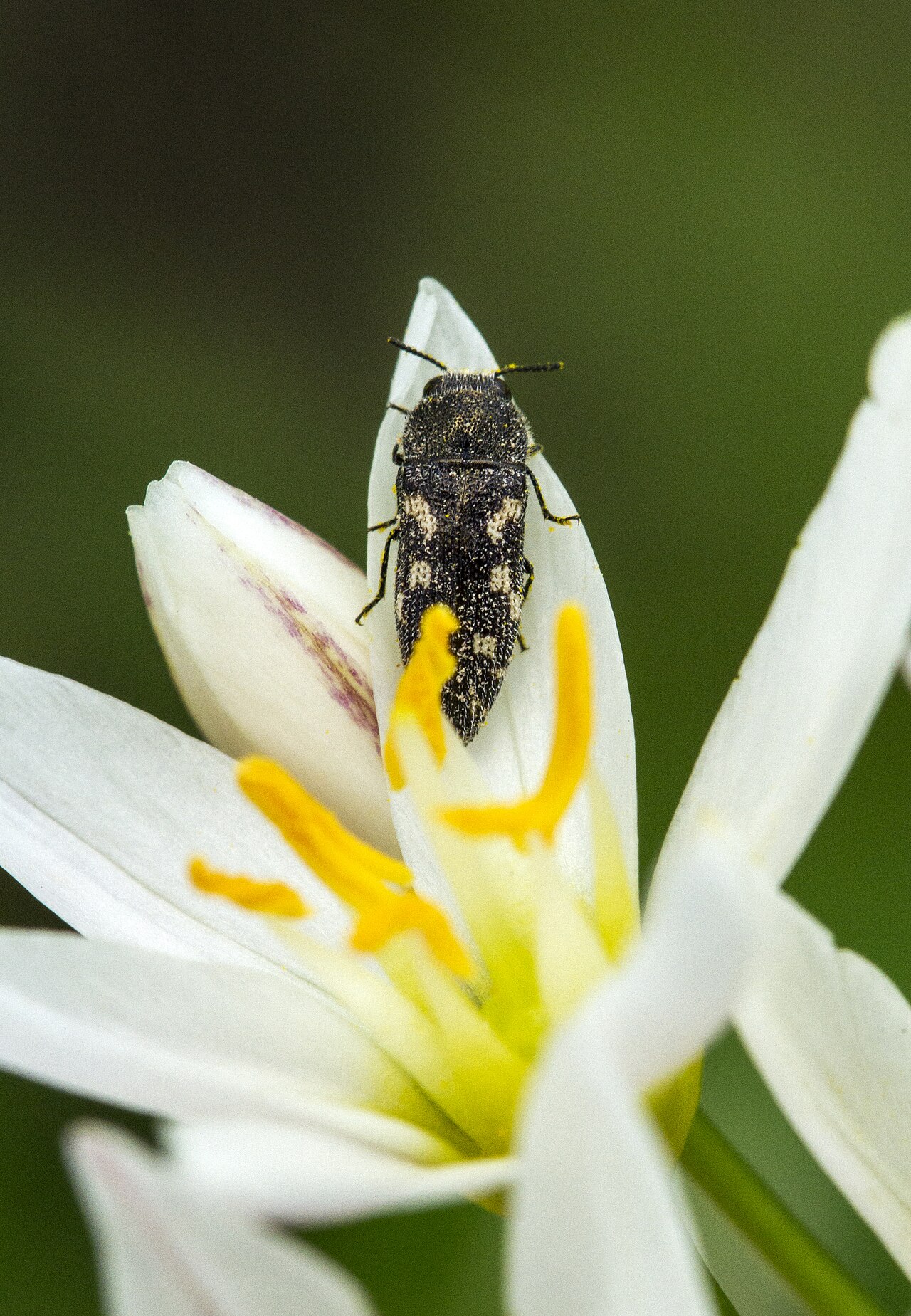
The flowering stalk (scape) is leafless, slender and 4 to 16 inches tall. At the top, two papery bracts enclose the young flower cluster, then split to release an umbel of usually 3 to 10 flowers on stalks of unequal length. Each flower is about 1/2 to 3/4 inch across, with six white to cream tepals that often have a greenish or reddish-purple stripe on the back, six stamens with yellow anthers, and a yellow-green center. The flowers have a light, sweet scent. They open on sunny days and close in the evening and in cool, cloudy weather.
Bloom Season
The main bloom is in late winter and spring, from February in Florida and Texas to April and May at the northern edge of the range. Many plants bloom again in fall, from September to November, especially after late-summer rains. A few flowers may appear at almost any time of the growing season in the South.
Fruit & Seeds
Pollinated flowers form small, three-lobed capsules, about 1/4 inch long, that split open to release several angular black seeds. Seeds fall close to the plant, and plants often form loose colonies over time.
Quick Facts
| Scientific Name | Nothoscordum bivalve (syn. Allium bivalve, Ornithogalum bivalve) |
| Common Names | Crowpoison (USDA), crow poison, false garlic |
| Family | Amaryllidaceae (amaryllis family; onion subfamily) |
| Plant Type | Herbaceous perennial from a small bulb |
| Mature Height | 4–16 in in flower |
| Mature Spread | 2–4 in per plant; forms loose colonies |
| Growth Rate | Moderate |
| Sun Exposure | Full sun to part shade |
| Water Needs | Low to medium; drought-tolerant once established |
| Soil Type | Adaptable: sand, loam, clay, thin soils over limestone or granite |
| Soil pH | About 5.5–8.0 |
| Bloom Time | February–May; often again September–November |
| Flower Color | White to cream with yellow anthers |
| Fall Color | None; leaves wither after seed set |
| Fruit | Small three-lobed capsule with black seeds |
| Deer Resistant | Generally; rarely browsed |
| USDA Hardiness Zones | 6–10 |
Native Range
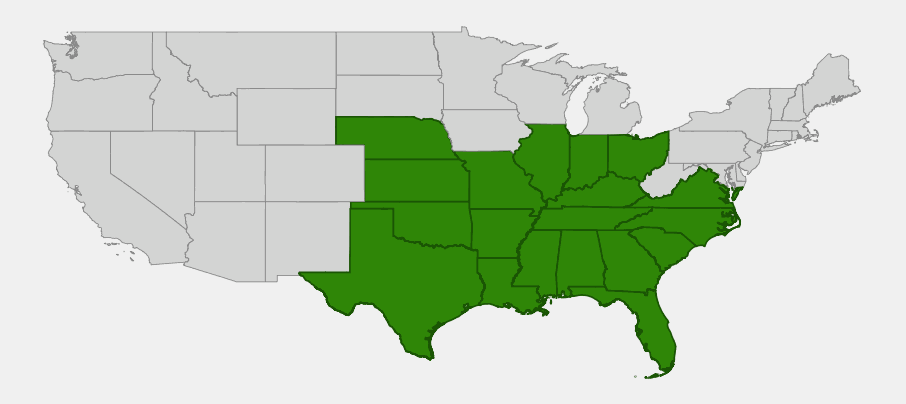
Crowpoison is native to the southern and central United States. USDA PLANTS records it from 19 states, from Virginia, Ohio, Indiana, Illinois and Nebraska south to Florida and Texas. It is common across much of the Southeast, the southern Great Plains and Texas, and it becomes scattered and local toward the northern edge of its range in Ohio, Indiana, Illinois and Nebraska. Beyond the United States it grows in Mexico and, as a disjunct population, in temperate South America.
It is a plant of open, sunny places. Natural habitats include prairies, glades and barrens, granite and limestone outcrops, sandy savannas, open oak woods and the edges of woodlands. It also adapts readily to mowed areas, and it is common in lawns, cemeteries, pastures, road shoulders and old fields across the South.
On the granite outcrops of the Piedmont, such as Forty Acre Rock in South Carolina, it grows in thin soil mats along with other specialist plants of rock habitats. In Texas it is one of the most widespread spring wildflowers, found in almost every part of the state on soils from sand to clay.
📋 Regional plant lists featuring Crowpoison: Ohio & Indiana · Kentucky & Tennessee · Nebraska, Kansas & Eastern Colorado · Maryland, Virginia & West Virginia · Illinois, Iowa & Missouri · Alabama, Georgia & Mississippi · North & South Florida
Growing & Care Guide
Crowpoison is an easy, low-maintenance bulb for a sunny spot. It thrives with little care and spreads by seed, so it is best suited to wildflower lawns, meadows and rock gardens, where its small flowers can naturalize.
Light
Full sun gives the best bloom, but crowpoison also flowers in light shade under deciduous trees, since it does most of its growing before the trees leaf out.
Soil & Water
It grows in almost any well-drained soil, from sand to clay, and handles thin, rocky soils. Normal rainfall is enough. Plants are dormant or nearly so in the heat of summer and need no watering then. Avoid constantly wet soil, which can rot the bulbs.
Planting Tips
Plant bulbs from nurseries in fall, about 2 to 3 inches deep and a few inches apart, or scatter seed on bare soil in late spring or fall. Crowpoison looks best in drifts in a lawn or meadow, mixed with other small spring bulbs and wildflowers such as bluets, blue-eyed grass and spring beauty. Because it self-sows, keep it away from formal beds where volunteers would be unwelcome.
Pruning & Maintenance
No pruning is needed. In a lawn, delay mowing in spring until the seed capsules have ripened if you want the plants to spread, and set the mower high. Leave the leaves to wither naturally so the bulbs can store energy. To limit spread, mow off the flowers before they set seed.
Propagation
Crowpoison grows readily from seed, which can be sown as soon as it ripens. Seedlings take two or three years to flower. Established clumps can also be dug and divided while dormant in summer.
Landscape Uses
- Wildflower lawns: a native alternative to non-native lawn bulbs, flowering spring and fall
- Rock gardens: thrives in thin, well-drained soil between rocks
- Prairie and meadow plantings: an early nectar source in sunny, open sites
- Glade and outcrop restoration: within its native range on thin soils
- Pollinator gardens: very early flowers for small bees and other insects
Wildlife & Ecological Value
Crowpoison flowers when few other plants are in bloom, so its small flowers matter to early insects in lawns, glades and prairies.
For Pollinators
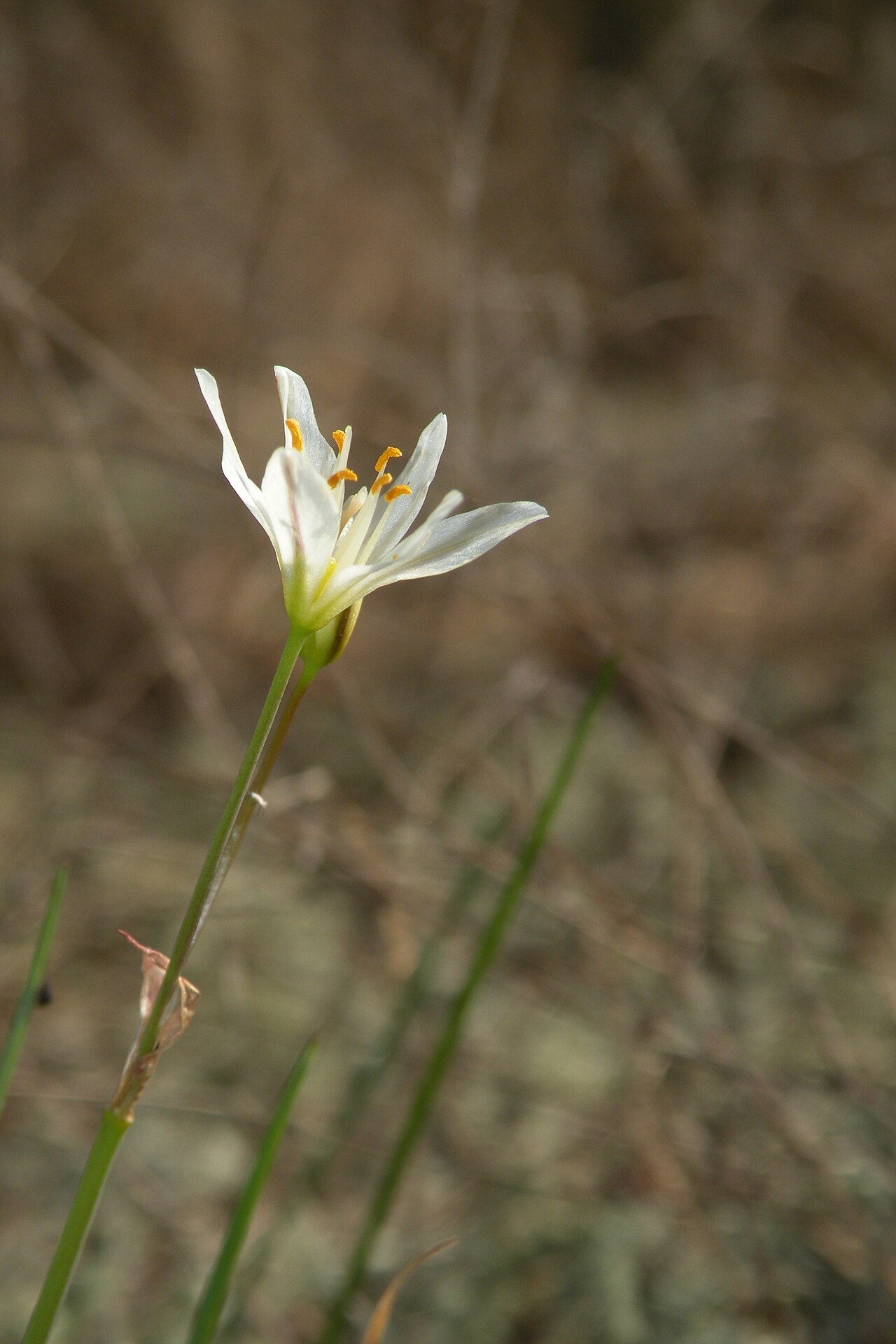
The fragrant flowers offer nectar and pollen to small native bees, including mining bees and sweat bees, as well as flies, beetles and early butterflies. Small jewel beetles feed on its pollen in Texas. The second, fall bloom provides food at a time when many other flowers have finished.
For Birds
Crowpoison has little direct value for birds, although ground-feeding birds may eat its small seeds. It supports insects that birds feed to their young in spring.
For Mammals
It is rarely eaten by deer or rabbits. Small rodents may dig the bulbs.
Ecosystem Role
As a spring-blooming bulb that goes dormant in summer, crowpoison fills a short window in open grassland and outcrop communities, using light and moisture before taller plants grow. It tolerates mowing and grazing, which helps it persist in lawns and pastures where many other native wildflowers have disappeared.
Cultural & Historical Uses
Linnaeus described the plant in 1753 as Ornithogalum bivalve, placing it with the star-of-Bethlehem. It was later moved to Allium and then to Nothoscordum, a genus created for onion-like plants that lack the onion smell. The species name bivalve, “two-valved”, probably refers to the two papery bracts that enclose the young flower cluster.
The origin of the name crowpoison is not well documented. It reflects a widespread folk belief that the plant is poisonous, but there are few reliable reports of poisoning. The same common name has also been used for other plants, including some toxic members of the lily group, which adds to the confusion.
Because it grows in lawns and looks like an onion, crowpoison is often mistaken for a weed or for wild garlic. Wild garlic (Allium canadense) and other onions have a strong odor and often have small bulbils in their flower clusters, while crowpoison has no odor and bears only flowers. Some gardeners now welcome it as a native spring flower in lawns that are mowed less often.
Frequently Asked Questions
Is crowpoison poisonous?
Its toxicity is not well documented, but it should not be eaten. It is not an edible onion, and it can be confused with the highly toxic death camas. Only eat wild onions that have a clear onion smell, and never eat any plant you cannot identify with certainty.
How do I tell crowpoison from wild onion or wild garlic?
Crush a leaf. Wild onions and wild garlic smell strongly of onion or garlic. Crowpoison has no onion smell. Crowpoison flowers are also white with yellow anthers, and its flower clusters never contain the small bulbils often found in wild garlic.
Is crowpoison a weed in lawns?
It is a native wildflower that adapts well to mowed lawns. Many people welcome its early white flowers. If you want fewer plants, mow off the flowers before they set seed.
When does crowpoison bloom?
Mainly in late winter and spring, from February in the Deep South to May farther north. Many plants bloom again in fall, especially after rain.
Why is it called false garlic?
The scientific name Nothoscordum means “false garlic”. The plant looks like a garlic or onion but lacks their smell and taste.

Looking for a nursery that carries Crowpoison?
Browse our native plant nursery directory: Alabama & Arkansas · Florida & Georgia · Illinois, Indiana & Kansas · Kentucky, Louisiana, Mississippi & Missouri · Nebraska, North Carolina, Ohio & Oklahoma · South Carolina, Tennessee, Texas & Virginia