
Narrowleaf Milkweed (Asclepias fascicularis)
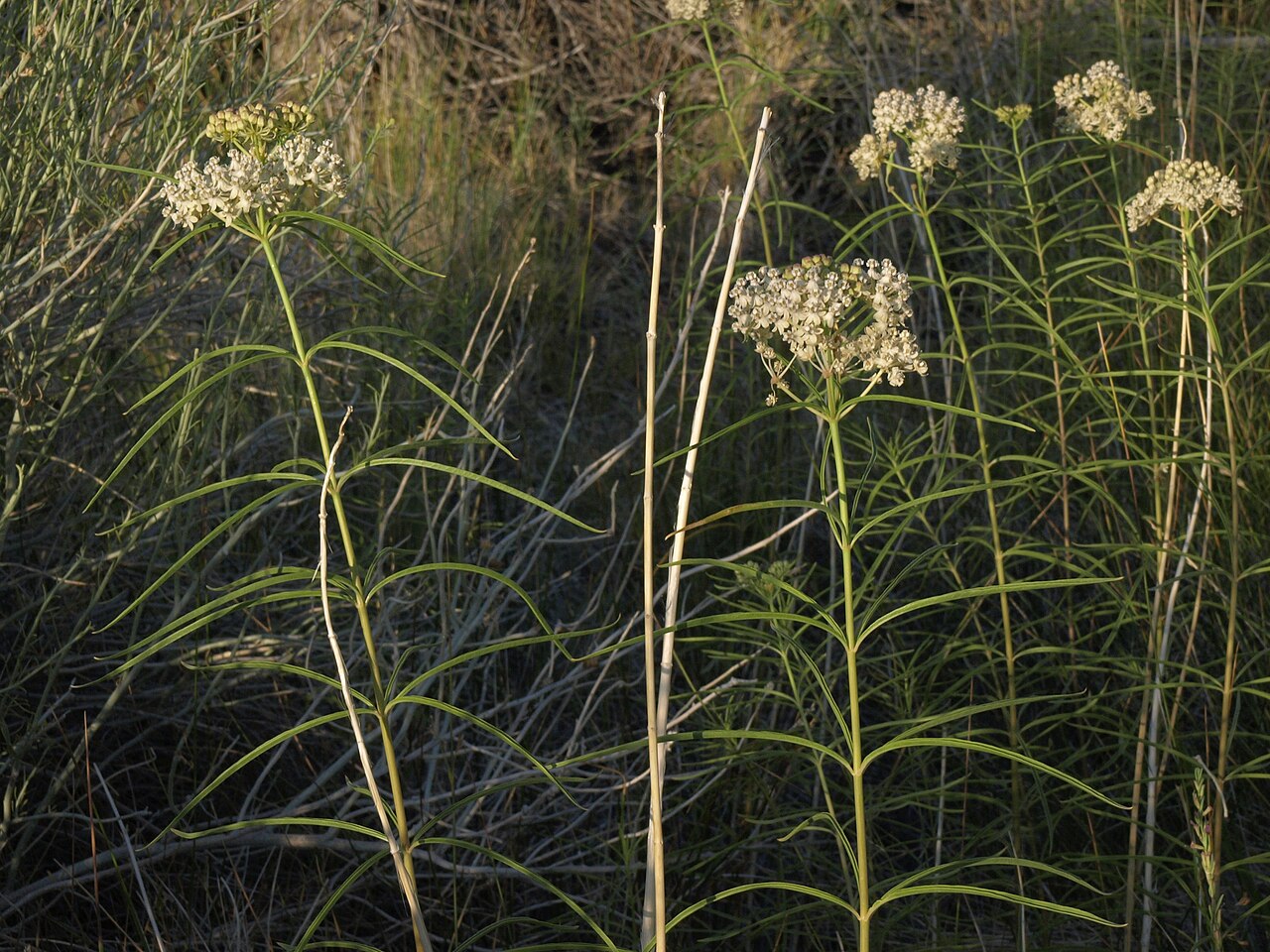
Asclepias fascicularis, known as Narrowleaf Milkweed, is the most widespread milkweed of California and one of the most important host plants for the western population of the monarch butterfly. It is a slender, upright perennial 1 to 3 feet tall, with narrow leaves arranged in whorls along the stems and rounded clusters of small, pale pink to greenish-white flowers from late spring through summer. USDA PLANTS lists it under the common name Mexican whorled milkweed.
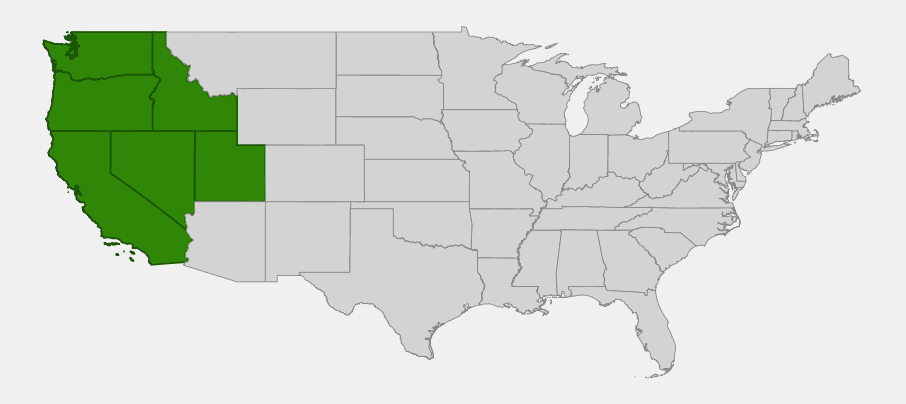
Narrowleaf milkweed grows from Washington and Idaho south through Oregon, Nevada and Utah to California and northern Baja California. It is a plant of open, sunny places such as grasslands, valley floors, the edges of oak woodland and chaparral, stream banks, ditches and roadsides. It is easy to grow, tolerates clay and summer drought, and spreads slowly by underground stems, which makes it one of the best milkweeds for western gardens.
Safety note: like other milkweeds, narrowleaf milkweed contains cardiac glycosides, compounds that affect the heart. All parts are toxic to livestock, pets and people if eaten, and the milky sap can irritate the eyes and skin. Wash your hands after handling it and keep it away from pastures and from pets that chew plants. This guide covers identification, range, garden care and its role for monarchs and other pollinators.
Identification
Narrowleaf milkweed is easy to recognize among western milkweeds by its very narrow leaves in whorls and its small, pale flower clusters. The leaf shape separates it from broad-leaved species such as showy milkweed.
Stems & Roots
Plants grow from a deep taproot and spreading underground stems (rhizomes), and they slowly form patches of several upright stems. The stems are slender, smooth or nearly so, and usually 1 to 3 feet tall. They contain milky white sap, which oozes out when a leaf or stem is broken. In fall the stems die back to the ground, and new shoots appear in spring.
Leaves
The leaves are long and narrow, linear to narrowly lance-shaped, about 1½ to 5 inches long and usually less than 1/2 inch wide. They grow in whorls of three to six at each node, or in clusters, the “fascicles” of the species name. The leaves are often folded lengthwise along the midrib, and they are smooth and green to slightly grayish.
Flowers
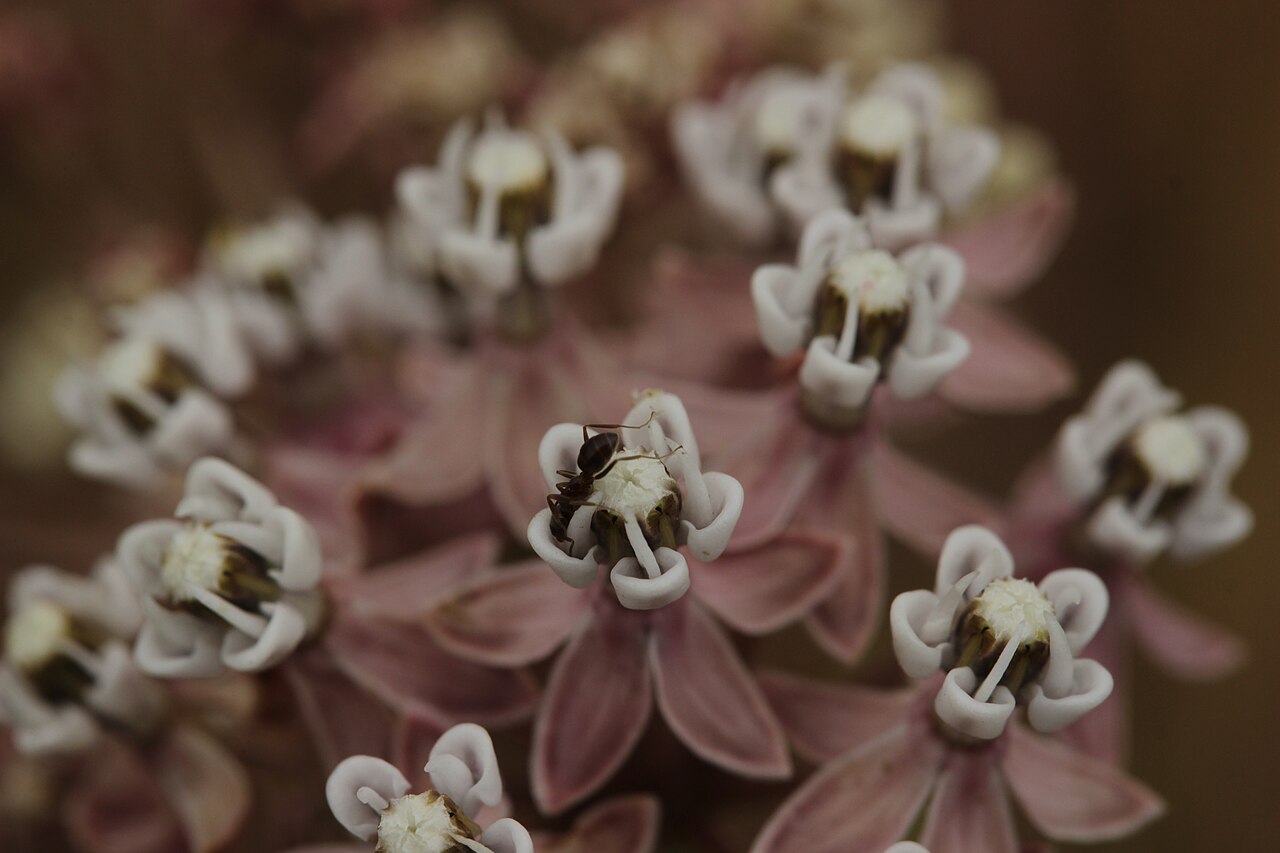
Rounded clusters (umbels) of 10 to 40 or more small flowers grow from the upper leaf nodes and stem tips. Each flower is about 1/4 inch across, with five petals that bend sharply backward and a central crown of five hoods with small curved horns. The petals are greenish-white to pale pink or lavender, and the hoods are whitish to pale pink. Bloom is from May or June to September, with a peak in midsummer.
Fruit & Seeds
Pollinated flowers produce smooth, slender, spindle-shaped pods 2 to 4 inches long that point upward. In late summer and fall the pods split along one side and release flat brown seeds, each with a tuft of silky white hairs that carries it on the wind.
Quick Facts
| Scientific Name | Asclepias fascicularis (syn. Asclepias mexicana auct. non Cav.) |
| Common Names | Narrowleaf milkweed, Mexican whorled milkweed (USDA) |
| Family | Apocynaceae (dogbane family; milkweed subfamily) |
| Plant Type | Herbaceous perennial; dies back in winter; spreads by rhizomes |
| Mature Height | 1–3 ft |
| Mature Spread | 1–3 ft; slowly forms patches |
| Growth Rate | Moderate |
| Sun Exposure | Full sun |
| Water Needs | Low to medium; drought-tolerant once established |
| Soil Type | Adaptable: clay, loam or sand; tolerates seasonally moist soils |
| Soil pH | About 6.0–8.0 |
| Bloom Time | May–September |
| Flower Color | Greenish-white to pale pink or lavender |
| Fall Color | Stems turn yellow and die back in fall |
| Fruit | Slender smooth pod with silky-tufted seeds |
| Deer Resistant | Yes; toxic and rarely browsed |
| USDA Hardiness Zones | 5–10 |
Native Range
Narrowleaf milkweed is native to the western United States and northern Baja California. USDA PLANTS records it from six states: California, Oregon, Washington, Idaho, Nevada and Utah. California is the center of its range, and there it grows in almost every county, from the coast to the foothills of the Sierra Nevada and from the northern Sacramento Valley to the Mexican border.
North of California it is found mainly east of the Cascades in eastern Oregon, eastern Washington and southwestern Idaho, and it reaches western Nevada and parts of Utah. It is usually found below about 7,000 feet and is uncommon in the true deserts.
It grows in open, sunny habitats: grasslands and valley floors, the edges of oak woodland, chaparral and sagebrush, along streams, ditches and the margins of seasonal wetlands, and on roadsides and disturbed ground. It is often most abundant where there is some extra moisture, such as low spots and stream terraces, but it survives long, dry summers once established.
📋 Regional plant lists featuring Narrowleaf Milkweed: Idaho, Eastern Oregon & Eastern Washington · Utah & Western Colorado
Growing & Care Guide
Narrowleaf milkweed is one of the easiest native milkweeds to grow in the West. It thrives in sun and ordinary garden soil, tolerates clay and drought, and returns every spring from its roots. Plant it in groups to support monarchs and many other insects, and choose it instead of the non-native tropical milkweed.
Light
Plant it in full sun. It tolerates a little afternoon shade in hot inland areas but flowers less and becomes floppy in shade.
Soil & Water
It grows in clay, loam or sand as long as the soil is not constantly waterlogged. Water new plants regularly in their first summer. Once established, it survives summer drought, although occasional deep watering keeps the foliage fresher and extends flowering in hot, dry regions. Do not fertilize.
Planting Tips
Plant in fall or spring from containers, or sow seed in fall. The deep taproot makes established plants hard to move, so choose the site carefully. Plant several together, since monarchs and other insects find groups more easily than single plants. Expect the plants to spread slowly by rhizomes into a patch. Narrowleaf milkweed is deciduous: it dies back in late fall and emerges again in spring, which is normal.
Pruning & Maintenance
Cut the dead stems to the ground in late fall or winter after they have died back. In coastal California, where monarchs overwinter, cutting back milkweed in fall is often recommended to discourage winter breeding and the buildup of the monarch parasite Ophryocystis elektroscirrha (OE). Wear gloves when cutting stems to avoid the irritating sap, and keep it out of your eyes. Aphids sometimes cover the stems; they rarely harm the plant and can be hosed off.
Propagation
Seed germinates readily, especially after one to two months of cold, moist stratification. Sow it in deep pots to accommodate the taproot. Plants can also be started from root or rhizome cuttings taken in late winter. Seedlings often bloom in their second year.
Landscape Uses
- Monarch waystations: a key native host plant for the western monarch
- Pollinator gardens: long summer bloom for bees, wasps and butterflies
- Meadow and grassland plantings: with native bunchgrasses and wildflowers
- Restoration: field margins, stream terraces and roadsides within its native range
- Low-water gardens: needs little or no summer water once established
Wildlife & Ecological Value
Narrowleaf milkweed supports one of the West’s most famous insects and a wide range of other wildlife, from native bees to large wasps.
For Pollinators
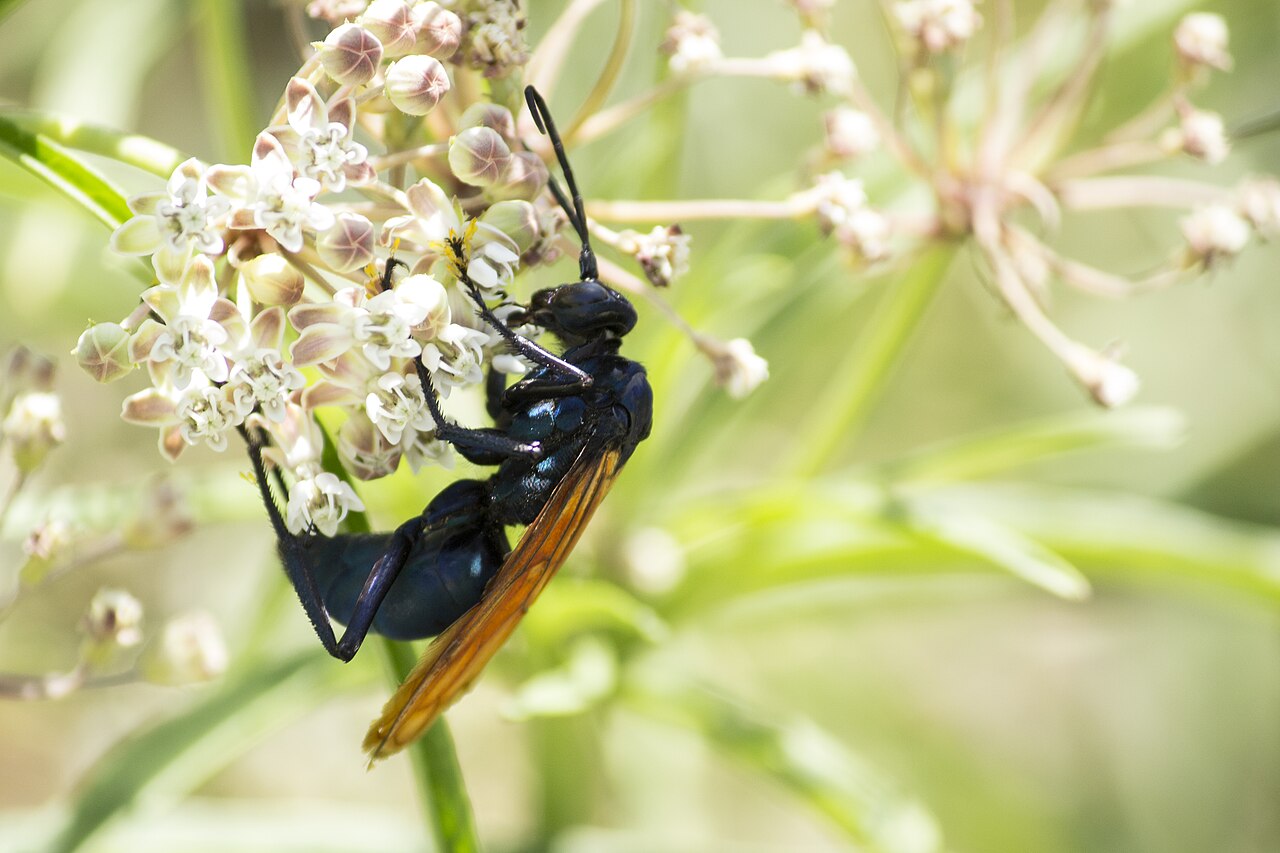
Narrowleaf milkweed is a major larval host plant for the western population of the monarch butterfly (Danaus plexippus). Females lay eggs on the leaves, and the caterpillars store the plant’s cardiac glycosides in their bodies, which makes them distasteful to predators. It is also a host for the queen butterfly in some areas. Its flowers attract a great variety of nectar-seeking insects, including native bees, honey bees, tarantula hawks and other large wasps, flies and many butterflies. Like all milkweeds, it is pollinated in an unusual way: pollen is packaged in pairs of sacs (pollinia) that clip onto the legs of visiting insects.
For Birds
Birds rarely eat milkweed, but some, such as goldfinches and orioles, use the silky seed fluff in their nests. The many insects on milkweed provide food for insect-eating birds.
For Mammals
Its toxic sap protects it from most browsing mammals, including deer. It can poison livestock, especially sheep and cattle, when it is abundant in pastures or mixed into hay.
Ecosystem Role
Milkweeds support a specialized community of insects that can tolerate their toxins, including milkweed bugs, milkweed beetles, milkweed tussock moths and milkweed aphids, and many of these use bright warning colors. Because narrowleaf milkweed dies back each winter, it fits the natural breeding cycle of western monarchs better than evergreen tropical milkweed. Planting it helps restore breeding habitat that has been lost to development and agriculture.
Cultural & Historical Uses
Narrowleaf milkweed was first described in 1844 by the Swiss botanist Joseph Decaisne. Some older works mistakenly called it Asclepias mexicana, a name that properly belongs to a different Mexican species. That mistake probably explains the USDA common name, Mexican whorled milkweed, even though the plant is mainly Californian.
Many Native Californian peoples used milkweeds. The fibers from the dried stems were twisted into strong cordage for nets, snares and string, and the milky sap was used in some traditional remedies. These uses required careful preparation, and milkweed should not be eaten or used medicinally today because of its toxicity.
Since the western monarch population fell sharply in recent decades, narrowleaf milkweed has become the most widely recommended milkweed for gardens, schools and restoration projects in California. Conservation groups and native plant societies encourage planting it, along with nectar plants, instead of tropical milkweed (Asclepias curassavica), which stays green through winter in mild climates.
Frequently Asked Questions
Is narrowleaf milkweed good for monarchs?
Yes. It is one of the most important host plants for western monarchs, and the caterpillars feed on its leaves. It is a better choice than tropical milkweed because it dies back in winter, matching the monarch’s natural breeding season.
Is narrowleaf milkweed poisonous?
Yes. Like other milkweeds it contains cardiac glycosides, which are toxic to livestock, pets and people if eaten. The milky sap can irritate skin and eyes. Wash your hands after handling it and keep it away from grazing animals.
Why did my milkweed die back in winter?
Narrowleaf milkweed is a deciduous perennial. The stems die to the ground in late fall, and new shoots grow from the roots in spring. Cut the old stems down and wait for new growth.
Does narrowleaf milkweed spread?
It spreads slowly by underground stems and by wind-blown seed. In a garden it forms a patch over a few years, but it is not usually aggressive. Remove seed pods before they open if you want to limit seedlings.
Why is it called Mexican whorled milkweed?
That is the USDA common name, which probably comes from an old misidentification with the Mexican species Asclepias mexicana. In gardens and in California it is almost always called narrowleaf milkweed.

Looking for a nursery that carries Narrowleaf Milkweed?
Browse our native plant nursery directory: California · Idaho · Nevada · Oregon · Utah · Washington